












METHODOLOGICAL
ISSUES
SAMPLING
VALIDITY
TRIANGULATION
Presented by Dr Moazzam Ali,MSPH.2014 2015
Course coordinator Mr. Aijaz
OUTLINE
 METHODOLOGY & METHODOLOGICAL ISSUES
 OVERVIEW OF METHODS IN QUALITATIVE RESEARCH
 SAMPLING ISSUES
 EVALUATION AND VALIDITY OF QUALITATIVE RESEARCH
METHODS
 TRIANGULATION
METHODOLOGY & METHODOLOGICAL ISSUES
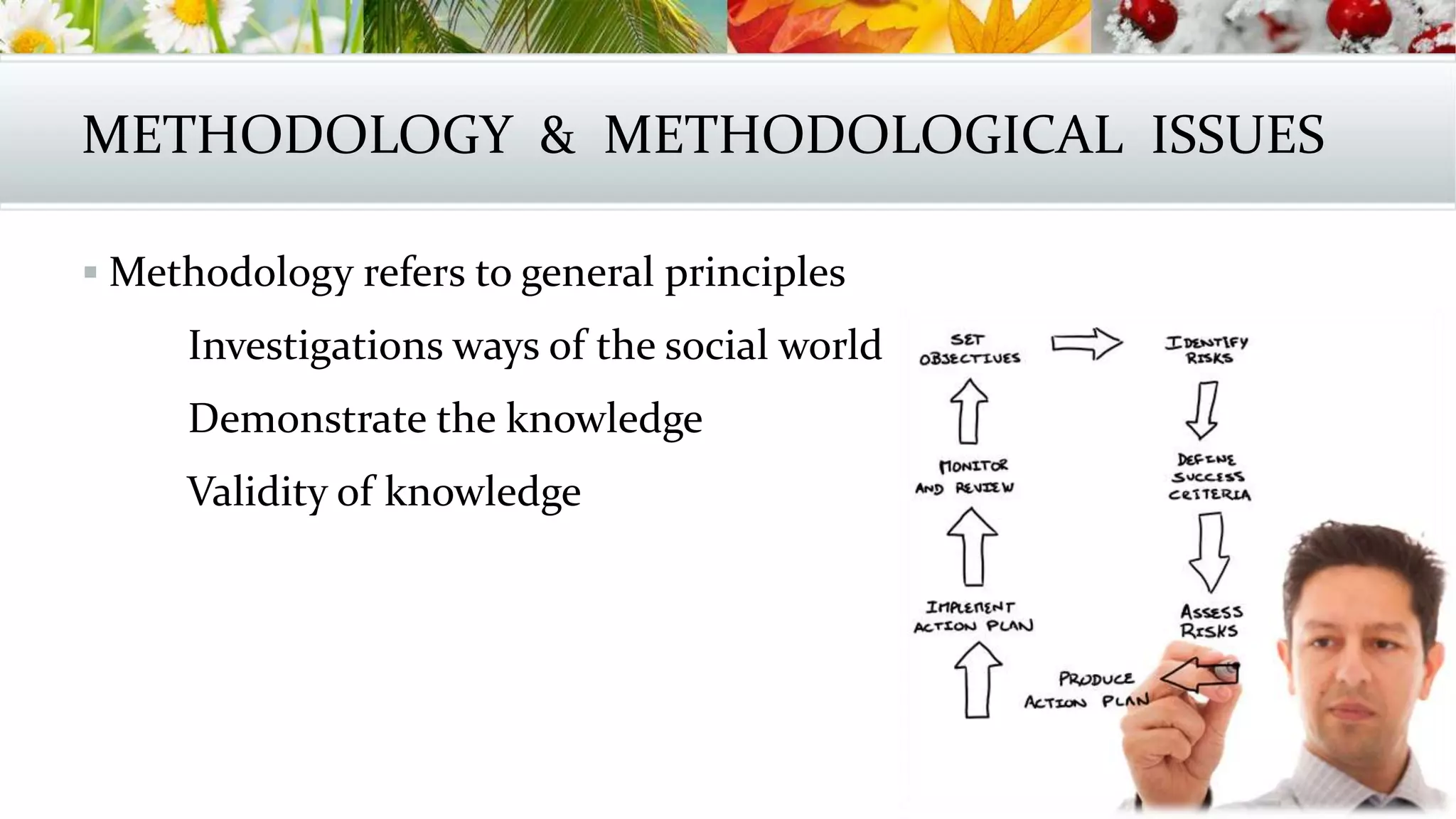
 Methodology refers to general principles
Investigations ways of the social world
Demonstrate the knowledge
Validity of knowledge
METHODS IN QUALITATIVE RESEARCH
WHEN QUALITATIVE METHODS USED?
 In exploratory studies, prior to quantitative work
 as a way of examining the context of quantitative findings, or to give
depth
 on their own, in studies addressing questions of meaning and
interpretation
 to generate hypothesis
 to develop new concepts
QUANITATIVES VS QUALITATIVES
SAMPLING ISSUES
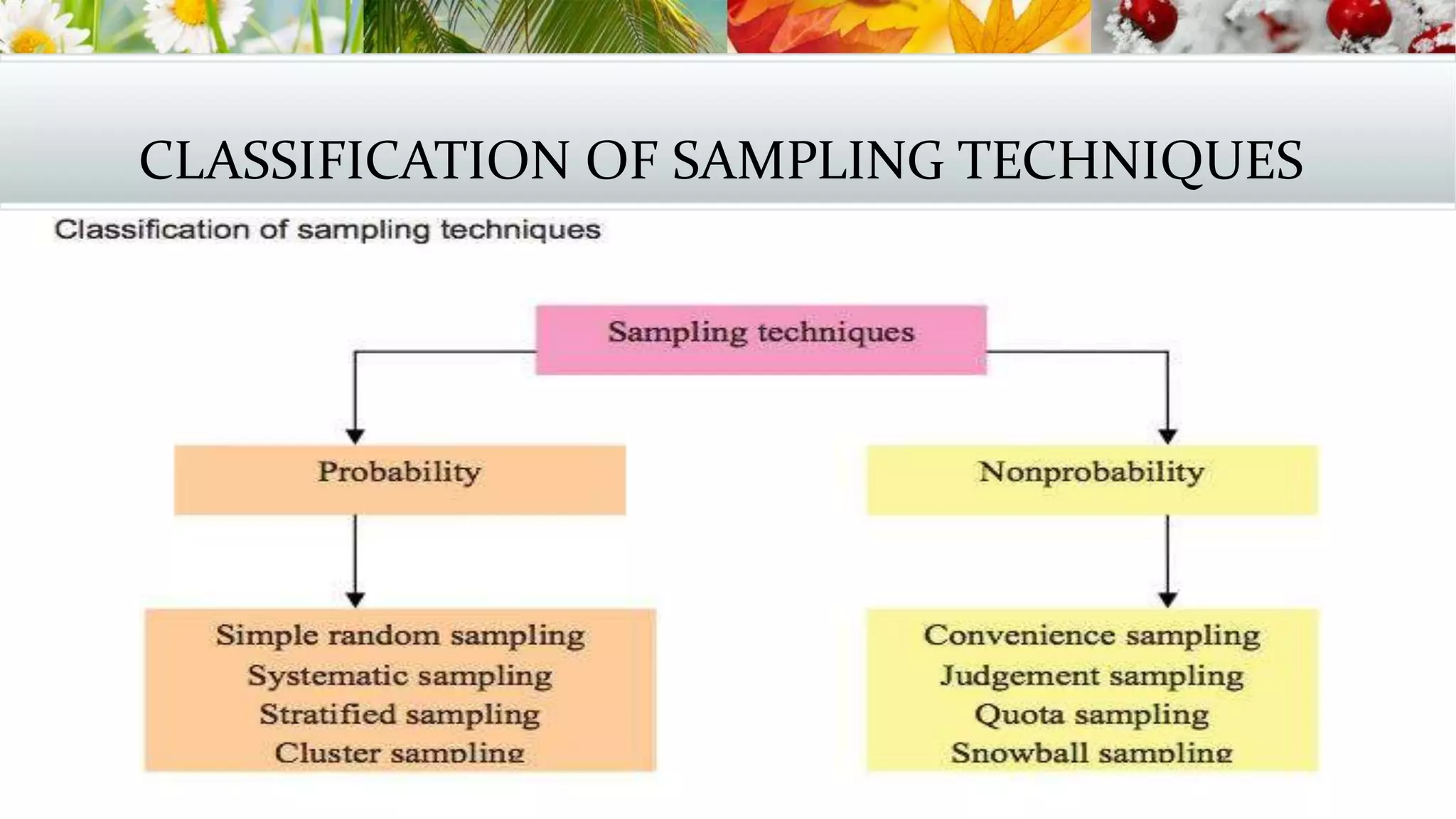
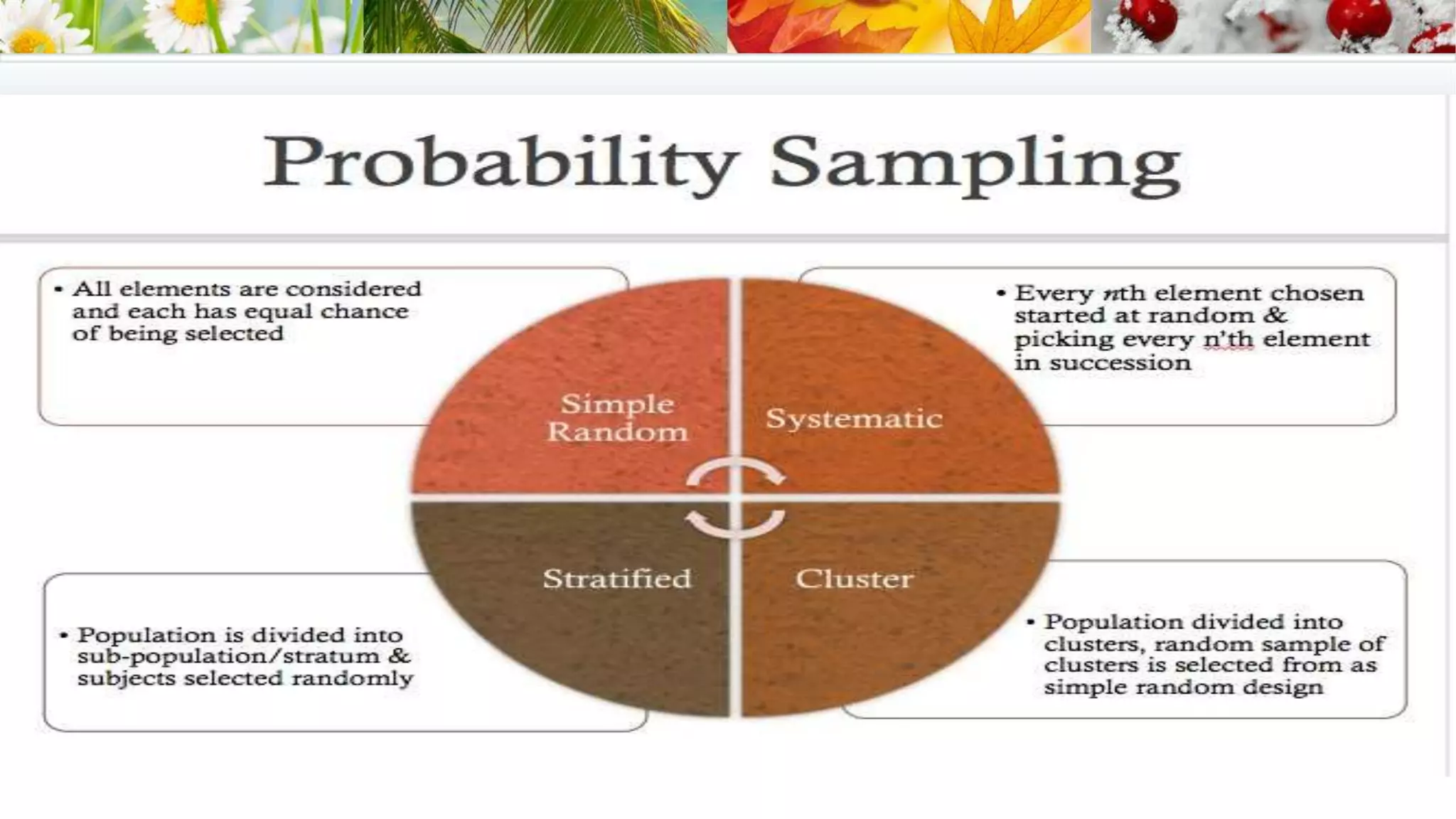
CLASSIFICATION OF SAMPLING TECHNIQUES
CONVENIENCE SAMPLING
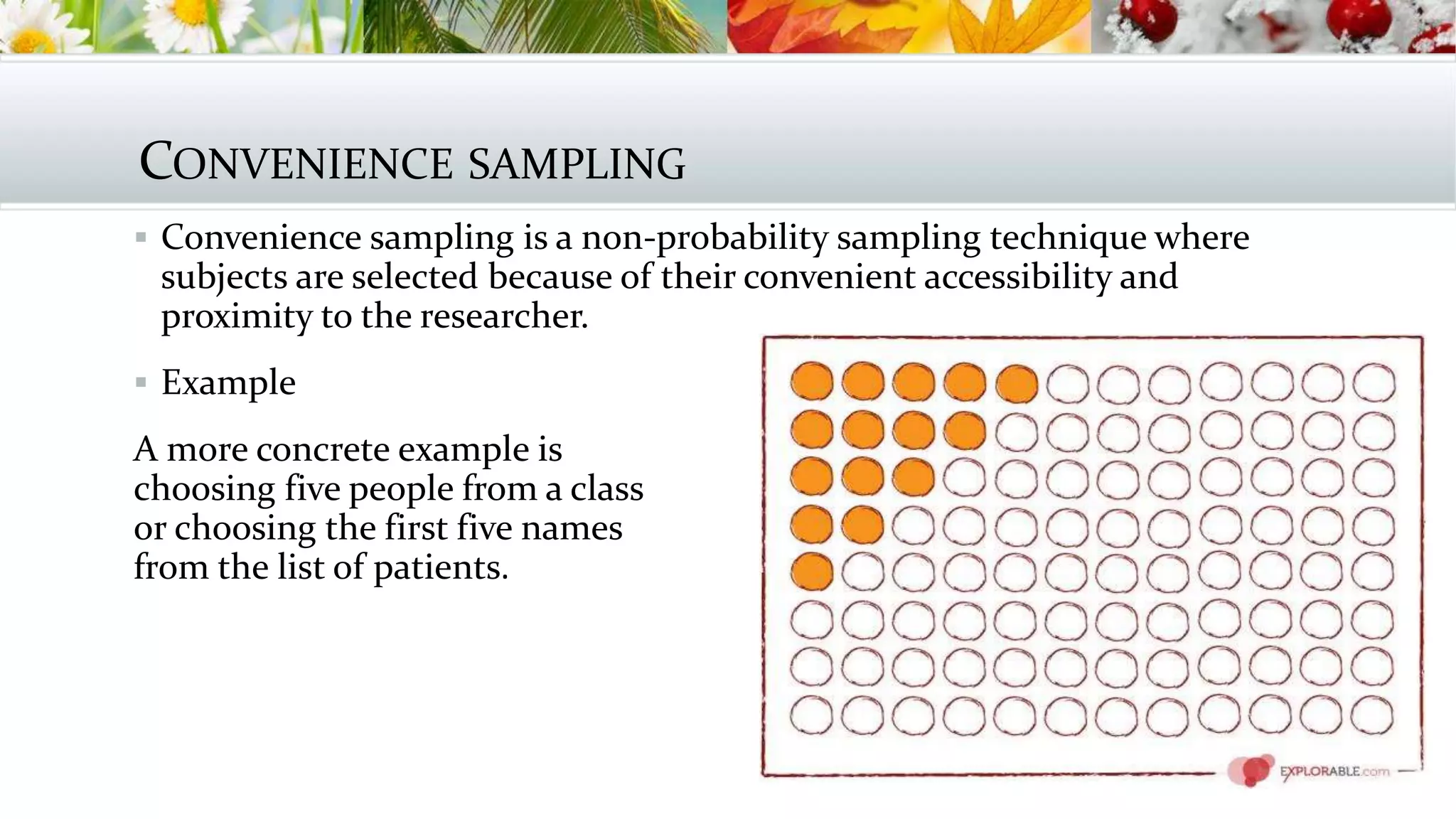
 Convenience sampling is a non-probability sampling technique where
subjects are selected because of their convenient accessibility and
proximity to the researcher.
 Example
A more concrete example is
choosing five people from a class
or choosing the first five names
from the list of patients.
JUDGMENTAL SAMPLING
 Judgmental sampling is a non-probability sampling technique where the
researcher selects units to be sampled based on their knowledge and
professional judgment.
JUDGMENTAL SAMPLING
 Judgmental sampling is a non-probability sampling technique where the
researcher selects units to be sampled based on their knowledge and professional
judgment.
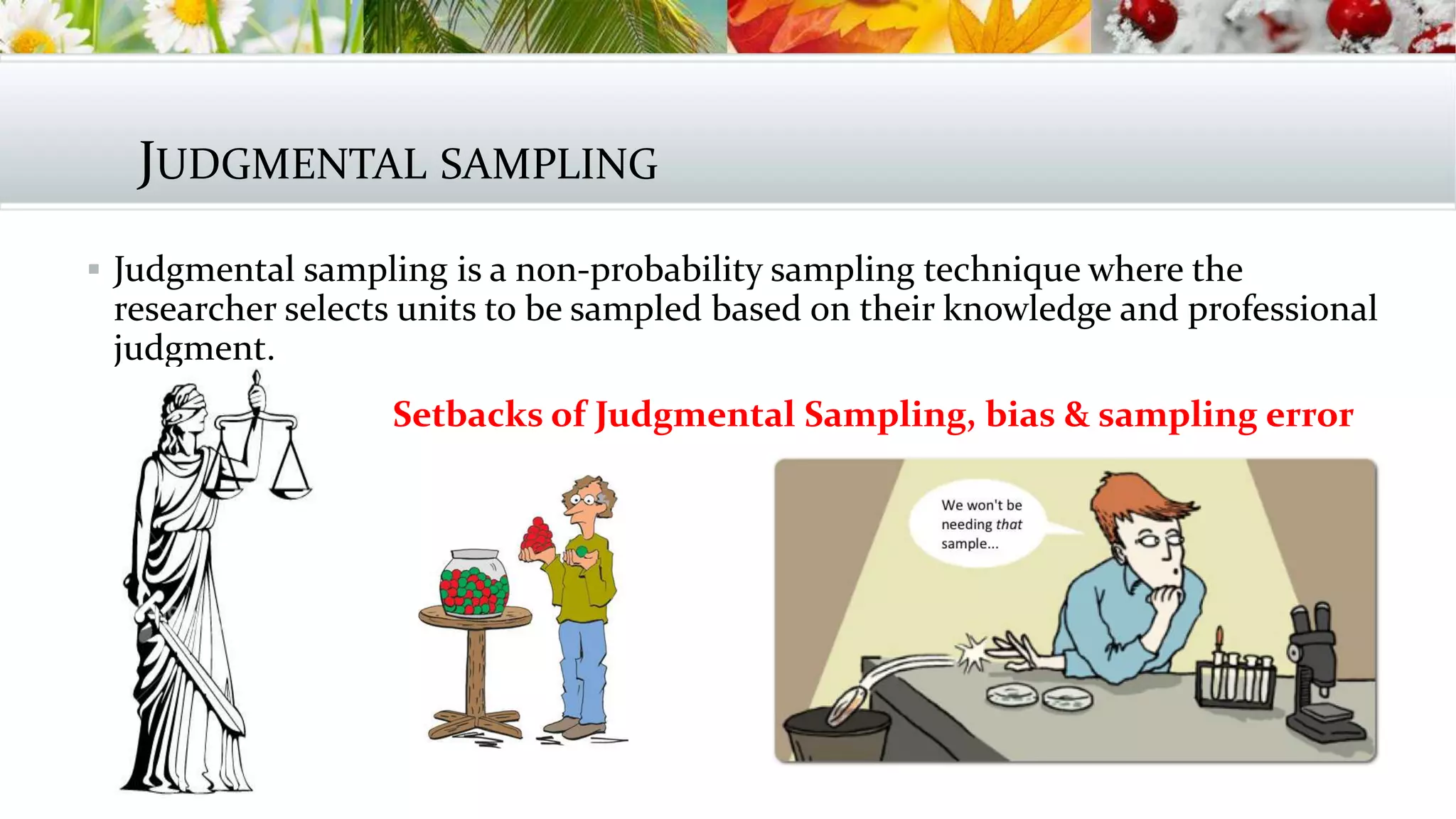
 Setbacks of Judgmental Sampling, bias & sampling error
QUOTA SAMPLING
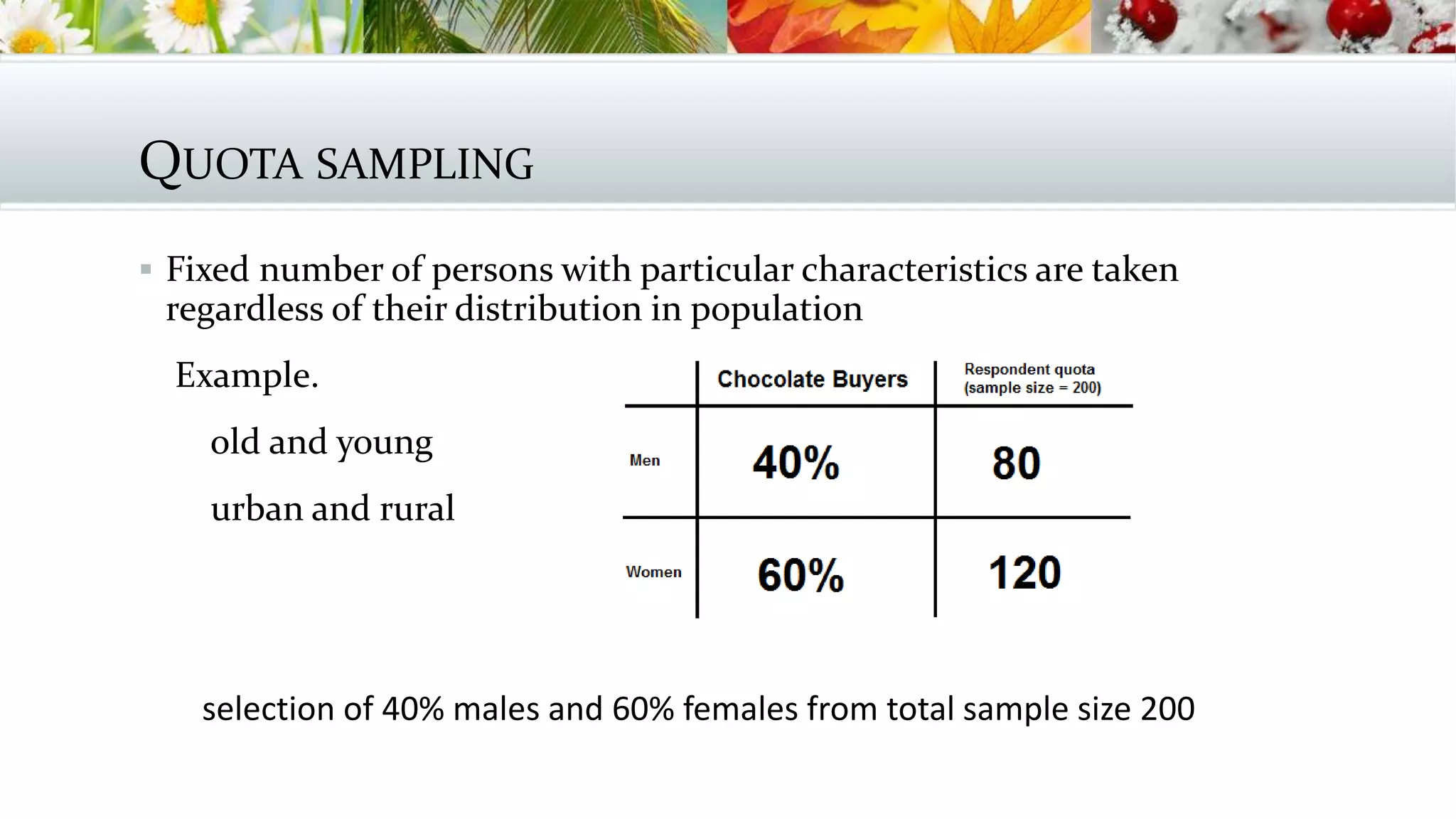
 Fixed number of persons with particular characteristics are taken
regardless of their distribution in population
Example.
old and young
urban and rural
selection of 40% males and 60% females from total sample size 200
SNOW BALL SAMPLING
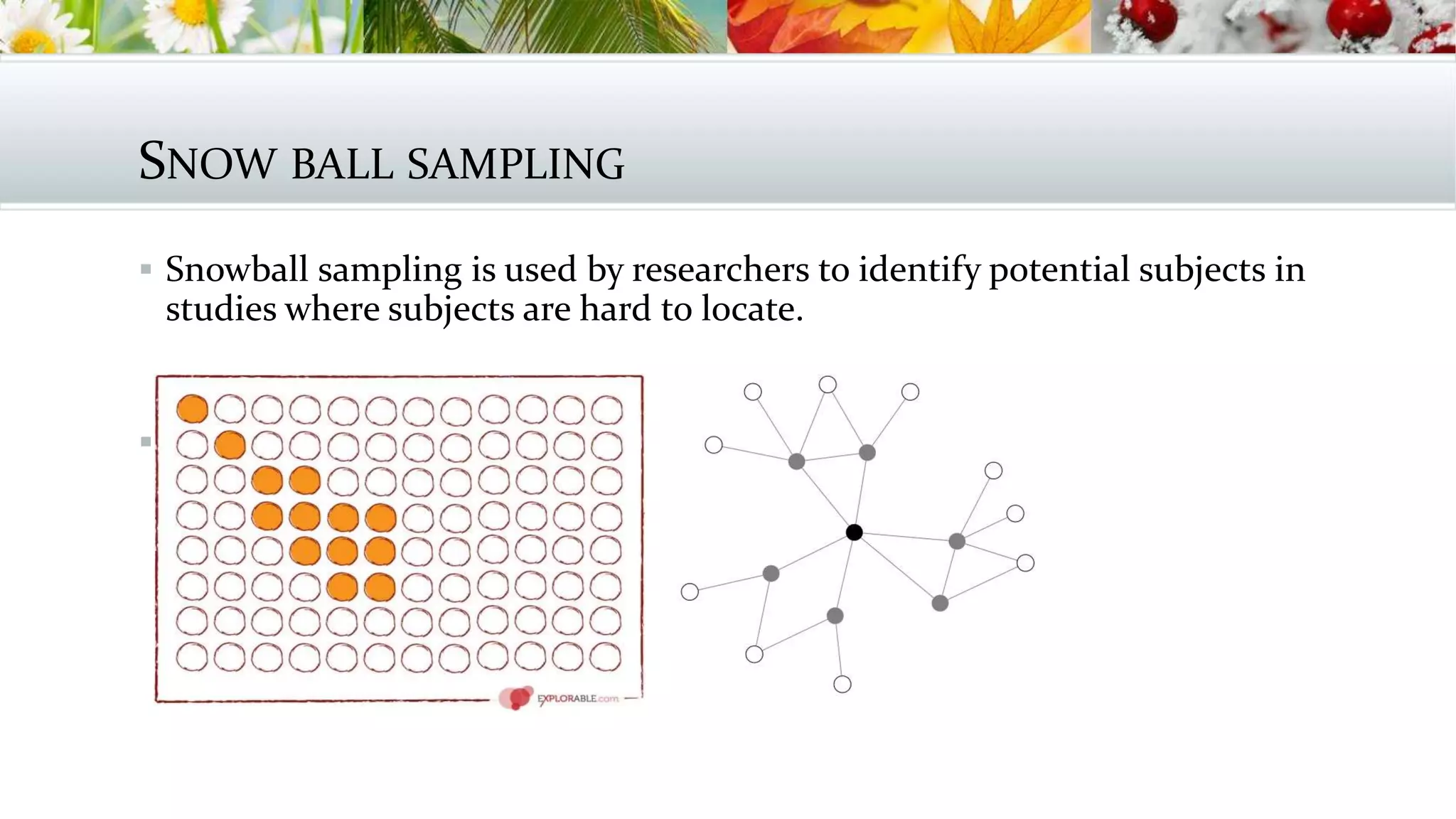
 Snowball sampling is used by researchers to identify potential subjects in
studies where subjects are hard to locate.

EVALUATION AND
VALIDITY OF
QUALITATIVE
METHODS
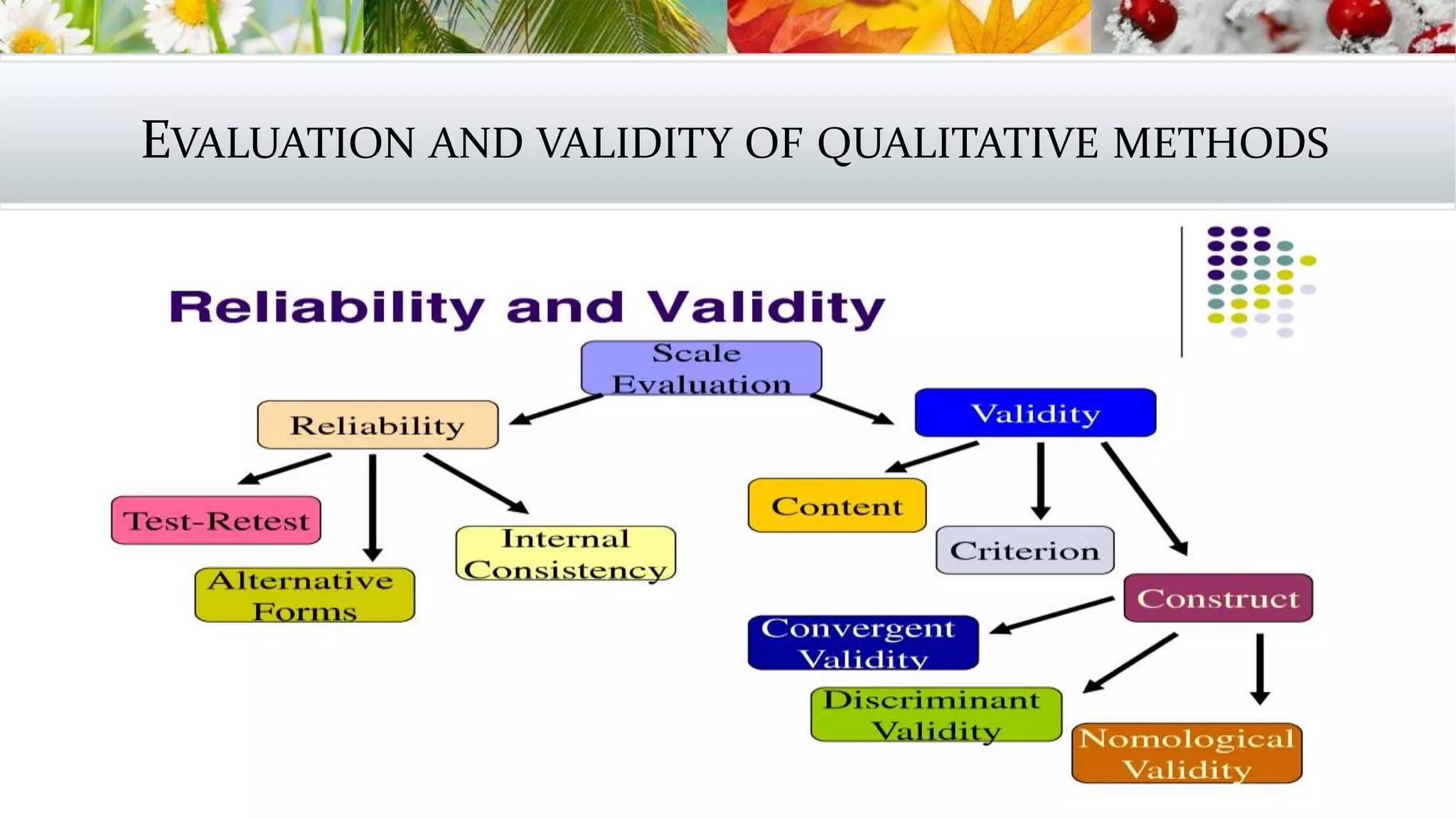
EVALUATION AND VALIDITY OF QUALITATIVE METHODS
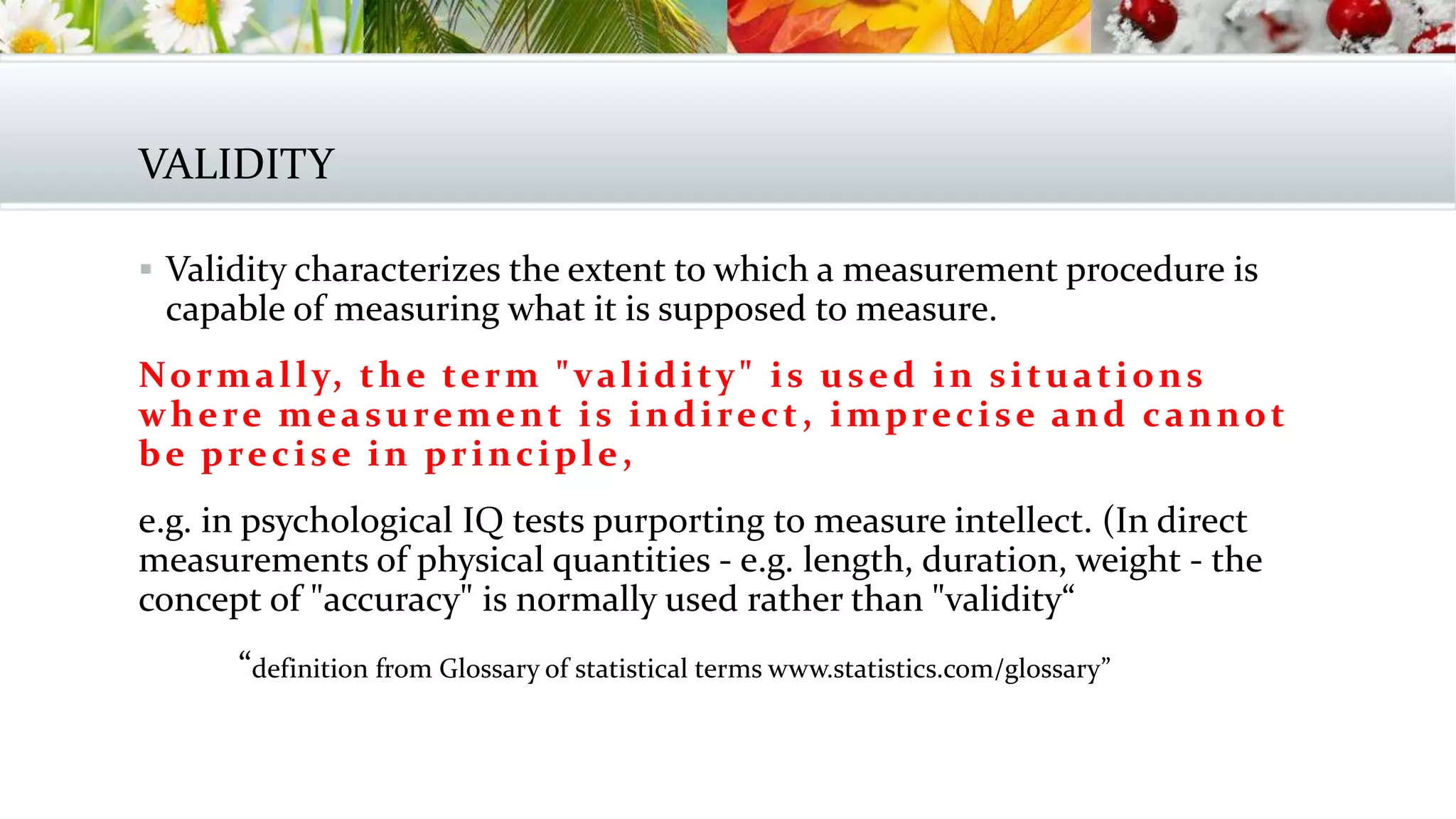
VALIDITY
 Validity characterizes the extent to which a measurement procedure is
capable of measuring what it is supposed to measure.
Normally, the term "validity" is used in situations
where measurement is indirect, imprecise and cannot
be precise in principle,
e.g. in psychological IQ tests purporting to measure intellect. (In direct
measurements of physical quantities - e.g. length, duration, weight - the
concept of "accuracy" is normally used rather than "validity“
“definition from Glossary of statistical terms www.statistics.com/glossary”
TYPES OF VALIDITY IN QUALITATIVE RESEARCH
 Descriptive Validity
 Interpretive Validity
 Theoretical Validity
 External Validity
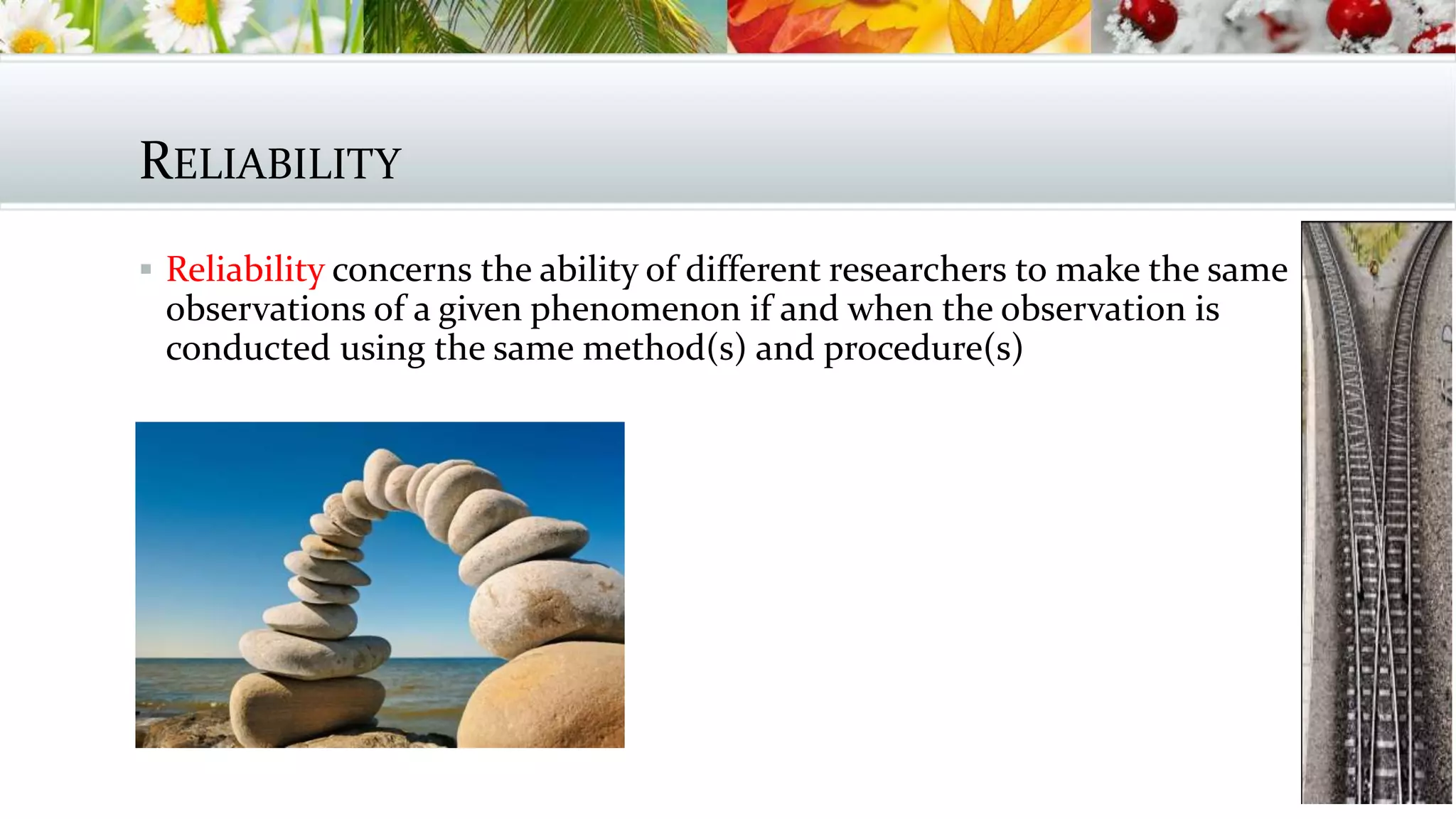
RELIABILITY
 Reliability concerns the ability of different researchers to make the same
observations of a given phenomenon if and when the observation is
conducted using the same method(s) and procedure(s)
RELIABILITY OF THEIR QUALITATIVE RESEARCH
can enhance the by:
 Standardizing data collection techniques and protocols
 Again, documenting, documenting, documenting
(e.g., time day and place observations made)
 Inter-rater reliability
TRIANGULATION
TRIANGULATION
 TRIANGULATION is often used to indicate that two (or more) methods
are used in a study in order to check the results.
OR
the use of multiple methods as a plan of action that will raise sociologist
above the personalistic biases from single research.
“Denzin 1970 b:27 A Handbook of Qualitative Methodologies for Mass Communication
Research”
"The concept of triangulation is borrowed from navigational and land
surveying techniques that determine a single point in space with the
convergence of measurements taken from two other distinct points”
TYPES OF TRIANGULATION
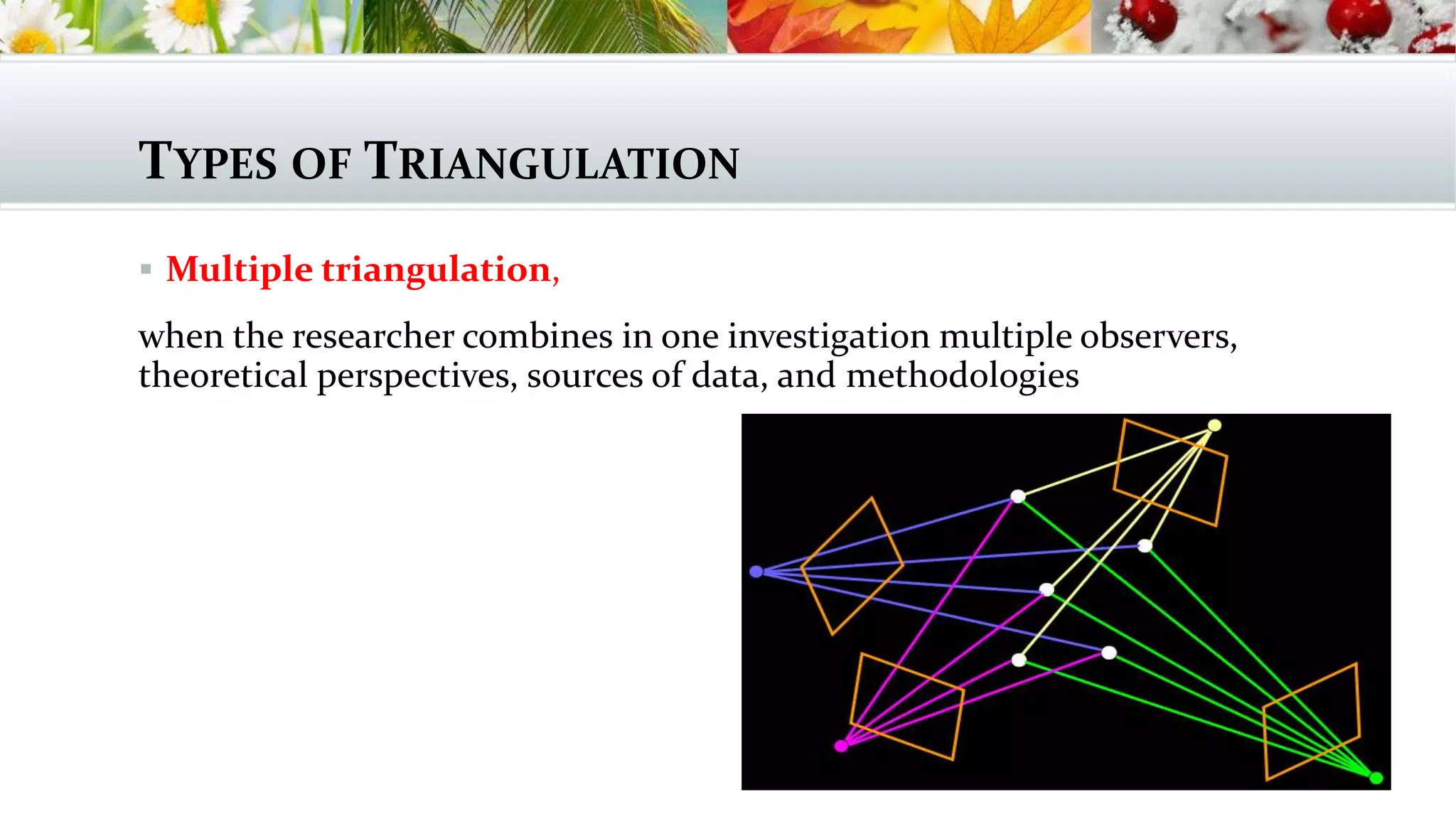
 Methodological triangulation,
which involves using more than one method and may consist of within-
method or between-method strategies
TYPES OF TRIANGULATION
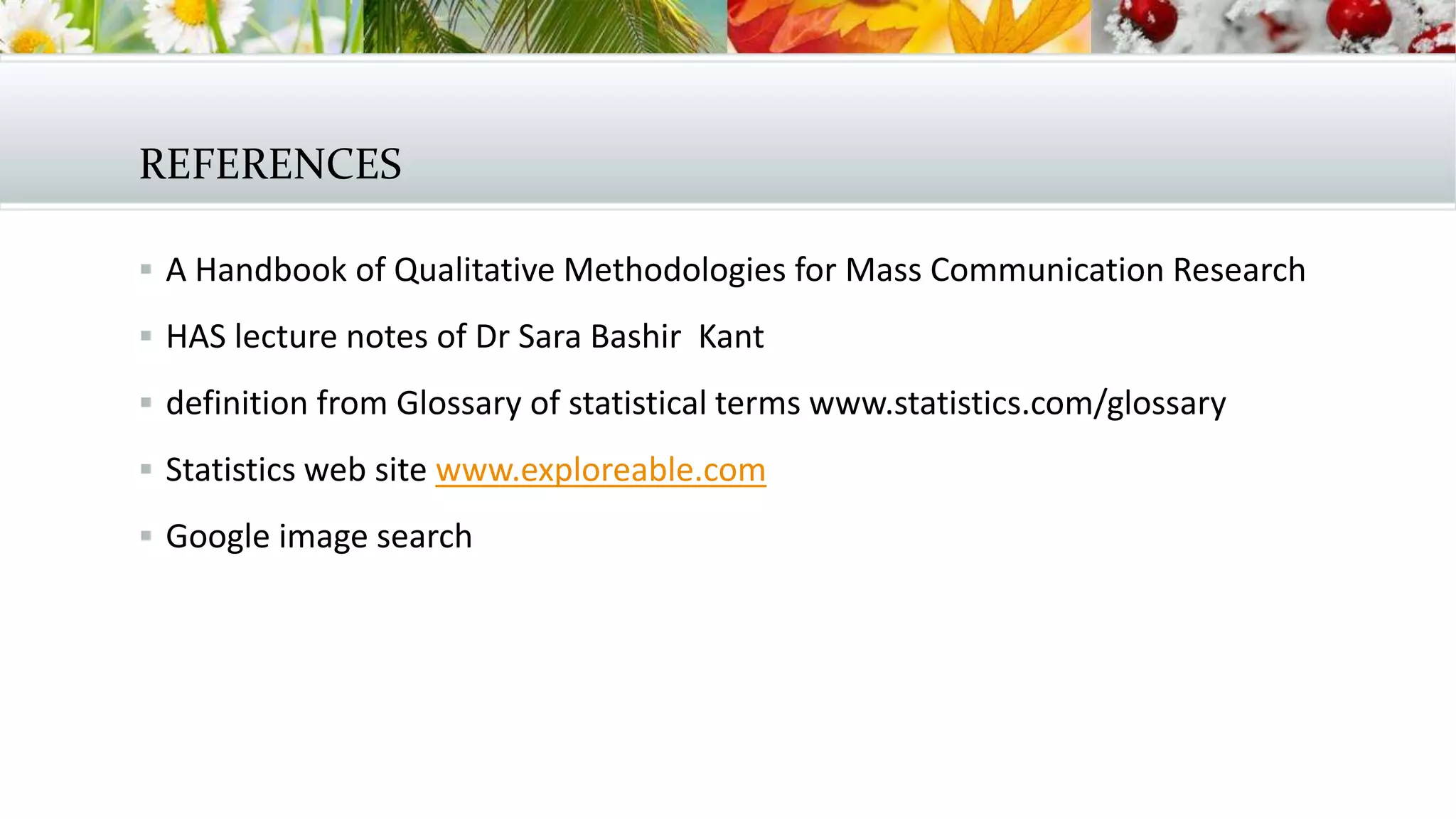
 Multiple triangulation,
when the researcher combines in one investigation multiple observers,
theoretical perspectives, sources of data, and methodologies
WHY TRIANGULATION?
WHY TRIANGULATION?
REFERENCES
 A Handbook of Qualitative Methodologies for Mass Communication Research
 HAS lecture notes of Dr Sara Bashir Kant
 definition from Glossary of statistical terms www.statistics.com/glossary
 Statistics web site www.exploreable.com
 Google image search
Methodological issues

Methodological issues

  • 1.
    METHODOLOGICAL ISSUES SAMPLING VALIDITY TRIANGULATION Presented by DrMoazzam Ali,MSPH.2014 2015 Course coordinator Mr. Aijaz
  • 2.
    OUTLINE  METHODOLOGY &METHODOLOGICAL ISSUES  OVERVIEW OF METHODS IN QUALITATIVE RESEARCH  SAMPLING ISSUES  EVALUATION AND VALIDITY OF QUALITATIVE RESEARCH METHODS  TRIANGULATION
  • 3.
    METHODOLOGY & METHODOLOGICALISSUES  Methodology refers to general principles Investigations ways of the social world Demonstrate the knowledge Validity of knowledge
  • 4.
  • 5.
    WHEN QUALITATIVE METHODSUSED?  In exploratory studies, prior to quantitative work  as a way of examining the context of quantitative findings, or to give depth  on their own, in studies addressing questions of meaning and interpretation  to generate hypothesis  to develop new concepts
  • 6.
  • 7.
  • 8.
  • 9.
    CONVENIENCE SAMPLING  Conveniencesampling is a non-probability sampling technique where subjects are selected because of their convenient accessibility and proximity to the researcher.  Example A more concrete example is choosing five people from a class or choosing the first five names from the list of patients.
  • 10.
    JUDGMENTAL SAMPLING  Judgmentalsampling is a non-probability sampling technique where the researcher selects units to be sampled based on their knowledge and professional judgment.
  • 11.
    JUDGMENTAL SAMPLING  Judgmentalsampling is a non-probability sampling technique where the researcher selects units to be sampled based on their knowledge and professional judgment.  Setbacks of Judgmental Sampling, bias & sampling error
  • 12.
    QUOTA SAMPLING  Fixednumber of persons with particular characteristics are taken regardless of their distribution in population Example. old and young urban and rural selection of 40% males and 60% females from total sample size 200
  • 13.
    SNOW BALL SAMPLING Snowball sampling is used by researchers to identify potential subjects in studies where subjects are hard to locate. 
  • 15.
  • 16.
    EVALUATION AND VALIDITYOF QUALITATIVE METHODS
  • 17.
    VALIDITY  Validity characterizesthe extent to which a measurement procedure is capable of measuring what it is supposed to measure. Normally, the term "validity" is used in situations where measurement is indirect, imprecise and cannot be precise in principle, e.g. in psychological IQ tests purporting to measure intellect. (In direct measurements of physical quantities - e.g. length, duration, weight - the concept of "accuracy" is normally used rather than "validity“ “definition from Glossary of statistical terms www.statistics.com/glossary”
  • 18.
    TYPES OF VALIDITYIN QUALITATIVE RESEARCH  Descriptive Validity  Interpretive Validity  Theoretical Validity  External Validity
  • 19.
    RELIABILITY  Reliability concernsthe ability of different researchers to make the same observations of a given phenomenon if and when the observation is conducted using the same method(s) and procedure(s)
  • 20.
    RELIABILITY OF THEIRQUALITATIVE RESEARCH can enhance the by:  Standardizing data collection techniques and protocols  Again, documenting, documenting, documenting (e.g., time day and place observations made)  Inter-rater reliability
  • 21.
  • 22.
    TRIANGULATION  TRIANGULATION isoften used to indicate that two (or more) methods are used in a study in order to check the results. OR the use of multiple methods as a plan of action that will raise sociologist above the personalistic biases from single research. “Denzin 1970 b:27 A Handbook of Qualitative Methodologies for Mass Communication Research” "The concept of triangulation is borrowed from navigational and land surveying techniques that determine a single point in space with the convergence of measurements taken from two other distinct points”
  • 23.
    TYPES OF TRIANGULATION Methodological triangulation, which involves using more than one method and may consist of within- method or between-method strategies
  • 24.
    TYPES OF TRIANGULATION Multiple triangulation, when the researcher combines in one investigation multiple observers, theoretical perspectives, sources of data, and methodologies
  • 26.
  • 27.
  • 28.
    REFERENCES  A Handbookof Qualitative Methodologies for Mass Communication Research  HAS lecture notes of Dr Sara Bashir Kant  definition from Glossary of statistical terms www.statistics.com/glossary  Statistics web site www.exploreable.com  Google image search