City University of New York (CUNY)
CUNY Academic Works
CUNY Academic Works
Publications and Research York College
2023
Criteria for Assessing and Ensuring the Trustworthiness in
Qualitative Research
Zia Ul Haq Kakar
Greenwich University - Pakistan
Rizwana Rasheed
Iqra University, Pakistan
Aamir Rashid
York College
Salma Akhter
Government Girls Model High School, Quetta, Pakistan
How does access to this work benefit you? Let us know!
More information about this work at: https://academicworks.cuny.edu/yc_pubs/342
Discover additional works at: https://academicworks.cuny.edu
This work is made publicly available by the City University of New York (CUNY).
Contact: AcademicWorks@cuny.edu
IJBR-Vol.4-ISS 2 Zia Ul Haq et al. (2023 )
International Journal of Business Reflections Page 150
CRITERIA FOR ASSESSING AND ENSURING THE
TRUSTWORTHINESS IN QUALITATIVE RESEARCH
ABSTRACT
The trustworthiness of qualitative data has been debatable, yet it has strong support from its supporters.
However, the importance and worth of qualitative data cannot be undermined. This paper presents a
critical review of the trustworthiness of the qualitative data. The degree of trustworthiness of qualitative
research can be measured by ensuring the credibility, transferability, dependability, and conformability of
research design, process, and action. The guarantee of trustworthiness in qualitative research is more
complex than in quantitative research due to its subjective nature. Many researchers and experts denied
the generalizability of qualitative research. However, few researchers, like Guba (1985), developed a
widely accepted model and strategies to ensure the trustworthiness and generalizability of qualitative
research. Credibility is like internal validity in quantitative analysis and provides the actual data about the
phenomenon. Transferability shows the degree of application of the research finding in other exact
natures of context, people, groups, and settings. If the findings of one study are replicated in a similar
population, condition, or context, then the findings are dependable. Neutrality is the degree of fairness of
results consisting of purity of initial responses and bias-free.
Key Words: Credibility; Dependable; Neutrality; Transferability; Trustworthiness; Guba Model
https://doi.org/10.56249/ijbr.00.00.00
* Corresponding author.
E-mail address: arashid6@york.cuny.edu (Aamir Rashid)
Copyright: © 2023 by the authors. Licensee HCBF, University of the Punjab, Lahore, Pakistan.
This article is an open access article distributed under the terms and conditions of the Creative
Commons Attribution (CC BY) license (https:// creativecommons.org/licenses/by/4.0/).
1. Introduction
Qualitative research is generally viewed as a soft science and criticised for lacking
generalizability and trustworthiness compared to quantitative research (Mays & Pope, 1995).
Every research study finding should have the quality of generalizability. It is a common
1. Zia Ul Haq Kakar
Department of Education Greenwich
University, Karachi, Pakistan
2. Rizwana Rasheed
Department of Business Administration Iqra
University, Main Campus, Karachi, Pakistan
3. *Aamir Rashid
Department of Business and Economics
York College, The City University of New
York (CUNY) Jamaica, New York, United
States
4. Salma Akhter
Government Girls Model High School
Mission Road Quetta, Pakistan
IJBR-Vol.4-ISS 2 Zia Ul Haq et al. (2023 )
International Journal of Business Reflections Page 151
question: Why should any research result be considered the same for others apart from the
research population? The question may be valid that every individual is unique, and the
population consists of these remarkable individuals who may differ from others. This question
needs a satisfactory answer in both qualitative and quantitative research results.
1.1 Underlying Research Problem
The case for qualitative research, in this regard, is more complicated as qualitative research is an
in-depth study that increases the subjectivity of results. Koch & Harrington (1998) view
qualitative research as subjective with involved researcher bias, lacking trustworthiness and
generalizability. This view shows that qualitative research is more personal and needs inclusive
measures to control preferences and minimise subjectivity.
1.2 Varying Research Perspective
Different research paradigms have different perspectives regarding subjectivity in qualitative
research. The positivists generally criticised qualitative research's trustworthiness because they
considered the validity and reliability of qualitative research not to suit the naturistic work.
Positivists favour quantitative research, where validity and reliability ensure the generalizability
of research findings. The stress of positivism is on objectivity. However, there are different
paradigms, and researchers have different perspectives on research and its findings. However,
qualitative research is the only different approach to studying humans and is not inferior to any
other research approach. This research approach emphasises discovering in-depth individual
experiences, exploring the human phenomenon, and helping in theory development (Vishnevsky
& Beanlands, 2004).
1.3 Importance of Trustworthiness in Qualitative Research
The most important factor influencing the rigour of qualitative research investigations is
trustworthiness (Amankwaa, 2016; Eryilmaz, 2022). It is generally accepted that quantitative and
qualitative research designs need credibility to generalise the findings. Every research design has
its techniques to enhance credibility. The efforts and ability of researchers in the qualitative
study are indications of trustworthiness. Validity and reliability are also important to ensure the
study's trustworthiness and credibility; transferability words are used in place of validity and
reliability in qualitative research. Every researcher accepts the importance of rigour, objectivity,
IJBR-Vol.4-ISS 2 Zia Ul Haq et al. (2023 )
International Journal of Business Reflections Page 152
and consistency of research, and they try to develop criteria to ensure trustworthiness. Lincoln
and Guba (1985) gave one of the most popular and generally accepted criteria for the
trustworthiness of qualitative research. They indicated four important concepts, credibility,
transferability, dependability, and conformability, to increase trustworthiness (Ghafouri &
Ofoghi, 2016; Earnest, 2020; Eryilmaz, 2022; Enworo, 2023; Riazi & Ghanbar, 2023).
According to Lincoln and Guba (1985), credibility is the process, just like internal validity
positivists recommended for the rigour of quantitative research. In qualitative research design,
transferability is similar to external validity or generalizability in quantitative research design.
Likewise, dependability is like reliability, and conformability is like objectivity, which increases
the trustworthiness of qualitative research. These recommended constructs have been recognised
by several researchers (Riazi & Ghanbar, 2023).
There are several constructs which help promote trustworthiness in qualitative research. The
systematic research design, the researcher's credibility, the findings’ acceptability, and
appropriate research methods decide the trustworthiness of qualitative research (Rose & Johnson,
2020; Johnson & Parry, 2015; Lincoln & Guba, 1985). It means that the research design
appropriateness is necessary to generalise the results. The personality and status of the researcher
in society regarding believability is also an essential aspect of gauging the generalizability of
research findings.
The assurance of trustworthiness in qualitative research is necessary as the researcher claims that
it is trustworthiness that provides qualitative research with a prominent place in the academic
world. It is a general perception that qualitative studies must be credible (Creswell & Miller,
2000). Thus, to increase trustworthiness in qualitative research, multiple aspects such as
epistemological understanding, in-depth literature review skills, theoretical understanding, and
argument skills are important for the researcher to master. Other elements such as various data
collection techniques, appropriate data analysis procedures, connection with theories, and
interaction among these concepts are also important to understand and apply trustworthiness in
qualitative research. Additionally, addressing the validity and reliability helps improve the
study’s trustworthiness. Validity and reliability are explained by Creswell (2014) as the
researcher checks for the accuracy of findings for the specific research, which is called validity,
and reliability is the consistency in results in the same situation by using the same tools.
IJBR-Vol.4-ISS 2 Zia Ul Haq et al. (2023 )
International Journal of Business Reflections Page 153
Reliability indicates the soundness of research by applying appropriate research methods and the
procedure used for these methods in qualitative research. The consistency and stability of the
methodological approach remain stable over time and space, which are the reliability
characteristics. Reliability ensures the replicability of the research project with similar results.
On the other hand, validity is the accuracy of research findings, which the researcher tends to
research (Creswell & Miller, 2000).
Other researchers also explain the importance of validity and reliability of the trustworthiness of
research results. Patton (2014) indicated validity and reliability for qualitative research,
understanding the techniques or methods used to guarantee the accuracy, integrity, and validity
of findings. The experiences and qualifications of research are other indications of
trustworthiness. If the researcher is more educated and expert, more trustworthy results may be
achieved. The vital objectives or underlying assumptions also help improve the study's
trustworthiness. In qualitative design, the terms and concepts of, Neutrality, Consistency,
Credibility, Conformability, Dependability, Applicability, Transferability are used for
trustworthiness, as the term reliability is used in quantitative research (Lincoln & Guba, 1985;
Paton, 2014; Bazeley, 2013; Flick, 2007; Glesne, 2016; Riazi, & Ghanbar, 2023). The researcher
must ensure trustworthiness in qualitative research by providing validity and reliability. To
ensure validity, researchers need to understand the different aspects of it. Kvale (1989) indicated
three important validity approaches in qualitative research: validation in the investigation,
communication, and action (Kvale, 1989). These approaches show the importance of rigorous
research planning, accurate questionnaire development and precise application, natural
interaction with respondents, and suitable data analysis and interpretation in qualitative research.
The researcher Kvale (1989) also considered researcher experience and literature as important
aspects to ensure generalizability, validity, and reliability. This argument indicated the
importance of knowledgeable researchers, as research is very technical work, so there must be a
learned person to conduct the research. Literature also supported the study results; it clarified
different aspects of the subject under investigation by providing data from prominent scholars.
The other researchers exploring the phenomenon will help researchers design, conduct, and
analyse research studies.
2. Criteria for Assessing the Trustworthiness
IJBR-Vol.4-ISS 2 Zia Ul Haq et al. (2023 )
International Journal of Business Reflections Page 154
2.1 Guba Model of Trustworthiness
The researchers Lincoln and Guba (1985) expressed that the validity and reliability of the
concept are replaced by trustworthiness, which is important in establishing confidence in results.
This argument indicates that validity, reliability, quality, trustworthiness, and rigour differentiate
good research from flawed research, which are all important whatever the research paradigm is.
Many researchers developed a trustworthiness model to improve the credibility of qualitative
research, such as Kirk and Miller, 1986; and Leininger, 1985 but the Guba model is the most
popular and suitable. Guba claimed a need for a specific trustworthiness model for the qualitative
researcher to improve the generalizability of research findings (Guba, 1981). Guba proposed a
model to assess trustworthiness, which is comparatively conceptually more well-developed than
other models. Guba (1981) indicated in his model four important aspects, Credibility,
Applicability, Consistency, and Neutrality, equally applicable to both quantitative and qualitative
research to improve trustworthiness (Morse, 2015; Staffileno et al., 2021; Riazi & Ghanbar,
2023). Guba suggested different strategies in this model to assess criteria due to philosophical
differences in qualitative and quantitative research designs. On the one hand, these strategies are
important for qualitative researchers to improve trustworthiness. On the other hand, for readers
to assess the value of research results.
2.1.1 Truth Value
Truth value indicates the researcher's confidence regarding the results of subjects or information
and the study context (Lincoln & Guba, 1985; Rose & Johnson, 2020). It shows how confident
the researcher is about the truth of findings, data, results, and the reliable context from which the
data is collected. The study context is important for the generalisation of the research study.
Keeping in mind the importance of internal validity and how to manage the threats to internal
validity and the validity of instruments used for the study indicated the assessment criteria of
truth value (Sandelowski, 1986). The term internal validity is used in qualitative research to
control compound variables by the researcher to control or randomise. Qualitative research is
subject-oriented and can be obtained from human experiences. In 1985, Guba and Lincoln
coined the word credibility for this concept.
2.1.2 Credibility
IJBR-Vol.4-ISS 2 Zia Ul Haq et al. (2023 )
International Journal of Business Reflections Page 155
One of the important criteria for generalizability is internal validity, which shows what is
intended to measure. Merriam (1998) expressed that the equivalent concept of internal validity is
credibility in the qualitative study. Ensuring trustworthiness (Lincoln & Guba, 1985) is
considered credibility the most important factor. The other researcher also viewed the
importance of credibility, as the researcher explained that credibility shows the truth of data and
respondents’ views and their interpretation (Polit & Beck,2012; Cope, 2014; Ghafouri & Ofoghi,
2016; Enworo, 2023; Hanson et al., 2019, p. 1017). Guba (1981) elaborated that internal validity
explains only one possible reality the researcher wants to measure. Guba further explained that if
the concept of one reality is being changed with multiple realities, as postmodernists view, the
researcher has to represent those realities by testing findings against various groups or experts
regarding the phenomenon. This argument indicates that the credibility in qualitative research
and internal reliability in quantitative research is only applicable to trustworthiness if the
researchers believe in one single reality.
The researcher Sandelowski (1986) explains that if the respondents of the study or any individual
immediately recognise the explanation or the interpretation made by the researcher about the
human experience and find that experiences they had, the findings are credible. If the study's
findings were similar to human experiences and commonly accepted, the study is credible. The
other aspect of credibility is the researcher’s experiences in the field of research. The
researcher’s explanation of his history of research experience and verifying research findings
enhance credibility. It means that in qualitative research, the researcher must explain his research
experiences comprehensively so that the readers may infer the result's credibility in the light of
the researcher’s authority. The other aspect of credibility is the easy understanding of findings.
The study is credible if the qualitative data results are recognised by readers easily and shared
adequately with others. The researcher has to fully engage and use proper observation methods
and audit trails as strategies to improve credibility. Truth value is perhaps one of the most
important criteria for assessing qualitative research.
2.1.3 Applicability/ Transferability
Applicability shows the degree of application of the research findings in the exact nature of
context, people, groups, and settings. The term transferability is also used for applicability. The
generalizability of research findings in other contexts is considered the applicability of research
IJBR-Vol.4-ISS 2 Zia Ul Haq et al. (2023 )
International Journal of Business Reflections Page 156
data Lincoln and Guba (1985), (Houghton et al., 2013; Polit & Beck,2 012; Cope, 2014;
Ghafouri & Ofoghi, 2016; Riazi & Ghanbar, 2023). The qualitative study result will be
considered applicable when the one who was not part of the study or the readers can associate it
with their own experiences. The recognition of findings by a large population shows the
applicability of results in qualitative research. It is also considered that the degree of external
threat to validity management will decide the degree of applicability in qualitative research. The
establishment and use of sampling techniques are important in generalising findings from a
sample to a large population, which is the quality of external validity (Payton, 1979).
The positivist argued that the study's findings must be generalisable for the wider population.
The qualitative study sample is always specific to small numbers of individuals covering small
numbers of the particular environment, so generally, it is considered that the findings or
conclusions are not suitable to use or apply to other situations or populations. According to
Erlandson et al. (1993), naturalistic inquiries denied generalizability because they argued that
there are always specific individuals and contexts in which the study is conducted. It means that
every individual is unique, and every context is different, so how can a study find my
generalised? This question may also apply to the quantitative research study. It is commonly
understood that every individual is also part of society.
In contrast, in response to individual uniqueness, the researchers Stake (1994) and Denscomb
(1998) argued that every unique case is also part of a large group, so the unique case's result may
be generalised. If the individuals recognised that the situation of the study is similar, they are
living; they could relate the results to their situation. The argument increases the importance of
the explanation context knowledge of the study that individuals can repeat with their context to
understand the study findings comprehensively. Guba (1985) stresses the researcher's
responsibility to ensure the availability of valuable, comprehensive contextual information on
fieldwork, which will help the reader understand and infer results regarding them in context.
Ensuring the availability of both aspects may provide the reader's confidence in transforming the
development to other situations. A sufficient description of the understudied phenomenon should
be included, which will be helpful to the reader in understanding the phenomenon.
There are two perspectives regarding the applicability of qualitative research. The first
perspective is that the applicability or generalisation of qualitative data is not always possible.
IJBR-Vol.4-ISS 2 Zia Ul Haq et al. (2023 )
International Journal of Business Reflections Page 157
The propagandas stress that the qualitative method is always conducted in a natural setting with
less control of variables. Each natural set is unique, and the findings will be unique, too, which is
not generalised. Sandelowski (1986) considered generalisation an illusion because, according to
him, every researcher, research situation, research interaction, and information is unique and
different. Furthermore, qualitative research aims to investigate a particular phenomenon rather
than to generalise the phenomenon. So, the generalizability or the applicability of research data is
out of the question.
The second perspective stresses the generalizability or applicability of the qualitative method.
Guba (1981) is the prominent propagator of the second perspective and fevered the applicability
of the qualitative method and developed the criteria to assess the applicability. According to him,
the research must adhere to this assessment criterion, and the study is deemed credible when the
findings are applicable outside of the study. Furthermore, he explained that the degree of
similarity of fitness indicated the quality of the study. Lincoln and Guba (1985) argued that
applicability is more than the researcher's responsibility to transfer data to the new situation or
population than the original situation. They stressed that as comprehensive as the description of
data regarding the compression of the situation would be, the chances of applicability will have
increased.
2.1.4 Dependability/ Consistency
Consistency or dependability of data is the third criterion of trustworthiness. Polit and Black
(2012) explain that dependability is data consistency over similar contexts (Polit & Black, 2012;
Cope, 2014; Ghafouri & Ofoghi, 2016; Hanson et al., 2019; Enworo, 2023). If the findings of
one study are replicated in a similar population, condition, or context, the findings are
dependable (Koch, 2006). Every research data must be replicated and have a degree of
consistency to ensure trustworthiness. The dependability in qualitative research means the
reliability of the research study, as indicated by the researcher. In quantitative analysis, the term
reliability is used for consistency, and it is the criterion expressing the consistency, stability, and
equivalence of research results (Sandelowski, 1986; Riazi & Ghanbar, 2023). The positivist
considered reliability as the technique of consistency. If the study were conducted again with the
same methods, similar participants, and similar contexts, similar results would be achieved, and
the study would be reliable.
IJBR-Vol.4-ISS 2 Zia Ul Haq et al. (2023 )
International Journal of Business Reflections Page 158
Nevertheless, Fidel (1993), Marshall, and Rossman (1999) argued that this would be difficult in
qualitative research due to its subjective nature, context, and situation. Qualitative research
differs from quantitative research, and it is challenging to ensure consistency but not impossible.
Researchers indicated criteria for insurance of dependability.
Florio-Ruane (1991) viewed that, in qualitative research, the researcher's observation is very
knotted to the situation. The researcher elaborated that “published descriptions of one study are
fixed, contextualised, and frozen. The use of this description for another study will not work
effectively. It indicated that there must be a comprehensive contextualised description of every
study to support the reader in understanding the results.
Infect the quantitative perspective regarding consistency is based on a single reality. If it applies
to the assumption of multiple realities, then this concept of consistency will be irrelevant.
Qualitative research, unlike quantitative, is not very controlled in nature, so extraneous and
unexpected variables can impact the reliability or trustworthiness. The researcher Duffy (1985)
differentiated the structured experimental design from unstructured and natural qualitative
research strategies. Furthermore, the qualitative researcher’s main quality is to explore the
originality of phenomena by using in-depth tools in an open environment rather than control. It is
also an important point to note that the instrument in qualitative research is the researcher and
respondent to assess the consistency. Moreover, qualitative research aims to explore the
uniqueness of the human situation, the variation of the situation, and subjective identification,
not the identical repetition (Field & Morse, 1985).
On the other hand, Lincoln and Guba (1981) indicated strong ties between credibility and
dependability. Furthermore, they stress the overlapping method, such as individual interviews
and focus group discussions, and the degree of consistency will increase by triangulation. Guba's
concept of dependability can be understood as traceable variability. The sources to understand
the variability improvement are the richness of researcher insight regarding study and sharing of
information and life situations. Additionally, qualitative researchers value the range of
experiences, so all kinds of situations may be included. Researchers must identify the outlying
data in qualitative research to define the limits of experiences or phenomena. Every member in
the group or part of the study must be considered important.
IJBR-Vol.4-ISS 2 Zia Ul Haq et al. (2023 )
International Journal of Business Reflections Page 159
In qualitative research, to ensure dependability, the research process must have been described
in detail so that the other researcher who intends to conduct a similar study can repeat the
process. The research process must be considered. The prototype model and detailed discretion
will help the readers assess and understand the research procedure and results in light of this
procedure.
2.1.5 Neutrality / Conformability
Neutrality is suggested in the fourth criterion of trustworthiness: the degree of unbiasedness of
the researcher in the research and interpretation process. Guba (1981) indicated it, including
motivational and perspective prejudices. Some researchers used the word conformability and
considered it the data consisting of participant responses rather than researcher choices,
viewpoints, and biases (Polit & Beck, 2012; Cope, 2014). The impartial nature of the researcher
can have derived results from the participant’s responses objectively. The researcher can explain
to imitate conformability about the conclusion, interpretation, and results by exemplifying that it
was derived directly from data (Ghafouri & Ofoghi, 2016; Olmos-Vega et al., 2022; Riazi &
Ghanbar, 2023; Enworo, 2023).
The direct quotes of participants' inclusion in reporting the data will help improve the neutrality
of the research. Patton (1987) considered conformability or objectivity as a science that can be
obtained by using appropriate instruments and skills to control human perception.
Furthermore, the researcher indicated that data collection tools are designed and applied by
humans, and biases are inevitable, so it’s impossible to ensure absolute objectivity. It shows that
the subjective nature of humans will always affect research planning, implementation, and
action. Researcher biases and prejudice are always there to decrease neutrality. In qualitative
research, objectivity is used for neutrality and ensured through an appropriate methodology that
establishes validity and reliability. In quantitative analysis, proper distance between researcher
and respondent is necessary to ensure reliability to control researcher bias by randomisation,
processes, and instruments. The propagators argued that this is scientifically important to control
the influences of the researcher on respondents and respondents on the researcher and ultimately
on the study.
IJBR-Vol.4-ISS 2 Zia Ul Haq et al. (2023 )
International Journal of Business Reflections Page 160
On the other hand, qualitative research encourages the closeness of researcher and respondent to
ensure the quality of findings. The worth of data can be boosted by increasing contacts of
researcher and respondent and the observation period. Lincoln and Guba (1985) argued that
qualitative research data is more important than a researcher’s to enhance neutrality. So, it is
crucial to consider the neutrality of data instead of the neutrality of the researcher. Furthermore,
they indicated it could achieve neutrality after establishing truth value and applicability.
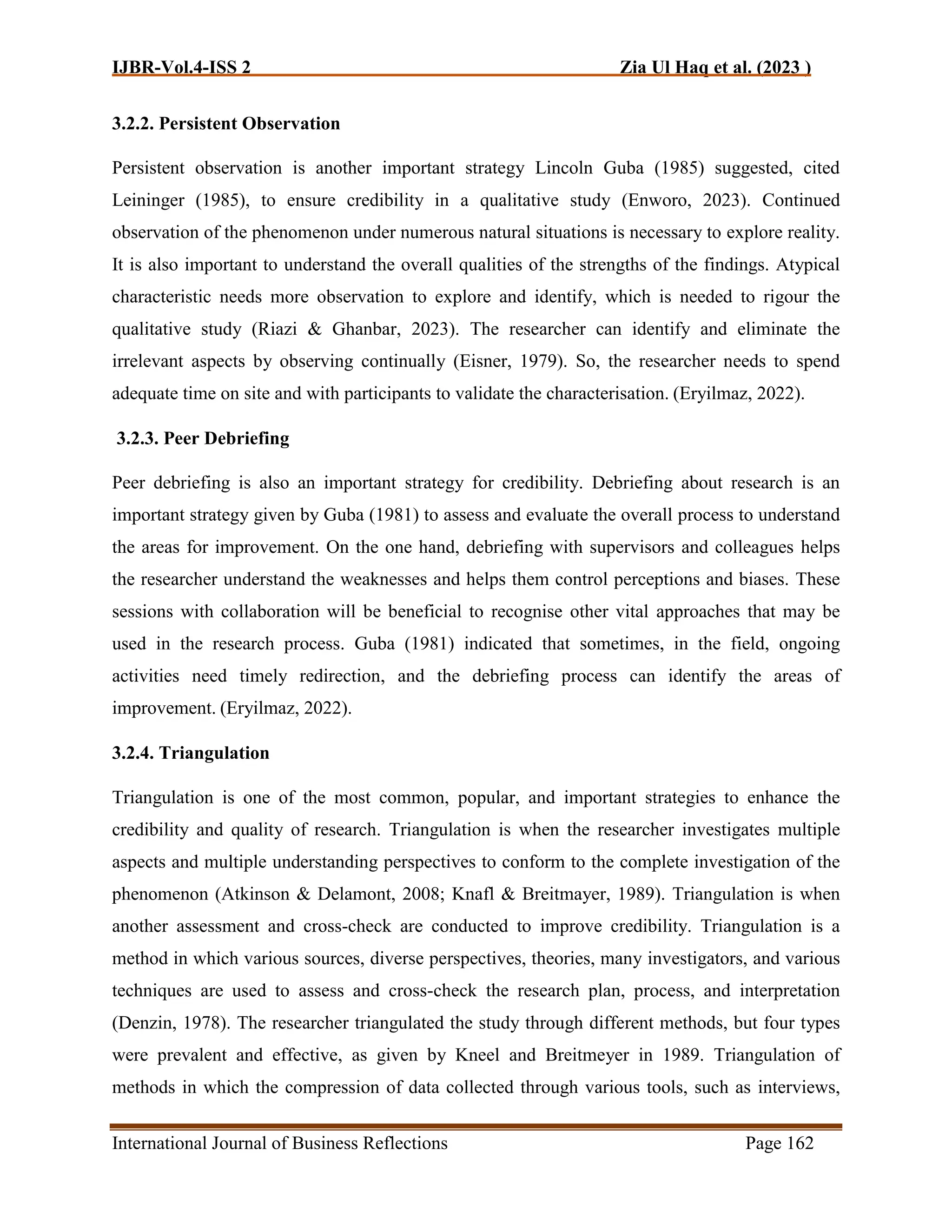
Table 1: Trustworthiness in Qualitative Research, Criteria and Strategies
Criteria Credibility Transferability/
Applicability
Dependability/
Consistency
Conformability/
Neutrality
Definitions
Credibility shows
the truth of data
respondents' views
and their
interpretation.
Applicability
offers the degree
of application of
the research
findings in the
exact nature of
context, people,
groups, and
settings.
Dependability is
the consistency
of data over
similar contexts.
If the findings of
one study are
replicated in a
similar
population,
condition, or
context, the
study findings
are dependable
(Koch, 2006)
Neutrality is the
degree of fairness
of results, which
consists of the
purity of original
responses of the
study participants
and free from
every kind of
biases
Strategies
for
Improvement
1. Prolong
Engagement at Sit
1. Theoretical,
purposive
sampling:
1. Overlap
Methods:
1. Triangulation
2. Persistent
Observation
2. Collect thick
descriptive data
2. Stepwise
Replication
2.Parecacing
Reflexivity
3. Peer Debriefing: 3. Develop a
thick description
of the data
3. Establish an
"Audit Trail"
4. Triangulation 4. The Audit
process.
5. Collection of
Referential
Adequacy Material
5. Coding
Record
6. Member Checks 6. Triangulation
7. Establishing
structural
Corroboration or
Coherence
7. Expert
opinion
IJBR-Vol.4-ISS 2 Zia Ul Haq et al. (2023 )
International Journal of Business Reflections Page 161
8. Repeated
Observation
3. Assurance of Trustworthiness in Qualitative Research
3.1 Strategies to Ensure Trustworthiness in Qualitative Research
Several strategies throughout the research process can ensure trustworthiness in qualitative
research. Research process planning can use some strategy. These strategies can be applied in the
data collection process, and others are in the data interpretation process. Every criterion of
trustworthiness in qualitative research can use specific strategies. Some strategies, such as
triangulation and reflexivity, are helpful for multiple criteria.
3.2 Strategies for Credibility Improvement
3.2.1. Prolong Engagement at Site
Prolonged engagements are one of the most critical strategies suggested by Lincoln & Guba
(1985), cited Leininger (1985), to improve the Credibility of qualitative research. The qualitative
researcher needs to spend more time with respondents and in context to identify and document
themes, patterns, and values and develop trust (Riazi & Ghanbar, 2023; Eryilmaz, 2022; Enworo,
2023).
It will also be helpful for the researcher to recognise the participant’s context, values, social
norms, and level of understanding to control his own biases, perceptions, and participant biases.
Understanding participant culture is also important to understand the real picture. Lincoln and
Guba (1985) indicated that prolonged engagement is an important strategy to identify patterns,
understand the perspective, and allow the researcher and respondent to familiarise themselves
with the investigator. The researcher, Kielhofner (1982), is also in favour of long interaction and
argues that this enhances research findings and helps understand hidden facts.
There is no rule regarding the engagement of time. It depends on the nature of the study, the
researcher, and the context where the study is conducted. However, it is worth mentioning that
over-involvement may disturb the study findings.
IJBR-Vol.4-ISS 2 Zia Ul Haq et al. (2023 )
International Journal of Business Reflections Page 162
3.2.2. Persistent Observation
Persistent observation is another important strategy Lincoln Guba (1985) suggested, cited
Leininger (1985), to ensure credibility in a qualitative study (Enworo, 2023). Continued
observation of the phenomenon under numerous natural situations is necessary to explore reality.
It is also important to understand the overall qualities of the strengths of the findings. Atypical
characteristic needs more observation to explore and identify, which is needed to rigour the
qualitative study (Riazi & Ghanbar, 2023). The researcher can identify and eliminate the
irrelevant aspects by observing continually (Eisner, 1979). So, the researcher needs to spend
adequate time on site and with participants to validate the characterisation. (Eryilmaz, 2022).
3.2.3. Peer Debriefing
Peer debriefing is also an important strategy for credibility. Debriefing about research is an
important strategy given by Guba (1981) to assess and evaluate the overall process to understand
the areas for improvement. On the one hand, debriefing with supervisors and colleagues helps
the researcher understand the weaknesses and helps them control perceptions and biases. These
sessions with collaboration will be beneficial to recognise other vital approaches that may be
used in the research process. Guba (1981) indicated that sometimes, in the field, ongoing
activities need timely redirection, and the debriefing process can identify the areas of
improvement. (Eryilmaz, 2022).
3.2.4. Triangulation
Triangulation is one of the most common, popular, and important strategies to enhance the
credibility and quality of research. Triangulation is when the researcher investigates multiple
aspects and multiple understanding perspectives to conform to the complete investigation of the
phenomenon (Atkinson & Delamont, 2008; Knafl & Breitmayer, 1989). Triangulation is when
another assessment and cross-check are conducted to improve credibility. Triangulation is a
method in which various sources, diverse perspectives, theories, many investigators, and various
techniques are used to assess and cross-check the research plan, process, and interpretation
(Denzin, 1978). The researcher triangulated the study through different methods, but four types
were prevalent and effective, as given by Kneel and Breitmeyer in 1989. Triangulation of
methods in which the compression of data collected through various tools, such as interviews,
IJBR-Vol.4-ISS 2 Zia Ul Haq et al. (2023 )
International Journal of Business Reflections Page 163
observation, and focal group discussions, is the most common kind of triangulation. The
triangulation of data sources is the second type. The investigator must triangulate the variety of
data concerning time, space, experience, setting, and procedures (e.g., interactive observation
and passive observation). The third kind of triangulation is theoretical triangulation. The
observation and investigation of the phenomenon using different theoretical lenses or testing the
phenomenon using different theoretical approaches to understand the phenomenon deeply is
called theoretical triangulation. The fourth is the triangulation of investigators. The research
study conducted by more than one researcher or group of researchers investigated the
phenomenon to understand a different perspective of this kind of triangulation. Team members
always have different experiences, approaches, points of view, and understanding from different
angles, which will help understand the phenomenon deeply by sharing their opinions and
purifying the findings and results.
3.2.5. Collection of Referential Adequacy Material
Thesis supportive activity, discussed by Guba (1981) to improve credibility. The supporting raw
data about the study area include audio, videos, documents, etc. Collecting the research study
topic will support the investigator in interpreting data and improving the study's credibility. For
example, videotapes about the collaborative strategies used by the teacher while investigating the
impacts of collaborative strategy on students' motivation will provide evidence about the variety
and effectiveness of the strategy (Eryilmaz, 2022).
3.2.6. Member Checks
Member checks are also one of the most common and effective techniques discussed by Lincoln
and Guba (1985). Member check is the process of sharing data in report form and collecting
participant feedback (Rose & Johnson, 2020; Eryilmaz, 2022). Member check is a significant
opportunity to test research findings, interpretations, and explanations linking culture (Davis &
Lachlan, 2017). The participants will judge the data accuracy and the researcher’s
interpretations through member checks (Riazi & Ghanbar, 2023).
The continued testing and assessment of research, data, process, analytical categories,
interpretation, and conclusion by another expert informant are member-checking strategies to
improve qualitative research credibility. This process can be adopted in the planning phase,
IJBR-Vol.4-ISS 2 Zia Ul Haq et al. (2023 )
International Journal of Business Reflections Page 164
during the data collection process, after data collection, and at any time on the spot. This
technique can be used by applying several styles, keeping in mind the needs of the study. Peer
check is also alike. Reforming or altering study tools can ensure process credibility (Mays &
Pope, 1995). Improving the effectiveness process after understanding with the help of interviews,
observation, and other tools can also enhance it. Lastly, by reading the reports, interrelations, and
discussions, it can also be improved by relating with theories and literature.
3.2.7. Establishing Structural Corroboration or Coherence
This is the strategy elaborated by Guba (1981) for the insurance of consistency of data and its
interpretation. Internal coherence among all data within the study structure is necessary for
credibility. The researcher must ensure that there is no internal contradiction or conflict. The
contraction is possible, as different perspectives and data are collected from different sources.
Still, the investigator needs to indicate these patients' disputes in the interpretation process,
which will enhance credibility.
3.3 Strategies of Transferability Improvement
3.3.1. Theoretical, Purposive Sampling
Theoretical purposive sampling is a vital strategy given by Gaba (1981) to improve
transferability. In this strategy, the panel of judges helps the investigator select the sample for the
under-research phenomenon. In this type of sample (nominated sample), there must be one or
two members of the family or support group that help the researcher in the sampling procedure
(Field & Morse, 1985), which is not typical purposive sampling. Theoretical sampling is when
the specialist collectively identifies the sample and envisions covering the maximum uncovered
information. The importance and relevancy are the primary targets in this sampling. The data
collected and interpreted by experts regarding study sampling is more authentic than individually
selected sampling. This is effective in the improvement of trustworthiness in the qualitative
study.
3.3.2. Collect Thick Descriptive Data
Thick descriptive data is another important strategy in which the investigator collected
comprehensive contextual information to compare it with another context to ensure
IJBR-Vol.4-ISS 2 Zia Ul Haq et al. (2023 )
International Journal of Business Reflections Page 165
transferability. Comparing the two contexts' characteristics will allow the assessors to understand
the phenomenon in light of already researched phenomena of the same nature. The background
information of respondents, context, setting, time, and space collected by the investigator
informed others to assess the transferability of the research study. Lincoln and Guba (1986)
stress that investigators' responsibility is to provide sufficient contextual information, which
others can use to judge the transferability.
3.3.3. Develop Thick Description of Data
Another essential strategy given by Guba (1981) is this strategy; the researcher has to
comprehensively describe the background of the study to provide the opportunity for readers to
have a proper understanding of the phenomenon. The researcher must elaborate the contextual
knowledge regarding the research study, considering another context, to allow others to judge
and fit it in their contexts.
3.4 Strategies for the Dependability Improvement
3.4.1. Overlap Methods
Overlap methods are an impertinent strategy proposed by Guba (1981) to ensure the
dependability or stability of a research study. Campbell, Schwartz, and Cherst (1966) consider
the overlap method as a triangulation method in which different methods are used in the cycle.
This overlap method is very important to overcome the shortages of one method. Using two or
more methods in a cyclic position will cover the weaknesses of each other and provide
comprehensive and real data. It is also important to notice that this strengthened stability if all
the methods provide the same result (Guba, 1978). It is commonly understood that more than one
data collection method offers more comprehensive information. The triangulation of these
methods helps us understand a clear picture of the phenomenon.
3.4.2. Stepwise Replication
A thesis is an important strategy discussed by Guba (1981) for improving dependability. This is
analogous to the “split-half" reliability of the test in quantitative research. Data is divided into
two halves; two research groups work on the analysis process and compare the results.
Communication between groups and team members is important to understand the nature of the
IJBR-Vol.4-ISS 2 Zia Ul Haq et al. (2023 )
International Journal of Business Reflections Page 166
research study and share their perspectives about every research step. Lincoln and Guba (1985)
stress the daily communication of teams and team members to cross-check and develop visions
for further operation. They also recommended that criteria be developed before starting the
process, and the communication must also be documented.
3.4.3. Establish an “Audit Trail”
An audit trail is the external auditing process suggested by Guba (1981). In this process, the
external auditor reinvestigates the data collection, analysis, and interpretation process to
understand the appropriateness of these processes. The auditor can analyse the documents and
observe the processes, and the audit report must be documented. The auditor may have indicated
the weaknesses in the data collection procedure, data analysing method, and data interoperation
so that the researcher could overcome the shortages (Earnest, 2020; Eryilmaz, 2022).
3.4.4. The Audit Process
Guba (1981) expressed that the audit process should be authentic and regulated. For this purpose,
there should be some criteria. The audit procedure must be evaluated by someone or a team to
assess the degree of effectiveness, authenticity, and applicability of the process and
appropriateness in light of pre-specified criteria.
3.4.5. Coding Record
Coding record is also an important strategy to improve the study’s dependability. The researcher
has to code the data in the data analysis process, adopt this technique, and then, after at least two
weeks, analyse the data and compare the results. This process will decrease the bias of the
researcher in the analysis process.
3.4.6. Triangulation
The triangulating process is also beneficial in the enhancement of credibility. By using
triangulation, the researcher can compensate for the weaknesses of one data collection method
with another data collection method. Krefting (1990) views that triangulating the methods can
improve dependability. Three important aspects, data triangulation, method triangulation, and
investigator triangulation, are indicated by researchers to improve trustworthiness (Denzin, 2015;
Riazi & Ghanbar, 2023).
IJBR-Vol.4-ISS 2 Zia Ul Haq et al. (2023 )
International Journal of Business Reflections Page 167
3.4.7. Expert Opinion
Expert opinion will be very helpful to improve the data collection tools, data collection process,
analysis strategies, and interpretation of the research study. It will ultimately enhance the degree
of credibility. The researcher, Krefting (1990) views that colleagues, peers, and methodological
experts can help check the research plan and implementation to improve the study's credibility.
3.4.8. Repeated Observation
Repeated and continuous observation of sites, events, and subjects and recording the important
points regarding the study can improve and enhance the degree of stability. Lincoln and Guba
(1985) also considered continuous repeated observation as an important strategy for improving
dependability.
3.5 Strategies to Improve the Conformability
3.5.1. Triangulation
Lincoln and Guba (1985) suggested triangulation as a vital strategy to improve conformability. It
is one of the most central strategies for strengthening trustworthiness. It is helpful to improve
credibility, transferability, and conformability (Earnest, 2020). The collection of a variety of
perspective knowledge, using various data collection methods, and comparing results in the
triangulation process are very helpful in improving conformability. (Eryilmaz, 2022). The
researcher stressed that there must be at least two data collection methods for every research
study to identify the real picture of the phenomenon by triangulation of the data. The other aspect
of triangulation is understanding the phenomenon in light of different perspectives and theories.
So, triangulation helps understand every aspect of the subject.
3.5.2. Practicing Reflexivity
Reflexivity is an important strategy, which indicates to the researcher regarding his influences on
data. Reflexivity is the understanding that the researcher's values, background, knowledge, and
experiences can affect the research findings (Earnest, 2020). The assessment of the researcher's
influences on research results is important to understand and control in several ways. The expert
opinion, member check, literature, and coding will be helpful strategies to prevent the
researcher's biases and minimise subjectivity ( Olmos-Vega et al., 2022)
IJBR-Vol.4-ISS 2 Zia Ul Haq et al. (2023 )
International Journal of Business Reflections Page 168
Aamodt (1982) argued that qualitative research is reflexive because the researcher is a part of the
research process instead of an observer. The results should reflect reality based on the data
received from informants (Pratt, 2009). The researcher must adopt the research context. For that
purpose, the researcher needs to reflect on his characteristics and evaluate how his characteristic
influences or corrupt the data collection process and data analysis. Researchers suggested that
“Filed journal” is one of the best techniques the investigators must maintain throughout the study
process. The researcher has to describe three kinds of information about the study in the field
journal. The description of the daily schedule, logistics, methodologies, and their relational,
made by the researcher, are the two aspects. The third is a personal diary in which the
researcher's thoughts, ideas, and feelings are reflected and generated by the researcher in
response to the respondent's responses. There must be content about questions the researcher
wants to discover and problems researchers face. By developing this research process, the
researcher may understand his bias and preconceived assumptions. In light of these indications of
biases, the researcher must change or modify the data collection process. This will ensure the
conformability of the study.
4. Conclusion
Qualitative researcher data are as generalisable as quantitative data. Opting for systematic
research design at the data collection stage, interpretation, and reporting of the results can resolve
qualitative quality issues (Mays & Pope, 2000). As mentioned by Martin (2003),” We cannot say
in advance how far we must go in our quest to determine the context that led to this move, but
this indeterminacy is simply the minimal flexibility required to understand complexity." The
trustworthiness of qualitative research relies on credibility, transferability, dependability, and
neutrality. The researchers advocated trustworthiness in qualitative research by conducting
research studies and developing models to ensure the generalizability of data. The research
provided four important criteria of trustworthiness and explored essential strategies of every
criterion to ensure trustworthiness. There are a number of strategies/techniques suggested by the
researcher, especially Guba, to be adopted in a research study to ensure trustworthiness. Experts
and researchers in the field highly accept the Guba model of the trustworthiness of qualitative
data. Credibility is like internal validity in quantitative research and provides true data about the
phenomenon. The strategies to ensure credibility are prolonged engagement at the site, persistent
IJBR-Vol.4-ISS 2 Zia Ul Haq et al. (2023 )
International Journal of Business Reflections Page 169
observation, peer debriefing, triangulation, collection of referential adequacy material, member
checks, and establishing structural corroboration or coherence. Transferability shows the degree
of application of the research finding in other exact natures of context, people, groups, and
settings. The primary technique to ensure applicability is theoretical purposive sampling,
collecting thick descriptive data and developing a thick description. If the findings of one study
are replicated in a similar population, condition, or context, the study findings are dependable.
The important technique for consistency is overlaps methods, stepwise replication, establishing
an audit trail, the audit process., coding record, triangulation, expert opinion, and repeated
observation. Neutrality is the degree of fairness of results, which consists of the purity of original
responses of the study participants’ original responses and free from every kind of bias. The
impertinent strategies to ensure neutrality are triangulation and prefacing reflexivity. These all
are important to ensure trustworthiness in qualitative research.
References
Aamodt, A. M. (1982). Examining ethnography for nurse researchers. Western journal of nursing
Research, 4, 209-220.
Amankwaa, L. (2016). Creating protocols for trustworthiness in qualitative research. Journal of
cultural diversity, 23(3).
Amankwaa, L. (2016). Creating protocols for trustworthiness in qualitative research. Journal of
cultural diversity, 23(3).
Atkinson, P., & Delamont, S. (2008). Analytic perspectives. In N. Denzin & Y. Lincoln (Eds.),
Collecting and interpreting qualitative materials (pp. 285–311). Los Angeles, CA: SAGE
Bazeley, P. (2013). Qualitative data analysis: practical strategies. Sage.
Campbell, D. T., &Stanley, J. C. (1966). Experimental and quasi-experimental designs for
research. Chicago: Rand McNally.
Cope, D. G. (2014, January). Methods and meanings: Credibility and trustworthiness of
qualitative research. In Oncology nursing forum (Vol. 41, No. 1, pp. 89-91).
Creswell, J. (2014). Research design: Qualitative, quantitative, and mixed methods
approaches(4th ed.). Los Angeles, CA: SAGE.
Creswell, J., & Miller, D. (2000). Determining validity in qualitative inquiry. Theory into
Practice, 39(3), 124–130
IJBR-Vol.4-ISS 2 Zia Ul Haq et al. (2023 )
International Journal of Business Reflections Page 170
Davis, C., & Lachlan, K. (2017). Straight talk about communication research methods (3rd ed.).
Dubuque, IA: Kendall-Hunt.
Denzin, N. K. (1978). The work of little children. Toward a Sociology of Education, 12, 316.
Denzin, N. K. (2015). Triangulation. In G. Ritzer (Ed.), The Blackwell Encyclopedia of
Sociology (pp. 5083–5088). John Wiley & Sons.
Duffy, M. E. (1985). Designing nursing research: The qualitative-quantitative debate. Journal of
Advanced Nursing, 10, 225-232.
Earnest, D. (2020). Quality in qualitative research: An overview. Indian Journal of Continuing
Nursing Education, 21(1), 76-80.
Enworo, O. C. (2023). Application of Guba and Lincoln's parallel criteria to assess
trustworthiness of qualitative research on indigenous social protection
systems. Qualitative Research Journal.
Erlandson, D. A., Harris, E. L., Skipper, B. L., & Allen, S. D. (1993). Doing naturalistic inquiry:
A guide to methods. Sage.
Eryilmaz, Ö. (2022). Are dissertations trustworthy enough? The case of Turkish ph. d.
dissertations on social studies education. Participatory Educational Research, 9(3), 344-
361.
Field, P. A., & Morse, (1995) Nursing research: The application of qualitative approaches.
London: Croom & Helm
Flick, U. (2007). Managing quality in qualitative research. Sage
Florio-Ruane, S. (1991). Instructional conversations in learning to write and learning to
teach. Educational values and cognitive instruction: Implications for reform, 2, 365-386.
Ghafouri, R., & Ofoghi, S. (2016). Trustworthy and rigor in qualitative research. International
journal of advanced biotechnology and research, 7(4), 1914-1922.
Ghafouri, R., & Ofoghi, S. (2016). Trustworth and rigour in qualitative research. International
journal of advanced biotechnology and research, 7(4), 1914-1922.
Glesne, C. (2016). Becoming qualitative researchers: An introduction (5th ed.). Pearson
Education.
Guba, E. G. (1978). Toward a Methodology of Naturalistic Inquiry in Educational Evaluation.
CSE Monograph Series in Evaluation, 8.
IJBR-Vol.4-ISS 2 Zia Ul Haq et al. (2023 )
International Journal of Business Reflections Page 171
Guba, E. G. (1981). Criteria for assessing the trustworthiness of naturalistic inquiries. Ectj, 29(2),
75-91.
Guba, E. G., & Lincoln, Y. S. (1982). Epistemological and methodological bases of naturalistic
inquiry. ECTJ, 30(4), 233-252.
Hanson, C.S., Ju, A. and Tong, A. (2019), “Appraisal of qualitative studies”, in
Liamputtong, P. (Ed.), Handbook of Research Methods in Health Social
Sciences, Springer Nature Pte, Singapore,pp. 1013-1026.
Houghton, C., Casey, D., Shaw, D., & Murphy, K. (2013). Rigour in qualitative case-study
research. Nurse researcher, 20(4).
Johnson, C., & Parry, D. (2015a). Contextualising qualitative research for social justice. In C.
Johnson & D. Parry (Eds.), Fostering social justice through qualitative inquiry: A
methodological guide (pp. 11–22). Walnut Creek, CA: Left Coast Press.
Johnson, C., & Parry, D. (2015b). Common features of qualitative inquiry. In C. Johnson & D.
Parry (Eds.), Fostering social justice through qualitative inquiry: A methodological guide
(pp. 43–70). Walnut Creek, CA: Left Coast Press
Kielhofner, G. (1982). Qualitative research: Part one paradigmatic grounds and issues of
reliability and validity. The Occupational Therapy Journal of Research, 2(2), 67-79.
Kirk, J., & Miller, M. L. (1986). Reliability and validity in qualitative research (Vol. 1). Sage.
Knafl, K. A., & Breitmayer, B. J. (1989). Qualitative nursing research: a contemporary
dialogue. Qualitative Research.
Koch, T., & Harrington, A. (1998). Reconceptualising rigour: The case for reflexivity. Journal of
Advanced Nursing, 28, 882–890.
Krefting, L. (1990). Double bind and disability: The case of traumatic head injury. Social
science& medicine, 30(8), 859-865.
Kvale, S. E. (1989). Issues of validity in qualitative research. Studentlitteratur.
Leininger, M. M. (1985). Nature, rationale and importance of qualitative research methods in
nursing. In M. M. Leininger (Ed.), Qualitative research methods in nursing (pp. 1-28).
New York: Grune & Stratton.
Lincoln, Y. S., & Guba, E. G. (1985). Establishing trustworthiness. Naturalistic
inquiry, 289(331), 289-327.
IJBR-Vol.4-ISS 2 Zia Ul Haq et al. (2023 )
International Journal of Business Reflections Page 172
Lincoln, Y. S., & Guba, E. G. (1986). But is it rigorous? Trustworthiness and authenticity in
naturalistic evaluation. New directions for program evaluation, 1986(30), 73-84.
Marshall, C and G.B. Rossman, G.B, (199). Designing qualitative research, 3rd ed. Newbury
Park: Sage
Martin, J. L. (2003). ‘What is field theory?’ American Journal of Sociology, 109, pp. 1–49.
Mays, N., & Pope, C. (1995). Qualitative research: rigour and qualitative research. British
Management Journal, 311(6997), 109-112.
Mays, N., & Pope, C. (2000). Assessing quality in qualitative research. British Management
Journal, 320(7226), 50-52.
Merriam, S. B. (1998). Qualitative Research and Case Study Applications in Education. Revised
and Expanded from" Case Study Research in Education.". Jossey-Bass Publishers, 350
Sansome St, San Francisco, CA 94104.
Morse, J. M. (2015). Critical analysis of strategies for determining rigor in qualitative
inquiry. Qualitative Health Research, 25(9), 1212–1222.
Olmos-Vega, F. M., Stalmeijer, R. E., Varpio, L., & Kahlke, R. (2023). A practical guide to
reflexivity in qualitative research: AMEE Guide No. 149. Medical teacher, 45(3), 241-
251.
Patton, M. Q. (1987). How to use qualitative methods in evaluation (No. 4). Sage.
Patton, M. Q. (2014). Qualitative research and evaluation methods (4th ed.). Los Angeles, CA:
SAGE
Payton, O. D. (1979). Research The validation of clinical practice. Philadelphia: F. A. Davis.
Polit, D.F., & Beck, C.T. (2012). Nursing research: Generating and assessing evidence for
nursing practice. Philadelphia, PA: Lippincott Williams and Wilkins
Pratt, M. G. 2009. For the lack of a boilerplate: Tips on writing up (and reviewing) qualitative
research. Academy of Management Journal, 52: 856–862.
R. Fidel, Qualitative methods in information retrieval research, Library and Information Science
Research 15 (1993), 219–247.
Riazi, A. M., Rezvani, R., & Ghanbar, H. (2023). Trustworthiness in L2 writing research: A
review and analysis of qualitative articles in the Journal of Second Language
Writing. Research Methods in Applied Linguistics, 2(3), 100065.
IJBR-Vol.4-ISS 2 Zia Ul Haq et al. (2023 )
International Journal of Business Reflections Page 173
Rose, J., & Johnson, C. W. (2020). Contextualising reliability and validity in qualitative
research: toward more rigorous and trustworthy qualitative social science in leisure
research. Journal of Leisure Research, 51(4), 432-451.
Sandelowski, M. (1986). The problem of rigour in qualitative research. Advances in nursing
science.
Staffileno, B. A., Murphy, M. P., & Buchholz, S. W. (2021). Research for advanced practice
nurses: From evidence to practice (4th ed.). Springer.
Stake, R.E. (1994). Case studies, in: Handbook of qualitative research, N.K. Denzin and Y.S.
Lincoln, eds, Thousand Oaks: Sage, 1994, pp. 236–247.
Vishnevsky, T., & Beanlands, H. (2004). Qualitative research. Nephrology Nursing, 31, 234–
238.
Criteria for Assessing and Ensuring the Trustworthiness in Qualit (1).pdf

  • 1.
    City University ofNew York (CUNY) City University of New York (CUNY) CUNY Academic Works CUNY Academic Works Publications and Research York College 2023 Criteria for Assessing and Ensuring the Trustworthiness in Criteria for Assessing and Ensuring the Trustworthiness in Qualitative Research Qualitative Research Zia Ul Haq Kakar Greenwich University - Pakistan Rizwana Rasheed Iqra University, Pakistan Aamir Rashid York College Salma Akhter Government Girls Model High School, Quetta, Pakistan How does access to this work benefit you? Let us know! More information about this work at: https://academicworks.cuny.edu/yc_pubs/342 Discover additional works at: https://academicworks.cuny.edu This work is made publicly available by the City University of New York (CUNY). Contact: AcademicWorks@cuny.edu
  • 2.
    IJBR-Vol.4-ISS 2 ZiaUl Haq et al. (2023 ) International Journal of Business Reflections Page 150 CRITERIA FOR ASSESSING AND ENSURING THE TRUSTWORTHINESS IN QUALITATIVE RESEARCH ABSTRACT The trustworthiness of qualitative data has been debatable, yet it has strong support from its supporters. However, the importance and worth of qualitative data cannot be undermined. This paper presents a critical review of the trustworthiness of the qualitative data. The degree of trustworthiness of qualitative research can be measured by ensuring the credibility, transferability, dependability, and conformability of research design, process, and action. The guarantee of trustworthiness in qualitative research is more complex than in quantitative research due to its subjective nature. Many researchers and experts denied the generalizability of qualitative research. However, few researchers, like Guba (1985), developed a widely accepted model and strategies to ensure the trustworthiness and generalizability of qualitative research. Credibility is like internal validity in quantitative analysis and provides the actual data about the phenomenon. Transferability shows the degree of application of the research finding in other exact natures of context, people, groups, and settings. If the findings of one study are replicated in a similar population, condition, or context, then the findings are dependable. Neutrality is the degree of fairness of results consisting of purity of initial responses and bias-free. Key Words: Credibility; Dependable; Neutrality; Transferability; Trustworthiness; Guba Model https://doi.org/10.56249/ijbr.00.00.00 * Corresponding author. E-mail address: arashid6@york.cuny.edu (Aamir Rashid) Copyright: © 2023 by the authors. Licensee HCBF, University of the Punjab, Lahore, Pakistan. This article is an open access article distributed under the terms and conditions of the Creative Commons Attribution (CC BY) license (https:// creativecommons.org/licenses/by/4.0/). 1. Introduction Qualitative research is generally viewed as a soft science and criticised for lacking generalizability and trustworthiness compared to quantitative research (Mays & Pope, 1995). Every research study finding should have the quality of generalizability. It is a common 1. Zia Ul Haq Kakar Department of Education Greenwich University, Karachi, Pakistan 2. Rizwana Rasheed Department of Business Administration Iqra University, Main Campus, Karachi, Pakistan 3. *Aamir Rashid Department of Business and Economics York College, The City University of New York (CUNY) Jamaica, New York, United States 4. Salma Akhter Government Girls Model High School Mission Road Quetta, Pakistan
  • 3.
    IJBR-Vol.4-ISS 2 ZiaUl Haq et al. (2023 ) International Journal of Business Reflections Page 151 question: Why should any research result be considered the same for others apart from the research population? The question may be valid that every individual is unique, and the population consists of these remarkable individuals who may differ from others. This question needs a satisfactory answer in both qualitative and quantitative research results. 1.1 Underlying Research Problem The case for qualitative research, in this regard, is more complicated as qualitative research is an in-depth study that increases the subjectivity of results. Koch & Harrington (1998) view qualitative research as subjective with involved researcher bias, lacking trustworthiness and generalizability. This view shows that qualitative research is more personal and needs inclusive measures to control preferences and minimise subjectivity. 1.2 Varying Research Perspective Different research paradigms have different perspectives regarding subjectivity in qualitative research. The positivists generally criticised qualitative research's trustworthiness because they considered the validity and reliability of qualitative research not to suit the naturistic work. Positivists favour quantitative research, where validity and reliability ensure the generalizability of research findings. The stress of positivism is on objectivity. However, there are different paradigms, and researchers have different perspectives on research and its findings. However, qualitative research is the only different approach to studying humans and is not inferior to any other research approach. This research approach emphasises discovering in-depth individual experiences, exploring the human phenomenon, and helping in theory development (Vishnevsky & Beanlands, 2004). 1.3 Importance of Trustworthiness in Qualitative Research The most important factor influencing the rigour of qualitative research investigations is trustworthiness (Amankwaa, 2016; Eryilmaz, 2022). It is generally accepted that quantitative and qualitative research designs need credibility to generalise the findings. Every research design has its techniques to enhance credibility. The efforts and ability of researchers in the qualitative study are indications of trustworthiness. Validity and reliability are also important to ensure the study's trustworthiness and credibility; transferability words are used in place of validity and reliability in qualitative research. Every researcher accepts the importance of rigour, objectivity,
  • 4.
    IJBR-Vol.4-ISS 2 ZiaUl Haq et al. (2023 ) International Journal of Business Reflections Page 152 and consistency of research, and they try to develop criteria to ensure trustworthiness. Lincoln and Guba (1985) gave one of the most popular and generally accepted criteria for the trustworthiness of qualitative research. They indicated four important concepts, credibility, transferability, dependability, and conformability, to increase trustworthiness (Ghafouri & Ofoghi, 2016; Earnest, 2020; Eryilmaz, 2022; Enworo, 2023; Riazi & Ghanbar, 2023). According to Lincoln and Guba (1985), credibility is the process, just like internal validity positivists recommended for the rigour of quantitative research. In qualitative research design, transferability is similar to external validity or generalizability in quantitative research design. Likewise, dependability is like reliability, and conformability is like objectivity, which increases the trustworthiness of qualitative research. These recommended constructs have been recognised by several researchers (Riazi & Ghanbar, 2023). There are several constructs which help promote trustworthiness in qualitative research. The systematic research design, the researcher's credibility, the findings’ acceptability, and appropriate research methods decide the trustworthiness of qualitative research (Rose & Johnson, 2020; Johnson & Parry, 2015; Lincoln & Guba, 1985). It means that the research design appropriateness is necessary to generalise the results. The personality and status of the researcher in society regarding believability is also an essential aspect of gauging the generalizability of research findings. The assurance of trustworthiness in qualitative research is necessary as the researcher claims that it is trustworthiness that provides qualitative research with a prominent place in the academic world. It is a general perception that qualitative studies must be credible (Creswell & Miller, 2000). Thus, to increase trustworthiness in qualitative research, multiple aspects such as epistemological understanding, in-depth literature review skills, theoretical understanding, and argument skills are important for the researcher to master. Other elements such as various data collection techniques, appropriate data analysis procedures, connection with theories, and interaction among these concepts are also important to understand and apply trustworthiness in qualitative research. Additionally, addressing the validity and reliability helps improve the study’s trustworthiness. Validity and reliability are explained by Creswell (2014) as the researcher checks for the accuracy of findings for the specific research, which is called validity, and reliability is the consistency in results in the same situation by using the same tools.
  • 5.
    IJBR-Vol.4-ISS 2 ZiaUl Haq et al. (2023 ) International Journal of Business Reflections Page 153 Reliability indicates the soundness of research by applying appropriate research methods and the procedure used for these methods in qualitative research. The consistency and stability of the methodological approach remain stable over time and space, which are the reliability characteristics. Reliability ensures the replicability of the research project with similar results. On the other hand, validity is the accuracy of research findings, which the researcher tends to research (Creswell & Miller, 2000). Other researchers also explain the importance of validity and reliability of the trustworthiness of research results. Patton (2014) indicated validity and reliability for qualitative research, understanding the techniques or methods used to guarantee the accuracy, integrity, and validity of findings. The experiences and qualifications of research are other indications of trustworthiness. If the researcher is more educated and expert, more trustworthy results may be achieved. The vital objectives or underlying assumptions also help improve the study's trustworthiness. In qualitative design, the terms and concepts of, Neutrality, Consistency, Credibility, Conformability, Dependability, Applicability, Transferability are used for trustworthiness, as the term reliability is used in quantitative research (Lincoln & Guba, 1985; Paton, 2014; Bazeley, 2013; Flick, 2007; Glesne, 2016; Riazi, & Ghanbar, 2023). The researcher must ensure trustworthiness in qualitative research by providing validity and reliability. To ensure validity, researchers need to understand the different aspects of it. Kvale (1989) indicated three important validity approaches in qualitative research: validation in the investigation, communication, and action (Kvale, 1989). These approaches show the importance of rigorous research planning, accurate questionnaire development and precise application, natural interaction with respondents, and suitable data analysis and interpretation in qualitative research. The researcher Kvale (1989) also considered researcher experience and literature as important aspects to ensure generalizability, validity, and reliability. This argument indicated the importance of knowledgeable researchers, as research is very technical work, so there must be a learned person to conduct the research. Literature also supported the study results; it clarified different aspects of the subject under investigation by providing data from prominent scholars. The other researchers exploring the phenomenon will help researchers design, conduct, and analyse research studies. 2. Criteria for Assessing the Trustworthiness
  • 6.
    IJBR-Vol.4-ISS 2 ZiaUl Haq et al. (2023 ) International Journal of Business Reflections Page 154 2.1 Guba Model of Trustworthiness The researchers Lincoln and Guba (1985) expressed that the validity and reliability of the concept are replaced by trustworthiness, which is important in establishing confidence in results. This argument indicates that validity, reliability, quality, trustworthiness, and rigour differentiate good research from flawed research, which are all important whatever the research paradigm is. Many researchers developed a trustworthiness model to improve the credibility of qualitative research, such as Kirk and Miller, 1986; and Leininger, 1985 but the Guba model is the most popular and suitable. Guba claimed a need for a specific trustworthiness model for the qualitative researcher to improve the generalizability of research findings (Guba, 1981). Guba proposed a model to assess trustworthiness, which is comparatively conceptually more well-developed than other models. Guba (1981) indicated in his model four important aspects, Credibility, Applicability, Consistency, and Neutrality, equally applicable to both quantitative and qualitative research to improve trustworthiness (Morse, 2015; Staffileno et al., 2021; Riazi & Ghanbar, 2023). Guba suggested different strategies in this model to assess criteria due to philosophical differences in qualitative and quantitative research designs. On the one hand, these strategies are important for qualitative researchers to improve trustworthiness. On the other hand, for readers to assess the value of research results. 2.1.1 Truth Value Truth value indicates the researcher's confidence regarding the results of subjects or information and the study context (Lincoln & Guba, 1985; Rose & Johnson, 2020). It shows how confident the researcher is about the truth of findings, data, results, and the reliable context from which the data is collected. The study context is important for the generalisation of the research study. Keeping in mind the importance of internal validity and how to manage the threats to internal validity and the validity of instruments used for the study indicated the assessment criteria of truth value (Sandelowski, 1986). The term internal validity is used in qualitative research to control compound variables by the researcher to control or randomise. Qualitative research is subject-oriented and can be obtained from human experiences. In 1985, Guba and Lincoln coined the word credibility for this concept. 2.1.2 Credibility
  • 7.
    IJBR-Vol.4-ISS 2 ZiaUl Haq et al. (2023 ) International Journal of Business Reflections Page 155 One of the important criteria for generalizability is internal validity, which shows what is intended to measure. Merriam (1998) expressed that the equivalent concept of internal validity is credibility in the qualitative study. Ensuring trustworthiness (Lincoln & Guba, 1985) is considered credibility the most important factor. The other researcher also viewed the importance of credibility, as the researcher explained that credibility shows the truth of data and respondents’ views and their interpretation (Polit & Beck,2012; Cope, 2014; Ghafouri & Ofoghi, 2016; Enworo, 2023; Hanson et al., 2019, p. 1017). Guba (1981) elaborated that internal validity explains only one possible reality the researcher wants to measure. Guba further explained that if the concept of one reality is being changed with multiple realities, as postmodernists view, the researcher has to represent those realities by testing findings against various groups or experts regarding the phenomenon. This argument indicates that the credibility in qualitative research and internal reliability in quantitative research is only applicable to trustworthiness if the researchers believe in one single reality. The researcher Sandelowski (1986) explains that if the respondents of the study or any individual immediately recognise the explanation or the interpretation made by the researcher about the human experience and find that experiences they had, the findings are credible. If the study's findings were similar to human experiences and commonly accepted, the study is credible. The other aspect of credibility is the researcher’s experiences in the field of research. The researcher’s explanation of his history of research experience and verifying research findings enhance credibility. It means that in qualitative research, the researcher must explain his research experiences comprehensively so that the readers may infer the result's credibility in the light of the researcher’s authority. The other aspect of credibility is the easy understanding of findings. The study is credible if the qualitative data results are recognised by readers easily and shared adequately with others. The researcher has to fully engage and use proper observation methods and audit trails as strategies to improve credibility. Truth value is perhaps one of the most important criteria for assessing qualitative research. 2.1.3 Applicability/ Transferability Applicability shows the degree of application of the research findings in the exact nature of context, people, groups, and settings. The term transferability is also used for applicability. The generalizability of research findings in other contexts is considered the applicability of research
  • 8.
    IJBR-Vol.4-ISS 2 ZiaUl Haq et al. (2023 ) International Journal of Business Reflections Page 156 data Lincoln and Guba (1985), (Houghton et al., 2013; Polit & Beck,2 012; Cope, 2014; Ghafouri & Ofoghi, 2016; Riazi & Ghanbar, 2023). The qualitative study result will be considered applicable when the one who was not part of the study or the readers can associate it with their own experiences. The recognition of findings by a large population shows the applicability of results in qualitative research. It is also considered that the degree of external threat to validity management will decide the degree of applicability in qualitative research. The establishment and use of sampling techniques are important in generalising findings from a sample to a large population, which is the quality of external validity (Payton, 1979). The positivist argued that the study's findings must be generalisable for the wider population. The qualitative study sample is always specific to small numbers of individuals covering small numbers of the particular environment, so generally, it is considered that the findings or conclusions are not suitable to use or apply to other situations or populations. According to Erlandson et al. (1993), naturalistic inquiries denied generalizability because they argued that there are always specific individuals and contexts in which the study is conducted. It means that every individual is unique, and every context is different, so how can a study find my generalised? This question may also apply to the quantitative research study. It is commonly understood that every individual is also part of society. In contrast, in response to individual uniqueness, the researchers Stake (1994) and Denscomb (1998) argued that every unique case is also part of a large group, so the unique case's result may be generalised. If the individuals recognised that the situation of the study is similar, they are living; they could relate the results to their situation. The argument increases the importance of the explanation context knowledge of the study that individuals can repeat with their context to understand the study findings comprehensively. Guba (1985) stresses the researcher's responsibility to ensure the availability of valuable, comprehensive contextual information on fieldwork, which will help the reader understand and infer results regarding them in context. Ensuring the availability of both aspects may provide the reader's confidence in transforming the development to other situations. A sufficient description of the understudied phenomenon should be included, which will be helpful to the reader in understanding the phenomenon. There are two perspectives regarding the applicability of qualitative research. The first perspective is that the applicability or generalisation of qualitative data is not always possible.
  • 9.
    IJBR-Vol.4-ISS 2 ZiaUl Haq et al. (2023 ) International Journal of Business Reflections Page 157 The propagandas stress that the qualitative method is always conducted in a natural setting with less control of variables. Each natural set is unique, and the findings will be unique, too, which is not generalised. Sandelowski (1986) considered generalisation an illusion because, according to him, every researcher, research situation, research interaction, and information is unique and different. Furthermore, qualitative research aims to investigate a particular phenomenon rather than to generalise the phenomenon. So, the generalizability or the applicability of research data is out of the question. The second perspective stresses the generalizability or applicability of the qualitative method. Guba (1981) is the prominent propagator of the second perspective and fevered the applicability of the qualitative method and developed the criteria to assess the applicability. According to him, the research must adhere to this assessment criterion, and the study is deemed credible when the findings are applicable outside of the study. Furthermore, he explained that the degree of similarity of fitness indicated the quality of the study. Lincoln and Guba (1985) argued that applicability is more than the researcher's responsibility to transfer data to the new situation or population than the original situation. They stressed that as comprehensive as the description of data regarding the compression of the situation would be, the chances of applicability will have increased. 2.1.4 Dependability/ Consistency Consistency or dependability of data is the third criterion of trustworthiness. Polit and Black (2012) explain that dependability is data consistency over similar contexts (Polit & Black, 2012; Cope, 2014; Ghafouri & Ofoghi, 2016; Hanson et al., 2019; Enworo, 2023). If the findings of one study are replicated in a similar population, condition, or context, the findings are dependable (Koch, 2006). Every research data must be replicated and have a degree of consistency to ensure trustworthiness. The dependability in qualitative research means the reliability of the research study, as indicated by the researcher. In quantitative analysis, the term reliability is used for consistency, and it is the criterion expressing the consistency, stability, and equivalence of research results (Sandelowski, 1986; Riazi & Ghanbar, 2023). The positivist considered reliability as the technique of consistency. If the study were conducted again with the same methods, similar participants, and similar contexts, similar results would be achieved, and the study would be reliable.
  • 10.
    IJBR-Vol.4-ISS 2 ZiaUl Haq et al. (2023 ) International Journal of Business Reflections Page 158 Nevertheless, Fidel (1993), Marshall, and Rossman (1999) argued that this would be difficult in qualitative research due to its subjective nature, context, and situation. Qualitative research differs from quantitative research, and it is challenging to ensure consistency but not impossible. Researchers indicated criteria for insurance of dependability. Florio-Ruane (1991) viewed that, in qualitative research, the researcher's observation is very knotted to the situation. The researcher elaborated that “published descriptions of one study are fixed, contextualised, and frozen. The use of this description for another study will not work effectively. It indicated that there must be a comprehensive contextualised description of every study to support the reader in understanding the results. Infect the quantitative perspective regarding consistency is based on a single reality. If it applies to the assumption of multiple realities, then this concept of consistency will be irrelevant. Qualitative research, unlike quantitative, is not very controlled in nature, so extraneous and unexpected variables can impact the reliability or trustworthiness. The researcher Duffy (1985) differentiated the structured experimental design from unstructured and natural qualitative research strategies. Furthermore, the qualitative researcher’s main quality is to explore the originality of phenomena by using in-depth tools in an open environment rather than control. It is also an important point to note that the instrument in qualitative research is the researcher and respondent to assess the consistency. Moreover, qualitative research aims to explore the uniqueness of the human situation, the variation of the situation, and subjective identification, not the identical repetition (Field & Morse, 1985). On the other hand, Lincoln and Guba (1981) indicated strong ties between credibility and dependability. Furthermore, they stress the overlapping method, such as individual interviews and focus group discussions, and the degree of consistency will increase by triangulation. Guba's concept of dependability can be understood as traceable variability. The sources to understand the variability improvement are the richness of researcher insight regarding study and sharing of information and life situations. Additionally, qualitative researchers value the range of experiences, so all kinds of situations may be included. Researchers must identify the outlying data in qualitative research to define the limits of experiences or phenomena. Every member in the group or part of the study must be considered important.
  • 11.
    IJBR-Vol.4-ISS 2 ZiaUl Haq et al. (2023 ) International Journal of Business Reflections Page 159 In qualitative research, to ensure dependability, the research process must have been described in detail so that the other researcher who intends to conduct a similar study can repeat the process. The research process must be considered. The prototype model and detailed discretion will help the readers assess and understand the research procedure and results in light of this procedure. 2.1.5 Neutrality / Conformability Neutrality is suggested in the fourth criterion of trustworthiness: the degree of unbiasedness of the researcher in the research and interpretation process. Guba (1981) indicated it, including motivational and perspective prejudices. Some researchers used the word conformability and considered it the data consisting of participant responses rather than researcher choices, viewpoints, and biases (Polit & Beck, 2012; Cope, 2014). The impartial nature of the researcher can have derived results from the participant’s responses objectively. The researcher can explain to imitate conformability about the conclusion, interpretation, and results by exemplifying that it was derived directly from data (Ghafouri & Ofoghi, 2016; Olmos-Vega et al., 2022; Riazi & Ghanbar, 2023; Enworo, 2023). The direct quotes of participants' inclusion in reporting the data will help improve the neutrality of the research. Patton (1987) considered conformability or objectivity as a science that can be obtained by using appropriate instruments and skills to control human perception. Furthermore, the researcher indicated that data collection tools are designed and applied by humans, and biases are inevitable, so it’s impossible to ensure absolute objectivity. It shows that the subjective nature of humans will always affect research planning, implementation, and action. Researcher biases and prejudice are always there to decrease neutrality. In qualitative research, objectivity is used for neutrality and ensured through an appropriate methodology that establishes validity and reliability. In quantitative analysis, proper distance between researcher and respondent is necessary to ensure reliability to control researcher bias by randomisation, processes, and instruments. The propagators argued that this is scientifically important to control the influences of the researcher on respondents and respondents on the researcher and ultimately on the study.
  • 12.
    IJBR-Vol.4-ISS 2 ZiaUl Haq et al. (2023 ) International Journal of Business Reflections Page 160 On the other hand, qualitative research encourages the closeness of researcher and respondent to ensure the quality of findings. The worth of data can be boosted by increasing contacts of researcher and respondent and the observation period. Lincoln and Guba (1985) argued that qualitative research data is more important than a researcher’s to enhance neutrality. So, it is crucial to consider the neutrality of data instead of the neutrality of the researcher. Furthermore, they indicated it could achieve neutrality after establishing truth value and applicability. Table 1: Trustworthiness in Qualitative Research, Criteria and Strategies Criteria Credibility Transferability/ Applicability Dependability/ Consistency Conformability/ Neutrality Definitions Credibility shows the truth of data respondents' views and their interpretation. Applicability offers the degree of application of the research findings in the exact nature of context, people, groups, and settings. Dependability is the consistency of data over similar contexts. If the findings of one study are replicated in a similar population, condition, or context, the study findings are dependable (Koch, 2006) Neutrality is the degree of fairness of results, which consists of the purity of original responses of the study participants and free from every kind of biases Strategies for Improvement 1. Prolong Engagement at Sit 1. Theoretical, purposive sampling: 1. Overlap Methods: 1. Triangulation 2. Persistent Observation 2. Collect thick descriptive data 2. Stepwise Replication 2.Parecacing Reflexivity 3. Peer Debriefing: 3. Develop a thick description of the data 3. Establish an "Audit Trail" 4. Triangulation 4. The Audit process. 5. Collection of Referential Adequacy Material 5. Coding Record 6. Member Checks 6. Triangulation 7. Establishing structural Corroboration or Coherence 7. Expert opinion
  • 13.
    IJBR-Vol.4-ISS 2 ZiaUl Haq et al. (2023 ) International Journal of Business Reflections Page 161 8. Repeated Observation 3. Assurance of Trustworthiness in Qualitative Research 3.1 Strategies to Ensure Trustworthiness in Qualitative Research Several strategies throughout the research process can ensure trustworthiness in qualitative research. Research process planning can use some strategy. These strategies can be applied in the data collection process, and others are in the data interpretation process. Every criterion of trustworthiness in qualitative research can use specific strategies. Some strategies, such as triangulation and reflexivity, are helpful for multiple criteria. 3.2 Strategies for Credibility Improvement 3.2.1. Prolong Engagement at Site Prolonged engagements are one of the most critical strategies suggested by Lincoln & Guba (1985), cited Leininger (1985), to improve the Credibility of qualitative research. The qualitative researcher needs to spend more time with respondents and in context to identify and document themes, patterns, and values and develop trust (Riazi & Ghanbar, 2023; Eryilmaz, 2022; Enworo, 2023). It will also be helpful for the researcher to recognise the participant’s context, values, social norms, and level of understanding to control his own biases, perceptions, and participant biases. Understanding participant culture is also important to understand the real picture. Lincoln and Guba (1985) indicated that prolonged engagement is an important strategy to identify patterns, understand the perspective, and allow the researcher and respondent to familiarise themselves with the investigator. The researcher, Kielhofner (1982), is also in favour of long interaction and argues that this enhances research findings and helps understand hidden facts. There is no rule regarding the engagement of time. It depends on the nature of the study, the researcher, and the context where the study is conducted. However, it is worth mentioning that over-involvement may disturb the study findings.
  • 14.
    IJBR-Vol.4-ISS 2 ZiaUl Haq et al. (2023 ) International Journal of Business Reflections Page 162 3.2.2. Persistent Observation Persistent observation is another important strategy Lincoln Guba (1985) suggested, cited Leininger (1985), to ensure credibility in a qualitative study (Enworo, 2023). Continued observation of the phenomenon under numerous natural situations is necessary to explore reality. It is also important to understand the overall qualities of the strengths of the findings. Atypical characteristic needs more observation to explore and identify, which is needed to rigour the qualitative study (Riazi & Ghanbar, 2023). The researcher can identify and eliminate the irrelevant aspects by observing continually (Eisner, 1979). So, the researcher needs to spend adequate time on site and with participants to validate the characterisation. (Eryilmaz, 2022). 3.2.3. Peer Debriefing Peer debriefing is also an important strategy for credibility. Debriefing about research is an important strategy given by Guba (1981) to assess and evaluate the overall process to understand the areas for improvement. On the one hand, debriefing with supervisors and colleagues helps the researcher understand the weaknesses and helps them control perceptions and biases. These sessions with collaboration will be beneficial to recognise other vital approaches that may be used in the research process. Guba (1981) indicated that sometimes, in the field, ongoing activities need timely redirection, and the debriefing process can identify the areas of improvement. (Eryilmaz, 2022). 3.2.4. Triangulation Triangulation is one of the most common, popular, and important strategies to enhance the credibility and quality of research. Triangulation is when the researcher investigates multiple aspects and multiple understanding perspectives to conform to the complete investigation of the phenomenon (Atkinson & Delamont, 2008; Knafl & Breitmayer, 1989). Triangulation is when another assessment and cross-check are conducted to improve credibility. Triangulation is a method in which various sources, diverse perspectives, theories, many investigators, and various techniques are used to assess and cross-check the research plan, process, and interpretation (Denzin, 1978). The researcher triangulated the study through different methods, but four types were prevalent and effective, as given by Kneel and Breitmeyer in 1989. Triangulation of methods in which the compression of data collected through various tools, such as interviews,
  • 15.
    IJBR-Vol.4-ISS 2 ZiaUl Haq et al. (2023 ) International Journal of Business Reflections Page 163 observation, and focal group discussions, is the most common kind of triangulation. The triangulation of data sources is the second type. The investigator must triangulate the variety of data concerning time, space, experience, setting, and procedures (e.g., interactive observation and passive observation). The third kind of triangulation is theoretical triangulation. The observation and investigation of the phenomenon using different theoretical lenses or testing the phenomenon using different theoretical approaches to understand the phenomenon deeply is called theoretical triangulation. The fourth is the triangulation of investigators. The research study conducted by more than one researcher or group of researchers investigated the phenomenon to understand a different perspective of this kind of triangulation. Team members always have different experiences, approaches, points of view, and understanding from different angles, which will help understand the phenomenon deeply by sharing their opinions and purifying the findings and results. 3.2.5. Collection of Referential Adequacy Material Thesis supportive activity, discussed by Guba (1981) to improve credibility. The supporting raw data about the study area include audio, videos, documents, etc. Collecting the research study topic will support the investigator in interpreting data and improving the study's credibility. For example, videotapes about the collaborative strategies used by the teacher while investigating the impacts of collaborative strategy on students' motivation will provide evidence about the variety and effectiveness of the strategy (Eryilmaz, 2022). 3.2.6. Member Checks Member checks are also one of the most common and effective techniques discussed by Lincoln and Guba (1985). Member check is the process of sharing data in report form and collecting participant feedback (Rose & Johnson, 2020; Eryilmaz, 2022). Member check is a significant opportunity to test research findings, interpretations, and explanations linking culture (Davis & Lachlan, 2017). The participants will judge the data accuracy and the researcher’s interpretations through member checks (Riazi & Ghanbar, 2023). The continued testing and assessment of research, data, process, analytical categories, interpretation, and conclusion by another expert informant are member-checking strategies to improve qualitative research credibility. This process can be adopted in the planning phase,
  • 16.
    IJBR-Vol.4-ISS 2 ZiaUl Haq et al. (2023 ) International Journal of Business Reflections Page 164 during the data collection process, after data collection, and at any time on the spot. This technique can be used by applying several styles, keeping in mind the needs of the study. Peer check is also alike. Reforming or altering study tools can ensure process credibility (Mays & Pope, 1995). Improving the effectiveness process after understanding with the help of interviews, observation, and other tools can also enhance it. Lastly, by reading the reports, interrelations, and discussions, it can also be improved by relating with theories and literature. 3.2.7. Establishing Structural Corroboration or Coherence This is the strategy elaborated by Guba (1981) for the insurance of consistency of data and its interpretation. Internal coherence among all data within the study structure is necessary for credibility. The researcher must ensure that there is no internal contradiction or conflict. The contraction is possible, as different perspectives and data are collected from different sources. Still, the investigator needs to indicate these patients' disputes in the interpretation process, which will enhance credibility. 3.3 Strategies of Transferability Improvement 3.3.1. Theoretical, Purposive Sampling Theoretical purposive sampling is a vital strategy given by Gaba (1981) to improve transferability. In this strategy, the panel of judges helps the investigator select the sample for the under-research phenomenon. In this type of sample (nominated sample), there must be one or two members of the family or support group that help the researcher in the sampling procedure (Field & Morse, 1985), which is not typical purposive sampling. Theoretical sampling is when the specialist collectively identifies the sample and envisions covering the maximum uncovered information. The importance and relevancy are the primary targets in this sampling. The data collected and interpreted by experts regarding study sampling is more authentic than individually selected sampling. This is effective in the improvement of trustworthiness in the qualitative study. 3.3.2. Collect Thick Descriptive Data Thick descriptive data is another important strategy in which the investigator collected comprehensive contextual information to compare it with another context to ensure
  • 17.
    IJBR-Vol.4-ISS 2 ZiaUl Haq et al. (2023 ) International Journal of Business Reflections Page 165 transferability. Comparing the two contexts' characteristics will allow the assessors to understand the phenomenon in light of already researched phenomena of the same nature. The background information of respondents, context, setting, time, and space collected by the investigator informed others to assess the transferability of the research study. Lincoln and Guba (1986) stress that investigators' responsibility is to provide sufficient contextual information, which others can use to judge the transferability. 3.3.3. Develop Thick Description of Data Another essential strategy given by Guba (1981) is this strategy; the researcher has to comprehensively describe the background of the study to provide the opportunity for readers to have a proper understanding of the phenomenon. The researcher must elaborate the contextual knowledge regarding the research study, considering another context, to allow others to judge and fit it in their contexts. 3.4 Strategies for the Dependability Improvement 3.4.1. Overlap Methods Overlap methods are an impertinent strategy proposed by Guba (1981) to ensure the dependability or stability of a research study. Campbell, Schwartz, and Cherst (1966) consider the overlap method as a triangulation method in which different methods are used in the cycle. This overlap method is very important to overcome the shortages of one method. Using two or more methods in a cyclic position will cover the weaknesses of each other and provide comprehensive and real data. It is also important to notice that this strengthened stability if all the methods provide the same result (Guba, 1978). It is commonly understood that more than one data collection method offers more comprehensive information. The triangulation of these methods helps us understand a clear picture of the phenomenon. 3.4.2. Stepwise Replication A thesis is an important strategy discussed by Guba (1981) for improving dependability. This is analogous to the “split-half" reliability of the test in quantitative research. Data is divided into two halves; two research groups work on the analysis process and compare the results. Communication between groups and team members is important to understand the nature of the
  • 18.
    IJBR-Vol.4-ISS 2 ZiaUl Haq et al. (2023 ) International Journal of Business Reflections Page 166 research study and share their perspectives about every research step. Lincoln and Guba (1985) stress the daily communication of teams and team members to cross-check and develop visions for further operation. They also recommended that criteria be developed before starting the process, and the communication must also be documented. 3.4.3. Establish an “Audit Trail” An audit trail is the external auditing process suggested by Guba (1981). In this process, the external auditor reinvestigates the data collection, analysis, and interpretation process to understand the appropriateness of these processes. The auditor can analyse the documents and observe the processes, and the audit report must be documented. The auditor may have indicated the weaknesses in the data collection procedure, data analysing method, and data interoperation so that the researcher could overcome the shortages (Earnest, 2020; Eryilmaz, 2022). 3.4.4. The Audit Process Guba (1981) expressed that the audit process should be authentic and regulated. For this purpose, there should be some criteria. The audit procedure must be evaluated by someone or a team to assess the degree of effectiveness, authenticity, and applicability of the process and appropriateness in light of pre-specified criteria. 3.4.5. Coding Record Coding record is also an important strategy to improve the study’s dependability. The researcher has to code the data in the data analysis process, adopt this technique, and then, after at least two weeks, analyse the data and compare the results. This process will decrease the bias of the researcher in the analysis process. 3.4.6. Triangulation The triangulating process is also beneficial in the enhancement of credibility. By using triangulation, the researcher can compensate for the weaknesses of one data collection method with another data collection method. Krefting (1990) views that triangulating the methods can improve dependability. Three important aspects, data triangulation, method triangulation, and investigator triangulation, are indicated by researchers to improve trustworthiness (Denzin, 2015; Riazi & Ghanbar, 2023).
  • 19.
    IJBR-Vol.4-ISS 2 ZiaUl Haq et al. (2023 ) International Journal of Business Reflections Page 167 3.4.7. Expert Opinion Expert opinion will be very helpful to improve the data collection tools, data collection process, analysis strategies, and interpretation of the research study. It will ultimately enhance the degree of credibility. The researcher, Krefting (1990) views that colleagues, peers, and methodological experts can help check the research plan and implementation to improve the study's credibility. 3.4.8. Repeated Observation Repeated and continuous observation of sites, events, and subjects and recording the important points regarding the study can improve and enhance the degree of stability. Lincoln and Guba (1985) also considered continuous repeated observation as an important strategy for improving dependability. 3.5 Strategies to Improve the Conformability 3.5.1. Triangulation Lincoln and Guba (1985) suggested triangulation as a vital strategy to improve conformability. It is one of the most central strategies for strengthening trustworthiness. It is helpful to improve credibility, transferability, and conformability (Earnest, 2020). The collection of a variety of perspective knowledge, using various data collection methods, and comparing results in the triangulation process are very helpful in improving conformability. (Eryilmaz, 2022). The researcher stressed that there must be at least two data collection methods for every research study to identify the real picture of the phenomenon by triangulation of the data. The other aspect of triangulation is understanding the phenomenon in light of different perspectives and theories. So, triangulation helps understand every aspect of the subject. 3.5.2. Practicing Reflexivity Reflexivity is an important strategy, which indicates to the researcher regarding his influences on data. Reflexivity is the understanding that the researcher's values, background, knowledge, and experiences can affect the research findings (Earnest, 2020). The assessment of the researcher's influences on research results is important to understand and control in several ways. The expert opinion, member check, literature, and coding will be helpful strategies to prevent the researcher's biases and minimise subjectivity ( Olmos-Vega et al., 2022)
  • 20.
    IJBR-Vol.4-ISS 2 ZiaUl Haq et al. (2023 ) International Journal of Business Reflections Page 168 Aamodt (1982) argued that qualitative research is reflexive because the researcher is a part of the research process instead of an observer. The results should reflect reality based on the data received from informants (Pratt, 2009). The researcher must adopt the research context. For that purpose, the researcher needs to reflect on his characteristics and evaluate how his characteristic influences or corrupt the data collection process and data analysis. Researchers suggested that “Filed journal” is one of the best techniques the investigators must maintain throughout the study process. The researcher has to describe three kinds of information about the study in the field journal. The description of the daily schedule, logistics, methodologies, and their relational, made by the researcher, are the two aspects. The third is a personal diary in which the researcher's thoughts, ideas, and feelings are reflected and generated by the researcher in response to the respondent's responses. There must be content about questions the researcher wants to discover and problems researchers face. By developing this research process, the researcher may understand his bias and preconceived assumptions. In light of these indications of biases, the researcher must change or modify the data collection process. This will ensure the conformability of the study. 4. Conclusion Qualitative researcher data are as generalisable as quantitative data. Opting for systematic research design at the data collection stage, interpretation, and reporting of the results can resolve qualitative quality issues (Mays & Pope, 2000). As mentioned by Martin (2003),” We cannot say in advance how far we must go in our quest to determine the context that led to this move, but this indeterminacy is simply the minimal flexibility required to understand complexity." The trustworthiness of qualitative research relies on credibility, transferability, dependability, and neutrality. The researchers advocated trustworthiness in qualitative research by conducting research studies and developing models to ensure the generalizability of data. The research provided four important criteria of trustworthiness and explored essential strategies of every criterion to ensure trustworthiness. There are a number of strategies/techniques suggested by the researcher, especially Guba, to be adopted in a research study to ensure trustworthiness. Experts and researchers in the field highly accept the Guba model of the trustworthiness of qualitative data. Credibility is like internal validity in quantitative research and provides true data about the phenomenon. The strategies to ensure credibility are prolonged engagement at the site, persistent
  • 21.
    IJBR-Vol.4-ISS 2 ZiaUl Haq et al. (2023 ) International Journal of Business Reflections Page 169 observation, peer debriefing, triangulation, collection of referential adequacy material, member checks, and establishing structural corroboration or coherence. Transferability shows the degree of application of the research finding in other exact natures of context, people, groups, and settings. The primary technique to ensure applicability is theoretical purposive sampling, collecting thick descriptive data and developing a thick description. If the findings of one study are replicated in a similar population, condition, or context, the study findings are dependable. The important technique for consistency is overlaps methods, stepwise replication, establishing an audit trail, the audit process., coding record, triangulation, expert opinion, and repeated observation. Neutrality is the degree of fairness of results, which consists of the purity of original responses of the study participants’ original responses and free from every kind of bias. The impertinent strategies to ensure neutrality are triangulation and prefacing reflexivity. These all are important to ensure trustworthiness in qualitative research. References Aamodt, A. M. (1982). Examining ethnography for nurse researchers. Western journal of nursing Research, 4, 209-220. Amankwaa, L. (2016). Creating protocols for trustworthiness in qualitative research. Journal of cultural diversity, 23(3). Amankwaa, L. (2016). Creating protocols for trustworthiness in qualitative research. Journal of cultural diversity, 23(3). Atkinson, P., & Delamont, S. (2008). Analytic perspectives. In N. Denzin & Y. Lincoln (Eds.), Collecting and interpreting qualitative materials (pp. 285–311). Los Angeles, CA: SAGE Bazeley, P. (2013). Qualitative data analysis: practical strategies. Sage. Campbell, D. T., &Stanley, J. C. (1966). Experimental and quasi-experimental designs for research. Chicago: Rand McNally. Cope, D. G. (2014, January). Methods and meanings: Credibility and trustworthiness of qualitative research. In Oncology nursing forum (Vol. 41, No. 1, pp. 89-91). Creswell, J. (2014). Research design: Qualitative, quantitative, and mixed methods approaches(4th ed.). Los Angeles, CA: SAGE. Creswell, J., & Miller, D. (2000). Determining validity in qualitative inquiry. Theory into Practice, 39(3), 124–130
  • 22.
    IJBR-Vol.4-ISS 2 ZiaUl Haq et al. (2023 ) International Journal of Business Reflections Page 170 Davis, C., & Lachlan, K. (2017). Straight talk about communication research methods (3rd ed.). Dubuque, IA: Kendall-Hunt. Denzin, N. K. (1978). The work of little children. Toward a Sociology of Education, 12, 316. Denzin, N. K. (2015). Triangulation. In G. Ritzer (Ed.), The Blackwell Encyclopedia of Sociology (pp. 5083–5088). John Wiley & Sons. Duffy, M. E. (1985). Designing nursing research: The qualitative-quantitative debate. Journal of Advanced Nursing, 10, 225-232. Earnest, D. (2020). Quality in qualitative research: An overview. Indian Journal of Continuing Nursing Education, 21(1), 76-80. Enworo, O. C. (2023). Application of Guba and Lincoln's parallel criteria to assess trustworthiness of qualitative research on indigenous social protection systems. Qualitative Research Journal. Erlandson, D. A., Harris, E. L., Skipper, B. L., & Allen, S. D. (1993). Doing naturalistic inquiry: A guide to methods. Sage. Eryilmaz, Ö. (2022). Are dissertations trustworthy enough? The case of Turkish ph. d. dissertations on social studies education. Participatory Educational Research, 9(3), 344- 361. Field, P. A., & Morse, (1995) Nursing research: The application of qualitative approaches. London: Croom & Helm Flick, U. (2007). Managing quality in qualitative research. Sage Florio-Ruane, S. (1991). Instructional conversations in learning to write and learning to teach. Educational values and cognitive instruction: Implications for reform, 2, 365-386. Ghafouri, R., & Ofoghi, S. (2016). Trustworthy and rigor in qualitative research. International journal of advanced biotechnology and research, 7(4), 1914-1922. Ghafouri, R., & Ofoghi, S. (2016). Trustworth and rigour in qualitative research. International journal of advanced biotechnology and research, 7(4), 1914-1922. Glesne, C. (2016). Becoming qualitative researchers: An introduction (5th ed.). Pearson Education. Guba, E. G. (1978). Toward a Methodology of Naturalistic Inquiry in Educational Evaluation. CSE Monograph Series in Evaluation, 8.
  • 23.
    IJBR-Vol.4-ISS 2 ZiaUl Haq et al. (2023 ) International Journal of Business Reflections Page 171 Guba, E. G. (1981). Criteria for assessing the trustworthiness of naturalistic inquiries. Ectj, 29(2), 75-91. Guba, E. G., & Lincoln, Y. S. (1982). Epistemological and methodological bases of naturalistic inquiry. ECTJ, 30(4), 233-252. Hanson, C.S., Ju, A. and Tong, A. (2019), “Appraisal of qualitative studies”, in Liamputtong, P. (Ed.), Handbook of Research Methods in Health Social Sciences, Springer Nature Pte, Singapore,pp. 1013-1026. Houghton, C., Casey, D., Shaw, D., & Murphy, K. (2013). Rigour in qualitative case-study research. Nurse researcher, 20(4). Johnson, C., & Parry, D. (2015a). Contextualising qualitative research for social justice. In C. Johnson & D. Parry (Eds.), Fostering social justice through qualitative inquiry: A methodological guide (pp. 11–22). Walnut Creek, CA: Left Coast Press. Johnson, C., & Parry, D. (2015b). Common features of qualitative inquiry. In C. Johnson & D. Parry (Eds.), Fostering social justice through qualitative inquiry: A methodological guide (pp. 43–70). Walnut Creek, CA: Left Coast Press Kielhofner, G. (1982). Qualitative research: Part one paradigmatic grounds and issues of reliability and validity. The Occupational Therapy Journal of Research, 2(2), 67-79. Kirk, J., & Miller, M. L. (1986). Reliability and validity in qualitative research (Vol. 1). Sage. Knafl, K. A., & Breitmayer, B. J. (1989). Qualitative nursing research: a contemporary dialogue. Qualitative Research. Koch, T., & Harrington, A. (1998). Reconceptualising rigour: The case for reflexivity. Journal of Advanced Nursing, 28, 882–890. Krefting, L. (1990). Double bind and disability: The case of traumatic head injury. Social science& medicine, 30(8), 859-865. Kvale, S. E. (1989). Issues of validity in qualitative research. Studentlitteratur. Leininger, M. M. (1985). Nature, rationale and importance of qualitative research methods in nursing. In M. M. Leininger (Ed.), Qualitative research methods in nursing (pp. 1-28). New York: Grune & Stratton. Lincoln, Y. S., & Guba, E. G. (1985). Establishing trustworthiness. Naturalistic inquiry, 289(331), 289-327.
  • 24.
    IJBR-Vol.4-ISS 2 ZiaUl Haq et al. (2023 ) International Journal of Business Reflections Page 172 Lincoln, Y. S., & Guba, E. G. (1986). But is it rigorous? Trustworthiness and authenticity in naturalistic evaluation. New directions for program evaluation, 1986(30), 73-84. Marshall, C and G.B. Rossman, G.B, (199). Designing qualitative research, 3rd ed. Newbury Park: Sage Martin, J. L. (2003). ‘What is field theory?’ American Journal of Sociology, 109, pp. 1–49. Mays, N., & Pope, C. (1995). Qualitative research: rigour and qualitative research. British Management Journal, 311(6997), 109-112. Mays, N., & Pope, C. (2000). Assessing quality in qualitative research. British Management Journal, 320(7226), 50-52. Merriam, S. B. (1998). Qualitative Research and Case Study Applications in Education. Revised and Expanded from" Case Study Research in Education.". Jossey-Bass Publishers, 350 Sansome St, San Francisco, CA 94104. Morse, J. M. (2015). Critical analysis of strategies for determining rigor in qualitative inquiry. Qualitative Health Research, 25(9), 1212–1222. Olmos-Vega, F. M., Stalmeijer, R. E., Varpio, L., & Kahlke, R. (2023). A practical guide to reflexivity in qualitative research: AMEE Guide No. 149. Medical teacher, 45(3), 241- 251. Patton, M. Q. (1987). How to use qualitative methods in evaluation (No. 4). Sage. Patton, M. Q. (2014). Qualitative research and evaluation methods (4th ed.). Los Angeles, CA: SAGE Payton, O. D. (1979). Research The validation of clinical practice. Philadelphia: F. A. Davis. Polit, D.F., & Beck, C.T. (2012). Nursing research: Generating and assessing evidence for nursing practice. Philadelphia, PA: Lippincott Williams and Wilkins Pratt, M. G. 2009. For the lack of a boilerplate: Tips on writing up (and reviewing) qualitative research. Academy of Management Journal, 52: 856–862. R. Fidel, Qualitative methods in information retrieval research, Library and Information Science Research 15 (1993), 219–247. Riazi, A. M., Rezvani, R., & Ghanbar, H. (2023). Trustworthiness in L2 writing research: A review and analysis of qualitative articles in the Journal of Second Language Writing. Research Methods in Applied Linguistics, 2(3), 100065.
  • 25.
    IJBR-Vol.4-ISS 2 ZiaUl Haq et al. (2023 ) International Journal of Business Reflections Page 173 Rose, J., & Johnson, C. W. (2020). Contextualising reliability and validity in qualitative research: toward more rigorous and trustworthy qualitative social science in leisure research. Journal of Leisure Research, 51(4), 432-451. Sandelowski, M. (1986). The problem of rigour in qualitative research. Advances in nursing science. Staffileno, B. A., Murphy, M. P., & Buchholz, S. W. (2021). Research for advanced practice nurses: From evidence to practice (4th ed.). Springer. Stake, R.E. (1994). Case studies, in: Handbook of qualitative research, N.K. Denzin and Y.S. Lincoln, eds, Thousand Oaks: Sage, 1994, pp. 236–247. Vishnevsky, T., & Beanlands, H. (2004). Qualitative research. Nephrology Nursing, 31, 234– 238.