
QUADRATIC EQUATIONS
NATURE OF ROOTS OF A QUADRATIC
            EQUATION
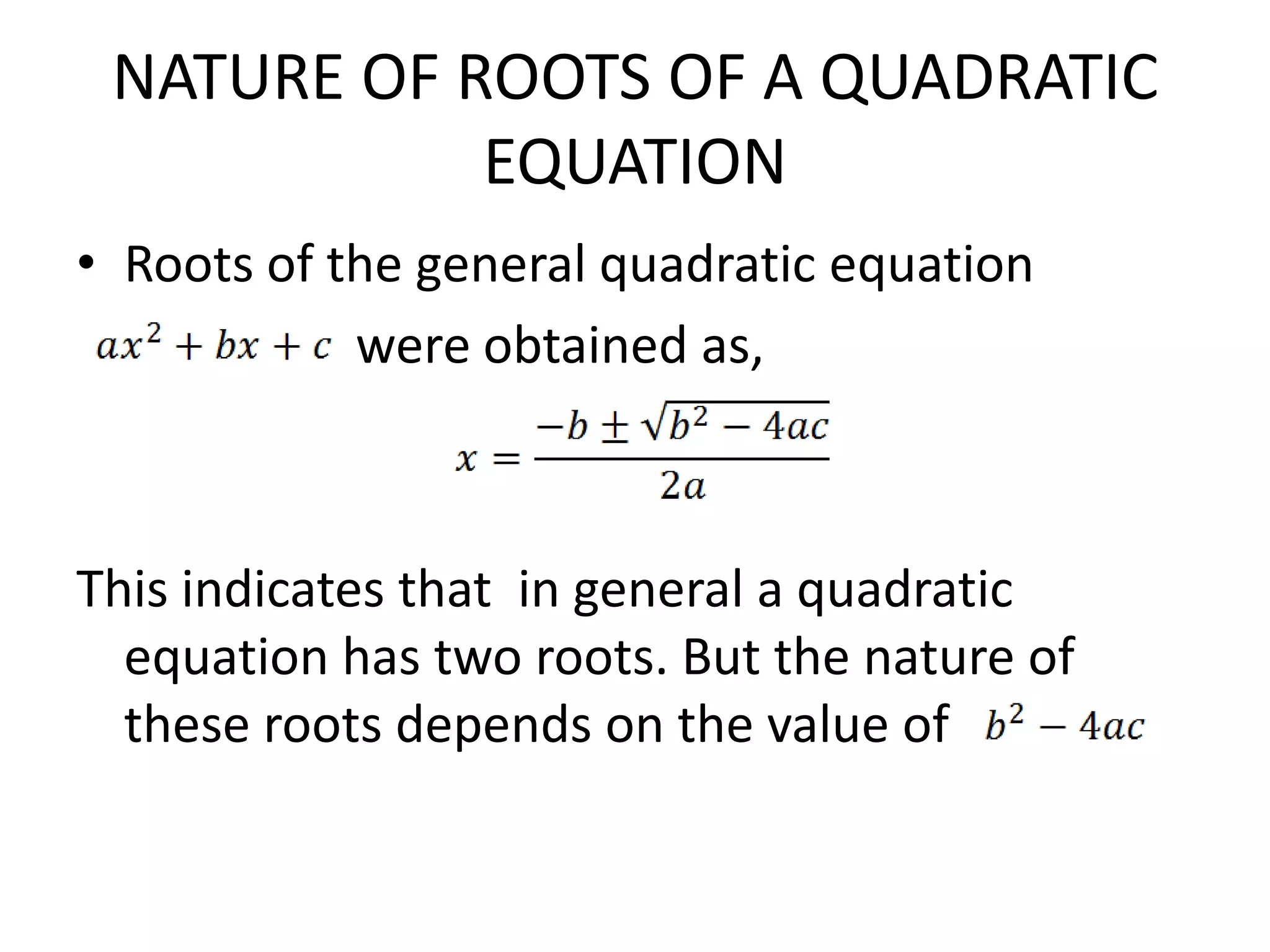
• Roots of the general quadratic equation
            were obtained as,


This indicates that in general a quadratic
  equation has two roots. But the nature of
  these roots depends on the value of
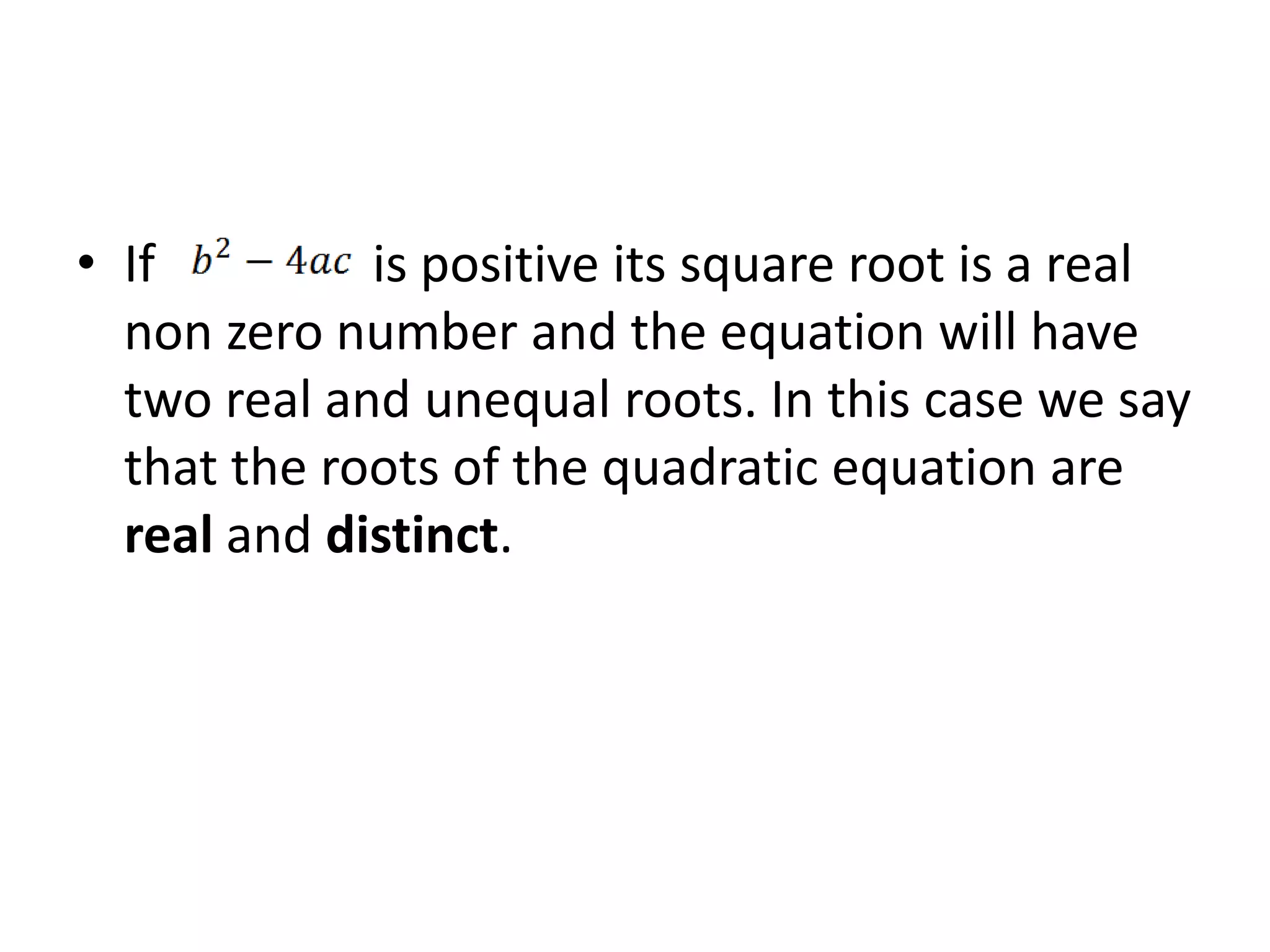
• If         is positive its square root is a real
  non zero number and the equation will have
  two real and unequal roots. In this case we say
  that the roots of the quadratic equation are
  real and distinct.
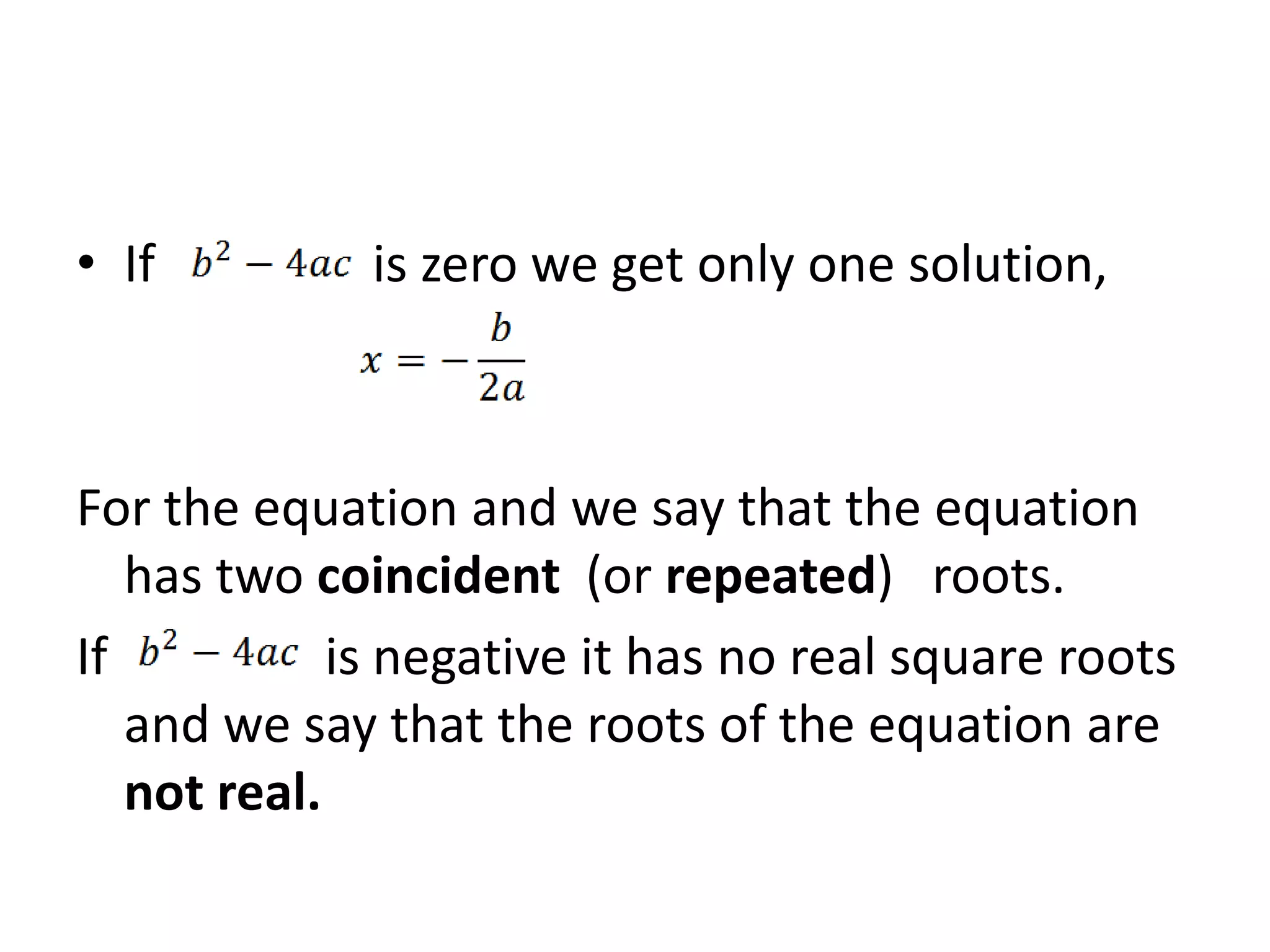
• If         is zero we get only one solution,


For the equation and we say that the equation
   has two coincident (or repeated) roots.
If           is negative it has no real square roots
   and we say that the roots of the equation are
   not real.
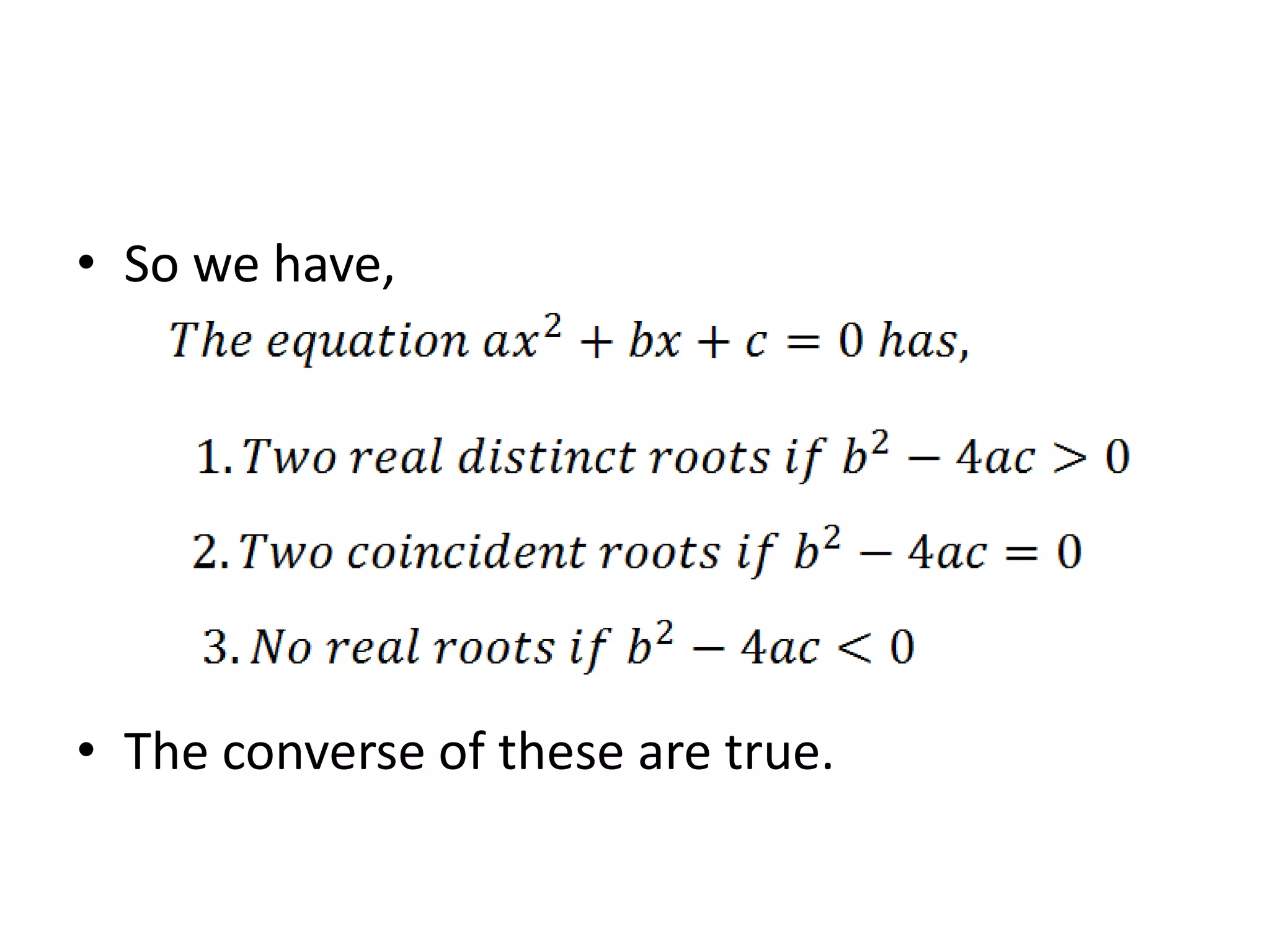
• So we have,


• The converse of these are true.
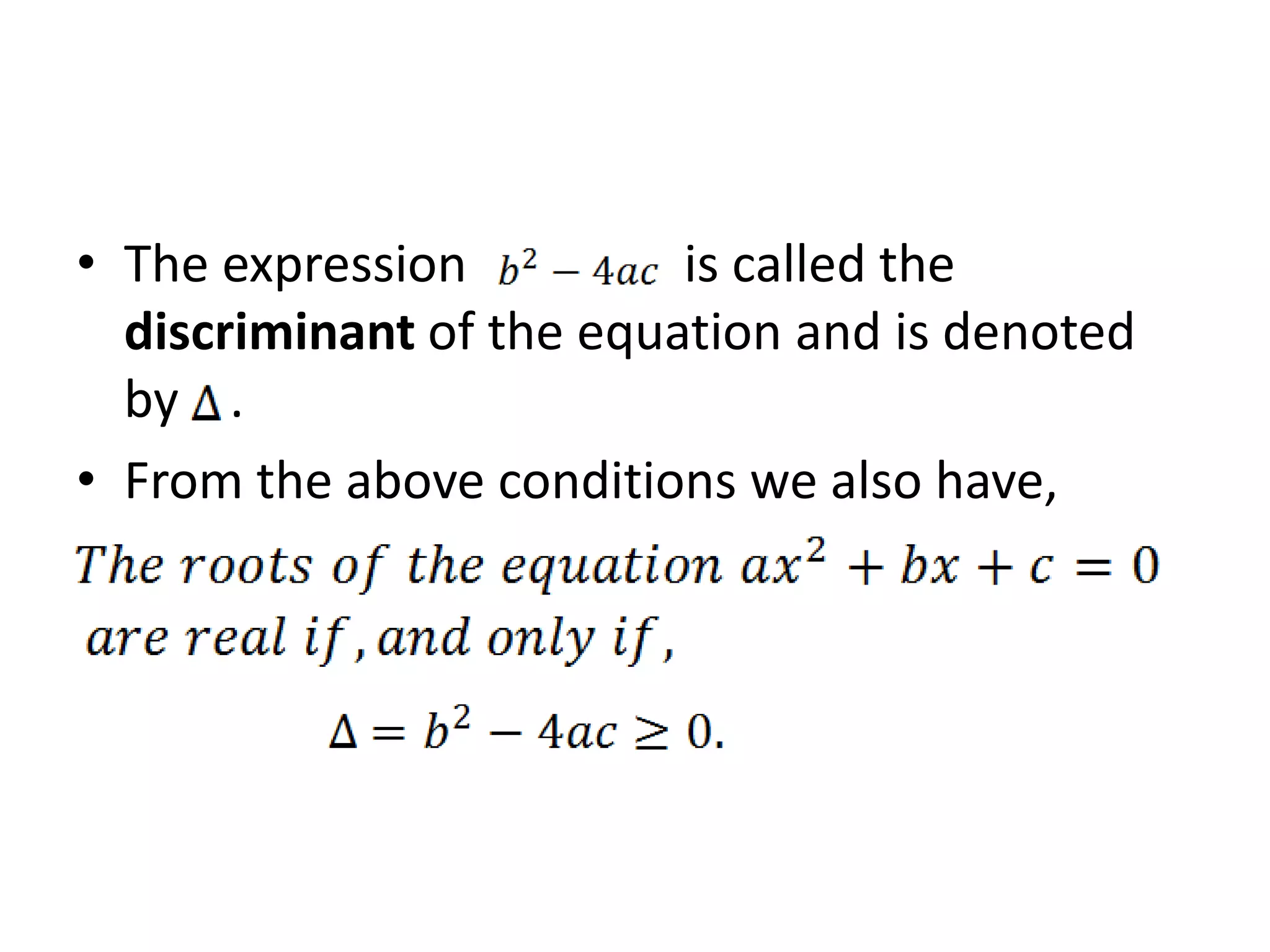
• The expression          is called the
  discriminant of the equation and is denoted
  by .
• From the above conditions we also have,
Quadratic equations

Quadratic equations

  • 1.
  • 2.
    NATURE OF ROOTSOF A QUADRATIC EQUATION • Roots of the general quadratic equation were obtained as, This indicates that in general a quadratic equation has two roots. But the nature of these roots depends on the value of
  • 3.
    • If is positive its square root is a real non zero number and the equation will have two real and unequal roots. In this case we say that the roots of the quadratic equation are real and distinct.
  • 4.
    • If is zero we get only one solution, For the equation and we say that the equation has two coincident (or repeated) roots. If is negative it has no real square roots and we say that the roots of the equation are not real.
  • 5.
    • So wehave, • The converse of these are true.
  • 6.
    • The expression is called the discriminant of the equation and is denoted by . • From the above conditions we also have,