Vertebrate
Animals
Quarter 2 Week 5
Ana Liza Degamo Sebastian
Teacher III
Bayombong South Elementary School
Bayombong I District
• Would like to go out and visit the
surrounding of our school
especially in our gardens?
• Bring with you your notepad and
ballpen
• Write down anything that you see
outside
• You are all given 3-5 minutes.
What are the animals you see in the
picture? What is common to all of them?
4 pictures one word
V E R T E B R A T E S
Group the class into 5
Distributes the
materials
Setting of Standards
present the group
activity
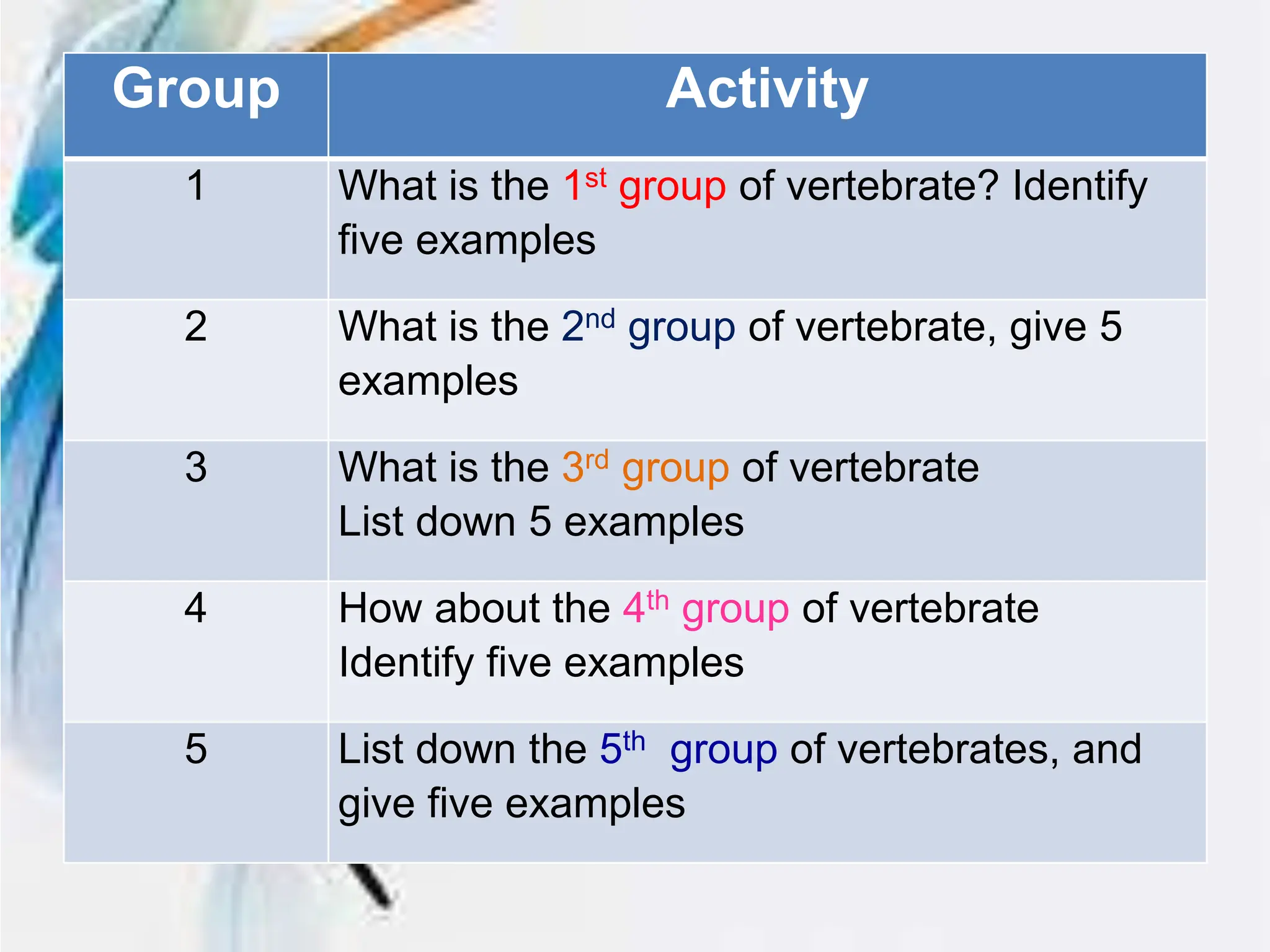
Group Activity
1 What is the 1st group of vertebrate? Identify
five examples
2 What is the 2nd group of vertebrate, give 5
examples
3 What is the 3rd group of vertebrate
List down 5 examples
4 How about the 4th group of vertebrate
Identify five examples
5 List down the 5th group of vertebrates, and
give five examples
Video Viewing:
Watching video clip
(Vertebrates)
https://www.youtube.com/watch?
v=qfw_fQwDejA
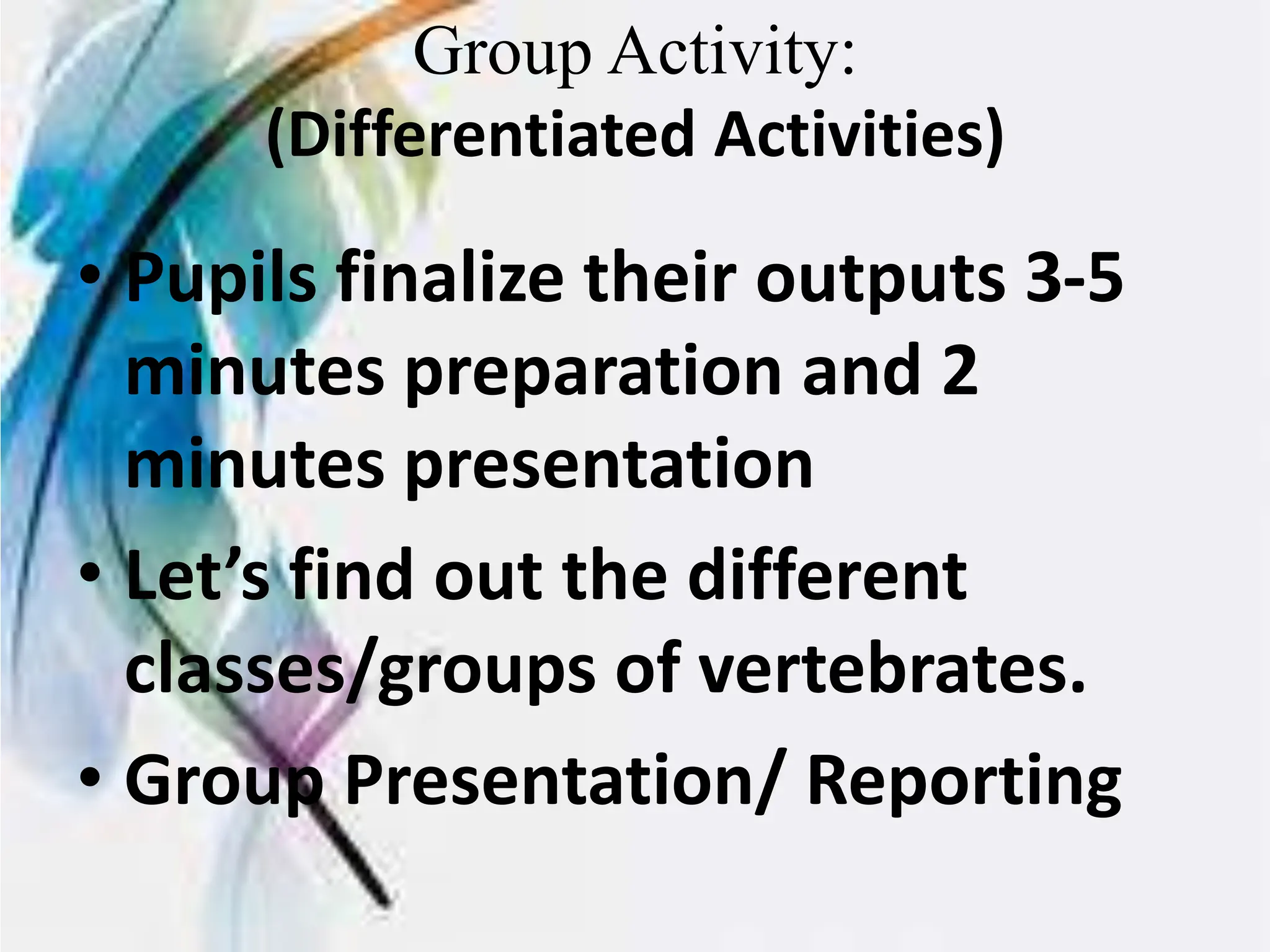
Group Activity:
(Differentiated Activities)
• Pupils finalize their outputs 3-5
minutes preparation and 2
minutes presentation
• Let’s find out the different
classes/groups of vertebrates.
• Group Presentation/ Reporting
•What is the activity all
about?
• What are vertebrates?
• How many groups of
vertebrates are there?
•Kindly describe the different
groups of vertebrates.
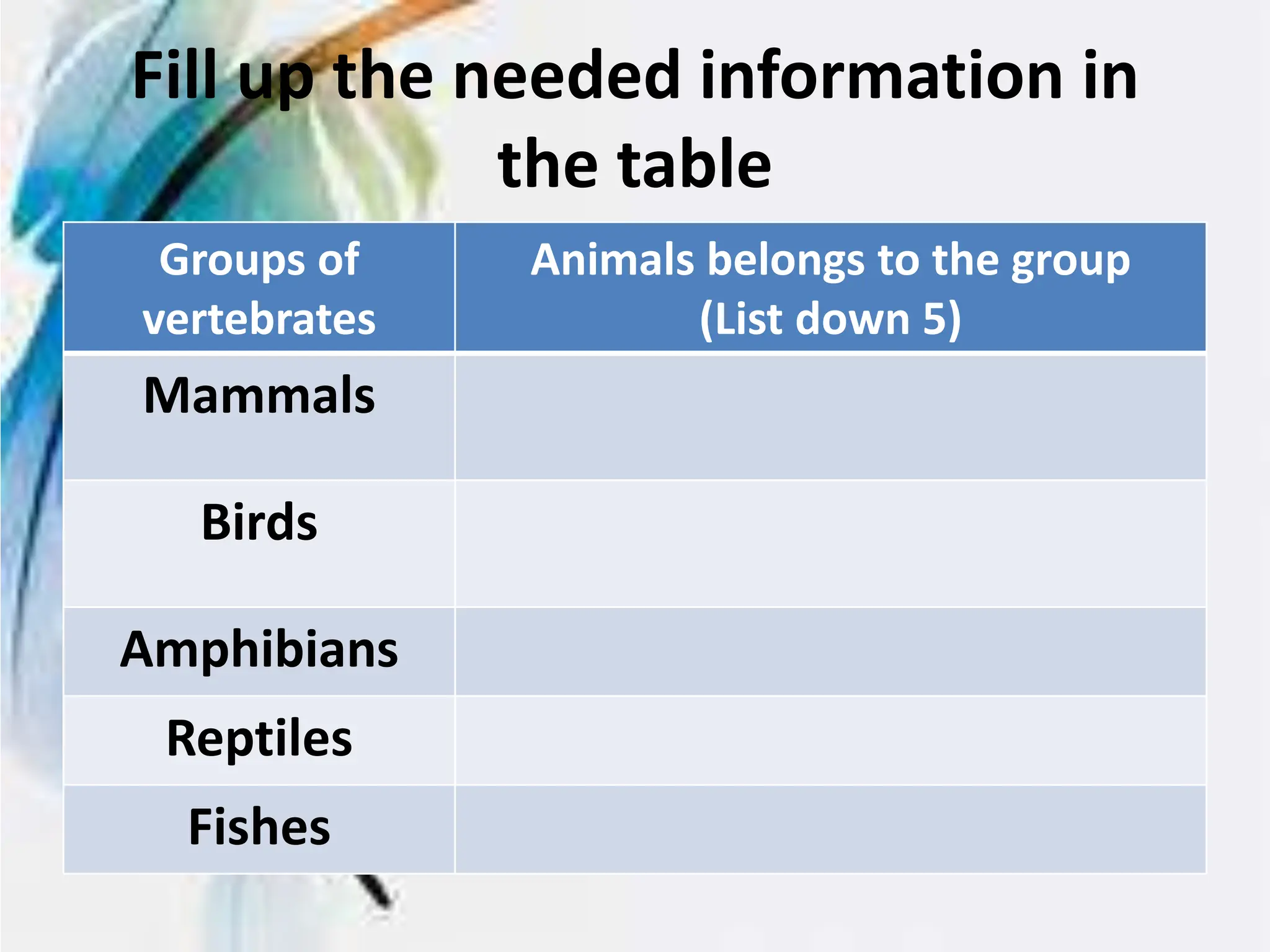
Fill up the needed information in
the table
Groups of
vertebrates
Animals belongs to the group
(List down 5)
Mammals
Birds
Amphibians
Reptiles
Fishes
As a young child, How
will you take good care
of your backbone? And
why should you take
good care of it?
What is vertebrate?
What are the different
groups of vertebrates?
How do you group
them?
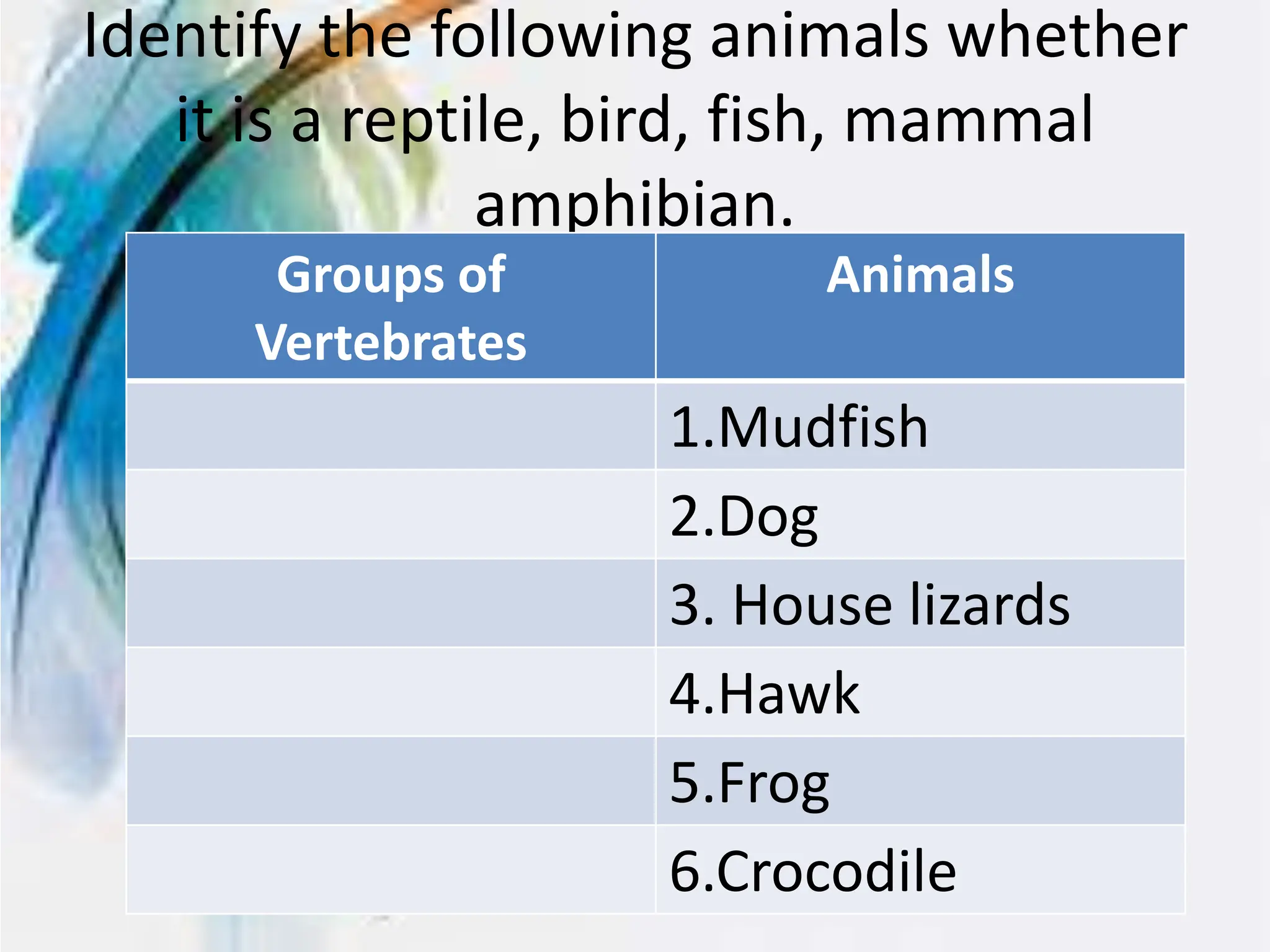
Identify the following animals whether
it is a reptile, bird, fish, mammal
amphibian.
Groups of
Vertebrates
Animals
1.Mudfish
2.Dog
3. House lizards
4.Hawk
5.Frog
6.Crocodile
•Draw different animals
found in your
surrounding and identify
them according to their
group.

Q2Wk5 Science 6 vertebrates animal day 1.pptx

  • 1.
    Vertebrate Animals Quarter 2 Week5 Ana Liza Degamo Sebastian Teacher III Bayombong South Elementary School Bayombong I District
  • 2.
    • Would liketo go out and visit the surrounding of our school especially in our gardens? • Bring with you your notepad and ballpen • Write down anything that you see outside • You are all given 3-5 minutes.
  • 3.
    What are theanimals you see in the picture? What is common to all of them?
  • 4.
    4 pictures oneword V E R T E B R A T E S
  • 5.
    Group the classinto 5 Distributes the materials Setting of Standards present the group activity
  • 6.
    Group Activity 1 Whatis the 1st group of vertebrate? Identify five examples 2 What is the 2nd group of vertebrate, give 5 examples 3 What is the 3rd group of vertebrate List down 5 examples 4 How about the 4th group of vertebrate Identify five examples 5 List down the 5th group of vertebrates, and give five examples
  • 7.
    Video Viewing: Watching videoclip (Vertebrates) https://www.youtube.com/watch? v=qfw_fQwDejA
  • 8.
    Group Activity: (Differentiated Activities) •Pupils finalize their outputs 3-5 minutes preparation and 2 minutes presentation • Let’s find out the different classes/groups of vertebrates. • Group Presentation/ Reporting
  • 9.
    •What is theactivity all about? • What are vertebrates? • How many groups of vertebrates are there? •Kindly describe the different groups of vertebrates.
  • 10.
    Fill up theneeded information in the table Groups of vertebrates Animals belongs to the group (List down 5) Mammals Birds Amphibians Reptiles Fishes
  • 11.
    As a youngchild, How will you take good care of your backbone? And why should you take good care of it?
  • 12.
    What is vertebrate? Whatare the different groups of vertebrates? How do you group them?
  • 14.
    Identify the followinganimals whether it is a reptile, bird, fish, mammal amphibian. Groups of Vertebrates Animals 1.Mudfish 2.Dog 3. House lizards 4.Hawk 5.Frog 6.Crocodile
  • 15.
    •Draw different animals foundin your surrounding and identify them according to their group.