EPFL, spring 2012 - week 2!
data collection - interviewing
overview
➝  candidates
➝  basic  methods
➝  interview structure
➝  produce a script
➝  watch
➝  practice run I
➝  practice run II
identifying candidates
➝  what   different sorts of people might use this
   product?
➝  how might needs and behaviour differ?
➝  what ranges of behaviour and types of
   environment need to be explored?

➝  if at all possible, do not use students
➝  If not possible, at least not IT students
preparation
➝  note   pad, forms and pens
➝  script/protocol of questions and topics
➝  digital or video camera, voice recorder (check or
   replace batteries)‫
‏‬
➝  extension cables (if you re using a laptop)‫
‏‬
➝  little gift/reward
➝  being on time
➝  address/telephone numbers
structure of interview
➝    preparation – remind yourself of goals of the interview
➝    arrival – introduction of 2nd person
➝    thank the host 
➝    settle down
➝    introduction of what the interview is about, length
➝    inform about anonymity of data, voluntary nature (end at any time)
➝    ask permission for audio (start recording), pictures/video
➝    warm-up, e.g. with demographic data
➝    interview - listen
➝    wrap-up, stop recording (but not listening), pack-up
➝    give a token gift (keep listening) and leave
➝    note down additional comments after recording stopped
➝    debrief between partners discuss observations, note down, highlight
     points, amend questions for next
the interview
➝  listen
➝  let people talk
➝  watch"
   don’t take everything people say at face value note
   down what you see around you and when being
   demonstrated something. This might contradict
   what people are saying.
basic methods
➝  interview where the action happens
➝  avoid a fixed set of questions
➝  focus on goals first, tasks second
➝  avoid making the user a designer
➝  avoid discussions about technology
➝  avoid giving advice (as the expert)
➝  remind people they are not being tested or
   evaluated
➝  encourage story telling
➝  ask for a show and tell 
➝  avoid leading questions
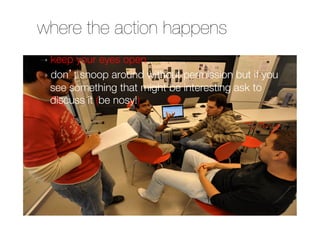
where the action happens
➝  keep your eyes open
➝  don t snoop around without permission but if you
   see something that might be interesting ask to
   discuss it (be nosy!)‫
‏‬
focus on topics, not fixed set of questions
➝  goals – what makes a good day? a bad day?
➝  opportunity – what currently wastes your time?
goal oriented questions
➝  priortities – what is most important to you?
➝  information – what helps you make decisions?
➝  frequency - what part of the product do you use most?
➝  preference – what doquestions about the product/activity?
system-oriented you love/hate
➝  failure - how do you work around problems?
➝  process – what do you do first? and after that?
➝  occurrence – how oftenquestions
workflow-oriented do you do this? 
➝  exception – what is typical what is unusual
➝  aspiration – what do you see yourself doing in 5 years
➝  avoidance – what would you prefer not to do/ procratinate on?
attitude-oriented questions
➝  motivation - what do you enjoy most about your private lifestyle? What
   do you always tackle first?

                                                         Cooper 2007
focus on topics, not fixed set of questions
➝    goals – what makes a good day? a bad day?
➝    opportunity – what currently wastes your time?
➝    priortities – what is most important to you?
➝    information – what helps you make decisions?
➝    frequency - what part of the product do you use most?
➝    preference – what do you love/hate about the product/activity?
➝    failure - how do you work around problems?
➝    process – what do you do first? and after that?
➝    occurrence – how often do you do this? 
➝    exception – what is typical what is unusual
➝    aspiration – what do you see yourself doing in 5 years
➝    avoidance – what would you prefer not to do/ procratinate on?
➝    motivation - what do you enjoy most about your private lifestyle? What
     do you always tackle first?

                                                           Cooper 2007
goals first, task second
➝  try to understand the why and how
➝  what motivates the behaviours of individuals in
   different roles?
➝  understanding the task is important and needs to
   be recorded


but tasks will be restructured to better match user
   goals in the design solution
avoid making the user a designer
➝  guide   the interviewee towards examining
   problems and away from expressing solutions
➝  if it happens possible transitions are "
     What problem would that solve for you? "
     Why would that be a good solution?
avoid technological discussions
➝  don   t treat them as a programmer or engineer
➝  for technical products steer away from product-
   related discussion (allow domain-related
   discussion)
➝  do not attempt to solve their problems during the
   interview, observe
➝  to steer away from it: How would that help you?
encourage storytelling
➝  how  they use an existing product
➝  the different contexts, places, people, occasions
➝  what they think of it
➝  where they go with it
➝  encourage stories that talk about typical cases
   and also exceptional ones
➝  encourage to replay a past situation (explaining
   the context) in which e.g. the mobile was used to
   synchronize with someone, observe and take
   notes, e.g.: 
   ➝      middle-aged user takes off bifocal glasses, puts them on the
        table and squints at the small buttons… tries several times to open
        the last SMS, curses… mumbles…
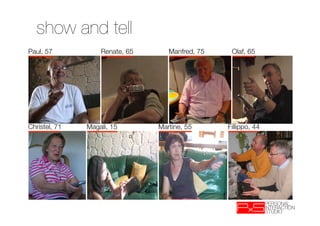
show and tell
➝  ask   for a grand tour of artefacts
   ➝  domain-related
   ➝  software interfaces
   ➝  paper systems
   ➝  work environment

➝  pay attention to how they are described
➝  ask many clarification questions
➝  take pictures/video
show and tell
Paul, 57           Renate, 65      Manfred, 75    Olaf, 65


Christel, 71   Magali, 15       Martine, 55      Fillippo, 44
avoid leading questions
➝  Would  feature X help you
➝  You like X, don t you? 
➝  Do you think you d use X if it were available?


➝  ask  for qualifications when people talk not about
    themselves and but about others e.g. we,
    everybody, nobody, some people.
don’t worry
➝  peoplelike to talk about themselves
➝  and appreciate listeners
practice runs
➝  produce   script
➝  role play
➝  practice runs

PxS'12 - week 2 interviewing

  • 1.
    EPFL, spring 2012- week 2! data collection - interviewing
  • 2.
    overview ➝  candidates ➝  basic methods ➝  interview structure ➝  produce a script ➝  watch ➝  practice run I ➝  practice run II
  • 3.
    identifying candidates ➝  what different sorts of people might use this product? ➝  how might needs and behaviour differ? ➝  what ranges of behaviour and types of environment need to be explored? ➝  if at all possible, do not use students ➝  If not possible, at least not IT students
  • 4.
    preparation ➝  note pad, forms and pens ➝  script/protocol of questions and topics ➝  digital or video camera, voice recorder (check or replace batteries)‫ ‏‬ ➝  extension cables (if you re using a laptop)‫ ‏‬ ➝  little gift/reward ➝  being on time ➝  address/telephone numbers
  • 5.
    structure of interview ➝  preparation – remind yourself of goals of the interview ➝  arrival – introduction of 2nd person ➝  thank the host ➝  settle down ➝  introduction of what the interview is about, length ➝  inform about anonymity of data, voluntary nature (end at any time) ➝  ask permission for audio (start recording), pictures/video ➝  warm-up, e.g. with demographic data ➝  interview - listen ➝  wrap-up, stop recording (but not listening), pack-up ➝  give a token gift (keep listening) and leave ➝  note down additional comments after recording stopped ➝  debrief between partners discuss observations, note down, highlight points, amend questions for next
  • 6.
    the interview ➝  listen ➝ let people talk ➝  watch" don’t take everything people say at face value note down what you see around you and when being demonstrated something. This might contradict what people are saying.
  • 7.
    basic methods ➝  interviewwhere the action happens ➝  avoid a fixed set of questions ➝  focus on goals first, tasks second ➝  avoid making the user a designer ➝  avoid discussions about technology ➝  avoid giving advice (as the expert) ➝  remind people they are not being tested or evaluated ➝  encourage story telling ➝  ask for a show and tell ➝  avoid leading questions
  • 8.
    where the actionhappens ➝  keep your eyes open ➝  don t snoop around without permission but if you see something that might be interesting ask to discuss it (be nosy!)‫ ‏‬
  • 9.
    focus on topics,not fixed set of questions ➝  goals – what makes a good day? a bad day? ➝  opportunity – what currently wastes your time? goal oriented questions ➝  priortities – what is most important to you? ➝  information – what helps you make decisions? ➝  frequency - what part of the product do you use most? ➝  preference – what doquestions about the product/activity? system-oriented you love/hate ➝  failure - how do you work around problems? ➝  process – what do you do first? and after that? ➝  occurrence – how oftenquestions workflow-oriented do you do this? ➝  exception – what is typical what is unusual ➝  aspiration – what do you see yourself doing in 5 years ➝  avoidance – what would you prefer not to do/ procratinate on? attitude-oriented questions ➝  motivation - what do you enjoy most about your private lifestyle? What do you always tackle first? Cooper 2007
  • 10.
    focus on topics,not fixed set of questions ➝  goals – what makes a good day? a bad day? ➝  opportunity – what currently wastes your time? ➝  priortities – what is most important to you? ➝  information – what helps you make decisions? ➝  frequency - what part of the product do you use most? ➝  preference – what do you love/hate about the product/activity? ➝  failure - how do you work around problems? ➝  process – what do you do first? and after that? ➝  occurrence – how often do you do this? ➝  exception – what is typical what is unusual ➝  aspiration – what do you see yourself doing in 5 years ➝  avoidance – what would you prefer not to do/ procratinate on? ➝  motivation - what do you enjoy most about your private lifestyle? What do you always tackle first? Cooper 2007
  • 11.
    goals first, tasksecond ➝  try to understand the why and how ➝  what motivates the behaviours of individuals in different roles? ➝  understanding the task is important and needs to be recorded but tasks will be restructured to better match user goals in the design solution
  • 12.
    avoid making theuser a designer ➝  guide the interviewee towards examining problems and away from expressing solutions ➝  if it happens possible transitions are " What problem would that solve for you? " Why would that be a good solution?
  • 13.
    avoid technological discussions ➝ don t treat them as a programmer or engineer ➝  for technical products steer away from product- related discussion (allow domain-related discussion) ➝  do not attempt to solve their problems during the interview, observe ➝  to steer away from it: How would that help you?
  • 14.
    encourage storytelling ➝  how they use an existing product ➝  the different contexts, places, people, occasions ➝  what they think of it ➝  where they go with it ➝  encourage stories that talk about typical cases and also exceptional ones ➝  encourage to replay a past situation (explaining the context) in which e.g. the mobile was used to synchronize with someone, observe and take notes, e.g.: ➝  middle-aged user takes off bifocal glasses, puts them on the table and squints at the small buttons… tries several times to open the last SMS, curses… mumbles…
  • 15.
    show and tell ➝ ask for a grand tour of artefacts ➝  domain-related ➝  software interfaces ➝  paper systems ➝  work environment ➝  pay attention to how they are described ➝  ask many clarification questions ➝  take pictures/video
  • 16.
    show and tell Paul,57 Renate, 65 Manfred, 75 Olaf, 65 Christel, 71 Magali, 15 Martine, 55 Fillippo, 44
  • 17.
    avoid leading questions ➝ Would feature X help you ➝  You like X, don t you? ➝  Do you think you d use X if it were available? ➝  ask for qualifications when people talk not about themselves and but about others e.g. we, everybody, nobody, some people.
  • 18.
    don’t worry ➝  peopleliketo talk about themselves ➝  and appreciate listeners
  • 19.
    practice runs ➝  produce script ➝  role play ➝  practice runs