EPFL, spring 2012 – week 4!
qualitative analysis
overview
➝  todays goal – provide basis for as many ideas for
  you as possible
   ➝  brainstorming
   ➝  competitive   analysis
   ➝  literature research
   ➝  interviews

➝  briefintroduction to qualitative analysis
➝  practical work: 
   ➝  data   analysis
   ➝  literature review
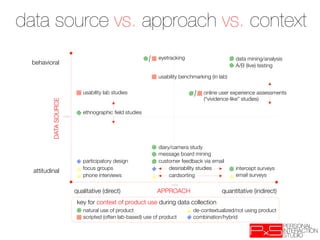
data source vs. approach vs. context
                                                                    eyetracking
                       data mining/analysis
  behavioral
                                                                                          A/B (live) testing

                                                                    usability benchmarking (in lab)

                                   usability lab studies
                               online user experience assessments
                                                                                        (“vividence-like” studies)
          DATA SOURCE


                                   ethnographic field studies
                         mix


                                diary/camera study
                                   
                                message board mining
                                   participatory design
            customer feedback via email
                                   focus groups
                         desiriability studies
        intercept surveys
  attitudinal
                                   phone interviews
                     cardsorting
                  email surveys
                                                                          mix
                                qualitative (direct)
              APPROACH
                    quantitative (indirect)
                                 key for context of product use during data collection
                                   natural use of product     


de-contextualized/not using product
                                   scripted (often lab-based) use of product
      
combination/hybrid
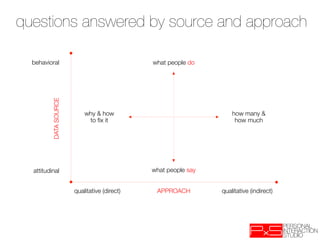
questions answered by source and approach

  behavioral
                                    what people do
          DATA SOURCE


                             why & how                                  how many &
                              to fix it
                                  how much


  attitudinal
                                   what people say


                         qualitative (direct)
    APPROACH
         qualitative (indirect)
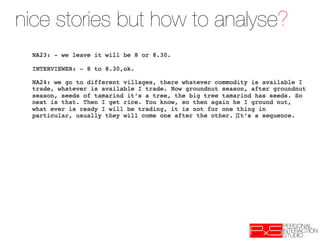
nice stories but how to analyse?
qualitative analysis - approaches
➝  interpretative
                techniques "
   (observer impression)
➝  coding
➝  recursive abstraction "
   summaries of summaries
➝  mechanical techniques "
   content analysis – counting keywords
coding
➝  summarizing  responses into groups
➝  to reduce number of responses
➝  to make comparison easier
➝  in a group 
  ➝  as similar as possible and
  ➝  as different as possible to every other group

➝  can   be done by multiple people to agree on (judges)
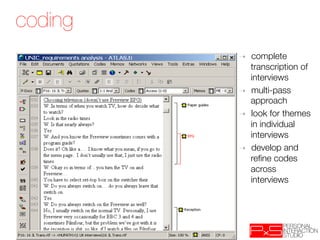
coding
          ➝    complete
               transcription of
               interviews
          ➝    multi-pass
               approach
          ➝    look for themes
               in individual
               interviews
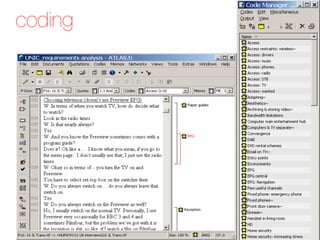
          ➝    develop and
               refine codes
               across
               interviews
coding
coding – quick and dirty
➝  cut out and sort into groups (assign codes)
➝  akin to card sorting (popular HCI method)
➝  please put remarks on the cover sheet of each
   interview for the interviewer/note taker

PxS’12 - week 4 - qualitative analysis

  • 1.
    EPFL, spring 2012– week 4! qualitative analysis
  • 2.
    overview ➝  todays goal– provide basis for as many ideas for you as possible ➝  brainstorming ➝  competitive analysis ➝  literature research ➝  interviews ➝  briefintroduction to qualitative analysis ➝  practical work: ➝  data analysis ➝  literature review
  • 3.
    data source vs.approach vs. context eyetracking data mining/analysis behavioral A/B (live) testing usability benchmarking (in lab) usability lab studies online user experience assessments (“vividence-like” studies) DATA SOURCE ethnographic field studies mix diary/camera study message board mining participatory design customer feedback via email focus groups desiriability studies intercept surveys attitudinal phone interviews cardsorting email surveys mix qualitative (direct) APPROACH quantitative (indirect) key for context of product use during data collection natural use of product de-contextualized/not using product scripted (often lab-based) use of product combination/hybrid
  • 4.
    questions answered bysource and approach behavioral what people do DATA SOURCE why & how how many & to fix it how much attitudinal what people say qualitative (direct) APPROACH qualitative (indirect)
  • 5.
    nice stories buthow to analyse?
  • 6.
    qualitative analysis -approaches ➝  interpretative techniques " (observer impression) ➝  coding ➝  recursive abstraction " summaries of summaries ➝  mechanical techniques " content analysis – counting keywords
  • 7.
    coding ➝  summarizing responses into groups ➝  to reduce number of responses ➝  to make comparison easier ➝  in a group ➝  as similar as possible and ➝  as different as possible to every other group ➝  can be done by multiple people to agree on (judges)
  • 8.
    coding ➝  complete transcription of interviews ➝  multi-pass approach ➝  look for themes in individual interviews ➝  develop and refine codes across interviews
  • 9.
  • 10.
    coding – quickand dirty ➝  cut out and sort into groups (assign codes) ➝  akin to card sorting (popular HCI method) ➝  please put remarks on the cover sheet of each interview for the interviewer/note taker