PROCRASTINATION

By Hilary Finch
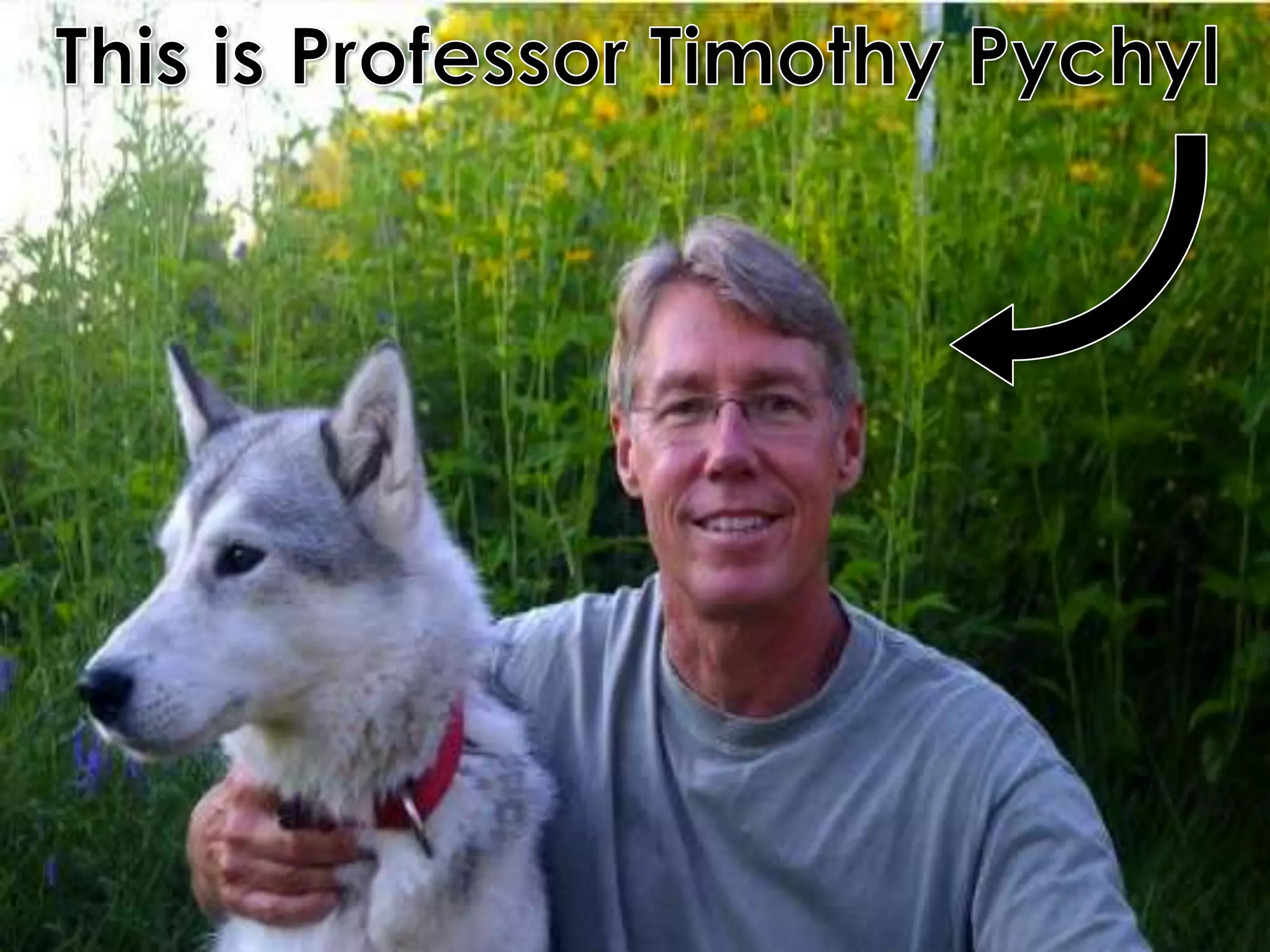
Prof. Tim Pychyl
Dr. Timothy Pychyl is an associate
professor in the department of
psychology at Carleton University. His
research focuses on procrastination.
He has numerous publications, a website,
a blog, podcasts, and comic strips
For more information about his research, visit www.procrastination.ca
… ENOUGH TO BREAK THE ICE!
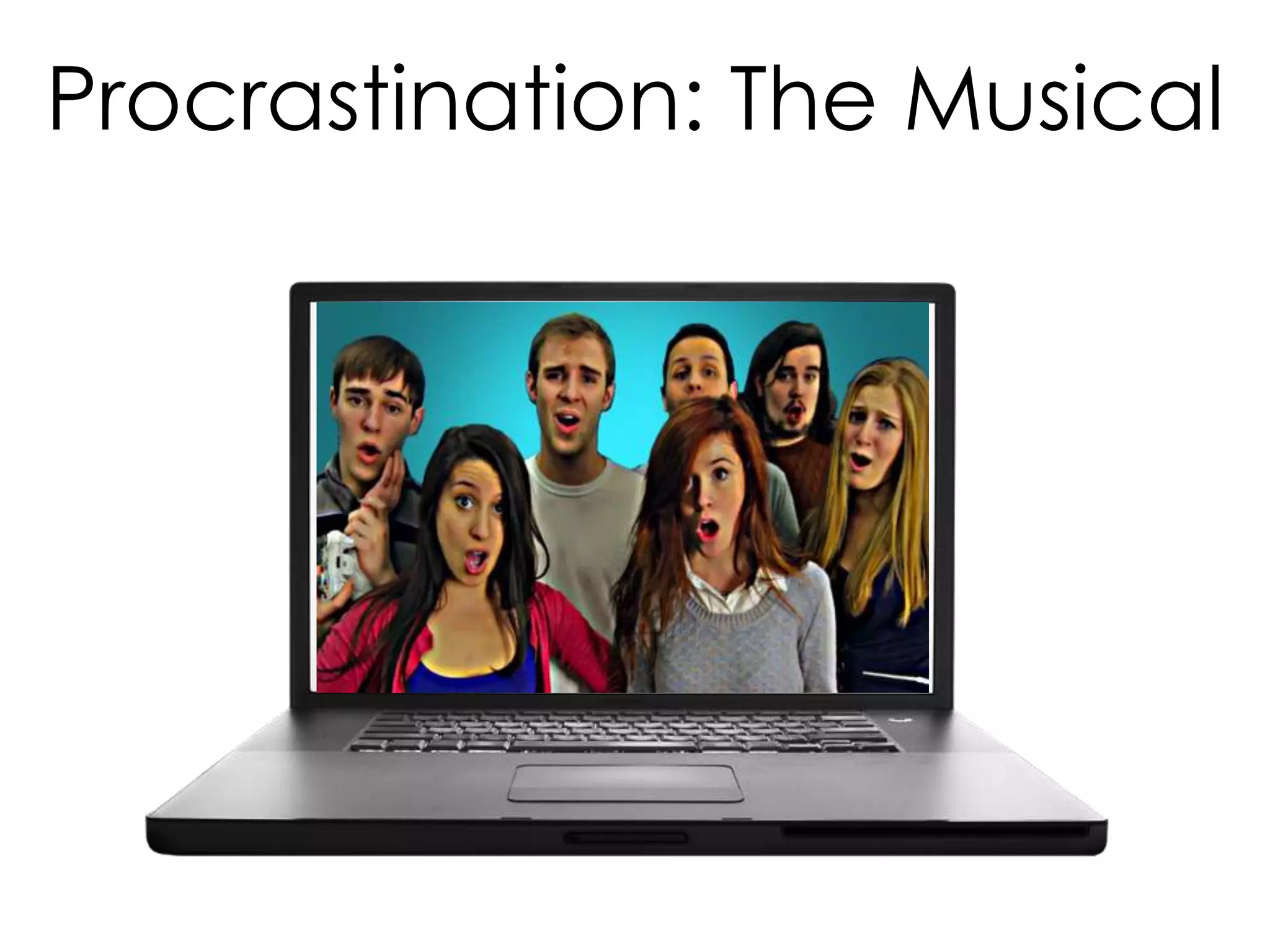
Procrastination: The Musical
What is Procrastination?
Derived from the latin verb: procrastinare
pro – forward motion

crastinus – belonging to tomorrow

To “put off or postpone until another day”
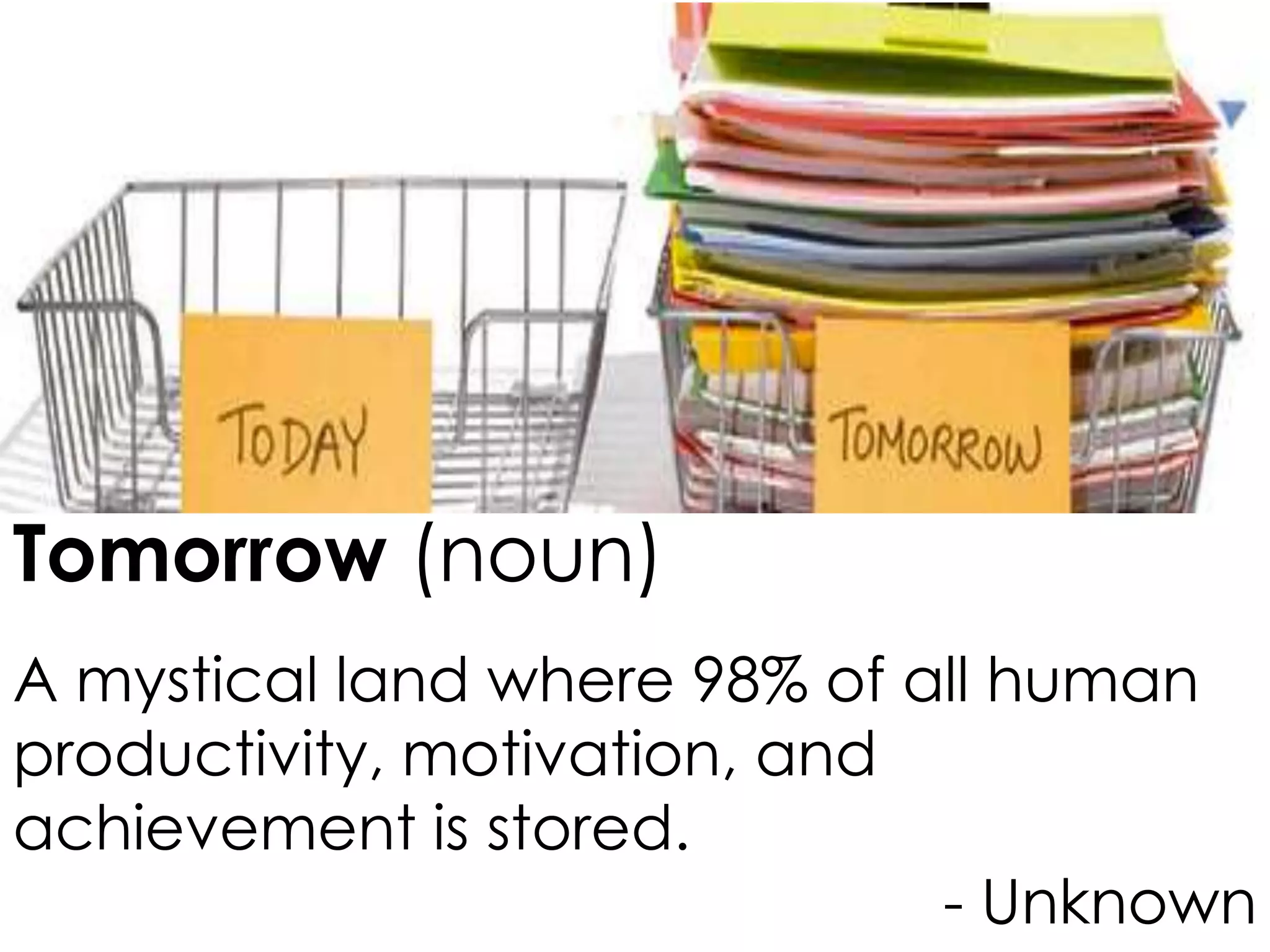
Tomorrow (noun)
A mystical land where 98% of all human
productivity, motivation, and
achievement is stored.
- Unknown
Procrastination is
the art of keeping up
with yesterday
Don Marquis
Procrastination is the
thief of time
Edward Young
Never put off till
tomorrow what you
can do the day after
tomorrow just as well
Mark Twain
Who Procrastinates?
Everyone procrastinates

BUT
Not everyone is a procrastinator
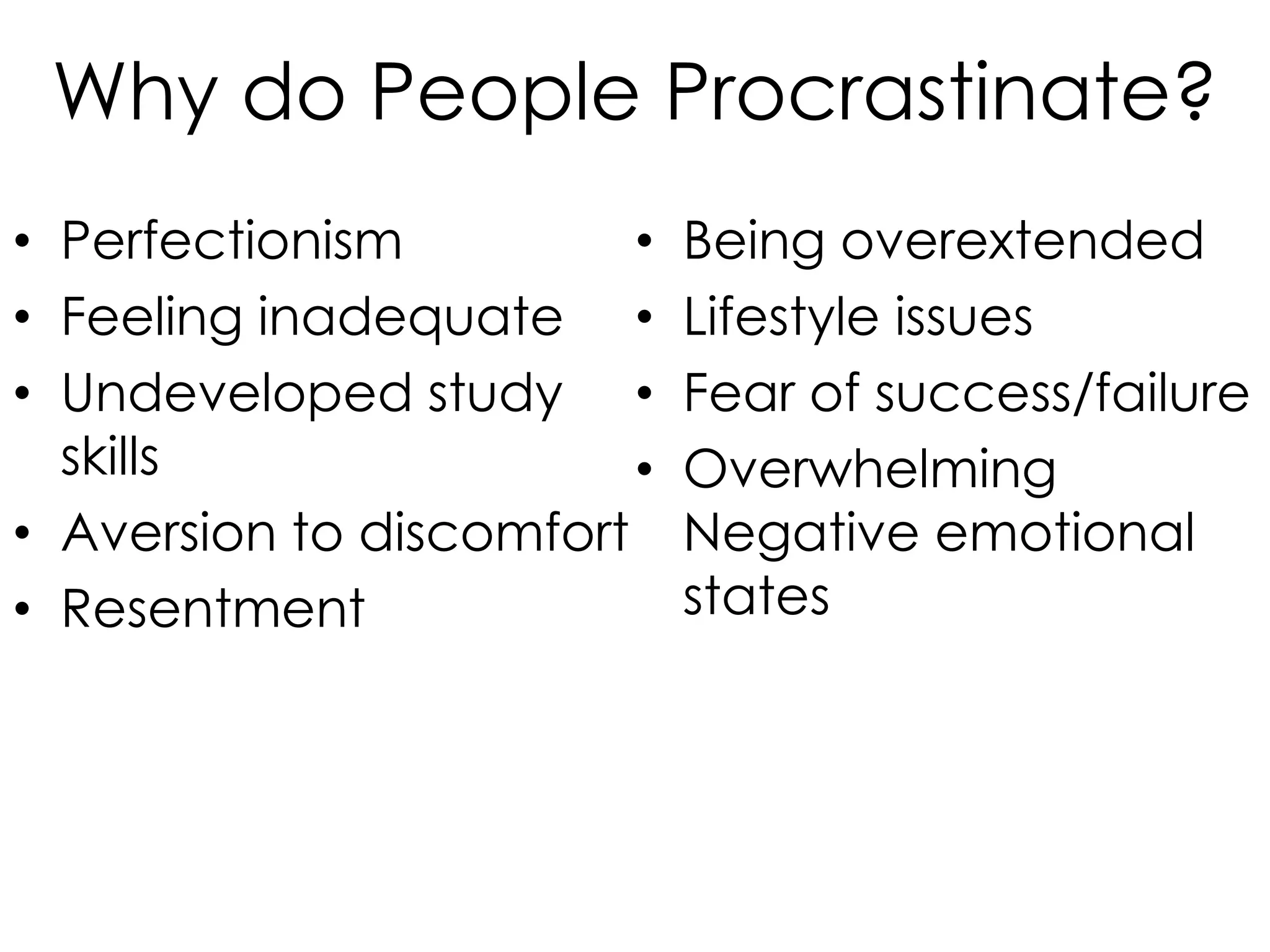
Why do People Procrastinate?
• Perfectionism
•
• Feeling inadequate •
• Undeveloped study •
skills
•
• Aversion to discomfort
• Resentment

Being overextended
Lifestyle issues
Fear of success/failure
Overwhelming
Negative emotional
states
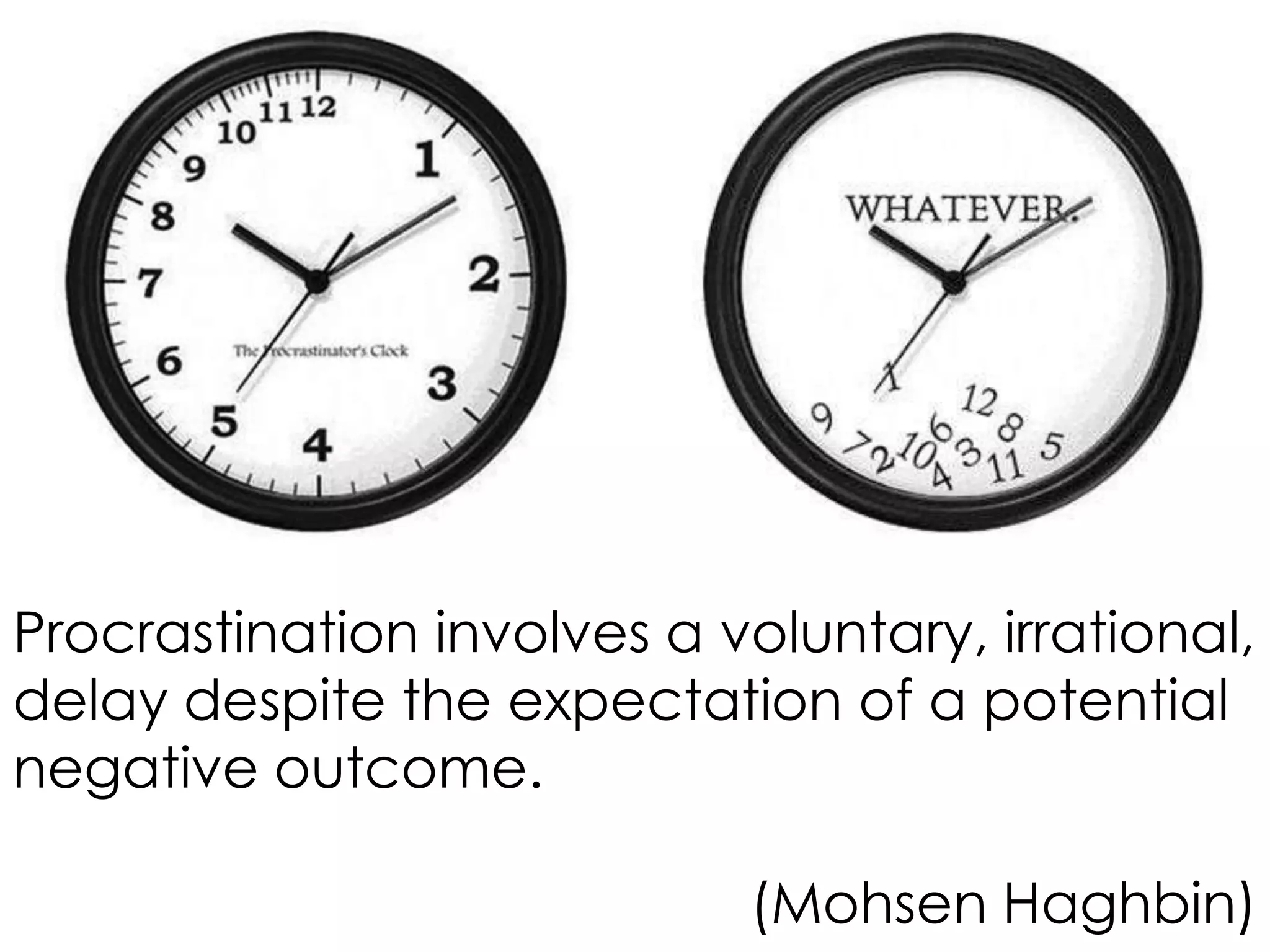
Procrastination involves a voluntary, irrational,
delay despite the expectation of a potential
negative outcome.
(Mohsen Haghbin)
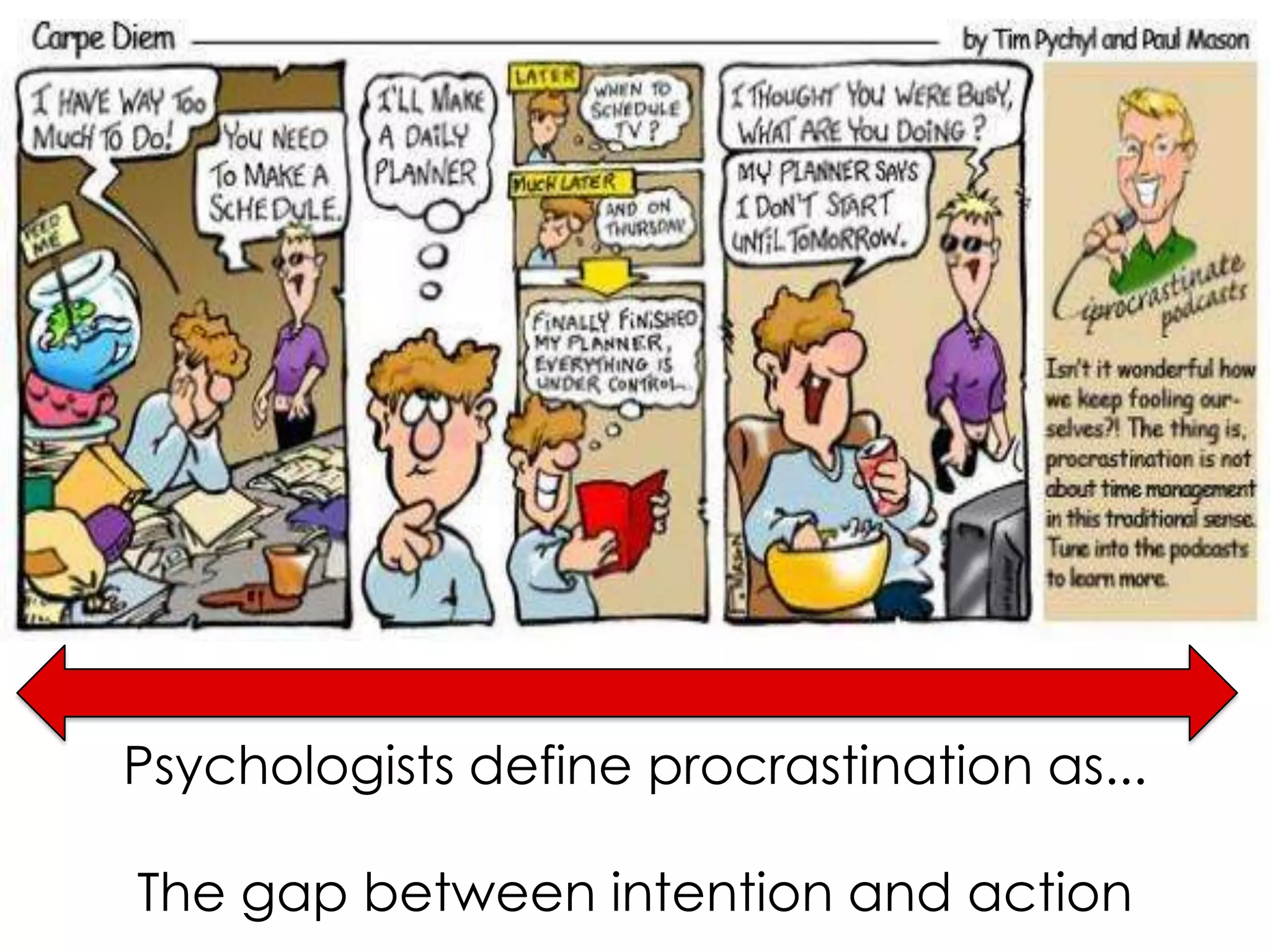
Psychologists define procrastination as...
The gap between intention and action
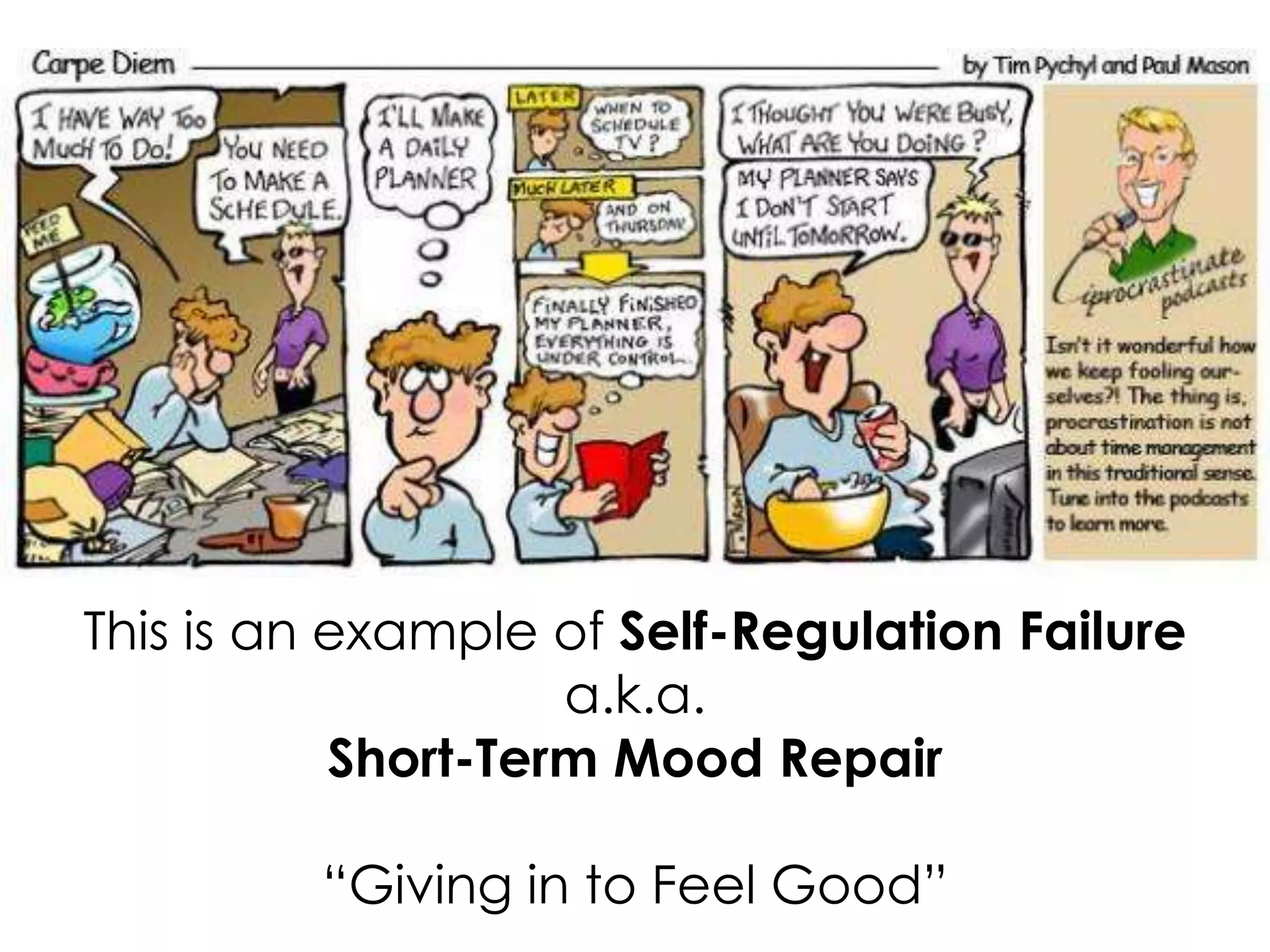
This is an example of Self-Regulation Failure
a.k.a.
Short-Term Mood Repair
“Giving in to Feel Good”
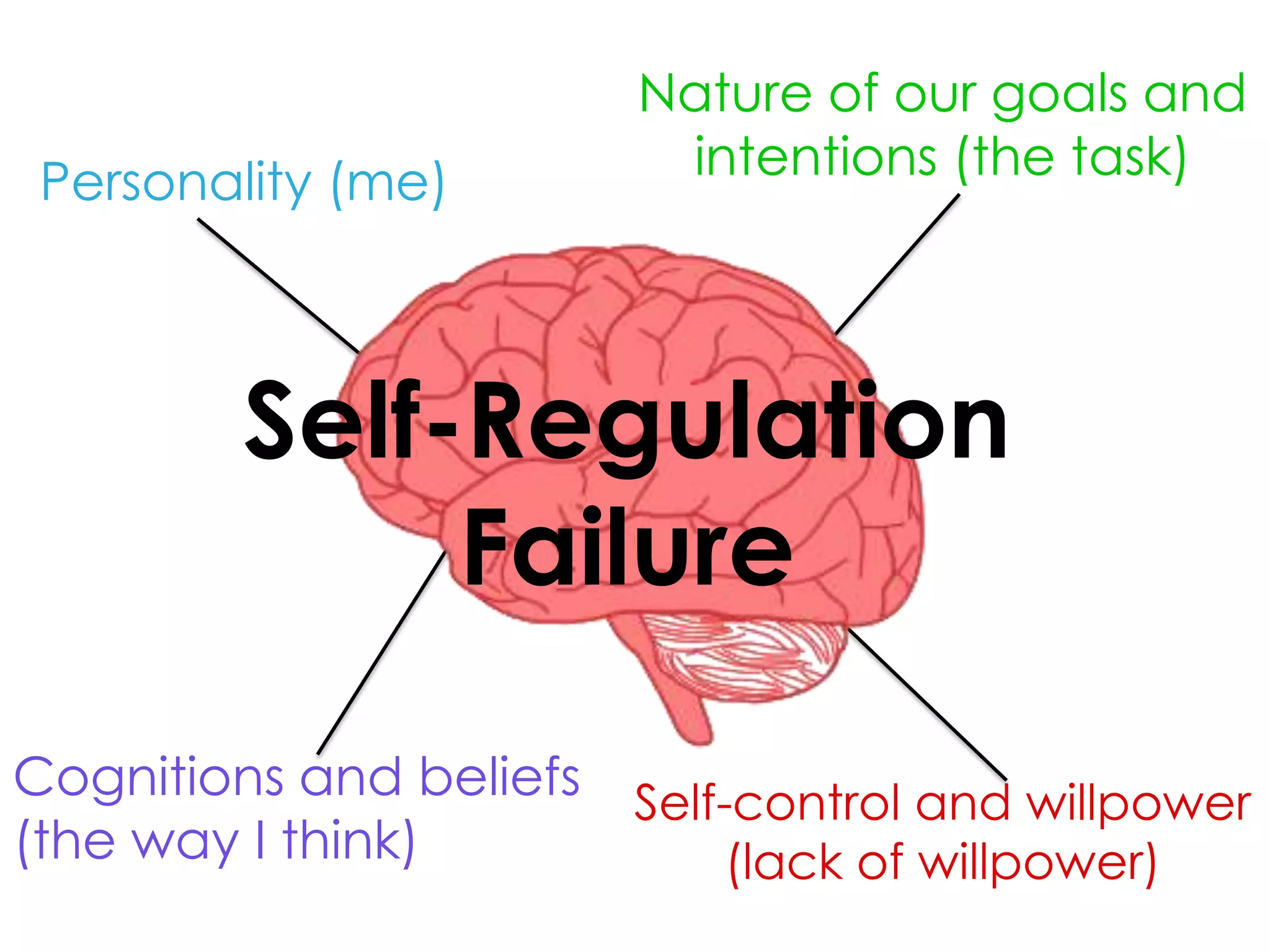
Personality (me)

Nature of our goals and
intentions (the task)

Self-Regulation
Failure
Cognitions and beliefs
(the way I think)

Self-control and willpower
(lack of willpower)
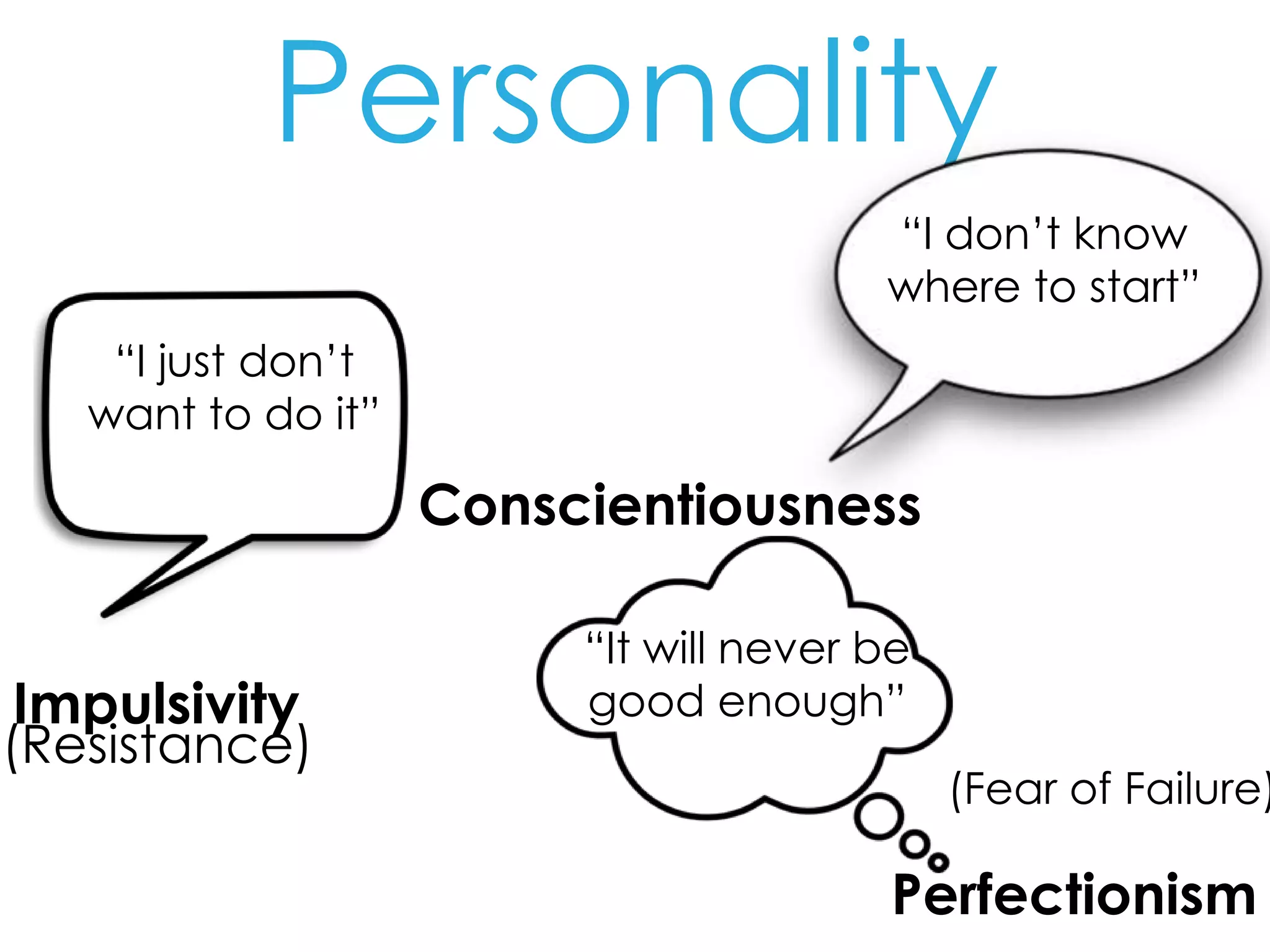
Personality
“I don’t know
where to start”
“I just don’t
want to do it”

Conscientiousness

Impulsivity

(Resistance)

“It will never be
good enough”

(Fear of Failure)

Perfectionism
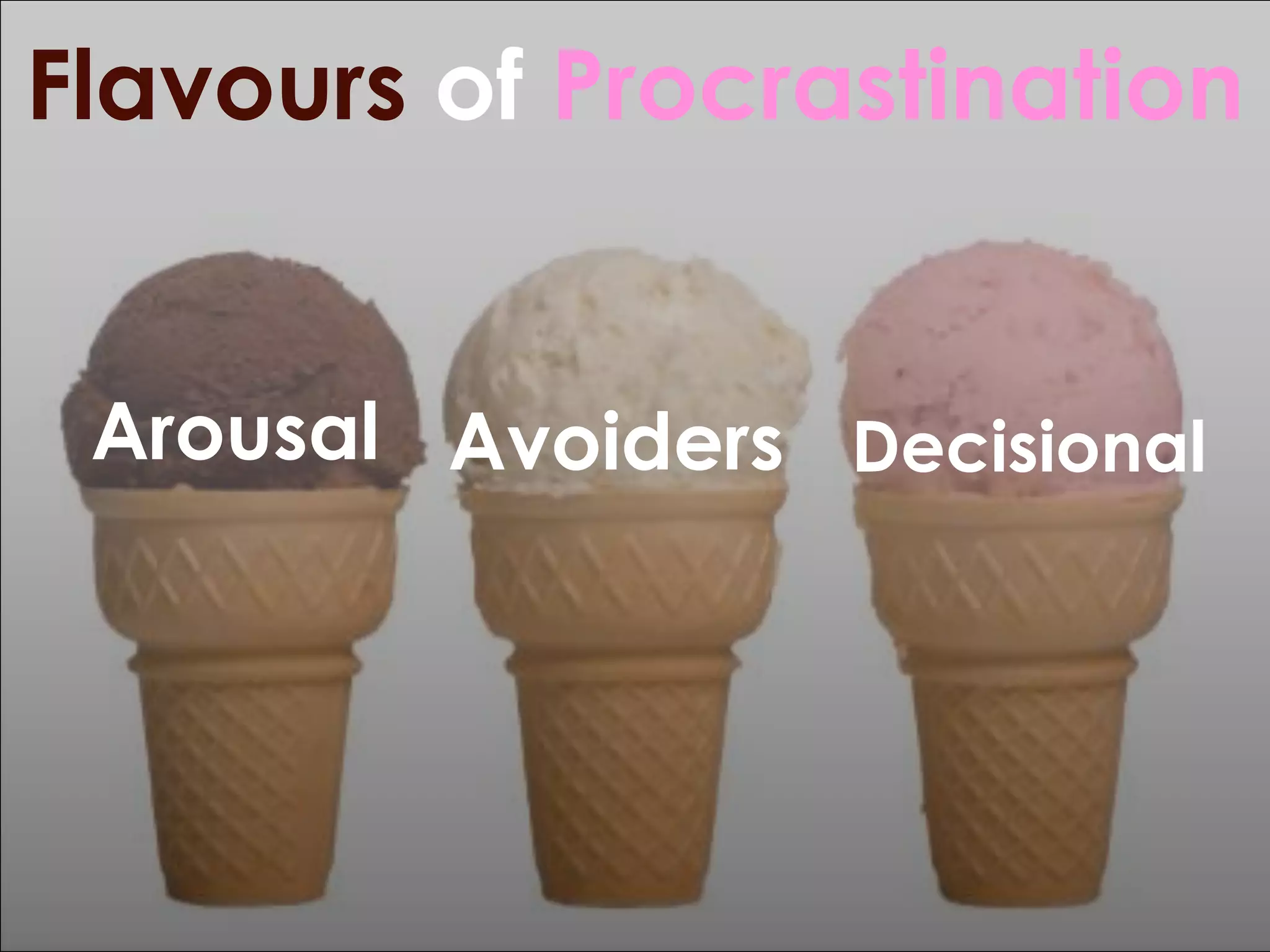
Flavours of Procrastination
Arousal Avoiders Decisional
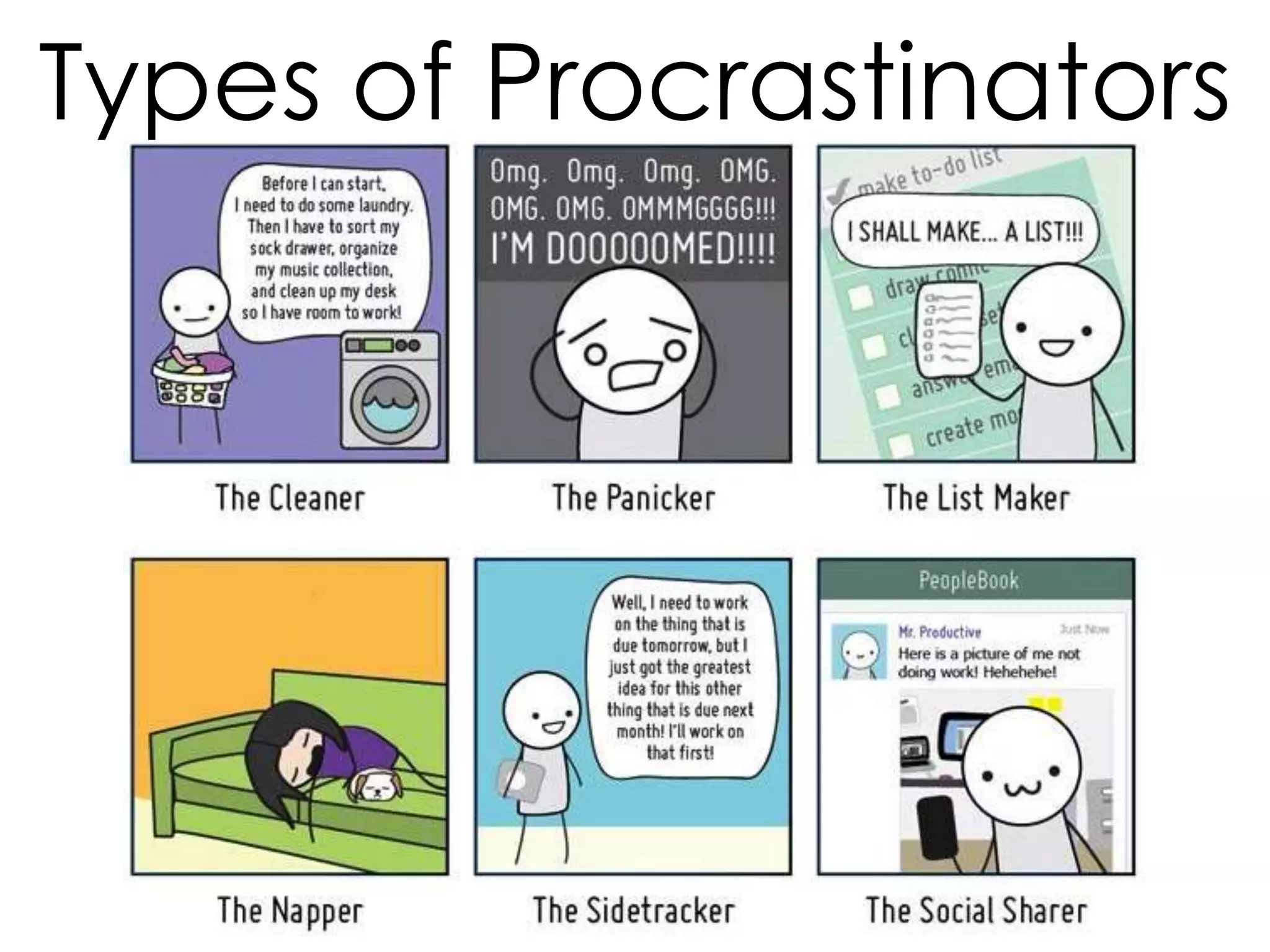
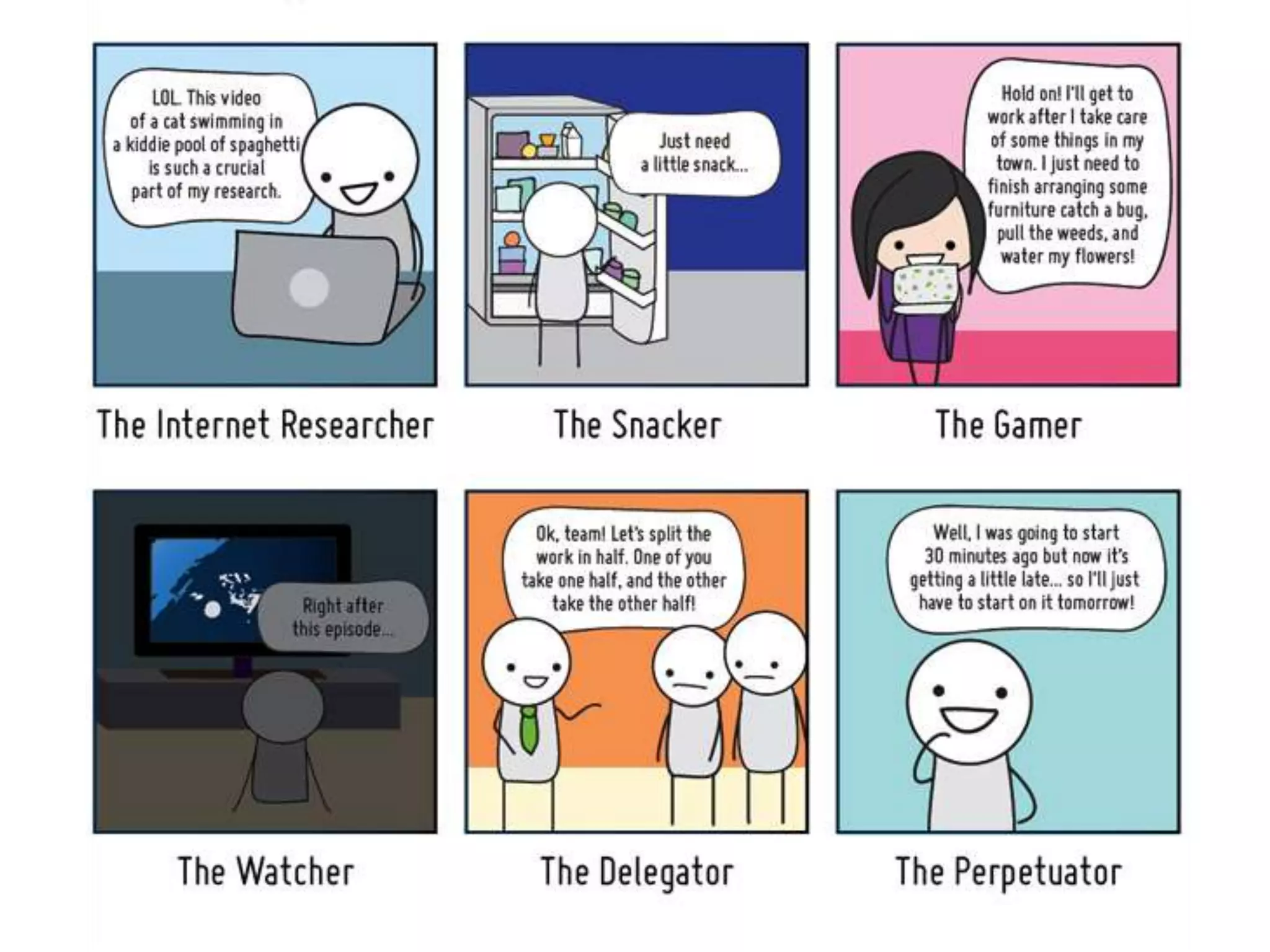
Types of Procrastinators
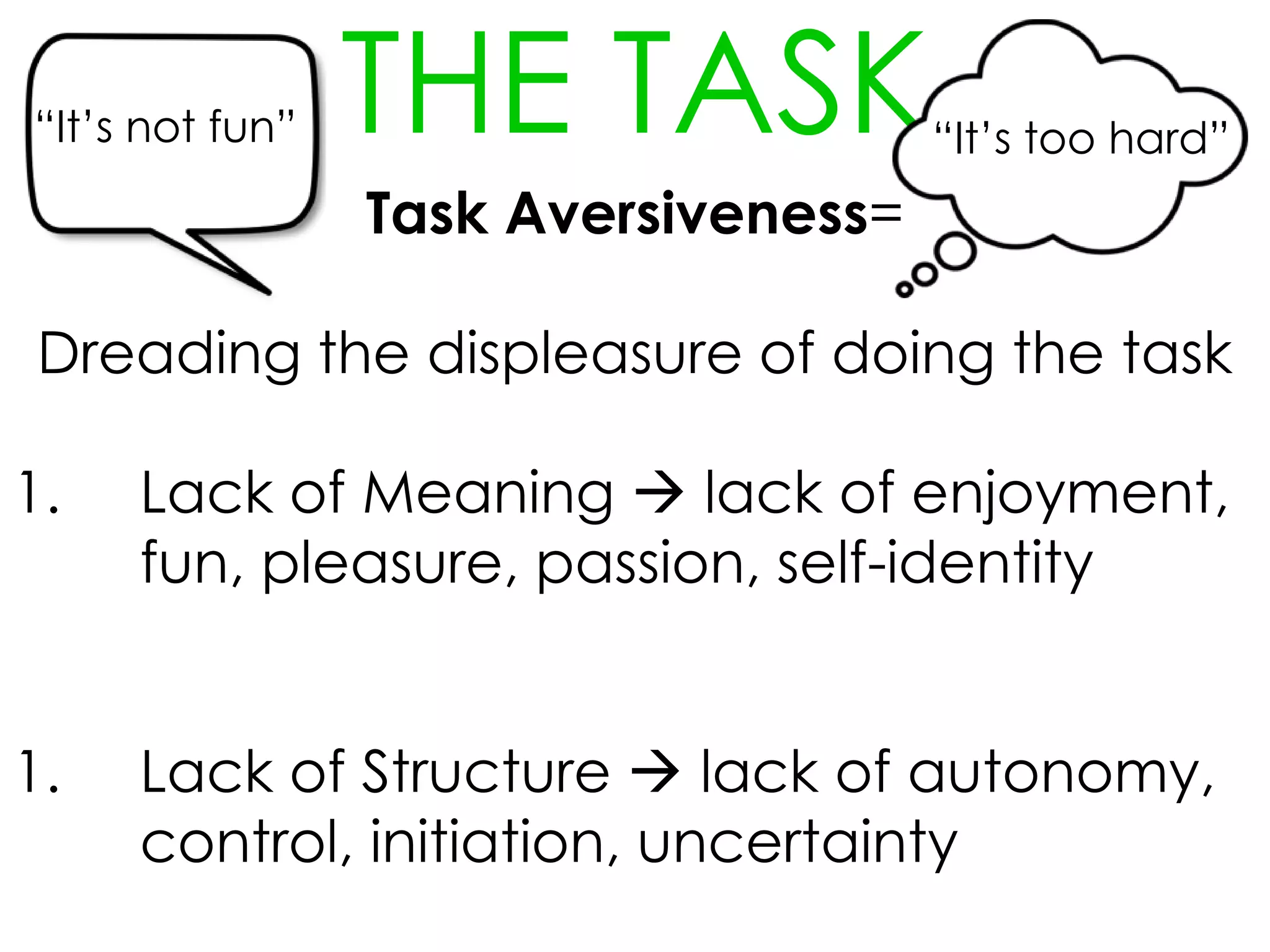
“It’s not fun”

THE TASK

“It’s too hard”

Task Aversiveness=
Dreading the displeasure of doing the task

1.

Lack of Meaning  lack of enjoyment,
fun, pleasure, passion, self-identity

1.

Lack of Structure  lack of autonomy,
control, initiation, uncertainty
PERSONAL
PROJECTS
ANALYSIS
Lack of Willpower
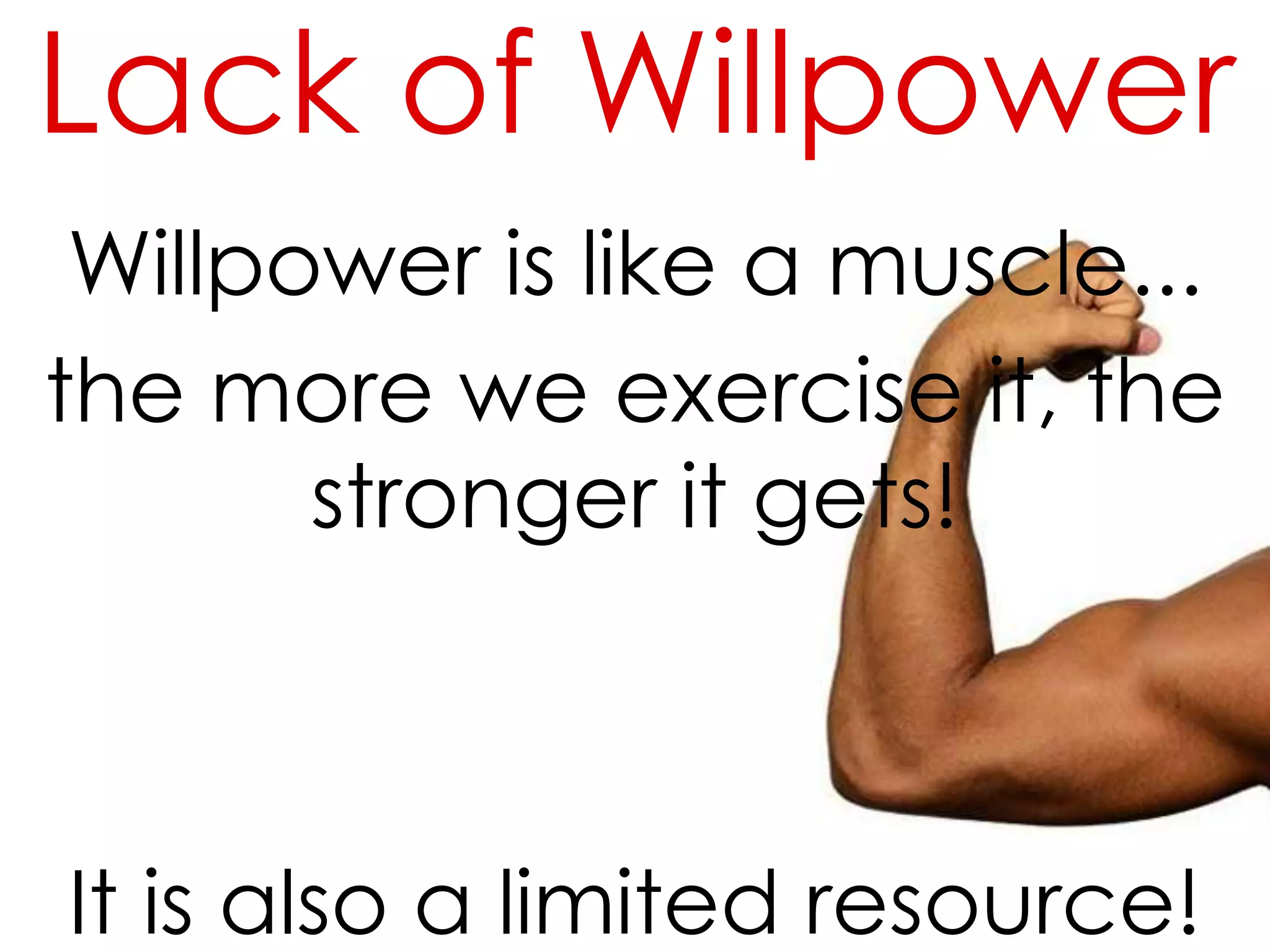
Willpower is like a muscle...
the more we exercise it, the
stronger it gets!

It is also a limited resource!
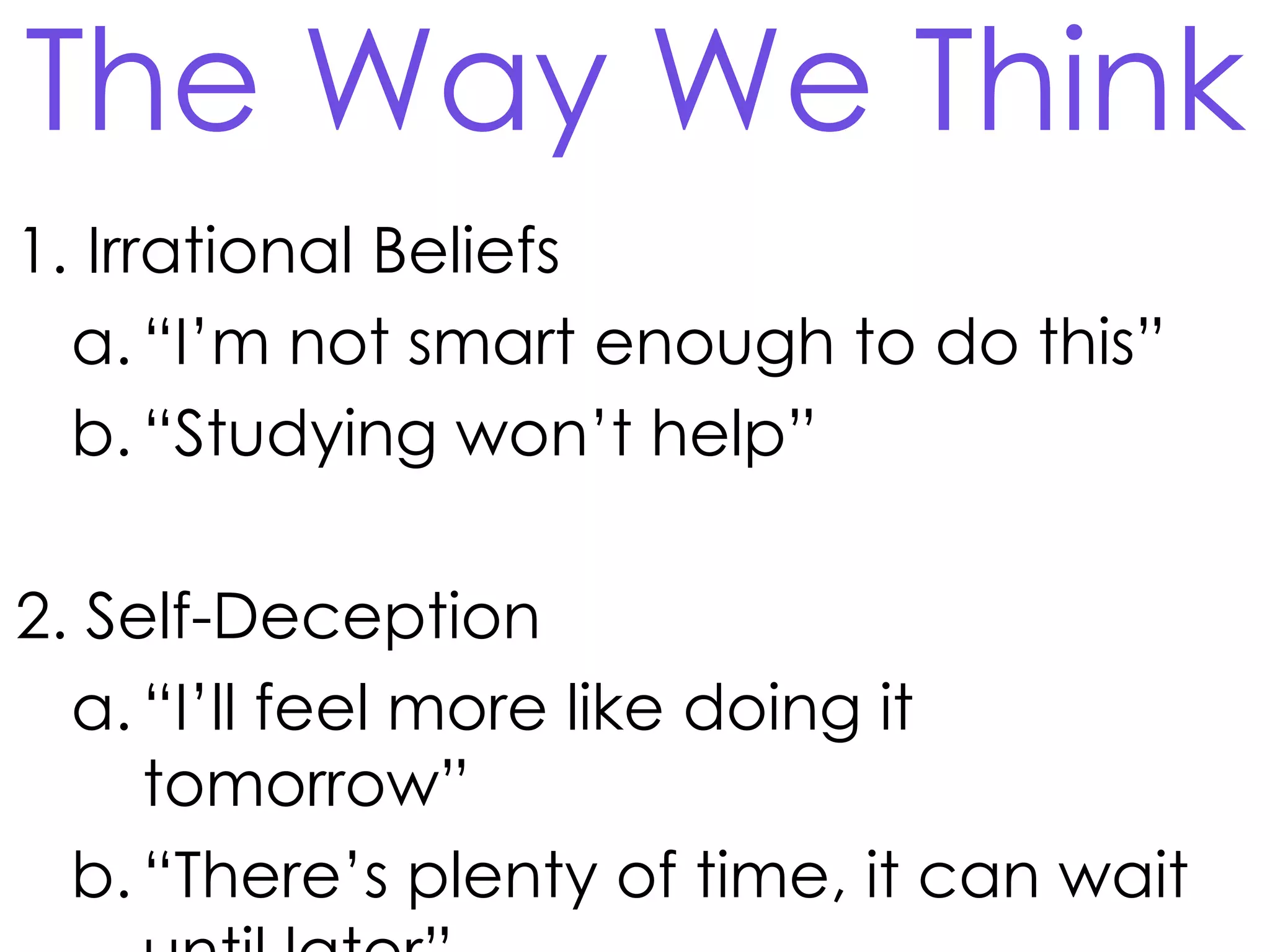
The Way We Think
1. Irrational Beliefs
a. “I’m not smart enough to do this”
b. “Studying won’t help”

2. Self-Deception
a. “I’ll feel more like doing it
tomorrow”
b. “There’s plenty of time, it can wait
Effects of Procrastination
Procrastination is more than the cost of a few
“all nighters” in the dorms of universities

a. performance
b. emotional and mental well-being
c. physical health
d. relationships
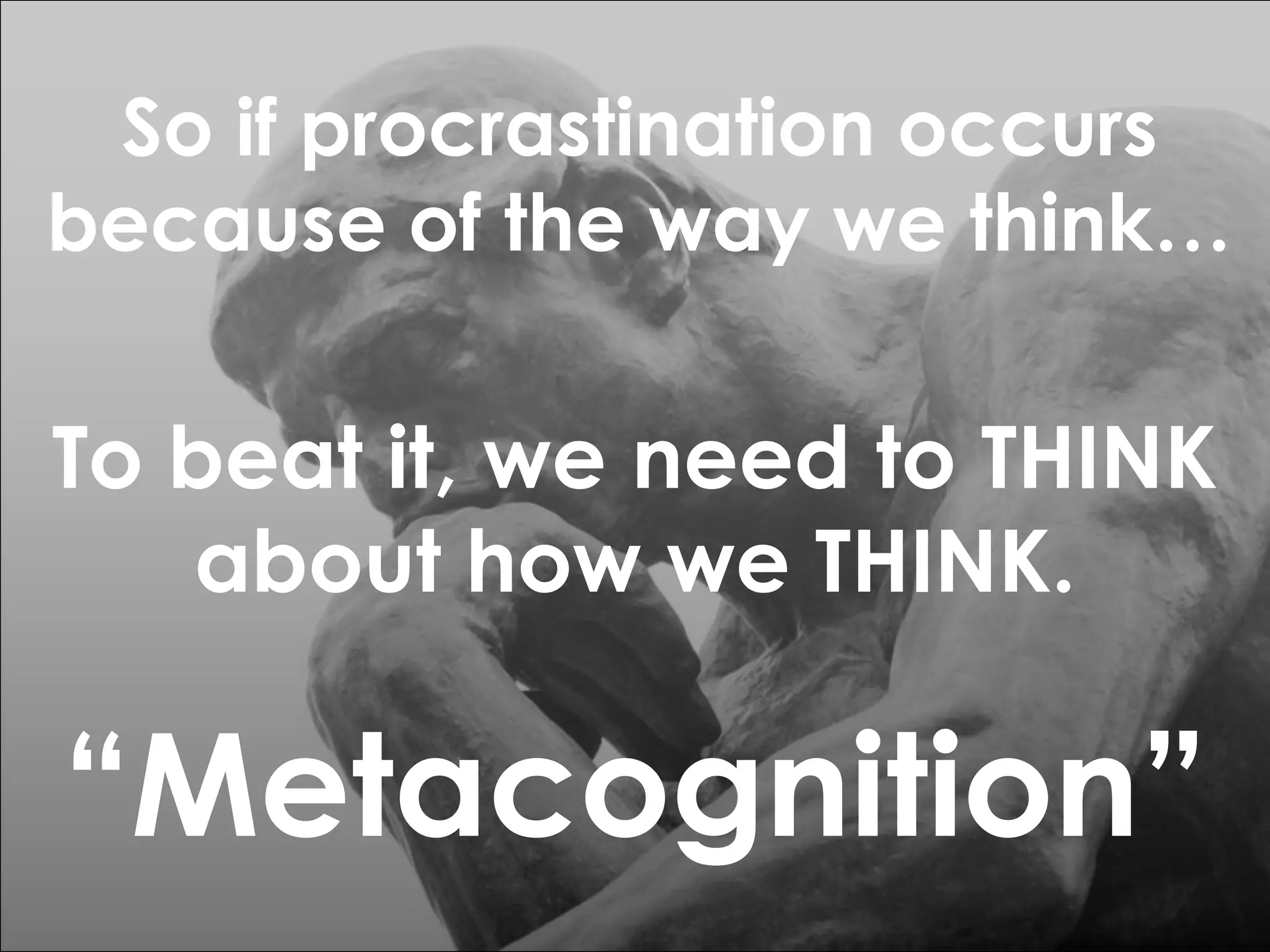
So if procrastination occurs
because of the way we think…

To beat it, we need to THINK
about how we THINK.

“Metacognition”
Recognizing Procrastination
1. Admit that you WILL procrastinate!
(it’s inevitable)
1. Identify the cost of procrastinating
or the benefits of completing the
task on time
1. Forgive yourself!
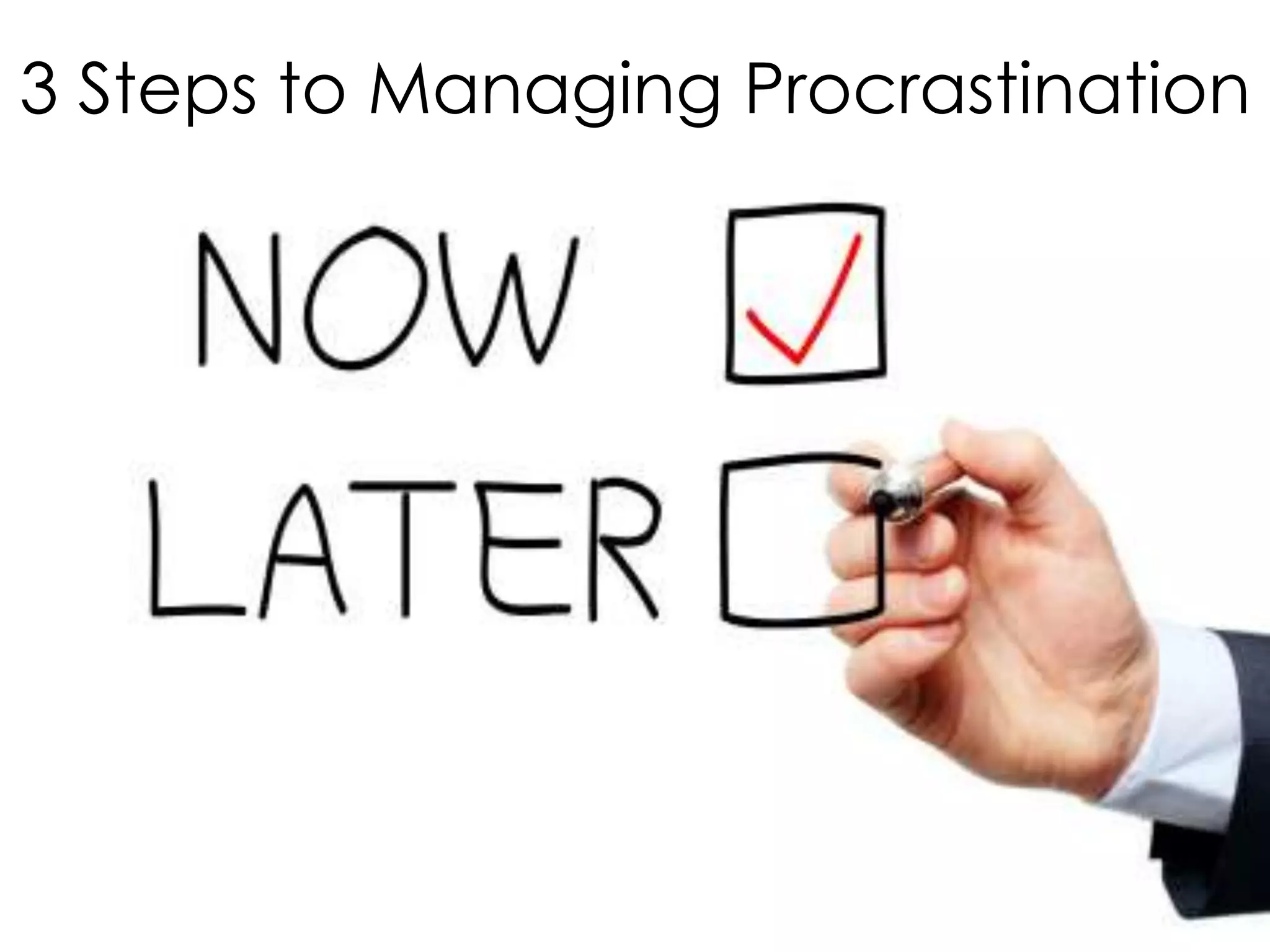
3 Steps to Managing Procrastination
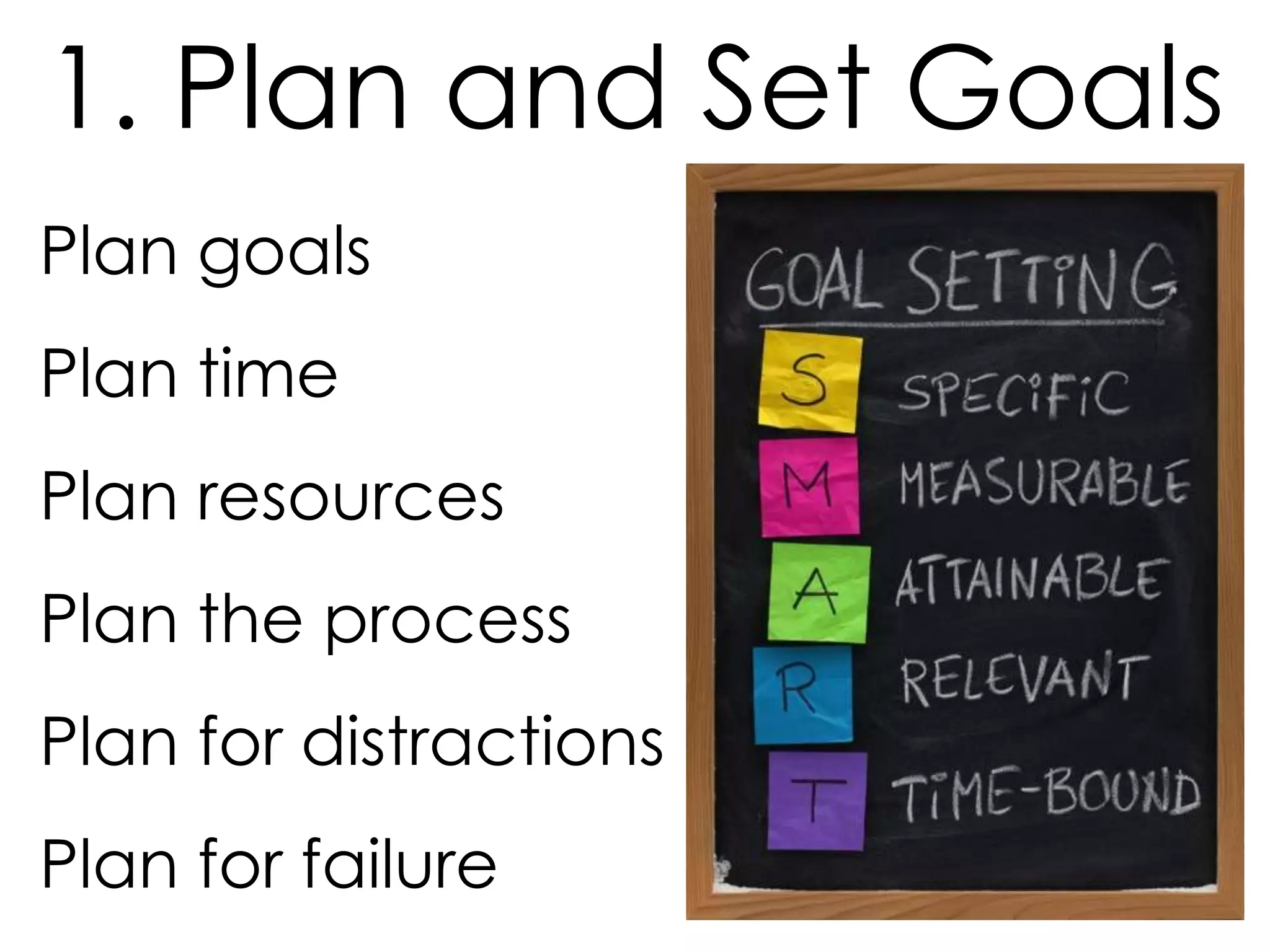
1. Plan and Set Goals
Plan goals
Plan time
Plan resources
Plan the process

Plan for distractions
Plan for failure
Intention to Action
Implementation Intentions:
“When X occurs, I will do Y, resulting in Z”
X= Social cue
Y= The task
Z= Result
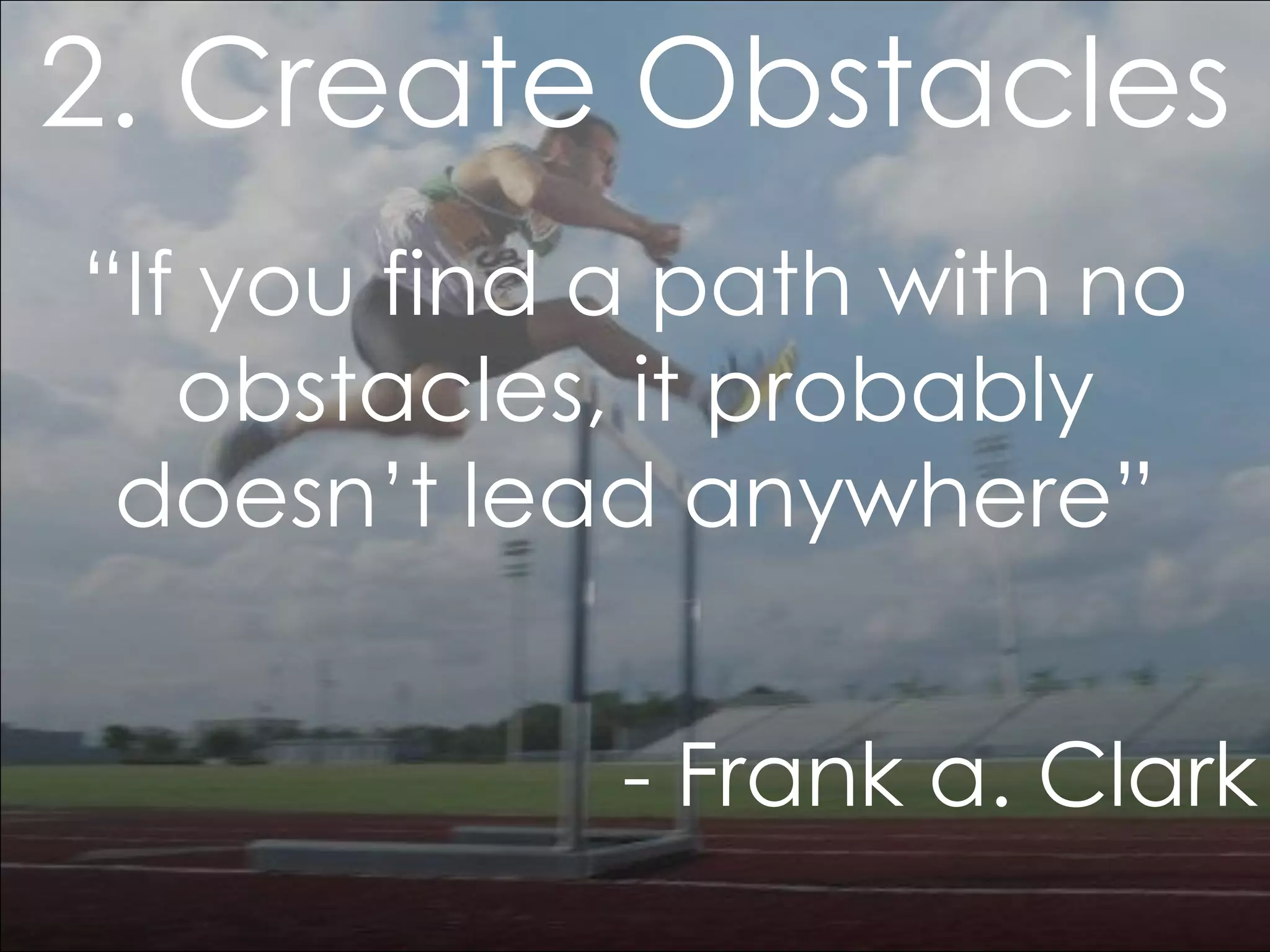
2. Create Obstacles
“If you find a path with no
obstacles, it probably
doesn’t lead anywhere”

- Frank a. Clark
2. Create Obstacles
- Multi-tasking is a myth!
- Choose a designated workspace that
you feel motivated in
- Bring only the tools you need for the
task
- Use internet blocking apps such as antisocial
- Leave post-it note reminders on your
most common forms of procrastination
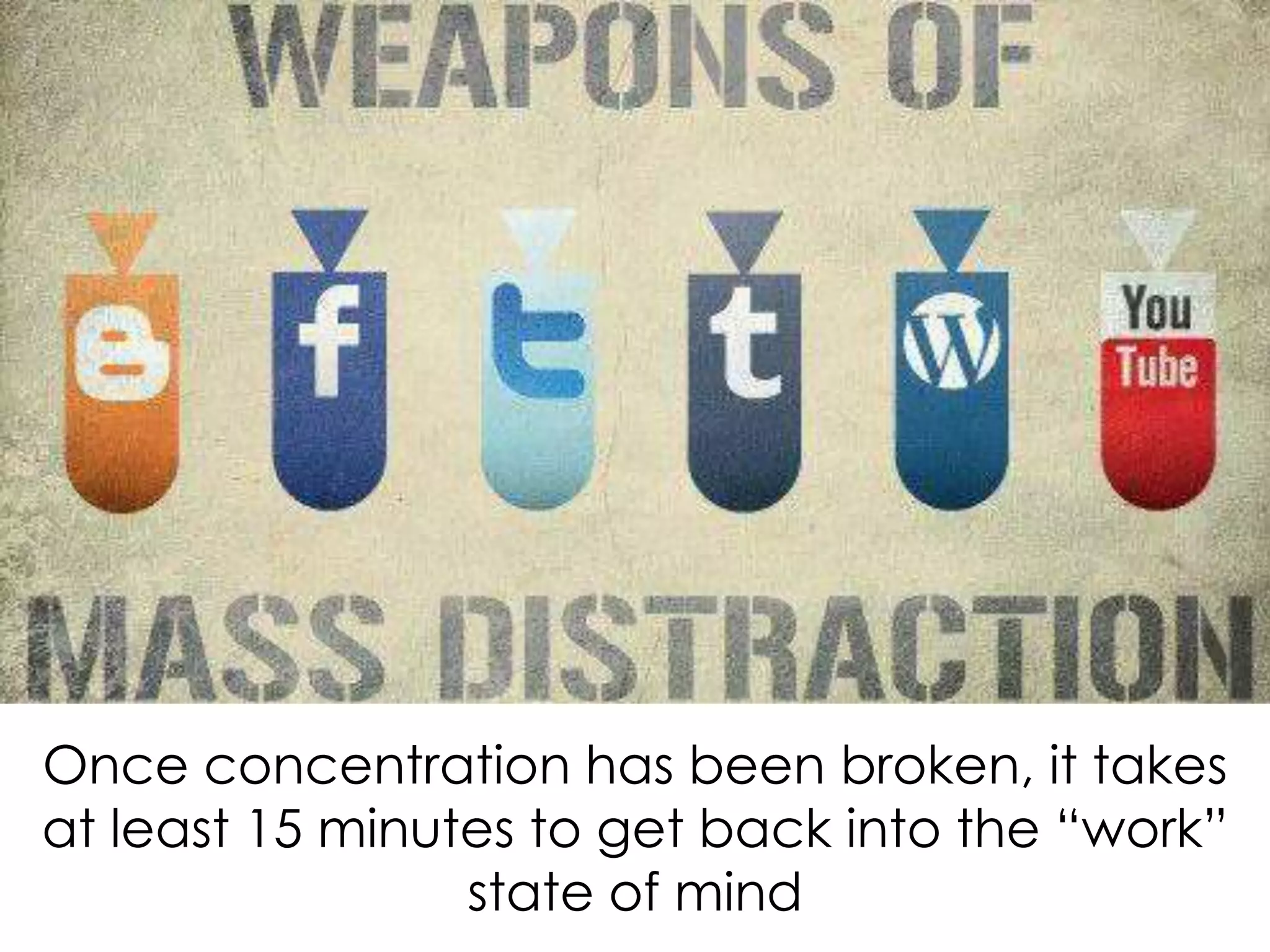
Once concentration has been broken, it takes
at least 15 minutes to get back into the “work”
state of mind
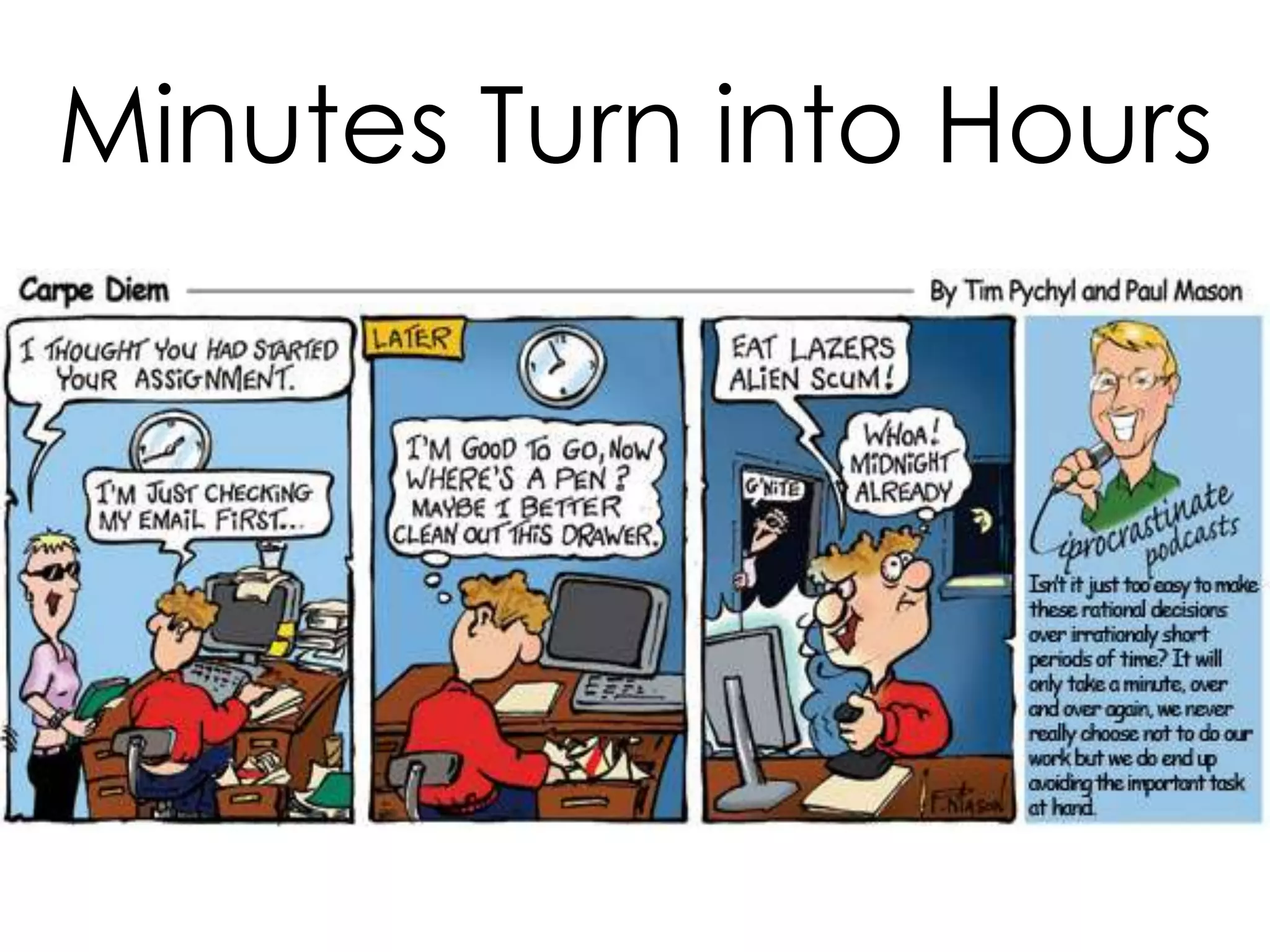
Minutes Turn into Hours
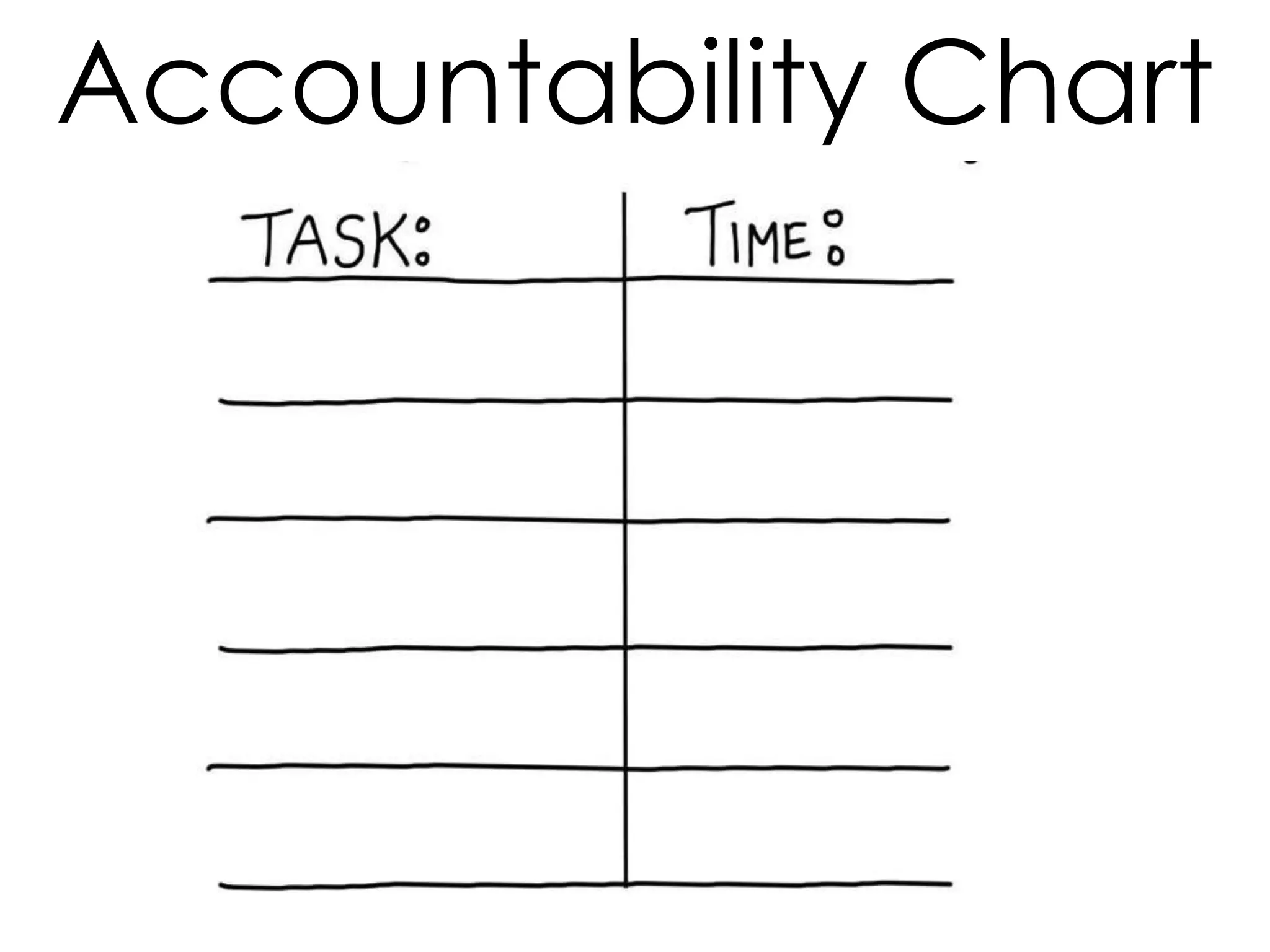
Accountability Chart
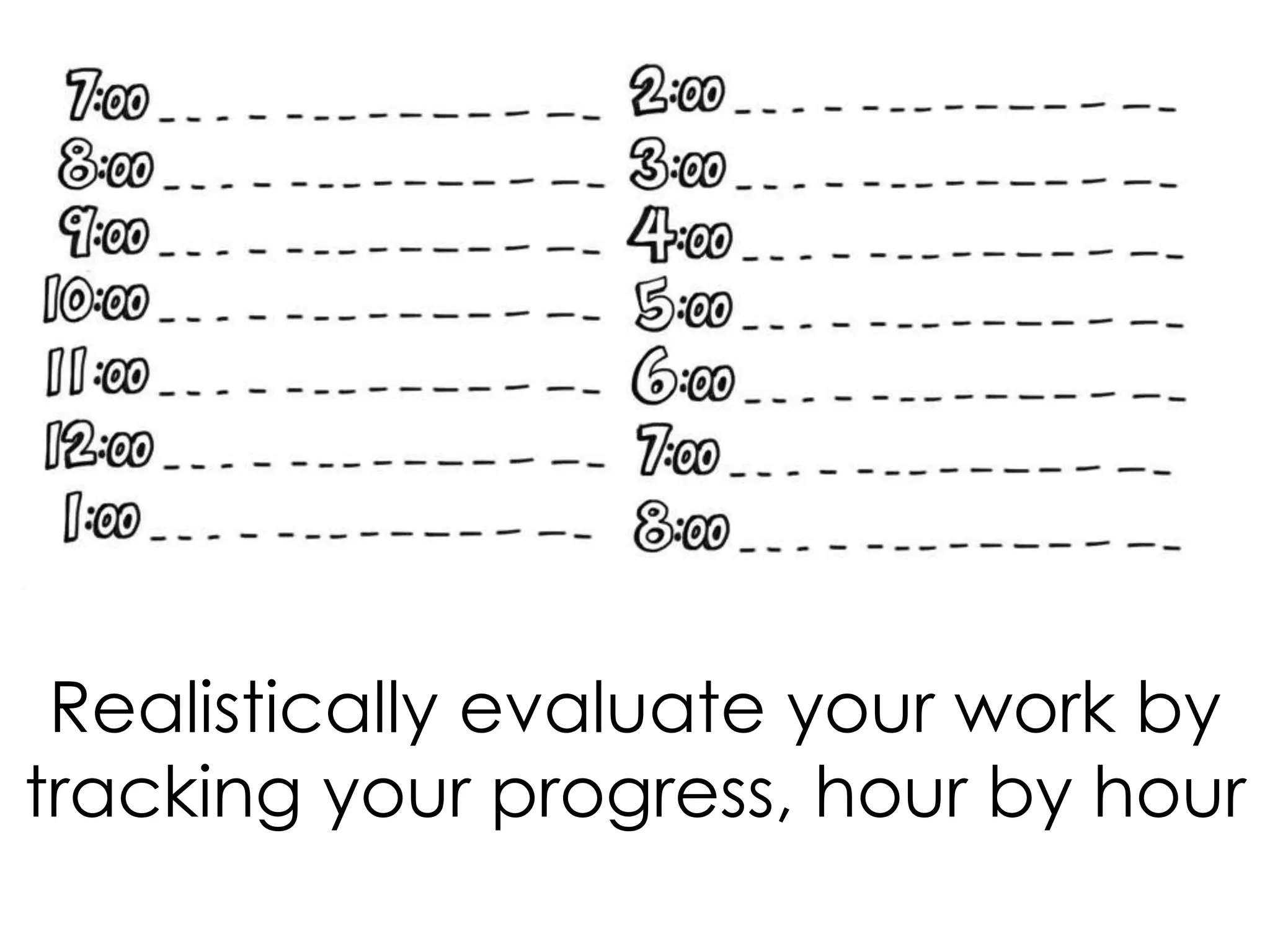
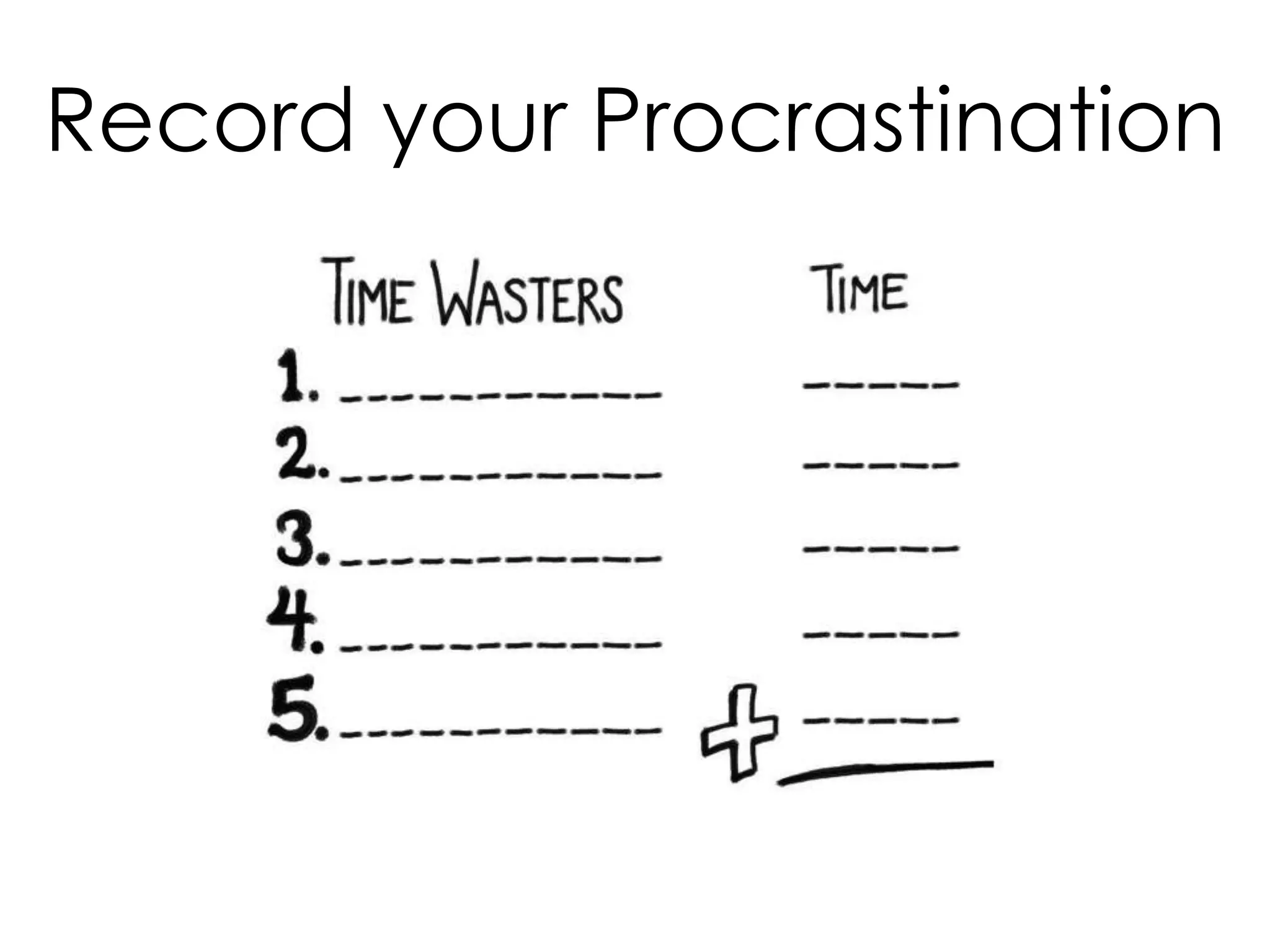
Realistically evaluate your work by
tracking your progress, hour by hour
Record your Procrastination
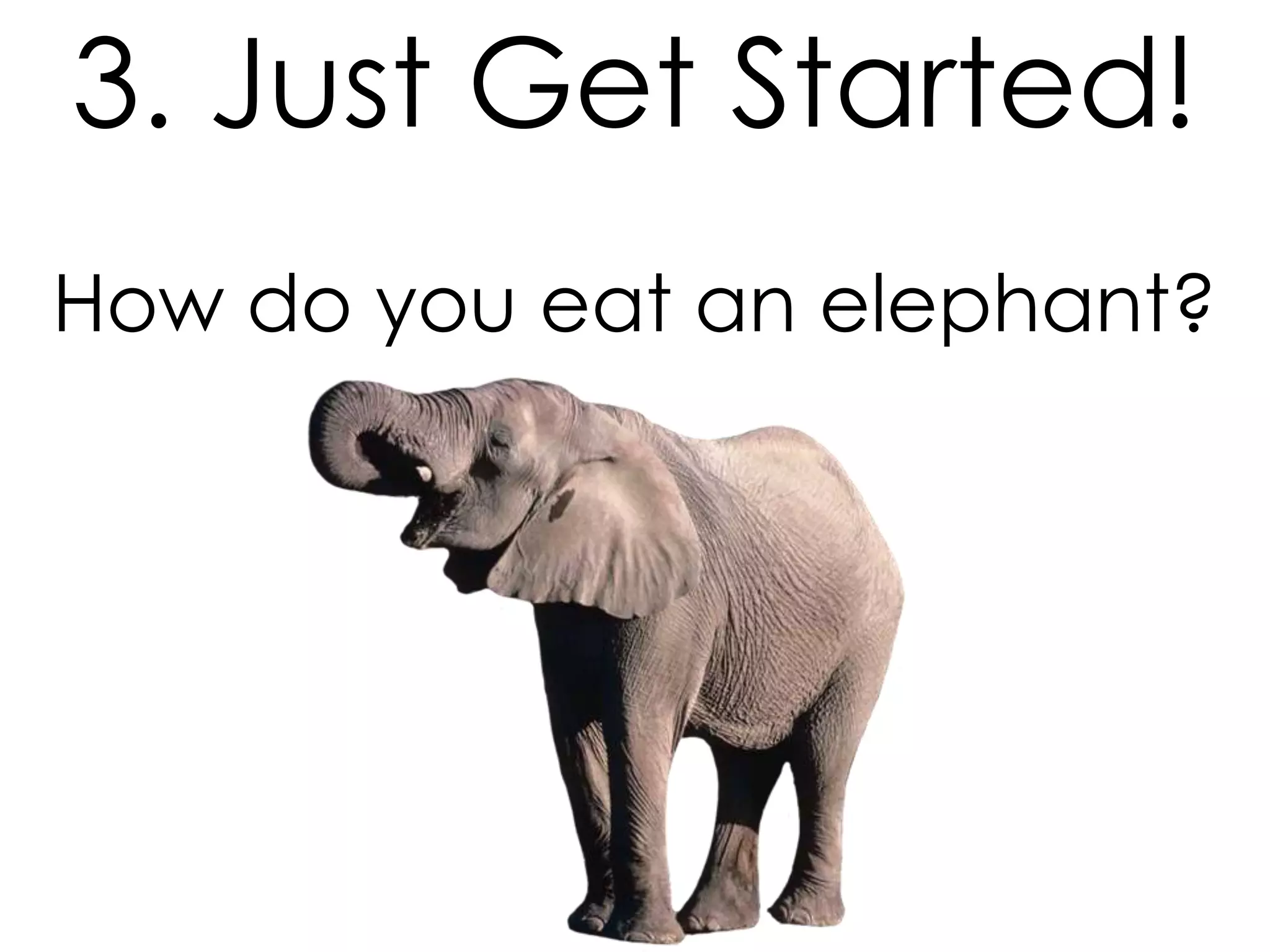
3. Just Get Started!
How do you eat an elephant?
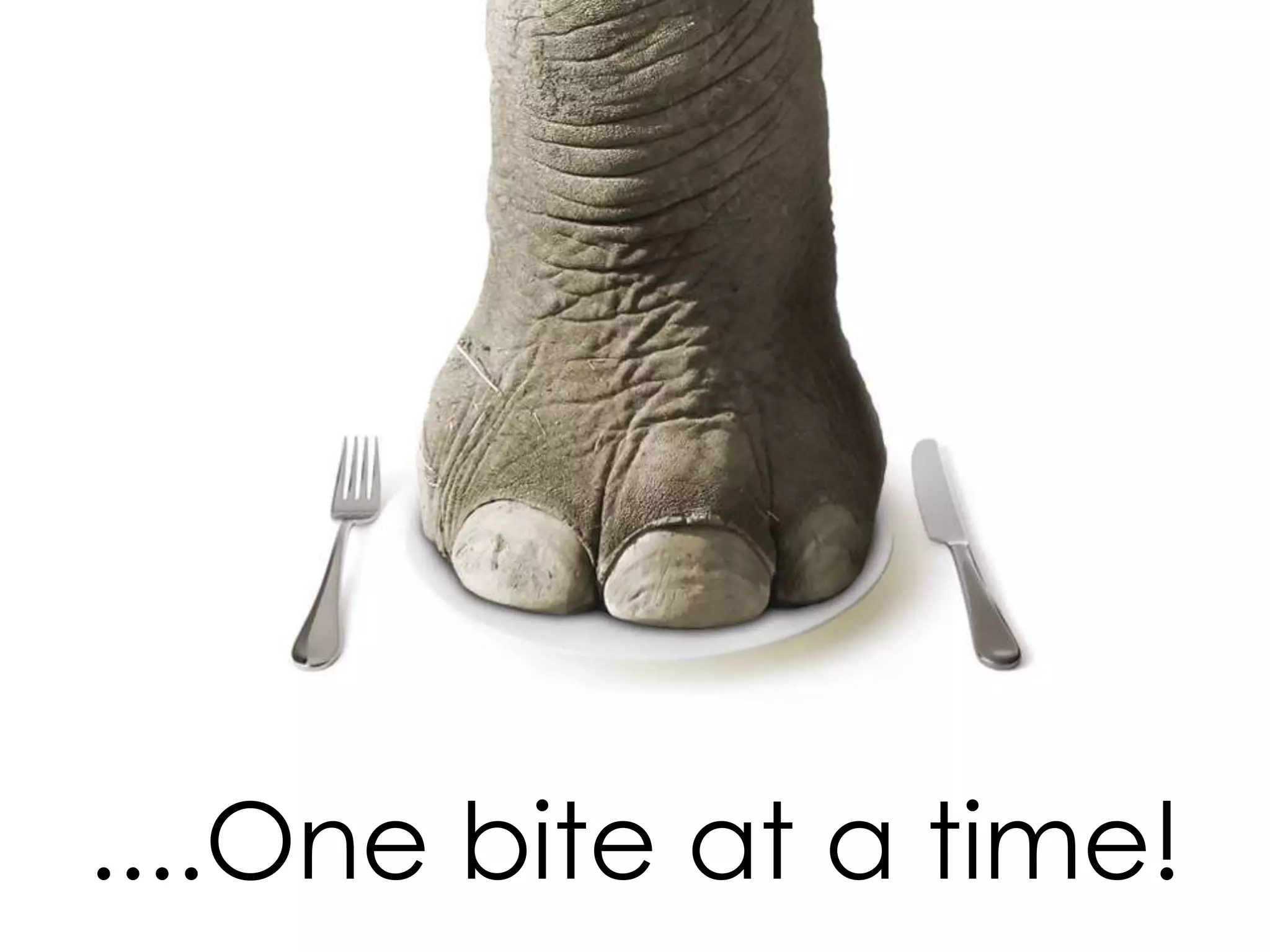
....One bite at a time!
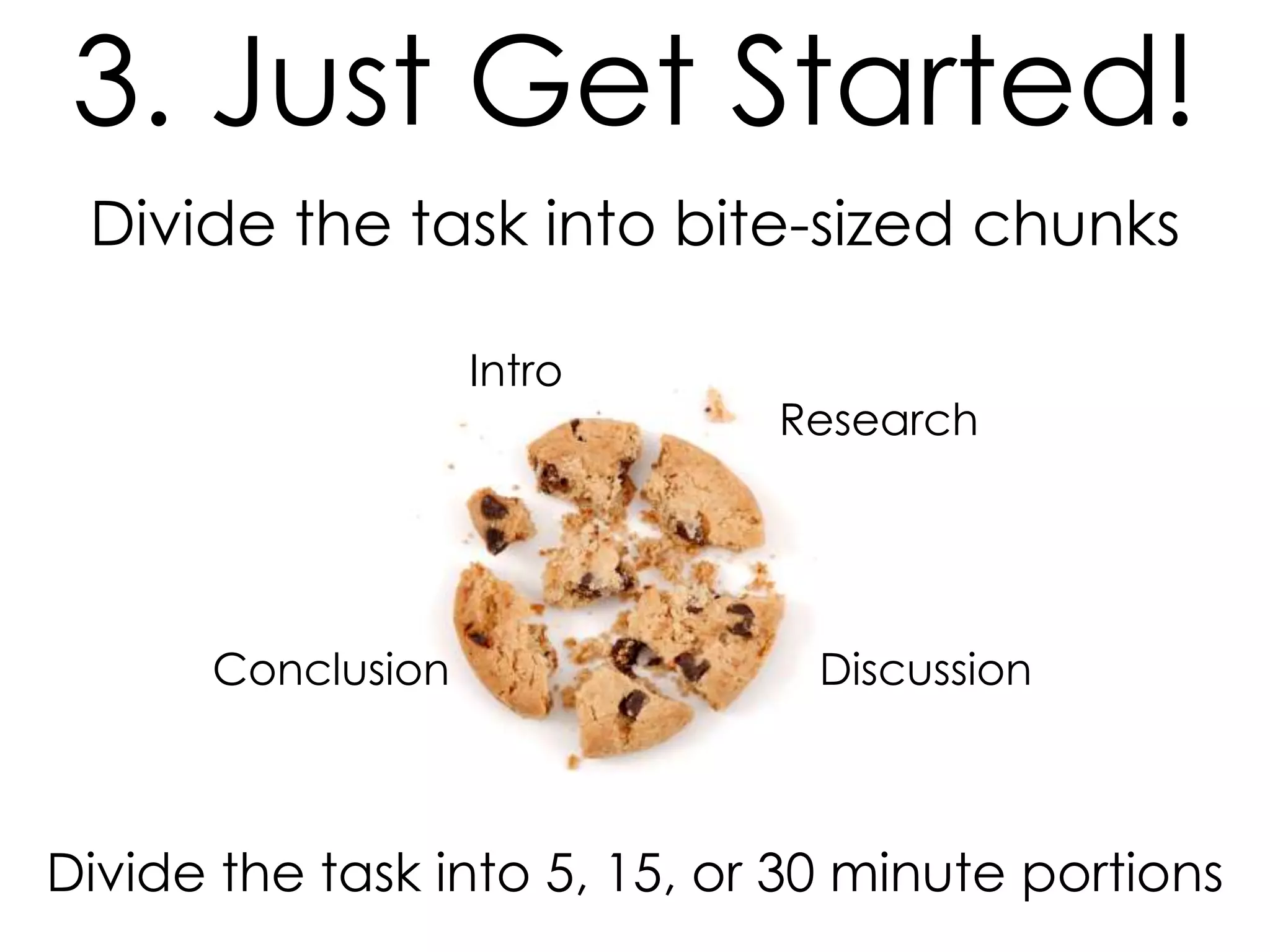
3. Just Get Started!
Divide the task into bite-sized chunks
Intro

Conclusion

Research

Discussion

Divide the task into 5, 15, or 30 minute portions
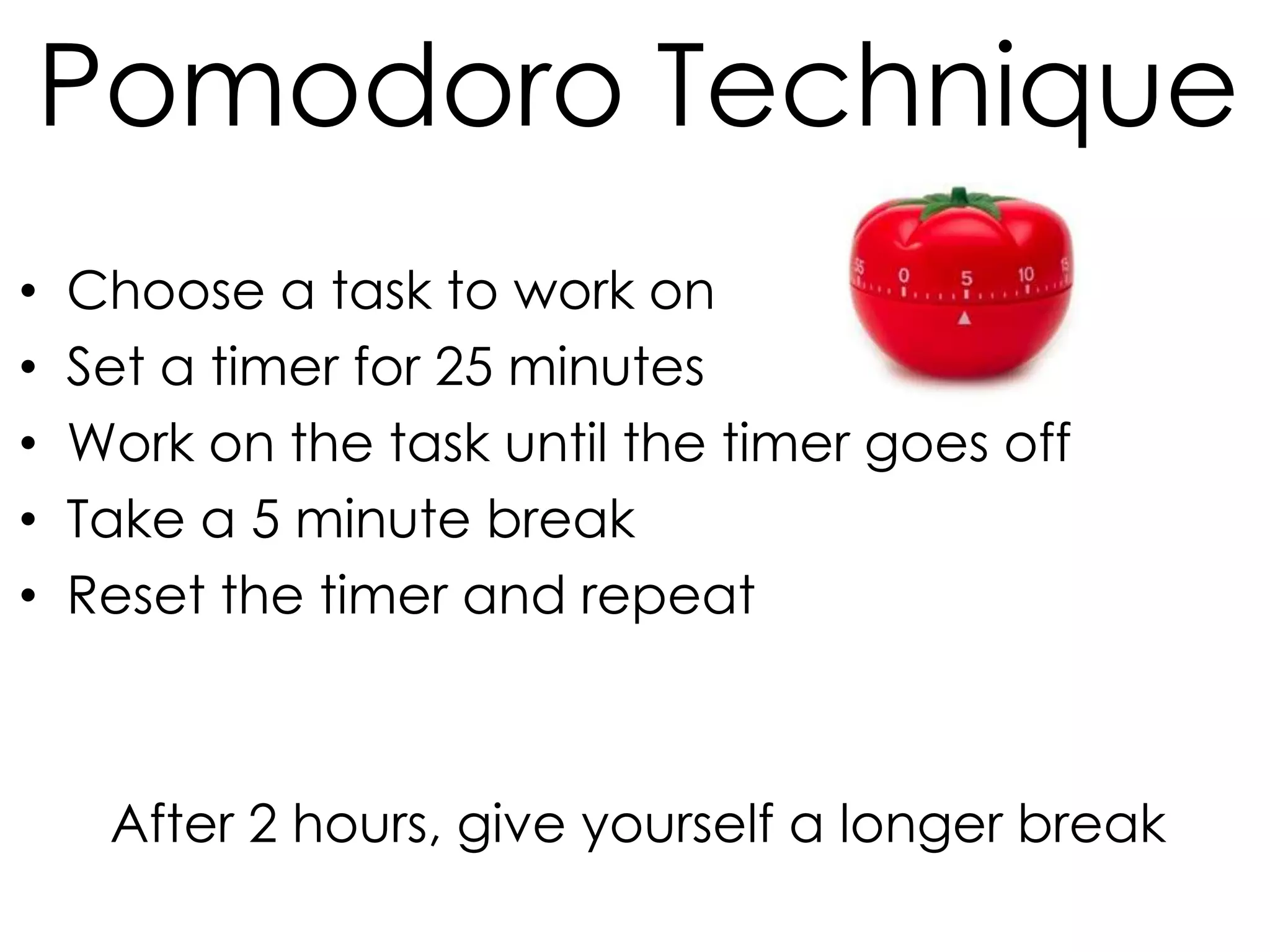
Pomodoro Technique
•
•
•
•
•

Choose a task to work on
Set a timer for 25 minutes
Work on the task until the timer goes off
Take a 5 minute break
Reset the timer and repeat

After 2 hours, give yourself a longer break
In Conclusion…
Resources
• Pychyl, t.a., and flett, g.l. (2012). procrastination and selfregulatory failure: An introduction to the special issue. journal of
rational-emotive and cognitive-behavior therapy. DOI:
10.1007/s10942-012-0149-5
• http://www.brianrlittle.com/topics/research/personal-projectsanalysis/
• http://www.counselling.cam.ac.uk/selfhelp/leaflets/procrastina
tion
• http://www.mentalhealth.ualberta.ca/en/~/media/mentalheal
th/docs/hintsprocrastination2012.pdf
• www.procrastination.ca
• http://httpserver.carleton.ca/~tpychyl/PYCHYL%20procrastination%20pres
entation%20march%2019%202012.pdf
• http://www.watchwellcast.com/

Procrastination Powerpoint2

  • 1.
  • 3.
    Prof. Tim Pychyl Dr.Timothy Pychyl is an associate professor in the department of psychology at Carleton University. His research focuses on procrastination. He has numerous publications, a website, a blog, podcasts, and comic strips For more information about his research, visit www.procrastination.ca
  • 4.
    … ENOUGH TOBREAK THE ICE!
  • 5.
  • 6.
    What is Procrastination? Derivedfrom the latin verb: procrastinare pro – forward motion crastinus – belonging to tomorrow To “put off or postpone until another day”
  • 7.
    Tomorrow (noun) A mysticalland where 98% of all human productivity, motivation, and achievement is stored. - Unknown
  • 8.
    Procrastination is the artof keeping up with yesterday Don Marquis
  • 9.
    Procrastination is the thiefof time Edward Young
  • 10.
    Never put offtill tomorrow what you can do the day after tomorrow just as well Mark Twain
  • 11.
  • 13.
    Why do PeopleProcrastinate? • Perfectionism • • Feeling inadequate • • Undeveloped study • skills • • Aversion to discomfort • Resentment Being overextended Lifestyle issues Fear of success/failure Overwhelming Negative emotional states
  • 14.
    Procrastination involves avoluntary, irrational, delay despite the expectation of a potential negative outcome. (Mohsen Haghbin)
  • 15.
    Psychologists define procrastinationas... The gap between intention and action
  • 16.
    This is anexample of Self-Regulation Failure a.k.a. Short-Term Mood Repair “Giving in to Feel Good”
  • 17.
    Personality (me) Nature ofour goals and intentions (the task) Self-Regulation Failure Cognitions and beliefs (the way I think) Self-control and willpower (lack of willpower)
  • 18.
    Personality “I don’t know whereto start” “I just don’t want to do it” Conscientiousness Impulsivity (Resistance) “It will never be good enough” (Fear of Failure) Perfectionism
  • 19.
  • 20.
  • 22.
    “It’s not fun” THETASK “It’s too hard” Task Aversiveness= Dreading the displeasure of doing the task 1. Lack of Meaning  lack of enjoyment, fun, pleasure, passion, self-identity 1. Lack of Structure  lack of autonomy, control, initiation, uncertainty
  • 23.
  • 24.
    Lack of Willpower Willpoweris like a muscle... the more we exercise it, the stronger it gets! It is also a limited resource!
  • 25.
    The Way WeThink 1. Irrational Beliefs a. “I’m not smart enough to do this” b. “Studying won’t help” 2. Self-Deception a. “I’ll feel more like doing it tomorrow” b. “There’s plenty of time, it can wait
  • 26.
    Effects of Procrastination Procrastinationis more than the cost of a few “all nighters” in the dorms of universities a. performance b. emotional and mental well-being c. physical health d. relationships
  • 27.
    So if procrastinationoccurs because of the way we think… To beat it, we need to THINK about how we THINK. “Metacognition”
  • 28.
    Recognizing Procrastination 1. Admitthat you WILL procrastinate! (it’s inevitable) 1. Identify the cost of procrastinating or the benefits of completing the task on time 1. Forgive yourself!
  • 29.
    3 Steps toManaging Procrastination
  • 30.
    1. Plan andSet Goals Plan goals Plan time Plan resources Plan the process Plan for distractions Plan for failure
  • 32.
    Intention to Action ImplementationIntentions: “When X occurs, I will do Y, resulting in Z” X= Social cue Y= The task Z= Result
  • 33.
    2. Create Obstacles “Ifyou find a path with no obstacles, it probably doesn’t lead anywhere” - Frank a. Clark
  • 34.
    2. Create Obstacles -Multi-tasking is a myth! - Choose a designated workspace that you feel motivated in - Bring only the tools you need for the task - Use internet blocking apps such as antisocial - Leave post-it note reminders on your most common forms of procrastination
  • 35.
    Once concentration hasbeen broken, it takes at least 15 minutes to get back into the “work” state of mind
  • 36.
  • 37.
  • 38.
    Realistically evaluate yourwork by tracking your progress, hour by hour
  • 39.
  • 40.
    3. Just GetStarted! How do you eat an elephant?
  • 41.
  • 42.
    3. Just GetStarted! Divide the task into bite-sized chunks Intro Conclusion Research Discussion Divide the task into 5, 15, or 30 minute portions
  • 44.
    Pomodoro Technique • • • • • Choose atask to work on Set a timer for 25 minutes Work on the task until the timer goes off Take a 5 minute break Reset the timer and repeat After 2 hours, give yourself a longer break
  • 46.
  • 47.
    Resources • Pychyl, t.a.,and flett, g.l. (2012). procrastination and selfregulatory failure: An introduction to the special issue. journal of rational-emotive and cognitive-behavior therapy. DOI: 10.1007/s10942-012-0149-5 • http://www.brianrlittle.com/topics/research/personal-projectsanalysis/ • http://www.counselling.cam.ac.uk/selfhelp/leaflets/procrastina tion • http://www.mentalhealth.ualberta.ca/en/~/media/mentalheal th/docs/hintsprocrastination2012.pdf • www.procrastination.ca • http://httpserver.carleton.ca/~tpychyl/PYCHYL%20procrastination%20pres entation%20march%2019%202012.pdf • http://www.watchwellcast.com/