
























WHATS‟S THE KEY
      DIFFERENCE
       BETWEEN A
SCALEABLE START UP
    AND A LARGER
      ESTABLISHED
      COMPANY?

                PART FIVE
Unlike a large   In a start up,
profitable       cash is not
company,         king;
start ups have   The number of
                 times you can
limited time     adapt to find
and require      the right business
processes        model before
                 you run out of
that are cost    money is
effective and
quick
CUSTOMER DEVELOPMENT
     INTERVIEWS
Know your goals and
questions ahead of time
Have your assumptions and thus learning goals prioritised ahead of
time. Decide who you want to talk to (age, gender, location,
profession/industry, affluence, etc), and target interviewees
accordingly. Prep your basic flow and list of questions.


                              You might veer off the plan to follow your nose,
                              which is great, but go in prepared.
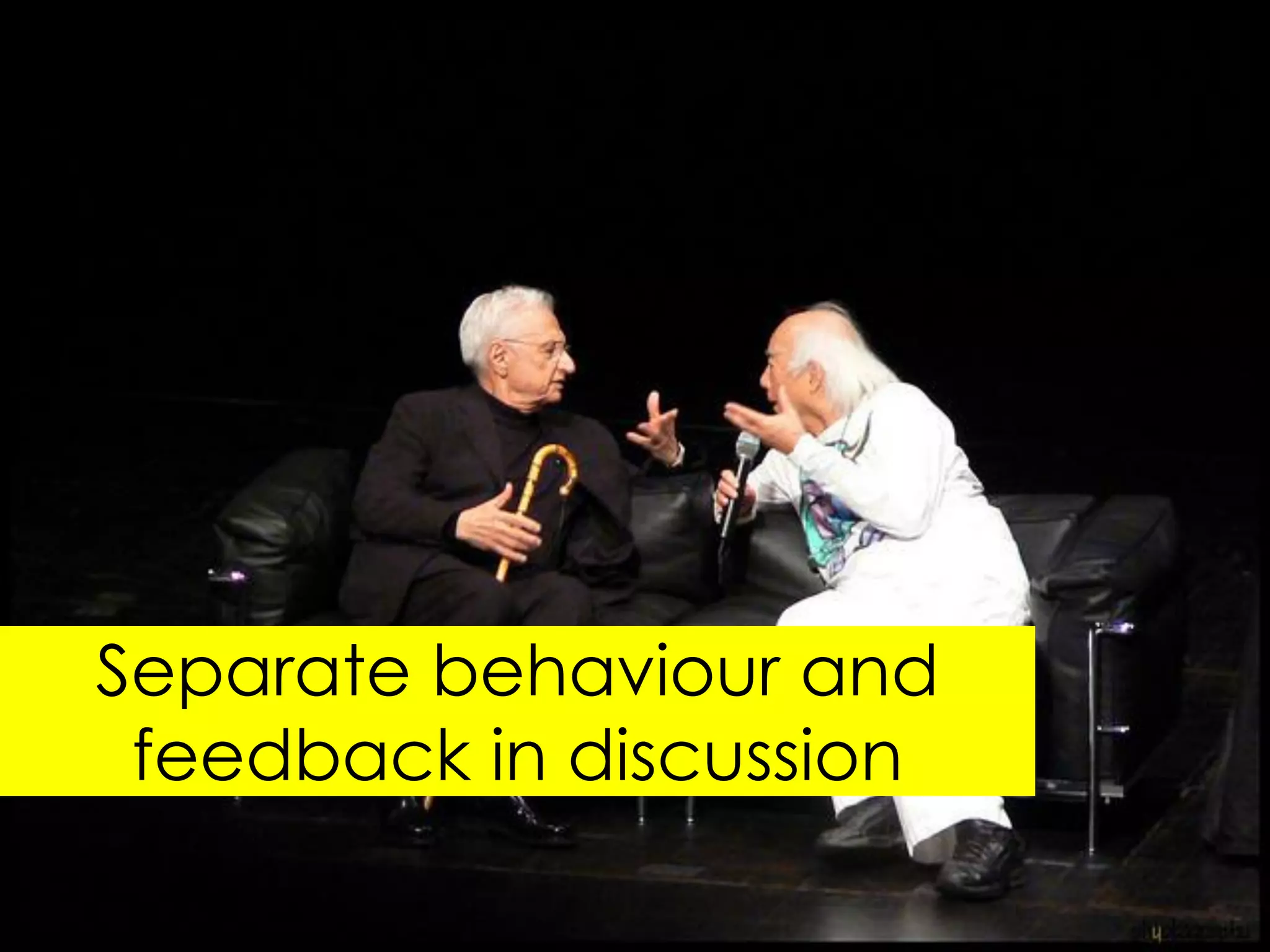
Separate behaviour and
 feedback in discussion
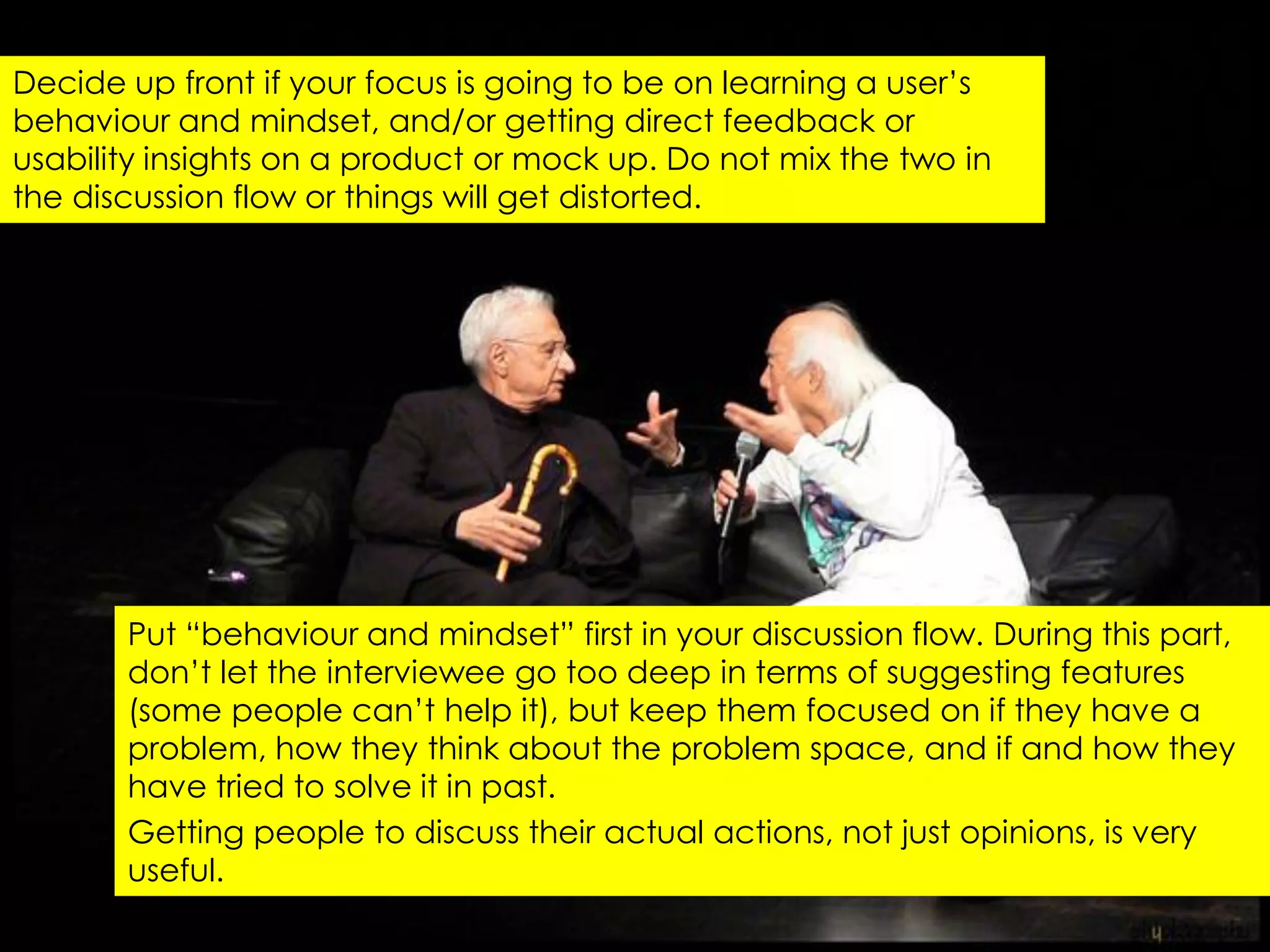
Decide up front if your focus is going to be on learning a user‟s
behaviour and mindset, and/or getting direct feedback or
usability insights on a product or mock up. Do not mix the two in
the discussion flow or things will get distorted.


       Put “behaviour and mindset” first in your discussion flow. During this part,
       don‟t let the interviewee go too deep in terms of suggesting features
       (some people can‟t help it), but keep them focused on if they have a
       problem, how they think about the problem space, and if and how they
       have tried to solve it in past.
       Getting people to discuss their actual actions, not just opinions, is very
       useful.
Work from an outline of
  3-5 key questions
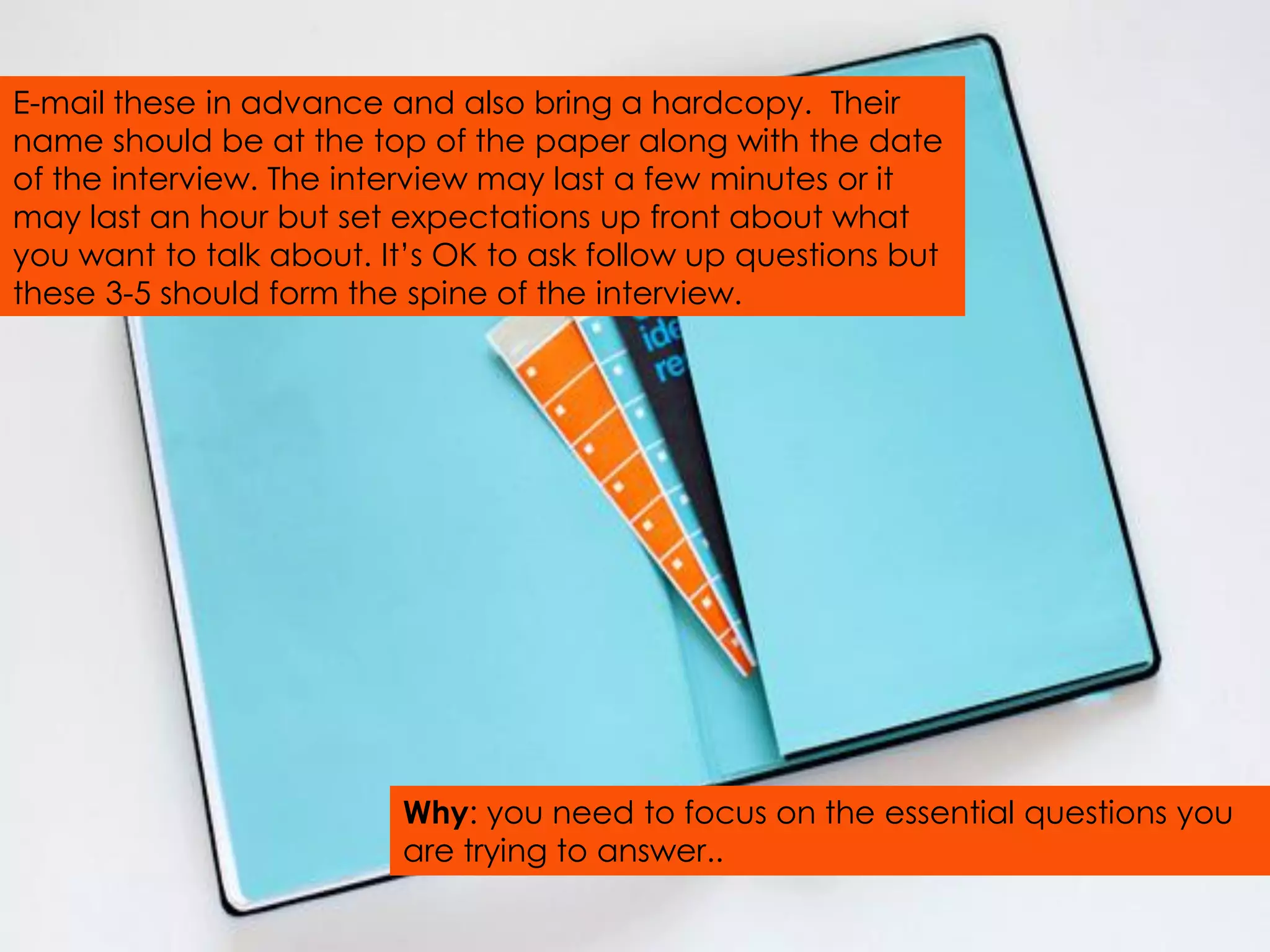
E-mail these in advance and also bring a hardcopy. Their
name should be at the top of the paper along with the date
of the interview. The interview may last a few minutes or it
may last an hour but set expectations up front about what
you want to talk about. It‟s OK to ask follow up questions but
these 3-5 should form the spine of the interview.


                         Why: you need to focus on the essential questions you
                         are trying to answer..
Get psyched to hear things
 you don‟t want to hear
If you don‟t do this, you might find yourself selling or convincing, or even
hearing what you want to hear. Remember, the goal in this early stage is
learning and validation, not a sale.


               Unless, of course, you have set a sale or „Letter Of Intent‟ as a
               goal. You might want to shoot for a commitment from the
               interviewee as a way to measure true demand. If so, keep it
               entirely out of the behaviour/mindset portion of the discussion.
One person at a time


            Focus groups are a group-think,
            distraction-filled mess. Avoid them and
            only talk to one person at a time.
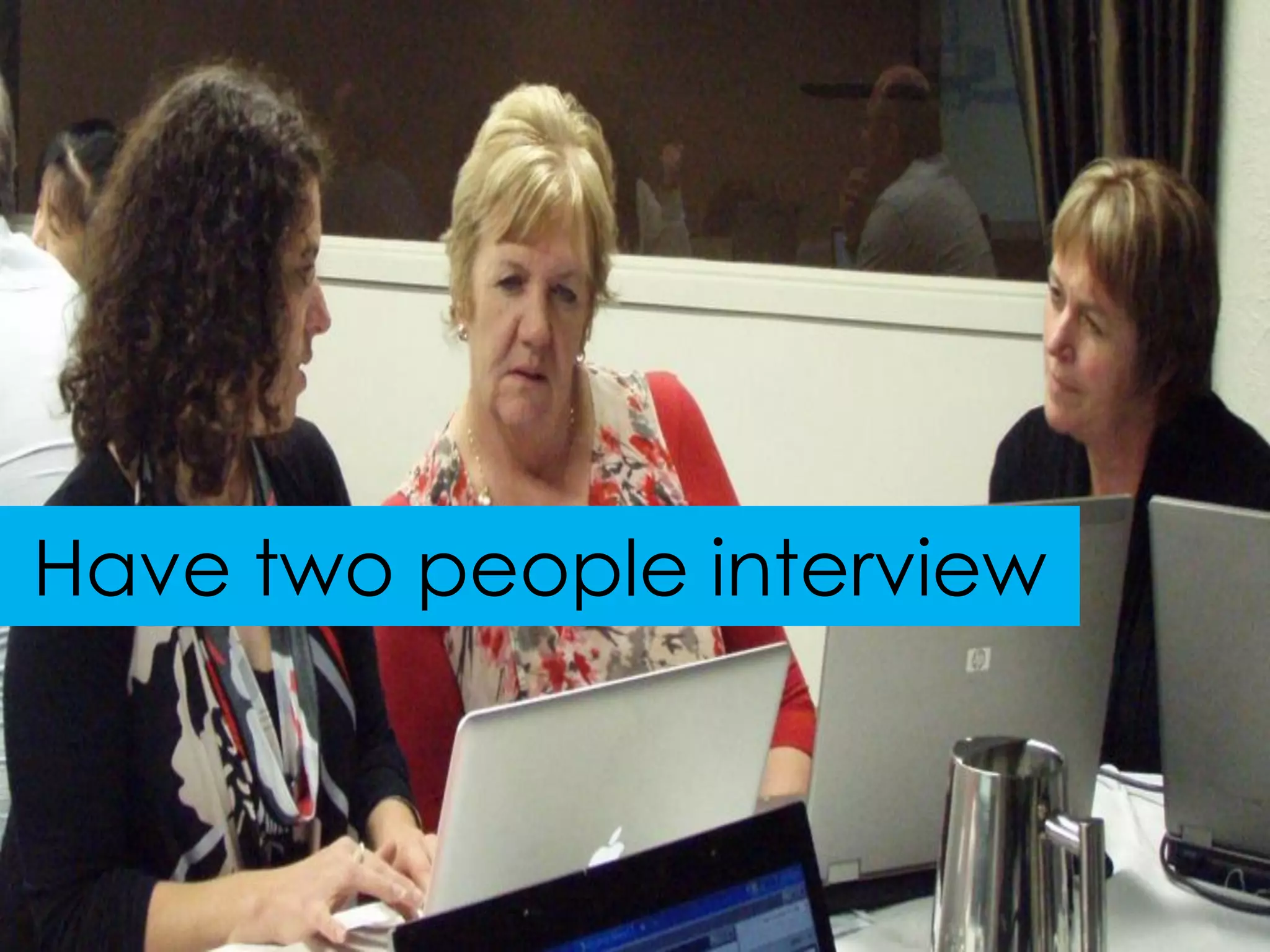
Have two people interview
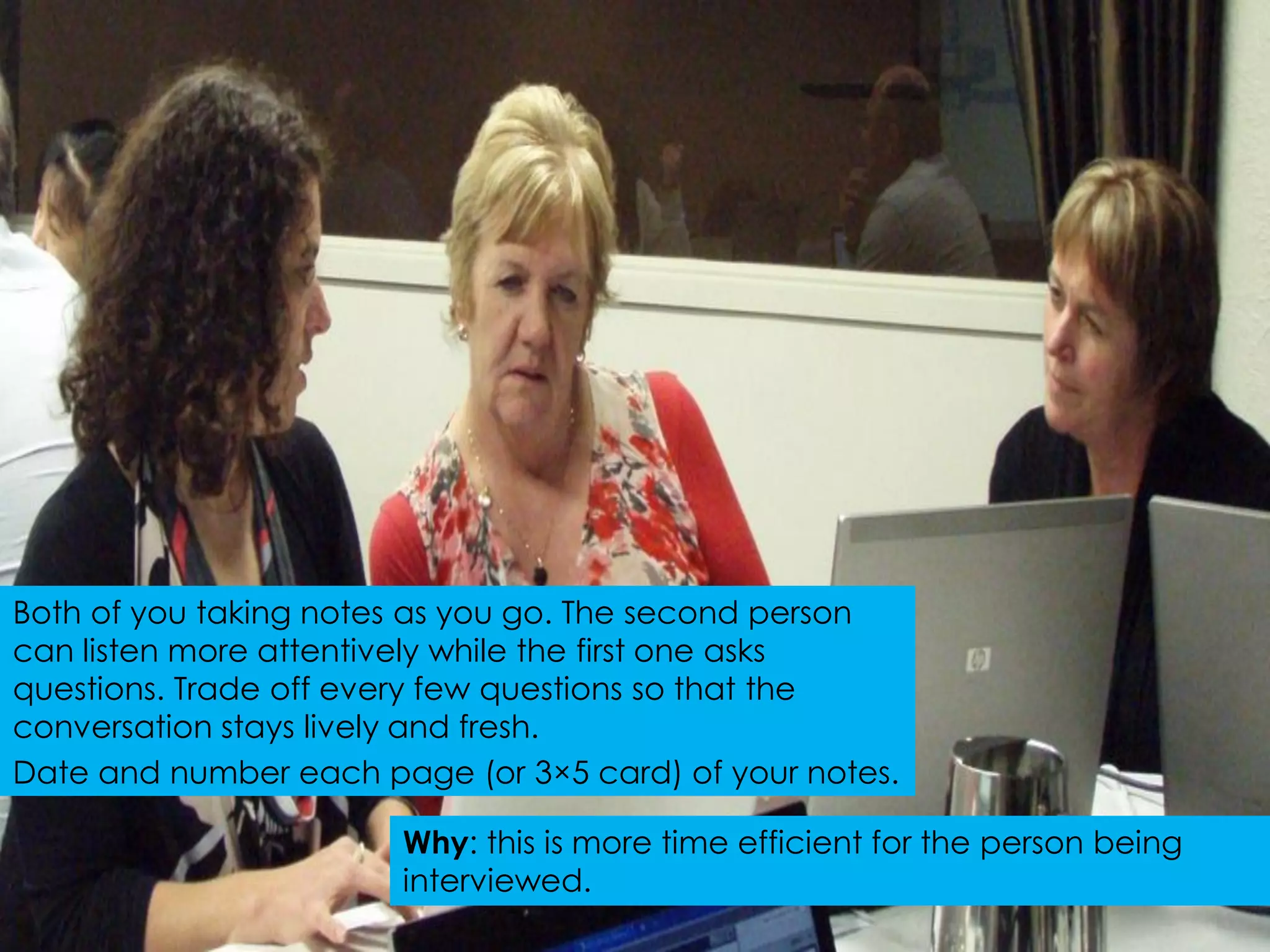
Both of you taking notes as you go. The second person
can listen more attentively while the first one asks
questions. Trade off every few questions so that the
conversation stays lively and fresh.
Date and number each page (or 3×5 card) of your notes.

                       Why: this is more time efficient for the person being
                       interviewed.
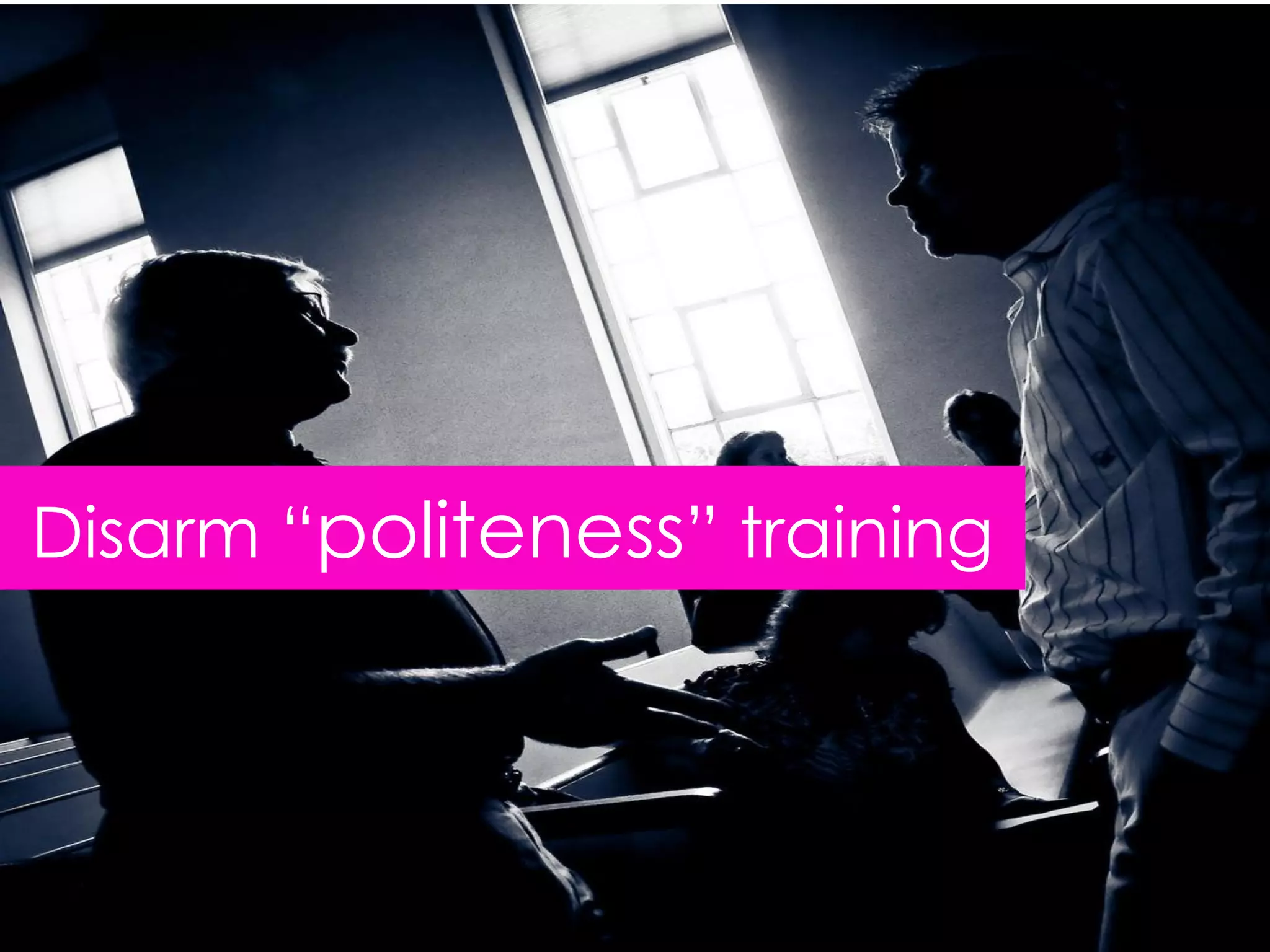
Disarm “politeness” training
People are trained not to call your baby ugly.
You need to make them feel safe to do this.


              My approach was to explain that the worst thing that could
              happen to me was building something people didn‟t care about,
              so the best way they could help me was absolute, brutal honesty.
Ask open ended questions
Do not ask too many yes/no questions.


     For example, minimize such questions as “do you like Trademe?” Instead
     ask “what kinds of deals do you look for, if any?” “What motivates you to
     hunt for deals?” “How do you discover deals?” “Do you get frustrated with
     the deal sites out there?”
Listen, don‟t talk
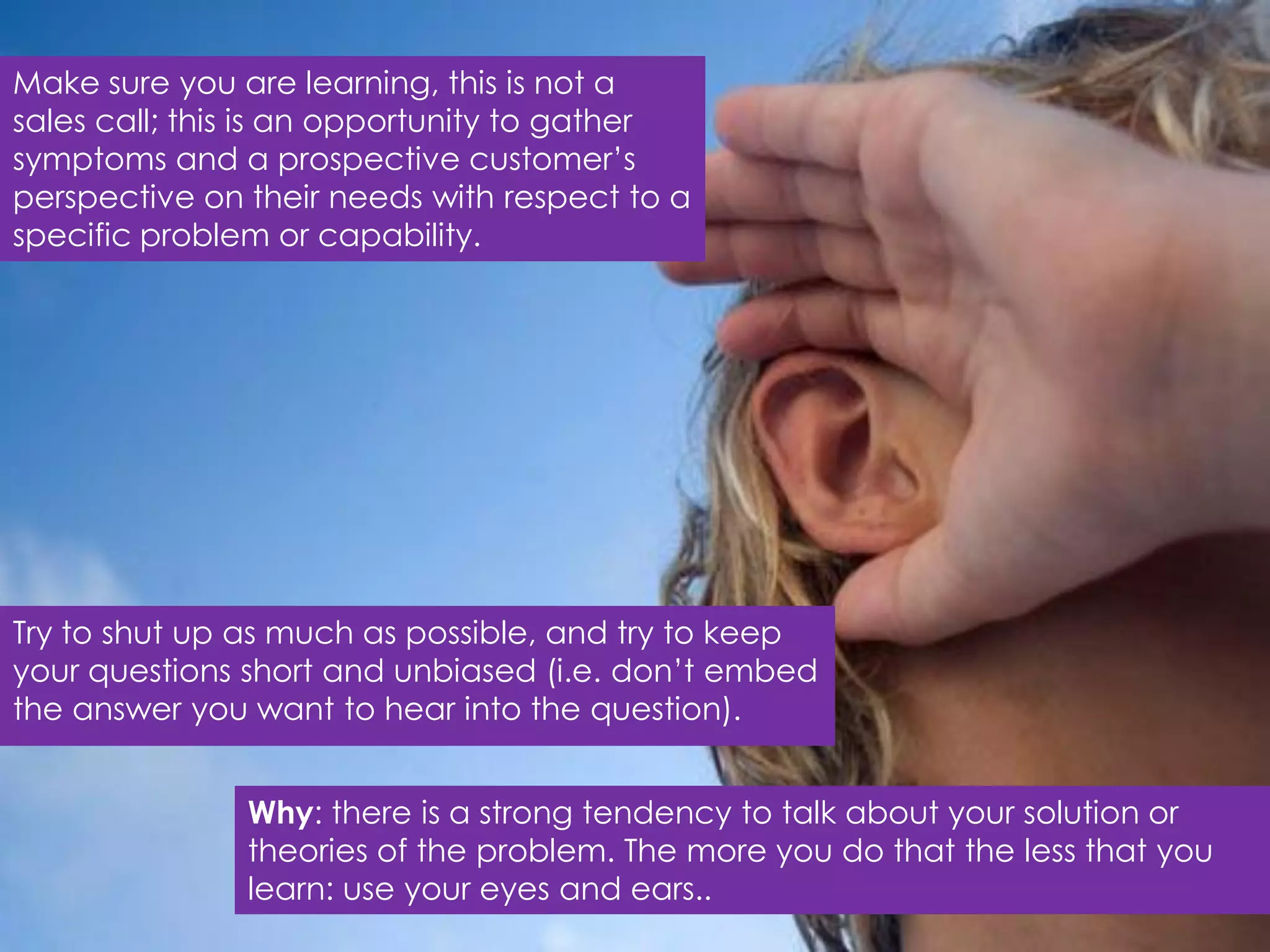
Make sure you are learning, this is not a
sales call; this is an opportunity to gather
symptoms and a prospective customer‟s
perspective on their needs with respect to a
specific problem or capability.


Try to shut up as much as possible, and try to keep
your questions short and unbiased (i.e. don‟t embed
the answer you want to hear into the question).


               Why: there is a strong tendency to talk about your solution or
               theories of the problem. The more you do that the less that you
               learn: use your eyes and ears..
Encourage but don‟t
     influence
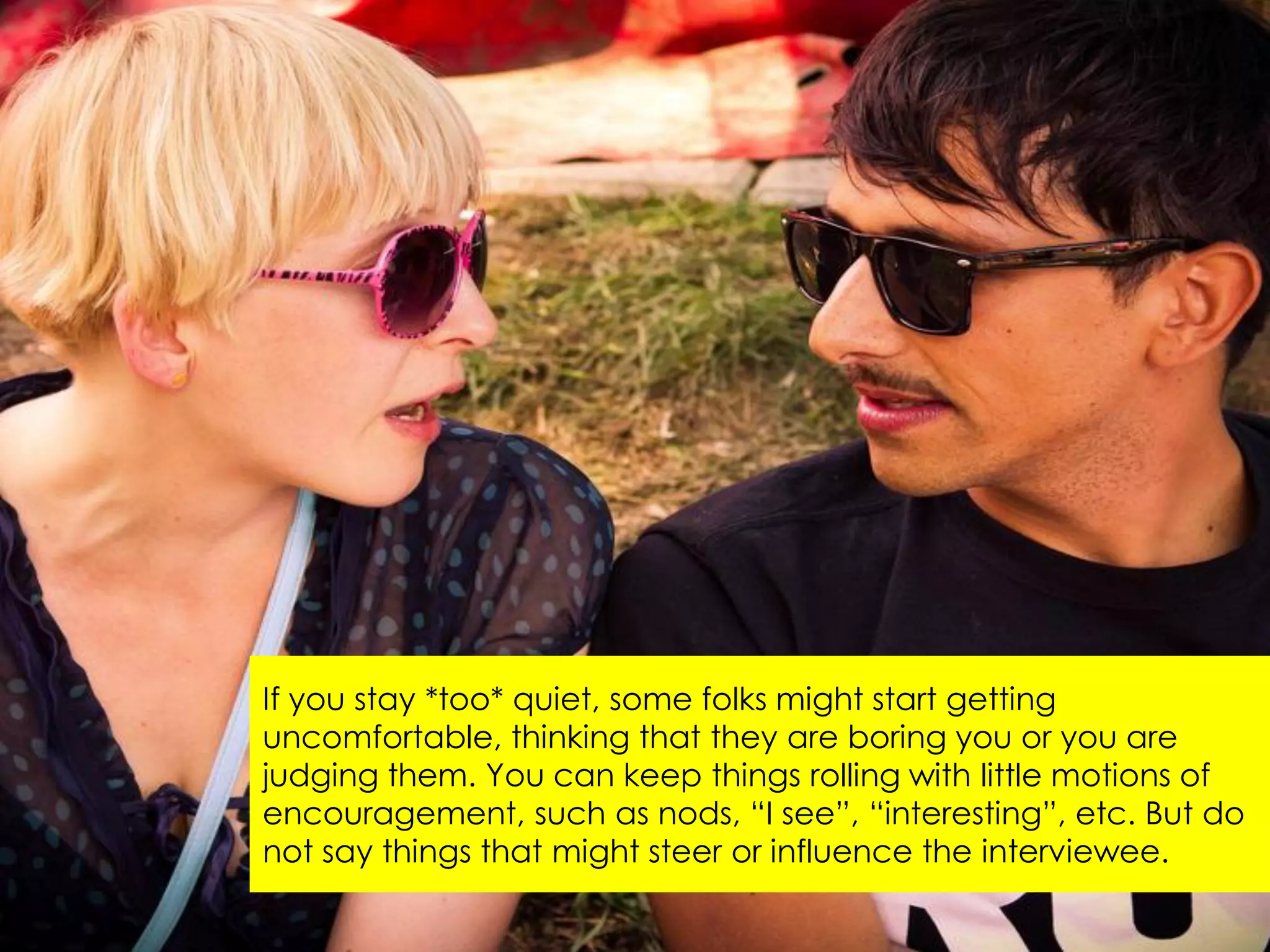
If you stay *too* quiet, some folks might start getting
uncomfortable, thinking that they are boring you or you are
judging them. You can keep things rolling with little motions of
encouragement, such as nods, “I see”, “interesting”, etc. But do
not say things that might steer or influence the interviewee.
Focus on past behaviour and
actual situations and events to
     bound the problem
Don‟t focus on hypothetical, potential, or future problems. Or at least don‟t
explore them until you are confident that there is a clearly defined business
need or critical capability that they are looking for today. Walk through
actual situations and events to develop a model for the costs and impact of
the problem on their current business.

                      Why: businesses are more likely to pay for problems or
                      needs that are impacting them today.
Don‟t talk about possible solutions
until you have thoroughly bounded
        their problem or need
Don‟t mix how they describe the problem with the kinds
of solutions that they are interested in.


     Why: again resist the temptation to talk about your solution until you can
     talk with very high confidence about their situation, needs, and challenges.
Follow your nose and drill down
Anytime something tweaks your antenna, drill down
  with follow up questions. Don‟t be afraid to ask for
  clarifications and the “why” behind the “what”.


You can even try drilling into multiple layers of “why”, as
long as the interviewee doesn‟t start getting annoyed.
We can use the technique of asking why five times to
get to the root cause of the problem.
Probe for what‟s changed
What has happened to make this problem or need more
critical? Explore the environment or system(s) that the group or
firm is operating in. What is the context they operate in? What
trends are at work that are making the problem more serious
(and what might happen to make it less serious)? Were they
ignorant of the problem (or ignoring it) until a particular
situation or event occurred? Have they been managing it and
now need it solved?


             Why: businesses have many problems. They are more likely
             to invest in solutions for the critical ones that are likely to
             get worse if they don‟t take action to address them.
Probe for quantities
            and ranges
Wherever possible try and get them to put a number or estimate a
range on an adjective (e.g. small, large, light, heavy, thin, frequent,
rare…). Write down both their adjective and their estimate for the
appropriate quantity or range.


            Why: you will need to develop specific target prospect selection
            criteria and some simple ROI or value models for your offering. These
            are much more useful if you can use numbers or objective criteria.
Parrot back or
misrepresent to confirm
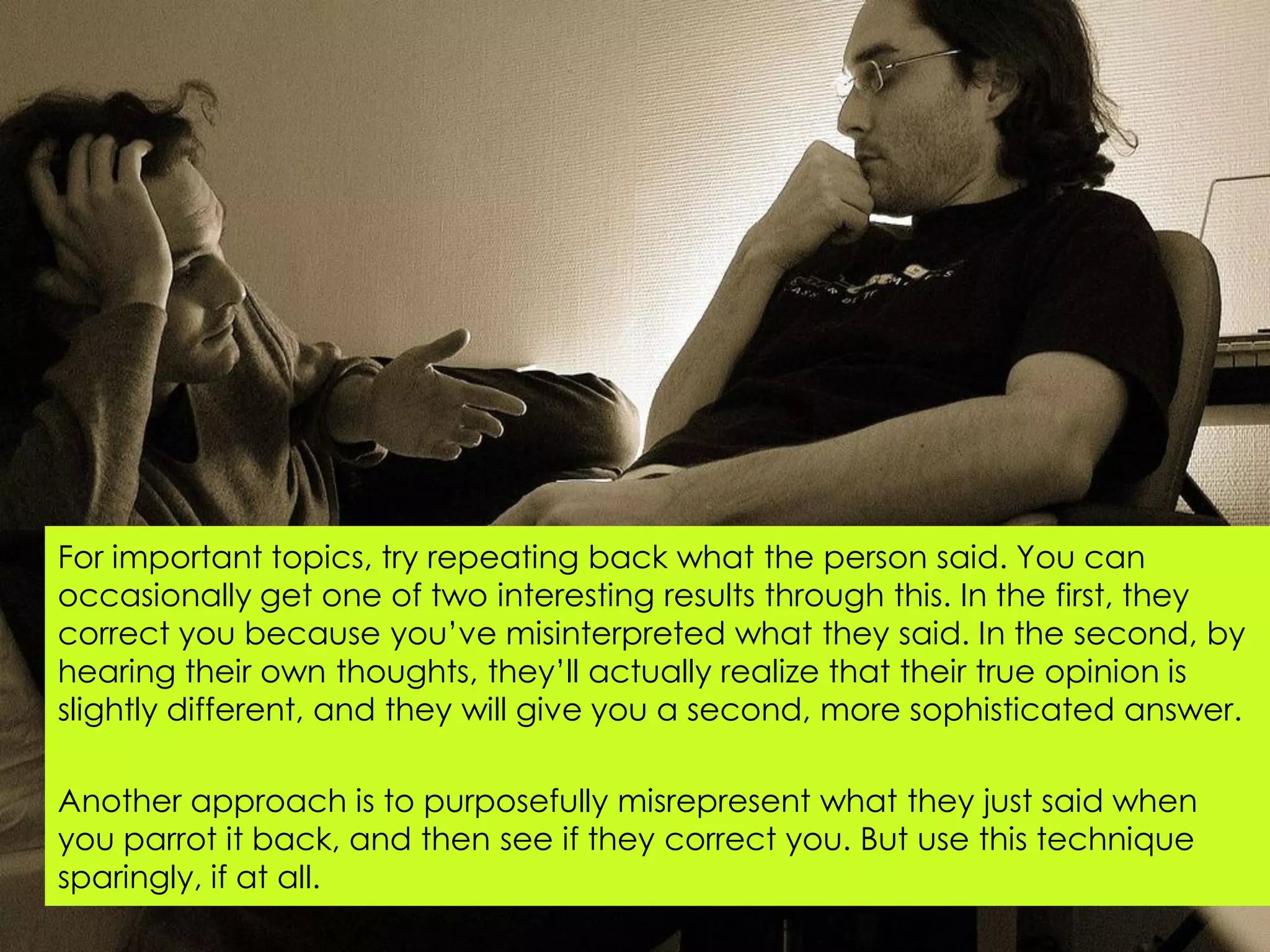
For important topics, try repeating back what the person said. You can
occasionally get one of two interesting results through this. In the first, they
correct you because you‟ve misinterpreted what they said. In the second, by
hearing their own thoughts, they‟ll actually realize that their true opinion is
slightly different, and they will give you a second, more sophisticated answer.

Another approach is to purposefully misrepresent what they just said when
you parrot it back, and then see if they correct you. But use this technique
sparingly, if at all.
Don‟t overstay your welcome
This allows you to come back. Take two or three minutes to wrap
up by thanking them and providing a high level summary of what
you heard. Commit to providing them with a more detailed
summary within a day or two. Meet that commitment.


Why: unless the person is energized by the conversation
you should end it promptly..
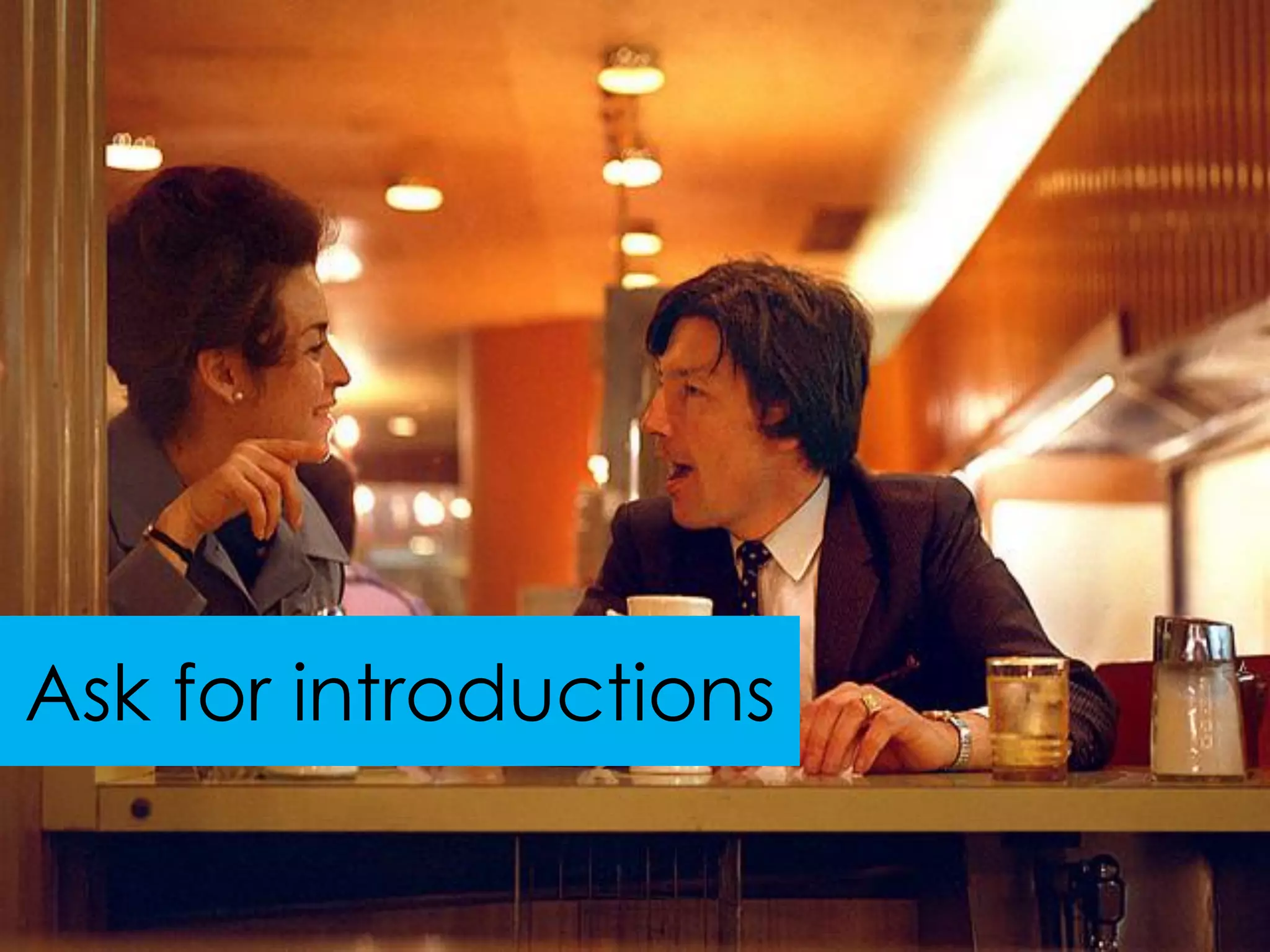
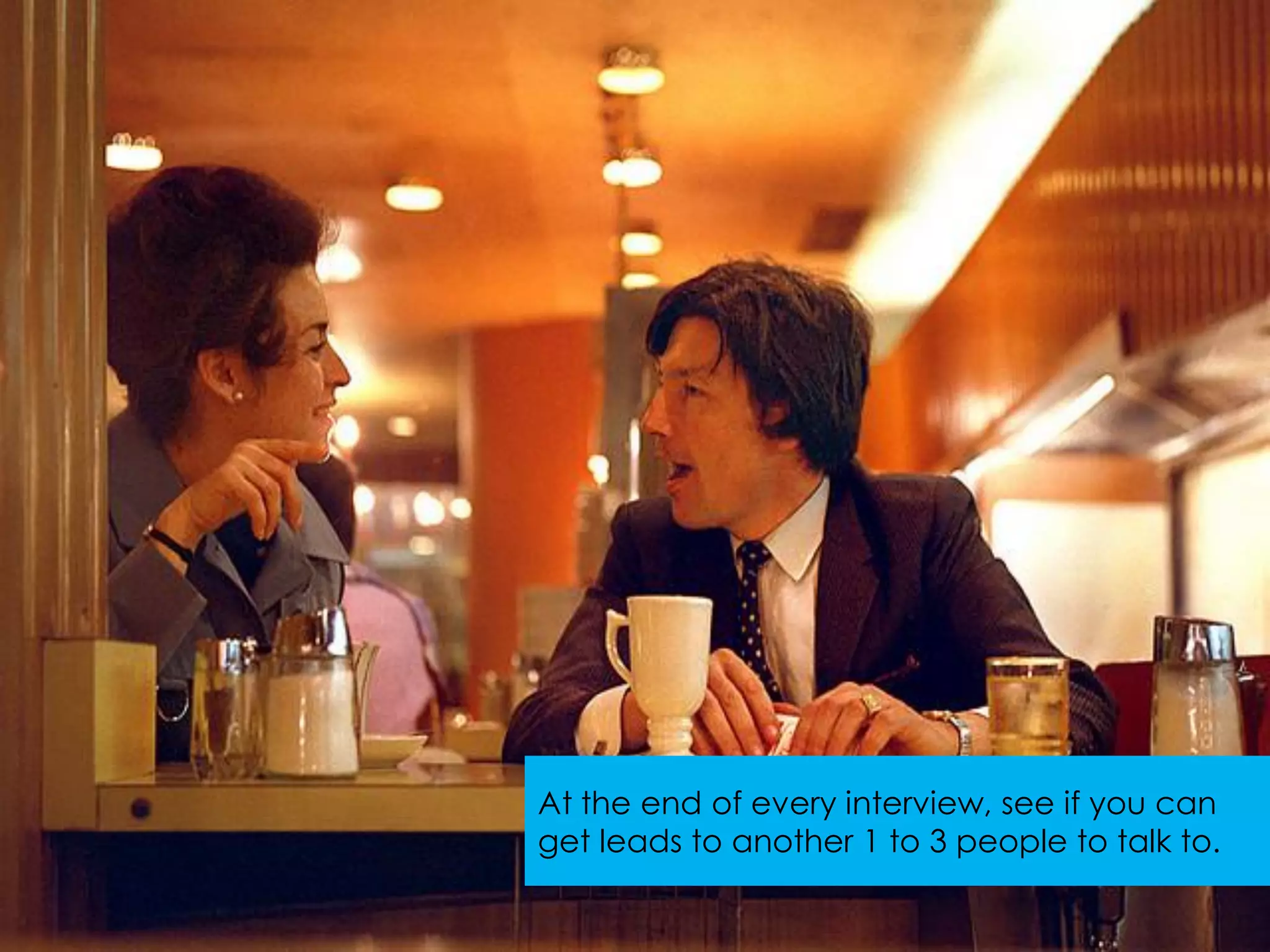
Ask for introductions
At the end of every interview, see if you can
get leads to another 1 to 3 people to talk to.
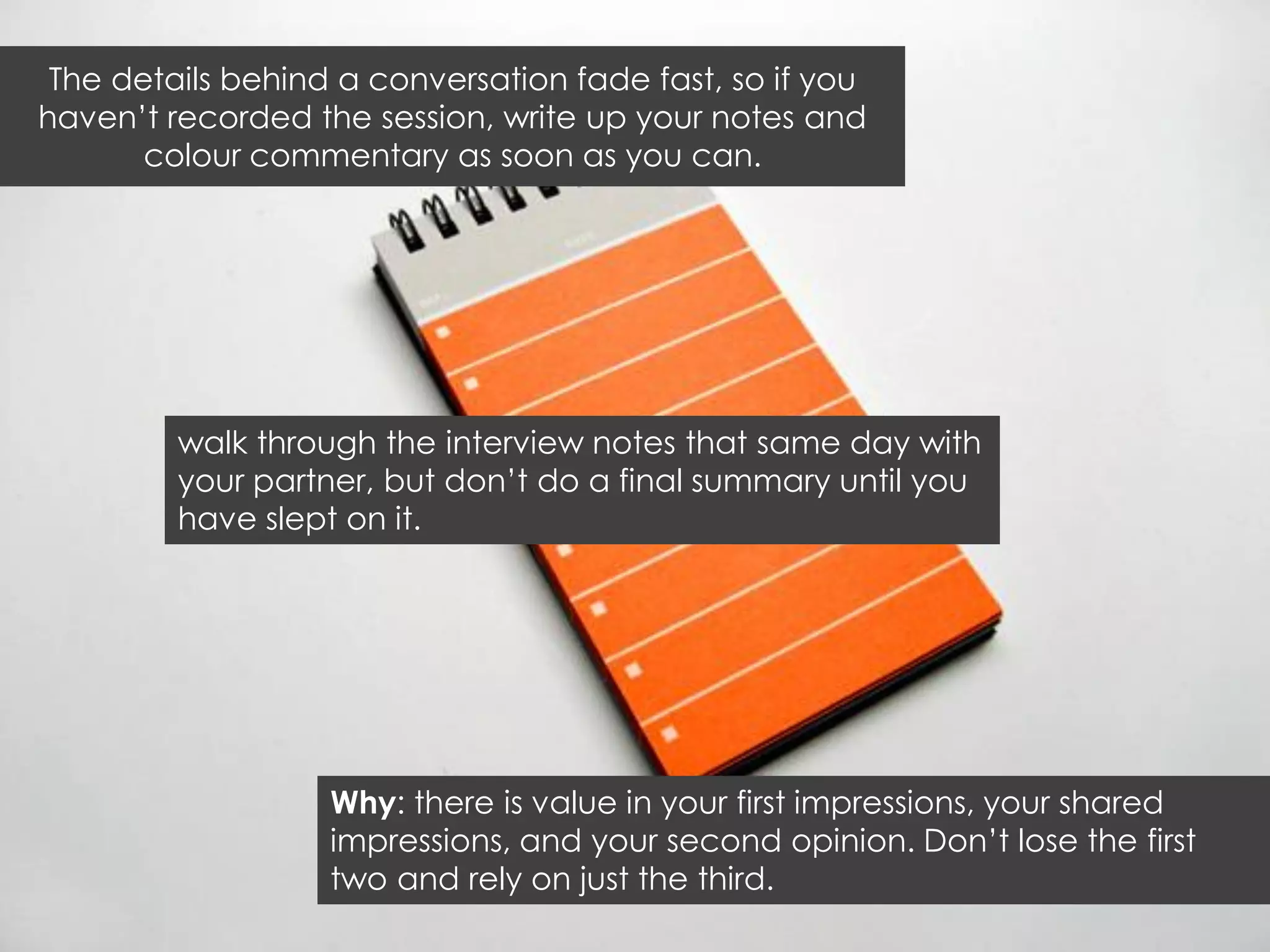
Write up your notes as
 quickly as possible
The details behind a conversation fade fast, so if you
haven‟t recorded the session, write up your notes and
       colour commentary as soon as you can.


         walk through the interview notes that same day with
         your partner, but don‟t do a final summary until you
         have slept on it.


                   Why: there is value in your first impressions, your shared
                   impressions, and your second opinion. Don‟t lose the first
                   two and rely on just the third.
Afterwards: Look for
patterns and apply
    judgement
Customer development interviews will not give you statistically significant
data, but they will give you insights based on patterns. They can be very
tricky to interpret, because what people say is not always what they do.

You need to use your judgement to read between the lines, to read body
language, to try to understand context and agendas, and to filter out
biases based on the types of people in your pool of interviewees. But it is
exactly the ability to use human judgement based on human connections
that make interviews so much more useful than surveys.

Ultimately, you are better off moving fast and making decisions from
credible patterns than dithering about in analysis paralysis.
Find the right information
I want to additionally stress that your goal is not to ask the
customer to define the solution. Perhaps this is obvious, but the
entrepreneur needs to have the vision to look deep into a
problem and come up with the right solution.

Don‟t ask people what they want, but rather study their
behaviour for what they do and what they need. To this end, try
to get your interviewee talking about specific situations, not
abstract feelings and concepts.
Follow up by e-mail
Thank them again. Provide a detailed summary
(include their numbers and ranges) of what you heard
and let them critique it (this does not mean that you
have to share all of your perceptions or plans).


      Ask if there are other folks that they feel you should talk to, either
      at their company or other companies, who would be able to
      provide you with a valuable perspective on the problem


                   Why: Introverts are much more willing to share their thoughts
                   in writing once they have had a chance to reflect, give them
                   a chance to do so. Extroverts can have second thoughts and
                   follow on observations, capture them all.
Want to quickly find a profitable
 customers and scale faster?


                                    See part six

Startups are different pt5

  • 1.
    WHATS‟S THE KEY DIFFERENCE BETWEEN A SCALEABLE START UP AND A LARGER ESTABLISHED COMPANY? PART FIVE
  • 2.
    Unlike a large In a start up, profitable cash is not company, king; start ups have The number of times you can limited time adapt to find and require the right business processes model before you run out of that are cost money is effective and quick
  • 3.
  • 4.
    Know your goalsand questions ahead of time
  • 5.
    Have your assumptionsand thus learning goals prioritised ahead of time. Decide who you want to talk to (age, gender, location, profession/industry, affluence, etc), and target interviewees accordingly. Prep your basic flow and list of questions. You might veer off the plan to follow your nose, which is great, but go in prepared.
  • 6.
    Separate behaviour and feedback in discussion
  • 7.
    Decide up frontif your focus is going to be on learning a user‟s behaviour and mindset, and/or getting direct feedback or usability insights on a product or mock up. Do not mix the two in the discussion flow or things will get distorted. Put “behaviour and mindset” first in your discussion flow. During this part, don‟t let the interviewee go too deep in terms of suggesting features (some people can‟t help it), but keep them focused on if they have a problem, how they think about the problem space, and if and how they have tried to solve it in past. Getting people to discuss their actual actions, not just opinions, is very useful.
  • 8.
    Work from anoutline of 3-5 key questions
  • 9.
    E-mail these inadvance and also bring a hardcopy. Their name should be at the top of the paper along with the date of the interview. The interview may last a few minutes or it may last an hour but set expectations up front about what you want to talk about. It‟s OK to ask follow up questions but these 3-5 should form the spine of the interview. Why: you need to focus on the essential questions you are trying to answer..
  • 10.
    Get psyched tohear things you don‟t want to hear
  • 11.
    If you don‟tdo this, you might find yourself selling or convincing, or even hearing what you want to hear. Remember, the goal in this early stage is learning and validation, not a sale. Unless, of course, you have set a sale or „Letter Of Intent‟ as a goal. You might want to shoot for a commitment from the interviewee as a way to measure true demand. If so, keep it entirely out of the behaviour/mindset portion of the discussion.
  • 12.
    One person ata time Focus groups are a group-think, distraction-filled mess. Avoid them and only talk to one person at a time.
  • 13.
    Have two peopleinterview
  • 14.
    Both of youtaking notes as you go. The second person can listen more attentively while the first one asks questions. Trade off every few questions so that the conversation stays lively and fresh. Date and number each page (or 3×5 card) of your notes. Why: this is more time efficient for the person being interviewed.
  • 15.
  • 16.
    People are trainednot to call your baby ugly. You need to make them feel safe to do this. My approach was to explain that the worst thing that could happen to me was building something people didn‟t care about, so the best way they could help me was absolute, brutal honesty.
  • 17.
    Ask open endedquestions
  • 18.
    Do not asktoo many yes/no questions. For example, minimize such questions as “do you like Trademe?” Instead ask “what kinds of deals do you look for, if any?” “What motivates you to hunt for deals?” “How do you discover deals?” “Do you get frustrated with the deal sites out there?”
  • 19.
  • 20.
    Make sure youare learning, this is not a sales call; this is an opportunity to gather symptoms and a prospective customer‟s perspective on their needs with respect to a specific problem or capability. Try to shut up as much as possible, and try to keep your questions short and unbiased (i.e. don‟t embed the answer you want to hear into the question). Why: there is a strong tendency to talk about your solution or theories of the problem. The more you do that the less that you learn: use your eyes and ears..
  • 21.
  • 22.
    If you stay*too* quiet, some folks might start getting uncomfortable, thinking that they are boring you or you are judging them. You can keep things rolling with little motions of encouragement, such as nods, “I see”, “interesting”, etc. But do not say things that might steer or influence the interviewee.
  • 23.
    Focus on pastbehaviour and actual situations and events to bound the problem
  • 24.
    Don‟t focus onhypothetical, potential, or future problems. Or at least don‟t explore them until you are confident that there is a clearly defined business need or critical capability that they are looking for today. Walk through actual situations and events to develop a model for the costs and impact of the problem on their current business. Why: businesses are more likely to pay for problems or needs that are impacting them today.
  • 25.
    Don‟t talk aboutpossible solutions until you have thoroughly bounded their problem or need
  • 26.
    Don‟t mix howthey describe the problem with the kinds of solutions that they are interested in. Why: again resist the temptation to talk about your solution until you can talk with very high confidence about their situation, needs, and challenges.
  • 27.
    Follow your noseand drill down
  • 28.
    Anytime something tweaksyour antenna, drill down with follow up questions. Don‟t be afraid to ask for clarifications and the “why” behind the “what”. You can even try drilling into multiple layers of “why”, as long as the interviewee doesn‟t start getting annoyed. We can use the technique of asking why five times to get to the root cause of the problem.
  • 29.
  • 30.
    What has happenedto make this problem or need more critical? Explore the environment or system(s) that the group or firm is operating in. What is the context they operate in? What trends are at work that are making the problem more serious (and what might happen to make it less serious)? Were they ignorant of the problem (or ignoring it) until a particular situation or event occurred? Have they been managing it and now need it solved? Why: businesses have many problems. They are more likely to invest in solutions for the critical ones that are likely to get worse if they don‟t take action to address them.
  • 31.
  • 32.
    Wherever possible tryand get them to put a number or estimate a range on an adjective (e.g. small, large, light, heavy, thin, frequent, rare…). Write down both their adjective and their estimate for the appropriate quantity or range. Why: you will need to develop specific target prospect selection criteria and some simple ROI or value models for your offering. These are much more useful if you can use numbers or objective criteria.
  • 33.
  • 34.
    For important topics,try repeating back what the person said. You can occasionally get one of two interesting results through this. In the first, they correct you because you‟ve misinterpreted what they said. In the second, by hearing their own thoughts, they‟ll actually realize that their true opinion is slightly different, and they will give you a second, more sophisticated answer. Another approach is to purposefully misrepresent what they just said when you parrot it back, and then see if they correct you. But use this technique sparingly, if at all.
  • 35.
  • 36.
    This allows youto come back. Take two or three minutes to wrap up by thanking them and providing a high level summary of what you heard. Commit to providing them with a more detailed summary within a day or two. Meet that commitment. Why: unless the person is energized by the conversation you should end it promptly..
  • 37.
  • 38.
    At the endof every interview, see if you can get leads to another 1 to 3 people to talk to.
  • 39.
    Write up yournotes as quickly as possible
  • 40.
    The details behinda conversation fade fast, so if you haven‟t recorded the session, write up your notes and colour commentary as soon as you can. walk through the interview notes that same day with your partner, but don‟t do a final summary until you have slept on it. Why: there is value in your first impressions, your shared impressions, and your second opinion. Don‟t lose the first two and rely on just the third.
  • 41.
    Afterwards: Look for patternsand apply judgement
  • 42.
    Customer development interviewswill not give you statistically significant data, but they will give you insights based on patterns. They can be very tricky to interpret, because what people say is not always what they do. You need to use your judgement to read between the lines, to read body language, to try to understand context and agendas, and to filter out biases based on the types of people in your pool of interviewees. But it is exactly the ability to use human judgement based on human connections that make interviews so much more useful than surveys. Ultimately, you are better off moving fast and making decisions from credible patterns than dithering about in analysis paralysis.
  • 43.
    Find the rightinformation
  • 44.
    I want toadditionally stress that your goal is not to ask the customer to define the solution. Perhaps this is obvious, but the entrepreneur needs to have the vision to look deep into a problem and come up with the right solution. Don‟t ask people what they want, but rather study their behaviour for what they do and what they need. To this end, try to get your interviewee talking about specific situations, not abstract feelings and concepts.
  • 45.
  • 46.
    Thank them again.Provide a detailed summary (include their numbers and ranges) of what you heard and let them critique it (this does not mean that you have to share all of your perceptions or plans). Ask if there are other folks that they feel you should talk to, either at their company or other companies, who would be able to provide you with a valuable perspective on the problem Why: Introverts are much more willing to share their thoughts in writing once they have had a chance to reflect, give them a chance to do so. Extroverts can have second thoughts and follow on observations, capture them all.
  • 47.
    Want to quicklyfind a profitable customers and scale faster? See part six