PRESENTED BY,
Sandesh, G.M
2016610811
TNAU, MADURAI
 A major part of the human diet all over the world consists of cereals
and Pulses.
 Pulses are considered as the major source of protein and dietary
amino acid for man and farm animals.
 According to the estimation of FAO, 70% of human food comprises
cereals and Pulses and the remaining 30% comes from animals.
 Pulses are considered as the major source of protein, however, the
protein and their amino acid constituents are less when compared to
animals.
 Especially, pulses are deficient in essential amino acid, methionine
which is important for synthesize other some of the amino acids.
 The attempts were made to improve the protein quantity and
quality of legumes with various strategies and achieved a little
improvement.
 One of the breeding objective of the pulses is to increase the protein quality.
 Normally conventional methods are involved in enhancing the protein quality in
pulses. But nowadays scientists are ahead in developing the protein content in
various approaches like.,
 1. Biofortification.
 2. Through Mutagens.
 3. Transgenic approach.
 4. Marker assisted selection.
 5. Molecular cloning.
 It was done in Coimbatore.
 Pigeon pea seeds are mutated by the Gamma rays for 3 generations.
 The seeds are also mutated by the different concentrations of EMS.
 The evaluated the protein content of the seeds in M2 generation.
 The protein content was increased.
 It confers that in the pulses which are deficient in the Sulphur containing
amino acids, protein can be increased by the mutagens.
Biofortification was done in mungbean (Vigna radiata ) .
Genetic biofortification is a sustainable method of naturally enriching foods
crops by conventional breeding and modern biotechnology to increase the
protein and nutrient content.
 Mungbean is a substantive source of dietary protein (24-28%)
 Mungbean has a very low concentration of the essential amino acid
methionine , reported to be 0.17 g /kg.
 This makes methionine the limiting amino acid .
The World Vegetable Center (currently 11,591 accessions) for protein
content screening would help in exploiting the existing variability of useful traits
in breeding programs.
The wide 14 diversity in the Vigna genus coupled with the cross
compatibility of mungbean with related species offers substantial scope for
making progress through conventional plant breeding approaches, such as
interspecific hybridization.
Transgenic approaches such as increasing the methionine content by
expression of sulfur-rich proteins have been studied .
 Black gram (V. mungo (L.) Hepper), a close relative of mungbean, has higher
methionine content, and improving mungbean protein quality through
interspecific breeding with black gram is feasible.
 Therefore, 22 interspecific breeding has great potential to improve the
nutritional value of mungbean protein.
 AVRDC – The World Vegetable Center has identified black gram accessions,
including VM2164, with high methionine content (1.8-2 g kg-1) as well as
bruchid resistance, as donor parents for improving the protein quality.
 Single seed selection for high methionine 1 content in mungbean and black
gram hybrids was developed.
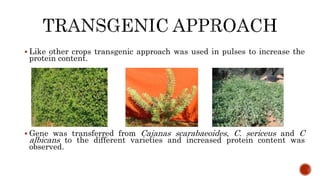
 Like other crops transgenic approach was used in pulses to increase the
protein content.
 Gene was transferred from Cajanas scarabaeoides, C. sericeus and C
albicans to the different varieties and increased protein content was
observed.
 The soil bacterium Agrobacterium have the innate ability to transfer
nucleic acid segment located between left border and right border of
disarmed Ti-plasmid.
 The pigeon pea has shown amenable to Agrobacterium mediated
transformation.
 The present work were undertaken to develop regeneration and genetic
transformation protocols for pigeon pea.
 Optmization of efficient transformation protocol and genetic
transformation of pigeon pea with Rchit gene by using Agrobacterium
mediated gene transfer for Protein.
 The implementation of the conventional selection procedures with innovative
methods (Nucleic acid based techniques) accelerated the Marker assisted
selection.
 This was done in pigeon pea and soybean.
 The high protein genotypes were selected based on the MAS and through the
conventional method of breeding was done to improve the protein content in
them.
 It was ongoing work in the AVRDC.
 Molecular cloning work was done in cowpea.
 Through the genetic engineering and the genetic transformation technology ,
the gene that is associated with the quality protein was found and the Cloning
is done through different methods.
 This work was conducted in the ICRISAT.
 Due to gene cloning the protein content was slightly increased in the cowpea.
 Pigeon pea transgenics carrying dhdps-1 gene for over production of sulfur
containing amino acids, driven by a phaseolin or an Arabidopsis 2S2 promoter
have been used for particle bombardment .
 2 – 6 fold enhanced DHDPS activity compared to the wild type was
observed in the transgenic imature seeds.
 It reflected a 1.6 to 8.5 times enhanced free lysine content compared to
wild types.
 Later on due to the Lysine keto glutarate reductase enzyme , it was
revealed that in later stages of seed development, LKR activity is increased in
the transgenic lines.
 Pigeon pea seed contains 20-22 % proteins.
 Seeds are dehulled and boiling treatments of seeds get rid of most tannins
and antinutritional factors.
 Such line also agronomically performed well and have acceptable seed size nd
colour.
 The seed protein was increased from 20-22 % to 28-30 %.
Pulses Protein Improvement

Pulses Protein Improvement

  • 1.
  • 2.
     A majorpart of the human diet all over the world consists of cereals and Pulses.  Pulses are considered as the major source of protein and dietary amino acid for man and farm animals.  According to the estimation of FAO, 70% of human food comprises cereals and Pulses and the remaining 30% comes from animals.
  • 3.
     Pulses areconsidered as the major source of protein, however, the protein and their amino acid constituents are less when compared to animals.  Especially, pulses are deficient in essential amino acid, methionine which is important for synthesize other some of the amino acids.  The attempts were made to improve the protein quantity and quality of legumes with various strategies and achieved a little improvement.
  • 4.
     One ofthe breeding objective of the pulses is to increase the protein quality.  Normally conventional methods are involved in enhancing the protein quality in pulses. But nowadays scientists are ahead in developing the protein content in various approaches like.,  1. Biofortification.  2. Through Mutagens.  3. Transgenic approach.  4. Marker assisted selection.  5. Molecular cloning.
  • 5.
     It wasdone in Coimbatore.  Pigeon pea seeds are mutated by the Gamma rays for 3 generations.  The seeds are also mutated by the different concentrations of EMS.  The evaluated the protein content of the seeds in M2 generation.  The protein content was increased.  It confers that in the pulses which are deficient in the Sulphur containing amino acids, protein can be increased by the mutagens.
  • 6.
    Biofortification was donein mungbean (Vigna radiata ) . Genetic biofortification is a sustainable method of naturally enriching foods crops by conventional breeding and modern biotechnology to increase the protein and nutrient content.  Mungbean is a substantive source of dietary protein (24-28%)  Mungbean has a very low concentration of the essential amino acid methionine , reported to be 0.17 g /kg.  This makes methionine the limiting amino acid .
  • 7.
    The World VegetableCenter (currently 11,591 accessions) for protein content screening would help in exploiting the existing variability of useful traits in breeding programs. The wide 14 diversity in the Vigna genus coupled with the cross compatibility of mungbean with related species offers substantial scope for making progress through conventional plant breeding approaches, such as interspecific hybridization. Transgenic approaches such as increasing the methionine content by expression of sulfur-rich proteins have been studied .
  • 8.
     Black gram(V. mungo (L.) Hepper), a close relative of mungbean, has higher methionine content, and improving mungbean protein quality through interspecific breeding with black gram is feasible.  Therefore, 22 interspecific breeding has great potential to improve the nutritional value of mungbean protein.  AVRDC – The World Vegetable Center has identified black gram accessions, including VM2164, with high methionine content (1.8-2 g kg-1) as well as bruchid resistance, as donor parents for improving the protein quality.  Single seed selection for high methionine 1 content in mungbean and black gram hybrids was developed.
  • 9.
     Like othercrops transgenic approach was used in pulses to increase the protein content.  Gene was transferred from Cajanas scarabaeoides, C. sericeus and C albicans to the different varieties and increased protein content was observed.
  • 10.
     The soilbacterium Agrobacterium have the innate ability to transfer nucleic acid segment located between left border and right border of disarmed Ti-plasmid.  The pigeon pea has shown amenable to Agrobacterium mediated transformation.  The present work were undertaken to develop regeneration and genetic transformation protocols for pigeon pea.  Optmization of efficient transformation protocol and genetic transformation of pigeon pea with Rchit gene by using Agrobacterium mediated gene transfer for Protein.
  • 11.
     The implementationof the conventional selection procedures with innovative methods (Nucleic acid based techniques) accelerated the Marker assisted selection.  This was done in pigeon pea and soybean.  The high protein genotypes were selected based on the MAS and through the conventional method of breeding was done to improve the protein content in them.  It was ongoing work in the AVRDC.
  • 12.
     Molecular cloningwork was done in cowpea.  Through the genetic engineering and the genetic transformation technology , the gene that is associated with the quality protein was found and the Cloning is done through different methods.  This work was conducted in the ICRISAT.  Due to gene cloning the protein content was slightly increased in the cowpea.
  • 13.
     Pigeon peatransgenics carrying dhdps-1 gene for over production of sulfur containing amino acids, driven by a phaseolin or an Arabidopsis 2S2 promoter have been used for particle bombardment .  2 – 6 fold enhanced DHDPS activity compared to the wild type was observed in the transgenic imature seeds.  It reflected a 1.6 to 8.5 times enhanced free lysine content compared to wild types.  Later on due to the Lysine keto glutarate reductase enzyme , it was revealed that in later stages of seed development, LKR activity is increased in the transgenic lines.
  • 14.
     Pigeon peaseed contains 20-22 % proteins.  Seeds are dehulled and boiling treatments of seeds get rid of most tannins and antinutritional factors.  Such line also agronomically performed well and have acceptable seed size nd colour.  The seed protein was increased from 20-22 % to 28-30 %.