Dr Bushra Naeem
BOLTON ANALYSIS AND MIXED
DENTITION ANALYSIS
BOLTON ANALYSIS
Bolton analysis
 According to Bolton there exist a ratio between
the mesiodistal width of maxillary and mandibular
teeth
 Bolton analysis helps in determining tooth size
discrepancy
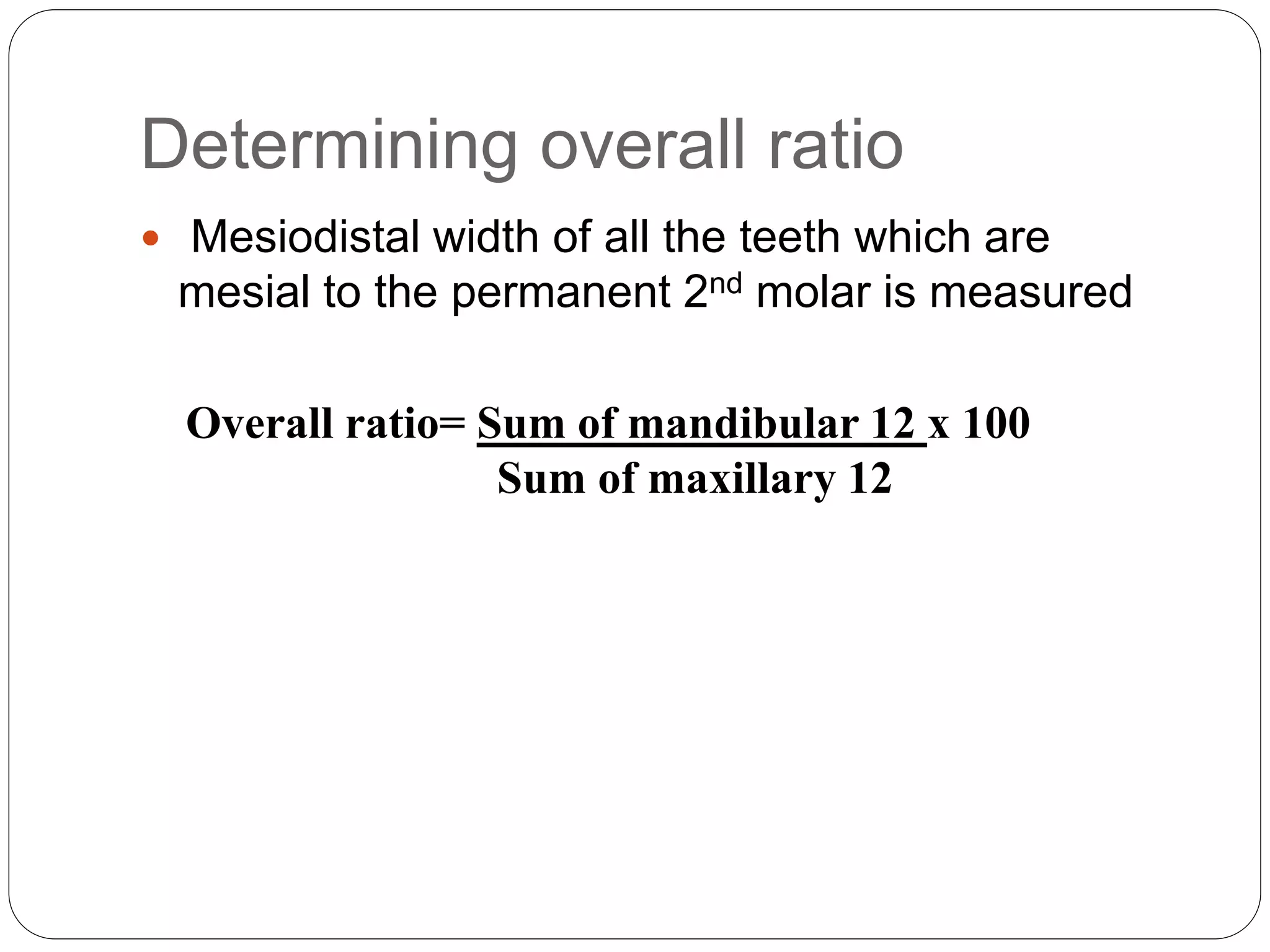
Determining overall ratio
 Mesiodistal width of all the teeth which are
mesial to the permanent 2nd molar is measured
Overall ratio= Sum of mandibular 12 x 100
Sum of maxillary 12
 If the ratio is less than 91.3% it indicates maxillary
tooth material excess
 Amount of excess can be calculated by
Sum of maxillary 12- sum of mandibular 12 × 100
91.3
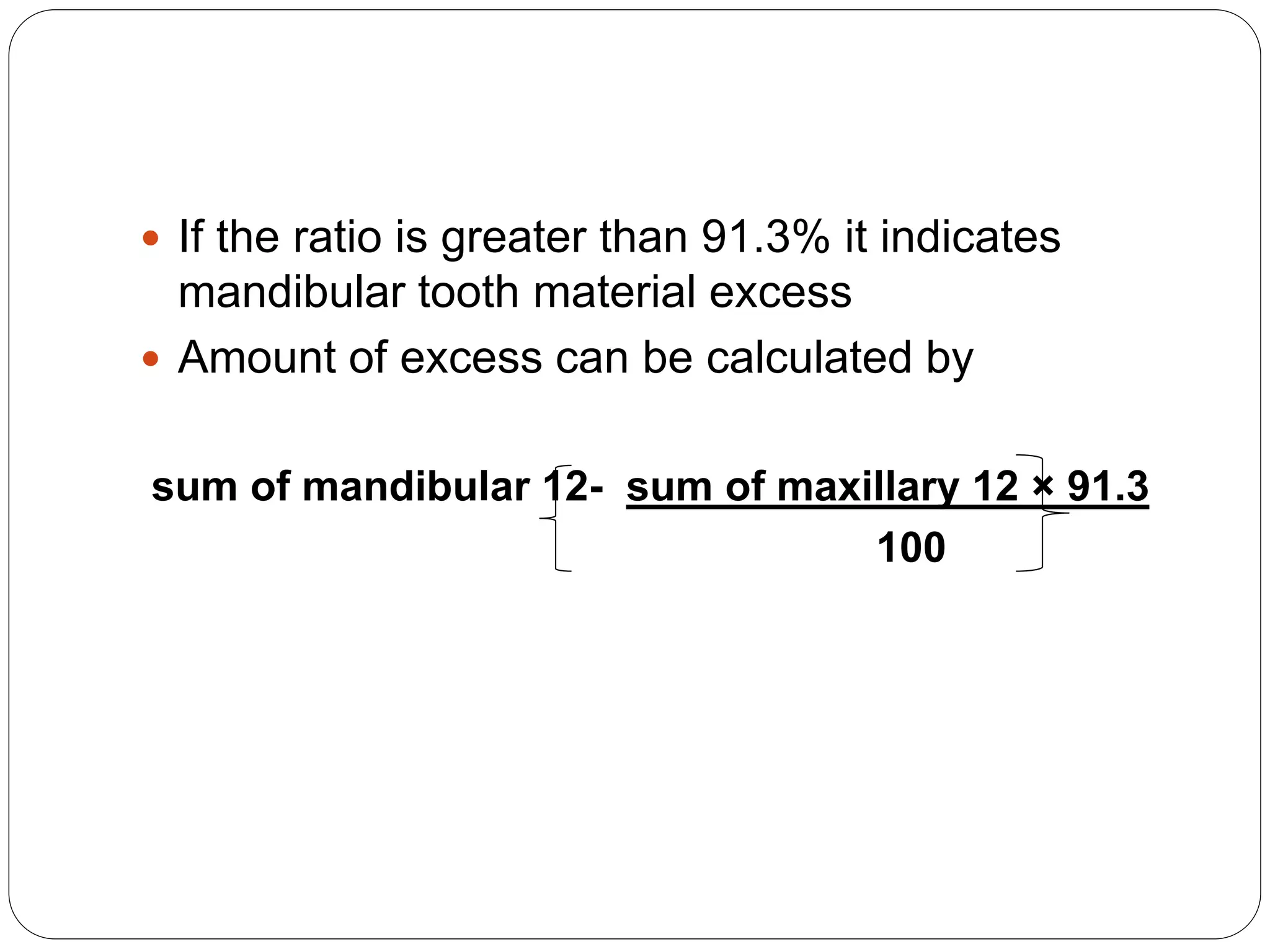
 If the ratio is greater than 91.3% it indicates
mandibular tooth material excess
 Amount of excess can be calculated by
sum of mandibular 12- sum of maxillary 12 × 91.3
100
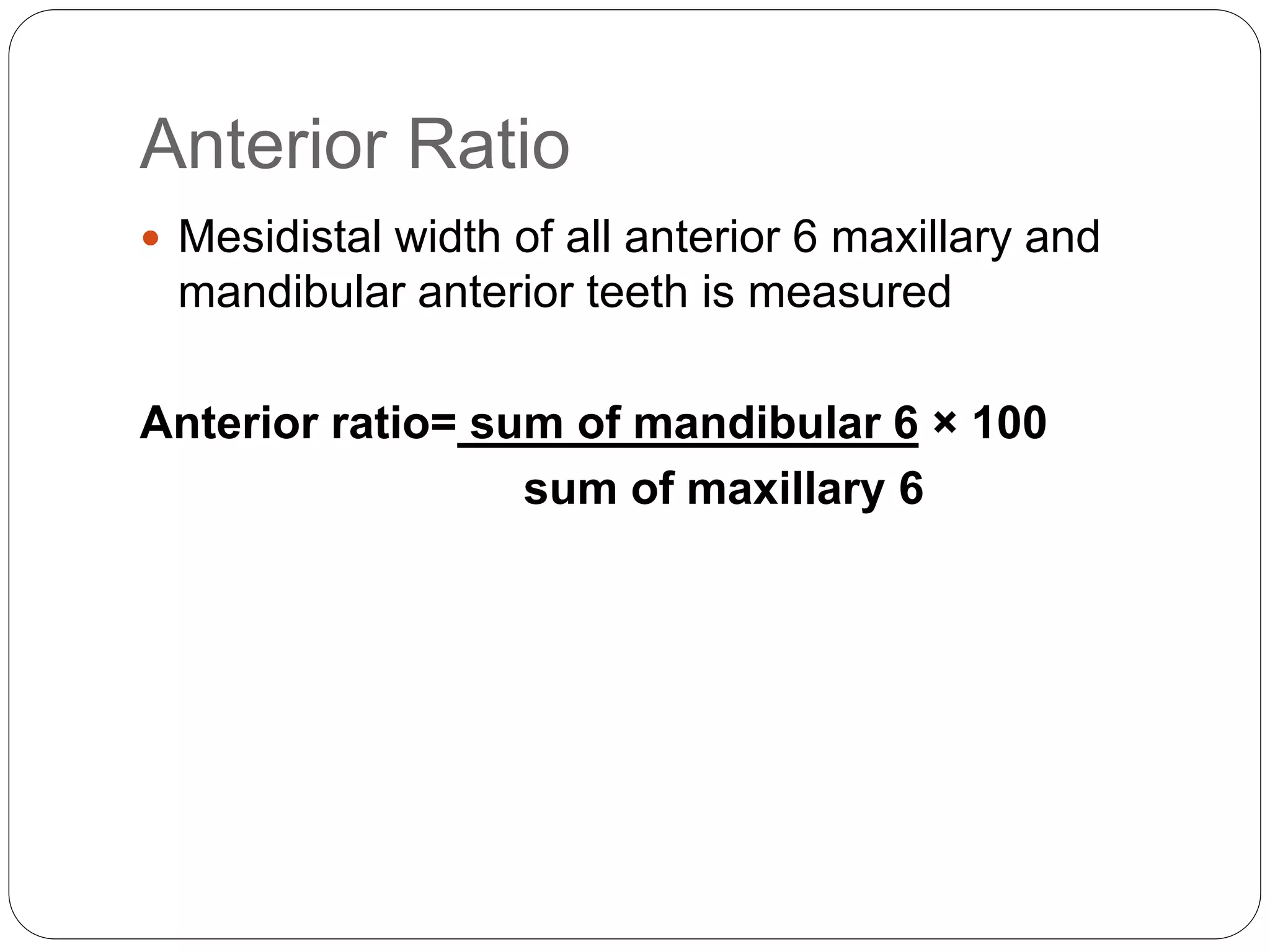
Anterior Ratio
 Mesidistal width of all anterior 6 maxillary and
mandibular anterior teeth is measured
Anterior ratio= sum of mandibular 6 × 100
sum of maxillary 6
 If the ratio is less than 77.2% it indicates maxillary
anterior excess material .
 Amount of excess material can be calculated by
Sum of maxillary 6- sum of mandibular 6 × 100
77.2
 If the ratio is greater than 77.2% it indicates
mandibular anterior excess material
 Amount of excess can be calculated by
sum of mandibular 6 – sum of maxillary 6 × 77.2
100
MIXED DENTITION ANALYSIS
 The purpose of mixed dentition analysis is to
evaluate the amount of space available in the
arch for eruption permanent canine and
premolars
 This can be achieved by predicting the
mesiodistal width of unerupted premolars and
canine
Methods
 Radiographic method
 Moyers prediction table
 Tanaka and johnston equation
 Staley kerber method
Radiographic method
 Also known as Hukaba’s analysis
 With any type of radiograph, it is necessary to
compensate for the radiographic enlargement,
this can be achieved by measuring the object
which is available on both radiograph and the
cast.
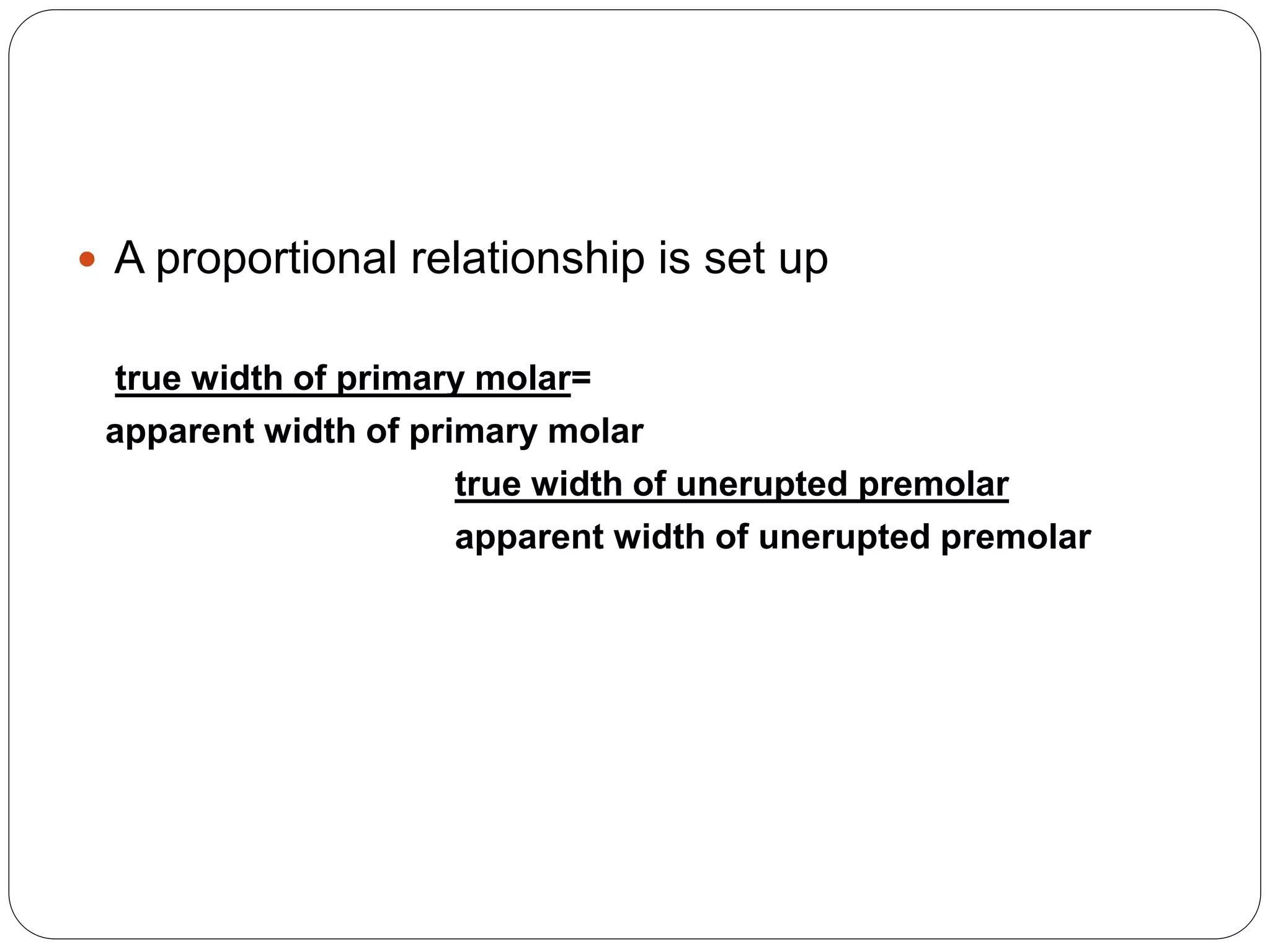
 A proportional relationship is set up
true width of primary molar=
apparent width of primary molar
true width of unerupted premolar
apparent width of unerupted premolar
 This technique can be used on maxillary and
mandibular arches for all ethnic groups
 Its accuracy depends on the quality of the
radiograph
Moyers prediction table
 Moyers predicted the combined mesiodistal width
of canine and premolars based on the sum of
lower 4 incisors
 Based on this calculation, the expected width of
canine and premolars is predicted by referring the
Moyers prediction values.
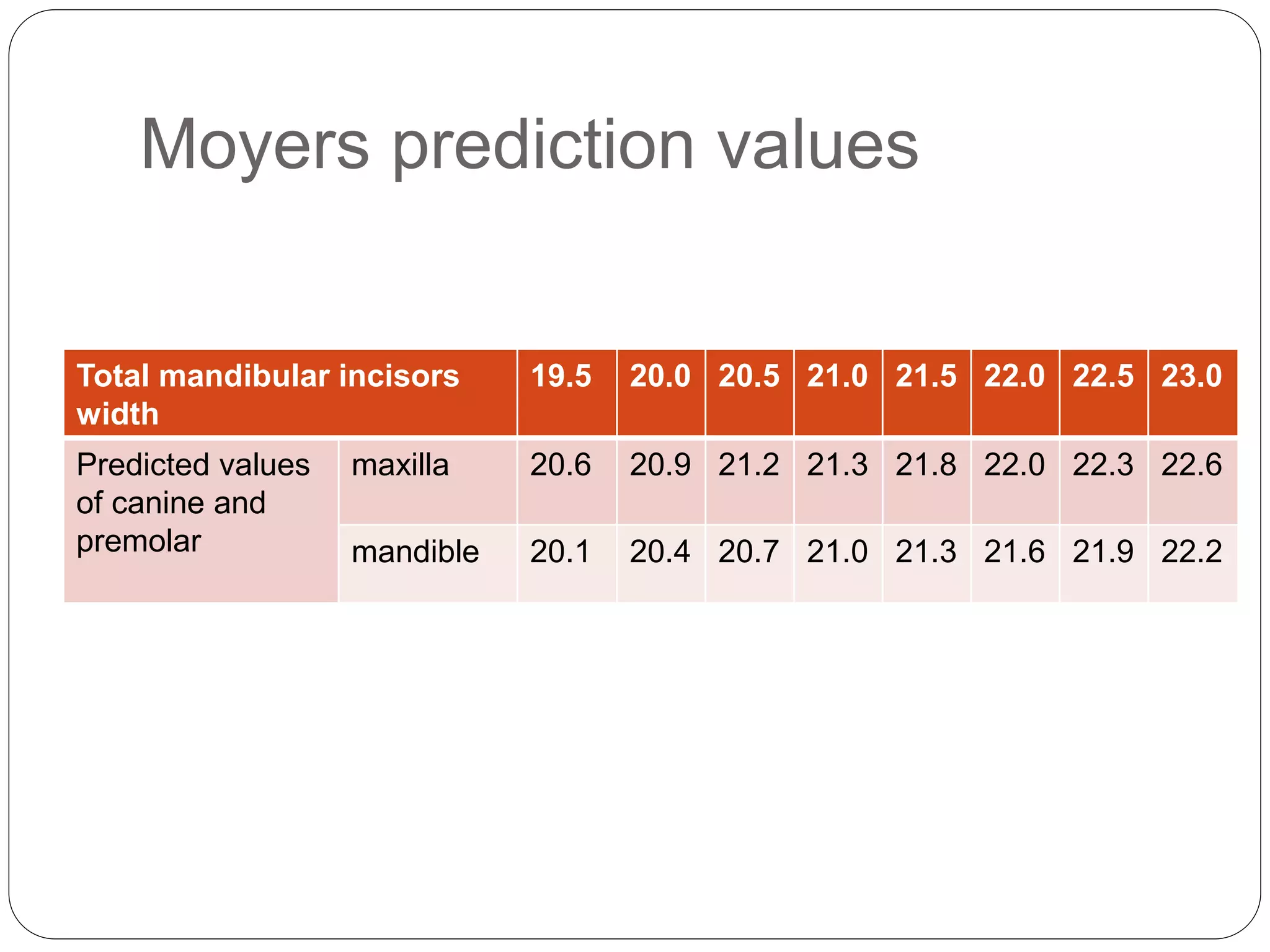
Moyers prediction values
Total mandibular incisors
width
19.5 20.0 20.5 21.0 21.5 22.0 22.5 23.0
Predicted values
of canine and
premolar
maxilla 20.6 20.9 21.2 21.3 21.8 22.0 22.3 22.6
mandible 20.1 20.4 20.7 21.0 21.3 21.6 21.9 22.2
 Accuracy of this method is fairly good for
European white children on whom data was
tabulated
 No radiograph required
Tanaka and johnston
 Tanaka and johnston developed another way of
using the width of lower 4 incisors to predict the
size of canine and premolars.
 Mesiodistal width of lower 4 incisors is obtained
and an equation is applied.
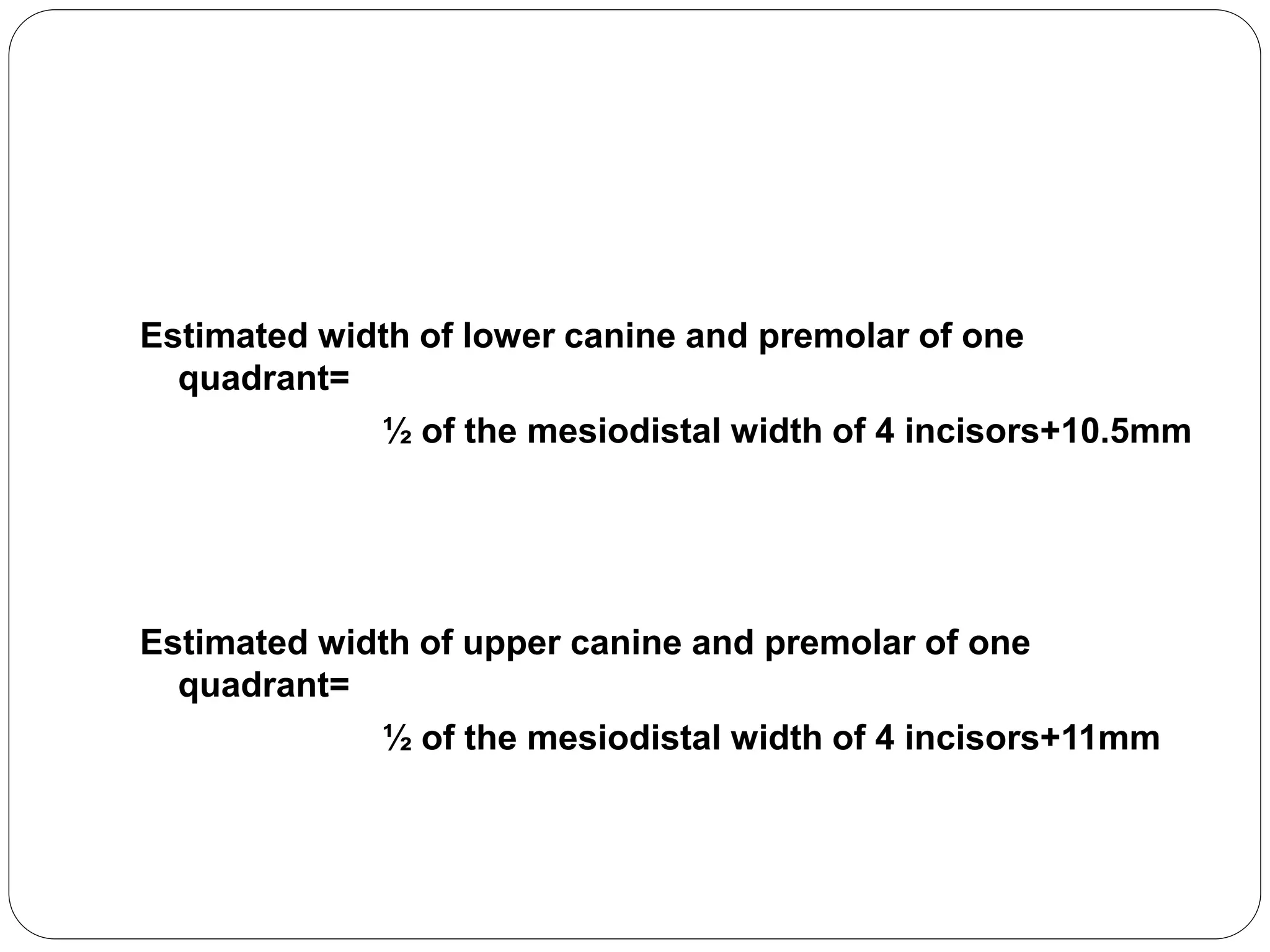
Estimated width of lower canine and premolar of one
quadrant=
½ of the mesiodistal width of 4 incisors+10.5mm
Estimated width of upper canine and premolar of one
quadrant=
½ of the mesiodistal width of 4 incisors+11mm
Staley kerber graph
 Combination of radiographic and prediction table
method
 Mesiodistal width of central and lateral lower
incisors is measured from the cast. Determine the
width of premolars from the periapical radiograph.
Sum up the mesiodistal width of central and
lateral incisors and premolars of that particular
side
 Staley and kerber graph allows canine width to be
read directly from the sum of incisors and
premolars width
 This method can only be used on mandibular
arch
 Quite accurate for European ancestry
Which method to be used?
THANK YOU

Bolton analysis and mixed dentition analysis

  • 1.
    Dr Bushra Naeem BOLTONANALYSIS AND MIXED DENTITION ANALYSIS
  • 2.
  • 3.
    Bolton analysis  Accordingto Bolton there exist a ratio between the mesiodistal width of maxillary and mandibular teeth  Bolton analysis helps in determining tooth size discrepancy
  • 4.
    Determining overall ratio Mesiodistal width of all the teeth which are mesial to the permanent 2nd molar is measured Overall ratio= Sum of mandibular 12 x 100 Sum of maxillary 12
  • 6.
     If theratio is less than 91.3% it indicates maxillary tooth material excess  Amount of excess can be calculated by Sum of maxillary 12- sum of mandibular 12 × 100 91.3
  • 7.
     If theratio is greater than 91.3% it indicates mandibular tooth material excess  Amount of excess can be calculated by sum of mandibular 12- sum of maxillary 12 × 91.3 100
  • 8.
    Anterior Ratio  Mesidistalwidth of all anterior 6 maxillary and mandibular anterior teeth is measured Anterior ratio= sum of mandibular 6 × 100 sum of maxillary 6
  • 9.
     If theratio is less than 77.2% it indicates maxillary anterior excess material .  Amount of excess material can be calculated by Sum of maxillary 6- sum of mandibular 6 × 100 77.2
  • 10.
     If theratio is greater than 77.2% it indicates mandibular anterior excess material  Amount of excess can be calculated by sum of mandibular 6 – sum of maxillary 6 × 77.2 100
  • 11.
    MIXED DENTITION ANALYSIS The purpose of mixed dentition analysis is to evaluate the amount of space available in the arch for eruption permanent canine and premolars  This can be achieved by predicting the mesiodistal width of unerupted premolars and canine
  • 12.
    Methods  Radiographic method Moyers prediction table  Tanaka and johnston equation  Staley kerber method
  • 13.
    Radiographic method  Alsoknown as Hukaba’s analysis  With any type of radiograph, it is necessary to compensate for the radiographic enlargement, this can be achieved by measuring the object which is available on both radiograph and the cast.
  • 14.
     A proportionalrelationship is set up true width of primary molar= apparent width of primary molar true width of unerupted premolar apparent width of unerupted premolar
  • 15.
     This techniquecan be used on maxillary and mandibular arches for all ethnic groups  Its accuracy depends on the quality of the radiograph
  • 16.
    Moyers prediction table Moyers predicted the combined mesiodistal width of canine and premolars based on the sum of lower 4 incisors  Based on this calculation, the expected width of canine and premolars is predicted by referring the Moyers prediction values.
  • 17.
    Moyers prediction values Totalmandibular incisors width 19.5 20.0 20.5 21.0 21.5 22.0 22.5 23.0 Predicted values of canine and premolar maxilla 20.6 20.9 21.2 21.3 21.8 22.0 22.3 22.6 mandible 20.1 20.4 20.7 21.0 21.3 21.6 21.9 22.2
  • 18.
     Accuracy ofthis method is fairly good for European white children on whom data was tabulated  No radiograph required
  • 19.
    Tanaka and johnston Tanaka and johnston developed another way of using the width of lower 4 incisors to predict the size of canine and premolars.  Mesiodistal width of lower 4 incisors is obtained and an equation is applied.
  • 20.
    Estimated width oflower canine and premolar of one quadrant= ½ of the mesiodistal width of 4 incisors+10.5mm Estimated width of upper canine and premolar of one quadrant= ½ of the mesiodistal width of 4 incisors+11mm
  • 21.
    Staley kerber graph Combination of radiographic and prediction table method  Mesiodistal width of central and lateral lower incisors is measured from the cast. Determine the width of premolars from the periapical radiograph. Sum up the mesiodistal width of central and lateral incisors and premolars of that particular side  Staley and kerber graph allows canine width to be read directly from the sum of incisors and premolars width
  • 22.
     This methodcan only be used on mandibular arch  Quite accurate for European ancestry
  • 23.
  • 24.