A Very Good Afternoon
1 phase versus 2 phase
Under the guidance of :
Dr. Mohammad Mushtaq,
PROFFESSOR & HOD
By:
Sneh Kalgotra,
2nd Year P.G.
Department of Orthodontics &
Dentofacial Orthopaedics, GDC&H,
Srinagar.dital jet versus pendulum appliance
One-phase vs 2-phase treatment for
developing Class III malocclusion: A
comparison of identical
Twins.
Junji Sugawara,
Zaher Aymach,
Hiromichi Hin,
Ravindra Nanda.
1 phase versus 2 phase
About the authors
1 phase versus 2 phase
Ravindra Nanda (born 19
February 1943) is the
professor and Head of
CraniofacialDepartment and
Chair of the Division of
Orthodontics at the
University of Connecticut
School of Dental Medicine.
He is an innovator of various
appliances in orthodontics.
With 10 books and 105
artcles to his credit
Ravindra Nanda
Dr. Nanda receiving
Life membership of
About the authors
Private practice, Nagoya, Japan.
Has 9 publications to his credit.
1 phase versus 2 phase
Junji Sugawara
Zaher Aymach
Lecturer and assistant researcher,
Division of Maxillofacial Surgery,
Tohoku .University, Sendai, Japan.
Has 63 publications to his credit.
prolouge
• In the treatment of skeletal Class III
growing patients, it has become a common
practice to intervene early with orthodontic
or orthopedic treatment modalities as a part
of a 2-phase treatment approach.
• Although orthopedic forces that attempt to
control or alter the skeletal framework in
skeletal Class III patients appear to be
remarkably effective in the initial stages, the
results are rarely maintained in the long term.
1 phase versus 2 phase
Therefore, the key question is “what differences in
jaw growth or treatment modality and outcome will
there be between patients who undergo 1-phase
treatment and those who don’t?”
1 phase versus 2 phase
Critical appraisal of title
• One-phase vs 2-phase treatment for developing Class III
malocclusion: A comparison of identical twins.
 Title reflects the aim of the study.
 Variables are not clearly mentioned in the title.
 The type of study is not mentioned in the title.
 It comprises of 16words- appropriate.
 It is not specific.
 Title is incomplete as it suggest nothing about the
parameters being undertaken in the study.1 phase versus 2 phase
Proposed alternative title
One-phase vs 2-phase treatment for mild
to moderate developing Class III
malocclusion: A comparison of identical
twins- A case report.
- 19 words.
1 phase versus 2 phase
Critical appraisal of the abstract
 Its informative and comprehensive in its
contents.
 Gives brief overview of the whole study.
Key words are NOT clearly mentioned.
1 phase versus 2 phase
CRITICAL APPRAISAL OF INTRODUCTION
 Introduction is meaningful.
 Introduction is SHORT.
 It is built on the existing literature.
 Citations that are reported, are relevant and
pertinent to the study and followed with correct
references in the list.
 Purpose of the study is clearly mentioned in the
introduction. 1 phase versus 2 phase
Material and methods
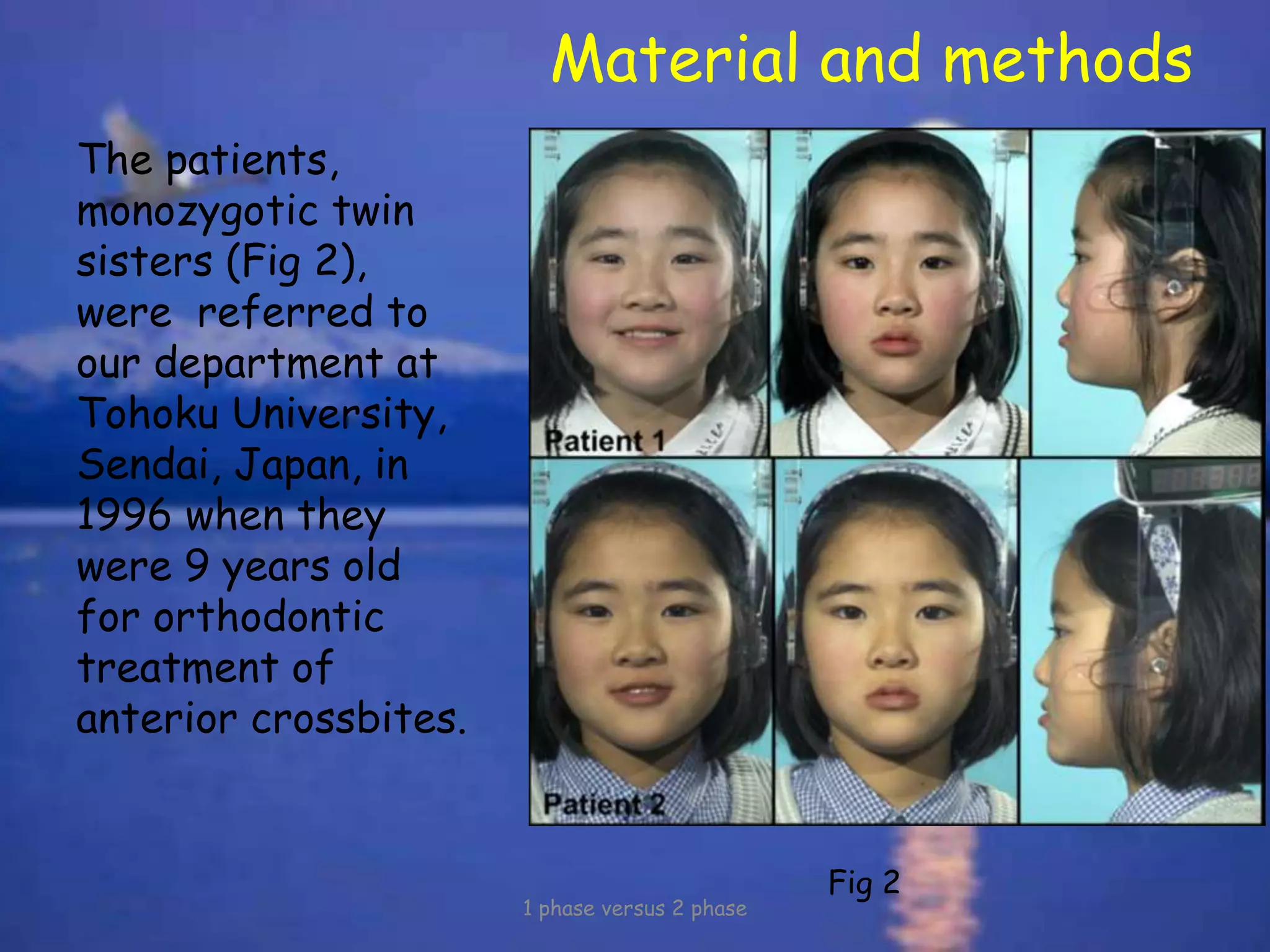
The patients,
monozygotic twin
sisters (Fig 2),
were referred to
our department at
Tohoku University,
Sendai, Japan, in
1996 when they
were 9 years old
for orthodontic
treatment of
anterior crossbites.
1 phase versus 2 phase
Fig 2
Material and methods
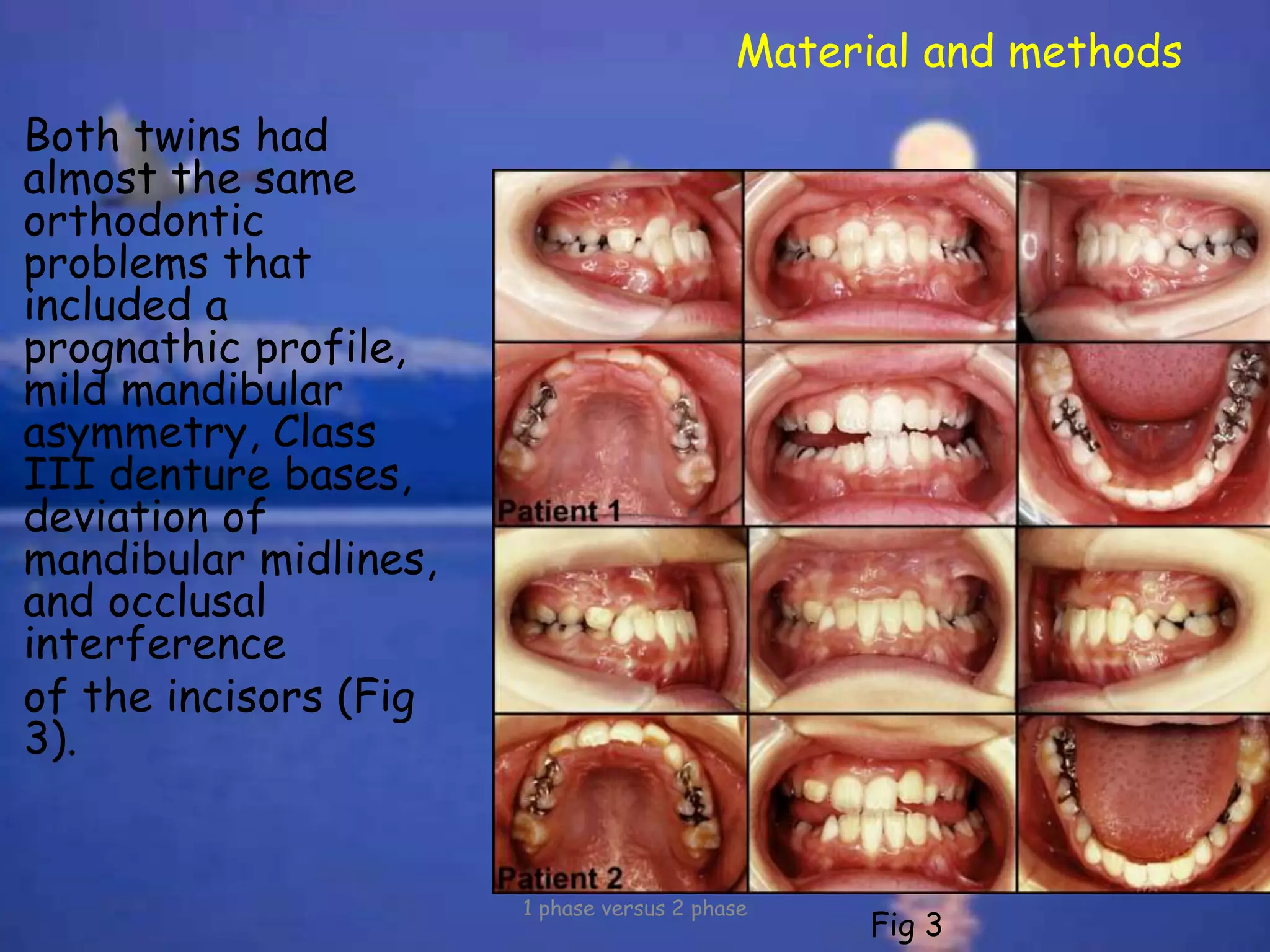
Both twins had
almost the same
orthodontic
problems that
included a
prognathic profile,
mild mandibular
asymmetry, Class
III denture bases,
deviation of
mandibular midlines,
and occlusal
interference
of the incisors (Fig
3).
1 phase versus 2 phase
Fig 3
Material and methods
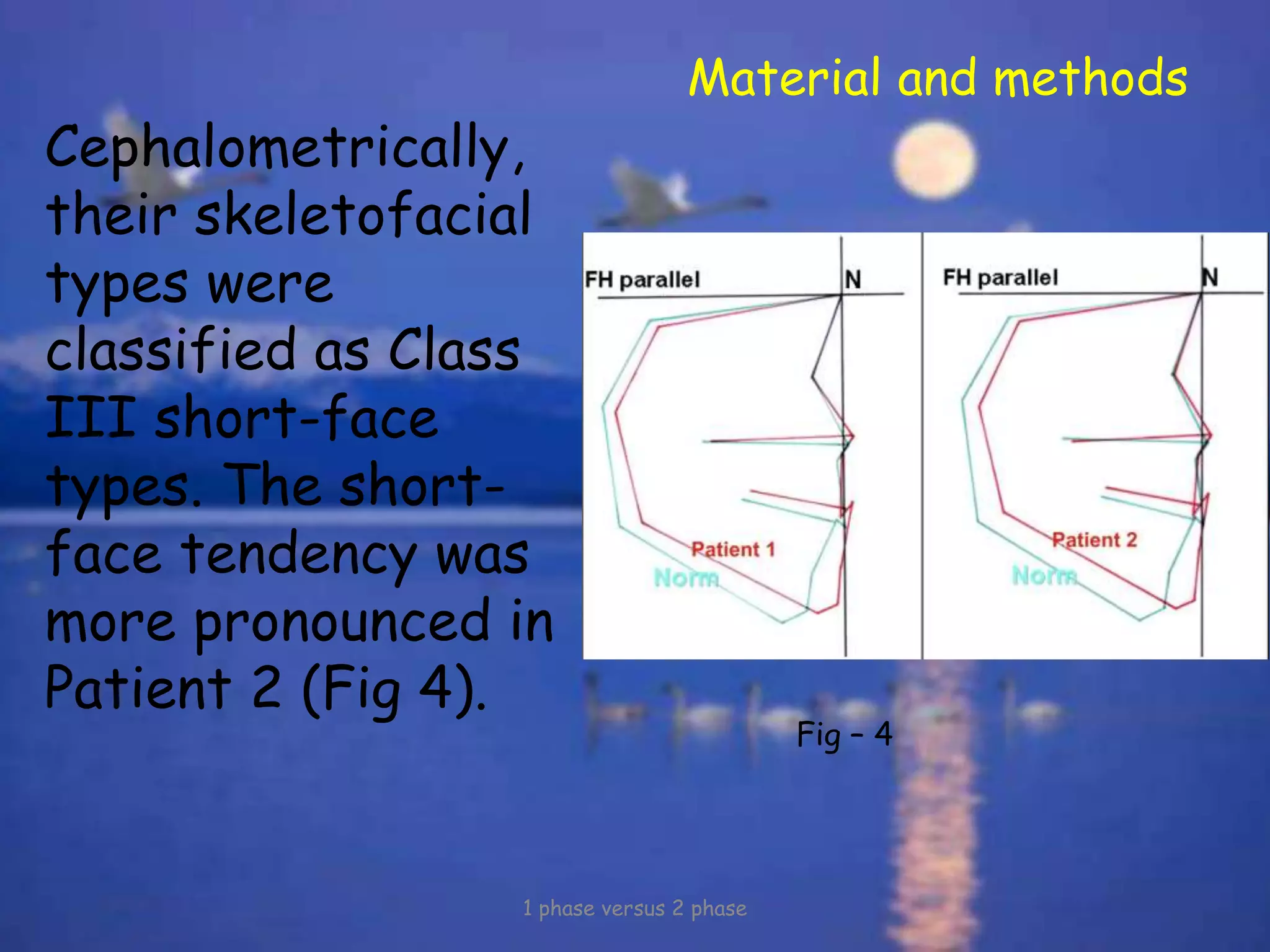
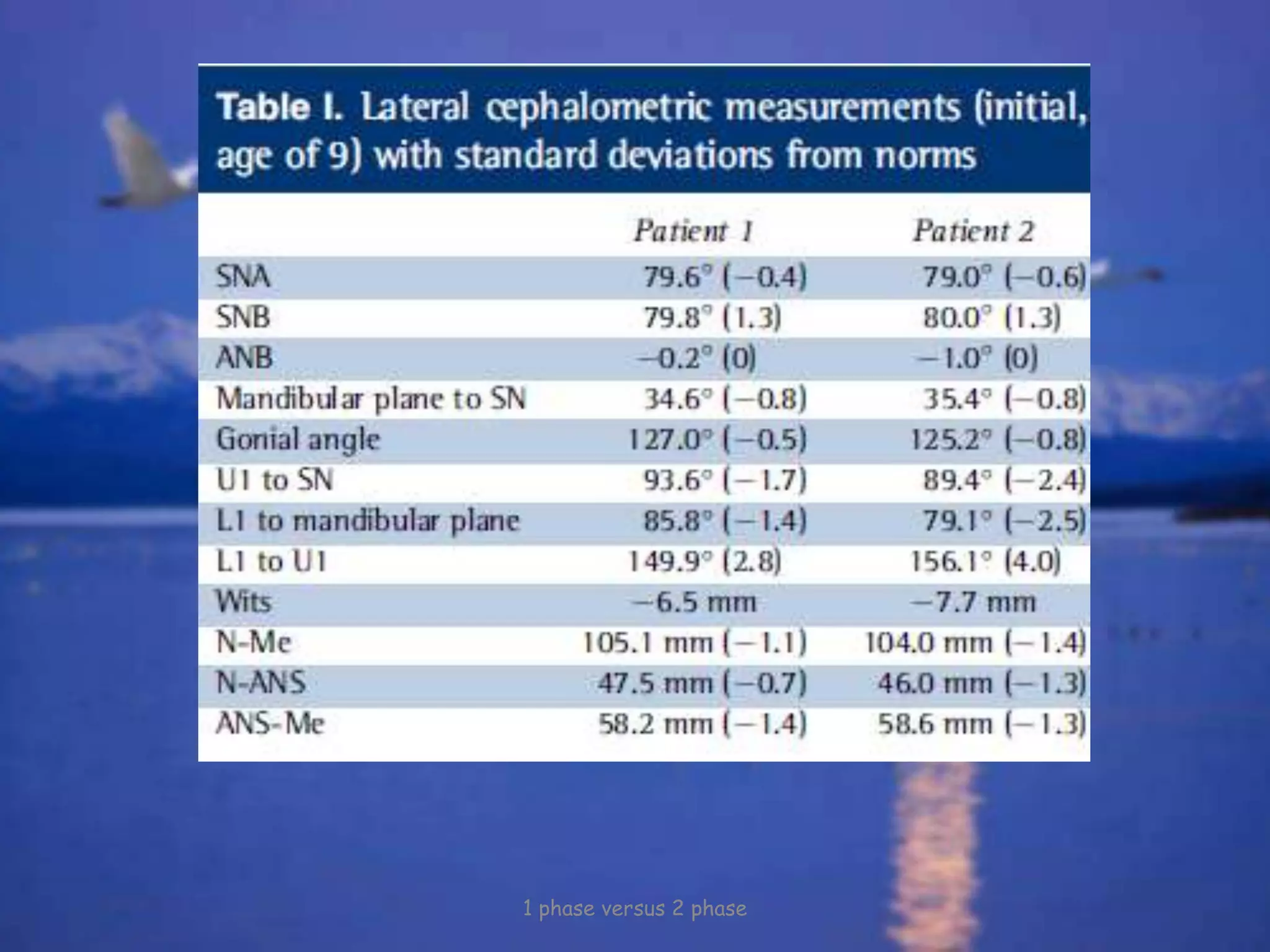
Cephalometrically,
their skeletofacial
types were
classified as Class
III short-face
types. The short-
face tendency was
more pronounced in
Patient 2 (Fig 4).
1 phase versus 2 phase
Fig – 4
1 phase versus 2 phase
Material and methods
Treatment objectives for Patient 1 were
established with the 2-phase treatment approach,
whereas Patient 2 was managed with a 1-phase
treatment concept.
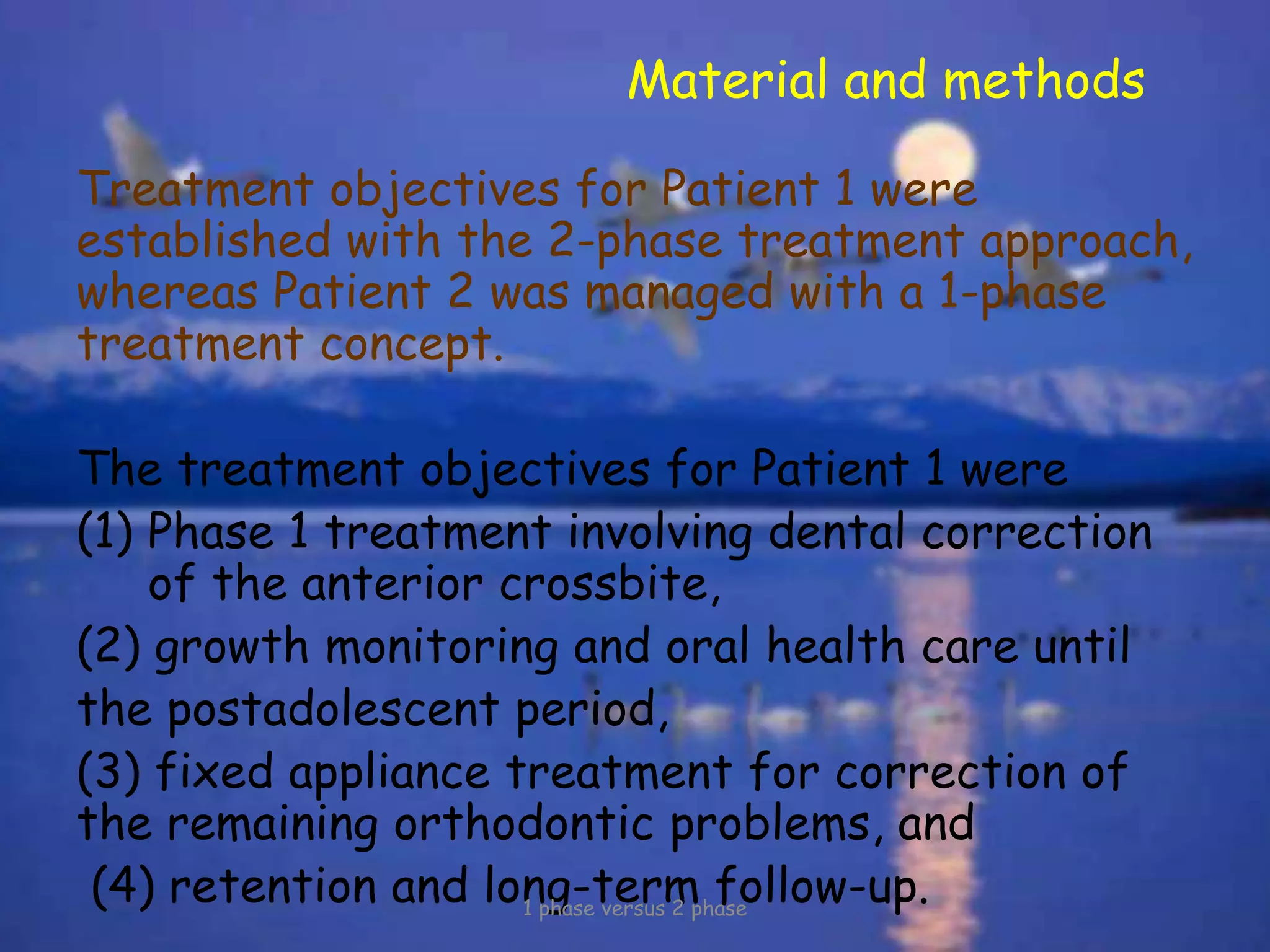
The treatment objectives for Patient 1 were
(1) Phase 1 treatment involving dental correction
of the anterior crossbite,
(2) growth monitoring and oral health care until
the postadolescent period,
(3) fixed appliance treatment for correction of
the remaining orthodontic problems, and
(4) retention and long-term follow-up.1 phase versus 2 phase
Material and methods
For Patient 2, the treatment objectives
were
(1) growth monitoring and oral health care
until the post adolescent period,
(2) correction of the malocclusion with
fixed appliance treatment together with
skeletal anchorage that would allow us to
circumvent the need for mandibular
premolar extraction, and
(3) retention and long-term follow-up.
1 phase versus 2 phase
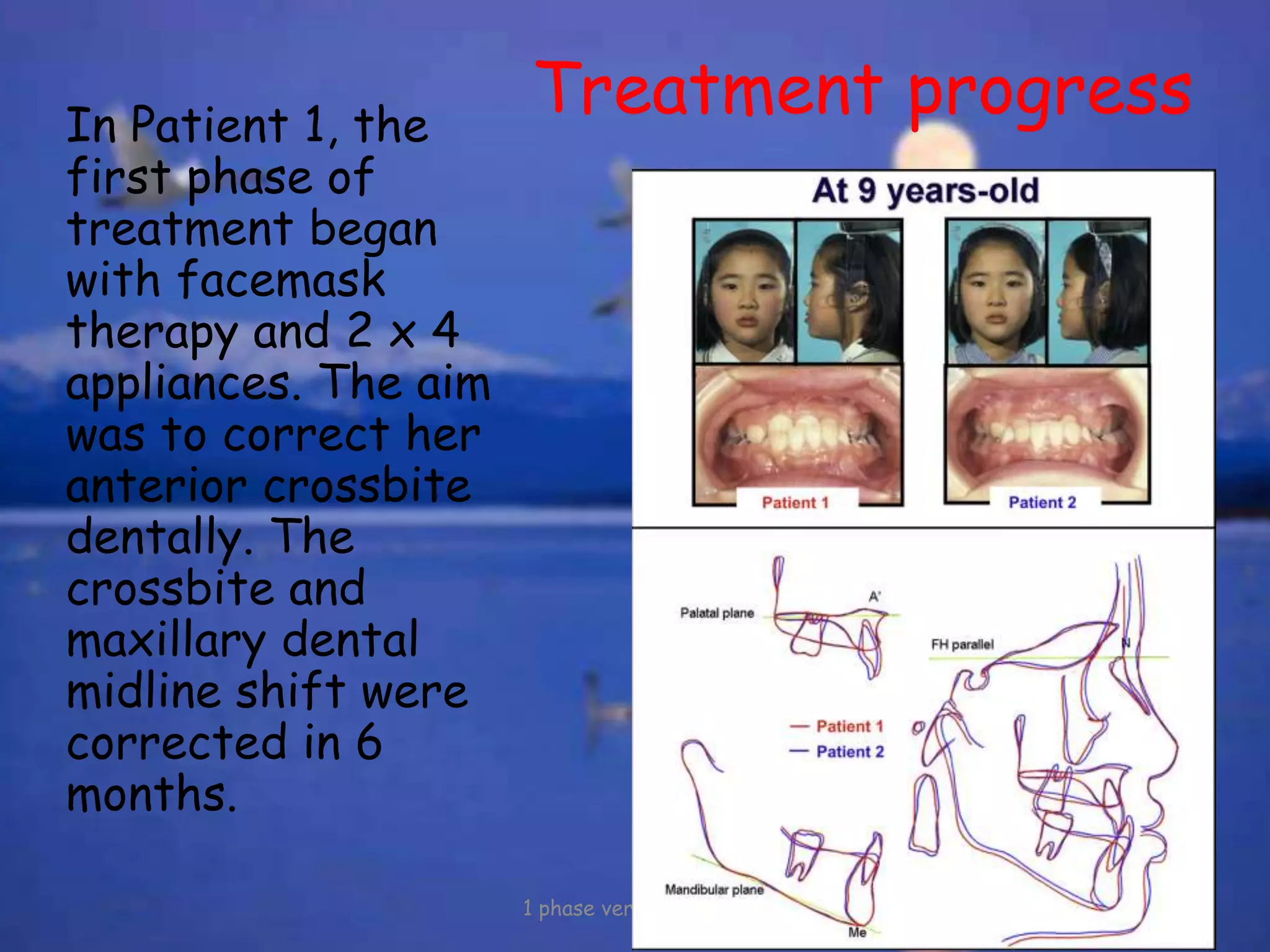
Treatment progressIn Patient 1, the
first phase of
treatment began
with facemask
therapy and 2 x 4
appliances. The aim
was to correct her
anterior crossbite
dentally. The
crossbite and
maxillary dental
midline shift were
corrected in 6
months.
1 phase versus 2 phase
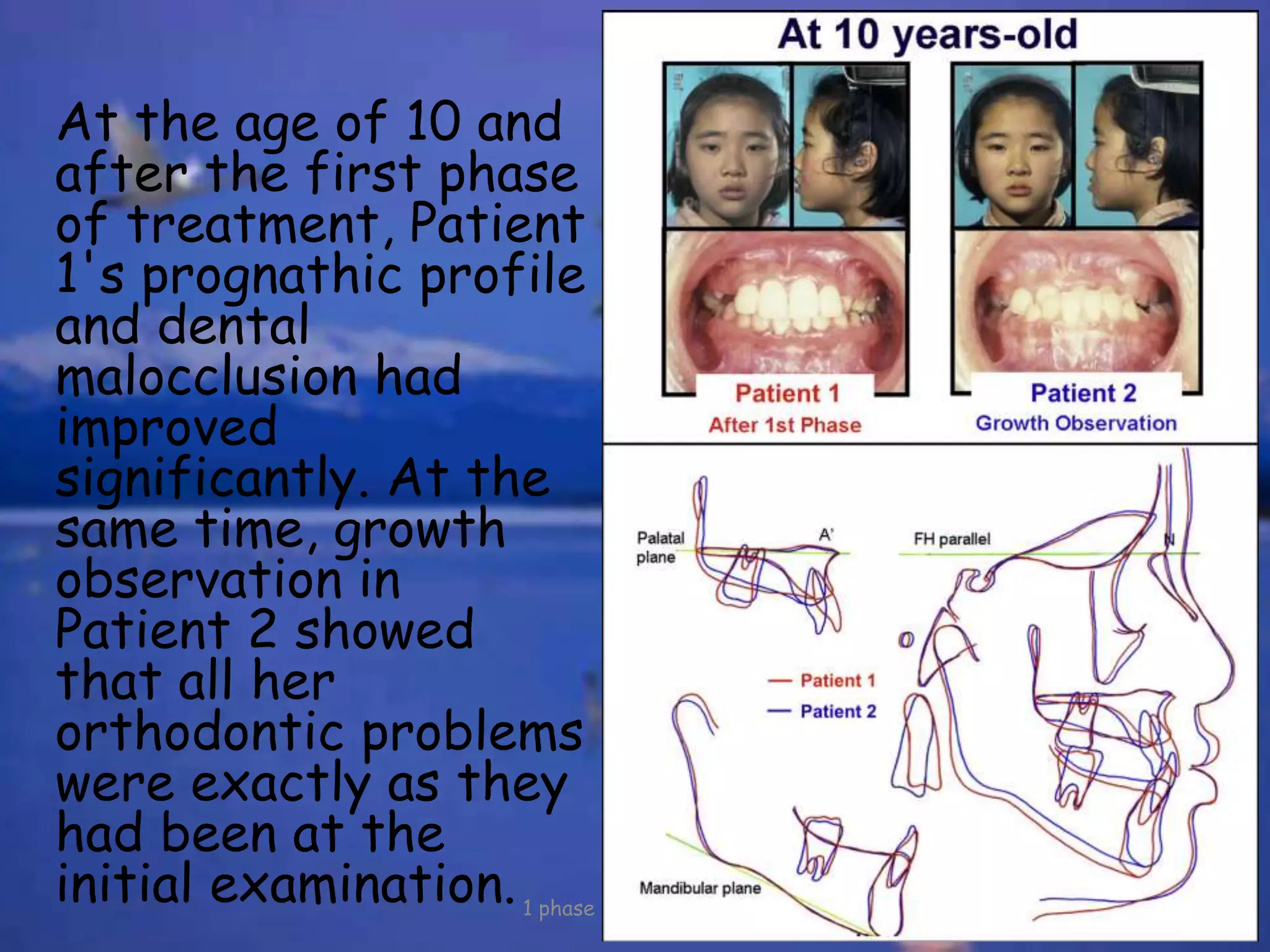
At the age of 10 and
after the first phase
of treatment, Patient
1's prognathic profile
and dental
malocclusion had
improved
significantly. At the
same time, growth
observation in
Patient 2 showed
that all her
orthodontic problems
were exactly as they
had been at the
initial examination.1 phase versus 2 phase
Before the second phase of treatment,
• Patient 1 still had a prognathic profile,
with some minor dental problems,
particularly in the mandibular dentition.
She had a lateral crossbite on the right
side, a mild Class III denture base, and
mild mandibular incisor crowding. At the
same stage,
• Patient 2 demonstrated more severe
orthodontic problems than her sister did
at this age. She had a skeletal Class III
malocclusion with a short-face tendency,
premature contact at the incisors, a dental
midline shift, an anterior crossbite, severe
crowding of the maxillary anterior teeth,
and retroclined mandibular incisors.
1 phase versus 2 phase
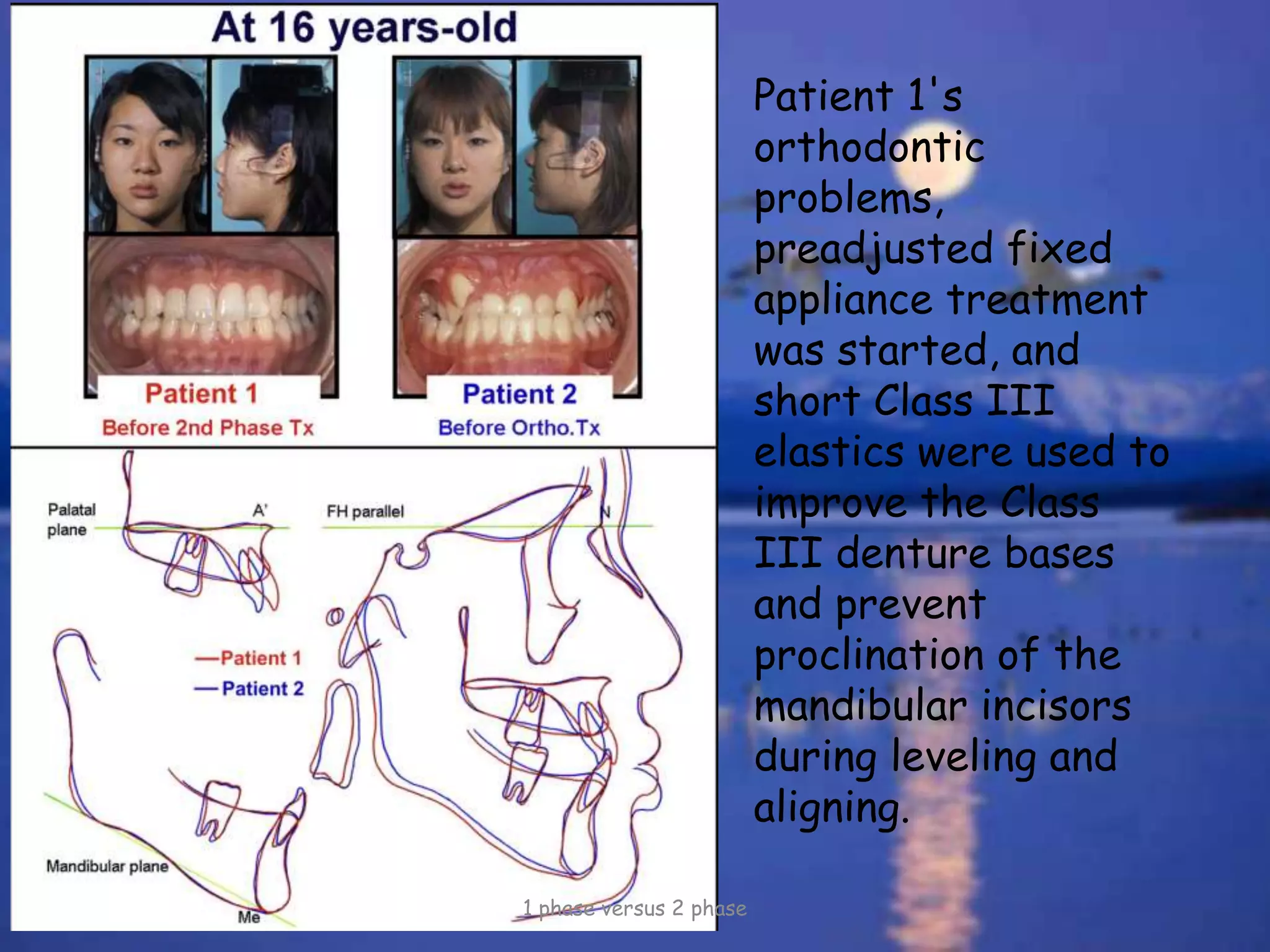
Patient 1's
orthodontic
problems,
preadjusted fixed
appliance treatment
was started, and
short Class III
elastics were used to
improve the Class
III denture bases
and prevent
proclination of the
mandibular incisors
during leveling and
aligning.
Treatment for
Patient 2 started with bonding brackets on
the mandibular teeth and placing resin caps
on the maxillary molars to open the bite for
maxillary bonding. Open-coil springs were
used to make space and procline the
maxillary incisors. Simultaneously,
distalization of the mandibular posterior
teeth was started with the skeletal
anchorage system, which uses an orthodontic
miniplate as a temporary anchorage device
1 phase versus 2 phase
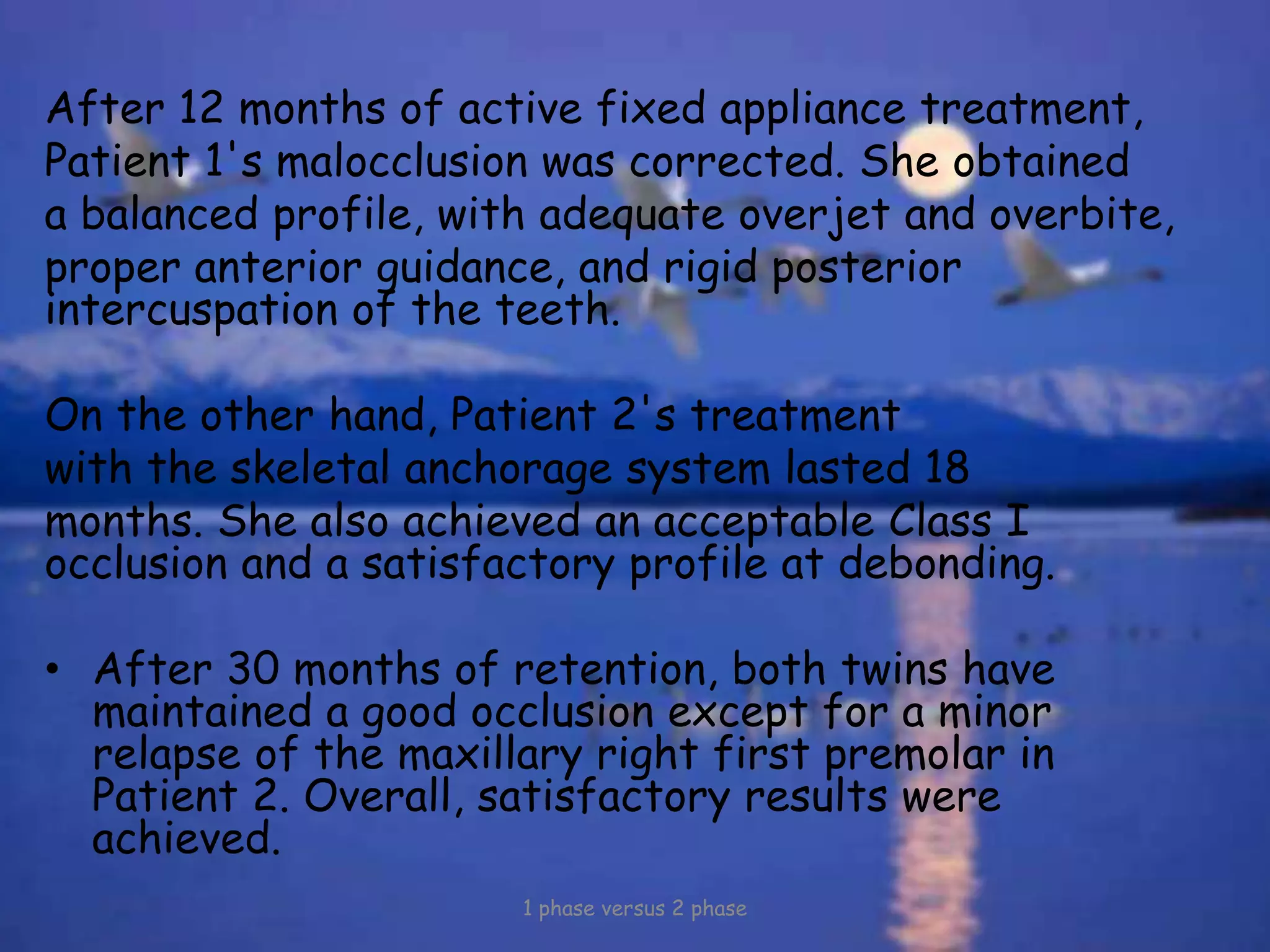
After 12 months of active fixed appliance treatment,
Patient 1's malocclusion was corrected. She obtained
a balanced profile, with adequate overjet and overbite,
proper anterior guidance, and rigid posterior
intercuspation of the teeth.
On the other hand, Patient 2's treatment
with the skeletal anchorage system lasted 18
months. She also achieved an acceptable Class I
occlusion and a satisfactory profile at debonding.
• After 30 months of retention, both twins have
maintained a good occlusion except for a minor
relapse of the maxillary right first premolar in
Patient 2. Overall, satisfactory results were
achieved.
1 phase versus 2 phase
COMPARISON OF TREATMENT PROGRESS AND
RESULTS IN THE TWINS
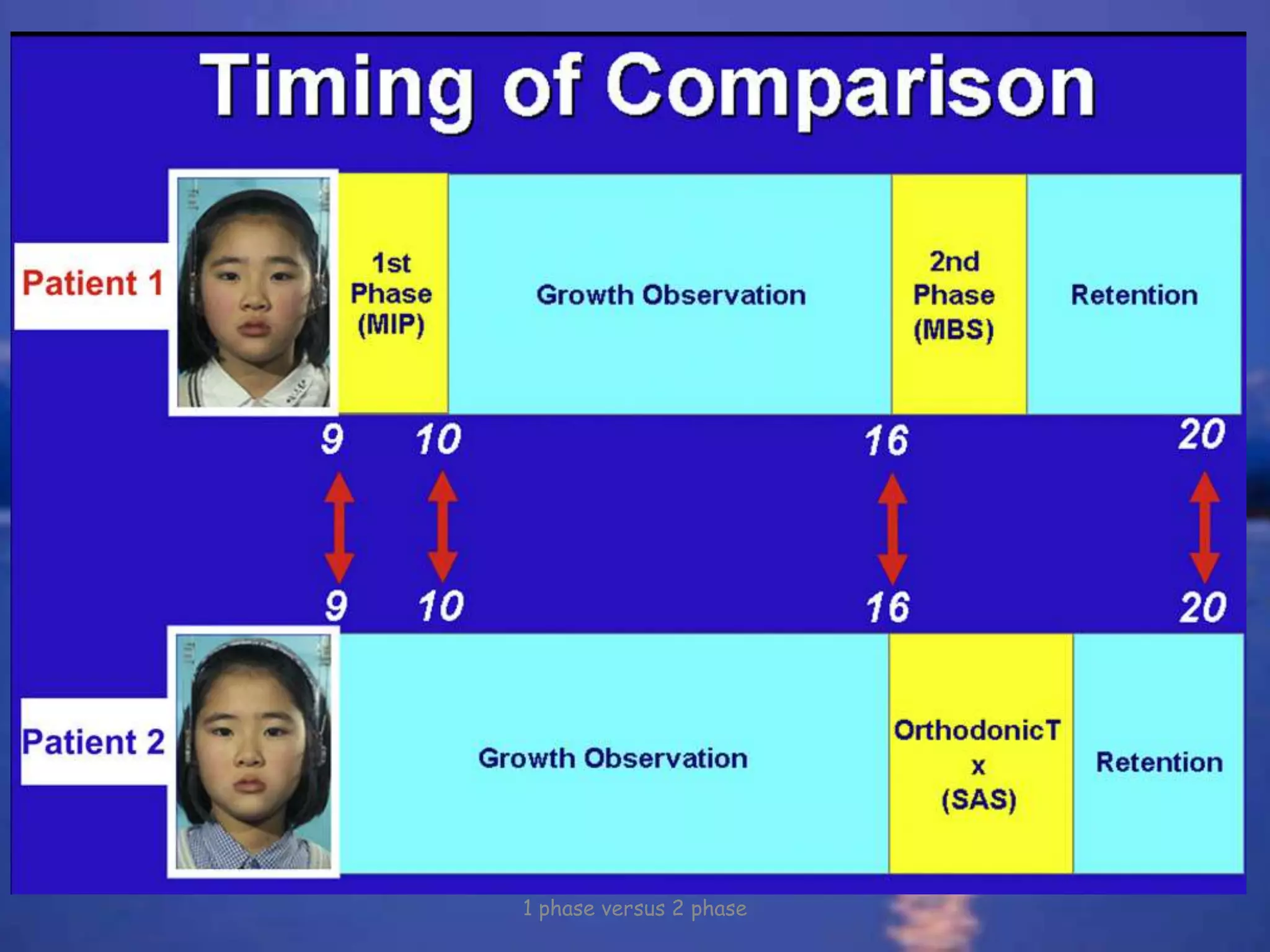
Comparisons of the twin sisters took
place at 4 time intervals
1. The initial examination was at age 9
years. Because they are monozygotic
twins, it is no surprise that even their
dentitions were almost identical.
1 phase versus 2 phase
2.After Patient 1's first phase of treatment
(age, 10 years), the clinical pictures clearly
show the efficiency of early intervention for
her. Cephalometric superimposition shows
significant dentofacial differences between
the sisters at this stage. Patient 1's
crossbite was corrected by proclinatoin of
her maxillary incisors, forward displacement
of the maxilla, and clockwise rotation of the
mandible. This gave her an orthognathic
facial profile compared with Patient 2.
1 phase versus 2 phase
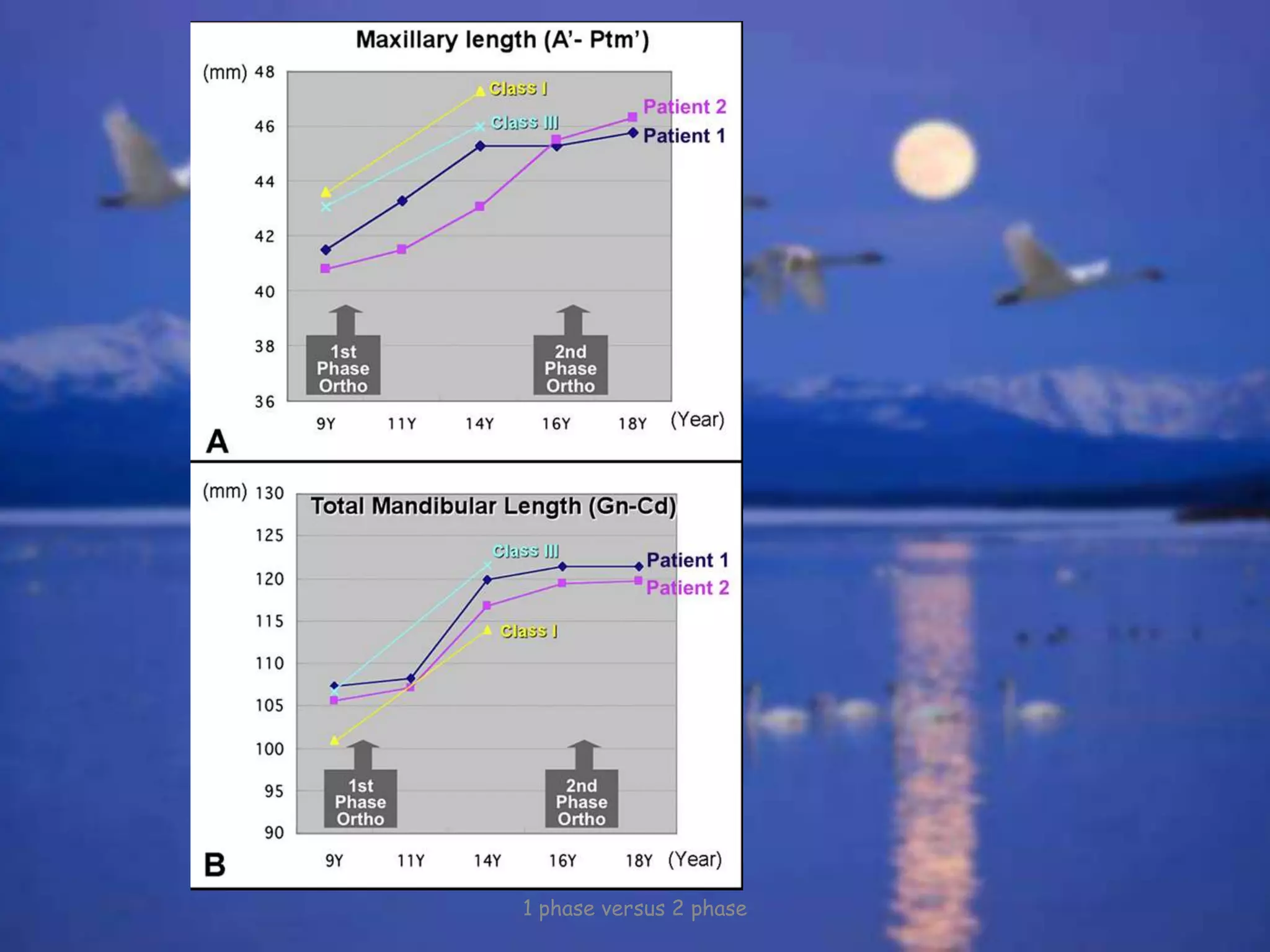
3. Before fixed appliance treatment (age, 16
years), the skeletal differences between
them at 10 years gradually disappeared
during the pubertal growth spurt, and almost
no difference could be observed between
their skeletal profiles at 16 years. The only
difference perhaps was in the position of
the maxillary incisors. The orthodontic
effect of the facemask could still be seen on
Patient 1's maxillary Incisors.
1 phase versus 2 phase
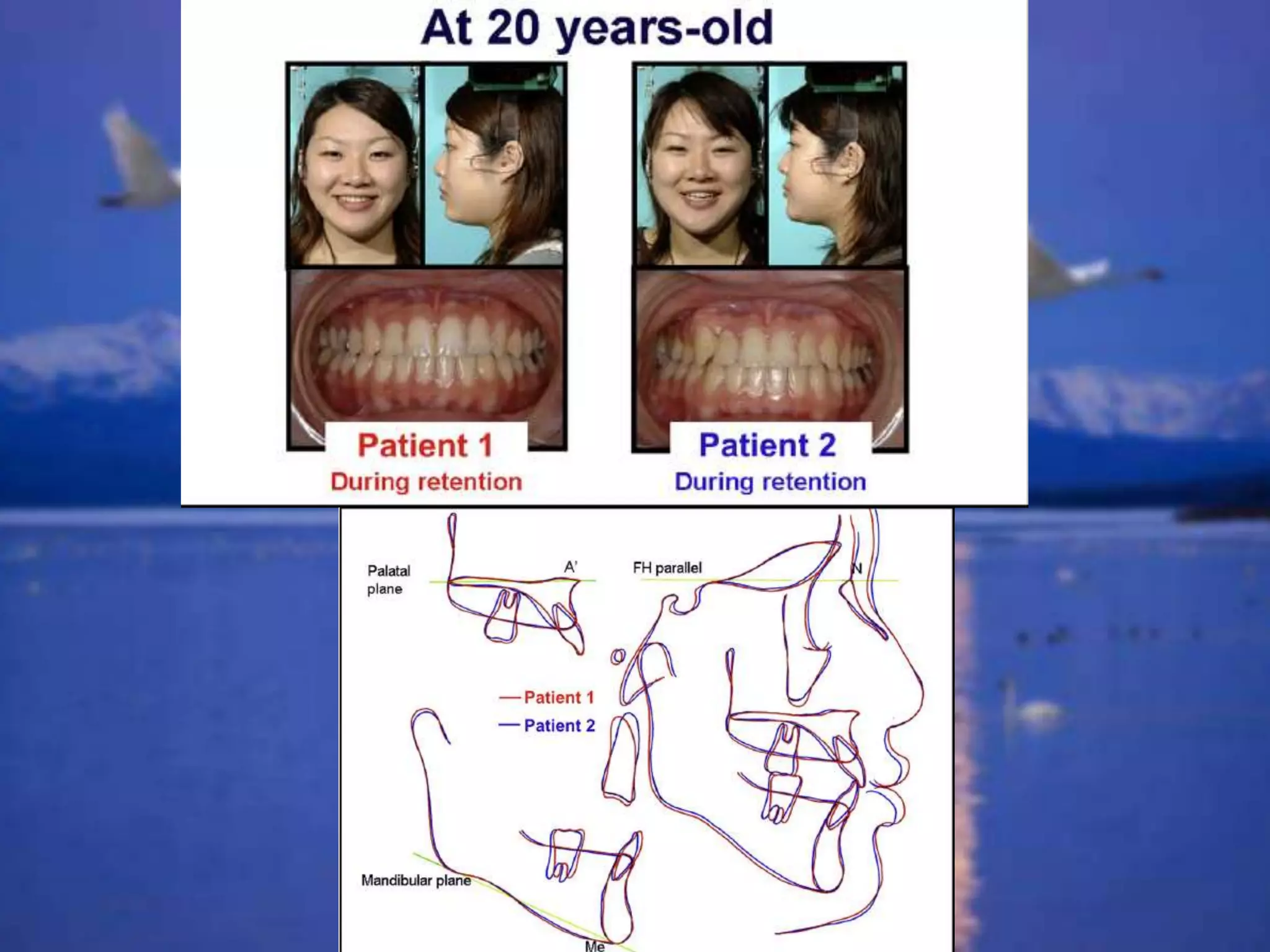
4. During the retention period (age, 20
years), we superimposed the twins’ final
records. Interestingly, although they
underwent orthodontic treatment with
completely different treatment regimens
(1-phase vs 2-phase), their dentofacial
morphologies were identical .
1 phase versus 2 phase
Critical appraisal of material and
methods
The local ethical committee was not
consulted.
Informed and written consent was
obtained before the treatment was
started both from the patients and the
parents.
1 phase versus 2 phase
Critical appraisal of material and
methods
 It is an experimental study.
 Pre-test, post- test comparisons are used.
 Parameters used for maxillary length and mandibular
length are not clearly mentioned.
 since authors believe that phase 1 treatment has any
positive effect on psychology of the patient than it is
ethically wrong to give benefit of such treatment to one
patient only.
 One advantage of the study is it rules out the
bias produced due to genetics.
1 phase versus 2 phase
DISCUSSION
• The advantage of using monozygotic twins in
such a comparative case report is that all
differences in skeletal growth, beyond the
error of measurement, can be assumed to be
nongenetic and, therefore, the result of the
environment.
• Recent clinical trials have suggested that in the
longterm the improvement in the skeletal
malocclusion obtained after a first phase of
treatment is not significant when compared with
a control group that had no growth modification
treatment.
1 phase versus 2 phase
It was obvious that the early correction of
the anterior crossbite did not make a positive
impact on jaw growth. It seems that
morphogenetic factors are still stronger and
much more dominant than environmental
factors in the matter of jaw growth.
Patient 2 who was managed with a 1-phase
treatment, had to undergo treatment with the
skeletal anchorage system. The skeletal
anchorage system is a viable modality for
distalizing mandibular molars.
1 phase versus 2 phase
Conclusion
1. In spite of the differences in
treatment timing and modalities (1-
phase vs 2-phase treatment), both twin
sisters achieved almost identical
dentofacial results. This implies that
early treatment had no impact on jaw
growth in the pubertal growth period.1 phase versus 2 phase
Conclusion
2. Although phase 1 treatment had no impact on jaw
growth, it made the phase 2 treatment simpler and
easier. Therefore, 2-phase treatment might be more
suited for mild to moderate Class III patients than 1-
phase treatment.
3. The criteria for the selection of 1-phase or 2-phase
treatment depend entirely on the patient’s
requirements.
Because the biologic outcome is the same, the basis for
opting for a particular treatment regimen can be
complicated. Cultural, environmental, and psychosocial
factors need to be considered more carefully.
1 phase versus 2 phase
Review of literature
1 phase versus 2 phase
Outcomes in a 2-phase randomized clinical trial of early

class II treatment
J.F.Camilla Tulloch, William R Proffit, Ceib Phillips.
(AJODO 125, JUNE 2004).
The differences created between the treated
children and untreated control group by phase 1
treatment before adolescence disappeared
when both groups received comprehensive fixed

appliance treatment during adolescence.
This suggests that 2-phase treatment started
before adolescence in the mixed dentition
might be no more clinically effective than 1-
phase treatment started during adolescence in
the early permanent dentition.
1 phase versus 2 phase
Two phase treatment of Class III malocclusion.
Siddegowda R, Sahoo KC, Jain S
• The earlier the intervention, the
greater the chances of positive
response, regarding transversal
maxillary advancement.
1 phase versus 2 phase
Is early class III protraction facemask
treatment effective? A multicentre,
randomized, controlled trial: 15‐month follow‐up.
JCO 2010.
• Early class III orthopaedic treatment, with
protraction facemask, in patients under
10 years of age, is skeletally and dentally
effective in the short term and does not result
in TMJ dysfunction. Seventy per cent of
patients had successful treatment, defined as
achieving a positive overjet. However, early
treatment does not seem to confer a clinically
significant psychosocial benefit.
1 phase versus 2 phase
Is early class III protraction facemask
treatment effective? A multicentre,
randomized, controlled trial: 3-year
follow-up
JO 2012.
• The favourable effect of early class III
protraction facemask treatment
undertaken in patients under 10 years of
age, is maintained at 3-year follow-up in
terms of ANB, overjet and % PAR
improvement. The direct protraction
treatment effect at SNA is still
favourable although not statistically
significantly better than the CG.1 phase versus 2 phase
Moyers R. Handbook of orthodontics. 4th ed. Chicago:
Year
Book; 1988. p. 346-7, 433-4.
• “there is no assurance that the results
of early treatment will be sustained and
that 2-phased treatment will always
lengthen overall treatment time. Early
treatment not only may do some damage
or prolong therapy, it may exhaust the
child’s spirit of cooperation and
compliance.”
1 phase versus 2 phase
Critical reflection
1 phase versus 2 phase
Critical reflection
• This article is very relevant for day to day
patient care.
• Further studies need to be undertaken.
• Considerations like environmental factors
• And psycho-social factors should be
concerned.
1 phase versus 2 phase
References
1. Gebeile-Chauty S, Perret M, Schott AM, Akin JJ. Early
treatment of
Class III: a long-term cohort study. Orthod Fr 2010;81:245-54.
2. Kanno Z, Kim Y, Soma K. Early correction of a developing skeletal
Class III malocclusion. Angle Orthod 2007;77:549-56.
3. Mandall N, DiBiase A, Littlewood S, Nute S, Stivaros N,
McDowall R, et al. Is early Class III protraction facemask
treatment
effective? A multicentre, randomized, controlled trial: 15-month
follow-up. J Orthod 2010;37:149-61.
4. Sugawara J, Asano T, Endo N, Mitani H. Long-term effects of
chincap
therapy on skeletal profile in mandibular prognathism. Am J
Orthod Dentofacial Orthop 1990;98:127-33.
5. Mitani H, Sato K, Sugawara J. Growth of mandibular prongathism
after pubertal growth peak. Am J Orthod Dentofacial Orthop
1993;
104:330-6.
1 phase versus 2 phase
6. Sugawara J, Asano T. The clinical practice guideline
for treatment
of developing Class III malocclusion. In: Sugawara J,
Asano T, editors.
Seeking a consensus for Class III treatment. Osaka,
Japan:
Tokyo Rinsho Shuppan; 2002. p. 21-30.
7. Sugawara J. Clinical practice guidelines for
developing Class III
malocclusion. In: Nanda R, editor. Biomechanics and
esthetic strategies
in clinical orthodontics. St Louis: Elsevier; 2005. p.
211-42.
1 phase versus 2 phase
8. Sugawara J, Mitani H. Facial growth of skeletal Class III
malocclusion
and the effects, limitations, and long-term dentofacial
adaptations to chincap therapy. Semin Orthod 1997;3:244-54.
9. Skieller V, Bj€ork A, Linde-Hansen T. Prediction of mandibular
growth rotation evaluated from a longitudinal implant sample.
Am J Orthod 1984;86:359-70.
10. Bj€ork A, Skieller V. Normal and abnormal growth of mandible.
A
longitudinal cephalometric implantation study over a 25-year
period. Inf Orthod Kieferorthop 1984;16:55-108.
11. Sugawara J. A bioefficient skeletal anchorage system. In:
Nanda R, editor. Biomechanics and esthetic strategies in clinical
orthodontics. St Louis: Elsevier; 2005. p. 295-309.
1 phase versus 2 phase

Phase I versus phase II

  • 1.
    A Very GoodAfternoon 1 phase versus 2 phase
  • 2.
    Under the guidanceof : Dr. Mohammad Mushtaq, PROFFESSOR & HOD By: Sneh Kalgotra, 2nd Year P.G. Department of Orthodontics & Dentofacial Orthopaedics, GDC&H, Srinagar.dital jet versus pendulum appliance
  • 3.
    One-phase vs 2-phasetreatment for developing Class III malocclusion: A comparison of identical Twins. Junji Sugawara, Zaher Aymach, Hiromichi Hin, Ravindra Nanda. 1 phase versus 2 phase
  • 4.
    About the authors 1phase versus 2 phase Ravindra Nanda (born 19 February 1943) is the professor and Head of CraniofacialDepartment and Chair of the Division of Orthodontics at the University of Connecticut School of Dental Medicine. He is an innovator of various appliances in orthodontics. With 10 books and 105 artcles to his credit Ravindra Nanda Dr. Nanda receiving Life membership of
  • 5.
    About the authors Privatepractice, Nagoya, Japan. Has 9 publications to his credit. 1 phase versus 2 phase Junji Sugawara Zaher Aymach Lecturer and assistant researcher, Division of Maxillofacial Surgery, Tohoku .University, Sendai, Japan. Has 63 publications to his credit.
  • 6.
    prolouge • In thetreatment of skeletal Class III growing patients, it has become a common practice to intervene early with orthodontic or orthopedic treatment modalities as a part of a 2-phase treatment approach. • Although orthopedic forces that attempt to control or alter the skeletal framework in skeletal Class III patients appear to be remarkably effective in the initial stages, the results are rarely maintained in the long term. 1 phase versus 2 phase
  • 7.
    Therefore, the keyquestion is “what differences in jaw growth or treatment modality and outcome will there be between patients who undergo 1-phase treatment and those who don’t?” 1 phase versus 2 phase
  • 8.
    Critical appraisal oftitle • One-phase vs 2-phase treatment for developing Class III malocclusion: A comparison of identical twins.  Title reflects the aim of the study.  Variables are not clearly mentioned in the title.  The type of study is not mentioned in the title.  It comprises of 16words- appropriate.  It is not specific.  Title is incomplete as it suggest nothing about the parameters being undertaken in the study.1 phase versus 2 phase
  • 9.
    Proposed alternative title One-phasevs 2-phase treatment for mild to moderate developing Class III malocclusion: A comparison of identical twins- A case report. - 19 words. 1 phase versus 2 phase
  • 10.
    Critical appraisal ofthe abstract  Its informative and comprehensive in its contents.  Gives brief overview of the whole study. Key words are NOT clearly mentioned. 1 phase versus 2 phase
  • 11.
    CRITICAL APPRAISAL OFINTRODUCTION  Introduction is meaningful.  Introduction is SHORT.  It is built on the existing literature.  Citations that are reported, are relevant and pertinent to the study and followed with correct references in the list.  Purpose of the study is clearly mentioned in the introduction. 1 phase versus 2 phase
  • 12.
    Material and methods Thepatients, monozygotic twin sisters (Fig 2), were referred to our department at Tohoku University, Sendai, Japan, in 1996 when they were 9 years old for orthodontic treatment of anterior crossbites. 1 phase versus 2 phase Fig 2
  • 13.
    Material and methods Bothtwins had almost the same orthodontic problems that included a prognathic profile, mild mandibular asymmetry, Class III denture bases, deviation of mandibular midlines, and occlusal interference of the incisors (Fig 3). 1 phase versus 2 phase Fig 3
  • 14.
    Material and methods Cephalometrically, theirskeletofacial types were classified as Class III short-face types. The short- face tendency was more pronounced in Patient 2 (Fig 4). 1 phase versus 2 phase Fig – 4
  • 15.
  • 16.
    Material and methods Treatmentobjectives for Patient 1 were established with the 2-phase treatment approach, whereas Patient 2 was managed with a 1-phase treatment concept. The treatment objectives for Patient 1 were (1) Phase 1 treatment involving dental correction of the anterior crossbite, (2) growth monitoring and oral health care until the postadolescent period, (3) fixed appliance treatment for correction of the remaining orthodontic problems, and (4) retention and long-term follow-up.1 phase versus 2 phase
  • 17.
    Material and methods ForPatient 2, the treatment objectives were (1) growth monitoring and oral health care until the post adolescent period, (2) correction of the malocclusion with fixed appliance treatment together with skeletal anchorage that would allow us to circumvent the need for mandibular premolar extraction, and (3) retention and long-term follow-up. 1 phase versus 2 phase
  • 18.
    Treatment progressIn Patient1, the first phase of treatment began with facemask therapy and 2 x 4 appliances. The aim was to correct her anterior crossbite dentally. The crossbite and maxillary dental midline shift were corrected in 6 months. 1 phase versus 2 phase
  • 19.
    At the ageof 10 and after the first phase of treatment, Patient 1's prognathic profile and dental malocclusion had improved significantly. At the same time, growth observation in Patient 2 showed that all her orthodontic problems were exactly as they had been at the initial examination.1 phase versus 2 phase
  • 20.
    Before the secondphase of treatment, • Patient 1 still had a prognathic profile, with some minor dental problems, particularly in the mandibular dentition. She had a lateral crossbite on the right side, a mild Class III denture base, and mild mandibular incisor crowding. At the same stage, • Patient 2 demonstrated more severe orthodontic problems than her sister did at this age. She had a skeletal Class III malocclusion with a short-face tendency, premature contact at the incisors, a dental midline shift, an anterior crossbite, severe crowding of the maxillary anterior teeth, and retroclined mandibular incisors. 1 phase versus 2 phase
  • 21.
    1 phase versus2 phase Patient 1's orthodontic problems, preadjusted fixed appliance treatment was started, and short Class III elastics were used to improve the Class III denture bases and prevent proclination of the mandibular incisors during leveling and aligning.
  • 22.
    Treatment for Patient 2started with bonding brackets on the mandibular teeth and placing resin caps on the maxillary molars to open the bite for maxillary bonding. Open-coil springs were used to make space and procline the maxillary incisors. Simultaneously, distalization of the mandibular posterior teeth was started with the skeletal anchorage system, which uses an orthodontic miniplate as a temporary anchorage device 1 phase versus 2 phase
  • 23.
    After 12 monthsof active fixed appliance treatment, Patient 1's malocclusion was corrected. She obtained a balanced profile, with adequate overjet and overbite, proper anterior guidance, and rigid posterior intercuspation of the teeth. On the other hand, Patient 2's treatment with the skeletal anchorage system lasted 18 months. She also achieved an acceptable Class I occlusion and a satisfactory profile at debonding. • After 30 months of retention, both twins have maintained a good occlusion except for a minor relapse of the maxillary right first premolar in Patient 2. Overall, satisfactory results were achieved. 1 phase versus 2 phase
  • 24.
  • 25.
  • 26.
    COMPARISON OF TREATMENTPROGRESS AND RESULTS IN THE TWINS Comparisons of the twin sisters took place at 4 time intervals 1. The initial examination was at age 9 years. Because they are monozygotic twins, it is no surprise that even their dentitions were almost identical. 1 phase versus 2 phase
  • 27.
    2.After Patient 1'sfirst phase of treatment (age, 10 years), the clinical pictures clearly show the efficiency of early intervention for her. Cephalometric superimposition shows significant dentofacial differences between the sisters at this stage. Patient 1's crossbite was corrected by proclinatoin of her maxillary incisors, forward displacement of the maxilla, and clockwise rotation of the mandible. This gave her an orthognathic facial profile compared with Patient 2. 1 phase versus 2 phase
  • 28.
    3. Before fixedappliance treatment (age, 16 years), the skeletal differences between them at 10 years gradually disappeared during the pubertal growth spurt, and almost no difference could be observed between their skeletal profiles at 16 years. The only difference perhaps was in the position of the maxillary incisors. The orthodontic effect of the facemask could still be seen on Patient 1's maxillary Incisors. 1 phase versus 2 phase
  • 29.
  • 30.
    4. During theretention period (age, 20 years), we superimposed the twins’ final records. Interestingly, although they underwent orthodontic treatment with completely different treatment regimens (1-phase vs 2-phase), their dentofacial morphologies were identical . 1 phase versus 2 phase
  • 31.
    Critical appraisal ofmaterial and methods The local ethical committee was not consulted. Informed and written consent was obtained before the treatment was started both from the patients and the parents. 1 phase versus 2 phase
  • 32.
    Critical appraisal ofmaterial and methods  It is an experimental study.  Pre-test, post- test comparisons are used.  Parameters used for maxillary length and mandibular length are not clearly mentioned.  since authors believe that phase 1 treatment has any positive effect on psychology of the patient than it is ethically wrong to give benefit of such treatment to one patient only.  One advantage of the study is it rules out the bias produced due to genetics. 1 phase versus 2 phase
  • 33.
    DISCUSSION • The advantageof using monozygotic twins in such a comparative case report is that all differences in skeletal growth, beyond the error of measurement, can be assumed to be nongenetic and, therefore, the result of the environment. • Recent clinical trials have suggested that in the longterm the improvement in the skeletal malocclusion obtained after a first phase of treatment is not significant when compared with a control group that had no growth modification treatment. 1 phase versus 2 phase
  • 34.
    It was obviousthat the early correction of the anterior crossbite did not make a positive impact on jaw growth. It seems that morphogenetic factors are still stronger and much more dominant than environmental factors in the matter of jaw growth. Patient 2 who was managed with a 1-phase treatment, had to undergo treatment with the skeletal anchorage system. The skeletal anchorage system is a viable modality for distalizing mandibular molars. 1 phase versus 2 phase
  • 35.
    Conclusion 1. In spiteof the differences in treatment timing and modalities (1- phase vs 2-phase treatment), both twin sisters achieved almost identical dentofacial results. This implies that early treatment had no impact on jaw growth in the pubertal growth period.1 phase versus 2 phase
  • 36.
    Conclusion 2. Although phase1 treatment had no impact on jaw growth, it made the phase 2 treatment simpler and easier. Therefore, 2-phase treatment might be more suited for mild to moderate Class III patients than 1- phase treatment. 3. The criteria for the selection of 1-phase or 2-phase treatment depend entirely on the patient’s requirements. Because the biologic outcome is the same, the basis for opting for a particular treatment regimen can be complicated. Cultural, environmental, and psychosocial factors need to be considered more carefully. 1 phase versus 2 phase
  • 37.
    Review of literature 1phase versus 2 phase
  • 38.
    Outcomes in a2-phase randomized clinical trial of early class II treatment J.F.Camilla Tulloch, William R Proffit, Ceib Phillips. (AJODO 125, JUNE 2004). The differences created between the treated children and untreated control group by phase 1 treatment before adolescence disappeared when both groups received comprehensive fixed appliance treatment during adolescence. This suggests that 2-phase treatment started before adolescence in the mixed dentition might be no more clinically effective than 1- phase treatment started during adolescence in the early permanent dentition. 1 phase versus 2 phase
  • 39.
    Two phase treatmentof Class III malocclusion. Siddegowda R, Sahoo KC, Jain S • The earlier the intervention, the greater the chances of positive response, regarding transversal maxillary advancement. 1 phase versus 2 phase
  • 40.
    Is early classIII protraction facemask treatment effective? A multicentre, randomized, controlled trial: 15‐month follow‐up. JCO 2010. • Early class III orthopaedic treatment, with protraction facemask, in patients under 10 years of age, is skeletally and dentally effective in the short term and does not result in TMJ dysfunction. Seventy per cent of patients had successful treatment, defined as achieving a positive overjet. However, early treatment does not seem to confer a clinically significant psychosocial benefit. 1 phase versus 2 phase
  • 41.
    Is early classIII protraction facemask treatment effective? A multicentre, randomized, controlled trial: 3-year follow-up JO 2012. • The favourable effect of early class III protraction facemask treatment undertaken in patients under 10 years of age, is maintained at 3-year follow-up in terms of ANB, overjet and % PAR improvement. The direct protraction treatment effect at SNA is still favourable although not statistically significantly better than the CG.1 phase versus 2 phase
  • 42.
    Moyers R. Handbookof orthodontics. 4th ed. Chicago: Year Book; 1988. p. 346-7, 433-4. • “there is no assurance that the results of early treatment will be sustained and that 2-phased treatment will always lengthen overall treatment time. Early treatment not only may do some damage or prolong therapy, it may exhaust the child’s spirit of cooperation and compliance.” 1 phase versus 2 phase
  • 43.
  • 44.
    Critical reflection • Thisarticle is very relevant for day to day patient care. • Further studies need to be undertaken. • Considerations like environmental factors • And psycho-social factors should be concerned. 1 phase versus 2 phase
  • 45.
    References 1. Gebeile-Chauty S,Perret M, Schott AM, Akin JJ. Early treatment of Class III: a long-term cohort study. Orthod Fr 2010;81:245-54. 2. Kanno Z, Kim Y, Soma K. Early correction of a developing skeletal Class III malocclusion. Angle Orthod 2007;77:549-56. 3. Mandall N, DiBiase A, Littlewood S, Nute S, Stivaros N, McDowall R, et al. Is early Class III protraction facemask treatment effective? A multicentre, randomized, controlled trial: 15-month follow-up. J Orthod 2010;37:149-61. 4. Sugawara J, Asano T, Endo N, Mitani H. Long-term effects of chincap therapy on skeletal profile in mandibular prognathism. Am J Orthod Dentofacial Orthop 1990;98:127-33. 5. Mitani H, Sato K, Sugawara J. Growth of mandibular prongathism after pubertal growth peak. Am J Orthod Dentofacial Orthop 1993; 104:330-6. 1 phase versus 2 phase
  • 46.
    6. Sugawara J,Asano T. The clinical practice guideline for treatment of developing Class III malocclusion. In: Sugawara J, Asano T, editors. Seeking a consensus for Class III treatment. Osaka, Japan: Tokyo Rinsho Shuppan; 2002. p. 21-30. 7. Sugawara J. Clinical practice guidelines for developing Class III malocclusion. In: Nanda R, editor. Biomechanics and esthetic strategies in clinical orthodontics. St Louis: Elsevier; 2005. p. 211-42. 1 phase versus 2 phase
  • 47.
    8. Sugawara J,Mitani H. Facial growth of skeletal Class III malocclusion and the effects, limitations, and long-term dentofacial adaptations to chincap therapy. Semin Orthod 1997;3:244-54. 9. Skieller V, Bj€ork A, Linde-Hansen T. Prediction of mandibular growth rotation evaluated from a longitudinal implant sample. Am J Orthod 1984;86:359-70. 10. Bj€ork A, Skieller V. Normal and abnormal growth of mandible. A longitudinal cephalometric implantation study over a 25-year period. Inf Orthod Kieferorthop 1984;16:55-108. 11. Sugawara J. A bioefficient skeletal anchorage system. In: Nanda R, editor. Biomechanics and esthetic strategies in clinical orthodontics. St Louis: Elsevier; 2005. p. 295-309. 1 phase versus 2 phase