PREPARED BY DOLISHA WARBI
DEFINITION:
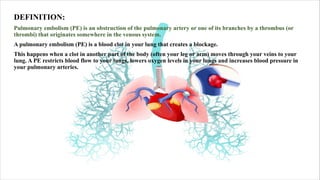
Pulmonary embolism (PE) is an obstruction of the pulmonary artery or one of its branches by a thrombus (or
thrombi) that originates somewhere in the venous system.
A pulmonary embolism (PE) is a blood clot in your lung that creates a blockage.
This happens when a clot in another part of the body (often your leg or arm) moves through your veins to your
lung. A PE restricts blood flow to your lungs, lowers oxygen levels in your lungs and increases blood pressure in
your pulmonary arteries.
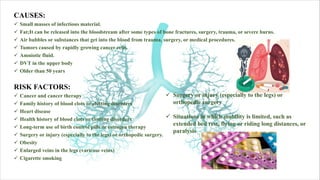
CAUSES:
ü Small masses of infectious material.
ü Fat;It can be released into the bloodstream after some types of bone fractures, surgery, trauma, or severe burns.
ü Air bubbles or substances that get into the blood from trauma, surgery, or medical procedures.
ü Tumors caused by rapidly growing cancer cells.
ü Amniotic fluid.
ü DVT in the upper body
ü Older than 50 years
RISK FACTORS:
ü Cancer and cancer therapy
ü Family history of blood clots or clotting disorders
ü Heart disease
ü Health history of blood clots or clotting disorders
ü Long-term use of birth control pills or estrogen therapy
ü Surgery or injury (especially to the legs) or orthopedic surgery.
ü Obesity
ü Enlarged veins in the legs (varicose veins)
ü Cigarette smoking
ü Surgery or injury (especially to the legs) or
orthopedic surgery
ü Situations in which mobility is limited, such as
extended bed rest, flying or riding long distances, or
paralysis
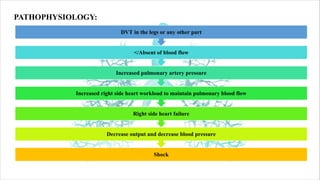
PATHOPHYSIOLOGY:
Shock
Decrease output and decrease blood pressure
Right side heart failure
Increased right side heart workload to maintain pulmonary blood flow
Increased pulmonary artery pressure
</Absent of blood flow
DVT in the legs or any other part
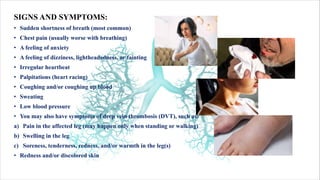
SIGNS AND SYMPTOMS:
• Sudden shortness of breath (most common)
• Chest pain (usually worse with breathing)
• A feeling of anxiety
• A feeling of dizziness, lightheadedness, or fainting
• Irregular heartbeat
• Palpitations (heart racing)
• Coughing and/or coughing up blood
• Sweating
• Low blood pressure
• You may also have symptoms of deep vein thrombosis (DVT), such as:
a) Pain in the affected leg (may happen only when standing or walking)
b) Swelling in the leg
c) Soreness, tenderness, redness, and/or warmth in the leg(s)
• Redness and/or discolored skin
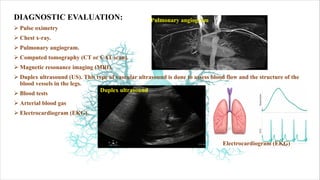
DIAGNOSTIC EVALUATION:
Ø Pulse oximetry
Ø Chest x-ray.
Ø Pulmonary angiogram.
Ø Computed tomography (CT or CAT scan).
Ø Magnetic resonance imaging (MRI).
Ø Duplex ultrasound (US). This type of vascular ultrasound is done to assess blood flow and the structure of the
blood vessels in the legs.
Ø Blood tests
Ø Arterial blood gas
Ø Electrocardiogram (EKG).
Pulmonary angiogram
Duplex ultrasound
Electrocardiogram (EKG)
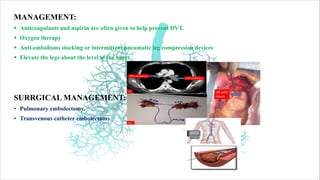
MANAGEMENT:
§ Anticoagulants and aspirin are often given to help prevent DVT.
§ Oxygen therapy
§ Anti-embolisms stocking or intermittent pneumatic leg compression devices
§ Elevate the legs about the level of the heart.
SURRGICAL MANAGEMENT:
• Pulmonary embolectomy.
• Transvenous catheter embolectomy
NURSING MANAGEMENT:
Ø Monitored vital sign.
Ø Monitor any signs and symptoms of hypoxia, headache, weight loss, pallor, sinuses and behavioral changes.
Ø Monitor patient response to intravenous fluid or vasopressor.
Ø Monitor oxygen therapy of the patient.
Ø Administered the prescribed drugs to the patient.
Ø In case of post operative management provide care for the stoma.
Ø Monitor patient dietary pattern.
Ø Encourage minimal mobility, range of motion of the patient.
Ø Provide comfortable position.
THANKS YOU

PULMONARY EMBOLISM AND ITS MANAGEMENTS.pdf

  • 1.
  • 2.
    DEFINITION: Pulmonary embolism (PE)is an obstruction of the pulmonary artery or one of its branches by a thrombus (or thrombi) that originates somewhere in the venous system. A pulmonary embolism (PE) is a blood clot in your lung that creates a blockage. This happens when a clot in another part of the body (often your leg or arm) moves through your veins to your lung. A PE restricts blood flow to your lungs, lowers oxygen levels in your lungs and increases blood pressure in your pulmonary arteries.
  • 3.
    CAUSES: ü Small massesof infectious material. ü Fat;It can be released into the bloodstream after some types of bone fractures, surgery, trauma, or severe burns. ü Air bubbles or substances that get into the blood from trauma, surgery, or medical procedures. ü Tumors caused by rapidly growing cancer cells. ü Amniotic fluid. ü DVT in the upper body ü Older than 50 years RISK FACTORS: ü Cancer and cancer therapy ü Family history of blood clots or clotting disorders ü Heart disease ü Health history of blood clots or clotting disorders ü Long-term use of birth control pills or estrogen therapy ü Surgery or injury (especially to the legs) or orthopedic surgery. ü Obesity ü Enlarged veins in the legs (varicose veins) ü Cigarette smoking ü Surgery or injury (especially to the legs) or orthopedic surgery ü Situations in which mobility is limited, such as extended bed rest, flying or riding long distances, or paralysis
  • 4.
    PATHOPHYSIOLOGY: Shock Decrease output anddecrease blood pressure Right side heart failure Increased right side heart workload to maintain pulmonary blood flow Increased pulmonary artery pressure </Absent of blood flow DVT in the legs or any other part
  • 5.
    SIGNS AND SYMPTOMS: •Sudden shortness of breath (most common) • Chest pain (usually worse with breathing) • A feeling of anxiety • A feeling of dizziness, lightheadedness, or fainting • Irregular heartbeat • Palpitations (heart racing) • Coughing and/or coughing up blood • Sweating • Low blood pressure • You may also have symptoms of deep vein thrombosis (DVT), such as: a) Pain in the affected leg (may happen only when standing or walking) b) Swelling in the leg c) Soreness, tenderness, redness, and/or warmth in the leg(s) • Redness and/or discolored skin
  • 6.
    DIAGNOSTIC EVALUATION: Ø Pulseoximetry Ø Chest x-ray. Ø Pulmonary angiogram. Ø Computed tomography (CT or CAT scan). Ø Magnetic resonance imaging (MRI). Ø Duplex ultrasound (US). This type of vascular ultrasound is done to assess blood flow and the structure of the blood vessels in the legs. Ø Blood tests Ø Arterial blood gas Ø Electrocardiogram (EKG). Pulmonary angiogram Duplex ultrasound Electrocardiogram (EKG)
  • 7.
    MANAGEMENT: § Anticoagulants andaspirin are often given to help prevent DVT. § Oxygen therapy § Anti-embolisms stocking or intermittent pneumatic leg compression devices § Elevate the legs about the level of the heart. SURRGICAL MANAGEMENT: • Pulmonary embolectomy. • Transvenous catheter embolectomy
  • 8.
    NURSING MANAGEMENT: Ø Monitoredvital sign. Ø Monitor any signs and symptoms of hypoxia, headache, weight loss, pallor, sinuses and behavioral changes. Ø Monitor patient response to intravenous fluid or vasopressor. Ø Monitor oxygen therapy of the patient. Ø Administered the prescribed drugs to the patient. Ø In case of post operative management provide care for the stoma. Ø Monitor patient dietary pattern. Ø Encourage minimal mobility, range of motion of the patient. Ø Provide comfortable position.
  • 9.