
ARDS
PREPARED BY DOLISHA WARBI
ARDS ( ACUTE RESPIRATORY DISTRESS SYNDROME )
DEFINITION:
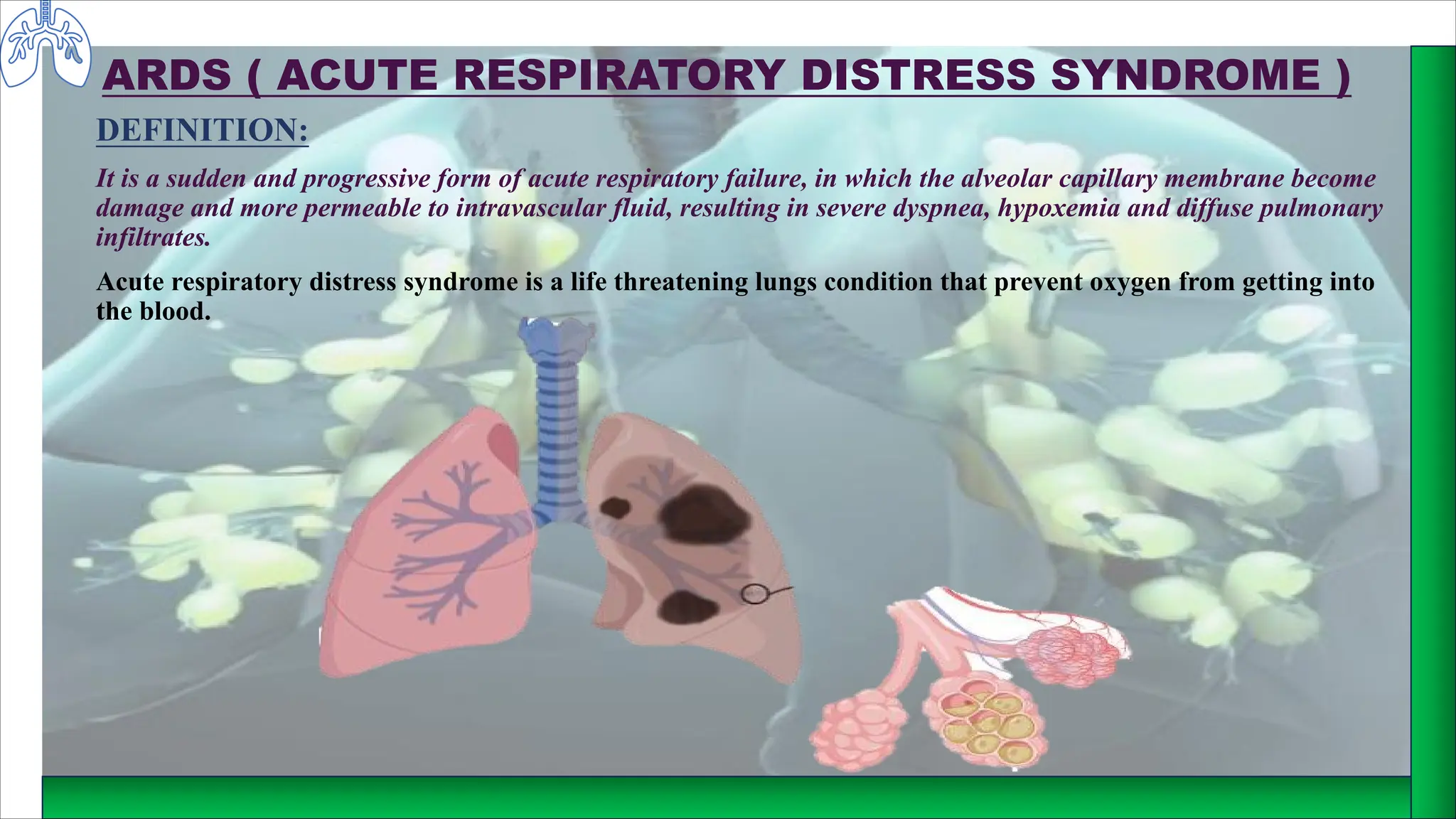
It is a sudden and progressive form of acute respiratory failure, in which the alveolar capillary membrane become
damage and more permeable to intravascular fluid, resulting in severe dyspnea, hypoxemia and diffuse pulmonary
infiltrates.
Acute respiratory distress syndrome is a life threatening lungs condition that prevent oxygen from getting into
the blood.
CAUSES:
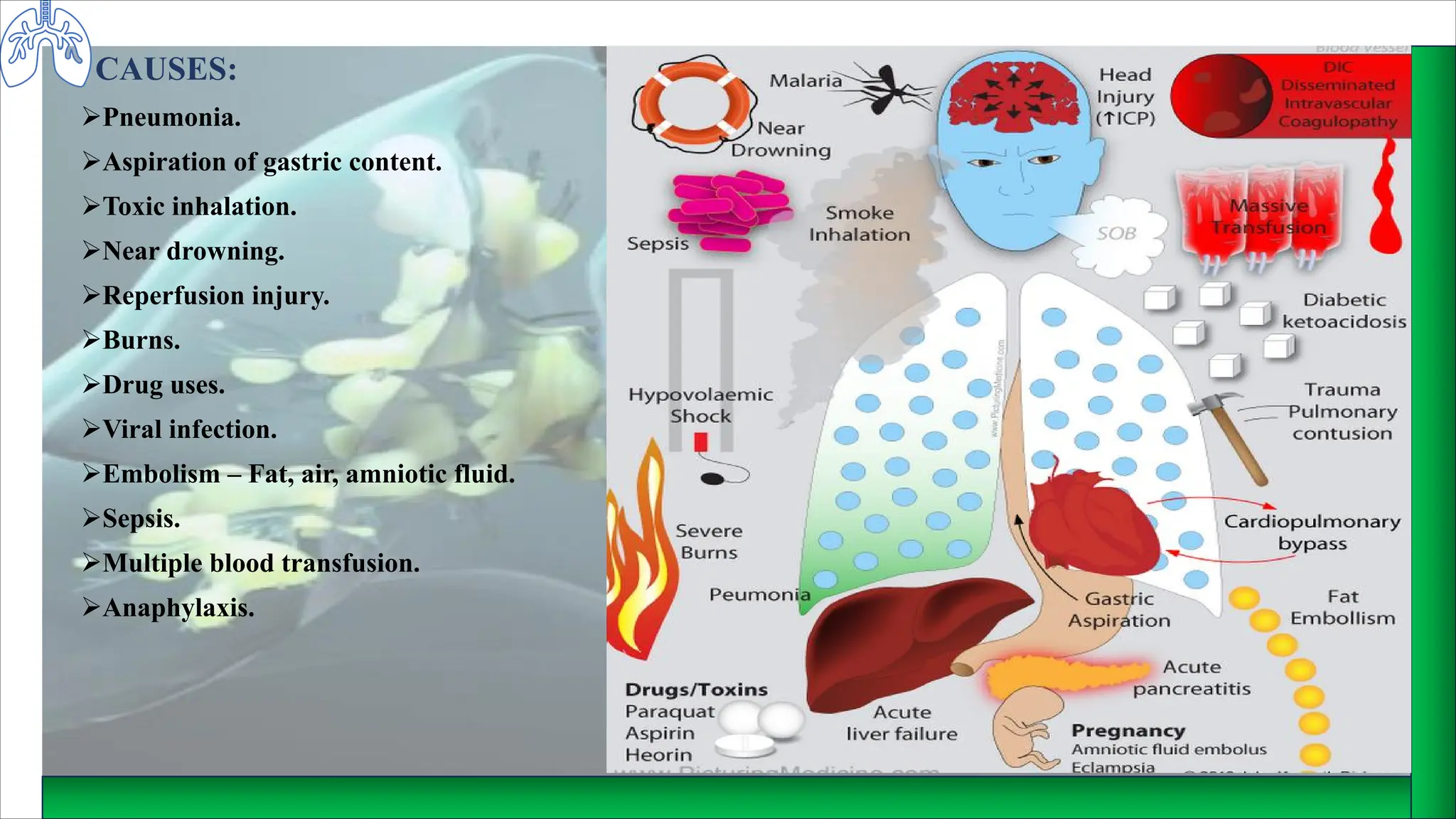
ØPneumonia.
ØAspiration of gastric content.
ØToxic inhalation.
ØNear drowning.
ØReperfusion injury.
ØBurns.
ØDrug uses.
ØViral infection.
ØEmbolism – Fat, air, amniotic fluid.
ØSepsis.
ØMultiple blood transfusion.
ØAnaphylaxis.
CLINICAL MANIFESTATION:
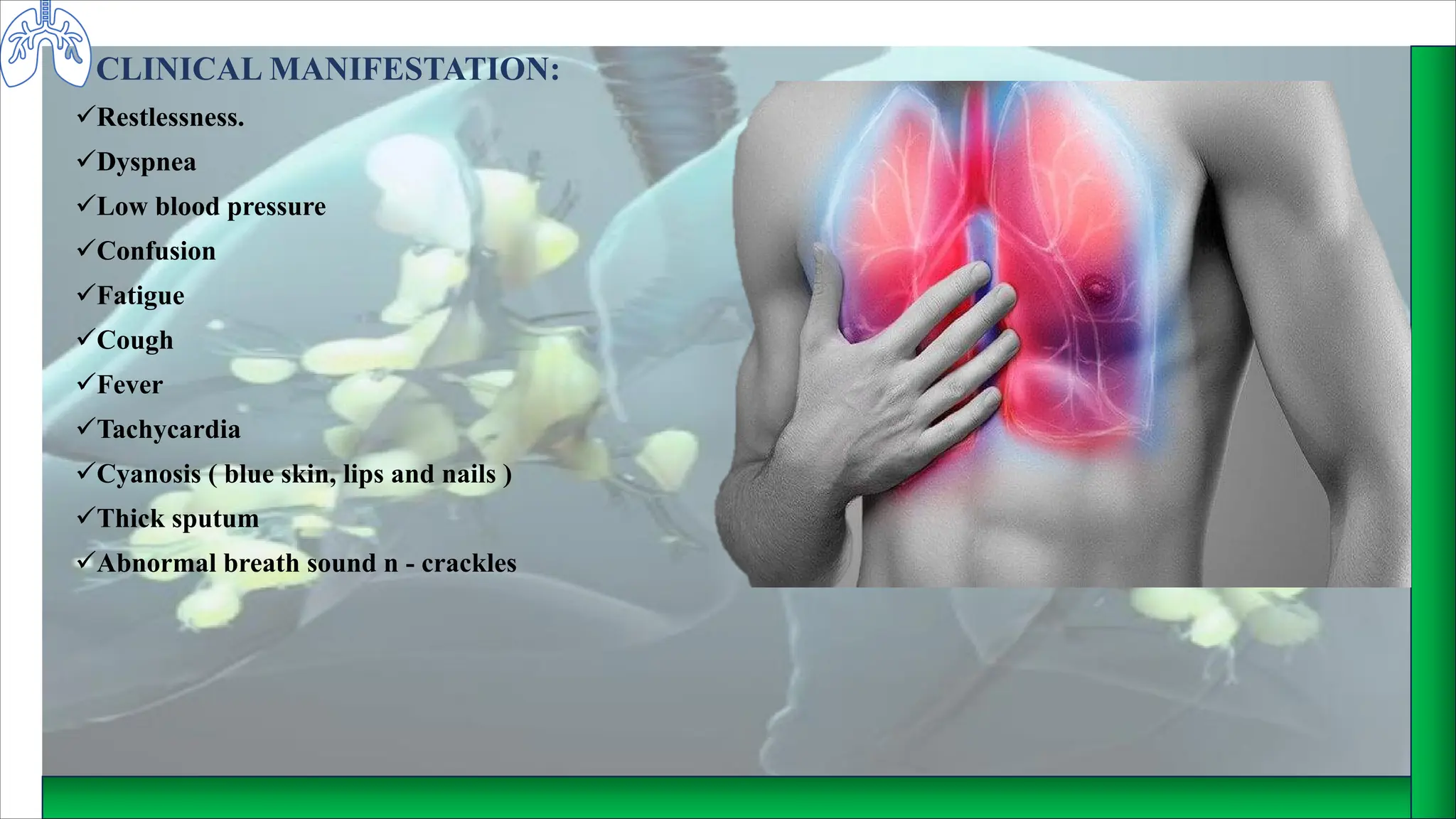
üRestlessness.
üDyspnea
üLow blood pressure
üConfusion
üFatigue
üCough
üFever
üTachycardia
üCyanosis ( blue skin, lips and nails )
üThick sputum
üAbnormal breath sound n - crackles
DIAGNOSTIC EVALUATION:
§ History collection.
§ Physical examination.
§ ABG analysis.
§ Blood test.
§ Chest X Ray.
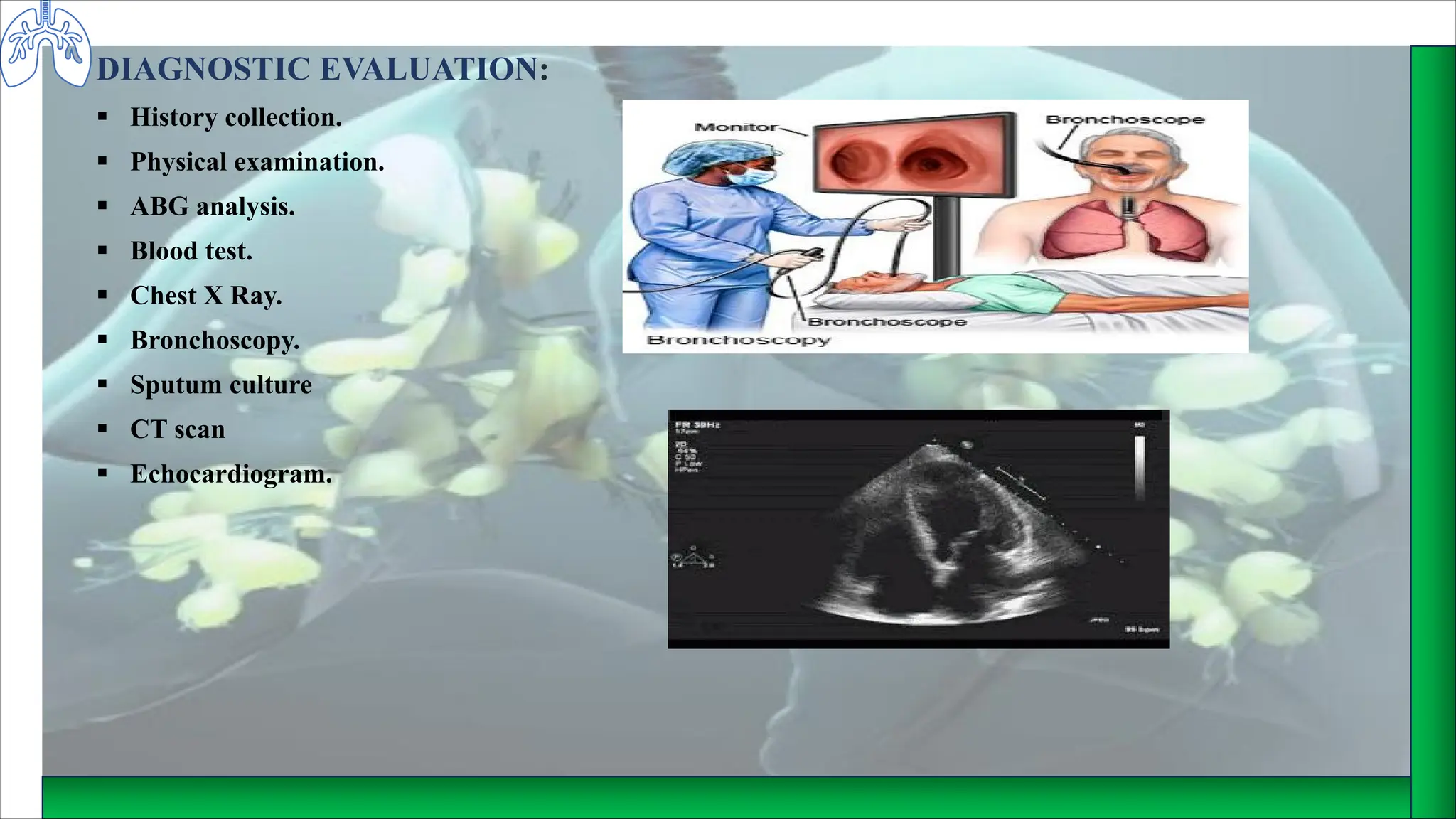
§ Bronchoscopy.
§ Sputum culture
§ CT scan
§ Echocardiogram.
MANAGEMENT:
ü ICU care is needed for patient with ARDS
ü Supplemental oxygen.
ü Positioning strategies
ü Fluid therapy ( restrict fluid intake as prescribed )
MEDICATIONS:
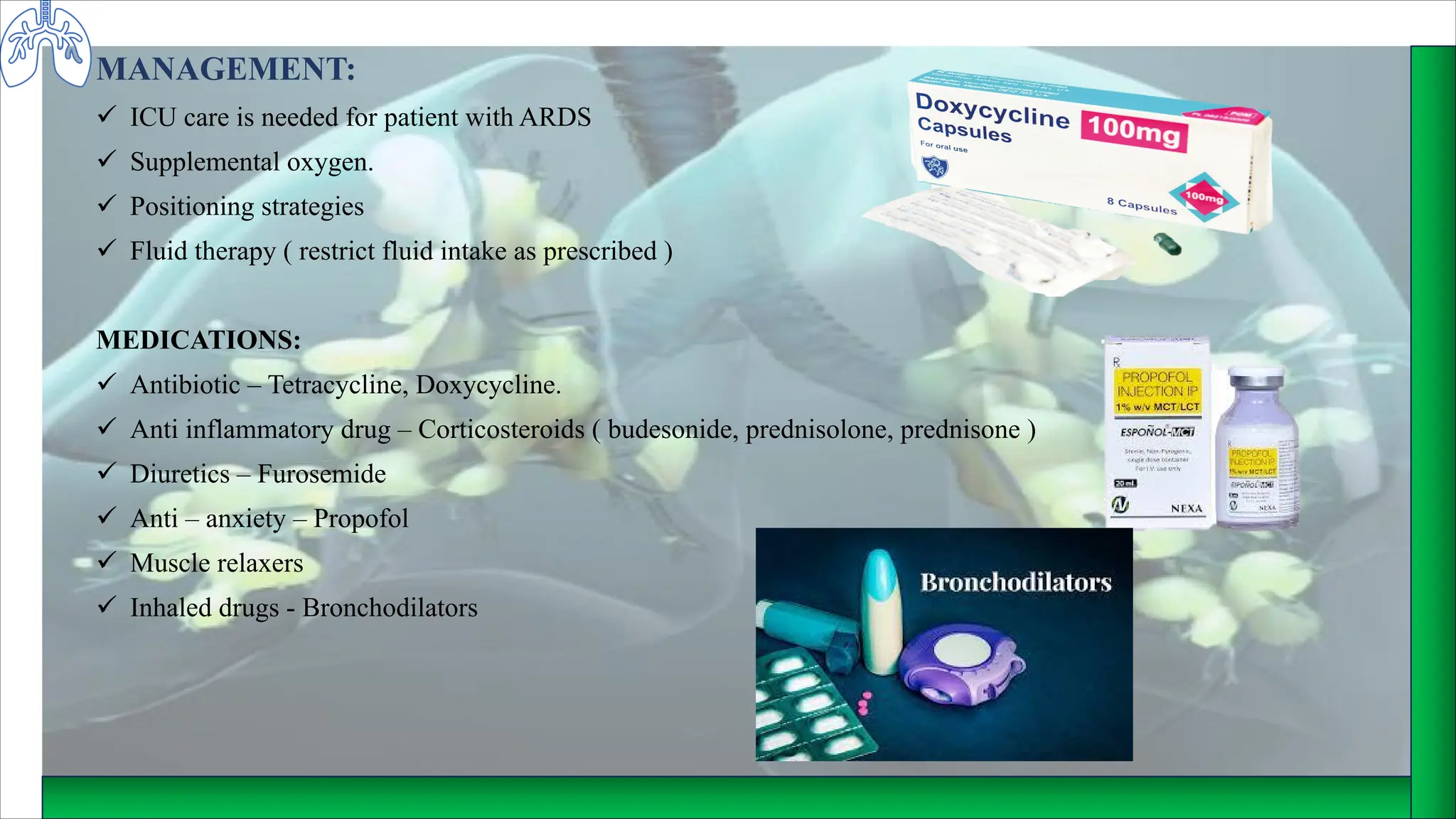
ü Antibiotic – Tetracycline, Doxycycline.
ü Anti inflammatory drug – Corticosteroids ( budesonide, prednisolone, prednisone )
ü Diuretics – Furosemide
ü Anti – anxiety – Propofol
ü Muscle relaxers
ü Inhaled drugs - Bronchodilators
NURSING MANAGEMENT:
Ø Manage nutrition.
Ø Treating the underlying causes or injury.
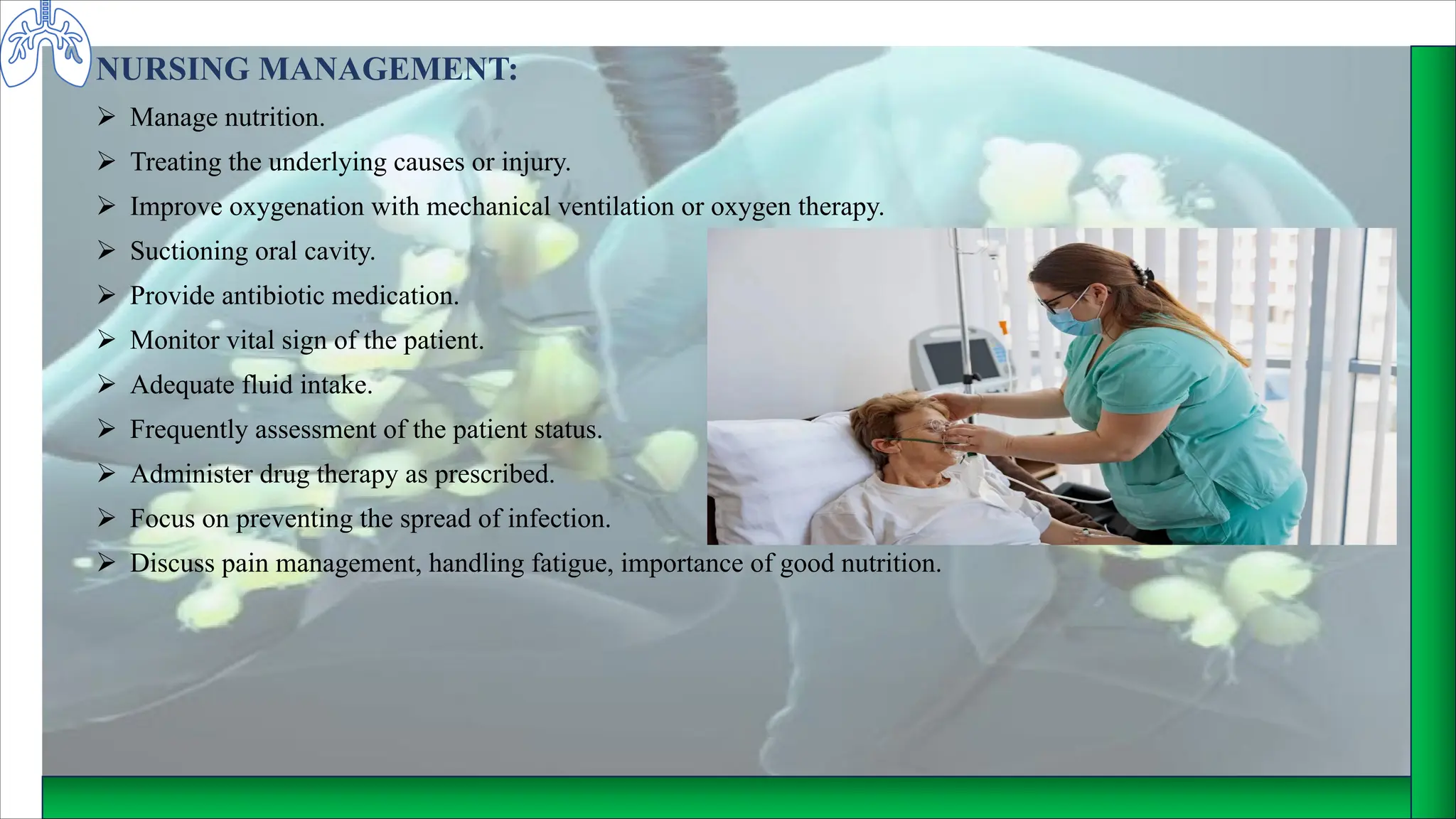
Ø Improve oxygenation with mechanical ventilation or oxygen therapy.
Ø Suctioning oral cavity.
Ø Provide antibiotic medication.
Ø Monitor vital sign of the patient.
Ø Adequate fluid intake.
Ø Frequently assessment of the patient status.
Ø Administer drug therapy as prescribed.
Ø Focus on preventing the spread of infection.
Ø Discuss pain management, handling fatigue, importance of good nutrition.
THANKS YOU

ARDS (ACUTE RESPIRATORY DISTRESS SYNDROME).pdf

  • 1.
  • 2.
    ARDS ( ACUTERESPIRATORY DISTRESS SYNDROME ) DEFINITION: It is a sudden and progressive form of acute respiratory failure, in which the alveolar capillary membrane become damage and more permeable to intravascular fluid, resulting in severe dyspnea, hypoxemia and diffuse pulmonary infiltrates. Acute respiratory distress syndrome is a life threatening lungs condition that prevent oxygen from getting into the blood.
  • 3.
    CAUSES: ØPneumonia. ØAspiration of gastriccontent. ØToxic inhalation. ØNear drowning. ØReperfusion injury. ØBurns. ØDrug uses. ØViral infection. ØEmbolism – Fat, air, amniotic fluid. ØSepsis. ØMultiple blood transfusion. ØAnaphylaxis.
  • 4.
    CLINICAL MANIFESTATION: üRestlessness. üDyspnea üLow bloodpressure üConfusion üFatigue üCough üFever üTachycardia üCyanosis ( blue skin, lips and nails ) üThick sputum üAbnormal breath sound n - crackles
  • 5.
    DIAGNOSTIC EVALUATION: § Historycollection. § Physical examination. § ABG analysis. § Blood test. § Chest X Ray. § Bronchoscopy. § Sputum culture § CT scan § Echocardiogram.
  • 6.
    MANAGEMENT: ü ICU careis needed for patient with ARDS ü Supplemental oxygen. ü Positioning strategies ü Fluid therapy ( restrict fluid intake as prescribed ) MEDICATIONS: ü Antibiotic – Tetracycline, Doxycycline. ü Anti inflammatory drug – Corticosteroids ( budesonide, prednisolone, prednisone ) ü Diuretics – Furosemide ü Anti – anxiety – Propofol ü Muscle relaxers ü Inhaled drugs - Bronchodilators
  • 7.
    NURSING MANAGEMENT: Ø Managenutrition. Ø Treating the underlying causes or injury. Ø Improve oxygenation with mechanical ventilation or oxygen therapy. Ø Suctioning oral cavity. Ø Provide antibiotic medication. Ø Monitor vital sign of the patient. Ø Adequate fluid intake. Ø Frequently assessment of the patient status. Ø Administer drug therapy as prescribed. Ø Focus on preventing the spread of infection. Ø Discuss pain management, handling fatigue, importance of good nutrition.
  • 8.