.
PREPARED BY DOLISHA WARBI
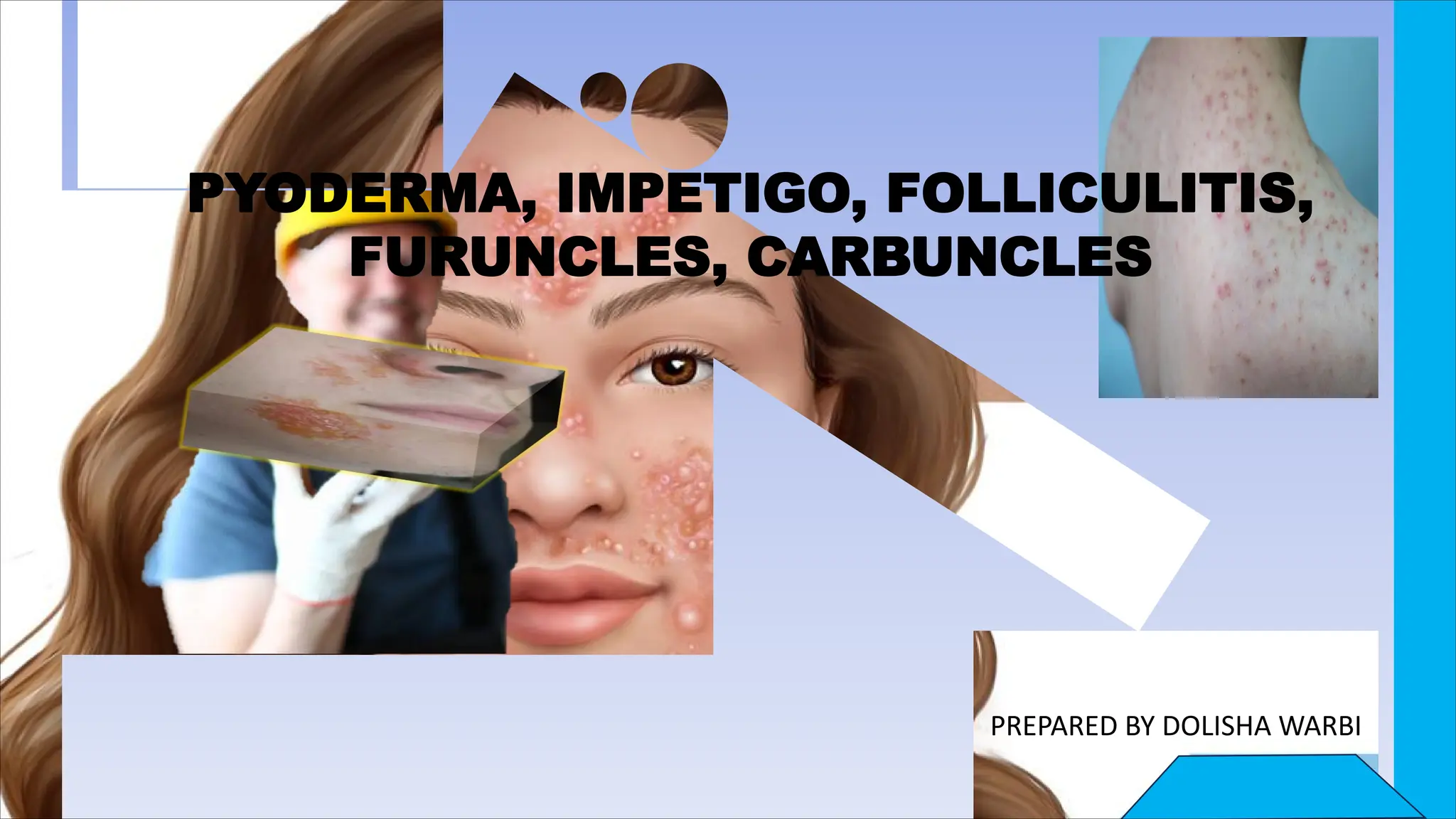
PYODERMA, IMPETIGO, FOLLICULITIS,
FURUNCLES, CARBUNCLES
PYODERMA:
Definition:
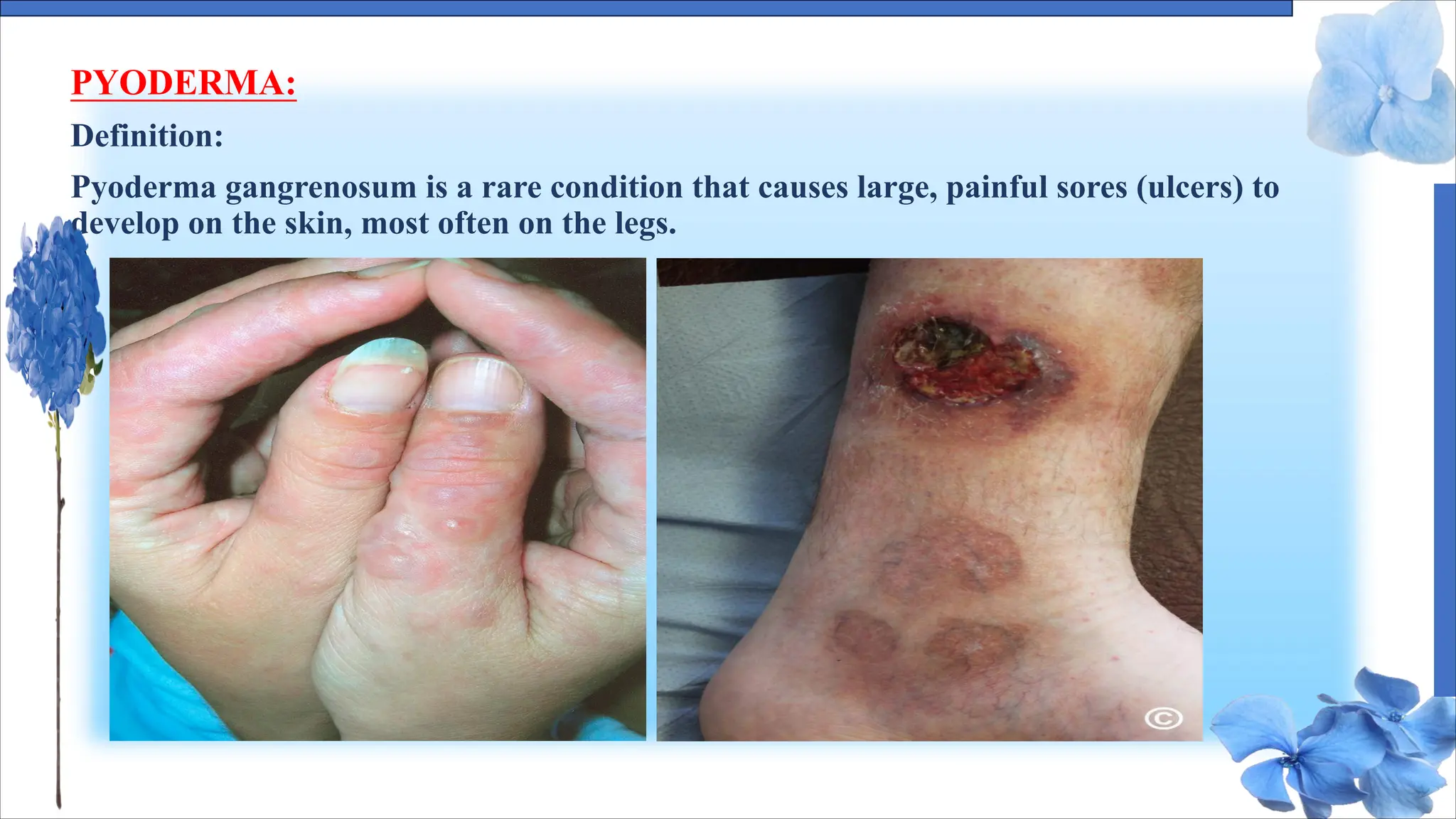
Pyoderma gangrenosum is a rare condition that causes large, painful sores (ulcers) to
develop on the skin, most often on the legs.
Causes:
§ Bacterial infection eg. Staphylococcus aureus or Streptococcus species.
§ Skin conditions, such as eczema, psoriasis, or acne.
§ Immune system disorders - HIV/AIDS or diabetes.
§ Lack of proper hygiene.
§ Exposure to hot and humid environments.
§ Certain underlying health conditions, such as obesity or peripheral vascular disease, can impair blood circulation to
the skin.
Signs and symptoms:
• Small, discolored (red, purple, blue, brown or black), pus-filled blisters that enlarge quickly.
• Open ulcers with distinct, raised borders.
• Inflammation and pain around your sores.
• Fever.
• Joint pain.
Diagnosis:
• Blood test.
• Biopsy.
• Bone marrow sampling.
• Rectal exam (proctoscopy).
• Colon exam (colonoscopy).
Management:
§ Corticosteroid (cortisone, prednisone).
§ Nonsteroidal anti-inflammatory drugs (NSAIDs): Aspirin and ibuprofen.
§ Immunosuppressant medications: mycophenolate and cyclosporine.
§ Biologic agents: infliximab, adalimumab.
§ Skin grafting.
IMPETIGO:
Definition:
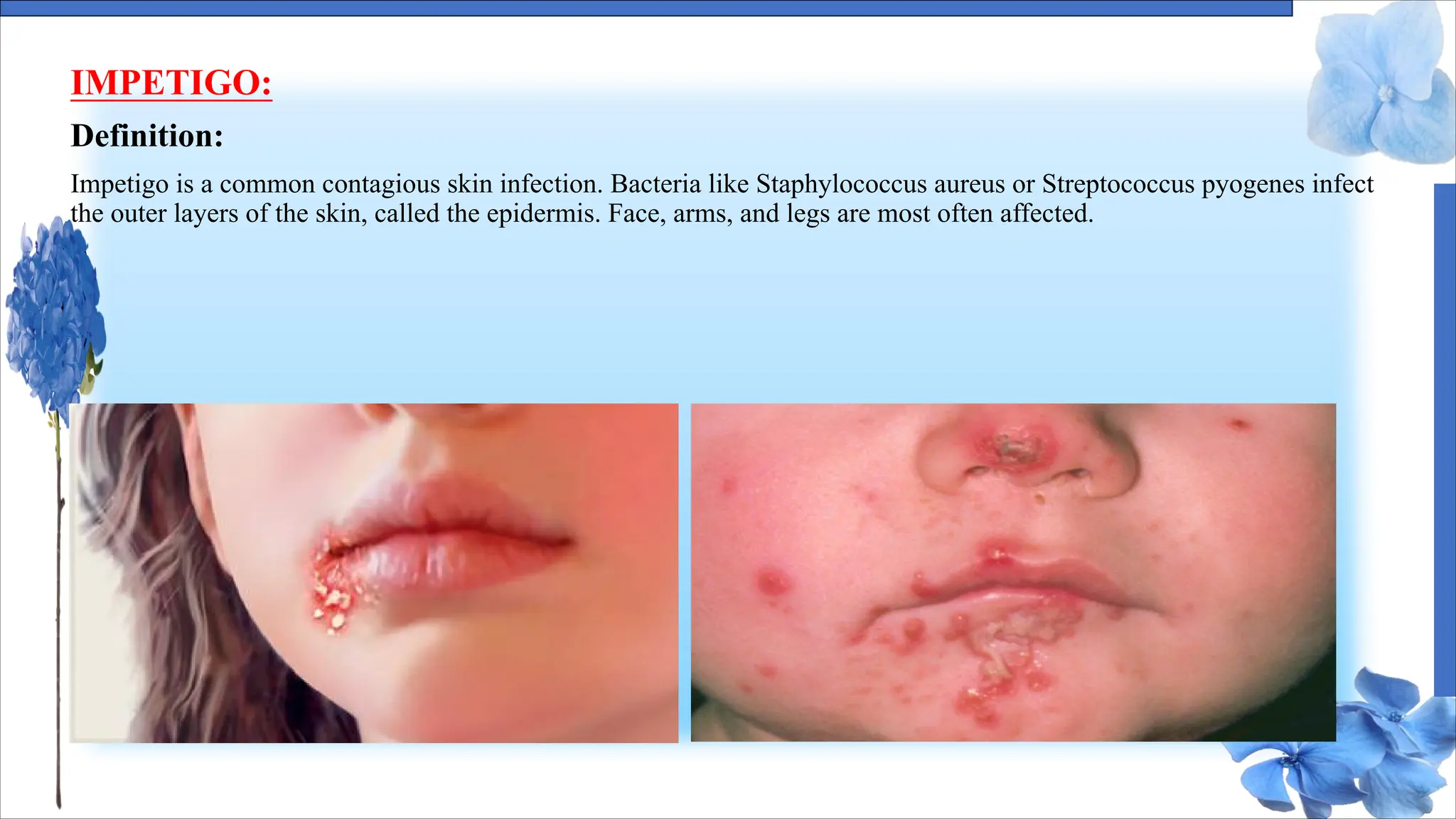
Impetigo is a common contagious skin infection. Bacteria like Staphylococcus aureus or Streptococcus pyogenes infect
the outer layers of the skin, called the epidermis. Face, arms, and legs are most often affected.
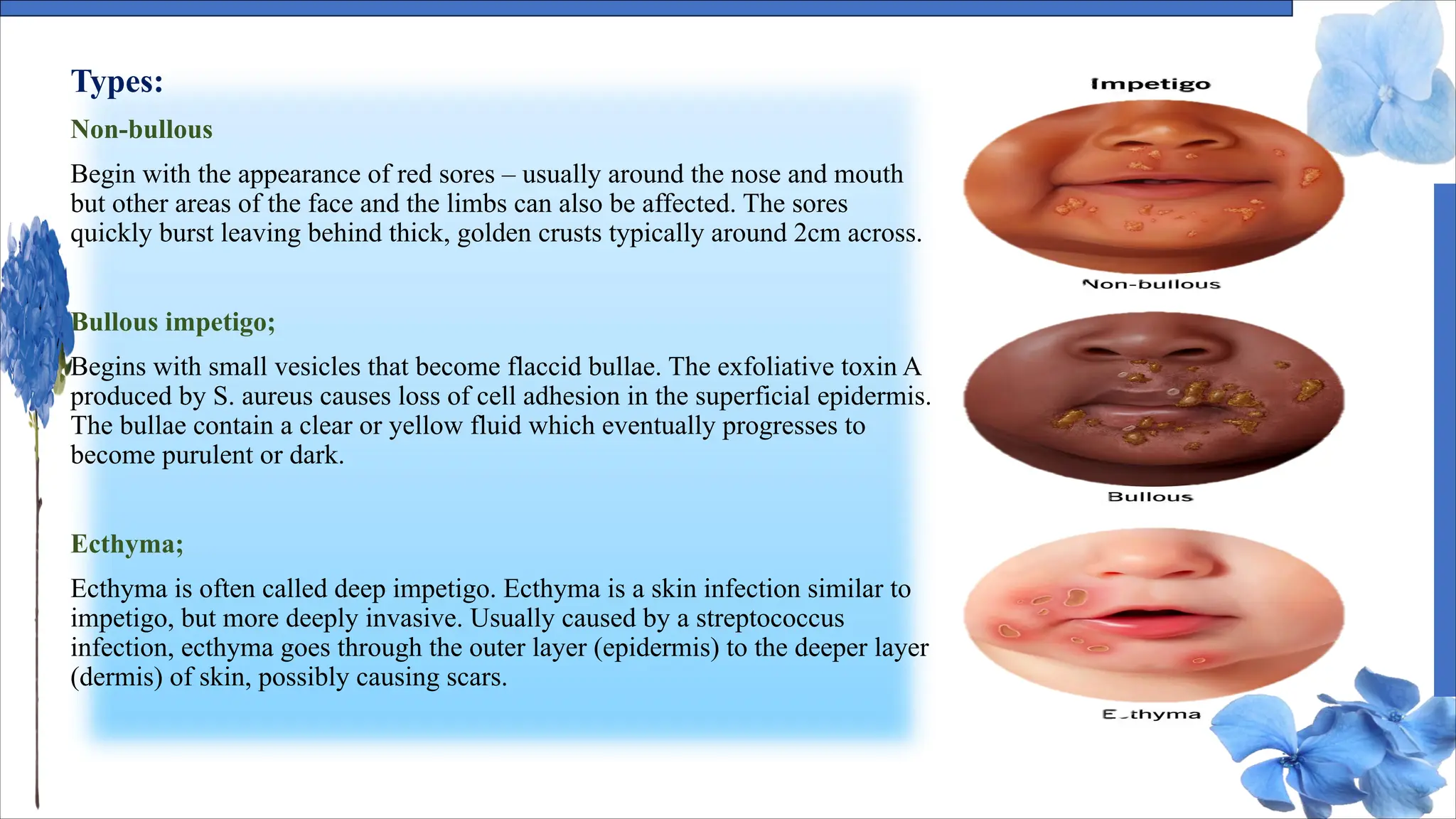
Types:
Non-bullous
Begin with the appearance of red sores – usually around the nose and mouth
but other areas of the face and the limbs can also be affected. The sores
quickly burst leaving behind thick, golden crusts typically around 2cm across.
Bullous impetigo;
Begins with small vesicles that become flaccid bullae. The exfoliative toxin A
produced by S. aureus causes loss of cell adhesion in the superficial epidermis.
The bullae contain a clear or yellow fluid which eventually progresses to
become purulent or dark.
Ecthyma;
Ecthyma is often called deep impetigo. Ecthyma is a skin infection similar to
impetigo, but more deeply invasive. Usually caused by a streptococcus
infection, ecthyma goes through the outer layer (epidermis) to the deeper layer
(dermis) of skin, possibly causing scars.
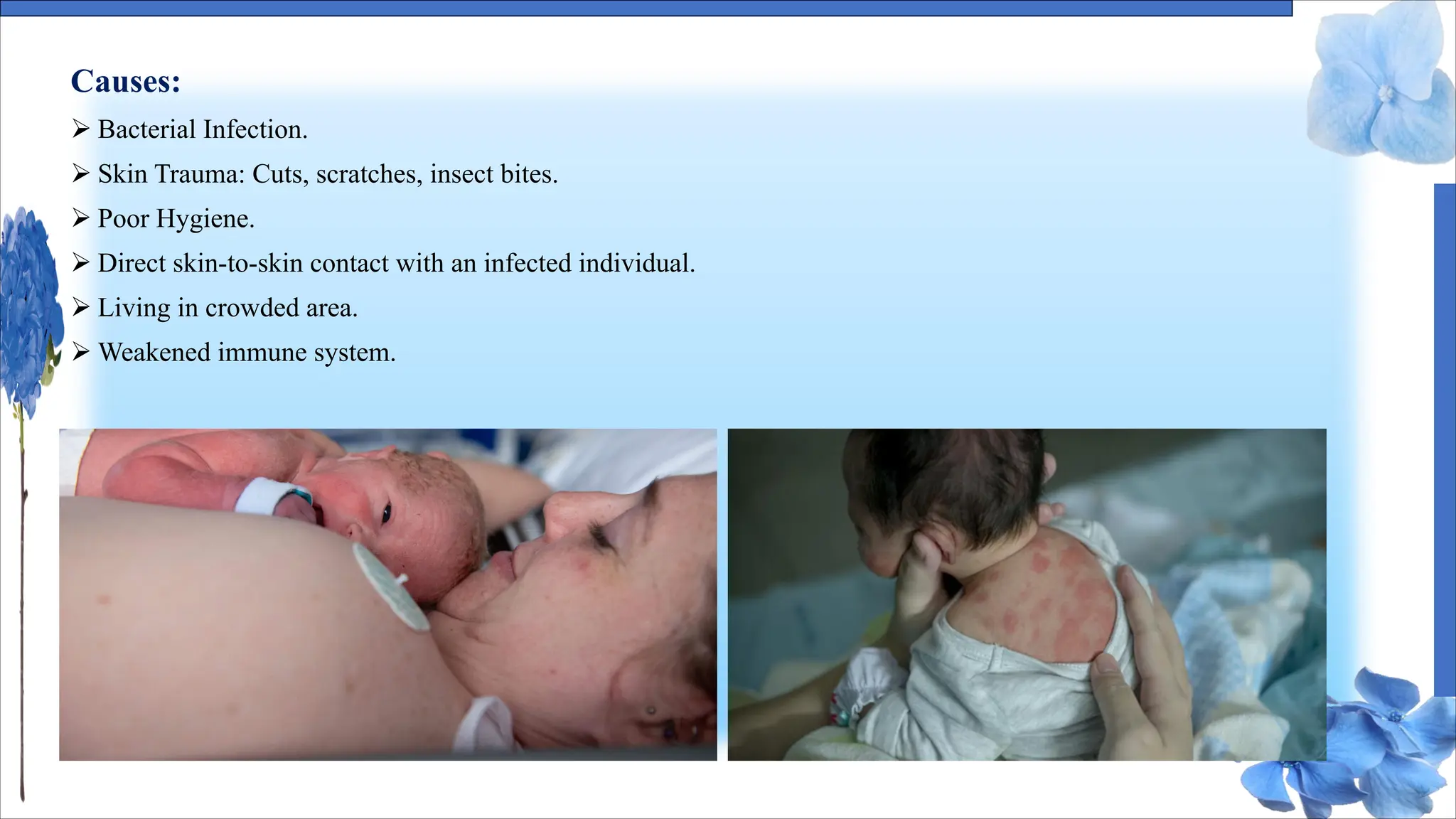
Causes:
Ø Bacterial Infection.
Ø Skin Trauma: Cuts, scratches, insect bites.
Ø Poor Hygiene.
Ø Direct skin-to-skin contact with an infected individual.
Ø Living in crowded area.
Ø Weakened immune system.
Signs and symptoms:
• Pus-filled and burst easily, fluid may be yellow or tan.
• Redness.
• Skin lesions present.
• Swollen lymph nodes near the infected area may develop.
• Raw, shiny areas that scab over with a yellowish-brown crust.
Diagnosis;
• Skin culture test.
• Physical examination.
• Blood test
Management;
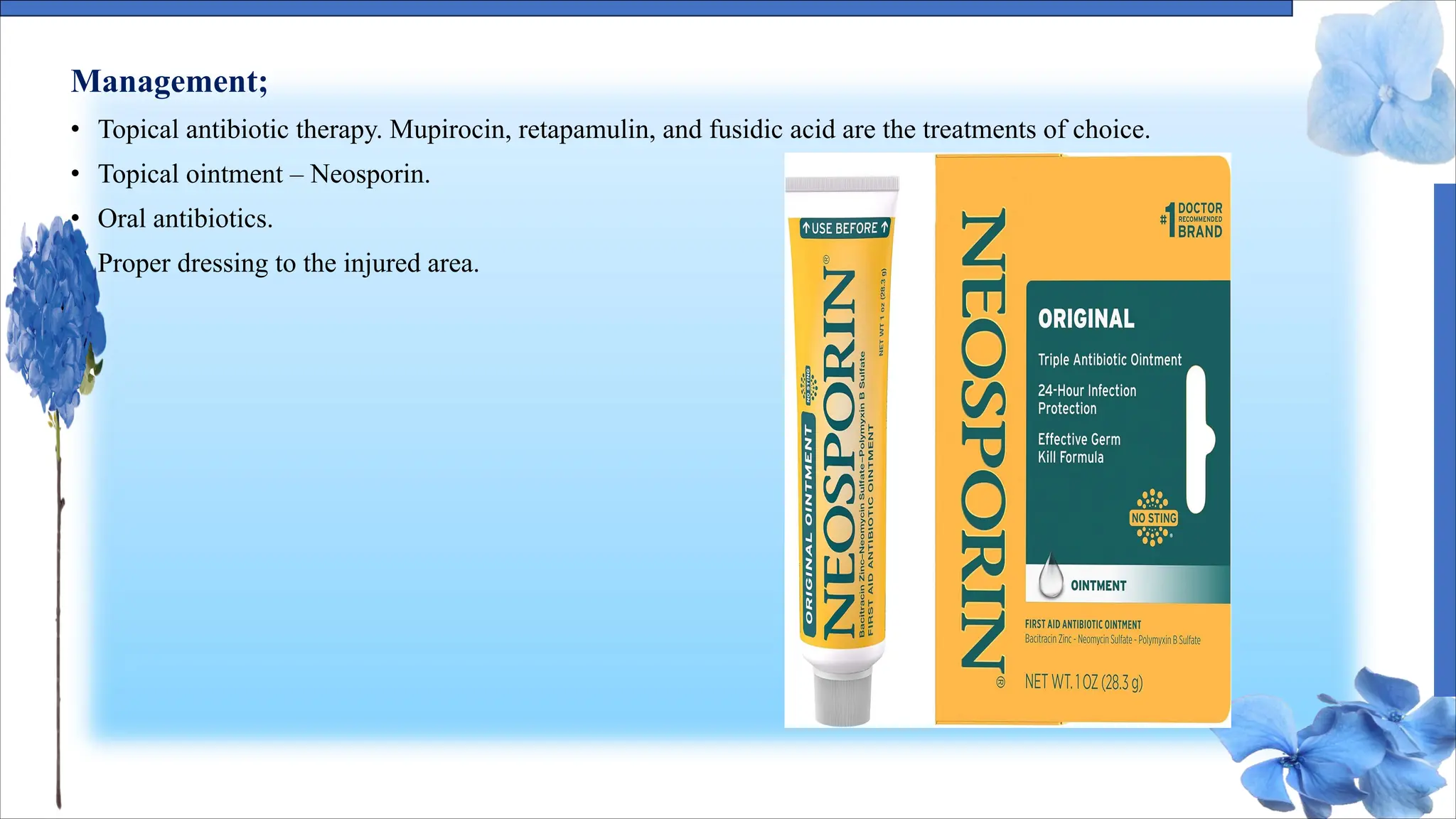
• Topical antibiotic therapy. Mupirocin, retapamulin, and fusidic acid are the treatments of choice.
• Topical ointment – Neosporin.
• Oral antibiotics.
• Proper dressing to the injured area.
FULLICULITIES:
Definition;
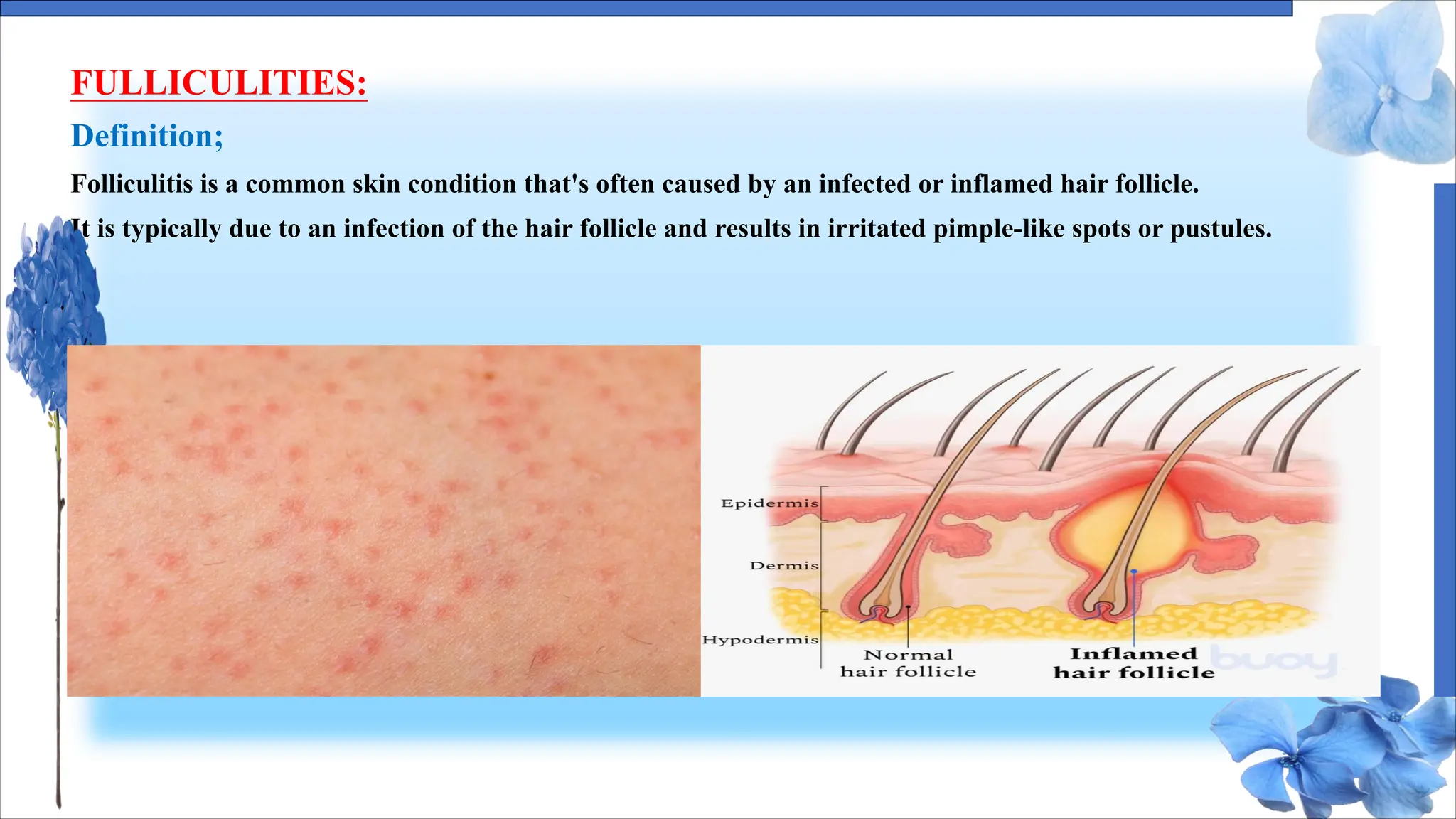
Folliculitis is a common skin condition that's often caused by an infected or inflamed hair follicle.
It is typically due to an infection of the hair follicle and results in irritated pimple-like spots or pustules.
Causes:
Ø Infection by staphylococcus aureus bacteria, yeast, fungus, and viruses.
Ø Skin irritation
Ø Occlusion, or blockage, of the follicle
Ø Topical steroids
Ø Skin disorders, such as acne or dermatitis
Ø Some medications
Ø Irritant chemicals
Ø Immunosuppressive medications
Risk factors:
Ø History of diabetes
Ø Long-term antibiotic use
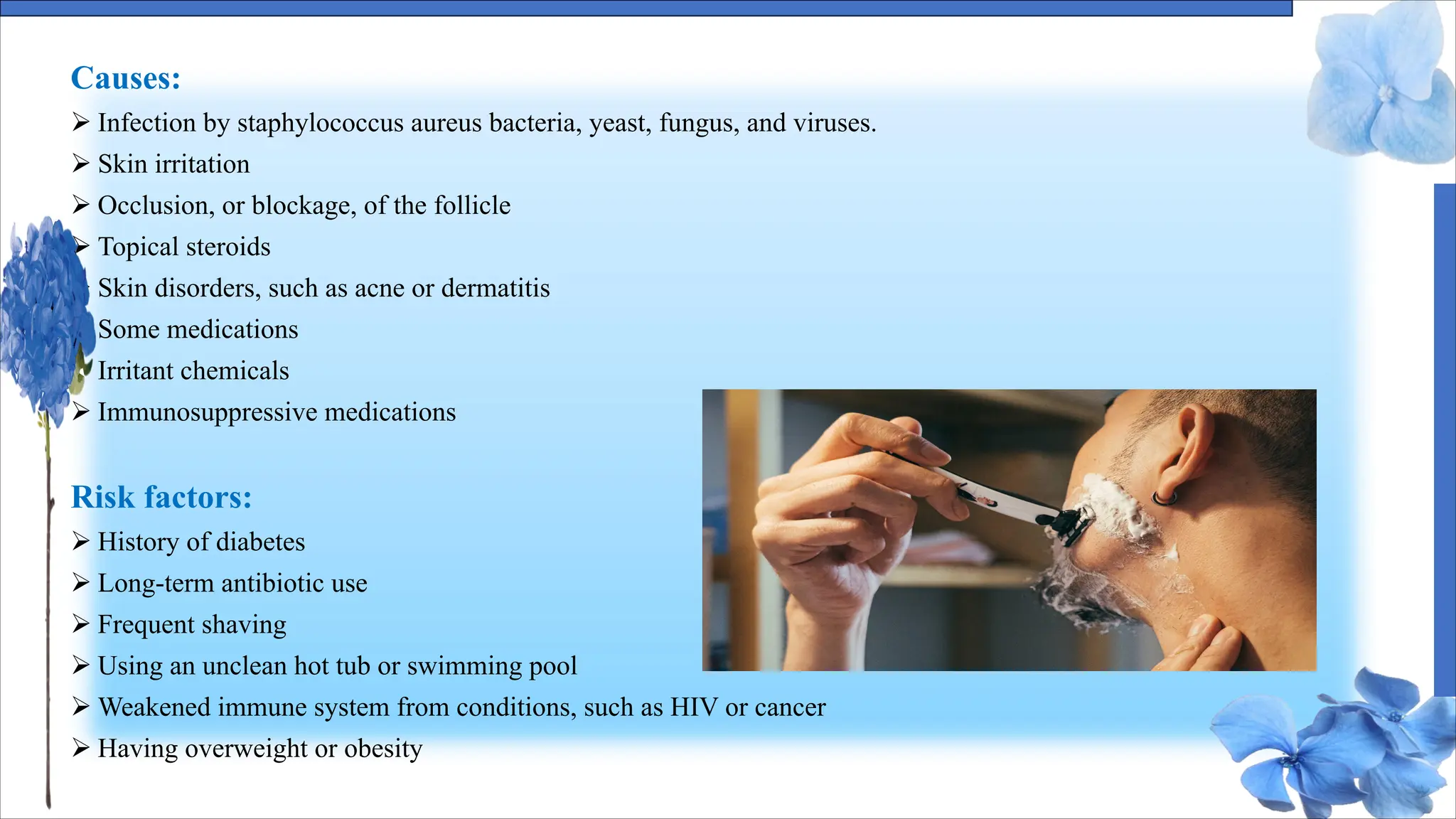
Ø Frequent shaving
Ø Using an unclean hot tub or swimming pool
Ø Weakened immune system from conditions, such as HIV or cancer
Ø Having overweight or obesity
Symptoms:
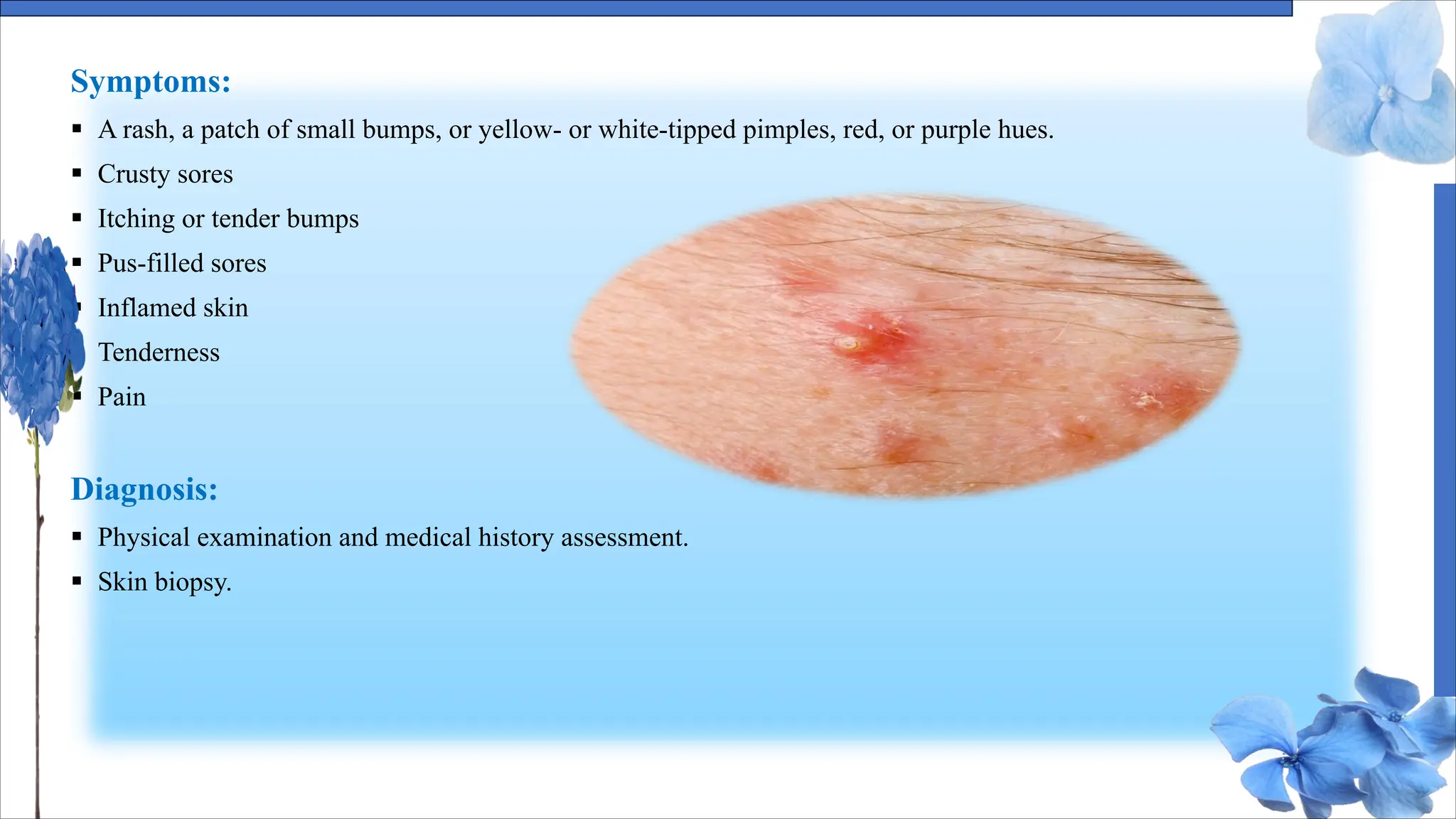
§ A rash, a patch of small bumps, or yellow- or white-tipped pimples, red, or purple hues.
§ Crusty sores
§ Itching or tender bumps
§ Pus-filled sores
§ Inflamed skin
§ Tenderness
§ Pain
Diagnosis:
§ Physical examination and medical history assessment.
§ Skin biopsy.
Management:
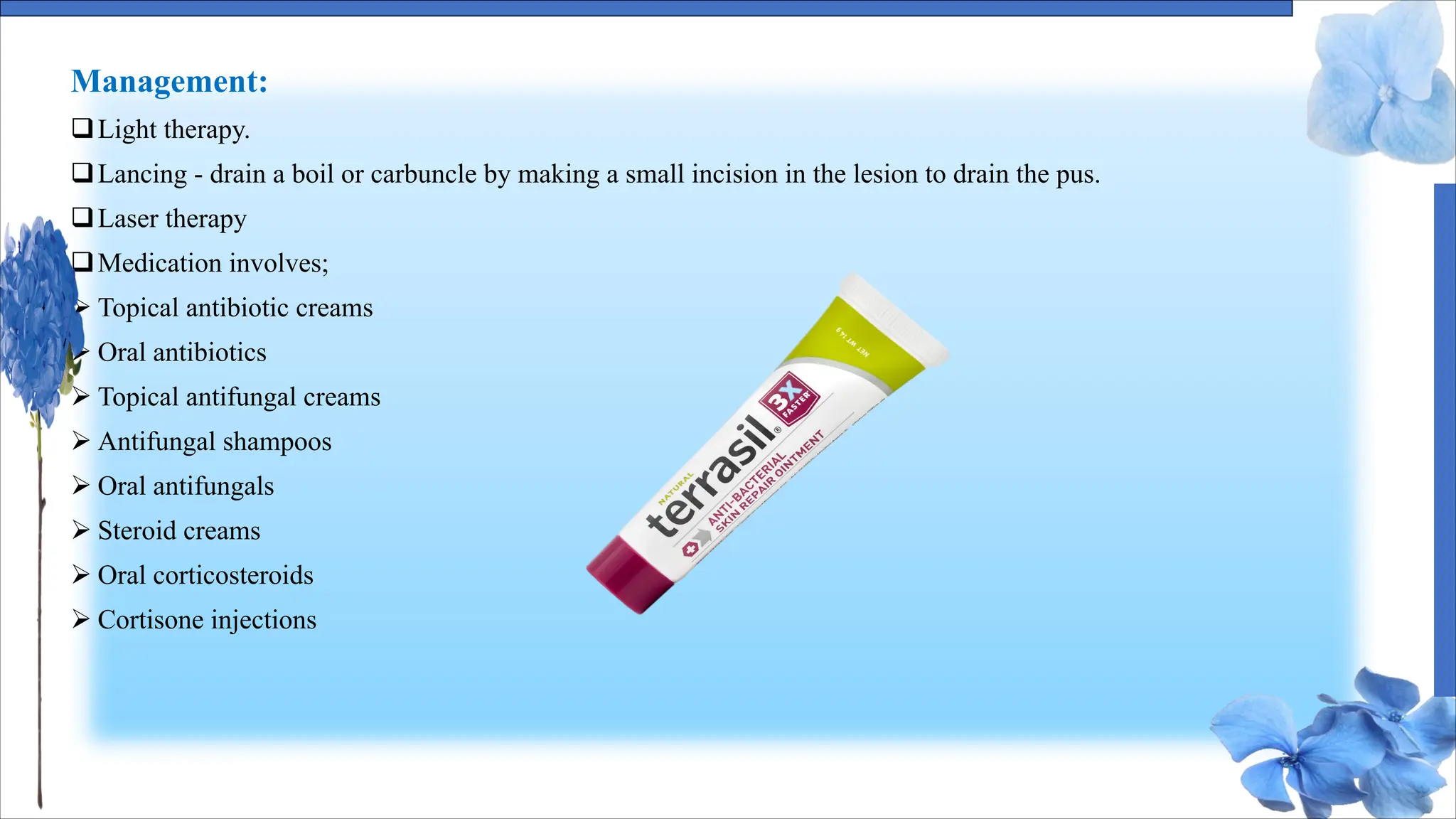
qLight therapy.
qLancing - drain a boil or carbuncle by making a small incision in the lesion to drain the pus.
qLaser therapy
qMedication involves;
Ø Topical antibiotic creams
Ø Oral antibiotics
Ø Topical antifungal creams
Ø Antifungal shampoos
Ø Oral antifungals
Ø Steroid creams
Ø Oral corticosteroids
Ø Cortisone injections
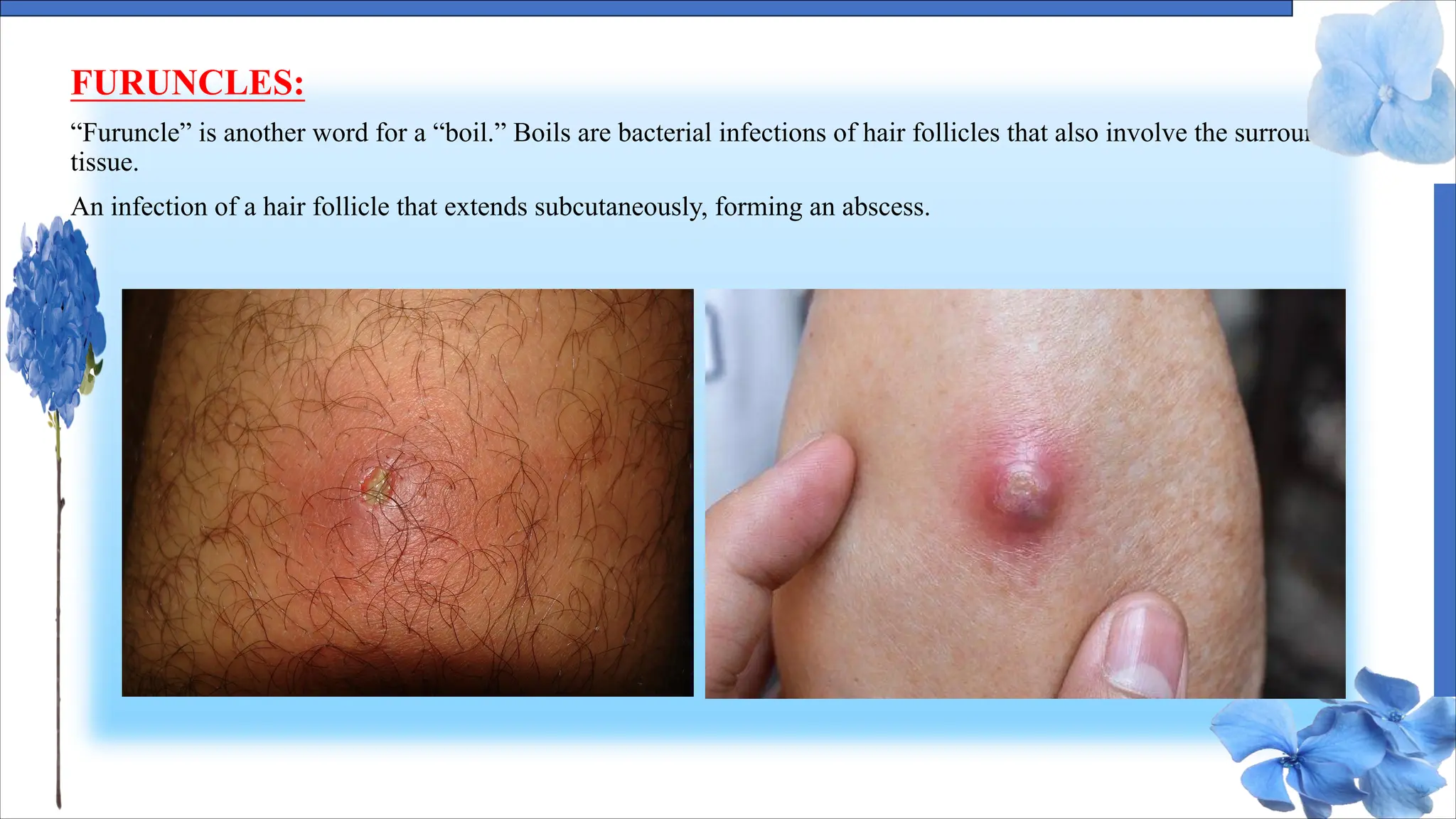
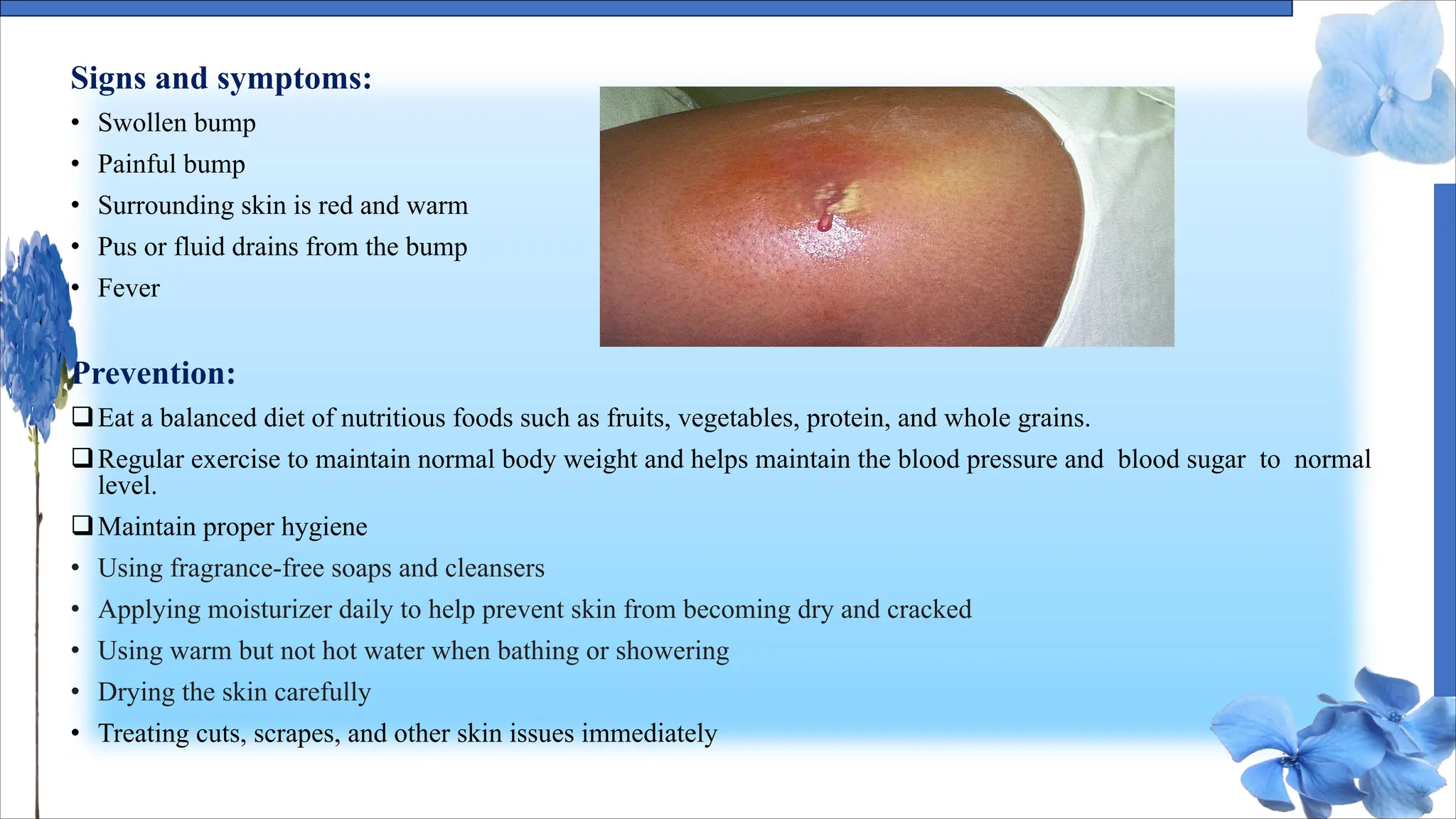
FURUNCLES:
“Furuncle” is another word for a “boil.” Boils are bacterial infections of hair follicles that also involve the surrounding
tissue.
An infection of a hair follicle that extends subcutaneously, forming an abscess.
Causes:
§ Staphylococcal infection,
§ Inadequate personal hygiene.
§ Conditions or medications that weaken the immune system, such as diabetes, HIV/AIDs, or immunosuppressive
drugs.
§ Friction from tight clothing.
§ Excessive sweating in hot and humid conditions
§ Close contact with infected individuals
§ Certain skin conditions, such as acne or eczema.
Risk factors:
• Obesity.
• Treatment with corticosteroids.
• Defects in neutrophil function or number.
• Diabetes mellitus.
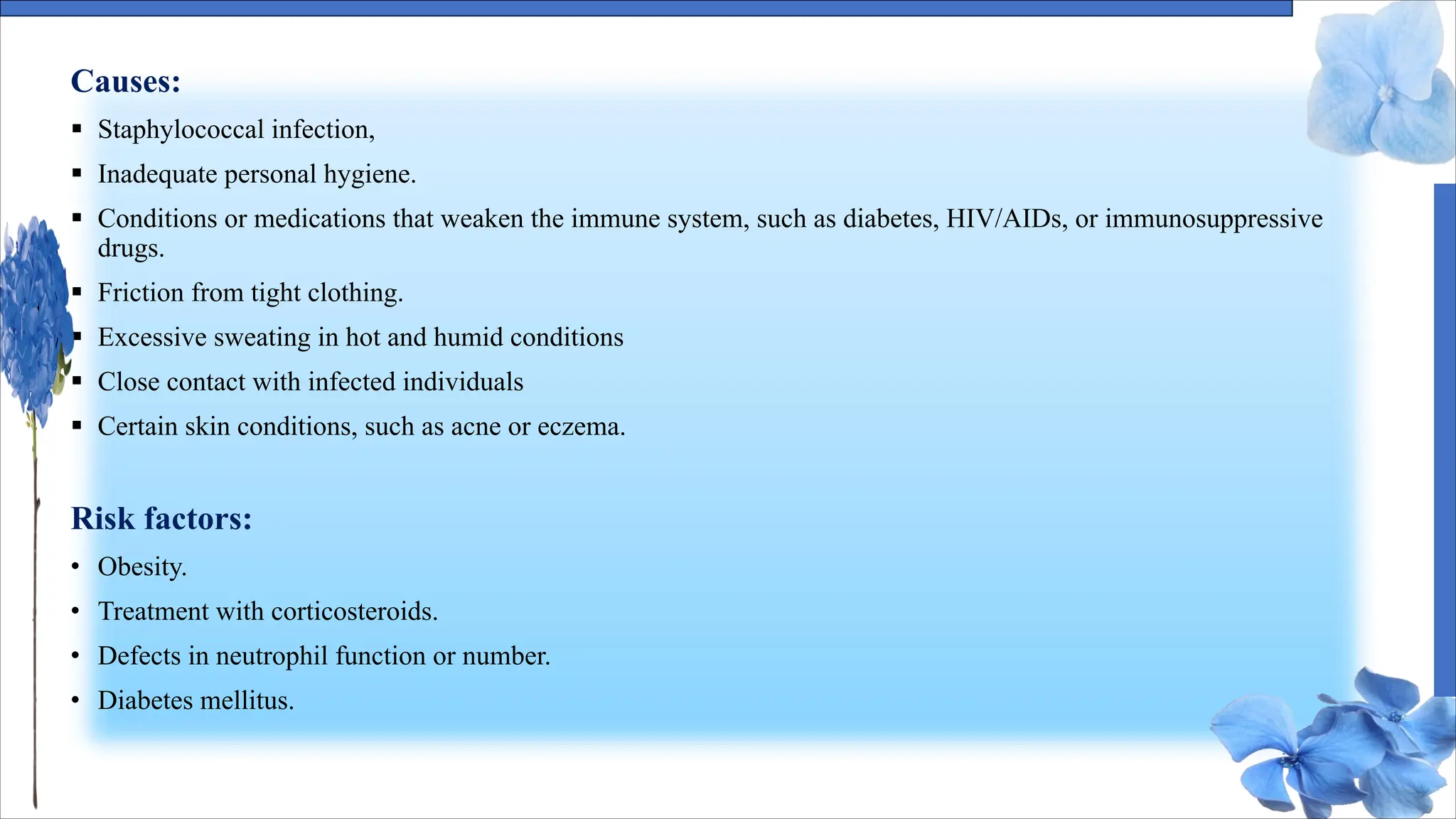
Signs and symptoms:
• Swollen bump
• Painful bump
• Surrounding skin is red and warm
• Pus or fluid drains from the bump
• Fever
Prevention:
qEat a balanced diet of nutritious foods such as fruits, vegetables, protein, and whole grains.
qRegular exercise to maintain normal body weight and helps maintain the blood pressure and blood sugar to normal
level.
qMaintain proper hygiene
• Using fragrance-free soaps and cleansers
• Applying moisturizer daily to help prevent skin from becoming dry and cracked
• Using warm but not hot water when bathing or showering
• Drying the skin carefully
• Treating cuts, scrapes, and other skin issues immediately
Treatment:
• Warm compresses can help speed the rupturing of a furuncle.
• Apply a warm, moist compress throughout the day to facilitate drainage.
• First‐line oral antibiotics including dicloxacillin (250 mg four times daily) and cephalosporins (such as cefadroxil
500 mg twice daily).
• Apply a topical antiseptic such as povidone iodine or chlorhexidine cream to the boils and cover with a square of
gauze.
• Putting antibiotic ointment (Neosporin, Bacitracin, Iodine or Polysporin).
Nursing management:
• Monitor the patient skin condition.
• Apply ointment and do the proper dressing to the affected area.
• Educate the patient about dietary pattern, personal hygiene and skin care.
• Administered the prescribed medication.
• Provide psychological support to the patient.
• Instruct the patient for follow up.
CARBUNCLES:
Definition:
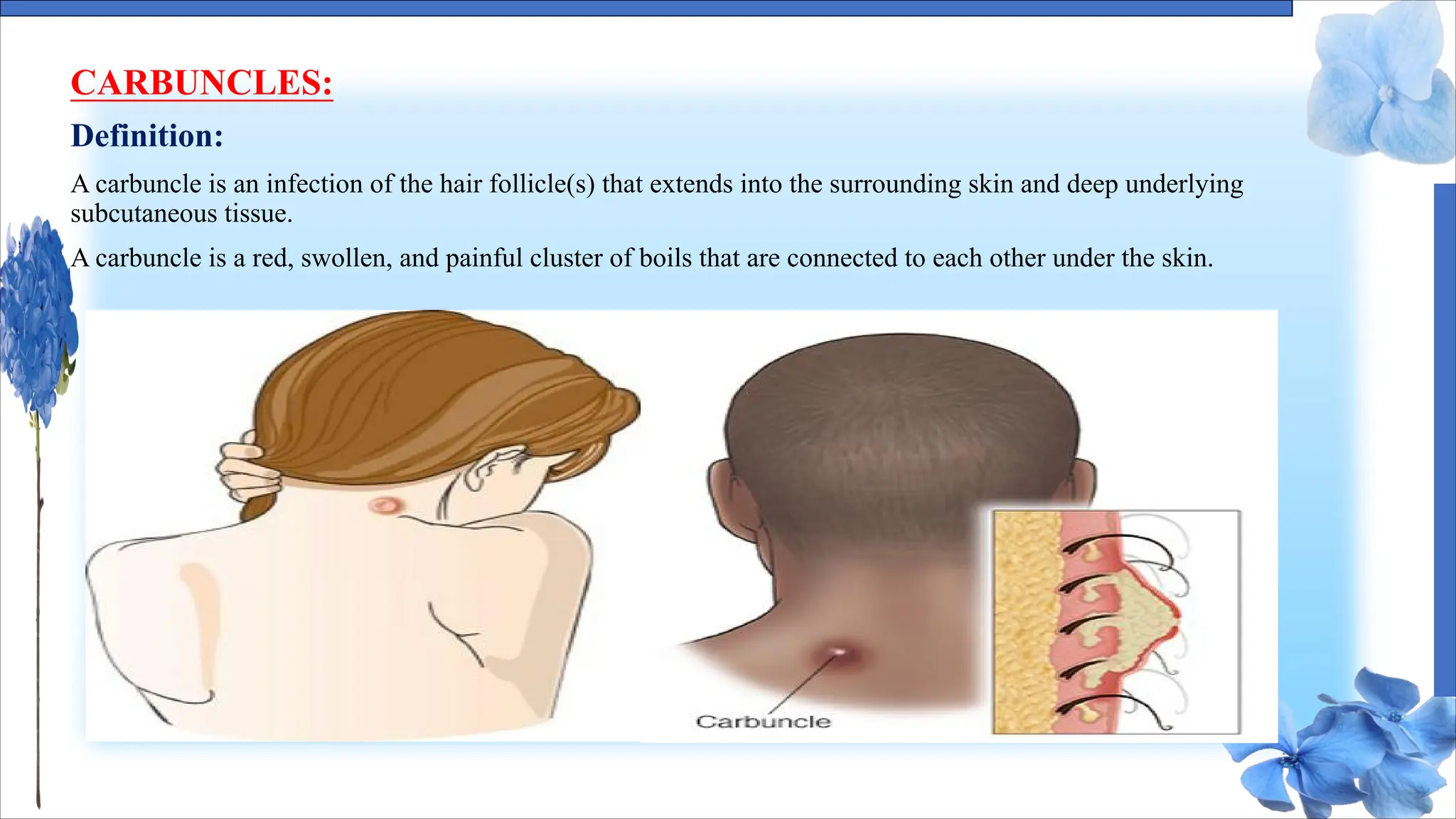
A carbuncle is an infection of the hair follicle(s) that extends into the surrounding skin and deep underlying
subcutaneous tissue.
A carbuncle is a red, swollen, and painful cluster of boils that are connected to each other under the skin.
Causes:
• Staphylococcus aureus.
• Friction from clothing or shaving
• Poor hygiene
• Poor overall health
Symptoms:
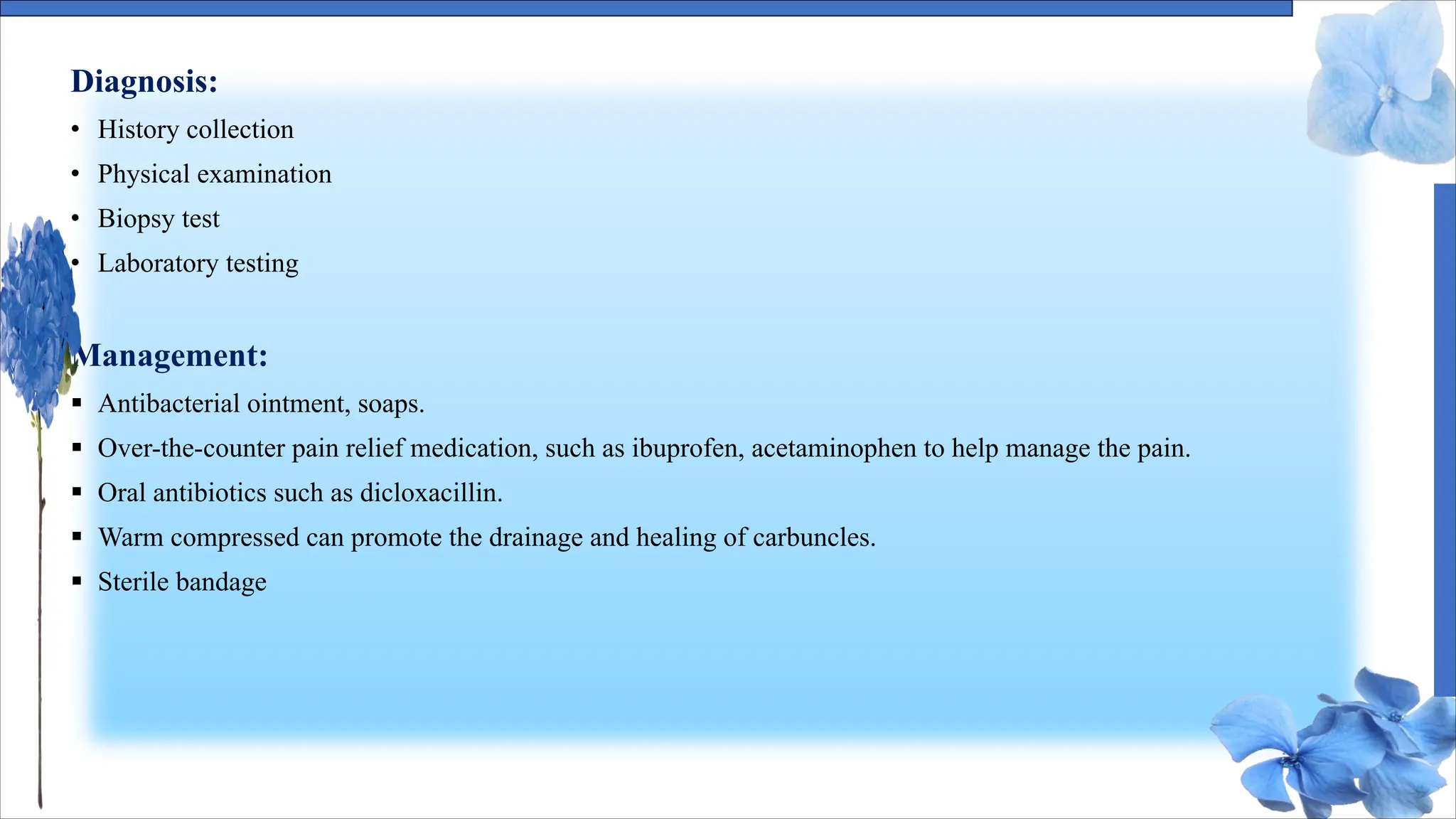
§ Develops over several days
§ Have a white or yellow center (contains pus)
§ Weep, ooze, or crust
§ Spread to other skin areas
§ Others symptom include;
§ Fatigue
§ Tightness when moving in the area where its infected.
§ Fever
§ General discomfort or sick feeling
§ Skin itching before the carbuncle develops
Diagnosis:
• History collection
• Physical examination
• Biopsy test
• Laboratory testing
Management:
§ Antibacterial ointment, soaps.
§ Over-the-counter pain relief medication, such as ibuprofen, acetaminophen to help manage the pain.
§ Oral antibiotics such as dicloxacillin.
§ Warm compressed can promote the drainage and healing of carbuncles.
§ Sterile bandage
Nursing management:
• Assess the general condition of the patient.
• Check the vital signs of the patient.
• Plan for the care plan
• Administered prescribed medication to the patient.
• Applying necessary cream to the patient
• Applying bandage to the affecting area to prevent from spreading.
• Educate the patient for proper skin hygiene.
• Manage the signs and symptoms
• Educate the patient about the diseases condition
• Advice for follow up care.
PYODERMA, IMPETIGO, FOLLICULITIS, FURUNCLES, CARBUNCLES.pdf

PYODERMA, IMPETIGO, FOLLICULITIS, FURUNCLES, CARBUNCLES.pdf

  • 1.
    . PREPARED BY DOLISHAWARBI PYODERMA, IMPETIGO, FOLLICULITIS, FURUNCLES, CARBUNCLES
  • 2.
    PYODERMA: Definition: Pyoderma gangrenosum isa rare condition that causes large, painful sores (ulcers) to develop on the skin, most often on the legs.
  • 3.
    Causes: § Bacterial infectioneg. Staphylococcus aureus or Streptococcus species. § Skin conditions, such as eczema, psoriasis, or acne. § Immune system disorders - HIV/AIDS or diabetes. § Lack of proper hygiene. § Exposure to hot and humid environments. § Certain underlying health conditions, such as obesity or peripheral vascular disease, can impair blood circulation to the skin. Signs and symptoms: • Small, discolored (red, purple, blue, brown or black), pus-filled blisters that enlarge quickly. • Open ulcers with distinct, raised borders. • Inflammation and pain around your sores. • Fever. • Joint pain.
  • 4.
    Diagnosis: • Blood test. •Biopsy. • Bone marrow sampling. • Rectal exam (proctoscopy). • Colon exam (colonoscopy). Management: § Corticosteroid (cortisone, prednisone). § Nonsteroidal anti-inflammatory drugs (NSAIDs): Aspirin and ibuprofen. § Immunosuppressant medications: mycophenolate and cyclosporine. § Biologic agents: infliximab, adalimumab. § Skin grafting.
  • 5.
    IMPETIGO: Definition: Impetigo is acommon contagious skin infection. Bacteria like Staphylococcus aureus or Streptococcus pyogenes infect the outer layers of the skin, called the epidermis. Face, arms, and legs are most often affected.
  • 6.
    Types: Non-bullous Begin with theappearance of red sores – usually around the nose and mouth but other areas of the face and the limbs can also be affected. The sores quickly burst leaving behind thick, golden crusts typically around 2cm across. Bullous impetigo; Begins with small vesicles that become flaccid bullae. The exfoliative toxin A produced by S. aureus causes loss of cell adhesion in the superficial epidermis. The bullae contain a clear or yellow fluid which eventually progresses to become purulent or dark. Ecthyma; Ecthyma is often called deep impetigo. Ecthyma is a skin infection similar to impetigo, but more deeply invasive. Usually caused by a streptococcus infection, ecthyma goes through the outer layer (epidermis) to the deeper layer (dermis) of skin, possibly causing scars.
  • 7.
    Causes: Ø Bacterial Infection. ØSkin Trauma: Cuts, scratches, insect bites. Ø Poor Hygiene. Ø Direct skin-to-skin contact with an infected individual. Ø Living in crowded area. Ø Weakened immune system.
  • 8.
    Signs and symptoms: •Pus-filled and burst easily, fluid may be yellow or tan. • Redness. • Skin lesions present. • Swollen lymph nodes near the infected area may develop. • Raw, shiny areas that scab over with a yellowish-brown crust. Diagnosis; • Skin culture test. • Physical examination. • Blood test
  • 9.
    Management; • Topical antibiotictherapy. Mupirocin, retapamulin, and fusidic acid are the treatments of choice. • Topical ointment – Neosporin. • Oral antibiotics. • Proper dressing to the injured area.
  • 10.
    FULLICULITIES: Definition; Folliculitis is acommon skin condition that's often caused by an infected or inflamed hair follicle. It is typically due to an infection of the hair follicle and results in irritated pimple-like spots or pustules.
  • 11.
    Causes: Ø Infection bystaphylococcus aureus bacteria, yeast, fungus, and viruses. Ø Skin irritation Ø Occlusion, or blockage, of the follicle Ø Topical steroids Ø Skin disorders, such as acne or dermatitis Ø Some medications Ø Irritant chemicals Ø Immunosuppressive medications Risk factors: Ø History of diabetes Ø Long-term antibiotic use Ø Frequent shaving Ø Using an unclean hot tub or swimming pool Ø Weakened immune system from conditions, such as HIV or cancer Ø Having overweight or obesity
  • 12.
    Symptoms: § A rash,a patch of small bumps, or yellow- or white-tipped pimples, red, or purple hues. § Crusty sores § Itching or tender bumps § Pus-filled sores § Inflamed skin § Tenderness § Pain Diagnosis: § Physical examination and medical history assessment. § Skin biopsy.
  • 13.
    Management: qLight therapy. qLancing -drain a boil or carbuncle by making a small incision in the lesion to drain the pus. qLaser therapy qMedication involves; Ø Topical antibiotic creams Ø Oral antibiotics Ø Topical antifungal creams Ø Antifungal shampoos Ø Oral antifungals Ø Steroid creams Ø Oral corticosteroids Ø Cortisone injections
  • 14.
    FURUNCLES: “Furuncle” is anotherword for a “boil.” Boils are bacterial infections of hair follicles that also involve the surrounding tissue. An infection of a hair follicle that extends subcutaneously, forming an abscess.
  • 15.
    Causes: § Staphylococcal infection, §Inadequate personal hygiene. § Conditions or medications that weaken the immune system, such as diabetes, HIV/AIDs, or immunosuppressive drugs. § Friction from tight clothing. § Excessive sweating in hot and humid conditions § Close contact with infected individuals § Certain skin conditions, such as acne or eczema. Risk factors: • Obesity. • Treatment with corticosteroids. • Defects in neutrophil function or number. • Diabetes mellitus.
  • 16.
    Signs and symptoms: •Swollen bump • Painful bump • Surrounding skin is red and warm • Pus or fluid drains from the bump • Fever Prevention: qEat a balanced diet of nutritious foods such as fruits, vegetables, protein, and whole grains. qRegular exercise to maintain normal body weight and helps maintain the blood pressure and blood sugar to normal level. qMaintain proper hygiene • Using fragrance-free soaps and cleansers • Applying moisturizer daily to help prevent skin from becoming dry and cracked • Using warm but not hot water when bathing or showering • Drying the skin carefully • Treating cuts, scrapes, and other skin issues immediately
  • 17.
    Treatment: • Warm compressescan help speed the rupturing of a furuncle. • Apply a warm, moist compress throughout the day to facilitate drainage. • First‐line oral antibiotics including dicloxacillin (250 mg four times daily) and cephalosporins (such as cefadroxil 500 mg twice daily). • Apply a topical antiseptic such as povidone iodine or chlorhexidine cream to the boils and cover with a square of gauze. • Putting antibiotic ointment (Neosporin, Bacitracin, Iodine or Polysporin). Nursing management: • Monitor the patient skin condition. • Apply ointment and do the proper dressing to the affected area. • Educate the patient about dietary pattern, personal hygiene and skin care. • Administered the prescribed medication. • Provide psychological support to the patient. • Instruct the patient for follow up.
  • 18.
    CARBUNCLES: Definition: A carbuncle isan infection of the hair follicle(s) that extends into the surrounding skin and deep underlying subcutaneous tissue. A carbuncle is a red, swollen, and painful cluster of boils that are connected to each other under the skin.
  • 19.
    Causes: • Staphylococcus aureus. •Friction from clothing or shaving • Poor hygiene • Poor overall health Symptoms: § Develops over several days § Have a white or yellow center (contains pus) § Weep, ooze, or crust § Spread to other skin areas § Others symptom include; § Fatigue § Tightness when moving in the area where its infected. § Fever § General discomfort or sick feeling § Skin itching before the carbuncle develops
  • 20.
    Diagnosis: • History collection •Physical examination • Biopsy test • Laboratory testing Management: § Antibacterial ointment, soaps. § Over-the-counter pain relief medication, such as ibuprofen, acetaminophen to help manage the pain. § Oral antibiotics such as dicloxacillin. § Warm compressed can promote the drainage and healing of carbuncles. § Sterile bandage
  • 21.
    Nursing management: • Assessthe general condition of the patient. • Check the vital signs of the patient. • Plan for the care plan • Administered prescribed medication to the patient. • Applying necessary cream to the patient • Applying bandage to the affecting area to prevent from spreading. • Educate the patient for proper skin hygiene. • Manage the signs and symptoms • Educate the patient about the diseases condition • Advice for follow up care.