
   Group Members Name

   Saima Sharafat       95
   Nukhbah Munir        76
   Sana Meer            82
   Sadia Iqbal          91
   Saira                63
   Sumaira Hanif        83
   Umer Naiz            78
   Haseeb Khan          94






                             Submitted to

                                Sir Aslam Dogar
   Public relations (PR) is the practice of managing the flow
    of information between an organization and its publics

communication vehicles commonly used by PR Practitioners:
                      Press releases
                         Articles
                Customer Success Stories
                   Letters to the Editor
      Press Conferences, Interview, or Media Tours
          Radio, Television, or Press Interviews
           Seminars or Speaking Engagements
                   Event Sponsorships
   Media     relations   involves    working     with
    various media for the purpose of informing the
    public of an organization's mission, policies and
    practices in a positive, consistent and credible
    manner


   The goal of media relations is to maximize positive
    coverage in the mass media without paying for it
    directly through advertising
  The media is the central vehicle for much of the PR
   industry's messages
 The media in turn has become more dependent on
   PR to supply content to fill air time or column
   inches
 Grunig and Hunt state that:
 “relations with the news media are so central to the
           practice of public relations that many
    practitioners, especially those guided by the press
     a gentry and public information models of public
      relations, believe that public relations is nothing
                 more than media relations”
What media relations activity often tries to
    achieve as part of a public affairs programme
    is:
   Pressure on politicians: working with the media
    to make your issue a new story , to try to apply
    pressure on politicians (usually the government
    ) so that they are forced to do something about
    it.
   The support of the public which , obviously ,
    assists in the achievement of the first : making
    your issue on that chimes with the public and
    making them aware of the matter through the
    media.
BRIEFING PAPER

 Is one that the Journalist will be attracted to
 Will appeal to the audience of the media you
  are approaching
 Will not leave the journalist exposed to
  criticism for being inaccurate
 Will have the effect you desire in
  government
 IDENTIFICATION OF MEDIA
 WHAT ARE YOU TRYING TO SELL IN
 APPROACH TO JOURNALIST
 Know the reporter and the publication
  before picking up the phone
 Always know how and when a reporter
  wants to be contacted
 Clarify your message before delivering your
  pitch
 When sending ideas via email, always
  include a short, pithy pitch along with your
  contact information
   Be careful what you send via email
   When calling a reporter, introduce yourself
    fully, reference previous conversations
   When you get a reporter on the phone,
    always ask what they are working on and
    how you can help
   Never make promises you cannot keep
   Follow up aggressively
   Whenever possible, pitch by phone
    In-House PR departments
     Large PR companies
    Conglomerates
    Some smaller players
     Industry Bodies
     Front Groups
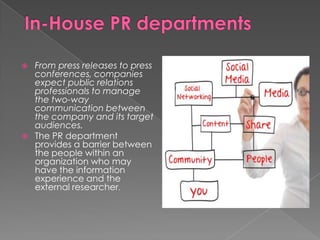
   From press releases to press
    conferences, companies
    expect public relations
    professionals to manage
    the two-way
    communication between
    the company and its target
    audiences.
   The PR department
    provides a barrier between
    the people within an
    organization who may
    have the information
    experience and the
    external researcher.
 The Top Ten PR companies in        1 Weber Shandwick Worldwide
  2001 were the following,           $426,572,018
                                      2 Fleishman-Hillard Inc.
  ranked by revenues              
                                     $345,098,241
 Many of the largest PR             3 Hill and Knowlton, Inc.
  companies are now owned            $325,119,000
  by large conglomerates such        4 Incepta (Citigate)
  as WPP, Omnicom, and               $266,018,371
  Interpublic Group. These           5 Burson Marsteller
  super-companies bring              $259,112,000
                                      6 Edelman Public Relations Worldwide
  together PR, lobbying,          
                                      $223,708,535
  advertising and marketing
                                  
                                     7 Ketchum, Inc.
  companies to provide               $185,221,000
  "integrated communications         8 Porter Novelli
  services" for their corporate      $179,294,000
  clients.                           9 GCI Group/APCO Worldwide
                                    $151,081,645
                                     10 Ogilvy Public Relations Worldwide
                                     $145,949,285
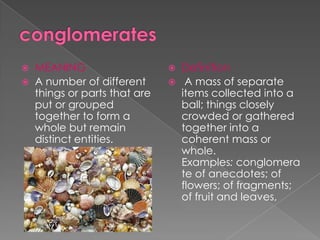
 MEANING                     Definition
 A number of different       A mass of separate
  things or parts that are     items collected into a
  put or grouped               ball; things closely
  together to form a           crowded or gathered
  whole but remain             together into a
  distinct entities.           coherent mass or
                               whole.
                               Examples: conglomera
                               te of anecdotes; of
                               flowers; of fragments;
                               of fruit and leaves,
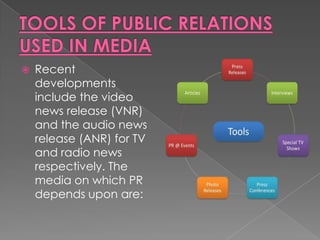
   Recent
    developments
    include the video
    news release (VNR)
    and the audio news
    release (ANR) for TV
    and radio news
    respectively. The
    media on which PR
    depends upon are:
Public relation and media

Public relation and media

  • 2.
      Group Members Name  Saima Sharafat 95  Nukhbah Munir 76  Sana Meer 82  Sadia Iqbal 91  Saira 63  Sumaira Hanif 83  Umer Naiz 78  Haseeb Khan 94      Submitted to   Sir Aslam Dogar
  • 3.
    Public relations (PR) is the practice of managing the flow of information between an organization and its publics communication vehicles commonly used by PR Practitioners: Press releases Articles Customer Success Stories Letters to the Editor Press Conferences, Interview, or Media Tours Radio, Television, or Press Interviews Seminars or Speaking Engagements Event Sponsorships
  • 4.
    Media relations involves working with various media for the purpose of informing the public of an organization's mission, policies and practices in a positive, consistent and credible manner  The goal of media relations is to maximize positive coverage in the mass media without paying for it directly through advertising
  • 5.
     Themedia is the central vehicle for much of the PR industry's messages  The media in turn has become more dependent on PR to supply content to fill air time or column inches  Grunig and Hunt state that: “relations with the news media are so central to the practice of public relations that many practitioners, especially those guided by the press a gentry and public information models of public relations, believe that public relations is nothing more than media relations”
  • 6.
    What media relationsactivity often tries to achieve as part of a public affairs programme is:  Pressure on politicians: working with the media to make your issue a new story , to try to apply pressure on politicians (usually the government ) so that they are forced to do something about it.  The support of the public which , obviously , assists in the achievement of the first : making your issue on that chimes with the public and making them aware of the matter through the media.
  • 7.
    BRIEFING PAPER  Isone that the Journalist will be attracted to  Will appeal to the audience of the media you are approaching  Will not leave the journalist exposed to criticism for being inaccurate  Will have the effect you desire in government
  • 8.
     IDENTIFICATION OFMEDIA  WHAT ARE YOU TRYING TO SELL IN  APPROACH TO JOURNALIST
  • 9.
     Know thereporter and the publication before picking up the phone  Always know how and when a reporter wants to be contacted  Clarify your message before delivering your pitch  When sending ideas via email, always include a short, pithy pitch along with your contact information
  • 10.
    Be careful what you send via email  When calling a reporter, introduce yourself fully, reference previous conversations  When you get a reporter on the phone, always ask what they are working on and how you can help  Never make promises you cannot keep  Follow up aggressively  Whenever possible, pitch by phone
  • 11.
    In-House PR departments Large PR companies Conglomerates Some smaller players Industry Bodies Front Groups
  • 12.
    From press releases to press conferences, companies expect public relations professionals to manage the two-way communication between the company and its target audiences.  The PR department provides a barrier between the people within an organization who may have the information experience and the external researcher.
  • 13.
     The TopTen PR companies in  1 Weber Shandwick Worldwide 2001 were the following,  $426,572,018 2 Fleishman-Hillard Inc. ranked by revenues   $345,098,241  Many of the largest PR  3 Hill and Knowlton, Inc. companies are now owned  $325,119,000 by large conglomerates such  4 Incepta (Citigate) as WPP, Omnicom, and  $266,018,371 Interpublic Group. These  5 Burson Marsteller super-companies bring  $259,112,000 6 Edelman Public Relations Worldwide together PR, lobbying,  $223,708,535 advertising and marketing   7 Ketchum, Inc. companies to provide  $185,221,000 "integrated communications  8 Porter Novelli services" for their corporate  $179,294,000 clients.  9 GCI Group/APCO Worldwide   $151,081,645  10 Ogilvy Public Relations Worldwide  $145,949,285
  • 14.
     MEANING  Definition  A number of different  A mass of separate things or parts that are items collected into a put or grouped ball; things closely together to form a crowded or gathered whole but remain together into a distinct entities. coherent mass or whole. Examples: conglomera te of anecdotes; of flowers; of fragments; of fruit and leaves,
  • 15.
    Recent developments include the video news release (VNR) and the audio news release (ANR) for TV and radio news respectively. The media on which PR depends upon are: