PTT 302 DOWNSTREAM
PROCESSING TECHNOLOGY
SEMESTER 1 2013/2014
Lecture 1:
Introduction to Bioproducts and Bioseparation
Definitions
 Bioseparations
 A sequence of recovery and separation steps – maximize the purity
of the bioproduct while minimizing the processing time, yield losses
and costs
 Bioproducts
 Chemical substances or combinations of chemical substances that are
made by living things
 Can be broadly classified into three categories of sources:
 Whole cells: single-cell protein, baker’s yeast and animal feed supplements
derived from yeast fermentation
 Intracellular macromolecules: protein in inclusion bodies from recombinant
bacterial fermentations, starch in inclusion bodies found in plant cells and
intracellular proteins
 Extracellular products: proteins, antibiotics, organic acids, and alcohols
secreted during microbial fermentations or cell culture
 The choice of separation method depends on the
nature of the product – purity, yield and activity are
the goals
 Bioproducts are sold for their chemical activity,
example:
 Methanol for solvent activity
 Ethanol for its neurological activity or as fuel
 Penicillin for its antibacterial activity
 Streptokinase (an enzyme) for its blood clot
dissolving activity
 The design of a large-scale purification process
requires three main considerations :
 Clearly defining the final product objective (therapeutic for
human or animals, industrial enzymes)
 Characterizing the starting material (from bacteria, yeast,
mammalian cell, knows the physicochemical properties of
the product such as surface hydrophobicity, pI, stability etc.)
 Defining possible separation steps and constraints
regarding the protein product, operations and conditions to
be used
Rules of Thumb
In selection of separation sequence, five main heuristics or rules of thumb provide a
good basis for process selection which are as follows:
Rule 1: Choose separation processes based on different physical, chemical or
biochemical properties
Rule 2: Separate the most plentiful impurities first
Rule 3: Choose those processes that will exploit the differences in the physico-
chemical properties of the product and impurities in the most efficient
manner
Rule 4: Use a high-resolution step as soon as possible
Rule 5: Do the most harduous step last
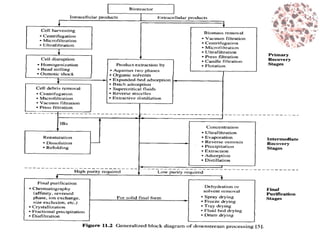
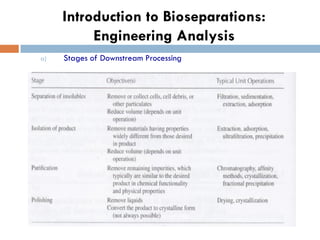
Objectives and Typical Unit Operations of
the Four Stages in Bioseparations
 Individual recovery operations can be grouped into different categories, depending on
their general purpose.
 The sequence of recovery operations that typically employed in practice is as follows:
 Separation of insolubles. Insoluble materials include whole cells, cell debris, pellets of
aggregated protein, and undissolved nutrients. Common operations for this purpose
are sedimentation, centrifugation, and filtration.
 Isolation and Concentration. Generally refers to the isolation of the desired product
from unrelated impurities. Significant concentration is achieved in the early stages, but
concentration accompanies purification as well. This category includes extraction,
ultrafiltration, precipitation, and ion exchange.
 Primary Purification. More selective than isolation; some purification steps can
distinguish between species having very similar chemical and physical properties.
Primary purification techniques include chromatography, affinity methods, and
fractional precipitation.
 Final Purification (Polishing). Necessitated by the extremely high purity required of
many bioproducts, particularly pharmaceuticals and therapeutics. After primary
purification the product is nearly pure but may not be in the proper form. Partially
pure solids may still contain discolored material or solvent. Crystallization and/or
drying are typically employed to achieve final purity.
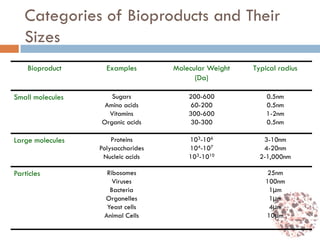
Categories of Bioproducts and Their
Sizes
Bioproduct Examples Molecular Weight
(Da)
Typical radius
Small molecules Sugars
Amino acids
Vitamins
Organic acids
200-600
60-200
300-600
30-300
0.5nm
0.5nm
1-2nm
0.5nm
Large molecules Proteins
Polysaccharides
Nucleic acids
103-106
104-107
103-1010
3-10nm
4-20nm
2-1,000nm
Particles Ribosomes
Viruses
Bacteria
Organelles
Yeast cells
Animal Cells
25nm
100nm
1µm
1µm
4µm
10µm
Characterization of Biomolecules
 Because biomolecules differ greatly in nature, different
separation principles are required for their recovery and
purification.
 Their relative molecular masses vary generally,
biomolecules are rather unstable and their stability
depends on many different factors such as:
 pH
 Temperature
 Ionic strength
 Type of solvent used
 Presence of surfactant
 Metal ions
Small Biomolecules
 can be divided into two categories
 primary metabolites and secondary metabolites
 Primary Metabolites
 formed during the primary growth phase of the
organism
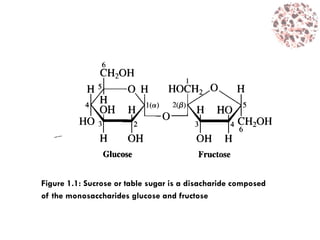
 Sugar – monosaccharides, disaccharides or
polysaccarides (Figure 1.1)
 Organic alcohols, acids, and ketones – can be
produced by anaerobic fermentation of
microorganism ex. Ethanol, isopropanol, acetone,
acetic acid (Figure 1.2)
 Vitamins – vitamin A (carotenoid), B, C (ascorbic
acid), D (hormone D, steroid)
Figure 1.1: Sucrose or table sugar is a disacharide composed
of the monosaccharides glucose and fructose
Small Biomolecules (cont’d)
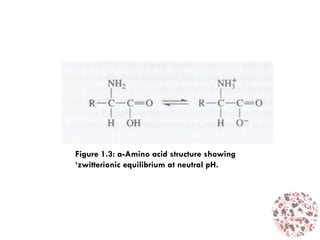
 Amino acids – building blocks of proteins
 specific properties of amino acid side groups can be
exploited in purification methods. A protein rich in
acidic @ basic amino acids on its surface can be
adsorbed by ion exchange or separated by
electrophoresis (Figure 1.3)
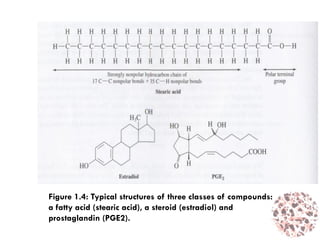
 Lipids – natural fats consist of fatty acids, lipids,
steroids this family of bioproducts- highly extractable
into nonpolar solvents (Figure 1.4)
Figure 1.3: a-Amino acid structure showing
‘zwitterionic equilibrium at neutral pH.
Figure 1.4: Typical structures of three classes of compounds:
a fatty acid (stearic acid), a steroid (estradiol) and
prostaglandin (PGE2).
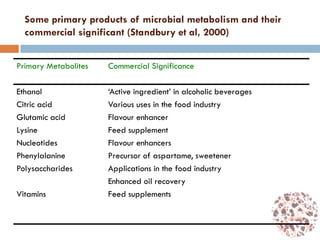
Some primary products of microbial metabolism and their
commercial significant (Standbury et al, 2000)
Primary Metabolites Commercial Significance
Ethanol
Citric acid
Glutamic acid
Lysine
Nucleotides
Phenylalanine
Polysaccharides
Vitamins
‘Active ingredient’ in alcoholic beverages
Various uses in the food industry
Flavour enhancer
Feed supplement
Flavour enhancers
Precursor of aspartame, sweetener
Applications in the food industry
Enhanced oil recovery
Feed supplements
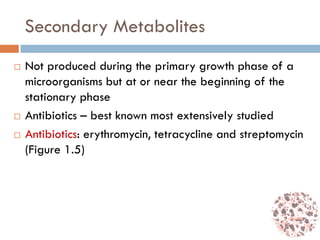
Secondary Metabolites
 Not produced during the primary growth phase of a
microorganisms but at or near the beginning of the
stationary phase
 Antibiotics – best known most extensively studied
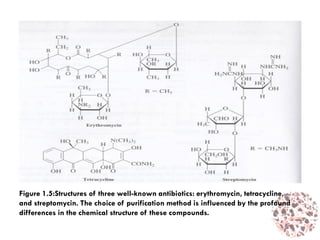
 Antibiotics: erythromycin, tetracycline and streptomycin
(Figure 1.5)
Figure 1.5:Structures of three well-known antibiotics: erythromycin, tetracycline,
and streptomycin. The choice of purification method is influenced by the profound
differences in the chemical structure of these compounds.
Macromolecules: Protein
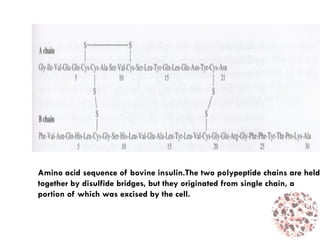
 Primary structure (the covalent amino acid sequence) (Figure
1.6)
 established by the sequence of nucleotide codons of the
messenger RNA for that protein
 amino acid- held together in strictly linear sequence and all
backbone bonds are covalent
 no branched peptide, despite the existence of amino and
carboxyl side chains capable of forming amine linkages
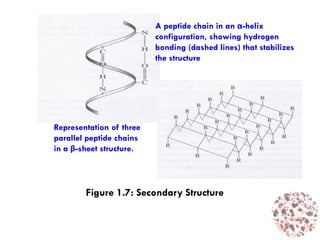
 Secondary structure (the hydrogen-bonded structures)
(Figure 1.7)
 two main forms – the formation of hydrogen bonds between
oxygen and nitrogen atoms in the peptide backbone
 two structures that form are the α helix and the βsheet
(or‘pleated sheet’)
Amino acid sequence of bovine insulin.The two polypeptide chains are held
together by disulfide bridges, but they originated from single chain, a
portion of which was excised by the cell.
A peptide chain in an α-helix
configuration, showing hydrogen
bonding (dashed lines) that stabilizes
the structure
Representation of three
parallel peptide chains
in a β-sheet structure.
Figure 1.7: Secondary Structure
Protein (cont’d)
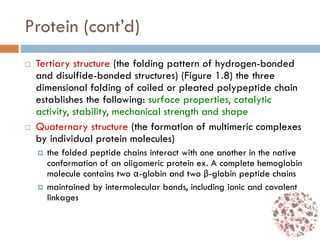
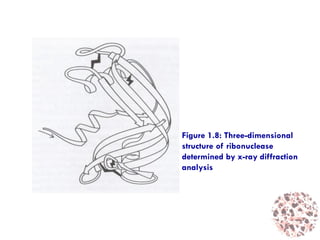
 Tertiary structure (the folding pattern of hydrogen-bonded
and disulfide-bonded structures) (Figure 1.8) the three
dimensional folding of coiled or pleated polypeptide chain
establishes the following: surface properties, catalytic
activity, stability, mechanical strength and shape
 Quaternary structure (the formation of multimeric complexes
by individual protein molecules)
 the folded peptide chains interact with one another in the native
conformation of an oligomeric protein ex. A complete hemoglobin
molecule contains two α-globin and two β-globin peptide chains
 maintained by intermolecular bonds, including ionic and covalent
linkages
Figure 1.8: Three-dimensional
structure of ribonuclease
determined by x-ray diffraction
analysis
Protein (cont’d)
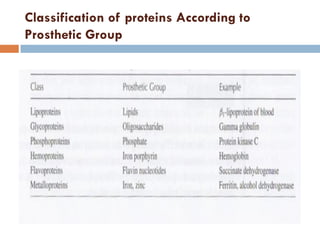
 prosthethic group and hybrid molecules
 conjugated proteins- contain not only amino acids but other
organic and inorganic compounds
 the non-amino acid portion of a conjugated protein- called
prosthetic group
 conjugated proteins- classified on the basis of the chemical nature
of their prosthetic group
 proteins containing lipids or sugar moieties – called hybrid
compounds
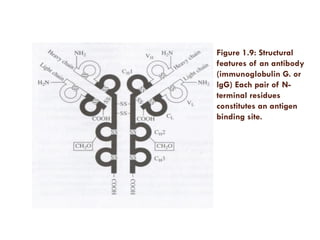
 antibodies – hybrid molecules – become a major product of
biotechnology companies (Figure 1.9)
 antibodies – globular proteins synthesized by B lymphocytes in
animals
Classification of proteins According to
Prosthetic Group
Figure 1.9: Structural
features of an antibody
(immunoglobulin G. or
lgG) Each pair of N-
terminal residues
constitutes an antigen
binding site.
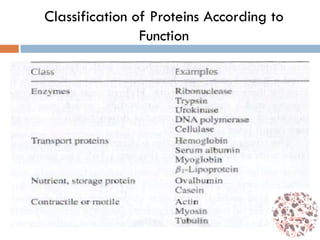
Classification of Proteins According to
Function
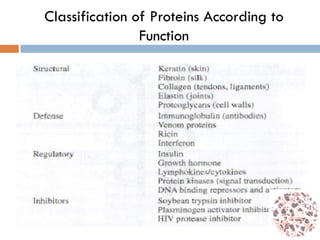
Classification of Proteins According to
Function
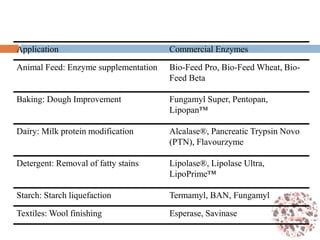
Commercial Uses of Proteins
Application Commercial Enzymes
Animal Feed: Enzyme supplementation Bio-Feed Pro, Bio-Feed Wheat, Bio-
Feed Beta
Baking: Dough Improvement Fungamyl Super, Pentopan,
Lipopan™
Dairy: Milk protein modification Alcalase®, Pancreatic Trypsin Novo
(PTN), Flavourzyme
Detergent: Removal of fatty stains Lipolase®, Lipolase Ultra,
LipoPrime™
Starch: Starch liquefaction Termamyl, BAN, Fungamyl
Textiles: Wool finishing Esperase, Savinase
Stability of Protein
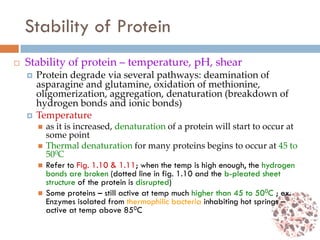
 Stability of protein – temperature, pH, shear
 Protein degrade via several pathways: deamination of
asparagine and glutamine, oxidation of methionine,
oligomerization, aggregation, denaturation (breakdown of
hydrogen bonds and ionic bonds)
 Temperature
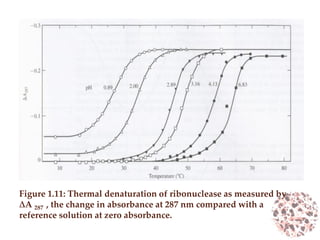
 as it is increased, denaturation of a protein will start to occur at
some point
 Thermal denaturation for many proteins begins to occur at 45 to
500C
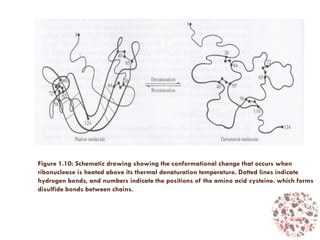
 Refer to Fig. 1.10 & 1.11; when the temp is high enough, the hydrogen
bonds are broken (dotted line in fig. 1.10 and the b-pleated sheet
structure of the protein is disrupted)
 Some proteins – still active at temp much higher than 45 to 500C ; ex.
Enzymes isolated from thermophilic bacteria inhabiting hot springs –
active at temp above 850C
Figure 1.10: Schematic drawing showing the conformational change that occurs when
ribonuclease is heated above its thermal denaturation temperature. Dotted lines indicate
hydrogen bonds, and numbers indicate the positions of the amino acid cysteine. which forms
disulfide bonds between chains.
Figure 1.11: Thermal denaturation of ribonuclease as measured by
∆A 287 , the change in absorbance at 287 nm compared with a
reference solution at zero absorbance.
Protein (cont’d)
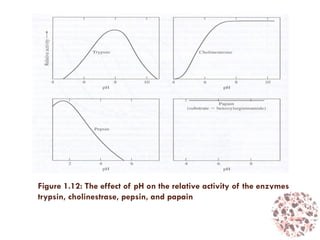
 pH
 often varied during the d/stream processing of proteins
 Fig 1.12 illustrates the phenomenon for four enzymes for
which effect of pH on the relative activity of the enzymes
has been determined
 In these cases the pH changes- leading to a change in the
ionization state and structure of the active site
 At extreme of pH, proteins are not only denatured but can
be completely hydrolysed to their constituent amino acids
 At extreme of pH, proteins are not only denatured but can
be completely hydrolysed to their constituent amino acids
Figure 1.12: The effect of pH on the relative activity of the enzymes
trypsin, cholinestrase, pepsin, and papain
Protein (cont’d)
 Shear
 Not significant except when gas-liquid interfaces are present
 Ex. In a rotating disk reactor that had a gas phase caused by incomplete
filling of the reactor
 This loss of activity – attributed to the proteins being adsorbed to the
gas-liquid interfaces in an unfolded partially active and inactive state
 If the turbulence in the solution – sufficiently high, the interface with
protein adsorbed breaks, causing unfolded protein to be inactivated
 Therefore, it is important – gas-liquid interfaces be avoided/ minimized
Macromolecules: Nucleic acids and
Oligonucleotides
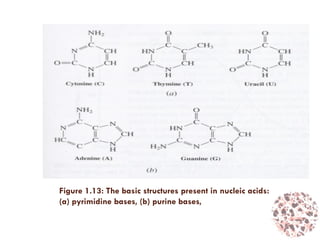
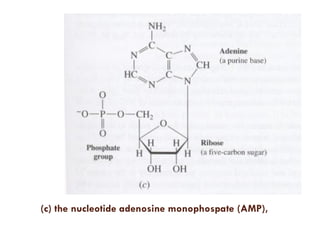
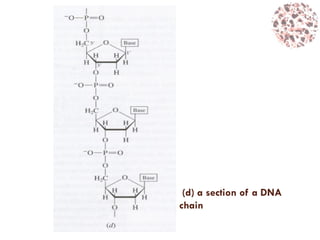
 Nucleic acids- polynucleotides whose primary structure consists of
repeating units of nucleotides (Figure 1.13)
 A nucleotide consists of a nitrogeneous base, a ribose or deoxyribose
sugar and one or more phosphate groups
 Ribonucleotide acid (RNA) – polynucleotide containing only ribose sugar
while deoxyribose (DNA) contains only deoxyriboses (DNA) (lacking a
hydroxyl group at the 2’ position)
 The use of DNA in tiny quantities; large-scale purification – never been
necessary
 However, a new family of nucleic acid products – currently arising
 Commercial potential of oligo- and polynucleotides are antisense
sequences, ribozymes and aptamers (combinatorial products)
 These three categories of nucleic acid products- targeted for the
therapeutics and diagnostics field
Figure 1.13: The basic structures present in nucleic acids:
(a) pyrimidine bases, (b) purine bases,
(c) the nucleotide adenosine monophospate (AMP),
(d) a section of a DNA
chain
Macromolecules: Polysaccharides
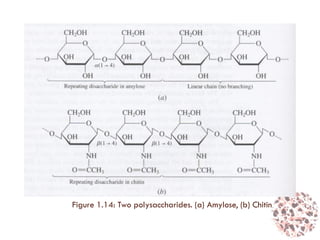
 Of all bioproducts in use; the highest MW and the longest
end-to-end polymer length (Figure 1.14)
 Most familiar- starch, glycogen and cellulose
 Most of them- extracted from plants, several are produced
microbially; ex. Dextran, alginate
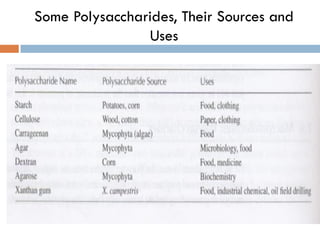
 Highly purified- seldom sold, sources and uses of selected
p/saccharides are listed in Table 1.6
Figure 1.14: Two polysaccharides. (a) Amylose, (b) Chitin
Some Polysaccharides, Their Sources and
Uses
Particulate Products
 The form of sub-cellular particles, bacterial inclusion
bodies, whole cells and insoluble macromolecular
aggregates
 Purifying of suspended animal and plant cells- to
obtain pure populations for biochem. study and for
food/ feed applications, starting material for pure
bioproducts
Introduction to Bioseparations:
Engineering Analysis
a) Stages of Downstream Processing
Introduction to Bioseparations:
Basic Engineering Analysis
1. Material balance:
Accumulation = inflow –outflow + amount produced –
amount consumed
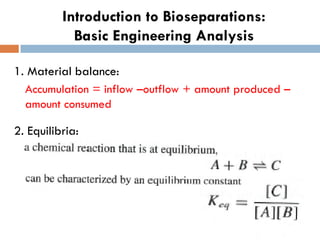
2. Equilibria:
Introduction to Bioseparations:
Basic Engineering Analysis
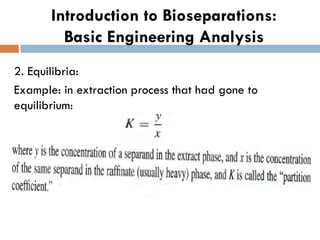
2. Equilibria:
Example: in extraction process that had gone to
equilibrium:
Introduction to Bioseparations:
Basic Engineering Analysis
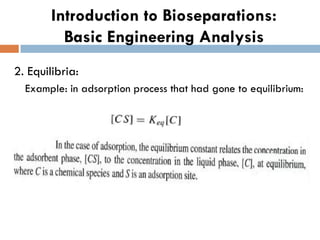
2. Equilibria:
Example: in adsorption process that had gone to equilibrium:
Introduction to Bioseparations:
Basic Engineering Analysis
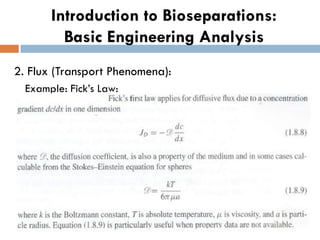
2. Flux (Transport Phenomena):
Example: Fick’s Law:
Introduction to Bioseparations:
Basic Engineering Analysis
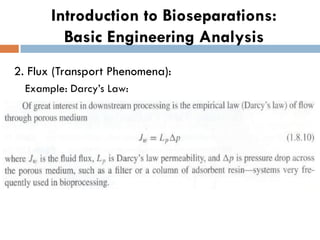
2. Flux (Transport Phenomena):
Example: Darcy’s Law:
Introduction to Bioseparations:
Engineering Analysis (cont’d)
 Criteria should be used in evaluating and developing a
bioseparation process:
 product purity
 cost of production as related to yield
 Scalability
 Reproducibility and ease of implementation
 Robustness with respect to process stream variables

PTT 302 Lecture 1 Introduction.pdf

  • 1.
    PTT 302 DOWNSTREAM PROCESSINGTECHNOLOGY SEMESTER 1 2013/2014 Lecture 1: Introduction to Bioproducts and Bioseparation
  • 2.
    Definitions  Bioseparations  Asequence of recovery and separation steps – maximize the purity of the bioproduct while minimizing the processing time, yield losses and costs  Bioproducts  Chemical substances or combinations of chemical substances that are made by living things  Can be broadly classified into three categories of sources:  Whole cells: single-cell protein, baker’s yeast and animal feed supplements derived from yeast fermentation  Intracellular macromolecules: protein in inclusion bodies from recombinant bacterial fermentations, starch in inclusion bodies found in plant cells and intracellular proteins  Extracellular products: proteins, antibiotics, organic acids, and alcohols secreted during microbial fermentations or cell culture
  • 3.
     The choiceof separation method depends on the nature of the product – purity, yield and activity are the goals  Bioproducts are sold for their chemical activity, example:  Methanol for solvent activity  Ethanol for its neurological activity or as fuel  Penicillin for its antibacterial activity  Streptokinase (an enzyme) for its blood clot dissolving activity
  • 4.
     The designof a large-scale purification process requires three main considerations :  Clearly defining the final product objective (therapeutic for human or animals, industrial enzymes)  Characterizing the starting material (from bacteria, yeast, mammalian cell, knows the physicochemical properties of the product such as surface hydrophobicity, pI, stability etc.)  Defining possible separation steps and constraints regarding the protein product, operations and conditions to be used
  • 5.
    Rules of Thumb Inselection of separation sequence, five main heuristics or rules of thumb provide a good basis for process selection which are as follows: Rule 1: Choose separation processes based on different physical, chemical or biochemical properties Rule 2: Separate the most plentiful impurities first Rule 3: Choose those processes that will exploit the differences in the physico- chemical properties of the product and impurities in the most efficient manner Rule 4: Use a high-resolution step as soon as possible Rule 5: Do the most harduous step last
  • 6.
    Objectives and TypicalUnit Operations of the Four Stages in Bioseparations  Individual recovery operations can be grouped into different categories, depending on their general purpose.  The sequence of recovery operations that typically employed in practice is as follows:  Separation of insolubles. Insoluble materials include whole cells, cell debris, pellets of aggregated protein, and undissolved nutrients. Common operations for this purpose are sedimentation, centrifugation, and filtration.  Isolation and Concentration. Generally refers to the isolation of the desired product from unrelated impurities. Significant concentration is achieved in the early stages, but concentration accompanies purification as well. This category includes extraction, ultrafiltration, precipitation, and ion exchange.  Primary Purification. More selective than isolation; some purification steps can distinguish between species having very similar chemical and physical properties. Primary purification techniques include chromatography, affinity methods, and fractional precipitation.  Final Purification (Polishing). Necessitated by the extremely high purity required of many bioproducts, particularly pharmaceuticals and therapeutics. After primary purification the product is nearly pure but may not be in the proper form. Partially pure solids may still contain discolored material or solvent. Crystallization and/or drying are typically employed to achieve final purity.
  • 8.
    Categories of Bioproductsand Their Sizes Bioproduct Examples Molecular Weight (Da) Typical radius Small molecules Sugars Amino acids Vitamins Organic acids 200-600 60-200 300-600 30-300 0.5nm 0.5nm 1-2nm 0.5nm Large molecules Proteins Polysaccharides Nucleic acids 103-106 104-107 103-1010 3-10nm 4-20nm 2-1,000nm Particles Ribosomes Viruses Bacteria Organelles Yeast cells Animal Cells 25nm 100nm 1µm 1µm 4µm 10µm
  • 9.
    Characterization of Biomolecules Because biomolecules differ greatly in nature, different separation principles are required for their recovery and purification.  Their relative molecular masses vary generally, biomolecules are rather unstable and their stability depends on many different factors such as:  pH  Temperature  Ionic strength  Type of solvent used  Presence of surfactant  Metal ions
  • 10.
    Small Biomolecules  canbe divided into two categories  primary metabolites and secondary metabolites  Primary Metabolites  formed during the primary growth phase of the organism  Sugar – monosaccharides, disaccharides or polysaccarides (Figure 1.1)  Organic alcohols, acids, and ketones – can be produced by anaerobic fermentation of microorganism ex. Ethanol, isopropanol, acetone, acetic acid (Figure 1.2)  Vitamins – vitamin A (carotenoid), B, C (ascorbic acid), D (hormone D, steroid)
  • 11.
    Figure 1.1: Sucroseor table sugar is a disacharide composed of the monosaccharides glucose and fructose
  • 12.
    Small Biomolecules (cont’d) Amino acids – building blocks of proteins  specific properties of amino acid side groups can be exploited in purification methods. A protein rich in acidic @ basic amino acids on its surface can be adsorbed by ion exchange or separated by electrophoresis (Figure 1.3)  Lipids – natural fats consist of fatty acids, lipids, steroids this family of bioproducts- highly extractable into nonpolar solvents (Figure 1.4)
  • 13.
    Figure 1.3: a-Aminoacid structure showing ‘zwitterionic equilibrium at neutral pH.
  • 14.
    Figure 1.4: Typicalstructures of three classes of compounds: a fatty acid (stearic acid), a steroid (estradiol) and prostaglandin (PGE2).
  • 15.
    Some primary productsof microbial metabolism and their commercial significant (Standbury et al, 2000) Primary Metabolites Commercial Significance Ethanol Citric acid Glutamic acid Lysine Nucleotides Phenylalanine Polysaccharides Vitamins ‘Active ingredient’ in alcoholic beverages Various uses in the food industry Flavour enhancer Feed supplement Flavour enhancers Precursor of aspartame, sweetener Applications in the food industry Enhanced oil recovery Feed supplements
  • 16.
    Secondary Metabolites  Notproduced during the primary growth phase of a microorganisms but at or near the beginning of the stationary phase  Antibiotics – best known most extensively studied  Antibiotics: erythromycin, tetracycline and streptomycin (Figure 1.5)
  • 17.
    Figure 1.5:Structures ofthree well-known antibiotics: erythromycin, tetracycline, and streptomycin. The choice of purification method is influenced by the profound differences in the chemical structure of these compounds.
  • 18.
    Macromolecules: Protein  Primarystructure (the covalent amino acid sequence) (Figure 1.6)  established by the sequence of nucleotide codons of the messenger RNA for that protein  amino acid- held together in strictly linear sequence and all backbone bonds are covalent  no branched peptide, despite the existence of amino and carboxyl side chains capable of forming amine linkages  Secondary structure (the hydrogen-bonded structures) (Figure 1.7)  two main forms – the formation of hydrogen bonds between oxygen and nitrogen atoms in the peptide backbone  two structures that form are the α helix and the βsheet (or‘pleated sheet’)
  • 19.
    Amino acid sequenceof bovine insulin.The two polypeptide chains are held together by disulfide bridges, but they originated from single chain, a portion of which was excised by the cell.
  • 20.
    A peptide chainin an α-helix configuration, showing hydrogen bonding (dashed lines) that stabilizes the structure Representation of three parallel peptide chains in a β-sheet structure. Figure 1.7: Secondary Structure
  • 21.
    Protein (cont’d)  Tertiarystructure (the folding pattern of hydrogen-bonded and disulfide-bonded structures) (Figure 1.8) the three dimensional folding of coiled or pleated polypeptide chain establishes the following: surface properties, catalytic activity, stability, mechanical strength and shape  Quaternary structure (the formation of multimeric complexes by individual protein molecules)  the folded peptide chains interact with one another in the native conformation of an oligomeric protein ex. A complete hemoglobin molecule contains two α-globin and two β-globin peptide chains  maintained by intermolecular bonds, including ionic and covalent linkages
  • 22.
    Figure 1.8: Three-dimensional structureof ribonuclease determined by x-ray diffraction analysis
  • 23.
    Protein (cont’d)  prosthethicgroup and hybrid molecules  conjugated proteins- contain not only amino acids but other organic and inorganic compounds  the non-amino acid portion of a conjugated protein- called prosthetic group  conjugated proteins- classified on the basis of the chemical nature of their prosthetic group  proteins containing lipids or sugar moieties – called hybrid compounds  antibodies – hybrid molecules – become a major product of biotechnology companies (Figure 1.9)  antibodies – globular proteins synthesized by B lymphocytes in animals
  • 24.
    Classification of proteinsAccording to Prosthetic Group
  • 25.
    Figure 1.9: Structural featuresof an antibody (immunoglobulin G. or lgG) Each pair of N- terminal residues constitutes an antigen binding site.
  • 26.
    Classification of ProteinsAccording to Function
  • 27.
    Classification of ProteinsAccording to Function
  • 28.
  • 29.
    Commercial Uses ofProteins Application Commercial Enzymes Animal Feed: Enzyme supplementation Bio-Feed Pro, Bio-Feed Wheat, Bio- Feed Beta Baking: Dough Improvement Fungamyl Super, Pentopan, Lipopan™ Dairy: Milk protein modification Alcalase®, Pancreatic Trypsin Novo (PTN), Flavourzyme Detergent: Removal of fatty stains Lipolase®, Lipolase Ultra, LipoPrime™ Starch: Starch liquefaction Termamyl, BAN, Fungamyl Textiles: Wool finishing Esperase, Savinase
  • 30.
    Stability of Protein Stability of protein – temperature, pH, shear  Protein degrade via several pathways: deamination of asparagine and glutamine, oxidation of methionine, oligomerization, aggregation, denaturation (breakdown of hydrogen bonds and ionic bonds)  Temperature  as it is increased, denaturation of a protein will start to occur at some point  Thermal denaturation for many proteins begins to occur at 45 to 500C  Refer to Fig. 1.10 & 1.11; when the temp is high enough, the hydrogen bonds are broken (dotted line in fig. 1.10 and the b-pleated sheet structure of the protein is disrupted)  Some proteins – still active at temp much higher than 45 to 500C ; ex. Enzymes isolated from thermophilic bacteria inhabiting hot springs – active at temp above 850C
  • 31.
    Figure 1.10: Schematicdrawing showing the conformational change that occurs when ribonuclease is heated above its thermal denaturation temperature. Dotted lines indicate hydrogen bonds, and numbers indicate the positions of the amino acid cysteine. which forms disulfide bonds between chains.
  • 32.
    Figure 1.11: Thermaldenaturation of ribonuclease as measured by ∆A 287 , the change in absorbance at 287 nm compared with a reference solution at zero absorbance.
  • 33.
    Protein (cont’d)  pH often varied during the d/stream processing of proteins  Fig 1.12 illustrates the phenomenon for four enzymes for which effect of pH on the relative activity of the enzymes has been determined  In these cases the pH changes- leading to a change in the ionization state and structure of the active site  At extreme of pH, proteins are not only denatured but can be completely hydrolysed to their constituent amino acids  At extreme of pH, proteins are not only denatured but can be completely hydrolysed to their constituent amino acids
  • 34.
    Figure 1.12: Theeffect of pH on the relative activity of the enzymes trypsin, cholinestrase, pepsin, and papain
  • 35.
    Protein (cont’d)  Shear Not significant except when gas-liquid interfaces are present  Ex. In a rotating disk reactor that had a gas phase caused by incomplete filling of the reactor  This loss of activity – attributed to the proteins being adsorbed to the gas-liquid interfaces in an unfolded partially active and inactive state  If the turbulence in the solution – sufficiently high, the interface with protein adsorbed breaks, causing unfolded protein to be inactivated  Therefore, it is important – gas-liquid interfaces be avoided/ minimized
  • 36.
    Macromolecules: Nucleic acidsand Oligonucleotides  Nucleic acids- polynucleotides whose primary structure consists of repeating units of nucleotides (Figure 1.13)  A nucleotide consists of a nitrogeneous base, a ribose or deoxyribose sugar and one or more phosphate groups  Ribonucleotide acid (RNA) – polynucleotide containing only ribose sugar while deoxyribose (DNA) contains only deoxyriboses (DNA) (lacking a hydroxyl group at the 2’ position)  The use of DNA in tiny quantities; large-scale purification – never been necessary  However, a new family of nucleic acid products – currently arising  Commercial potential of oligo- and polynucleotides are antisense sequences, ribozymes and aptamers (combinatorial products)  These three categories of nucleic acid products- targeted for the therapeutics and diagnostics field
  • 37.
    Figure 1.13: Thebasic structures present in nucleic acids: (a) pyrimidine bases, (b) purine bases,
  • 38.
    (c) the nucleotideadenosine monophospate (AMP),
  • 39.
    (d) a sectionof a DNA chain
  • 40.
    Macromolecules: Polysaccharides  Ofall bioproducts in use; the highest MW and the longest end-to-end polymer length (Figure 1.14)  Most familiar- starch, glycogen and cellulose  Most of them- extracted from plants, several are produced microbially; ex. Dextran, alginate  Highly purified- seldom sold, sources and uses of selected p/saccharides are listed in Table 1.6
  • 41.
    Figure 1.14: Twopolysaccharides. (a) Amylose, (b) Chitin
  • 42.
  • 43.
    Particulate Products  Theform of sub-cellular particles, bacterial inclusion bodies, whole cells and insoluble macromolecular aggregates  Purifying of suspended animal and plant cells- to obtain pure populations for biochem. study and for food/ feed applications, starting material for pure bioproducts
  • 44.
    Introduction to Bioseparations: EngineeringAnalysis a) Stages of Downstream Processing
  • 45.
    Introduction to Bioseparations: BasicEngineering Analysis 1. Material balance: Accumulation = inflow –outflow + amount produced – amount consumed 2. Equilibria:
  • 46.
    Introduction to Bioseparations: BasicEngineering Analysis 2. Equilibria: Example: in extraction process that had gone to equilibrium:
  • 47.
    Introduction to Bioseparations: BasicEngineering Analysis 2. Equilibria: Example: in adsorption process that had gone to equilibrium:
  • 48.
    Introduction to Bioseparations: BasicEngineering Analysis 2. Flux (Transport Phenomena): Example: Fick’s Law:
  • 49.
    Introduction to Bioseparations: BasicEngineering Analysis 2. Flux (Transport Phenomena): Example: Darcy’s Law:
  • 50.
    Introduction to Bioseparations: EngineeringAnalysis (cont’d)  Criteria should be used in evaluating and developing a bioseparation process:  product purity  cost of production as related to yield  Scalability  Reproducibility and ease of implementation  Robustness with respect to process stream variables