


learning 
Group 2: 
• Ta Quang Tuyen – BABAAU12057 
• Le Thi Kieu Oanh – BAFNIU13209
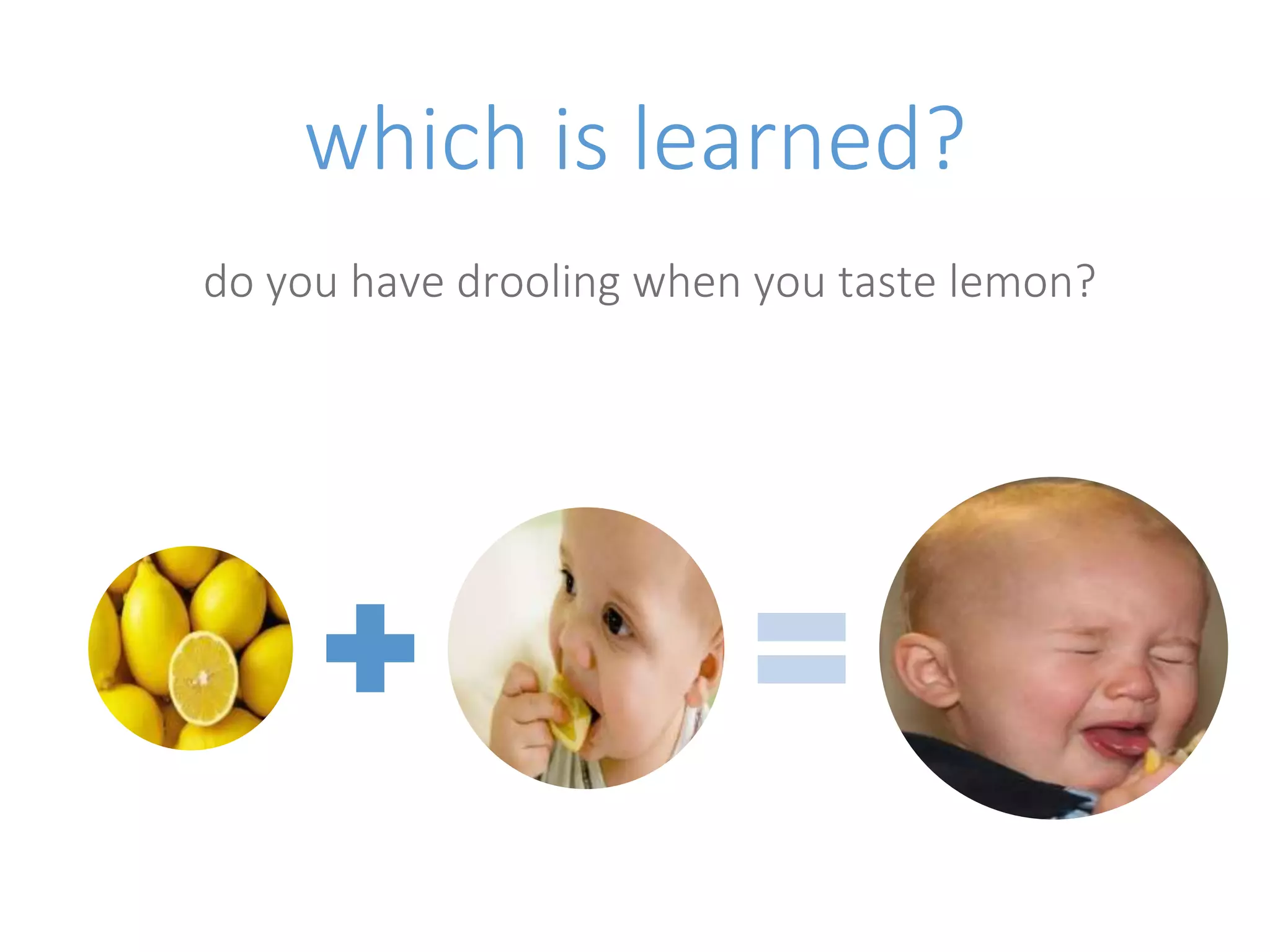
which is learned? 
do you have drooling when you taste lemon?
a relatively permanent change in 
behavior or the potential to 
make a response that occurs as a 
results of experience
classical conditioning 
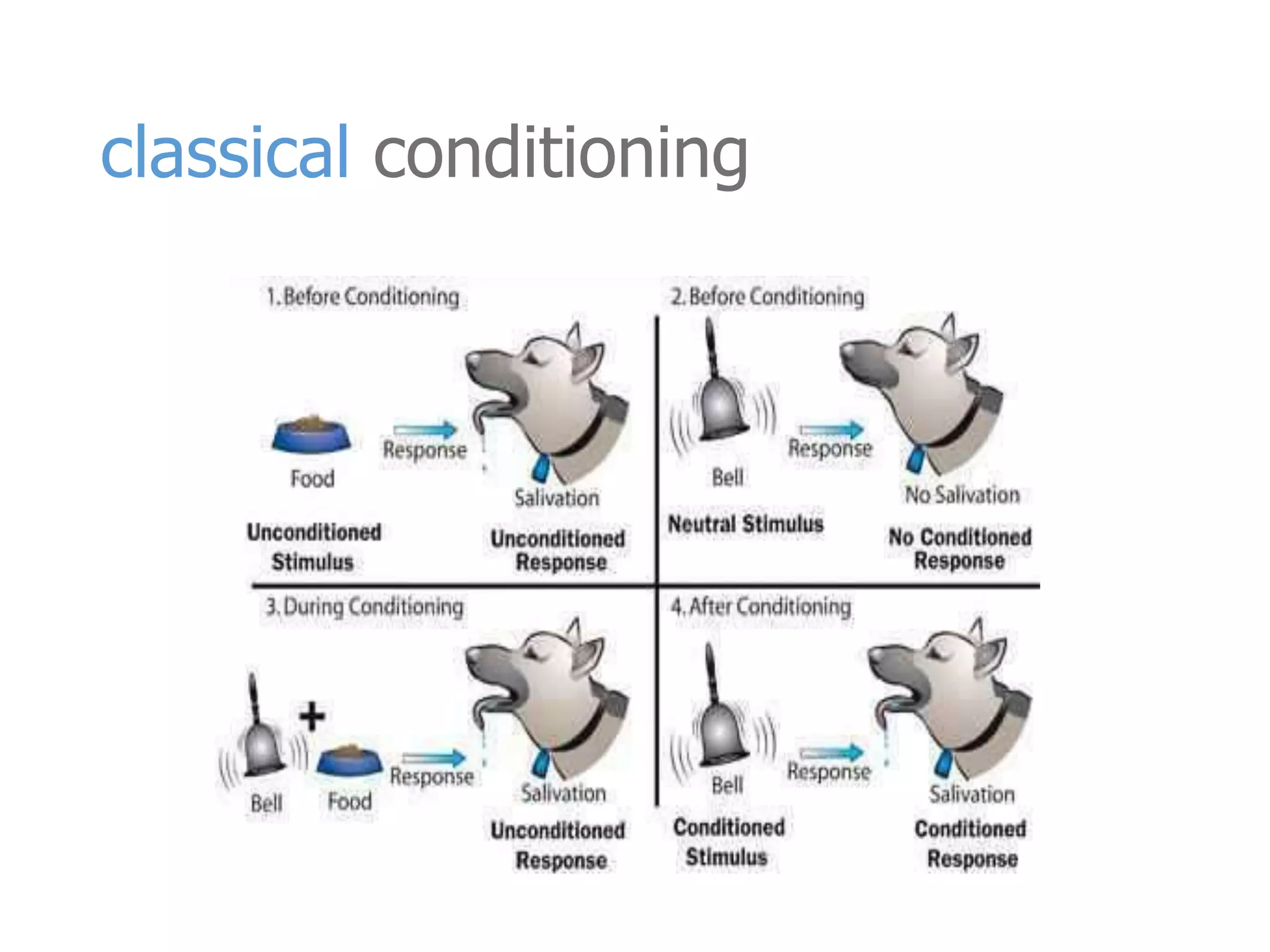
• a conditioned stimulus + An unconditioned 
stimulus 
• two stimulus are paired and become associated 
with each other.
classical conditioning 
• unconditioned Stimulus (UCS) 
• unconditioned Response (UCR) 
• conditioned Stimulus (CS) 
• conditioned Response (CR)
classical conditioning
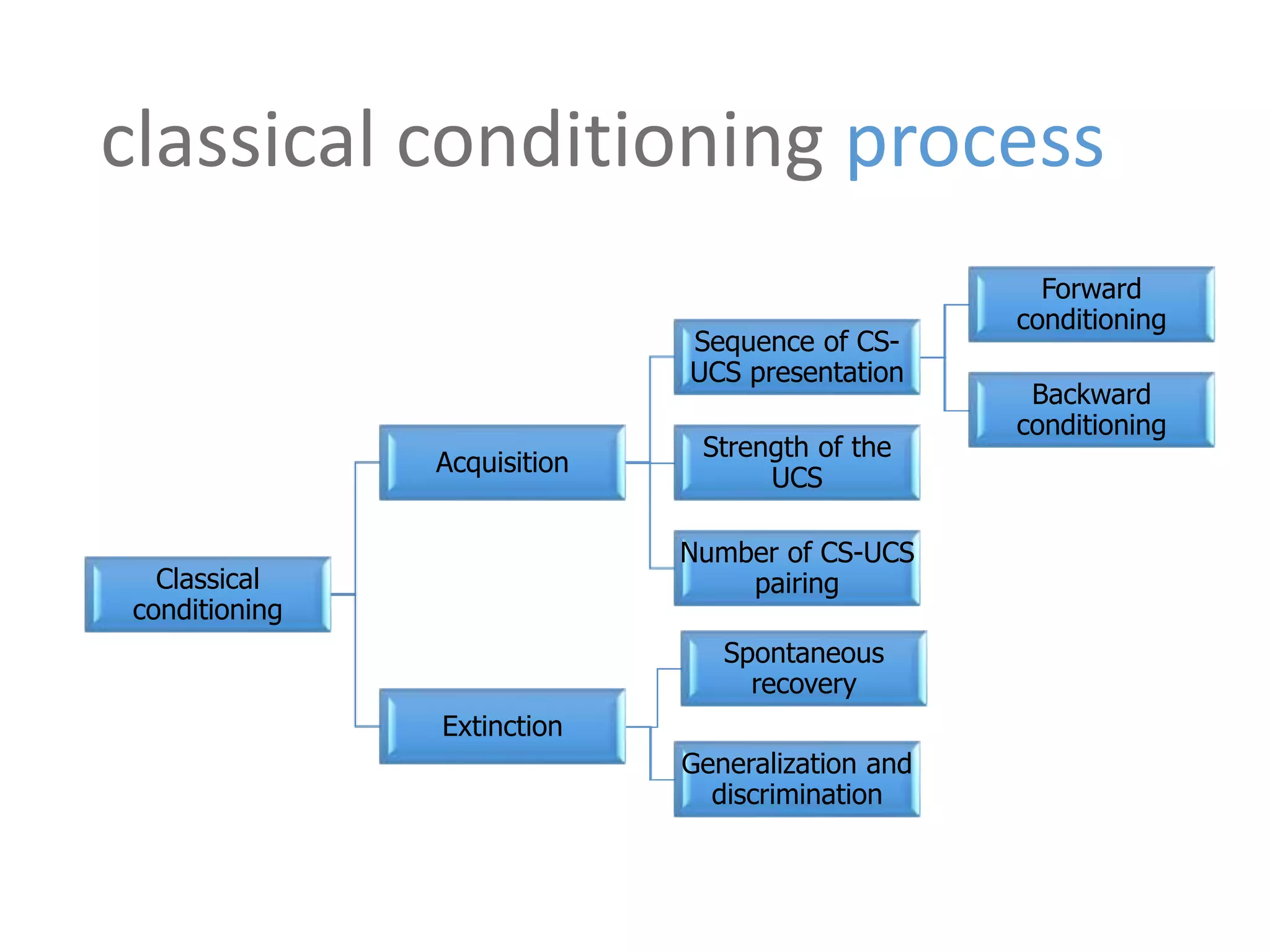
classical conditioning process 
Classical 
conditioning 
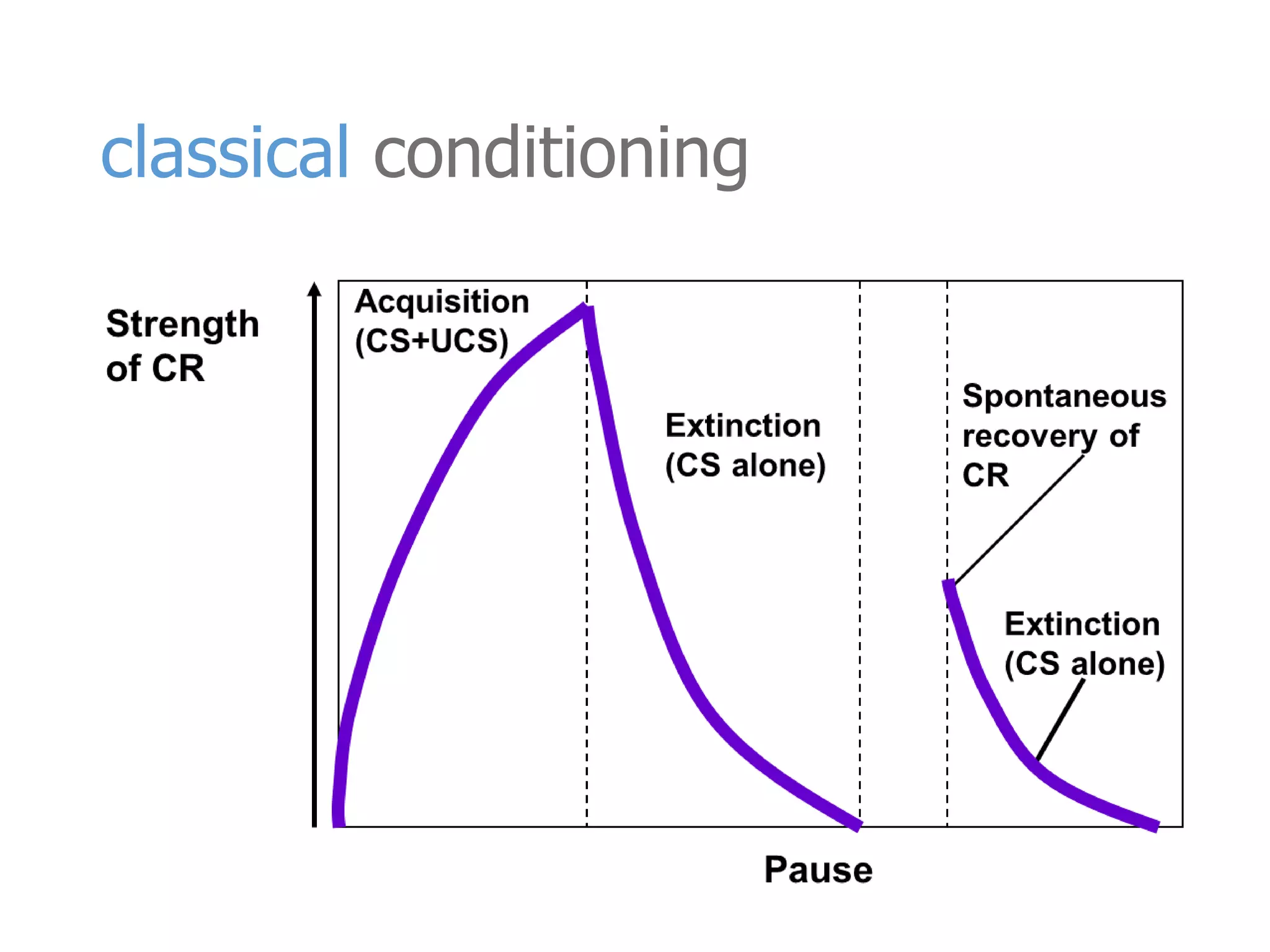
Acquisition 
Sequence of CS-UCS 
presentation 
Forward 
conditioning 
Backward 
conditioning 
Strength of the 
UCS 
Number of CS-UCS 
pairing 
Extinction 
Spontaneous 
recovery 
Generalization and 
discrimination
classical conditioning
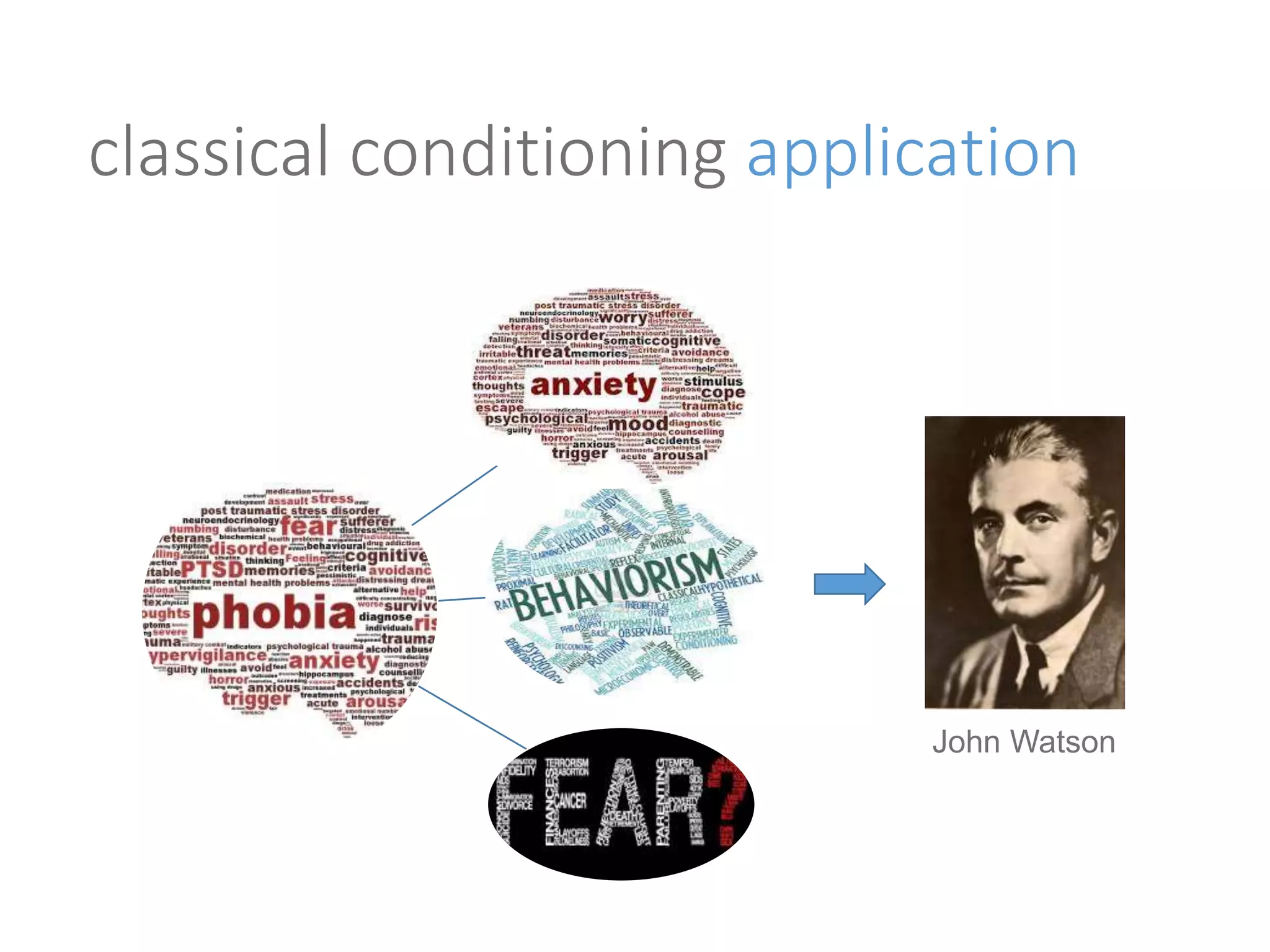
classical conditioning application 
John Watson
`
classical conditioning and our motives
operant conditioning 
(instrumental conditioning) 
an organism operates on its environment to produce a change (Leahey & Harris, 2001). 
• reinforcers. 
• schedules of reinforcers.
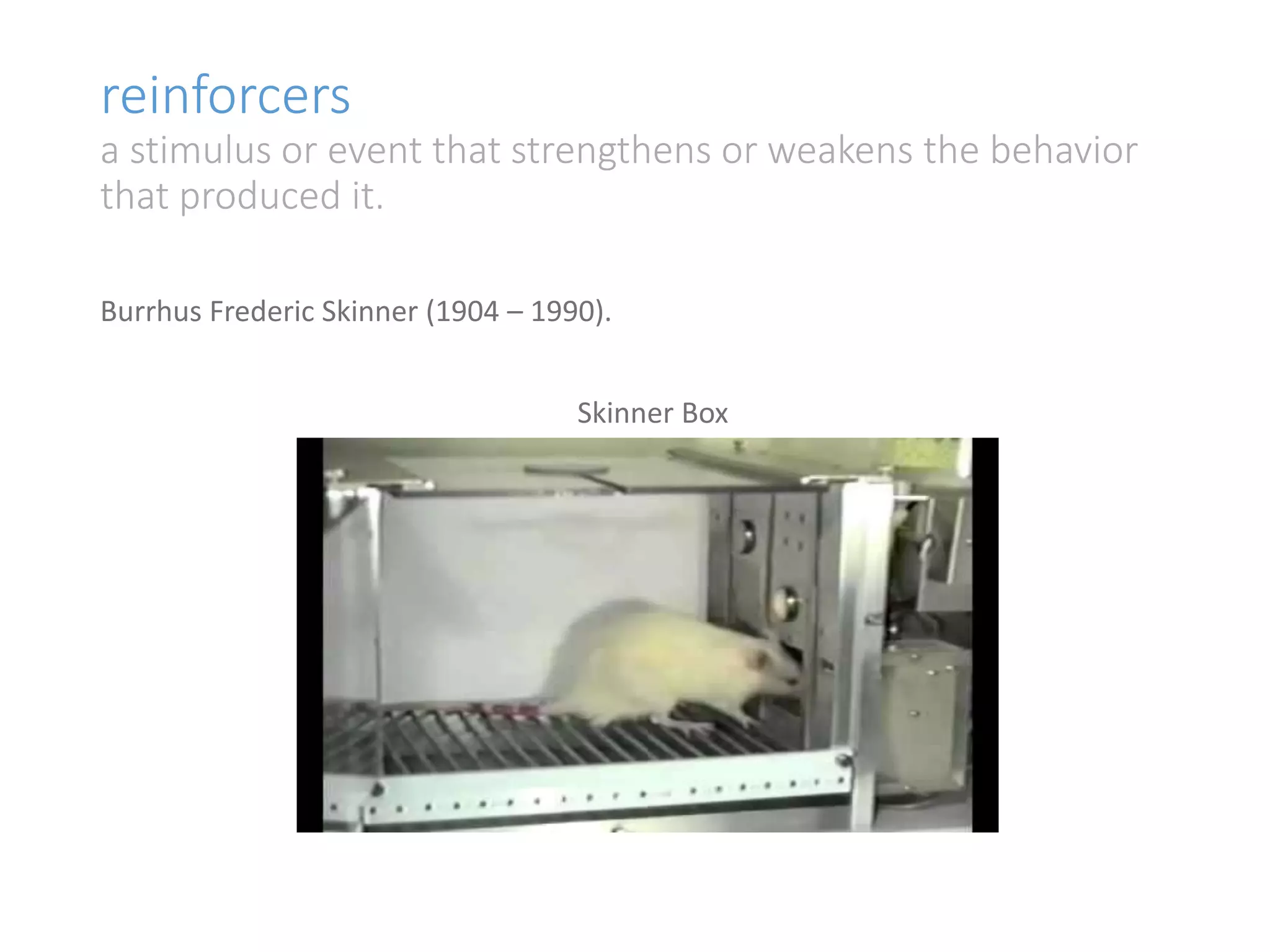
reinforcers 
a stimulus or event that strengthens or weakens the behavior 
that produced it. 
Burrhus Frederic Skinner (1904 – 1990). 
Skinner Box
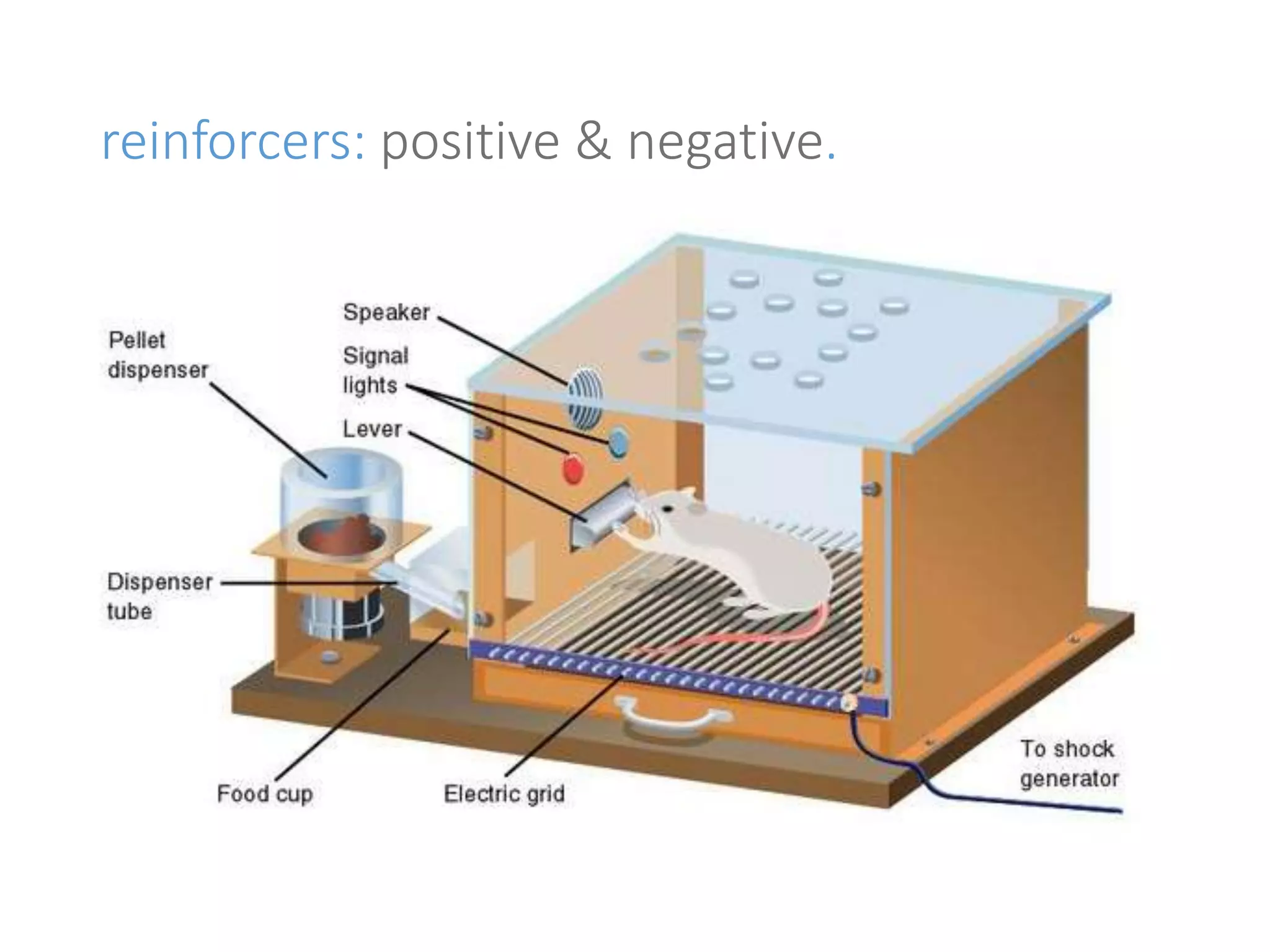
reinforcers: positive & negative. 
positive reinforcer: 
• presented after target response. 
• increase the ability the response 
will occur again. 
negative reinforcer: 
• removed after target response. 
• increase the likelihood that the 
response will occur again.
schedules of reinforcers 
show the rate of responding in a series of operant 
conditioning trials. 
• continuous reinforcement: given a reinforcement after each 
target response occurs. 
• intermittent reinforcement (partial reinforcement): with two main 
types ratio and interval.
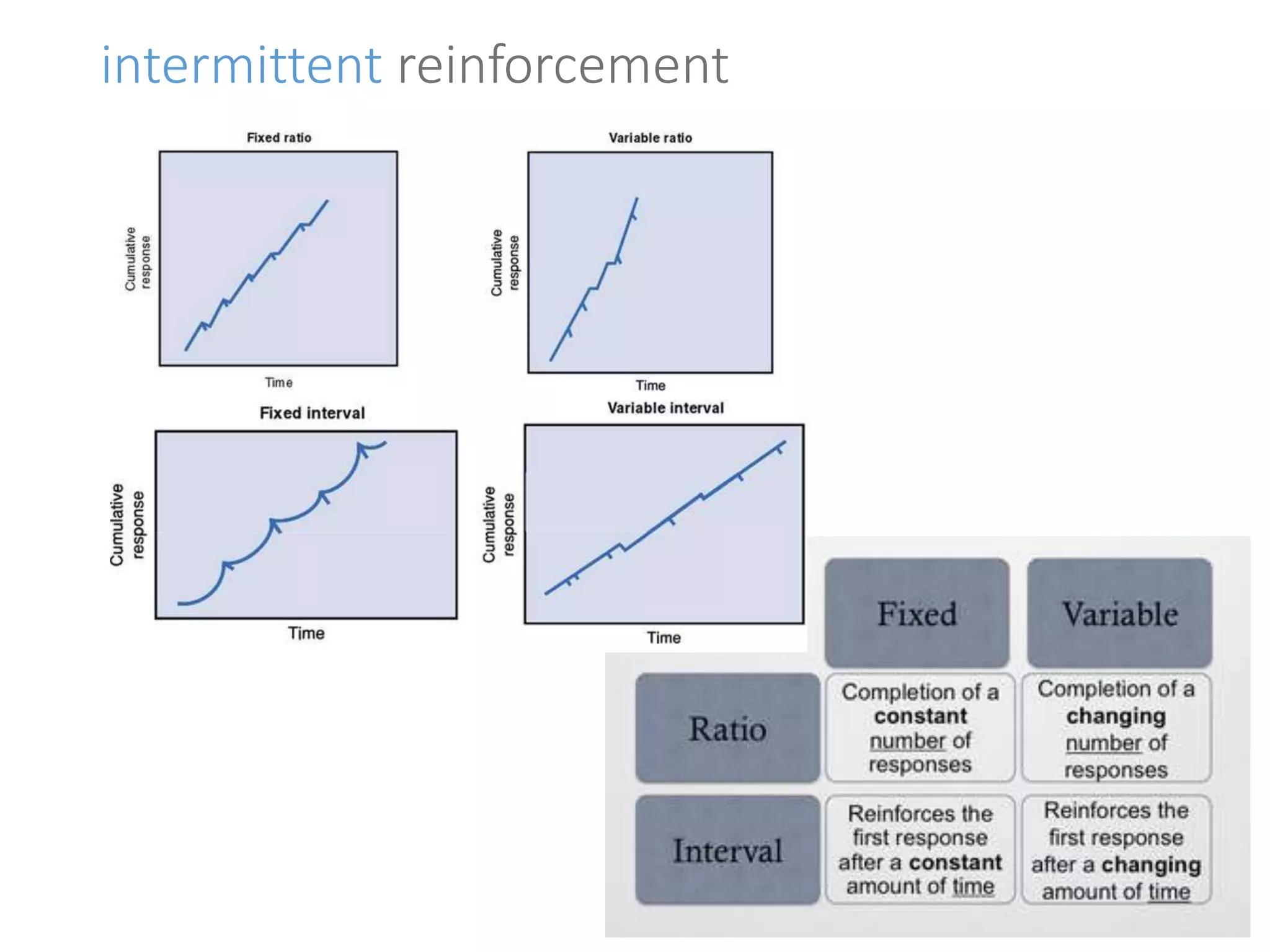
intermittent reinforcement
schedules of reinforcers 
show the rate of responding in a series of operant 
conditioning trials. 
• continuous reinforcement will result in fast acquisition, but it is more 
susceptible to extinction. 
• intermittent reinforcement will result in slower acquisition, but is 
more resistant to extinction. 
Variable Ratio schedules tend to produce 
the highest rates of responding.
punishment: 
the opposite of reinforcement. 
less effective than positive reinforcement
cognitive and social 
perceptives on learning 
• the role of cognition. 
• observational learning.
the role of cognition 
• insight learning: sudden grasp of a concept or the solution to 
a problem that result from perceptual restructuring; typically 
characterized by an immediate change in behavior. 
• latent learning: learning that has occurred but is not 
demonstrated.
observational learning 
(modeling)
thank you.

Psychology Learning

  • 1.
    learning Group 2: • Ta Quang Tuyen – BABAAU12057 • Le Thi Kieu Oanh – BAFNIU13209
  • 2.
    which is learned? do you have drooling when you taste lemon?
  • 3.
    a relatively permanentchange in behavior or the potential to make a response that occurs as a results of experience
  • 4.
    classical conditioning •a conditioned stimulus + An unconditioned stimulus • two stimulus are paired and become associated with each other.
  • 5.
    classical conditioning •unconditioned Stimulus (UCS) • unconditioned Response (UCR) • conditioned Stimulus (CS) • conditioned Response (CR)
  • 6.
  • 7.
    classical conditioning process Classical conditioning Acquisition Sequence of CS-UCS presentation Forward conditioning Backward conditioning Strength of the UCS Number of CS-UCS pairing Extinction Spontaneous recovery Generalization and discrimination
  • 8.
  • 9.
  • 10.
  • 11.
  • 12.
    operant conditioning (instrumentalconditioning) an organism operates on its environment to produce a change (Leahey & Harris, 2001). • reinforcers. • schedules of reinforcers.
  • 13.
    reinforcers a stimulusor event that strengthens or weakens the behavior that produced it. Burrhus Frederic Skinner (1904 – 1990). Skinner Box
  • 14.
    reinforcers: positive &negative. positive reinforcer: • presented after target response. • increase the ability the response will occur again. negative reinforcer: • removed after target response. • increase the likelihood that the response will occur again.
  • 15.
    schedules of reinforcers show the rate of responding in a series of operant conditioning trials. • continuous reinforcement: given a reinforcement after each target response occurs. • intermittent reinforcement (partial reinforcement): with two main types ratio and interval.
  • 16.
  • 17.
    schedules of reinforcers show the rate of responding in a series of operant conditioning trials. • continuous reinforcement will result in fast acquisition, but it is more susceptible to extinction. • intermittent reinforcement will result in slower acquisition, but is more resistant to extinction. Variable Ratio schedules tend to produce the highest rates of responding.
  • 18.
    punishment: the oppositeof reinforcement. less effective than positive reinforcement
  • 19.
    cognitive and social perceptives on learning • the role of cognition. • observational learning.
  • 20.
    the role ofcognition • insight learning: sudden grasp of a concept or the solution to a problem that result from perceptual restructuring; typically characterized by an immediate change in behavior. • latent learning: learning that has occurred but is not demonstrated.
  • 21.
  • 22.

Editor's Notes

  • #11 https://www.youtube.com/watch?v=DcIGIxgWwu8
  • #14 Skinner is regarded as the father of Operant Conditioning.
  • #15 Positive reinforcers: food, water, money, and praise that are presented after target response. Negative reinforcers: rates of detection and punishment are very low, cheating rates may be very high. Listen to music to remove boredom.
  • #17 FR: rapid responding, short pauses, higher ratios generate higher response rates. VR: high, steady rate without pauses, higher ratios generate higher response rates. FI: long pause after reinforcements yields “scalloping” effect, shorter intervals generate higher rates overall. VI: low, steady rate without pauses, shorter intervals generate higher rates overall.