Proxemics

Cinematography and Social
       Psychology
• A popular psychologist, Edward T Hall, has
  written a couple of books, “The Hidden
  Dimension’ and ‘The Silent Language’ on what
  he calls a theory of proxemic’s.
• It purports to be a study of how peoples
  behaviour are affected by the physical
  distances between them.
• Hall suggests that these can be divided into
  four categories: Intimate Distance, Personal
  Distance, Social Distance and
  Impersonal/Remote Distance.
• The camera always takes what could be
  construed as a psychological attitude to what
  it is filming, an attitude that directly affects
  the story being told.
• By using different shot sizes and placement of
  camera, a director is able to make a clear
  statement about his thoughts and feelings
  concerning the story’s characters and the
  situations they find themselves in, thoughts
  and feelings concerning
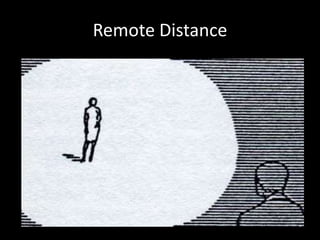
Remote Distance
Remote Distance

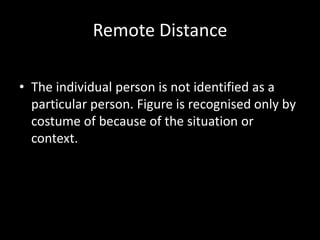
• The individual person is not identified as a
  particular person. Figure is recognised only by
  costume of because of the situation or
  context.
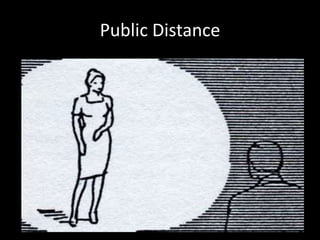
Public Distance
Public Distance

• This distance will be maintained by people
  who have to establish a ‘public status’, who
  are ‘unapproachable’ as individuals
Social Distance
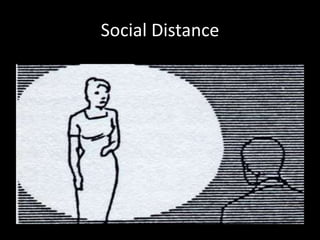
• At fifteen feet to ten feet, deportment and
  dress are on display. In a social environment
  manners are likely to be self-conscious
Social Distance
Social Distance

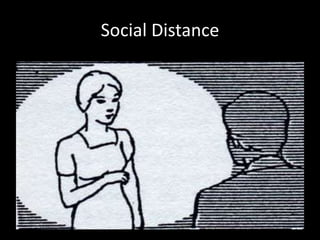
• Speech and gesture are apt to be fairly
  deliberate, formal and still a little ‘projected’ if
  in the presence of a group of people.
Personal Distance
Personal Distance
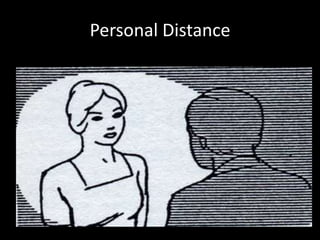
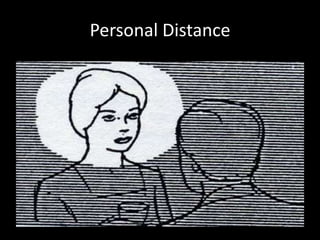
• Reserved for close acquaintances or friends. A
  stranger who invades this ‘ Private Space” may
  be regarded as an intruder.
Personal Distance
Personal Distance
• Closer still implies that the relationship is
  ‘one-on-one’. The presence of others is
  ignored. Speech will be impromptu and the
  communication more ‘non-verbal’.
Intimate Distance
Intimate Distance

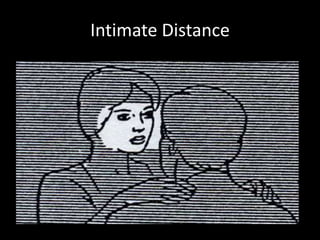
• Physical involvement. Acceptable in public if
  participants are ‘family’. It does imply
  exclusion of others, normally demands some
  degree of privacy.

Proxemics 2

  • 1.
  • 2.
    • A popularpsychologist, Edward T Hall, has written a couple of books, “The Hidden Dimension’ and ‘The Silent Language’ on what he calls a theory of proxemic’s. • It purports to be a study of how peoples behaviour are affected by the physical distances between them.
  • 3.
    • Hall suggeststhat these can be divided into four categories: Intimate Distance, Personal Distance, Social Distance and Impersonal/Remote Distance.
  • 4.
    • The cameraalways takes what could be construed as a psychological attitude to what it is filming, an attitude that directly affects the story being told.
  • 5.
    • By usingdifferent shot sizes and placement of camera, a director is able to make a clear statement about his thoughts and feelings concerning the story’s characters and the situations they find themselves in, thoughts and feelings concerning
  • 6.
  • 7.
    Remote Distance • Theindividual person is not identified as a particular person. Figure is recognised only by costume of because of the situation or context.
  • 8.
  • 9.
    Public Distance • Thisdistance will be maintained by people who have to establish a ‘public status’, who are ‘unapproachable’ as individuals
  • 10.
  • 11.
    • At fifteenfeet to ten feet, deportment and dress are on display. In a social environment manners are likely to be self-conscious
  • 12.
  • 13.
    Social Distance • Speechand gesture are apt to be fairly deliberate, formal and still a little ‘projected’ if in the presence of a group of people.
  • 14.
  • 15.
    Personal Distance • Reservedfor close acquaintances or friends. A stranger who invades this ‘ Private Space” may be regarded as an intruder.
  • 16.
  • 17.
    Personal Distance • Closerstill implies that the relationship is ‘one-on-one’. The presence of others is ignored. Speech will be impromptu and the communication more ‘non-verbal’.
  • 18.
  • 19.
    Intimate Distance • Physicalinvolvement. Acceptable in public if participants are ‘family’. It does imply exclusion of others, normally demands some degree of privacy.