Eye-lines and the Camera

   Practical Cinematography
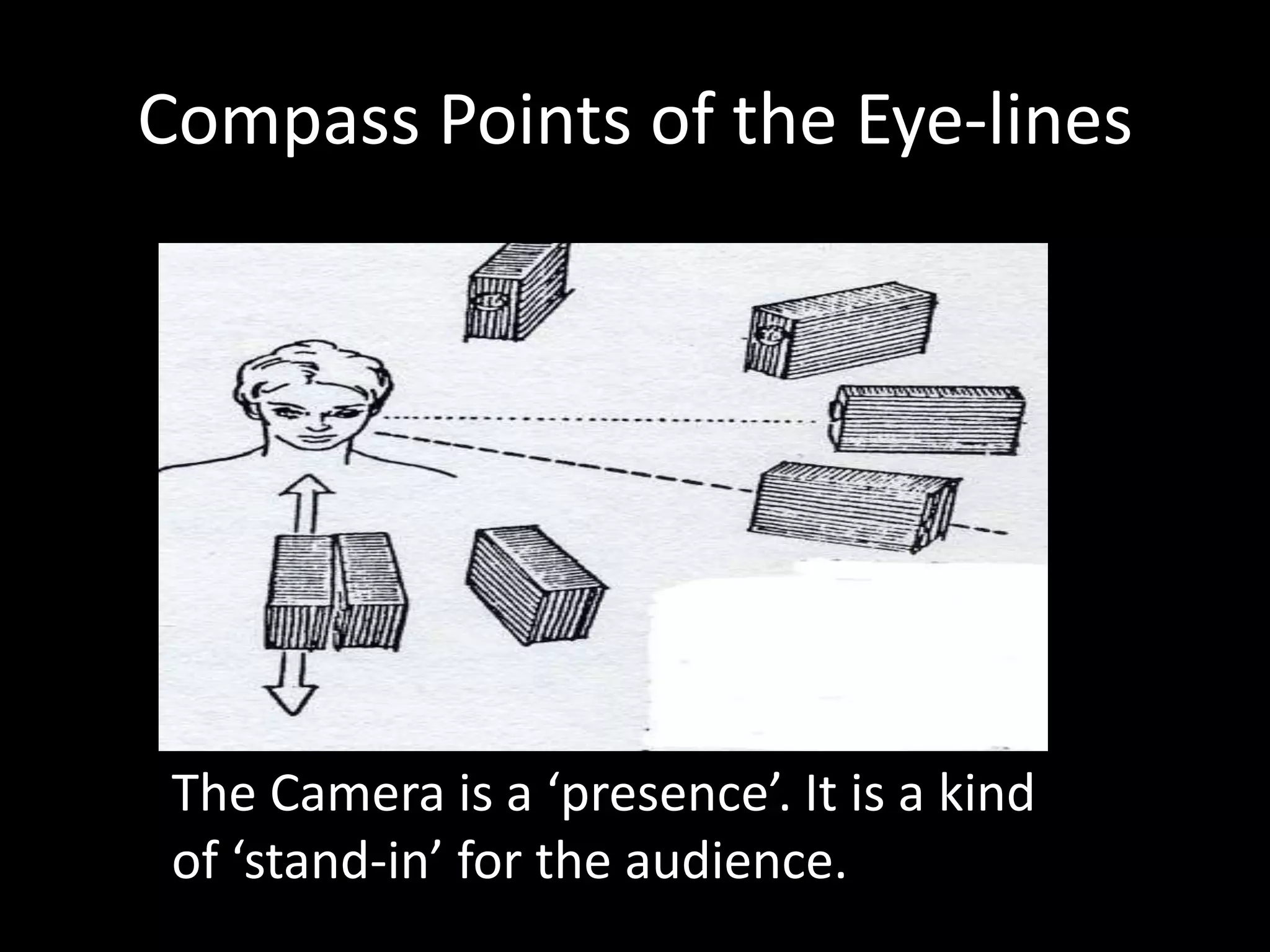
Compass Points of the Eye-lines


 The Camera is a ‘presence’. It is a kind
 of ‘stand-in’ for the audience.
• The eye-line is a measure of our feeling of
  empathy with a character. The more the
  camera angle, the greater our sense of
  subjective involvement.
• Interactions shot in semi-profile are relatively
  objective. We, the audience, remain outside
  and relatively neutral observers.
• With the three-quarter eye-line, close to
  camera, tension is at its maximum.

• It is common practice, as a scene builds in
  dramatic tension, to use eye-lines closer to
  the camera.
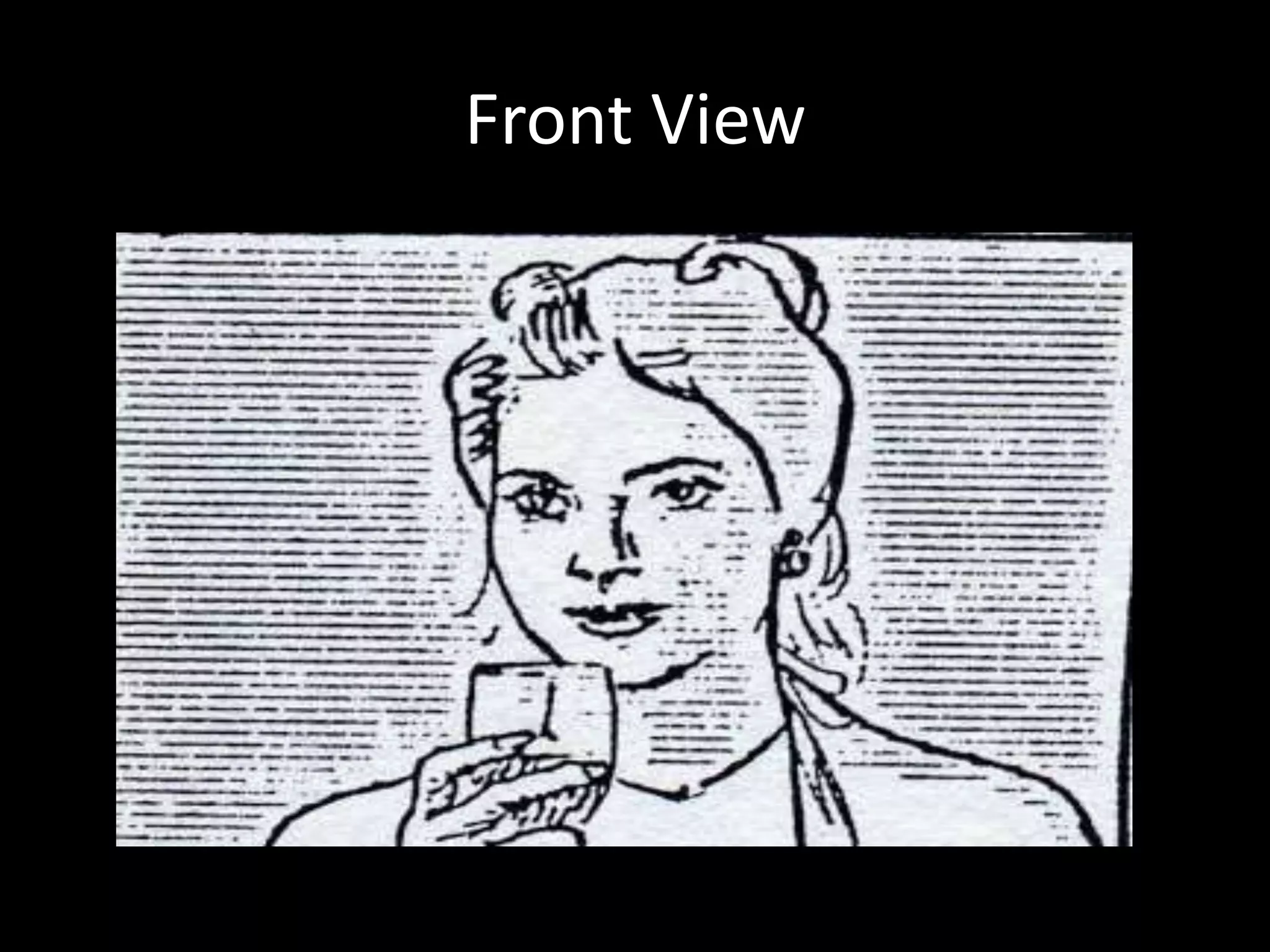
Front View
Front View
• Eye-line narrow to the lens. In a close shot this
  is commonly the image that a director uses for
  the full impact of personality. Our sense of
  empathy with the character is strong.
Three Quarter View
Three Quarter View
• Eye-line is wider. The impression of empathy is
  not quite so strong. But we still see the
  thoughts and feelings and, depending on the
  context, will ‘identify’ with her.
Side View
Side View

• Eye-line is now very wide and we can see only
  a little of the the eye that is furthest from
  camera. We now seem to be looking at the
  character. It’s a more ‘objective’ shot.
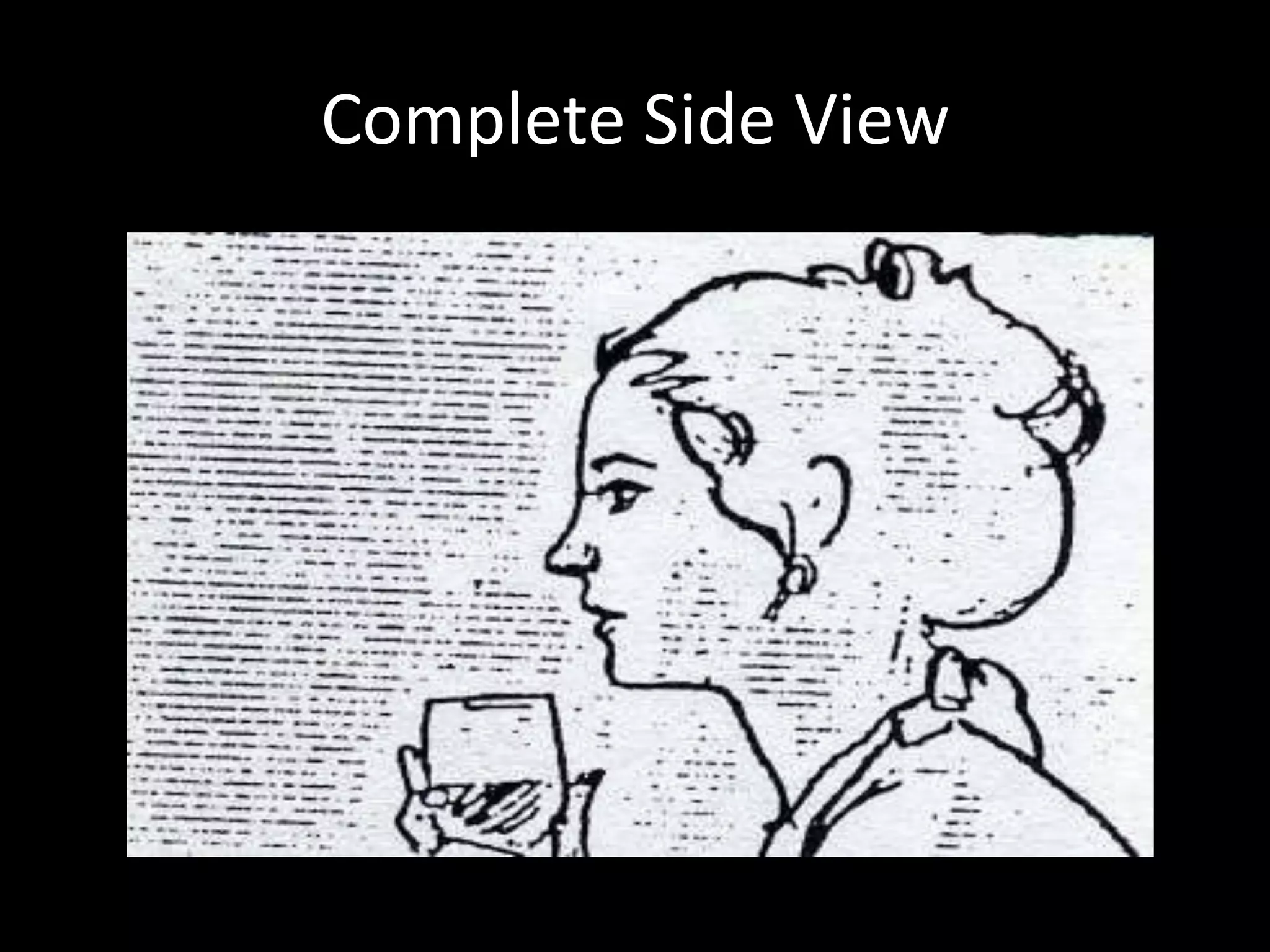
Complete Side View
Complete Side View
• As soon as we can see only one eye the shot
  becomes much more impersonal. Camera
  feels like an onlooker. We may or may not feel
  empathy, but we are likely to feel empathy,
  but we are likely a degree of objectivity, a
  distance.
Semi Back View
Semi Back View
• If we can see enough of the curve of the cheek
  and eye to recognise what expression there
  might be on the face that is turned away, we
  may still get some sense of personality. But it
  is likely to feel like a point of view angle.
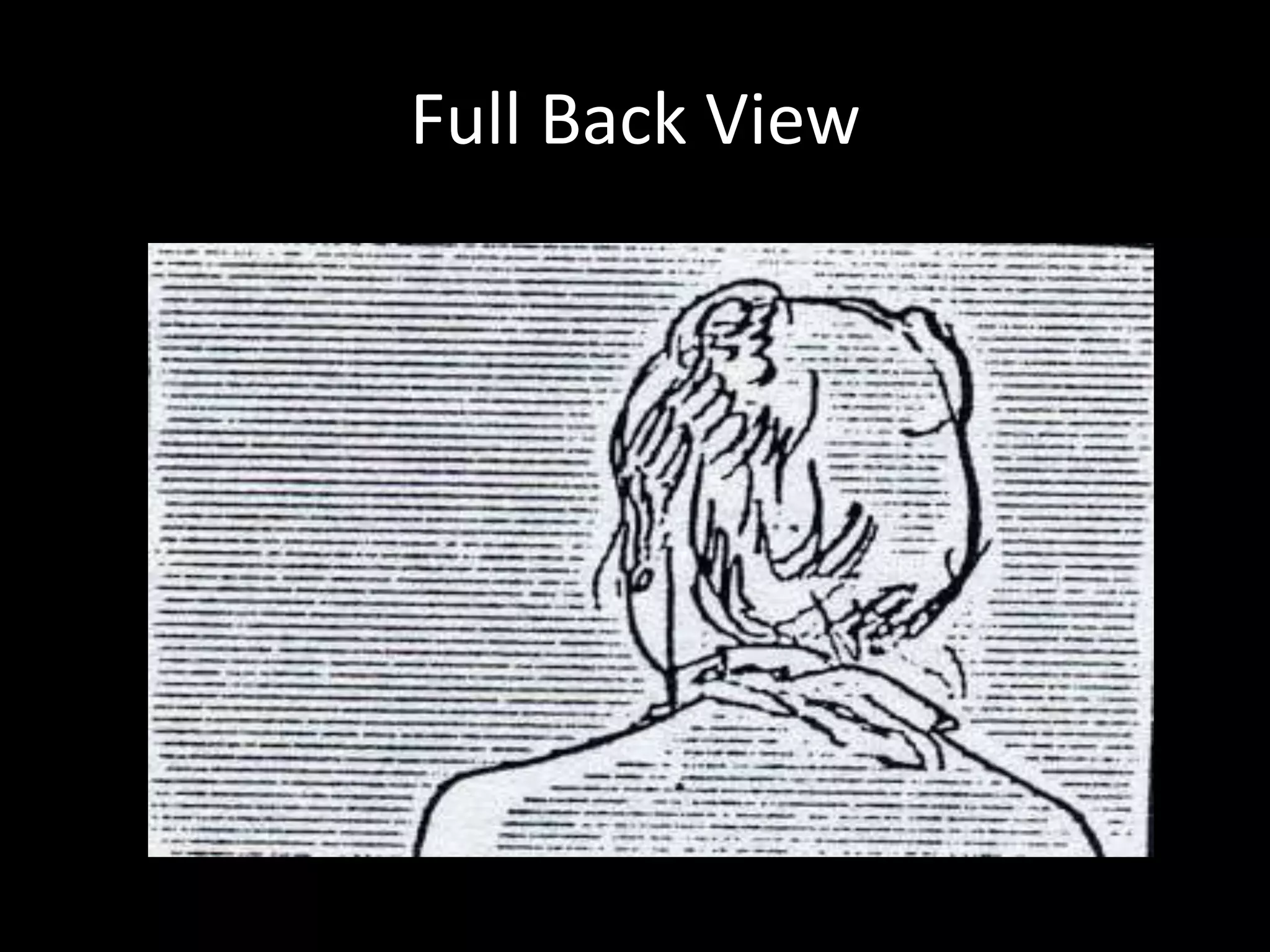
Full Back View
Full Back View

• Nothing of the face can be seen. Because all
  expression is left to our imaginations,
  paradoxically, a back-view can sometimes be
  used –in certain contexts – to produce a very
  strong sense of empathy.
Eye-lines and the Camera
• In matching what is important is the eyes, not
  the face.
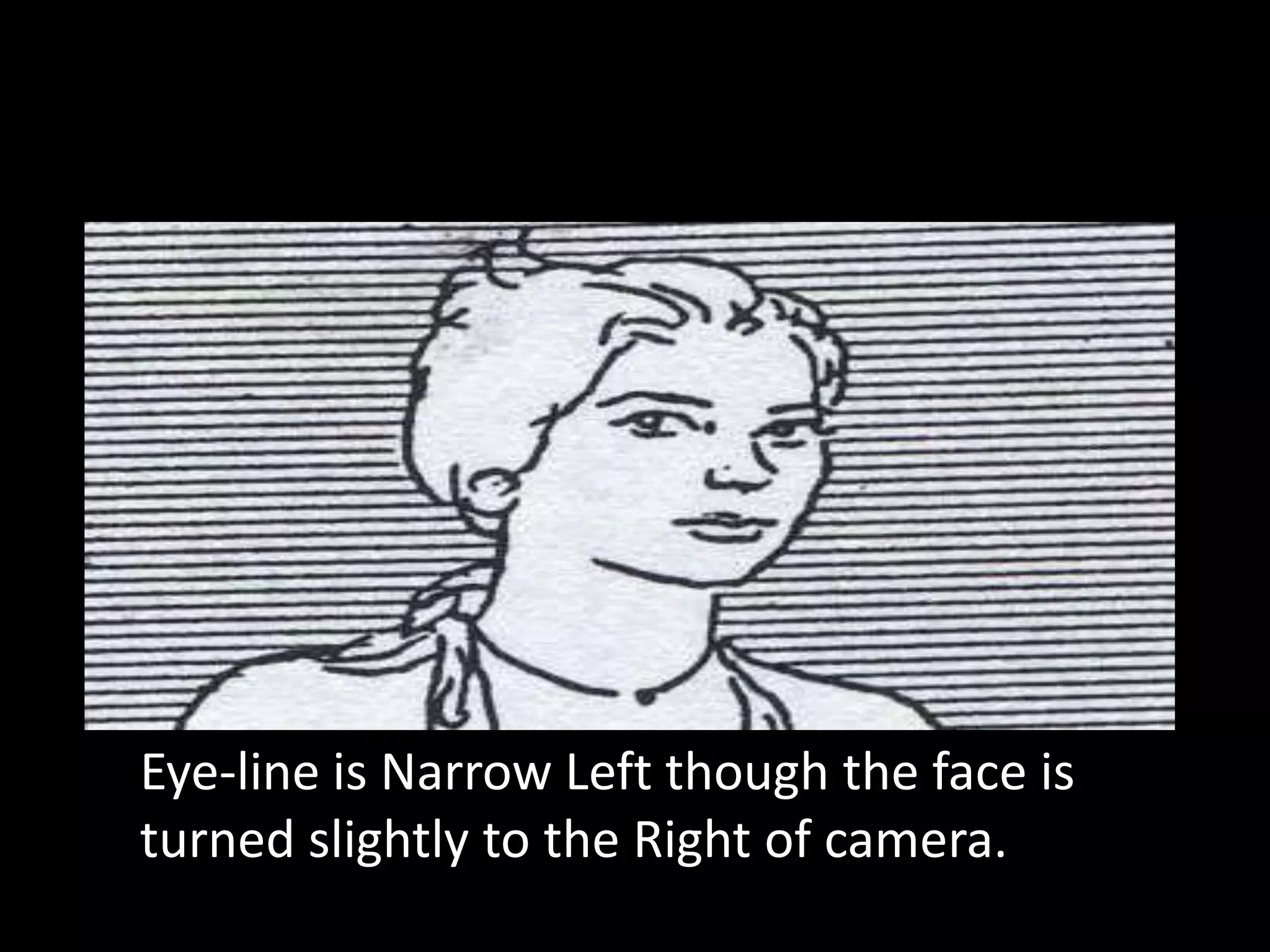
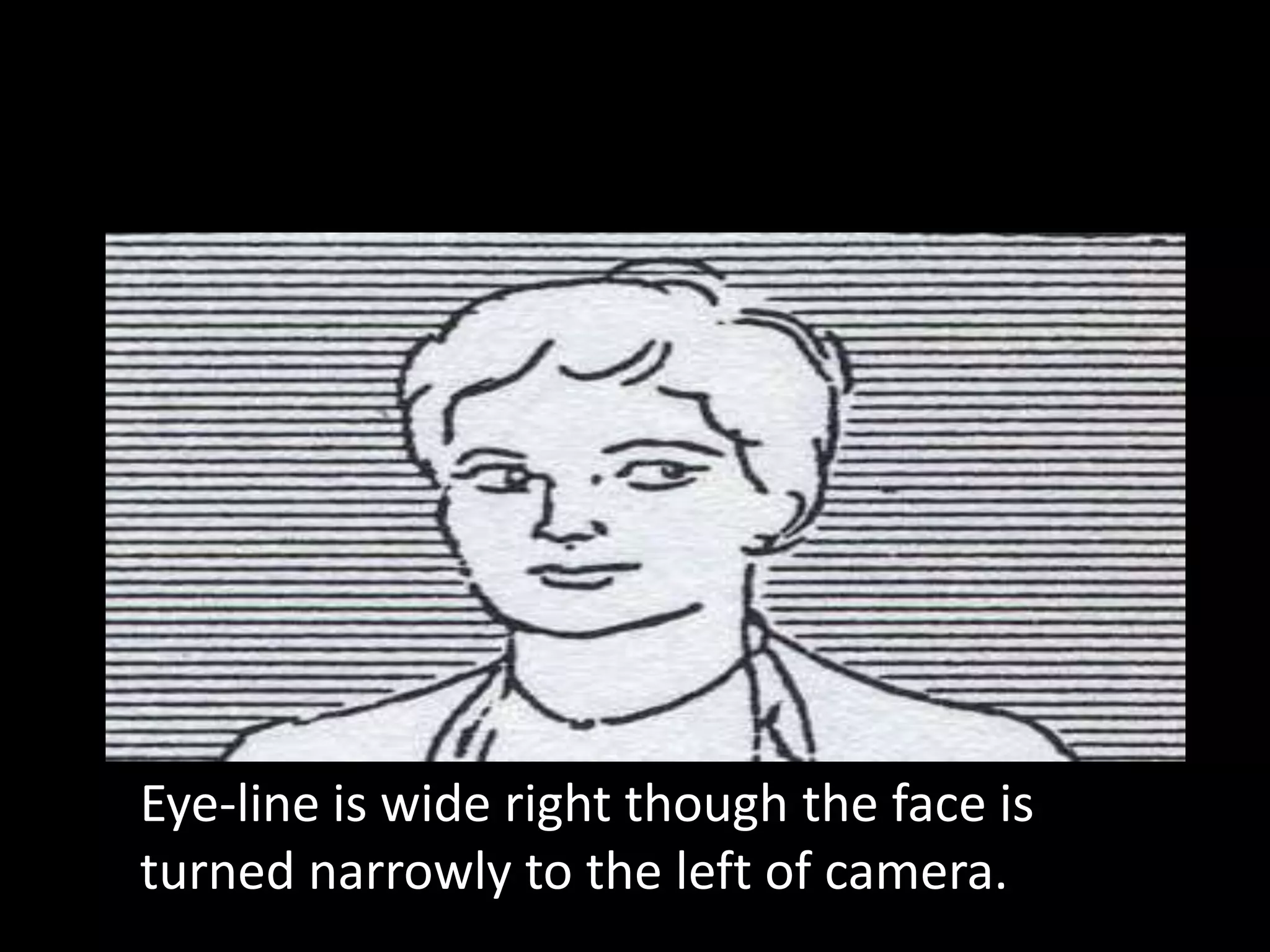
• Notice that when the eye-line is not in the
  same direction as the face, there is apt to be a
  suggestion of slyness in the expression.
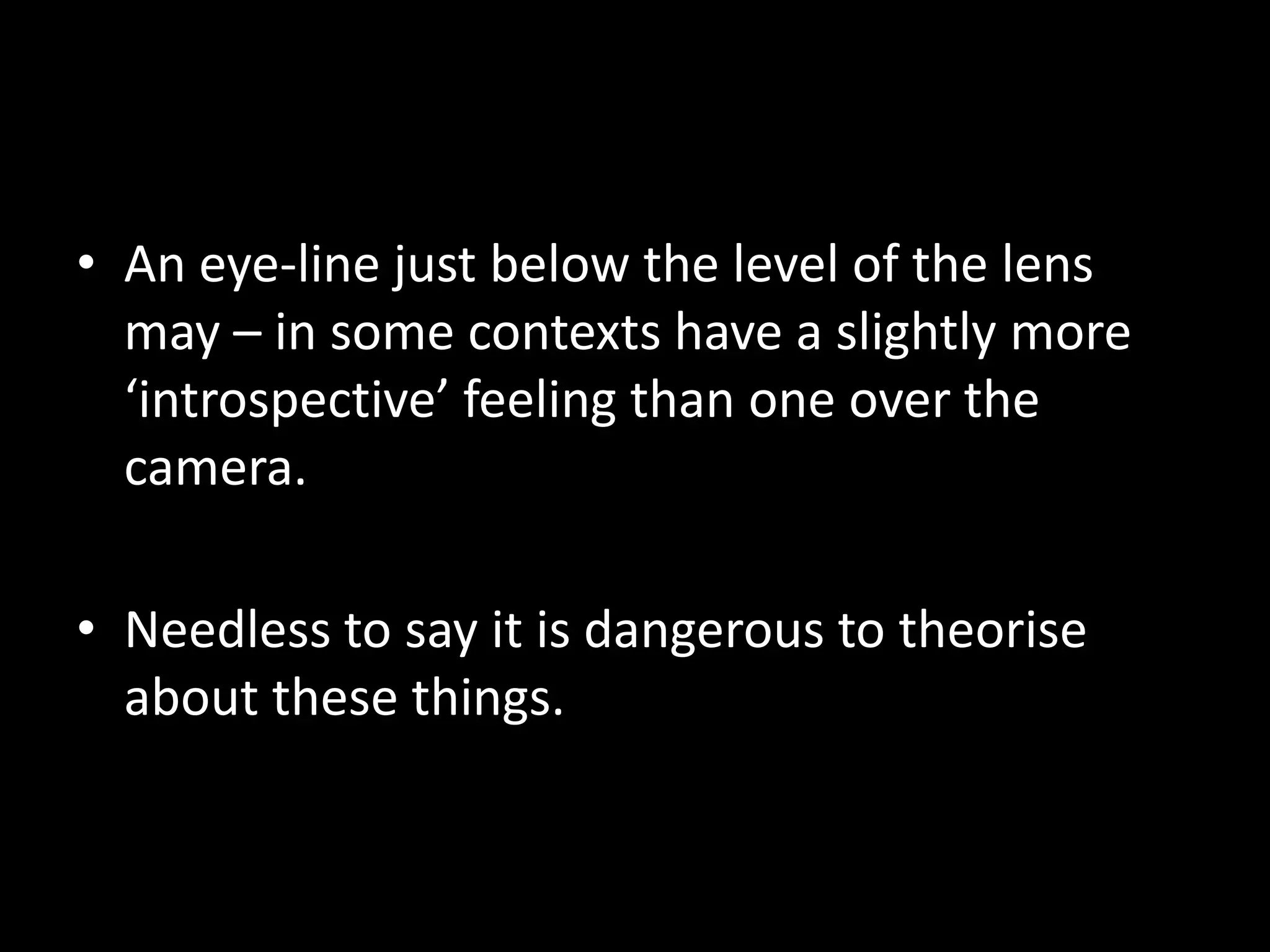
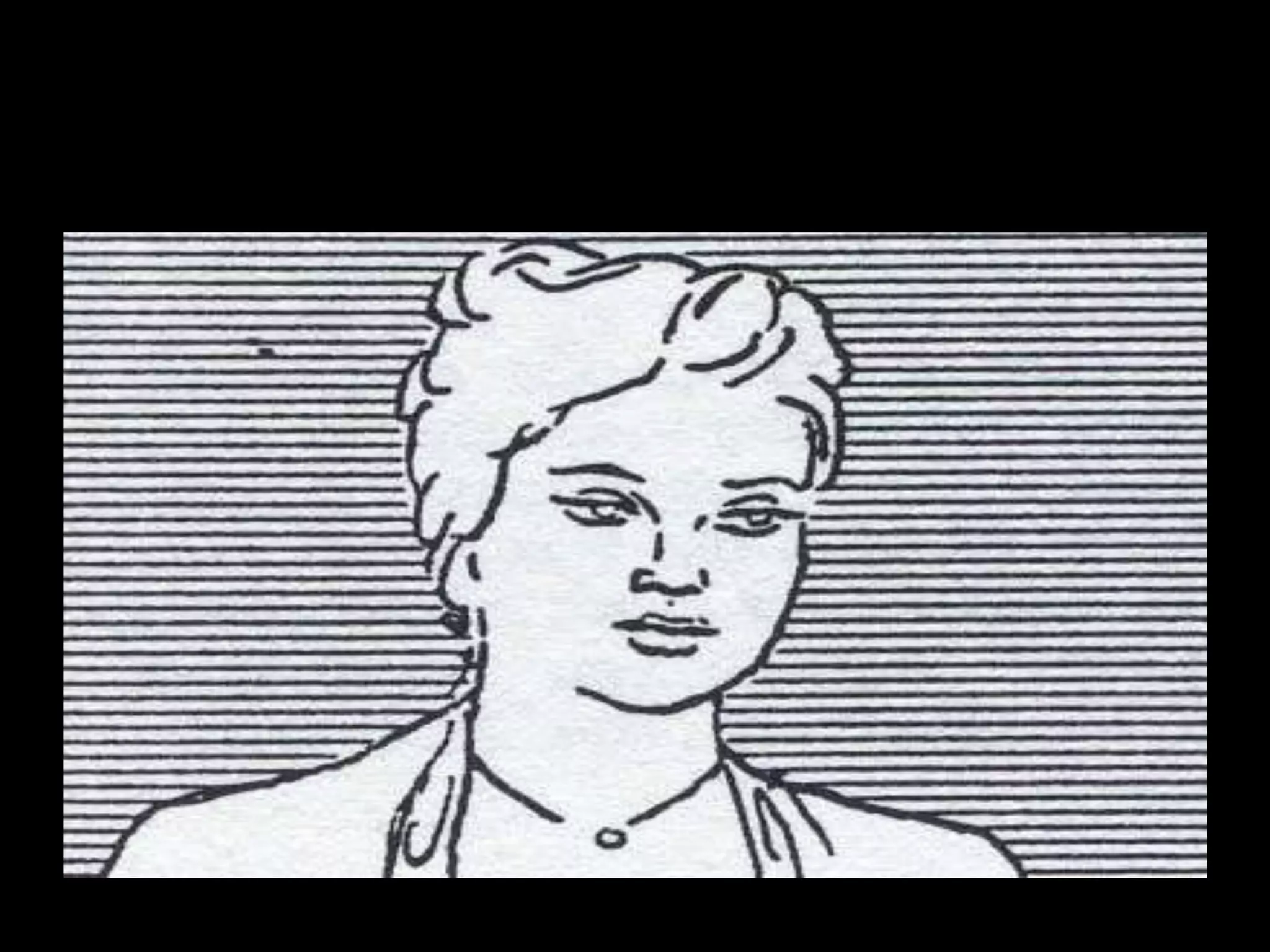
• An eye-line just below the level of the lens
  may – in some contexts have a slightly more
  ‘introspective’ feeling than one over the
  camera.

• Needless to say it is dangerous to theorise
  about these things.
Eye-line


Eye-line is narrowly to left though the face
is turned to the right of camera.
Eye-line is Narrow Left though the face is
turned slightly to the Right of camera.
Eye-line is Narrowly Right though face is
turned towards the left of camera.
Eye-line is wide right though the face is
turned narrowly to the left of camera.
• When the eye-line is well above the level of
  the lens, the off-screen look will sometimes –
  in some situations – imply a feeling of awe or
  admiration, literally of ‘looking up to ’ the off-
  screen person or situation.
• Conversely, when the eye-line is underneath
  the lens, a close-up may have a sense of more
  ‘interior’ and private thought or feeling. It is
  we ( the camera) who are looking for what is
  ‘behind the eyes’.

Eyeline

  • 1.
    Eye-lines and theCamera Practical Cinematography
  • 2.
    Compass Points ofthe Eye-lines The Camera is a ‘presence’. It is a kind of ‘stand-in’ for the audience.
  • 3.
    • The eye-lineis a measure of our feeling of empathy with a character. The more the camera angle, the greater our sense of subjective involvement. • Interactions shot in semi-profile are relatively objective. We, the audience, remain outside and relatively neutral observers.
  • 4.
    • With thethree-quarter eye-line, close to camera, tension is at its maximum. • It is common practice, as a scene builds in dramatic tension, to use eye-lines closer to the camera.
  • 5.
  • 6.
    Front View • Eye-linenarrow to the lens. In a close shot this is commonly the image that a director uses for the full impact of personality. Our sense of empathy with the character is strong.
  • 7.
  • 8.
    Three Quarter View •Eye-line is wider. The impression of empathy is not quite so strong. But we still see the thoughts and feelings and, depending on the context, will ‘identify’ with her.
  • 9.
  • 10.
    Side View • Eye-lineis now very wide and we can see only a little of the the eye that is furthest from camera. We now seem to be looking at the character. It’s a more ‘objective’ shot.
  • 11.
  • 12.
    Complete Side View •As soon as we can see only one eye the shot becomes much more impersonal. Camera feels like an onlooker. We may or may not feel empathy, but we are likely to feel empathy, but we are likely a degree of objectivity, a distance.
  • 13.
  • 14.
    Semi Back View •If we can see enough of the curve of the cheek and eye to recognise what expression there might be on the face that is turned away, we may still get some sense of personality. But it is likely to feel like a point of view angle.
  • 15.
  • 16.
    Full Back View •Nothing of the face can be seen. Because all expression is left to our imaginations, paradoxically, a back-view can sometimes be used –in certain contexts – to produce a very strong sense of empathy.
  • 17.
    Eye-lines and theCamera • In matching what is important is the eyes, not the face. • Notice that when the eye-line is not in the same direction as the face, there is apt to be a suggestion of slyness in the expression.
  • 18.
    • An eye-linejust below the level of the lens may – in some contexts have a slightly more ‘introspective’ feeling than one over the camera. • Needless to say it is dangerous to theorise about these things.
  • 20.
    Eye-line Eye-line is narrowlyto left though the face is turned to the right of camera.
  • 21.
    Eye-line is NarrowLeft though the face is turned slightly to the Right of camera.
  • 22.
    Eye-line is NarrowlyRight though face is turned towards the left of camera.
  • 23.
    Eye-line is wideright though the face is turned narrowly to the left of camera.
  • 25.
    • When theeye-line is well above the level of the lens, the off-screen look will sometimes – in some situations – imply a feeling of awe or admiration, literally of ‘looking up to ’ the off- screen person or situation.
  • 27.
    • Conversely, whenthe eye-line is underneath the lens, a close-up may have a sense of more ‘interior’ and private thought or feeling. It is we ( the camera) who are looking for what is ‘behind the eyes’.