Impressionism
     and
Expressionism
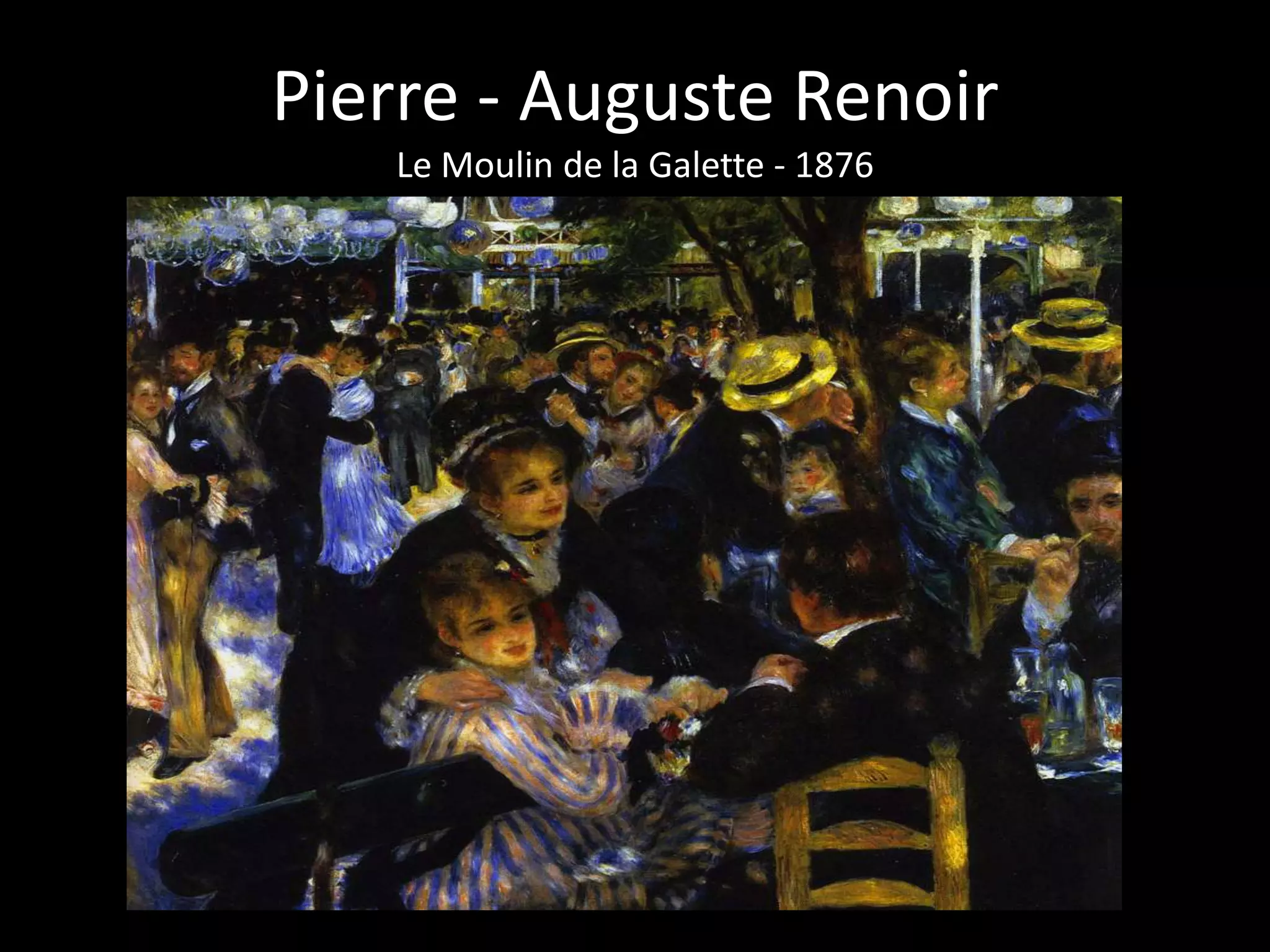
Pierre - Auguste Renoir
   Le Moulin de la Galette - 1876
• Impressionism was a 19th-century movement
  that began as a loose association of Paris-
  based artists whose independent exhibitions
  brought them to prominence in the 1870s and
  1880s.
• The name of the movement is derived from
  the title of a Claude Monet work, Impression,
  Sunrise (Impression, soleillevant), which
  provoked the critic Louis Leroy to coin the
  term in a satiric review published in Le
  Charivari.
• They also took the act of painting out of the
  studio and into the modern world. Previously,
  still life’s and portraits as well as landscapes
  had usually been painted indoors.
Pierre - Auguste Renoir
     La Grenouillere – 1869
Characteristics of Impressionist
                Paintings

• Radicals in their time, early Impressionists
  broke the rules of academic painting.

• They began by giving colours, freely brushed,
  primacy over line.
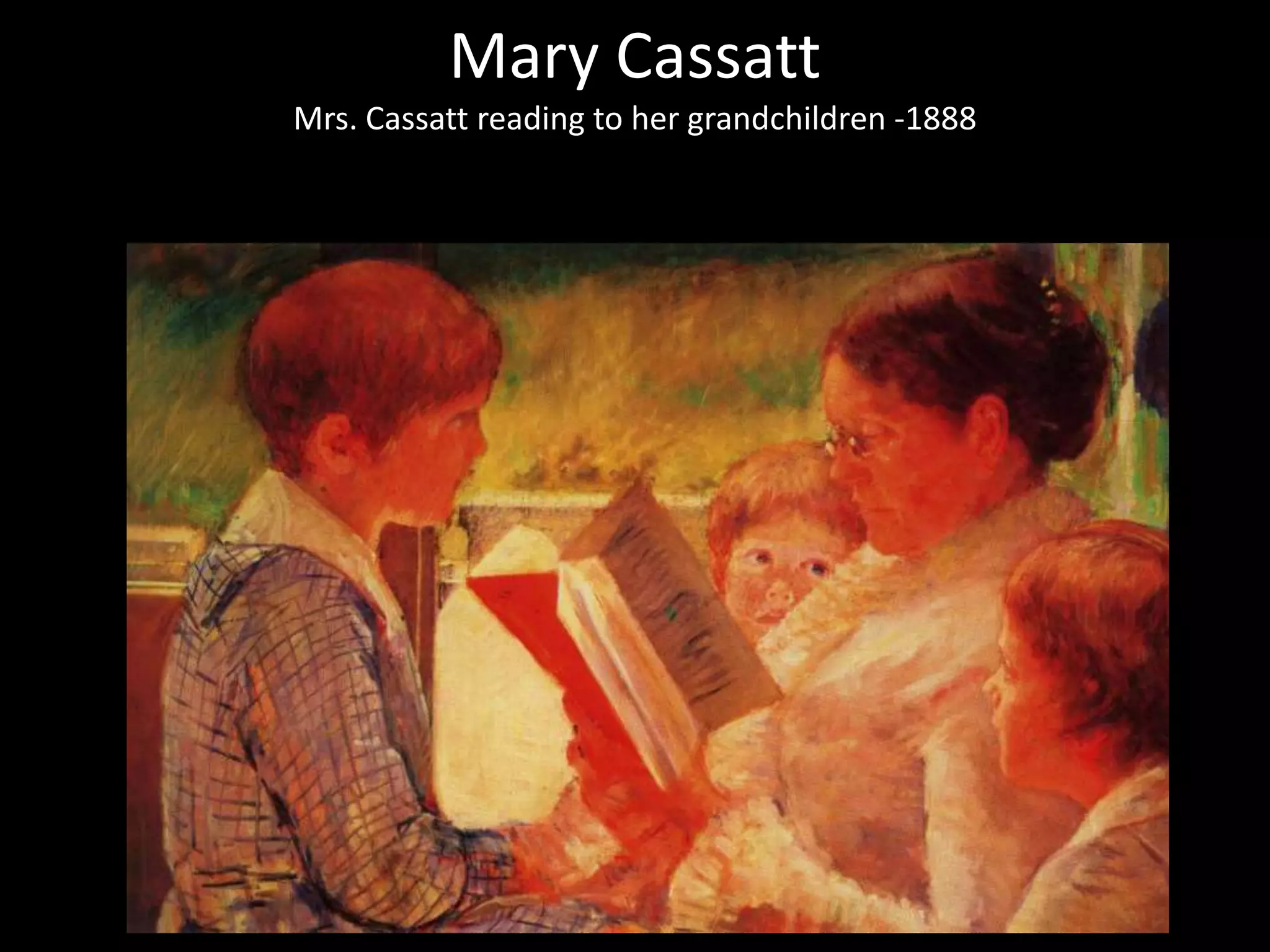
Mary Cassatt
Mrs. Cassatt reading to her grandchildren -1888
Characteristics of Impressionist
                Paintings


• The Impressionists found that they could
  capture the momentary and transient effects
  of sunlight by painting en plein air. (outdoors)
Claude Monet
Haystacks at sunset, frosty weather 1891
• Painting realistic scenes of modern life, they
  emphasized vivid overall effects rather than
  details. They used short, "broken" brush
  strokes of pure and unmixed colour, not
  smoothly blended, as was customary, in order
  to achieve the effect of intense colour
  vibration.
Edgar Degas
 The Pedicure - 1873
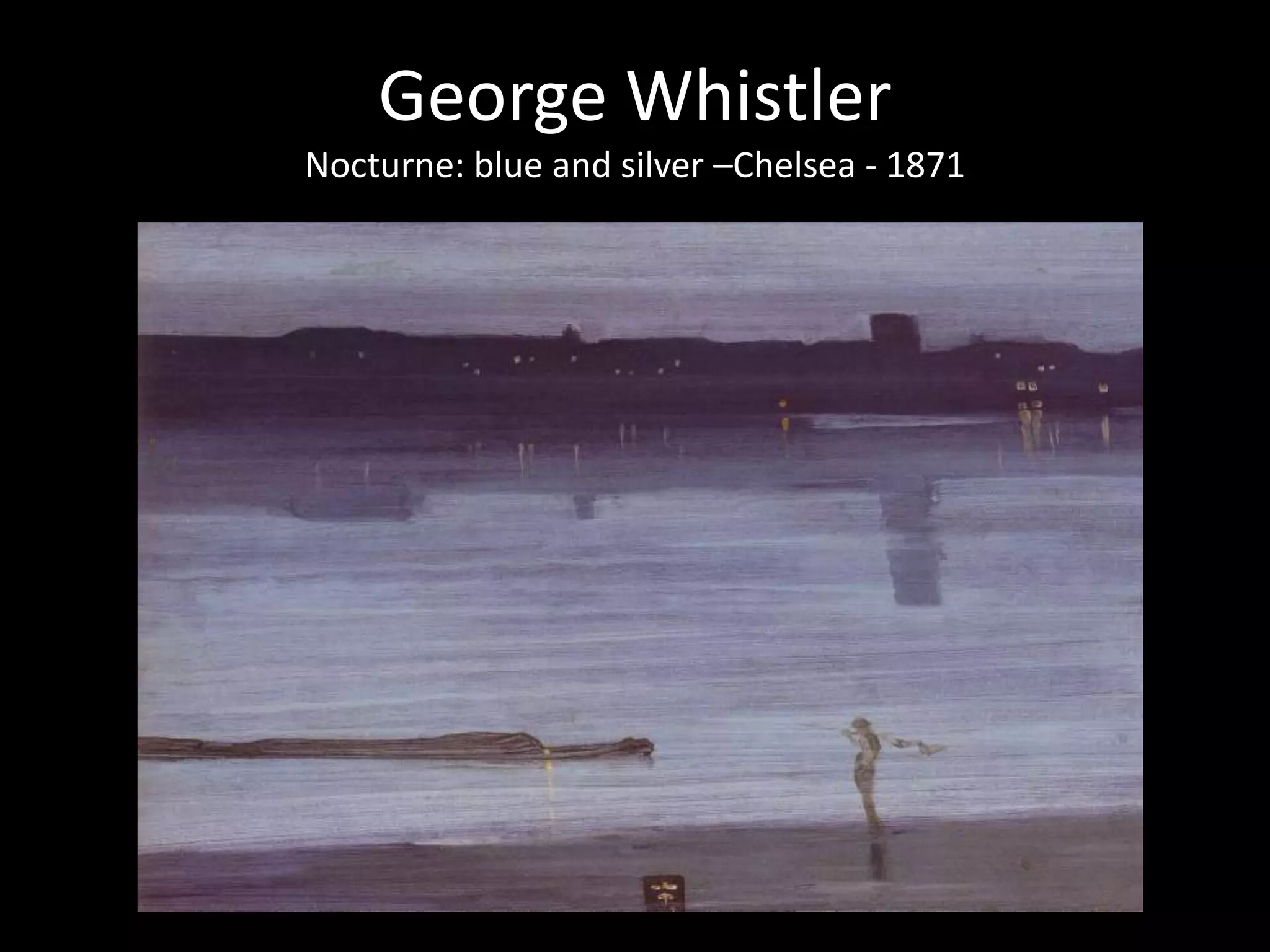
George Whistler
Nocturne: blue and silver –Chelsea - 1871
Characteristics of Impressionist
               Paintings
• Open composition, emphasis on light in its
  changing qualities
• The play of natural light is emphasized. Close
  attention is paid to the reflection of colours
  from object to object.
• The inclusion of movement as a crucial
  element of human perception and experience,
  and unusual visual angles
EdouardManet
  Argenteuil -1874
The Impressionists relaxed the boundary
between subject and background so that the
effect of an Impressionist painting often
resembles a snapshot, a part of a larger reality
captured as if by chance.
Berthe Morisot
Eugene Manet and His daughter in the garden at Bougival -1881
• Photography was gaining popularity, and as
  cameras became more portable, photographs
  became more candid. Photography inspired
  Impressionists to capture the moment, not
  only in the fleeting lights of a landscape, but in
  the day-to-day lives of people.
• The rise of the impressionist movement can
  be seen in part as a reaction by artists to the
  newly established medium of photography.

• The taking of fixed or still images challenged
  painters by providing a new medium with
  which to capture reality.
Whistler James
Nocturne in grey and gold: Chelsea snow - 1876
Impressionistic Painters
•   Frédéric Bazille, (1841-1870)
•   Gustave Caillebotte (who, younger than the others, joined forces with them in the mid 1870s),
    (1848-1894)
•   Mary Cassatt (American-born, she lived in Paris and participated in four Impressionist exhibitions),
    (1844-1926)
•   Paul Cézanne (although he later broke away from the Impressionists), (1839-1906)
•   Edgar Degas (a realist who despised the term Impressionist, but is considered one, due to his
    loyalty to the group), (1834-1917)
•   Armand Guillaumin, (1841-1927)
•   Édouard Manet (who did not regard himself as an Impressionist, but is generally considered one),
    (1832-1883)
•   Claude Monet (the most prolific of the Impressionists and the one who most clearly embodies their
    aesthetic), [17] (1840-1926)
•   Berthe Morisot, (1841-1895)
•   Camille Pissarro, (1830-1903)
•   Pierre-Auguste Renoir, (1841-1919)
•   Alfred Sisley, (1839-1899)
Expressionism
• Expressionismwas a cultural movement
  originating in Germany at the start of the
  20th-centuryas a reaction to positivism and
  other artistic movements such as naturalism
  and impressionism.
• It sought to express the meaning of "being
  alive” and emotional experience rather than
  physical reality. It is the tendency of an artist
  to distort reality for an emotional effect; it is a
  subjective art form.
Edvard Munch
 The Scream (1893)
Characteristics of Expressionist
                Paintings
• Expressionism worked with arbitrary colors as
  well as jarring compositions.

• In reaction and opposition to French
  Impressionism which focused on rendering
  the sheer visual appearance of objects,
  Expressionist artists sought to capture
  emotions and subjective interpretations:
Wassily Kandinsky
    On White II - 1923
Characteristics of Expressionist
                Paintings

• It was not important to reproduce an
  aesthetically pleasing impression of the
  artistic subject matter; the Expressionist's
  focused on capturing vivid emotional
  reactions through powerful colors and
  dynamic compositions instead.
• Expressionistic style is present when the artist
  or designer is seeking to evoke a maximum
  emotional response from the viewer.
"The Cabinet of Dr. Caligari" a silent film by Robert Wiene, 1920
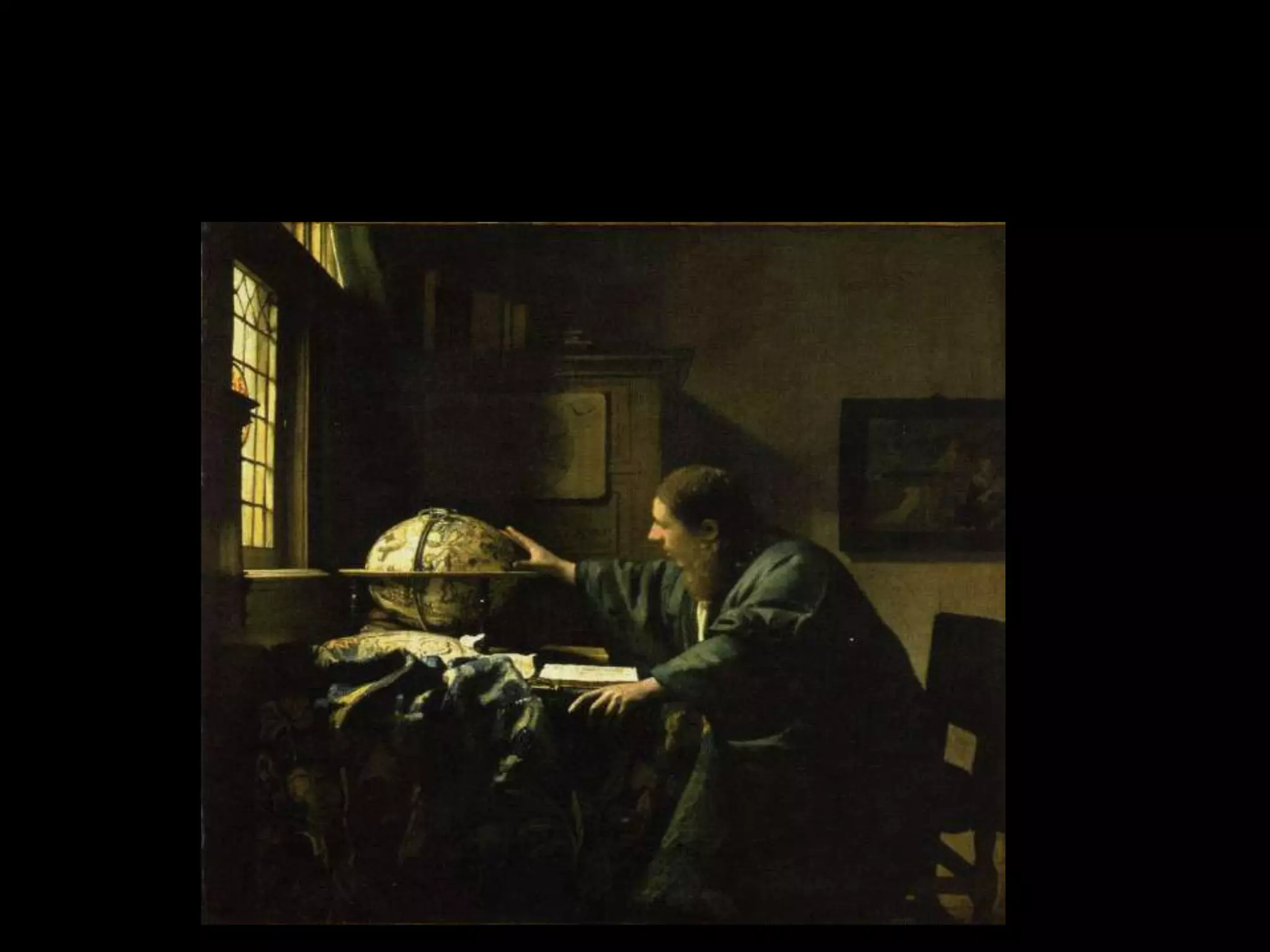
Realism
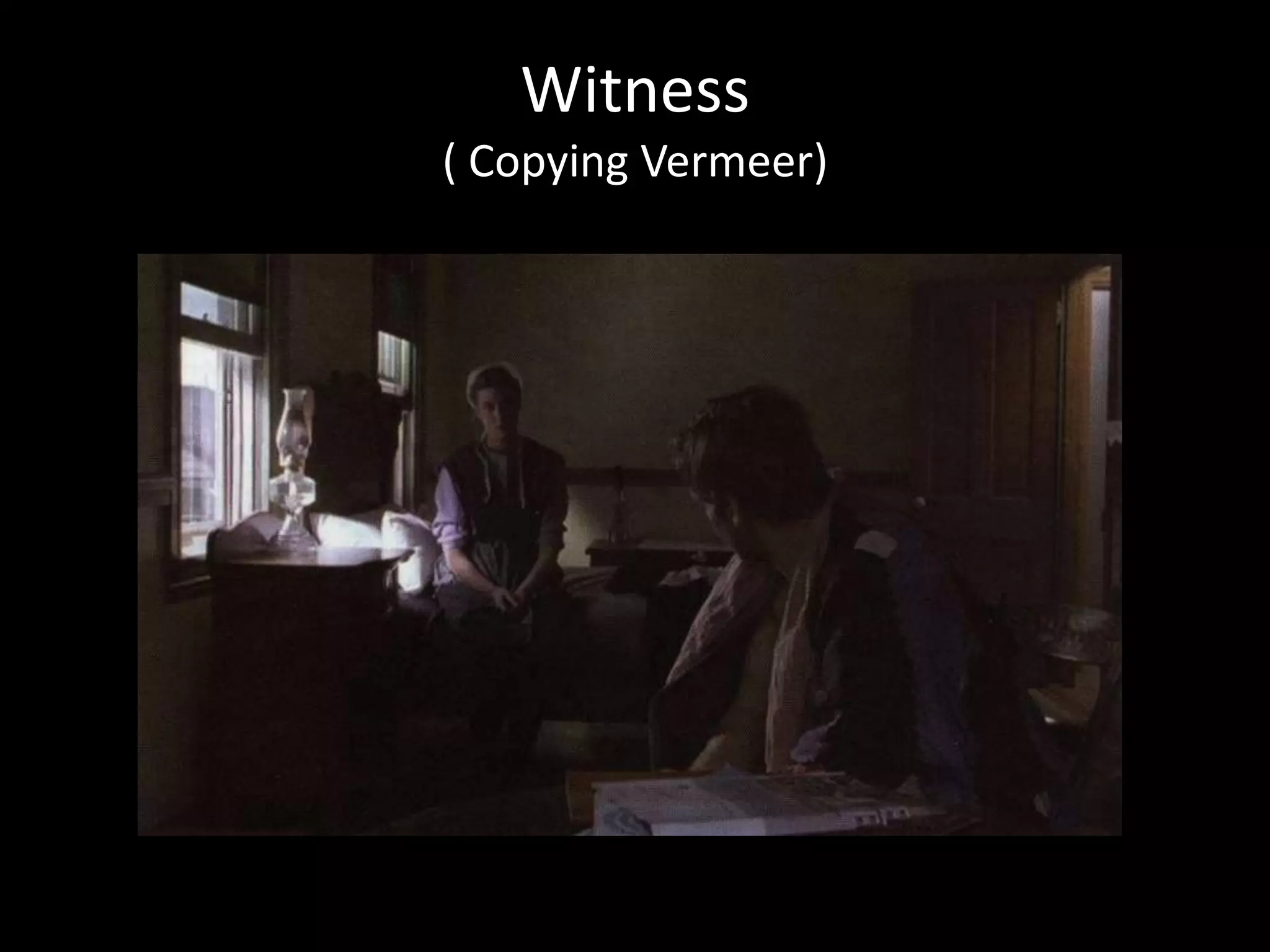
Witness
( Copying Vermeer)
Impress and Express
Impress and Express
Impress and Express

Impress and Express

  • 1.
    Impressionism and Expressionism
  • 2.
    Pierre - AugusteRenoir Le Moulin de la Galette - 1876
  • 3.
    • Impressionism wasa 19th-century movement that began as a loose association of Paris- based artists whose independent exhibitions brought them to prominence in the 1870s and 1880s.
  • 4.
    • The nameof the movement is derived from the title of a Claude Monet work, Impression, Sunrise (Impression, soleillevant), which provoked the critic Louis Leroy to coin the term in a satiric review published in Le Charivari.
  • 5.
    • They alsotook the act of painting out of the studio and into the modern world. Previously, still life’s and portraits as well as landscapes had usually been painted indoors.
  • 6.
    Pierre - AugusteRenoir La Grenouillere – 1869
  • 7.
    Characteristics of Impressionist Paintings • Radicals in their time, early Impressionists broke the rules of academic painting. • They began by giving colours, freely brushed, primacy over line.
  • 8.
    Mary Cassatt Mrs. Cassattreading to her grandchildren -1888
  • 9.
    Characteristics of Impressionist Paintings • The Impressionists found that they could capture the momentary and transient effects of sunlight by painting en plein air. (outdoors)
  • 10.
    Claude Monet Haystacks atsunset, frosty weather 1891
  • 11.
    • Painting realisticscenes of modern life, they emphasized vivid overall effects rather than details. They used short, "broken" brush strokes of pure and unmixed colour, not smoothly blended, as was customary, in order to achieve the effect of intense colour vibration.
  • 12.
    Edgar Degas ThePedicure - 1873
  • 13.
    George Whistler Nocturne: blueand silver –Chelsea - 1871
  • 14.
    Characteristics of Impressionist Paintings • Open composition, emphasis on light in its changing qualities • The play of natural light is emphasized. Close attention is paid to the reflection of colours from object to object. • The inclusion of movement as a crucial element of human perception and experience, and unusual visual angles
  • 15.
  • 16.
    The Impressionists relaxedthe boundary between subject and background so that the effect of an Impressionist painting often resembles a snapshot, a part of a larger reality captured as if by chance.
  • 17.
    Berthe Morisot Eugene Manetand His daughter in the garden at Bougival -1881
  • 18.
    • Photography wasgaining popularity, and as cameras became more portable, photographs became more candid. Photography inspired Impressionists to capture the moment, not only in the fleeting lights of a landscape, but in the day-to-day lives of people.
  • 19.
    • The riseof the impressionist movement can be seen in part as a reaction by artists to the newly established medium of photography. • The taking of fixed or still images challenged painters by providing a new medium with which to capture reality.
  • 20.
    Whistler James Nocturne ingrey and gold: Chelsea snow - 1876
  • 21.
    Impressionistic Painters • Frédéric Bazille, (1841-1870) • Gustave Caillebotte (who, younger than the others, joined forces with them in the mid 1870s), (1848-1894) • Mary Cassatt (American-born, she lived in Paris and participated in four Impressionist exhibitions), (1844-1926) • Paul Cézanne (although he later broke away from the Impressionists), (1839-1906) • Edgar Degas (a realist who despised the term Impressionist, but is considered one, due to his loyalty to the group), (1834-1917) • Armand Guillaumin, (1841-1927) • Édouard Manet (who did not regard himself as an Impressionist, but is generally considered one), (1832-1883) • Claude Monet (the most prolific of the Impressionists and the one who most clearly embodies their aesthetic), [17] (1840-1926) • Berthe Morisot, (1841-1895) • Camille Pissarro, (1830-1903) • Pierre-Auguste Renoir, (1841-1919) • Alfred Sisley, (1839-1899)
  • 22.
  • 23.
    • Expressionismwas acultural movement originating in Germany at the start of the 20th-centuryas a reaction to positivism and other artistic movements such as naturalism and impressionism.
  • 24.
    • It soughtto express the meaning of "being alive” and emotional experience rather than physical reality. It is the tendency of an artist to distort reality for an emotional effect; it is a subjective art form.
  • 25.
    Edvard Munch TheScream (1893)
  • 26.
    Characteristics of Expressionist Paintings • Expressionism worked with arbitrary colors as well as jarring compositions. • In reaction and opposition to French Impressionism which focused on rendering the sheer visual appearance of objects, Expressionist artists sought to capture emotions and subjective interpretations:
  • 27.
    Wassily Kandinsky On White II - 1923
  • 28.
    Characteristics of Expressionist Paintings • It was not important to reproduce an aesthetically pleasing impression of the artistic subject matter; the Expressionist's focused on capturing vivid emotional reactions through powerful colors and dynamic compositions instead.
  • 30.
    • Expressionistic styleis present when the artist or designer is seeking to evoke a maximum emotional response from the viewer.
  • 31.
    "The Cabinet ofDr. Caligari" a silent film by Robert Wiene, 1920
  • 32.
  • 36.