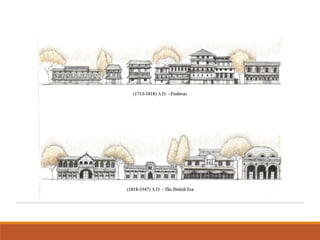
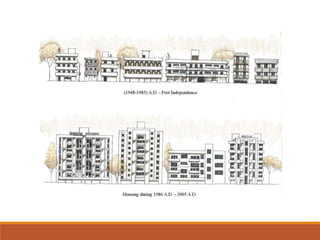
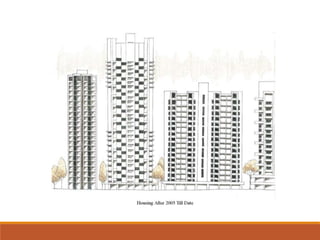
Housing Form Transformation
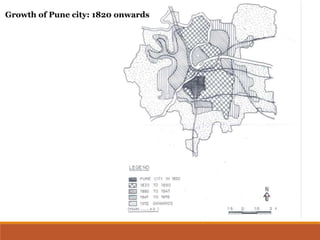
Growth of Pune city: 1820 onwards
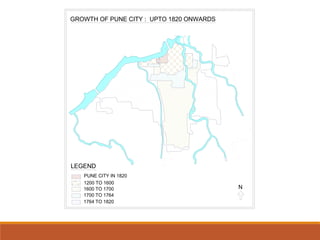
LEGEND
PUNE CITY IN 1820
1200 TO 1600
1600 TO 1700
1700 TO 1764
1764 TO 1820
N
GROWTH OF PUNE CITY : UPTO 1820 ONWARDS
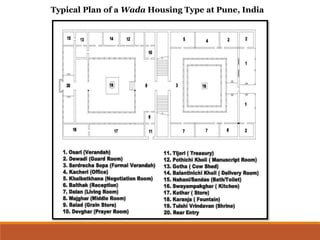
Typical Plan of a Wada Housing Type at Pune, India
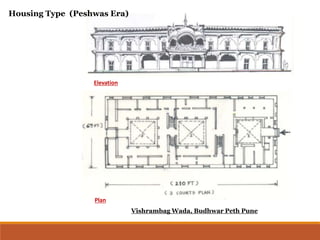
Vishrambag Wada, Budhwar Peth Pune
Elevation
Plan
Housing Type (Peshwas Era)
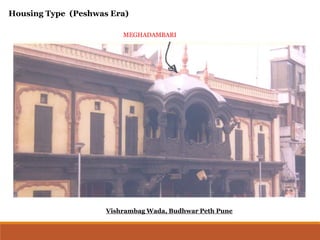
MEGHADAMBARI
Vishrambag Wada, Budhwar Peth Pune
Housing Type (Peshwas Era)
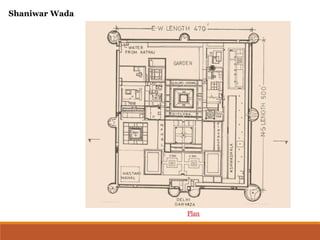
Plan
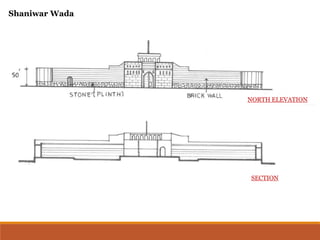
Shaniwar Wada
NORTH ELEVATION
SECTION
Shaniwar Wada
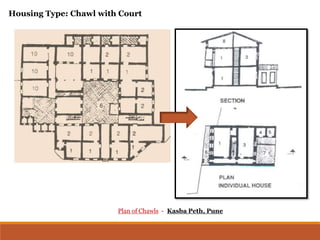
Kasba Peth, PunePlan of Chawls -
Housing Type: Chawl with Court
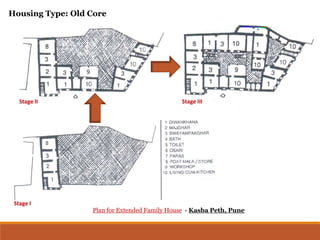
Plan for Extended Family House - Kasba Peth, Pune
Stage I
Stage II Stage III
Housing Type: Old Core
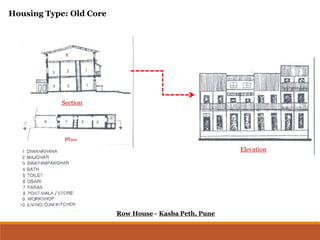
Kasba Peth, Pune
Plan
Section
Row House -
Elevation
Housing Type: Old Core
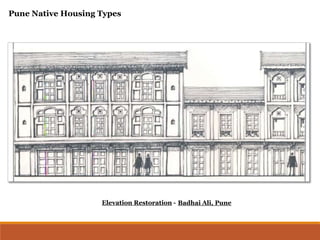
Badhai Ali, PuneElevation Restoration -
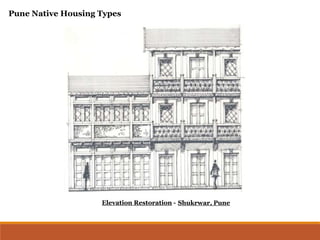
Pune Native Housing Types
Shukrwar, PuneElevation Restoration -
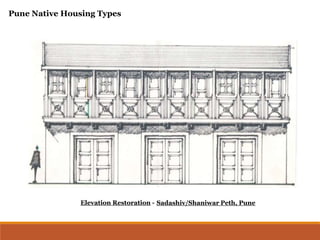
Pune Native Housing Types
Sadashiv/Shaniwar Peth, PuneElevation Restoration -
Pune Native Housing Types
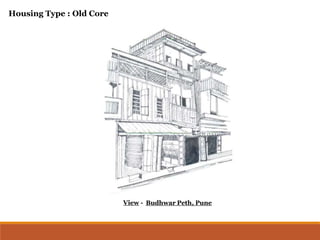
Budhwar Peth, PuneView -
Housing Type : Old Core
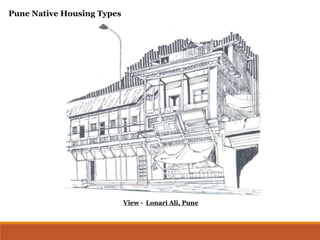
Pune Native Housing Types
Lonari Ali, PuneView -
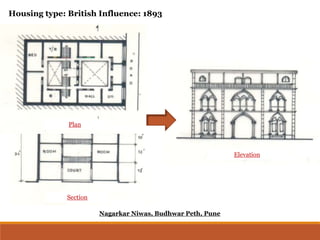
Plan
Section
Elevation
Housing type: British Influence: 1893
Nagarkar Niwas, Budhwar Peth, Pune
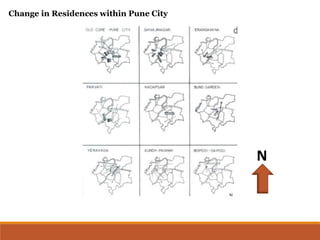
N
Change in Residences within Pune City
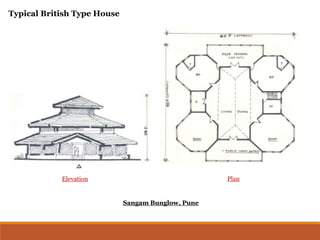
Elevation Plan
Typical British Type House
Sangam Bunglow, Pune
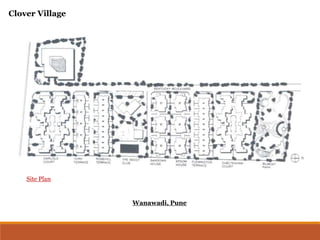
Site Plan
Clover Village
Wanawadi, Pune
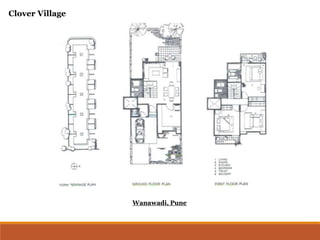
Clover Village
Wanawadi, Pune
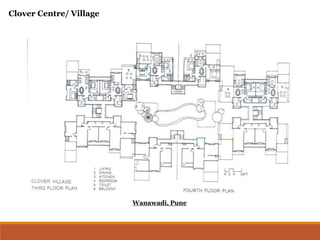
Clover Centre/ Village
Wanawadi, Pune
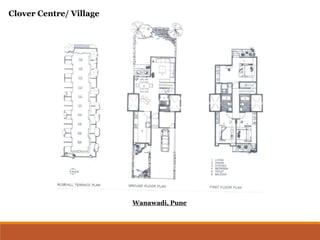
Clover Centre/ Village
Wanawadi, Pune
1. Situated on deep, narrow plots the wadas are generally two or three storied high structures on an
introvert plan.
2. The rooms look out onto the court yards of which at least two or as many as four.
3. The design of wada followed a specific concept in the location of particular areas such as official,
private for cooking, dining or worship.
4. A huge gateway flanked by ‘dewadis’ meant for the gate – keeper gave entry to the wada.
5. A smaller dindi darwaza within a larger gateway was normally used by all. The entire gate opened
only on ceremonial occasions.
6. The entrance led to the main hall to darbar where activities to carry out official functions related
to the profession of the owners.
7. The darbar leads to the first courtyard in case of two or three courtyards houses.
8. Common characteristics of these courtyards were the open verandah like spaces called sopa.
Normally wadas rarely exceeded 20m of street frontage.
Typical Character of Houses: 1713 A.D. – 1818 A.D.
9. The depth however ranged from 80m - 100m. A composite structure of timber frame and
masonry arranged about modest courtyards formed the basic vocabulary of this house type.
10. The timber frame carries the load of the intermediate floors and about a meter thick on the
ground floor, built in the locally available basalt stone, their thickness reducing on upper floors.
11. Brick used for walls on upper floors were of a flatter variety compared to those available today.
12. The older wadas were roofed in plot or tiles. Partition walls were traditionally of wattle usually
plastered with lime or cow- dung.
13. The fronts of wadas were often ornately carved with a stylized peacocks, parrots or pigeons as
later additions on exposed beam ends.
14. Timber brackets supporting balconies were also carved in themes of exotic flora and fauna.
Typical Character of Houses: 1713 A.D. – 1818 A.D.
Housing form transformation Pune

Housing form transformation Pune

  • 1.
  • 2.
    Growth of Punecity: 1820 onwards
  • 3.
    LEGEND PUNE CITY IN1820 1200 TO 1600 1600 TO 1700 1700 TO 1764 1764 TO 1820 N GROWTH OF PUNE CITY : UPTO 1820 ONWARDS
  • 4.
    Typical Plan ofa Wada Housing Type at Pune, India
  • 5.
    Vishrambag Wada, BudhwarPeth Pune Elevation Plan Housing Type (Peshwas Era)
  • 6.
    MEGHADAMBARI Vishrambag Wada, BudhwarPeth Pune Housing Type (Peshwas Era)
  • 7.
  • 8.
  • 9.
    Kasba Peth, PunePlanof Chawls - Housing Type: Chawl with Court
  • 10.
    Plan for ExtendedFamily House - Kasba Peth, Pune Stage I Stage II Stage III Housing Type: Old Core
  • 11.
    Kasba Peth, Pune Plan Section RowHouse - Elevation Housing Type: Old Core
  • 12.
    Badhai Ali, PuneElevationRestoration - Pune Native Housing Types
  • 13.
    Shukrwar, PuneElevation Restoration- Pune Native Housing Types
  • 14.
    Sadashiv/Shaniwar Peth, PuneElevationRestoration - Pune Native Housing Types
  • 15.
    Budhwar Peth, PuneView- Housing Type : Old Core
  • 16.
    Pune Native HousingTypes Lonari Ali, PuneView -
  • 18.
    Plan Section Elevation Housing type: BritishInfluence: 1893 Nagarkar Niwas, Budhwar Peth, Pune
  • 19.
    N Change in Residenceswithin Pune City
  • 20.
    Elevation Plan Typical BritishType House Sangam Bunglow, Pune
  • 21.
  • 22.
  • 23.
  • 24.
  • 26.
    1. Situated ondeep, narrow plots the wadas are generally two or three storied high structures on an introvert plan. 2. The rooms look out onto the court yards of which at least two or as many as four. 3. The design of wada followed a specific concept in the location of particular areas such as official, private for cooking, dining or worship. 4. A huge gateway flanked by ‘dewadis’ meant for the gate – keeper gave entry to the wada. 5. A smaller dindi darwaza within a larger gateway was normally used by all. The entire gate opened only on ceremonial occasions. 6. The entrance led to the main hall to darbar where activities to carry out official functions related to the profession of the owners. 7. The darbar leads to the first courtyard in case of two or three courtyards houses. 8. Common characteristics of these courtyards were the open verandah like spaces called sopa. Normally wadas rarely exceeded 20m of street frontage. Typical Character of Houses: 1713 A.D. – 1818 A.D.
  • 27.
    9. The depthhowever ranged from 80m - 100m. A composite structure of timber frame and masonry arranged about modest courtyards formed the basic vocabulary of this house type. 10. The timber frame carries the load of the intermediate floors and about a meter thick on the ground floor, built in the locally available basalt stone, their thickness reducing on upper floors. 11. Brick used for walls on upper floors were of a flatter variety compared to those available today. 12. The older wadas were roofed in plot or tiles. Partition walls were traditionally of wattle usually plastered with lime or cow- dung. 13. The fronts of wadas were often ornately carved with a stylized peacocks, parrots or pigeons as later additions on exposed beam ends. 14. Timber brackets supporting balconies were also carved in themes of exotic flora and fauna. Typical Character of Houses: 1713 A.D. – 1818 A.D.