PROTEINS
1
Contents
 Introduction
 Importance
 Classification
 Properties
Introduction
3



Protein name is derived form a Greek word PROTOS which
means “the first or the supreme.
Protein are extremely complicated and nitrogenous molecule
made up of variable number of amino acid residue joined to each
other by a specific covalent bond called peptide bond.
20 amino acid which have been found to occur in all proteins,
known as standard amino acid.
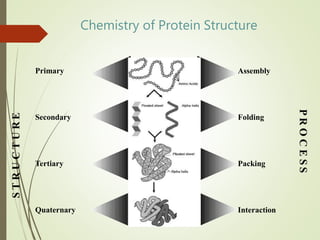
Levels in Protein
structure
 Majority of protein are compact and highly convoluted molecules.
 Each polypeptide assumes at least three levels of structural organization
termed as primery,secondary and tertiary structure.
 Proteins which possess more than one polypeptide chain in their molecule
also possess a fourth structure called quaternary structure
Chemistry of Protein Structure
Primary
Secondary
Tertiary
Quaternary
Assembly
Folding
Packing
Interaction
S
T
R
U
C
T
U
R
E
P
R
O
C
E
S
S
Primary
structure
6





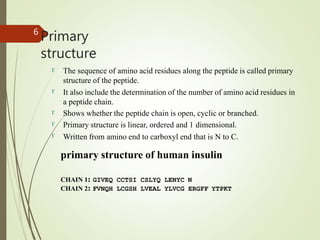
The sequence of amino acid residues along the peptide is called primary
structure of the peptide.
It also include the determination of the number of amino acid residues in
a peptide chain.
Shows whether the peptide chain is open, cyclic or branched.
Primary structure is linear, ordered and 1 dimensional.
Written from amino end to carboxyl end that is N to C.
primary structure of human insulin
CHAIN 1: GIVEQ CCTSI CSLYQ LENYC N
CHAIN 2: FVNQH LCGSH LVEAL YLVCG ERGFF YTPKT
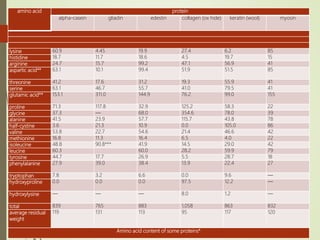
amino acid protein
alpha-casein gliadin edestin collagen (ox hide) keratin (wool) myosin
lysine 60.9 4.45 19.9 27.4 6.2 85
histidine 18.7 11.7 18.6 4.5 19.7 15
arginine 24.7 15.7 99.2 47.1 56.9 41
aspartic acid** 63.1 10.1 99.4 51.9 51.5 85
threonine 41.2 17.6 31.2 19.3 55.9 41
serine 63.1 46.7 55.7 41.0 79.5 41
glutamic acid** 153.1 311.0 144.9 76.2 99.0 155
proline 71.3 117.8 32.9 125.2 58.3 22
glycine 37.3 — 68.0 354.6 78.0 39
alanine 41.5 23.9 57.7 115.7 43.8 78
half-cystine 3.6 21.3 10.9 0.0 105.0 86
valine 53.8 22.7 54.6 21.4 46.6 42
methionine 16.8 11.3 16.4 6.5 4.0 22
isoleucine 48.8 90.8*** 41.9 14.5 29.0 42
leucine 60.3 60.0 28.2 59.9 79
tyrosine 44.7 17.7 26.9 5.5 28.7 18
phenylalanine 27.9 39.0 38.4 13.9 22.4 27
tryptophan 7.8 3.2 6.6 0.0 9.6 —
hydroxyproline 0.0 0.0 0.0 97.5 12.2 —
hydroxylysine — — — 8.0 1.2 —
total 839 765 883 1,058 863 832
average residual
weight
119 131 113 95 117 120
Amino acid content of some proteins*
Secondary
Structure
8




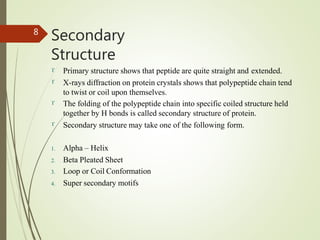
Primary structure shows that peptide are quite straight and extended.
X-rays diffraction on protein crystals shows that polypeptide chain tend
to twist or coil upon themselves.
The folding of the polypeptide chain into specific coiled structure held
together by H bonds is called secondary structure of protein.
Secondary structure may take one of the following form.
1. Alpha – Helix
2. Beta Pleated Sheet
3. Loop or Coil Conformation
4. Super secondary motifs
Tertiary
structure
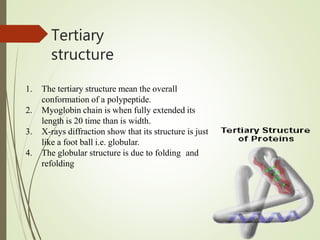
1. The tertiary structure mean the overall
conformation of a polypeptide.
2. Myoglobin chain is when fully extended its
length is 20 time than is width.
3. X-rays diffraction show that its structure is just
like a foot ball i.e. globular.
4. The globular structure is due to folding and
refolding
Quaternary
Structure
10
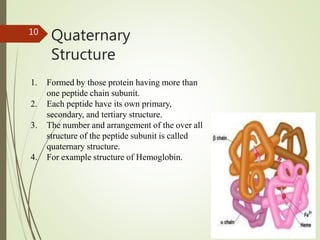
1. Formed by those protein having more than
one peptide chain subunit.
2. Each peptide have its own primary,
secondary, and tertiary structure.
3. The number and arrangement of the over all
structure of the peptide subunit is called
quaternary structure.
4. For example structure of Hemoglobin.
Classification based on
shape
11
 Depend upon the axial ratio the protein are classify
into two type of protein.
1. Globular protein
2. Fibrous protein
Fibrous
Protein
12







Axial ratio more than 10.
Long thread like molecule.
Their helical strands mainly form fibers.
These protein are insoluble in water.
Form structure of the tissue
Present where support is required.
Example
1. Collagen
2. Elastin
3. Keratin
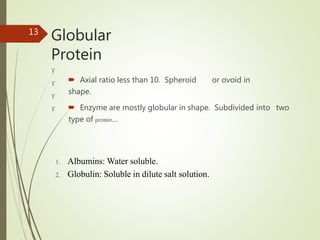
Globular
Protein
 Axial ratio less than 10. Spheroid or ovoid in
shape.
 Enzyme are mostly globular in shape. Subdivided into two
type of protein…
13




1. Albumins: Water soluble.
2. Globulin: Soluble in dilute salt solution.
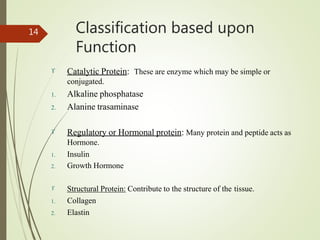
Classification based upon
Function
14
 Catalytic Protein: These are enzyme which may be simple or
conjugated.
1. Alkaline phosphatase
2. Alanine trasaminase
 Regulatory or Hormonal protein: Many protein and peptide acts as
Hormone.
1. Insulin
2. Growth Hormone
 Structural Protein: Contribute to the structure of the tissue.
1. Collagen
2. Elastin
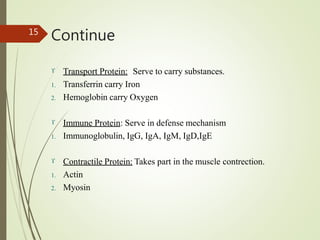
Continue
15
 Transport Protein: Serve to carry substances.
1. Transferrin carry Iron
2. Hemoglobin carry Oxygen
 Immune Protein: Serve in defense mechanism
1. Immunoglobulin, IgG, IgA, IgM, IgD,IgE
 Contractile Protein: Takes part in the muscle contrection.
1. Actin
2. Myosin
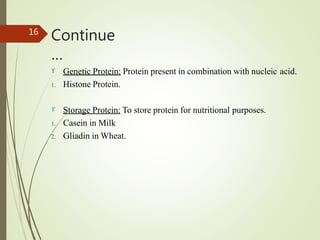
Continue
…
16
 Genetic Protein: Protein present in combination with nucleic acid.
1. Histone Protein.
 Storage Protein: To store protein for nutritional purposes.
1. Casein in Milk
2. Gliadin in Wheat.
Properties of Proteins
1. Different solubility in water. Soluble proteins form colloidal
solutions.
2. Hydrolysis is the action of solutions of mineral acids or
enzymes is the destruction of primary structure of the
protein and the formation of a mixture of amino acids.
3. Denaturation - the partial or total disruption of the spatial
structure inherent in a protein molecule. Denaturation is
activated with:
- high temperature
- solutions of acids, alkalis and concentrated salt solutions
- solutions of salts of heavy metals
- some organic substances (formaldehyde, phenol)
- radiation
THANK YOU

Protein classification

  • 1.
  • 2.
    Contents  Introduction  Importance Classification  Properties
  • 3.
    Introduction 3    Protein name isderived form a Greek word PROTOS which means “the first or the supreme. Protein are extremely complicated and nitrogenous molecule made up of variable number of amino acid residue joined to each other by a specific covalent bond called peptide bond. 20 amino acid which have been found to occur in all proteins, known as standard amino acid.
  • 4.
    Levels in Protein structure Majority of protein are compact and highly convoluted molecules.  Each polypeptide assumes at least three levels of structural organization termed as primery,secondary and tertiary structure.  Proteins which possess more than one polypeptide chain in their molecule also possess a fourth structure called quaternary structure
  • 5.
    Chemistry of ProteinStructure Primary Secondary Tertiary Quaternary Assembly Folding Packing Interaction S T R U C T U R E P R O C E S S
  • 6.
    Primary structure 6      The sequence ofamino acid residues along the peptide is called primary structure of the peptide. It also include the determination of the number of amino acid residues in a peptide chain. Shows whether the peptide chain is open, cyclic or branched. Primary structure is linear, ordered and 1 dimensional. Written from amino end to carboxyl end that is N to C. primary structure of human insulin CHAIN 1: GIVEQ CCTSI CSLYQ LENYC N CHAIN 2: FVNQH LCGSH LVEAL YLVCG ERGFF YTPKT
  • 7.
    amino acid protein alpha-caseingliadin edestin collagen (ox hide) keratin (wool) myosin lysine 60.9 4.45 19.9 27.4 6.2 85 histidine 18.7 11.7 18.6 4.5 19.7 15 arginine 24.7 15.7 99.2 47.1 56.9 41 aspartic acid** 63.1 10.1 99.4 51.9 51.5 85 threonine 41.2 17.6 31.2 19.3 55.9 41 serine 63.1 46.7 55.7 41.0 79.5 41 glutamic acid** 153.1 311.0 144.9 76.2 99.0 155 proline 71.3 117.8 32.9 125.2 58.3 22 glycine 37.3 — 68.0 354.6 78.0 39 alanine 41.5 23.9 57.7 115.7 43.8 78 half-cystine 3.6 21.3 10.9 0.0 105.0 86 valine 53.8 22.7 54.6 21.4 46.6 42 methionine 16.8 11.3 16.4 6.5 4.0 22 isoleucine 48.8 90.8*** 41.9 14.5 29.0 42 leucine 60.3 60.0 28.2 59.9 79 tyrosine 44.7 17.7 26.9 5.5 28.7 18 phenylalanine 27.9 39.0 38.4 13.9 22.4 27 tryptophan 7.8 3.2 6.6 0.0 9.6 — hydroxyproline 0.0 0.0 0.0 97.5 12.2 — hydroxylysine — — — 8.0 1.2 — total 839 765 883 1,058 863 832 average residual weight 119 131 113 95 117 120 Amino acid content of some proteins*
  • 8.
    Secondary Structure 8     Primary structure showsthat peptide are quite straight and extended. X-rays diffraction on protein crystals shows that polypeptide chain tend to twist or coil upon themselves. The folding of the polypeptide chain into specific coiled structure held together by H bonds is called secondary structure of protein. Secondary structure may take one of the following form. 1. Alpha – Helix 2. Beta Pleated Sheet 3. Loop or Coil Conformation 4. Super secondary motifs
  • 9.
    Tertiary structure 1. The tertiarystructure mean the overall conformation of a polypeptide. 2. Myoglobin chain is when fully extended its length is 20 time than is width. 3. X-rays diffraction show that its structure is just like a foot ball i.e. globular. 4. The globular structure is due to folding and refolding
  • 10.
    Quaternary Structure 10 1. Formed bythose protein having more than one peptide chain subunit. 2. Each peptide have its own primary, secondary, and tertiary structure. 3. The number and arrangement of the over all structure of the peptide subunit is called quaternary structure. 4. For example structure of Hemoglobin.
  • 11.
    Classification based on shape 11 Depend upon the axial ratio the protein are classify into two type of protein. 1. Globular protein 2. Fibrous protein
  • 12.
    Fibrous Protein 12        Axial ratio morethan 10. Long thread like molecule. Their helical strands mainly form fibers. These protein are insoluble in water. Form structure of the tissue Present where support is required. Example 1. Collagen 2. Elastin 3. Keratin
  • 13.
    Globular Protein  Axial ratioless than 10. Spheroid or ovoid in shape.  Enzyme are mostly globular in shape. Subdivided into two type of protein… 13     1. Albumins: Water soluble. 2. Globulin: Soluble in dilute salt solution.
  • 14.
    Classification based upon Function 14 Catalytic Protein: These are enzyme which may be simple or conjugated. 1. Alkaline phosphatase 2. Alanine trasaminase  Regulatory or Hormonal protein: Many protein and peptide acts as Hormone. 1. Insulin 2. Growth Hormone  Structural Protein: Contribute to the structure of the tissue. 1. Collagen 2. Elastin
  • 15.
    Continue 15  Transport Protein:Serve to carry substances. 1. Transferrin carry Iron 2. Hemoglobin carry Oxygen  Immune Protein: Serve in defense mechanism 1. Immunoglobulin, IgG, IgA, IgM, IgD,IgE  Contractile Protein: Takes part in the muscle contrection. 1. Actin 2. Myosin
  • 16.
    Continue … 16  Genetic Protein:Protein present in combination with nucleic acid. 1. Histone Protein.  Storage Protein: To store protein for nutritional purposes. 1. Casein in Milk 2. Gliadin in Wheat.
  • 17.
    Properties of Proteins 1.Different solubility in water. Soluble proteins form colloidal solutions. 2. Hydrolysis is the action of solutions of mineral acids or enzymes is the destruction of primary structure of the protein and the formation of a mixture of amino acids. 3. Denaturation - the partial or total disruption of the spatial structure inherent in a protein molecule. Denaturation is activated with: - high temperature - solutions of acids, alkalis and concentrated salt solutions - solutions of salts of heavy metals - some organic substances (formaldehyde, phenol) - radiation
  • 18.