Hormonal Therapy in
Prostate Cancer
Dept of Urology
Govt Royapettah Hospital and Kilpauk Medical College
Chennai
1
MODERATORS:
Professors:
Prof. Dr. G. Sivasankar, M.S., M.Ch.,
Prof. Dr. A. Senthilvel, M.S., M.Ch.,
Asst Professors:
Dr. J. Sivabalan, M.S., M.Ch.,
Dr. R. Bhargavi, M.S., M.Ch.,
Dr. S. Raju, M.S., M.Ch.,
Dr. K. Muthurathinam, M.S., M.Ch.,
Dr. D. Tamilselvan, M.S., M.Ch.,
Dr. K. Senthilkumar, M.S., M.Ch.
DEPT OF UROLOGY,GRH ANDKMC,CHENNAI. 2
HISTORY
In 1786, when Hunter described seasonal variation in prostate size among animals.
As early as 1893, White proposed castration to treat urinary obstruction disorders
based upon his research on aging dogs.
3
DEPT OF UROLOGY,GRH ANDKMC,CHENNAI.
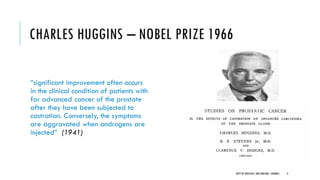
CHARLES HUGGINS – NOBEL PRIZE 1966
“significant improvement often occurs
in the clinical condition of patients with
far advanced cancer of the prostate
after they have been subjected to
castration. Conversely, the symptoms
are aggravated when androgens are
injected” (1941)
4
DEPT OF UROLOGY,GRH ANDKMC,CHENNAI.
MOLECULAR BIOLOGY OF THE ANDROGEN AXIS
The AR is a member of the nuclear receptor superfamily, which includes
receptors for the sex steroids (androgen, estrogen, progestin), adrenal steroids
(mineralocorticoids, glucocorticoids), thyroid hormones, vitamin D, and retinoids.
These receptors act as ligand inducible transcription factors
contain three key functional domains: ligand-binding (LBD), DNA-binding, and
transactivation.
5
DEPT OF UROLOGY,GRH ANDKMC,CHENNAI.
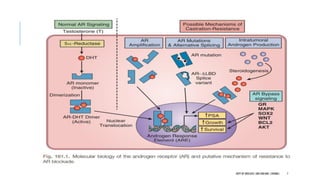
Membrane-permeable steroid ligands diffuse into the cell,
 where they engage the LBD and activate the DNA-binding domains;
the transactivation domain binds and recruits other gene transcriptional partners
 thus regulate gene expression, either by repression or activation
The AR gene is located on the X chromosome, meaning only one copy is inherited in
XY males.
6
DEPT OF UROLOGY,GRH ANDKMC,CHENNAI.
7
DEPT OF UROLOGY,GRH ANDKMC,CHENNAI.
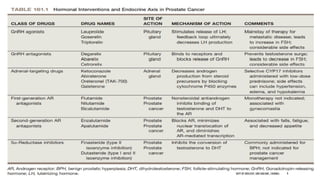
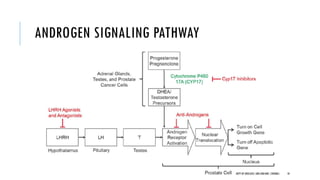
THERAPEUTIC APPROACHES
1. Ablation of androgen sources
2. Anti androgens
3. Inhibition of LHRH or LH
4. Inhibition of androgen synthesis
8
DEPT OF UROLOGY,GRH ANDKMC,CHENNAI.
9
DEPT OF UROLOGY,GRH ANDKMC,CHENNAI.
ANDROGEN SIGNALING PATHWAY
10
DEPT OF UROLOGY,GRH ANDKMC,CHENNAI.
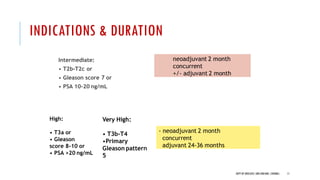
Intermediate:
• T2b-T2c or
• Gleason score 7 or
• PSA 10-20 ng/mL
High:
• T3a or
• Gleason
score 8-10 or
• PSA >20 ng/mL
neoadjuvant 2 month
concurrent
+/- adjuvant 2 month
- neoadjuvant 2 month
concurrent
adjuvant 24-36 months
Very High:
• T3b-T4
•Primary
Gleason pattern
5
INDICATIONS & DURATION
11
DEPT OF UROLOGY,GRH ANDKMC,CHENNAI.
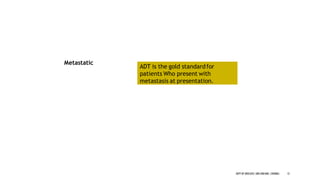
Metastatic
ADT is the gold standardfor
patients Who present with
metastasis at presentation.
12
DEPT OF UROLOGY,GRH ANDKMC,CHENNAI.
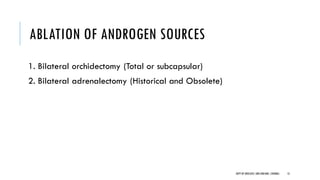
ABLATION OF ANDROGEN SOURCES
1. Bilateral orchidectomy (Total or subcapsular)
2. Bilateral adrenalectomy (Historical and Obsolete)
13
DEPT OF UROLOGY,GRH ANDKMC,CHENNAI.
BILATERAL ORCHIDECTOMY
Quickly reduces circulating testosterone levels to less than 50
ng/dL (Castrate range).
Classical castrate range – 50 ng/mL, now 15ng/mL
Within 24 hours of surgical castration, testosterone levels are
reduced by greater than 90%.
14
DEPT OF UROLOGY,GRH ANDKMC,CHENNAI.
ANTI ANDROGENS
Steroidal:
1. Cyproterone acetate
Non steroidal:
1. Flutamide
2. Bicalutamide
3. Nilutamide
4. Enzalutamide
5. Apalutamide
15
DEPT OF UROLOGY,GRH ANDKMC,CHENNAI.
CYPROTERONE ACETATE
Classical steroidal anti-androgen with direct AR blocking effects.
Rapidly lowers testosterone levels to 70-80%
Acts through progestational central inhibition.
Dose 100 mg twice or thrice daily.
Side effects:
Loss of libido,
Erectile dysfunction,
Lassitude.
16
DEPT OF UROLOGY,GRH ANDKMC,CHENNAI.
CYPROTERONE ACETATE
Cardiovascular complications in 10% of patients.
Gynaecomastia in < 20% of patients.
Used for the treatment of Hot flashes. Dose 50-100 mg/day.
17
DEPT OF UROLOGY,GRH ANDKMC,CHENNAI.
NON STEROIDAL ANTIANDROGENS
Block testosterone feedback centrally.
Cause LH and testosterone levels to increase.
Testosterone levels reach 1.5 times the normal levels.
Potency can be preserved. (< 20%)
Peripheral aromatization to estradiol.
Gynaecomastia and mastodynia.
Liver toxicity requires periodic LFT monitoring
18
DEPT OF UROLOGY,GRH ANDKMC,CHENNAI.
FLUTAMIDE
First ‘Pure’ anti androgen.
Half life 6 hrs.
Dose 250 mg twice or thrice a day.
Gastrointestinal toxicity – Diarrhea is a common complication.
19
DEPT OF UROLOGY,GRH ANDKMC,CHENNAI.
BICALUTAMIDE
Half life 6 days
Dose 150 mg once daily
Equivalent efficacy to surgical or medical castration.
Side effects: Gynaecomastia, mastalgia.
20
DEPT OF UROLOGY,GRH ANDKMC,CHENNAI.
NILUTAMIDE
Half life 56 hours.
Elimination via Cytochrome P450 system.
Dose 300 mg daily for 1 month followed by 150 mg daily.
Adverse effects: Delayed adaptation to darkness (25%), Interstitial
pneumonitis (1%) progressing to pulmonary fibrosis.
21
DEPT OF UROLOGY,GRH ANDKMC,CHENNAI.
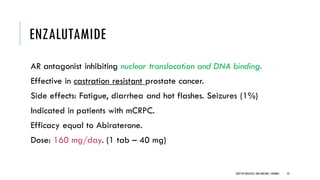
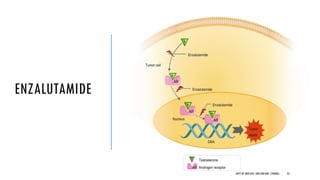
ENZALUTAMIDE
AR antagonist inhibiting nuclear translocation and DNA binding.
Effective in castration resistant prostate cancer.
Side effects: Fatigue, diarrhea and hot flashes. Seizures (1%)
Indicated in patients with mCRPC.
Efficacy equal to Abiraterone.
Dose: 160 mg/day. (1 tab – 40 mg)
22
DEPT OF UROLOGY,GRH ANDKMC,CHENNAI.
ENZALUTAMIDE
23
DEPT OF UROLOGY,GRH ANDKMC,CHENNAI.
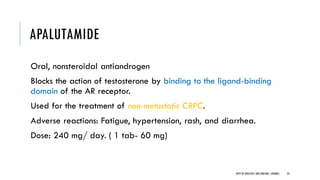
APALUTAMIDE
Oral, nonsteroidal antiandrogen
Blocks the action of testosterone by binding to the ligand-binding
domain of the AR receptor.
Used for the treatment of non-metastatic CRPC.
Adverse reactions: Fatigue, hypertension, rash, and diarrhea.
Dose: 240 mg/ day. ( 1 tab- 60 mg)
24
DEPT OF UROLOGY,GRH ANDKMC,CHENNAI.
LHRH AGONISTS
Leuprolide
Goserelin
Triptorelin
Histrelin
25
DEPT OF UROLOGY,GRH ANDKMC,CHENNAI.
LEUPROLIDE ACETATE
Commonly used LHRH agonist
Available as depot preparation for subcutaneous and im injections.
Lupron depot : Available with 1-,3-,4- and 6th monthly depot
preparations with 7.5 mg, 22.5 mg, 30 mg and 45 mg for im
injections.
Eligard: Same dosage available for SC injections.
Leuprolide acetate 1 mg/0.2 mL/day SC
26
DEPT OF UROLOGY,GRH ANDKMC,CHENNAI.
MECHANISM OF ACTION
Exploits sensitization of LHRH receptors in ant pituitary following
chronic exposure to LHRH.
After initial flare up, down-regulation of LHRH receptor occurs.
LH and testosterone production shut down.
27
DEPT OF UROLOGY,GRH ANDKMC,CHENNAI.
FLARE UP PHENOMENON
Testosterone surge or Flare up phenomenon associated with upto
10 fold increase in LH. (within 2-3 days)
May last for 10-20 days.
Co administration of an anti-androgen functionally blocks the
increased levels of testosterone.
Anti-androgen administration required for 3-4 weeks.
28
DEPT OF UROLOGY,GRH ANDKMC,CHENNAI.
LHRH ANTAGONISTS
Cetrorelix
Abarelix
Degarelix
Relugolix
29
DEPT OF UROLOGY,GRH ANDKMC,CHENNAI.
LHRH ANTAGONISTS
Competitively bind to LHRH receptors in the pituitary, reducing LH
concentrations by 84 % with in 24 hours.
Castration level = 2-3 days
No LH and testosterone flare.
No need for antiandrogen coadministration.
30
DEPT OF UROLOGY,GRH ANDKMC,CHENNAI.
ABARELIX
Severe allergic reactions even after previous uneventful treatment.
Patient should be monitored for 30 minutes after administration.
Voluntarily withdrawn in 2005.
31
DEPT OF UROLOGY,GRH ANDKMC,CHENNAI.
DEGARELIX
No systemic allergic reactions.
1-month SC dose, requiring two initial injections (2 × 3 mL for 240
mg) followed by monthly doses of 4 mL (80 mg).
32
DEPT OF UROLOGY,GRH ANDKMC,CHENNAI.
INHIBITION OF ANDROGEN SYNTHESIS
1. Aminoglutethimide
2. Ketoconazole
3. Abiraterone
33
DEPT OF UROLOGY,GRH ANDKMC,CHENNAI.
AMINOGLUTETHIMIDE
Inhibits conversion of cholesterol to pregnenolone.
Blocks production of aldosterone and cortisol also. Hence should be
replaced.
Side effects: Anorexia, nausea, skin rash, lethargy, vertigo,
hypothyroidism and nystagmus.
Dose: 1000 mg/day and Hydrocortisone acetate (40 mg/day).
34
DEPT OF UROLOGY,GRH ANDKMC,CHENNAI.
KETOCONAZOLE
Interferes with two cytochrome P450 dependent pathways.
Blocks conversion of C21 to C19 steroids.
Effect is rapid. Testosterone level drops to castrate levels in 4 hours
in some cases.
Effect is immediately reversible.
Dose: 400 mg 8 hrly. Usually with hydrocortisone 20 mg bd.
35
DEPT OF UROLOGY,GRH ANDKMC,CHENNAI.
KETOCONAZOLE
With continuous use, testosterone levels begins to rise and can
reach low normal ranges with in 5 months of therapy.
Used currently for castration resistant prostate cancer.
Side effects:
• Gynaecomastia,
• lethargy, weakness,
• hepatic dysfunction, visual disturbance and nausea.
36
DEPT OF UROLOGY,GRH ANDKMC,CHENNAI.
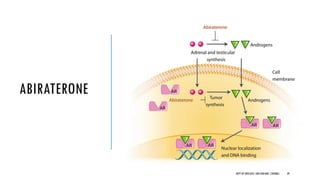
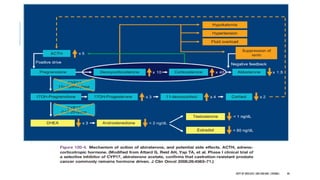
ABIRATERONE
Selective irreversible inhibitor of Cytochrome P17.
Inhibits 17α hydroxylase and C17-20 lyase.
Increase synthesis of aldosterone and its precursors.
Suppress cortisol and increase ACTH secretion.
Testosterone levels < 1 ng/mL.
Side effects:
•Hypokalemia, hypertension, fluid overload.
Dose: 1000 mg/day ( 1 tab – 250mg/500mg)
37
DEPT OF UROLOGY,GRH ANDKMC,CHENNAI.
ABIRATERONE
Co administration of prednisolone supresses ACTH.
Can be used in Metastatic castration resistant prostate cancer.
38
DEPT OF UROLOGY,GRH ANDKMC,CHENNAI.
ABIRATERONE
39
DEPT OF UROLOGY,GRH ANDKMC,CHENNAI.
40
DEPT OF UROLOGY,GRH ANDKMC,CHENNAI.
DRUGS IN DEVELOPMENT
Darolutamide
Relugolix
Orteronel (TAK-700)
ARN-509
41
DEPT OF UROLOGY,GRH ANDKMC,CHENNAI.
DAROLUTAMIDE
Oral, nonsteroidal antiandrogen
Similar mode of action to enzalutamide and
apalutamide.
42
DEPT OF UROLOGY,GRH ANDKMC,CHENNAI.
ARN-509
Novel antiandrogen similar to enzalutamide
Pure antagonist of AR while also inhibiting AR nuclear translocation
and DNA binding.
Does not cross blood brain barrier. So no seizures.
43
DEPT OF UROLOGY,GRH ANDKMC,CHENNAI.
RELUGOLIX
• Oral, GnRH antagonist in phase 3 development.
• Reduced mean serum testosterone levels within 6 h of dosing.
• However, a food effect reduced exposure by 50%
44
DEPT OF UROLOGY,GRH ANDKMC,CHENNAI.
ORTERONEL (TAK-700)
Mechanism of action similar to abiraterone.
CYPP17 inhibitor with potentially greater 17,20 lyase selectivity.
Impairs androgen synthesis preferentially over corticosteroid
synthesis.
45
DEPT OF UROLOGY,GRH ANDKMC,CHENNAI.
TESTOSTERONE TESTING
Testosterone levels should be measured regularly to ensure its
suppression is being maintained to target.
EAU guidelines recommendation: Test 3 months after the first dose
of ADT and repeated every 3−6 months thereafter.
46
DEPT OF UROLOGY,GRH ANDKMC,CHENNAI.
ADT AND PSA RESPONSE
In men with newly diagnosed metastatic prostate cancer started on
ADT, the absolute PSA level after 7 months of ADT was a strong,
independent predictor of survival.
47
DEPT OF UROLOGY,GRH ANDKMC,CHENNAI.
ADVERSE EFFECTS
1. Osteoporosis
2. Hot flashes
3. Sexual dysfunction
4. Cognitive decline
5. Changes in body habitus
6. Diabetes and metabolic syndrome
7. Cardiovascular morbidity
8. Gynaecomastia and anemia
48
DEPT OF UROLOGY,GRH ANDKMC,CHENNAI.
OSTEOPOROSIS
BMD criteria for osteopenia or osteoporosis-
•More than 2.5 standard deviations below an age specific reference mean –
Prior to the initiation of ADT.
After 5 yrs of ADT, fracture incidence 19.4 %.
Over 15 years incidence 40%.
4 years of ADT will place the average man in osteopenia range.
49
DEPT OF UROLOGY,GRH ANDKMC,CHENNAI.
OSTEOPOROSIS
Treatment begins with recognition.
BMD of the hip for all men anticipated on long term ADT.
Smoking cessation, weight bearing exercise, Vitamin D and calcium
supplementation.
Bisphosphonate pamidronate can be used for prevention as
demonstrated in some studies.
Bisphosphonates to be used when evidence of osteopenia or
osteoporosis emerge.
50
DEPT OF UROLOGY,GRH ANDKMC,CHENNAI.
OSTEOPOROSIS
Transdermal estradiol increases BMD in men with prostate cancer.
51
DEPT OF UROLOGY,GRH ANDKMC,CHENNAI.
HOT FLASHES
Uncomfortable flushes of heat similar to that experienced by women
during menopause.
Warmth in the upper torso and head followed by objective
perspiration.
Experienced by 50-80% of patients.
Mechanism: Increase in hypothalamic adrenergic concentrations and
alternations in endorphins and CGRP acting on thermo-regulating
center in hypothalamus.
52
DEPT OF UROLOGY,GRH ANDKMC,CHENNAI.
HOT FLASHES
Treatment reserved for bothersome patients.
Megestrol acetate 20 mg bd can be used. Dose can be reduced to
5 mg bd.
Cyproterone acetate 50 mg/day titrated to 300 mg/day.
DES and transdermal estradiol- Most effective.
Clonidine – Centrally acting α agonist decreases vascular
reactivity.
53
DEPT OF UROLOGY,GRH ANDKMC,CHENNAI.
HOT FLASHES
Venlafaxime 12.5 mg bd can be used.
Gabapentin decreased hot flashes to a moderate degree in some
studies.
54
DEPT OF UROLOGY,GRH ANDKMC,CHENNAI.
SEXUAL DYSFUNCTION
20% men on ADT have some sexual activity.
10-17% of men can have some erection adequate for intercourse.
Libido is highly compromised. Only 5% of men maintain high level
of sexual interest.
Loss of penile volume and penile length, loss of nocturnal penile
tumescence and loss of testicular volume noted.
55
DEPT OF UROLOGY,GRH ANDKMC,CHENNAI.
SEXUAL DYSFUNCTION
Treatment of libido is difficult.
PDE 5 inhibitors or intracavernosal injections of alprostadil can
be used for erectile dysfunction.
56
DEPT OF UROLOGY,GRH ANDKMC,CHENNAI.
COGNITIVE FUNCTION
Hypogonadal state is associated with declines in cognitive
functioning.
Short course of ADT is associated with increased depression and
anxiety scores.
Major depressive disorder in 12.8% of men with ADT.
Testosterone supplementation improves verbal fluency.
57
DEPT OF UROLOGY,GRH ANDKMC,CHENNAI.
BODY HABITUS
Loss of muscle mass and increase in percent fat body mass is
common.
More pronounced with initiation of ADT.
Weight gain due to increase in body fat mass. (1.8-3.8% increase
in one year)
Regular vigorous exercise may help to limit accumulation of fat.
58
DEPT OF UROLOGY,GRH ANDKMC,CHENNAI.
DIABETES AND METABOLIC SYNDROME
Present in 50% of men undergoing long term ADT.
Unlike visceral fat accumulation in classical metabolic syndrome, fat
accumulates in subcutaneous regions.
HDL level is increased.
Insulin sensitivity decreased.
59
DEPT OF UROLOGY,GRH ANDKMC,CHENNAI.
CARDIOVASCULAR MORBIDITY AND MORTALITY
Effect more in low risk prostate cancer patients on ADT.
At 1 year of ADT, 20% higher risk of cardiovascular morbidity
compared to normal men.
60
DEPT OF UROLOGY,GRH ANDKMC,CHENNAI.
GYNAECOMASTIA
Peripheral conversion of testosterone to estradiol induces
gynaecomastia and mastodynia.
Bicalutamide: 66.3% Gynaecomastia, 72.7% Mastodynia.
Prophylactic radiation therapy (10 Gy) can be used to prevent or
reduce painful gynaecomastia.
Liposuction and subcutaneous mastectomy can be used for
established gynaecomastia.
Tamoxifen can be used for mastodynia.
61
DEPT OF UROLOGY,GRH ANDKMC,CHENNAI.
ANAEMIA
Normochromic, normocytic anaemia
Decline in hemoglobin begin within 1 month of ADT initiation. It
continues for 24 months.
Secondary to lack of testosterone stimulation of erythroid
precursors and decrease in erythropoietin production.
Recombinant erythropoietin can be used.
After stopping ADT, anaemia reversal may take upto 1 year.
62
DEPT OF UROLOGY,GRH ANDKMC,CHENNAI.
Thank you...
63
DEPT OF UROLOGY,GRH ANDKMC,CHENNAI.

Prostate carcinoma- hormonal therapy 2

  • 1.
    Hormonal Therapy in ProstateCancer Dept of Urology Govt Royapettah Hospital and Kilpauk Medical College Chennai 1
  • 2.
    MODERATORS: Professors: Prof. Dr. G.Sivasankar, M.S., M.Ch., Prof. Dr. A. Senthilvel, M.S., M.Ch., Asst Professors: Dr. J. Sivabalan, M.S., M.Ch., Dr. R. Bhargavi, M.S., M.Ch., Dr. S. Raju, M.S., M.Ch., Dr. K. Muthurathinam, M.S., M.Ch., Dr. D. Tamilselvan, M.S., M.Ch., Dr. K. Senthilkumar, M.S., M.Ch. DEPT OF UROLOGY,GRH ANDKMC,CHENNAI. 2
  • 3.
    HISTORY In 1786, whenHunter described seasonal variation in prostate size among animals. As early as 1893, White proposed castration to treat urinary obstruction disorders based upon his research on aging dogs. 3 DEPT OF UROLOGY,GRH ANDKMC,CHENNAI.
  • 4.
    CHARLES HUGGINS –NOBEL PRIZE 1966 “significant improvement often occurs in the clinical condition of patients with far advanced cancer of the prostate after they have been subjected to castration. Conversely, the symptoms are aggravated when androgens are injected” (1941) 4 DEPT OF UROLOGY,GRH ANDKMC,CHENNAI.
  • 5.
    MOLECULAR BIOLOGY OFTHE ANDROGEN AXIS The AR is a member of the nuclear receptor superfamily, which includes receptors for the sex steroids (androgen, estrogen, progestin), adrenal steroids (mineralocorticoids, glucocorticoids), thyroid hormones, vitamin D, and retinoids. These receptors act as ligand inducible transcription factors contain three key functional domains: ligand-binding (LBD), DNA-binding, and transactivation. 5 DEPT OF UROLOGY,GRH ANDKMC,CHENNAI.
  • 6.
    Membrane-permeable steroid ligandsdiffuse into the cell,  where they engage the LBD and activate the DNA-binding domains; the transactivation domain binds and recruits other gene transcriptional partners  thus regulate gene expression, either by repression or activation The AR gene is located on the X chromosome, meaning only one copy is inherited in XY males. 6 DEPT OF UROLOGY,GRH ANDKMC,CHENNAI.
  • 7.
    7 DEPT OF UROLOGY,GRHANDKMC,CHENNAI.
  • 8.
    THERAPEUTIC APPROACHES 1. Ablationof androgen sources 2. Anti androgens 3. Inhibition of LHRH or LH 4. Inhibition of androgen synthesis 8 DEPT OF UROLOGY,GRH ANDKMC,CHENNAI.
  • 9.
    9 DEPT OF UROLOGY,GRHANDKMC,CHENNAI.
  • 10.
    ANDROGEN SIGNALING PATHWAY 10 DEPTOF UROLOGY,GRH ANDKMC,CHENNAI.
  • 11.
    Intermediate: • T2b-T2c or •Gleason score 7 or • PSA 10-20 ng/mL High: • T3a or • Gleason score 8-10 or • PSA >20 ng/mL neoadjuvant 2 month concurrent +/- adjuvant 2 month - neoadjuvant 2 month concurrent adjuvant 24-36 months Very High: • T3b-T4 •Primary Gleason pattern 5 INDICATIONS & DURATION 11 DEPT OF UROLOGY,GRH ANDKMC,CHENNAI.
  • 12.
    Metastatic ADT is thegold standardfor patients Who present with metastasis at presentation. 12 DEPT OF UROLOGY,GRH ANDKMC,CHENNAI.
  • 13.
    ABLATION OF ANDROGENSOURCES 1. Bilateral orchidectomy (Total or subcapsular) 2. Bilateral adrenalectomy (Historical and Obsolete) 13 DEPT OF UROLOGY,GRH ANDKMC,CHENNAI.
  • 14.
    BILATERAL ORCHIDECTOMY Quickly reducescirculating testosterone levels to less than 50 ng/dL (Castrate range). Classical castrate range – 50 ng/mL, now 15ng/mL Within 24 hours of surgical castration, testosterone levels are reduced by greater than 90%. 14 DEPT OF UROLOGY,GRH ANDKMC,CHENNAI.
  • 15.
    ANTI ANDROGENS Steroidal: 1. Cyproteroneacetate Non steroidal: 1. Flutamide 2. Bicalutamide 3. Nilutamide 4. Enzalutamide 5. Apalutamide 15 DEPT OF UROLOGY,GRH ANDKMC,CHENNAI.
  • 16.
    CYPROTERONE ACETATE Classical steroidalanti-androgen with direct AR blocking effects. Rapidly lowers testosterone levels to 70-80% Acts through progestational central inhibition. Dose 100 mg twice or thrice daily. Side effects: Loss of libido, Erectile dysfunction, Lassitude. 16 DEPT OF UROLOGY,GRH ANDKMC,CHENNAI.
  • 17.
    CYPROTERONE ACETATE Cardiovascular complicationsin 10% of patients. Gynaecomastia in < 20% of patients. Used for the treatment of Hot flashes. Dose 50-100 mg/day. 17 DEPT OF UROLOGY,GRH ANDKMC,CHENNAI.
  • 18.
    NON STEROIDAL ANTIANDROGENS Blocktestosterone feedback centrally. Cause LH and testosterone levels to increase. Testosterone levels reach 1.5 times the normal levels. Potency can be preserved. (< 20%) Peripheral aromatization to estradiol. Gynaecomastia and mastodynia. Liver toxicity requires periodic LFT monitoring 18 DEPT OF UROLOGY,GRH ANDKMC,CHENNAI.
  • 19.
    FLUTAMIDE First ‘Pure’ antiandrogen. Half life 6 hrs. Dose 250 mg twice or thrice a day. Gastrointestinal toxicity – Diarrhea is a common complication. 19 DEPT OF UROLOGY,GRH ANDKMC,CHENNAI.
  • 20.
    BICALUTAMIDE Half life 6days Dose 150 mg once daily Equivalent efficacy to surgical or medical castration. Side effects: Gynaecomastia, mastalgia. 20 DEPT OF UROLOGY,GRH ANDKMC,CHENNAI.
  • 21.
    NILUTAMIDE Half life 56hours. Elimination via Cytochrome P450 system. Dose 300 mg daily for 1 month followed by 150 mg daily. Adverse effects: Delayed adaptation to darkness (25%), Interstitial pneumonitis (1%) progressing to pulmonary fibrosis. 21 DEPT OF UROLOGY,GRH ANDKMC,CHENNAI.
  • 22.
    ENZALUTAMIDE AR antagonist inhibitingnuclear translocation and DNA binding. Effective in castration resistant prostate cancer. Side effects: Fatigue, diarrhea and hot flashes. Seizures (1%) Indicated in patients with mCRPC. Efficacy equal to Abiraterone. Dose: 160 mg/day. (1 tab – 40 mg) 22 DEPT OF UROLOGY,GRH ANDKMC,CHENNAI.
  • 23.
  • 24.
    APALUTAMIDE Oral, nonsteroidal antiandrogen Blocksthe action of testosterone by binding to the ligand-binding domain of the AR receptor. Used for the treatment of non-metastatic CRPC. Adverse reactions: Fatigue, hypertension, rash, and diarrhea. Dose: 240 mg/ day. ( 1 tab- 60 mg) 24 DEPT OF UROLOGY,GRH ANDKMC,CHENNAI.
  • 25.
  • 26.
    LEUPROLIDE ACETATE Commonly usedLHRH agonist Available as depot preparation for subcutaneous and im injections. Lupron depot : Available with 1-,3-,4- and 6th monthly depot preparations with 7.5 mg, 22.5 mg, 30 mg and 45 mg for im injections. Eligard: Same dosage available for SC injections. Leuprolide acetate 1 mg/0.2 mL/day SC 26 DEPT OF UROLOGY,GRH ANDKMC,CHENNAI.
  • 27.
    MECHANISM OF ACTION Exploitssensitization of LHRH receptors in ant pituitary following chronic exposure to LHRH. After initial flare up, down-regulation of LHRH receptor occurs. LH and testosterone production shut down. 27 DEPT OF UROLOGY,GRH ANDKMC,CHENNAI.
  • 28.
    FLARE UP PHENOMENON Testosteronesurge or Flare up phenomenon associated with upto 10 fold increase in LH. (within 2-3 days) May last for 10-20 days. Co administration of an anti-androgen functionally blocks the increased levels of testosterone. Anti-androgen administration required for 3-4 weeks. 28 DEPT OF UROLOGY,GRH ANDKMC,CHENNAI.
  • 29.
  • 30.
    LHRH ANTAGONISTS Competitively bindto LHRH receptors in the pituitary, reducing LH concentrations by 84 % with in 24 hours. Castration level = 2-3 days No LH and testosterone flare. No need for antiandrogen coadministration. 30 DEPT OF UROLOGY,GRH ANDKMC,CHENNAI.
  • 31.
    ABARELIX Severe allergic reactionseven after previous uneventful treatment. Patient should be monitored for 30 minutes after administration. Voluntarily withdrawn in 2005. 31 DEPT OF UROLOGY,GRH ANDKMC,CHENNAI.
  • 32.
    DEGARELIX No systemic allergicreactions. 1-month SC dose, requiring two initial injections (2 × 3 mL for 240 mg) followed by monthly doses of 4 mL (80 mg). 32 DEPT OF UROLOGY,GRH ANDKMC,CHENNAI.
  • 33.
    INHIBITION OF ANDROGENSYNTHESIS 1. Aminoglutethimide 2. Ketoconazole 3. Abiraterone 33 DEPT OF UROLOGY,GRH ANDKMC,CHENNAI.
  • 34.
    AMINOGLUTETHIMIDE Inhibits conversion ofcholesterol to pregnenolone. Blocks production of aldosterone and cortisol also. Hence should be replaced. Side effects: Anorexia, nausea, skin rash, lethargy, vertigo, hypothyroidism and nystagmus. Dose: 1000 mg/day and Hydrocortisone acetate (40 mg/day). 34 DEPT OF UROLOGY,GRH ANDKMC,CHENNAI.
  • 35.
    KETOCONAZOLE Interferes with twocytochrome P450 dependent pathways. Blocks conversion of C21 to C19 steroids. Effect is rapid. Testosterone level drops to castrate levels in 4 hours in some cases. Effect is immediately reversible. Dose: 400 mg 8 hrly. Usually with hydrocortisone 20 mg bd. 35 DEPT OF UROLOGY,GRH ANDKMC,CHENNAI.
  • 36.
    KETOCONAZOLE With continuous use,testosterone levels begins to rise and can reach low normal ranges with in 5 months of therapy. Used currently for castration resistant prostate cancer. Side effects: • Gynaecomastia, • lethargy, weakness, • hepatic dysfunction, visual disturbance and nausea. 36 DEPT OF UROLOGY,GRH ANDKMC,CHENNAI.
  • 37.
    ABIRATERONE Selective irreversible inhibitorof Cytochrome P17. Inhibits 17α hydroxylase and C17-20 lyase. Increase synthesis of aldosterone and its precursors. Suppress cortisol and increase ACTH secretion. Testosterone levels < 1 ng/mL. Side effects: •Hypokalemia, hypertension, fluid overload. Dose: 1000 mg/day ( 1 tab – 250mg/500mg) 37 DEPT OF UROLOGY,GRH ANDKMC,CHENNAI.
  • 38.
    ABIRATERONE Co administration ofprednisolone supresses ACTH. Can be used in Metastatic castration resistant prostate cancer. 38 DEPT OF UROLOGY,GRH ANDKMC,CHENNAI.
  • 39.
  • 40.
    40 DEPT OF UROLOGY,GRHANDKMC,CHENNAI.
  • 41.
    DRUGS IN DEVELOPMENT Darolutamide Relugolix Orteronel(TAK-700) ARN-509 41 DEPT OF UROLOGY,GRH ANDKMC,CHENNAI.
  • 42.
    DAROLUTAMIDE Oral, nonsteroidal antiandrogen Similarmode of action to enzalutamide and apalutamide. 42 DEPT OF UROLOGY,GRH ANDKMC,CHENNAI.
  • 43.
    ARN-509 Novel antiandrogen similarto enzalutamide Pure antagonist of AR while also inhibiting AR nuclear translocation and DNA binding. Does not cross blood brain barrier. So no seizures. 43 DEPT OF UROLOGY,GRH ANDKMC,CHENNAI.
  • 44.
    RELUGOLIX • Oral, GnRHantagonist in phase 3 development. • Reduced mean serum testosterone levels within 6 h of dosing. • However, a food effect reduced exposure by 50% 44 DEPT OF UROLOGY,GRH ANDKMC,CHENNAI.
  • 45.
    ORTERONEL (TAK-700) Mechanism ofaction similar to abiraterone. CYPP17 inhibitor with potentially greater 17,20 lyase selectivity. Impairs androgen synthesis preferentially over corticosteroid synthesis. 45 DEPT OF UROLOGY,GRH ANDKMC,CHENNAI.
  • 46.
    TESTOSTERONE TESTING Testosterone levelsshould be measured regularly to ensure its suppression is being maintained to target. EAU guidelines recommendation: Test 3 months after the first dose of ADT and repeated every 3−6 months thereafter. 46 DEPT OF UROLOGY,GRH ANDKMC,CHENNAI.
  • 47.
    ADT AND PSARESPONSE In men with newly diagnosed metastatic prostate cancer started on ADT, the absolute PSA level after 7 months of ADT was a strong, independent predictor of survival. 47 DEPT OF UROLOGY,GRH ANDKMC,CHENNAI.
  • 48.
    ADVERSE EFFECTS 1. Osteoporosis 2.Hot flashes 3. Sexual dysfunction 4. Cognitive decline 5. Changes in body habitus 6. Diabetes and metabolic syndrome 7. Cardiovascular morbidity 8. Gynaecomastia and anemia 48 DEPT OF UROLOGY,GRH ANDKMC,CHENNAI.
  • 49.
    OSTEOPOROSIS BMD criteria forosteopenia or osteoporosis- •More than 2.5 standard deviations below an age specific reference mean – Prior to the initiation of ADT. After 5 yrs of ADT, fracture incidence 19.4 %. Over 15 years incidence 40%. 4 years of ADT will place the average man in osteopenia range. 49 DEPT OF UROLOGY,GRH ANDKMC,CHENNAI.
  • 50.
    OSTEOPOROSIS Treatment begins withrecognition. BMD of the hip for all men anticipated on long term ADT. Smoking cessation, weight bearing exercise, Vitamin D and calcium supplementation. Bisphosphonate pamidronate can be used for prevention as demonstrated in some studies. Bisphosphonates to be used when evidence of osteopenia or osteoporosis emerge. 50 DEPT OF UROLOGY,GRH ANDKMC,CHENNAI.
  • 51.
    OSTEOPOROSIS Transdermal estradiol increasesBMD in men with prostate cancer. 51 DEPT OF UROLOGY,GRH ANDKMC,CHENNAI.
  • 52.
    HOT FLASHES Uncomfortable flushesof heat similar to that experienced by women during menopause. Warmth in the upper torso and head followed by objective perspiration. Experienced by 50-80% of patients. Mechanism: Increase in hypothalamic adrenergic concentrations and alternations in endorphins and CGRP acting on thermo-regulating center in hypothalamus. 52 DEPT OF UROLOGY,GRH ANDKMC,CHENNAI.
  • 53.
    HOT FLASHES Treatment reservedfor bothersome patients. Megestrol acetate 20 mg bd can be used. Dose can be reduced to 5 mg bd. Cyproterone acetate 50 mg/day titrated to 300 mg/day. DES and transdermal estradiol- Most effective. Clonidine – Centrally acting α agonist decreases vascular reactivity. 53 DEPT OF UROLOGY,GRH ANDKMC,CHENNAI.
  • 54.
    HOT FLASHES Venlafaxime 12.5mg bd can be used. Gabapentin decreased hot flashes to a moderate degree in some studies. 54 DEPT OF UROLOGY,GRH ANDKMC,CHENNAI.
  • 55.
    SEXUAL DYSFUNCTION 20% menon ADT have some sexual activity. 10-17% of men can have some erection adequate for intercourse. Libido is highly compromised. Only 5% of men maintain high level of sexual interest. Loss of penile volume and penile length, loss of nocturnal penile tumescence and loss of testicular volume noted. 55 DEPT OF UROLOGY,GRH ANDKMC,CHENNAI.
  • 56.
    SEXUAL DYSFUNCTION Treatment oflibido is difficult. PDE 5 inhibitors or intracavernosal injections of alprostadil can be used for erectile dysfunction. 56 DEPT OF UROLOGY,GRH ANDKMC,CHENNAI.
  • 57.
    COGNITIVE FUNCTION Hypogonadal stateis associated with declines in cognitive functioning. Short course of ADT is associated with increased depression and anxiety scores. Major depressive disorder in 12.8% of men with ADT. Testosterone supplementation improves verbal fluency. 57 DEPT OF UROLOGY,GRH ANDKMC,CHENNAI.
  • 58.
    BODY HABITUS Loss ofmuscle mass and increase in percent fat body mass is common. More pronounced with initiation of ADT. Weight gain due to increase in body fat mass. (1.8-3.8% increase in one year) Regular vigorous exercise may help to limit accumulation of fat. 58 DEPT OF UROLOGY,GRH ANDKMC,CHENNAI.
  • 59.
    DIABETES AND METABOLICSYNDROME Present in 50% of men undergoing long term ADT. Unlike visceral fat accumulation in classical metabolic syndrome, fat accumulates in subcutaneous regions. HDL level is increased. Insulin sensitivity decreased. 59 DEPT OF UROLOGY,GRH ANDKMC,CHENNAI.
  • 60.
    CARDIOVASCULAR MORBIDITY ANDMORTALITY Effect more in low risk prostate cancer patients on ADT. At 1 year of ADT, 20% higher risk of cardiovascular morbidity compared to normal men. 60 DEPT OF UROLOGY,GRH ANDKMC,CHENNAI.
  • 61.
    GYNAECOMASTIA Peripheral conversion oftestosterone to estradiol induces gynaecomastia and mastodynia. Bicalutamide: 66.3% Gynaecomastia, 72.7% Mastodynia. Prophylactic radiation therapy (10 Gy) can be used to prevent or reduce painful gynaecomastia. Liposuction and subcutaneous mastectomy can be used for established gynaecomastia. Tamoxifen can be used for mastodynia. 61 DEPT OF UROLOGY,GRH ANDKMC,CHENNAI.
  • 62.
    ANAEMIA Normochromic, normocytic anaemia Declinein hemoglobin begin within 1 month of ADT initiation. It continues for 24 months. Secondary to lack of testosterone stimulation of erythroid precursors and decrease in erythropoietin production. Recombinant erythropoietin can be used. After stopping ADT, anaemia reversal may take upto 1 year. 62 DEPT OF UROLOGY,GRH ANDKMC,CHENNAI.
  • 63.
    Thank you... 63 DEPT OFUROLOGY,GRH ANDKMC,CHENNAI.