Propps theory
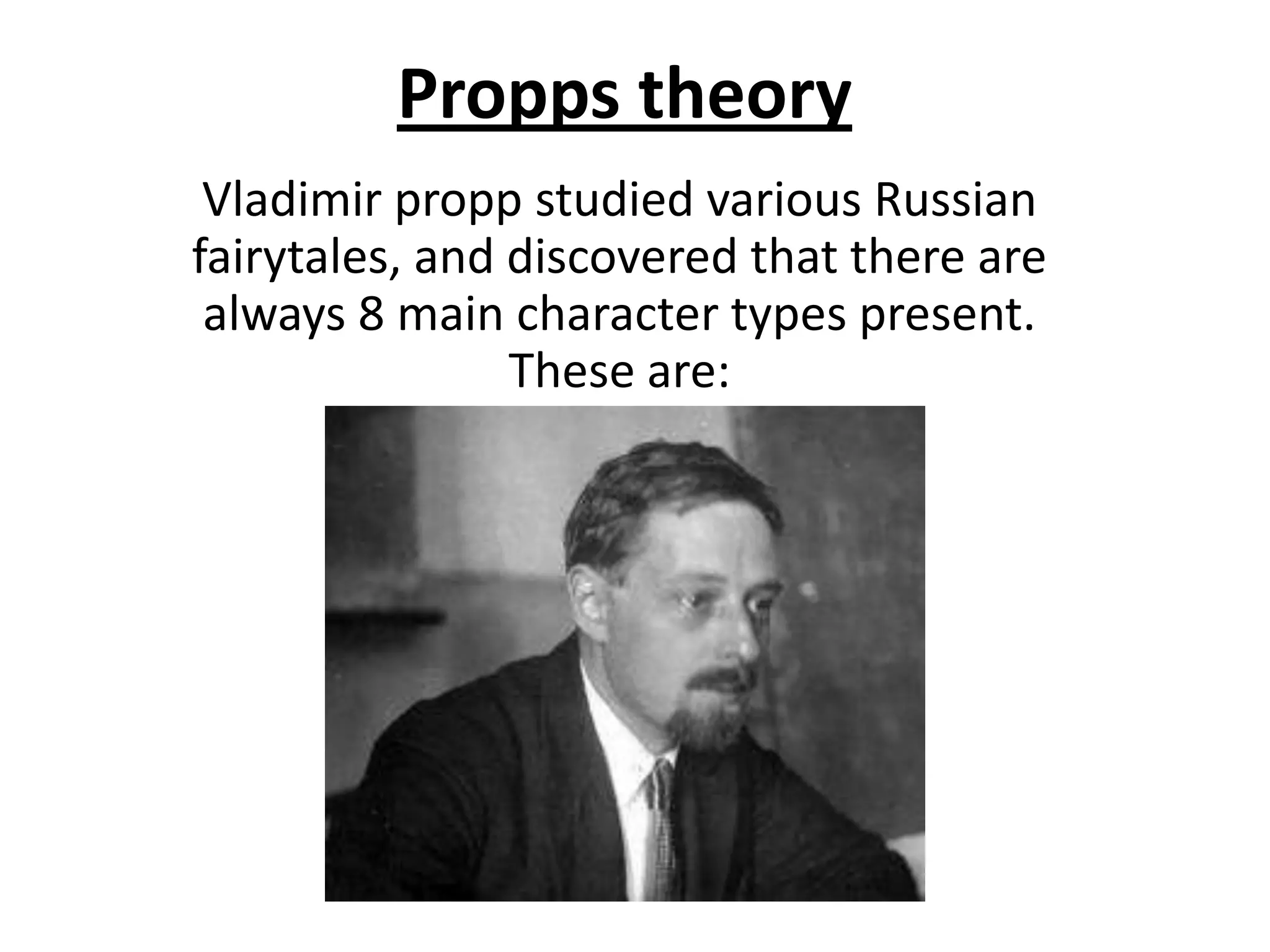
 Vladimir propp studied various Russian
fairytales, and discovered that there are
 always 8 main character types present.
                These are:
. The dispatcher —character who makes the lack known and
  sends the hero off.
• The (magical) helper — helps the hero in the quest.
• The princess or prize — the hero deserves her throughout
  the story but is unable to marry her because of an unfair
  evil, usually because of the villain. the hero's journey is often
  ended when he marries the princess, thereby beating the
  villain.
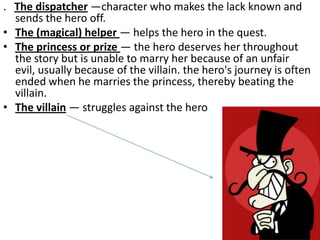
• The villain — struggles against the hero
Her father — gives the task to the hero, identifies the false
hero, and marries the hero, often sought for during the
narrative. Propp noted that functionally, the princess and
the father cannot be clearly distinguished.
The donor —prepares the hero or gives the hero some
magical object.
False hero — takes credit for the hero’s actions or tries to
marry the princess
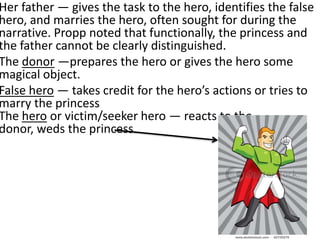
The hero or victim/seeker hero — reacts to the
donor, weds the princess.
applying propps theory

• Trying to adhere to propps theory is difficult in
  our video, as we only have 2 characters.
  However, some of the roles that propp states
  in his theory can be applied to them:
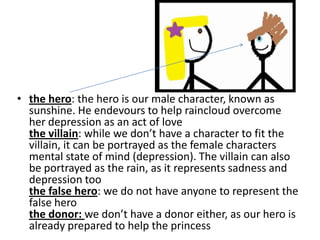
• the hero: the hero is our male character, known as
  sunshine. He endevours to help raincloud overcome
  her depression as an act of love
  the villain: while we don’t have a character to fit the
  villain, it can be portrayed as the female characters
  mental state of mind (depression). The villain can also
  be portrayed as the rain, as it represents sadness and
  depression too
  the false hero: we do not have anyone to represent the
  false hero
  the donor: we don’t have a donor either, as our hero is
  already prepared to help the princess
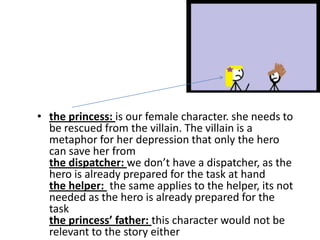
• the princess: is our female character. she needs to
  be rescued from the villain. The villain is a
  metaphor for her depression that only the hero
  can save her from
  the dispatcher: we don’t have a dispatcher, as the
  hero is already prepared for the task at hand
  the helper: the same applies to the helper, its not
  needed as the hero is already prepared for the
  task
  the princess’ father: this character would not be
  relevant to the story either

Propps theory (done)

  • 1.
    Propps theory Vladimirpropp studied various Russian fairytales, and discovered that there are always 8 main character types present. These are:
  • 2.
    . The dispatcher—character who makes the lack known and sends the hero off. • The (magical) helper — helps the hero in the quest. • The princess or prize — the hero deserves her throughout the story but is unable to marry her because of an unfair evil, usually because of the villain. the hero's journey is often ended when he marries the princess, thereby beating the villain. • The villain — struggles against the hero
  • 3.
    Her father —gives the task to the hero, identifies the false hero, and marries the hero, often sought for during the narrative. Propp noted that functionally, the princess and the father cannot be clearly distinguished. The donor —prepares the hero or gives the hero some magical object. False hero — takes credit for the hero’s actions or tries to marry the princess The hero or victim/seeker hero — reacts to the donor, weds the princess.
  • 4.
    applying propps theory •Trying to adhere to propps theory is difficult in our video, as we only have 2 characters. However, some of the roles that propp states in his theory can be applied to them:
  • 5.
    • the hero:the hero is our male character, known as sunshine. He endevours to help raincloud overcome her depression as an act of love the villain: while we don’t have a character to fit the villain, it can be portrayed as the female characters mental state of mind (depression). The villain can also be portrayed as the rain, as it represents sadness and depression too the false hero: we do not have anyone to represent the false hero the donor: we don’t have a donor either, as our hero is already prepared to help the princess
  • 6.
    • the princess:is our female character. she needs to be rescued from the villain. The villain is a metaphor for her depression that only the hero can save her from the dispatcher: we don’t have a dispatcher, as the hero is already prepared for the task at hand the helper: the same applies to the helper, its not needed as the hero is already prepared for the task the princess’ father: this character would not be relevant to the story either