Downloaded 587 times

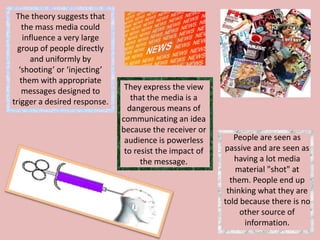

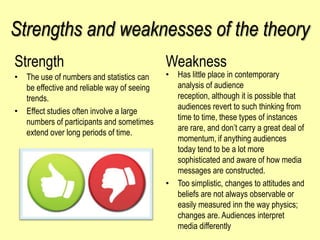

The hypodermic needle theory emerged in the 1940s-1950s and suggested that mass media had a powerful and direct effect on audiences, "injecting" them with messages that would trigger a desired response. Several factors contributed to this view, including the rise of radio and TV, advertising and propaganda industries, and studies of media influence on children. The theory saw audiences as passive receivers with no ability to resist media messages. An example was a 1938 radio dramatization of War of the Worlds that some listeners mistakenly believed was real news of a Martian invasion. While the theory provided large datasets, it is now seen as too simplistic since audiences interpret media differently and are more sophisticated than assumed.


