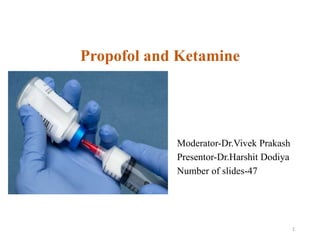
Propofol and Ketamine
Moderator-Dr.Vivek Prakash
Presentor-Dr.Harshit Dodiya
Number of slides-47
1
PROPOFOL
• Introduction
• Propofol is a substituted
isopropylphenol which is
commonly used as an
induction agent in
anesthesia.
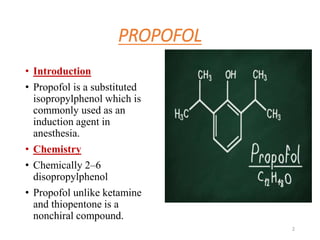
• Chemistry
• Chemically 2–6
disopropylphenol
• Propofol unlike ketamine
and thiopentone is a
nonchiral compound.
2
Presentation
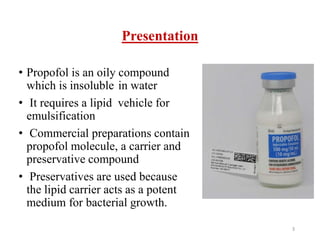
• Propofol is an oily compound
which is insoluble in water
• It requires a lipid vehicle for
emulsification
• Commercial preparations contain
propofol molecule, a carrier and
preservative compound
• Preservatives are used because
the lipid carrier acts as a potent
medium for bacterial growth.
3
Preparations
• The various preparations are:
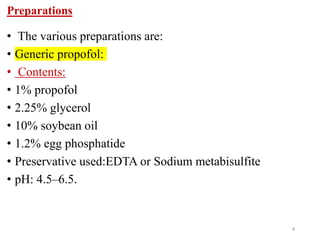
• Generic propofol:
• Contents:
• 1% propofol
• 2.25% glycerol
• 10% soybean oil
• 1.2% egg phosphatide
• Preservative used:EDTA or Sodium metabisulfite
• pH: 4.5–6.5.
4
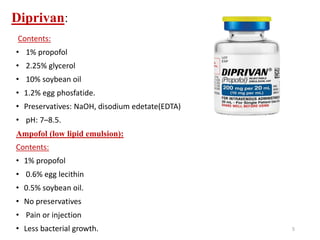
Diprivan:
Contents:
• 1% propofol
• 2.25% glycerol
• 10% soybean oil
• 1.2% egg phosfatide.
• Preservatives: NaOH, disodium edetate(EDTA)
• pH: 7–8.5.
Ampofol (low lipid emulsion):
Contents:
• 1% propofol
• 0.6% egg lecithin
• 0.5% soybean oil.
• No preservatives
• Pain or injection
• Less bacterial growth. 5
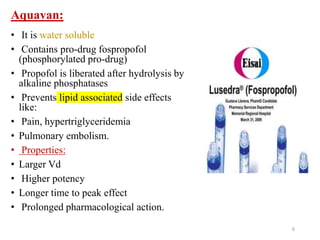
Aquavan:
• It is water soluble
• Contains pro-drug fospropofol
(phosphorylated pro-drug)
• Propofol is liberated after hydrolysis by
alkaline phosphatases
• Prevents lipid associated side effects
like:
• Pain, hypertriglyceridemia
• Pulmonary embolism.
• Properties:
• Larger Vd
• Higher potency
• Longer time to peak effect
• Prolonged pharmacological action.
6
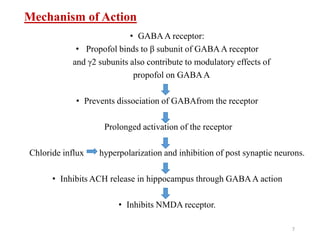
Mechanism of Action
• GABAA receptor:
• Propofol binds to β subunit of GABAA receptor
and γ2 subunits also contribute to modulatory effects of
propofol on GABAA
• Prevents dissociation of GABAfrom the receptor
Prolonged activation of the receptor
Chloride influx hyperpolarization and inhibition of post synaptic neurons.
• Inhibits ACH release in hippocampus through GABAA action
• Inhibits NMDA receptor.
7
Pharmacodynamics
• Central nervous system:
• Rapid smooth induction
• Rapid and clear headed recovery
• Cerebroprotective:
• Antioxidant properties
• intracranial pressure, CMRO2 and cerebral perfusion pressure.
• Cerebrovascular autoregulation
• Anti convulsant
• Tolerance occurs to repeated dosing
• Increases dopamine in nucleus accumbens: results in drug abuse.
8
↓
• CVS : It decreases blood pressure which is accompanied
by changes in cardiac outputand systemic vascular
resistance.
It leads to inhibition of sympathetic vasoconstrictor
nerve activity.
Propofol depresses baroreceptor reflex so despite change in blood
pressure , heart rate remains unchanged
9
• Bradycardia and asystole is observed after induction with
propofol,so anticholinergic
drug is given
• Bradycardia related death: This is a state of profound
bradycardia and asystole after administration of propofol
despite prophylactic anticholinergics.
• Treatment with direct beta agonist such as epinephrine.
10
• Respiratory system:
• Produces short duration apnea (30–60 sec) after induction in 25–30%
patients
• Decreases tidal volume and frequency of breathing
• Response to CO2 and hypoxemia is reduced by direct action on
carotid body receptors
• Produces bronchodilation and reduces intraoperative wheezing.
• Laryngeal reflexes are lost.
11
Hepatic and renal functions:
• Prolonged infusion: Causes hepatocellular injury resulting in
acidosis
• Increases phenols in urine: This causes phenoluria resulting
in green color urine.
• Urinary uric acid excretion increases resulting in turbid urine
• Decreases hepatic blood flow.
Eye
• Intraocular pressure: Decreases intraocular pressure
following intubation.
12
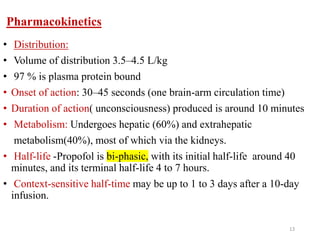
Pharmacokinetics
• Distribution:
• Volume of distribution 3.5–4.5 L/kg
• 97 % is plasma protein bound
• Onset of action: 30–45 seconds (one brain-arm circulation time)
• Duration of action( unconsciousness) produced is around 10 minutes
• Metabolism: Undergoes hepatic (60%) and extrahepatic
metabolism(40%), most of which via the kidneys.
• Half-life -Propofol is bi-phasic, with its initial half-life around 40
minutes, and its terminal half-life 4 to 7 hours.
• Context-sensitive half-time may be up to 1 to 3 days after a 10-day
infusion.
13
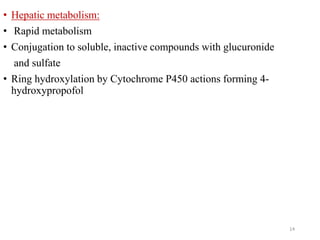
• Hepatic metabolism:
• Rapid metabolism
• Conjugation to soluble, inactive compounds with glucuronide
and sulfate
• Ring hydroxylation by Cytochrome P450 actions forming 4-
hydroxypropofol
14
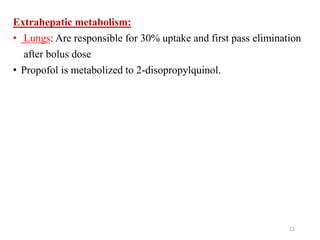
Extrahepatic metabolism:
• Lungs: Are responsible for 30% uptake and first pass elimination
after bolus dose
• Propofol is metabolized to 2-disopropylquinol.
15
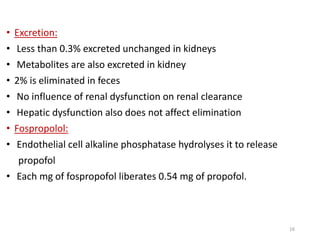
• Excretion:
• Less than 0.3% excreted unchanged in kidneys
• Metabolites are also excreted in kidney
• 2% is eliminated in feces
• No influence of renal dysfunction on renal clearance
• Hepatic dysfunction also does not affect elimination
• Fospropolol:
• Endothelial cell alkaline phosphatase hydrolyses it to release
propofol
• Each mg of fospropofol liberates 0.54 mg of propofol.
16
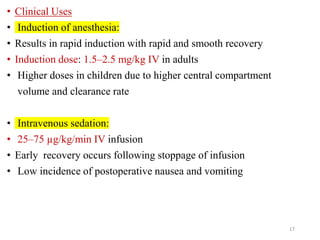
• Clinical Uses
• Induction of anesthesia:
• Results in rapid induction with rapid and smooth recovery
• Induction dose: 1.5–2.5 mg/kg IV in adults
• Higher doses in children due to higher central compartment
volume and clearance rate
• Intravenous sedation:
• 25–75 µg/kg/min IV infusion
• Early recovery occurs following stoppage of infusion
• Low incidence of postoperative nausea and vomiting
17
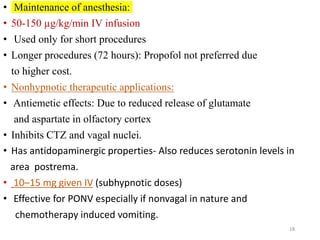
• Maintenance of anesthesia:
• 50-150 µg/kg/min IV infusion
• Used only for short procedures
• Longer procedures (72 hours): Propofol not preferred due
to higher cost.
• Nonhypnotic therapeutic applications:
• Antiemetic effects: Due to reduced release of glutamate
and aspartate in olfactory cortex
• Inhibits CTZ and vagal nuclei.
• Has antidopaminergic properties- Also reduces serotonin levels in
area postrema.
• 10–15 mg given IV (subhypnotic doses)
• Effective for PONV especially if nonvagal in nature and
chemotherapy induced vomiting.
18
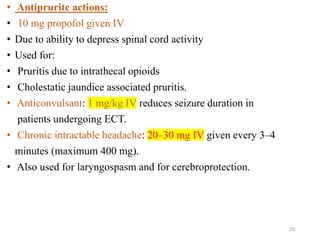
• Antipruritc actions:
• 10 mg propofol given IV
• Due to ability to depress spinal cord activity
• Used for:
• Pruritis due to intrathecal opioids
• Cholestatic jaundice associated pruritis.
• Anticonvulsant: 1 mg/kg IV reduces seizure duration in
patients undergoing ECT.
• Chronic intractable headache: 20–30 mg IV given every 3–4
minutes (maximum 400 mg).
• Also used for laryngospasm and for cerebroprotection.
19
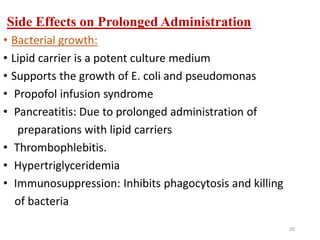
Side Effects on Prolonged Administration
• Bacterial growth:
• Lipid carrier is a potent culture medium
• Supports the growth of E. coli and pseudomonas
• Propofol infusion syndrome
• Pancreatitis: Due to prolonged administration of
preparations with lipid carriers
• Thrombophlebitis.
• Hypertriglyceridemia
• Immunosuppression: Inhibits phagocytosis and killing
of bacteria
20
• It is recommended that:
• an aseptic technique should be used by disinfecting the
ampoule neck surface or rubber stopper with 70%
isopropyl alcohol
• Content of an opened ampoule must be discarded
if they are not used within 6 hours
• In the ICU ,any unused portion must be discarded after
12 hours
21
• A new formulation of propofol (a mixture of long-chain and
medium-chain triglycerides in the carrier emulsion;
Propofol-MCT/LCT) reduces the incidence of pain on
injection.
• Pre-treatment with lidocaine before Propofol-MCT/LCT
have an additional effect.
22
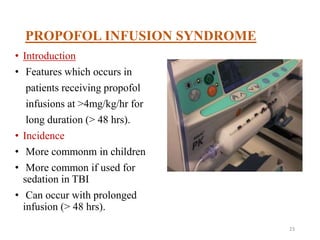
PROPOFOL INFUSION SYNDROME
• Introduction
• Features which occurs in
patients receiving propofol
infusions at >4mg/kg/hr for
long duration (> 48 hrs).
• Incidence
• More commonm in children
• More common if used for
sedation in TBI
• Can occur with prolonged
infusion (> 48 hrs).
23
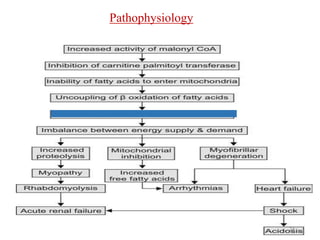
Pathophysiology
24
• Clinical Features
• Profound metabolic acidosis (base deficit > 10mmol/l)
• Lactic acidosis
• Hyperkalemia
• Hyperlipidemia hypertriglyceridemia
• Acute refractory bradycardia, sinus arrest, asystole
• Cardiomyopathy, cardiac failure, hypotension
• Fatty liver, hepatomegaly
• Skeletal myopathy, rhabdomyolysis
• Acute renal failure.
25
• Investigations
• ABG for metabolic acidosis
• Triglycerides
• Lactate
• Creatinine kinase
• Myoglobin.
• Prevention
• Avoid high dose propofol
• Minimize duration of infusion
• Avoid infusion in:Children
26
• Treatment
• Mainly supportive
• Stop propofol infusion
• Nutritional support:
• Add dextrose to IV fluids (4–8 mg/kg/hr glucose).
• Renal support:
• Dialysis
• Continuous renal replacement therapy.
• Maintain oxygenation
27
• Infusion of propofol lipid-based drug must be
monitored closely when given in conjunction with
enteral or parenteral nutrition to avoid overfeeding
and hypertriglyceridemia.
• Enteral and parenteral formulas must be
manipulated to provide optimal nutrient intakes
while not overfeeding with fat when using
increased amounts of lipid-based drugs.
28
ICU GUIDELINE: ADJUSTING GOAL FEED RATES IN
THE PATIENT RECEIVING A PROPOFOL INFUSION
• Propofol is a lipid solution containing 1.1 kcal /mL. When
provided at an infusion rate exceeding 10 mL/hr, the caloric
value of the propofol in combination with tube feeds can lead to
significant overfeeding.
• Overfeeding is associated with hyperglycemia, fatty liver,
hypertryglyceridemia, and excess CO2 production.
In order to prevent overfeeding and ensure optimal protein is
provided, tube feed rate flushes should be adjusted.
29
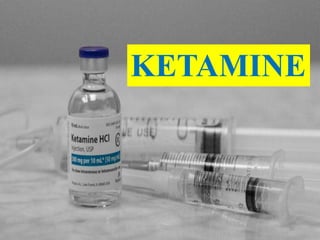
KETAMINE
30
INTRODUCTION:-
• Ketamine is a phencyclidine derivative.
• Produces dissociative anesthesia characterized by evidence on the EEG
of dissociation between the thalamocortical and limbic system.
• Ketamine is frequently described as a "unique drug“
• Because it has hypnotic, analgesic and amnesic effects - no other drug
used in clinical practice combines these three important features.
31
Mechanism Of Action
• The mechanism of action of ketamine induced
analgesia & dissociative anaesthesia is unknown.
• It interacts with multiple CNS receptors.
• Ketamine binds non-competitively to the
phencyclidine recognition site on N-methyl-D-
aspartate (NMDA) receptors.
• In addition ketamine exerts effect at other sites
including opioid receptor & muscarinic receptors &
nicotinic acetylcholine receptors.
32
Pharmacokinetics
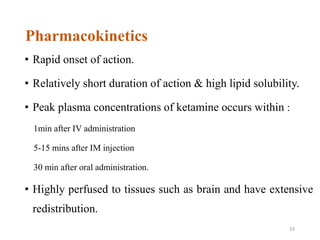
• Rapid onset of action.
• Relatively short duration of action & high lipid solubility.
• Peak plasma concentrations of ketamine occurs within :
1min after IV administration
5-15 mins after IM injection
30 min after oral administration.
• Highly perfused to tissues such as brain and have extensive
redistribution.
33
Pharmacokinetics:-
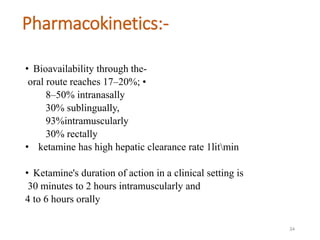
• Bioavailability through the-
oral route reaches 17–20%; •
8–50% intranasally
30% sublingually,
93%intramuscularly
30% rectally
• ketamine has high hepatic clearance rate 1litmin
• Ketamine's duration of action in a clinical setting is
30 minutes to 2 hours intramuscularly and
4 to 6 hours orally
34
Routes of Administration:-
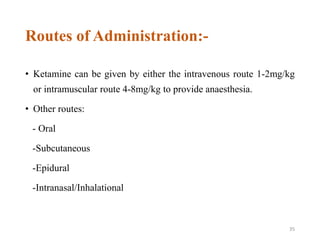
• Ketamine can be given by either the intravenous route 1-2mg/kg
or intramuscular route 4-8mg/kg to provide anaesthesia.
• Other routes:
- Oral
-Subcutaneous
-Epidural
-Intranasal/Inhalational
35
Dosing:-
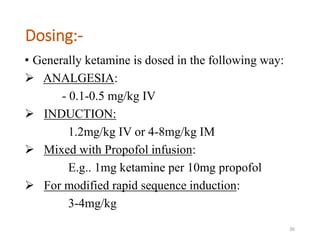
• Generally ketamine is dosed in the following way:
 ANALGESIA:
- 0.1-0.5 mg/kg IV
 INDUCTION:
1.2mg/kg IV or 4-8mg/kg IM
 Mixed with Propofol infusion:
E.g.. 1mg ketamine per 10mg propofol
 For modified rapid sequence induction:
3-4mg/kg
36
Effect on Body System:
Cardiovascular System:
• Stimulates sympathetic flow, causing stimulation of heart
with increased BP and Cardiac output.
• The heart rate is increased by about 20%- the overall effect
is therefore to increase the workload of the heart.
• BP rises over 3-5min and returns to normal after 10-20 min,
effect do not seems dose related.
• Premedication with Midazolam may reduce this rise in BP.
37
Effect on Body System….
Central Nervous System:
• Potent cerebral vasodilator
• Increase cerebral blood flow by 60% in normal individual &
causes a rise in ICP.
• CNS effect after IV injection is slower than other anaesthetic
agents.
• Duration of action depends on route of administration.
• Dissociative anaesthesia.
• Recovery is not smooth, Pt. may be agitated, disorientated
,restless and even crying called emergence delirium
38
USES :-
• Anesthesia in children, as the sole anesthetic for
minor procedures such as ear foreign body removal,
entrapment of penis in zipper.
• Improvement of psychiatric disorders.
• As a sedative for physically painful procedures in
emergency department.
• To supplement spinal or epidural anesthesia
39
USES:-
• For people in shock may be due to sepsis or acute
blood loss who are at risk of hypotension .
• Ketamine is a bronchodilator and can be used as
part of the treatment for status asthmatics.
• In Modified rapid sequence induction..
• For Patients who have strong allergy to sulfur group
or egg proteins ( as is a component of thiopental
and propofol respectively),ketamine may be used.
40
SIDE EFFECTS:-
• Mostly related to the R enantiomer
• Increase pulse rate, high blood pressure.
• Increased intracranial pressure.
• Transient reddening of the skin , transient measles-like
rash .
• reduced appetite, nausea, increased salivation,
increased Lacrimation and vomiting
• Pain, eruptions or rashes at the injection site .
• Emergence reaction
• Tonic clonic movements.
41
ABSOLUTE
CONTRAINDICATION
• Schizophrenia and psychosis
• Ketamine hypersensitivity
• Age < 3months, risk of respiratory complications
• porphyria
• Hyperthyroidism and thyroid medication
• Uncontrolled epilepsy
42
RELATIVE
CONTRAINDICATION
• Posterior oropharynx procedures
• Pregnancy
• Tracheal surgery or tracheal stenosis
• Significant upper respiratory tract infection
• Uncontrolled Hypertension
• Eye injury / increased intraocular pressure( usually
mild <3-5mmhg)
43
44

propofol and ketamine.pptxvbbbbbbbbbnnnnn

  • 1.
    Propofol and Ketamine Moderator-Dr.VivekPrakash Presentor-Dr.Harshit Dodiya Number of slides-47 1
  • 2.
    PROPOFOL • Introduction • Propofolis a substituted isopropylphenol which is commonly used as an induction agent in anesthesia. • Chemistry • Chemically 2–6 disopropylphenol • Propofol unlike ketamine and thiopentone is a nonchiral compound. 2
  • 3.
    Presentation • Propofol isan oily compound which is insoluble in water • It requires a lipid vehicle for emulsification • Commercial preparations contain propofol molecule, a carrier and preservative compound • Preservatives are used because the lipid carrier acts as a potent medium for bacterial growth. 3
  • 4.
    Preparations • The variouspreparations are: • Generic propofol: • Contents: • 1% propofol • 2.25% glycerol • 10% soybean oil • 1.2% egg phosphatide • Preservative used:EDTA or Sodium metabisulfite • pH: 4.5–6.5. 4
  • 5.
    Diprivan: Contents: • 1% propofol •2.25% glycerol • 10% soybean oil • 1.2% egg phosfatide. • Preservatives: NaOH, disodium edetate(EDTA) • pH: 7–8.5. Ampofol (low lipid emulsion): Contents: • 1% propofol • 0.6% egg lecithin • 0.5% soybean oil. • No preservatives • Pain or injection • Less bacterial growth. 5
  • 6.
    Aquavan: • It iswater soluble • Contains pro-drug fospropofol (phosphorylated pro-drug) • Propofol is liberated after hydrolysis by alkaline phosphatases • Prevents lipid associated side effects like: • Pain, hypertriglyceridemia • Pulmonary embolism. • Properties: • Larger Vd • Higher potency • Longer time to peak effect • Prolonged pharmacological action. 6
  • 7.
    Mechanism of Action •GABAA receptor: • Propofol binds to β subunit of GABAA receptor and γ2 subunits also contribute to modulatory effects of propofol on GABAA • Prevents dissociation of GABAfrom the receptor Prolonged activation of the receptor Chloride influx hyperpolarization and inhibition of post synaptic neurons. • Inhibits ACH release in hippocampus through GABAA action • Inhibits NMDA receptor. 7
  • 8.
    Pharmacodynamics • Central nervoussystem: • Rapid smooth induction • Rapid and clear headed recovery • Cerebroprotective: • Antioxidant properties • intracranial pressure, CMRO2 and cerebral perfusion pressure. • Cerebrovascular autoregulation • Anti convulsant • Tolerance occurs to repeated dosing • Increases dopamine in nucleus accumbens: results in drug abuse. 8 ↓
  • 9.
    • CVS :It decreases blood pressure which is accompanied by changes in cardiac outputand systemic vascular resistance. It leads to inhibition of sympathetic vasoconstrictor nerve activity. Propofol depresses baroreceptor reflex so despite change in blood pressure , heart rate remains unchanged 9
  • 10.
    • Bradycardia andasystole is observed after induction with propofol,so anticholinergic drug is given • Bradycardia related death: This is a state of profound bradycardia and asystole after administration of propofol despite prophylactic anticholinergics. • Treatment with direct beta agonist such as epinephrine. 10
  • 11.
    • Respiratory system: •Produces short duration apnea (30–60 sec) after induction in 25–30% patients • Decreases tidal volume and frequency of breathing • Response to CO2 and hypoxemia is reduced by direct action on carotid body receptors • Produces bronchodilation and reduces intraoperative wheezing. • Laryngeal reflexes are lost. 11
  • 12.
    Hepatic and renalfunctions: • Prolonged infusion: Causes hepatocellular injury resulting in acidosis • Increases phenols in urine: This causes phenoluria resulting in green color urine. • Urinary uric acid excretion increases resulting in turbid urine • Decreases hepatic blood flow. Eye • Intraocular pressure: Decreases intraocular pressure following intubation. 12
  • 13.
    Pharmacokinetics • Distribution: • Volumeof distribution 3.5–4.5 L/kg • 97 % is plasma protein bound • Onset of action: 30–45 seconds (one brain-arm circulation time) • Duration of action( unconsciousness) produced is around 10 minutes • Metabolism: Undergoes hepatic (60%) and extrahepatic metabolism(40%), most of which via the kidneys. • Half-life -Propofol is bi-phasic, with its initial half-life around 40 minutes, and its terminal half-life 4 to 7 hours. • Context-sensitive half-time may be up to 1 to 3 days after a 10-day infusion. 13
  • 14.
    • Hepatic metabolism: •Rapid metabolism • Conjugation to soluble, inactive compounds with glucuronide and sulfate • Ring hydroxylation by Cytochrome P450 actions forming 4- hydroxypropofol 14
  • 15.
    Extrahepatic metabolism: • Lungs:Are responsible for 30% uptake and first pass elimination after bolus dose • Propofol is metabolized to 2-disopropylquinol. 15
  • 16.
    • Excretion: • Lessthan 0.3% excreted unchanged in kidneys • Metabolites are also excreted in kidney • 2% is eliminated in feces • No influence of renal dysfunction on renal clearance • Hepatic dysfunction also does not affect elimination • Fospropolol: • Endothelial cell alkaline phosphatase hydrolyses it to release propofol • Each mg of fospropofol liberates 0.54 mg of propofol. 16
  • 17.
    • Clinical Uses •Induction of anesthesia: • Results in rapid induction with rapid and smooth recovery • Induction dose: 1.5–2.5 mg/kg IV in adults • Higher doses in children due to higher central compartment volume and clearance rate • Intravenous sedation: • 25–75 µg/kg/min IV infusion • Early recovery occurs following stoppage of infusion • Low incidence of postoperative nausea and vomiting 17
  • 18.
    • Maintenance ofanesthesia: • 50-150 µg/kg/min IV infusion • Used only for short procedures • Longer procedures (72 hours): Propofol not preferred due to higher cost. • Nonhypnotic therapeutic applications: • Antiemetic effects: Due to reduced release of glutamate and aspartate in olfactory cortex • Inhibits CTZ and vagal nuclei. • Has antidopaminergic properties- Also reduces serotonin levels in area postrema. • 10–15 mg given IV (subhypnotic doses) • Effective for PONV especially if nonvagal in nature and chemotherapy induced vomiting. 18
  • 19.
    • Antipruritc actions: •10 mg propofol given IV • Due to ability to depress spinal cord activity • Used for: • Pruritis due to intrathecal opioids • Cholestatic jaundice associated pruritis. • Anticonvulsant: 1 mg/kg IV reduces seizure duration in patients undergoing ECT. • Chronic intractable headache: 20–30 mg IV given every 3–4 minutes (maximum 400 mg). • Also used for laryngospasm and for cerebroprotection. 19
  • 20.
    Side Effects onProlonged Administration • Bacterial growth: • Lipid carrier is a potent culture medium • Supports the growth of E. coli and pseudomonas • Propofol infusion syndrome • Pancreatitis: Due to prolonged administration of preparations with lipid carriers • Thrombophlebitis. • Hypertriglyceridemia • Immunosuppression: Inhibits phagocytosis and killing of bacteria 20
  • 21.
    • It isrecommended that: • an aseptic technique should be used by disinfecting the ampoule neck surface or rubber stopper with 70% isopropyl alcohol • Content of an opened ampoule must be discarded if they are not used within 6 hours • In the ICU ,any unused portion must be discarded after 12 hours 21
  • 22.
    • A newformulation of propofol (a mixture of long-chain and medium-chain triglycerides in the carrier emulsion; Propofol-MCT/LCT) reduces the incidence of pain on injection. • Pre-treatment with lidocaine before Propofol-MCT/LCT have an additional effect. 22
  • 23.
    PROPOFOL INFUSION SYNDROME •Introduction • Features which occurs in patients receiving propofol infusions at >4mg/kg/hr for long duration (> 48 hrs). • Incidence • More commonm in children • More common if used for sedation in TBI • Can occur with prolonged infusion (> 48 hrs). 23
  • 24.
  • 25.
    • Clinical Features •Profound metabolic acidosis (base deficit > 10mmol/l) • Lactic acidosis • Hyperkalemia • Hyperlipidemia hypertriglyceridemia • Acute refractory bradycardia, sinus arrest, asystole • Cardiomyopathy, cardiac failure, hypotension • Fatty liver, hepatomegaly • Skeletal myopathy, rhabdomyolysis • Acute renal failure. 25
  • 26.
    • Investigations • ABGfor metabolic acidosis • Triglycerides • Lactate • Creatinine kinase • Myoglobin. • Prevention • Avoid high dose propofol • Minimize duration of infusion • Avoid infusion in:Children 26
  • 27.
    • Treatment • Mainlysupportive • Stop propofol infusion • Nutritional support: • Add dextrose to IV fluids (4–8 mg/kg/hr glucose). • Renal support: • Dialysis • Continuous renal replacement therapy. • Maintain oxygenation 27
  • 28.
    • Infusion ofpropofol lipid-based drug must be monitored closely when given in conjunction with enteral or parenteral nutrition to avoid overfeeding and hypertriglyceridemia. • Enteral and parenteral formulas must be manipulated to provide optimal nutrient intakes while not overfeeding with fat when using increased amounts of lipid-based drugs. 28
  • 29.
    ICU GUIDELINE: ADJUSTINGGOAL FEED RATES IN THE PATIENT RECEIVING A PROPOFOL INFUSION • Propofol is a lipid solution containing 1.1 kcal /mL. When provided at an infusion rate exceeding 10 mL/hr, the caloric value of the propofol in combination with tube feeds can lead to significant overfeeding. • Overfeeding is associated with hyperglycemia, fatty liver, hypertryglyceridemia, and excess CO2 production. In order to prevent overfeeding and ensure optimal protein is provided, tube feed rate flushes should be adjusted. 29
  • 30.
  • 31.
    INTRODUCTION:- • Ketamine isa phencyclidine derivative. • Produces dissociative anesthesia characterized by evidence on the EEG of dissociation between the thalamocortical and limbic system. • Ketamine is frequently described as a "unique drug“ • Because it has hypnotic, analgesic and amnesic effects - no other drug used in clinical practice combines these three important features. 31
  • 32.
    Mechanism Of Action •The mechanism of action of ketamine induced analgesia & dissociative anaesthesia is unknown. • It interacts with multiple CNS receptors. • Ketamine binds non-competitively to the phencyclidine recognition site on N-methyl-D- aspartate (NMDA) receptors. • In addition ketamine exerts effect at other sites including opioid receptor & muscarinic receptors & nicotinic acetylcholine receptors. 32
  • 33.
    Pharmacokinetics • Rapid onsetof action. • Relatively short duration of action & high lipid solubility. • Peak plasma concentrations of ketamine occurs within : 1min after IV administration 5-15 mins after IM injection 30 min after oral administration. • Highly perfused to tissues such as brain and have extensive redistribution. 33
  • 34.
    Pharmacokinetics:- • Bioavailability throughthe- oral route reaches 17–20%; • 8–50% intranasally 30% sublingually, 93%intramuscularly 30% rectally • ketamine has high hepatic clearance rate 1litmin • Ketamine's duration of action in a clinical setting is 30 minutes to 2 hours intramuscularly and 4 to 6 hours orally 34
  • 35.
    Routes of Administration:- •Ketamine can be given by either the intravenous route 1-2mg/kg or intramuscular route 4-8mg/kg to provide anaesthesia. • Other routes: - Oral -Subcutaneous -Epidural -Intranasal/Inhalational 35
  • 36.
    Dosing:- • Generally ketamineis dosed in the following way:  ANALGESIA: - 0.1-0.5 mg/kg IV  INDUCTION: 1.2mg/kg IV or 4-8mg/kg IM  Mixed with Propofol infusion: E.g.. 1mg ketamine per 10mg propofol  For modified rapid sequence induction: 3-4mg/kg 36
  • 37.
    Effect on BodySystem: Cardiovascular System: • Stimulates sympathetic flow, causing stimulation of heart with increased BP and Cardiac output. • The heart rate is increased by about 20%- the overall effect is therefore to increase the workload of the heart. • BP rises over 3-5min and returns to normal after 10-20 min, effect do not seems dose related. • Premedication with Midazolam may reduce this rise in BP. 37
  • 38.
    Effect on BodySystem…. Central Nervous System: • Potent cerebral vasodilator • Increase cerebral blood flow by 60% in normal individual & causes a rise in ICP. • CNS effect after IV injection is slower than other anaesthetic agents. • Duration of action depends on route of administration. • Dissociative anaesthesia. • Recovery is not smooth, Pt. may be agitated, disorientated ,restless and even crying called emergence delirium 38
  • 39.
    USES :- • Anesthesiain children, as the sole anesthetic for minor procedures such as ear foreign body removal, entrapment of penis in zipper. • Improvement of psychiatric disorders. • As a sedative for physically painful procedures in emergency department. • To supplement spinal or epidural anesthesia 39
  • 40.
    USES:- • For peoplein shock may be due to sepsis or acute blood loss who are at risk of hypotension . • Ketamine is a bronchodilator and can be used as part of the treatment for status asthmatics. • In Modified rapid sequence induction.. • For Patients who have strong allergy to sulfur group or egg proteins ( as is a component of thiopental and propofol respectively),ketamine may be used. 40
  • 41.
    SIDE EFFECTS:- • Mostlyrelated to the R enantiomer • Increase pulse rate, high blood pressure. • Increased intracranial pressure. • Transient reddening of the skin , transient measles-like rash . • reduced appetite, nausea, increased salivation, increased Lacrimation and vomiting • Pain, eruptions or rashes at the injection site . • Emergence reaction • Tonic clonic movements. 41
  • 42.
    ABSOLUTE CONTRAINDICATION • Schizophrenia andpsychosis • Ketamine hypersensitivity • Age < 3months, risk of respiratory complications • porphyria • Hyperthyroidism and thyroid medication • Uncontrolled epilepsy 42
  • 43.
    RELATIVE CONTRAINDICATION • Posterior oropharynxprocedures • Pregnancy • Tracheal surgery or tracheal stenosis • Significant upper respiratory tract infection • Uncontrolled Hypertension • Eye injury / increased intraocular pressure( usually mild <3-5mmhg) 43
  • 44.