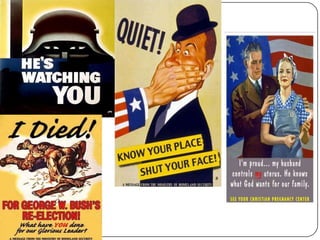
PROPAGANDA TECHNIQUES

  HOW DO WE GET PEOPLE TO DO
       WHAT WE WANT?
Propaganda Techniques
     There are eleven techniques that are commonly
     used to get others to do what we want them to
     do. They are:
1. Testimonials
2. Bandwagon                 7. Transfer
3. Card                      8. Simplification/Stereoty
   Stacking/Selective           ping
   Omission                  9. Assertion
4. Glittering Generalities   10.Lesser of two evils
5. Plain Folks               11.Pinpointing the enemy
6. Name Calling
1. TESTIMONIALS
 Testimonials are quotations or endorsements, in
 or out of context, which attempt to connect a
 famous or respectable person with a product or
 item.
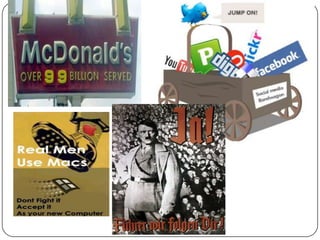
2. Bandwagon
 Bandwagon is an appeal to follow the crowd, to
  join in because others are as well. Bandwagon
  propaganda is trying to convince the subject that
  one side is the winning side, because more
  people have joined it. The subject is meant to
  believe that since so many people have joined,
  that victory is guaranteed.
 The subject is to be convinced by the propaganda
  that since everyone else is doing it, they will be
  left out if they do not.
3. Card Stacking or Selective
Omission
 It involves only presenting information that is
 positive to an idea or proposal and omitting
 information contrary to it. Card stacking is used in
 almost all forms of propaganda, and is extremely
 effective in convincing the public. The best way to
 deal with card stacking is to get more information
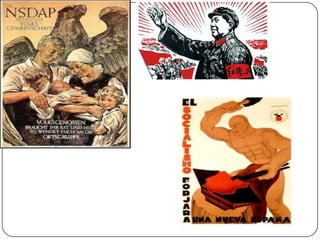
4. Glittering Generalities
 It also occurs very often in politics and political
  propaganda. Glittering generalities are words that
  have positive meaning for people. When these
  words are used, they demand approval without
  thinking, simply because such an important
  concept is involved.
 For example, when a person is asked to do
  something in "defense of democracy" they are
  more likely to agree. Words often used as
  glittering generalities are honor, glory, love of
  country, and especially in the United States,
  freedom.
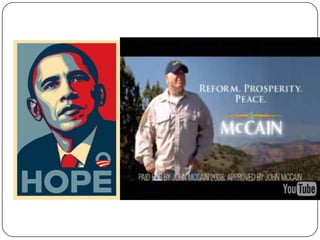
5. Plain Folks
 A method used to convince the public that a
  person’s views reflect those of the common
  person and that they are also working for the
  benefit of the common person.
 The person will often attempt to use the accent of
  a specific audience as well as using specific
  idioms or jokes or may attempt to increase the
  illusion through imperfect pronunciation,
  stuttering, and a more limited vocabulary. Errors
  such as these help add to the impression of
  sincerity and spontaneity.
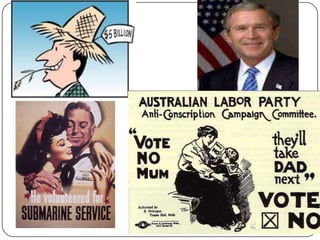
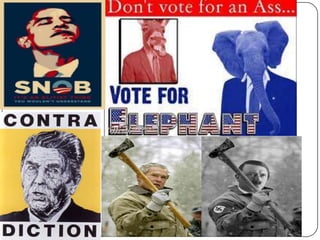
6. Name Calling
 It is the use of derogatory language or words that
 carry a negative connotation when describing an
 enemy. Often, name calling is employed using
 sarcasm and ridicule, and shows up often in
 political cartoons or writings.
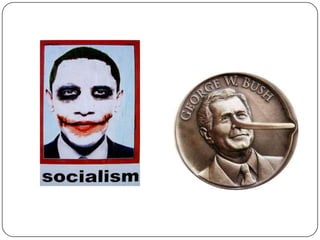
7. Transfer
 Transfer is often used in politics and during
  wartime. It is an attempt to make the subject view
  a certain item in the same way as they view
  another item. Although this technique is often
  used to transfer negative feelings for one object
  to another, it can also be used in positive ways.
 By linking an item to something the subject
  respects or enjoys, positive feelings can be
  generated for it. However, in politics, transfer is
  most often used to transfer blame or bad feelings
  from one politician to another of his friends or
  party members, or even to the party itself.
8. Simplification or Stereotyping
 This method often reduces a complex situation to
 a clear-cut choice involving good and evil. This
 technique is often useful in swaying uneducated
 audiences.
9. Assertion
 An enthusiastic or energetic statement presented
  as a fact, although it is not necessarily true.
 Any time an advertiser states that their product is
  the best without providing evidence.
 The subject, ideally, should simply agree to the
  statement without searching for additional
  information or reasoning. Assertions, although
  usually simple to spot, are often dangerous forms
  of propaganda because they often include
  falsehoods or lies.
10. Lesser of two evils
 This method tries to convince us of an idea or
  proposal by presenting it as the least offensive
  option. This technique is often implemented
  during wartime to convince people of the need for
  sacrifices or to justify difficult decisions.
 This technique is often accompanied by adding
  blame on an enemy country or political group.
 One idea or proposal is often depicted as one of
  the only options or paths.
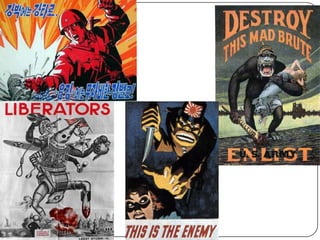
11. Pinpointing the Enemy
 This method is used often during wartime, and
 also in political campaigns and debates. This is
 an attempt to simplify a complex situation by
 presenting one specific group or person as the
 enemy.
Propaganda techniques

Propaganda techniques

  • 1.
    PROPAGANDA TECHNIQUES HOW DO WE GET PEOPLE TO DO WHAT WE WANT?
  • 2.
    Propaganda Techniques  There are eleven techniques that are commonly used to get others to do what we want them to do. They are: 1. Testimonials 2. Bandwagon 7. Transfer 3. Card 8. Simplification/Stereoty Stacking/Selective ping Omission 9. Assertion 4. Glittering Generalities 10.Lesser of two evils 5. Plain Folks 11.Pinpointing the enemy 6. Name Calling
  • 3.
    1. TESTIMONIALS  Testimonialsare quotations or endorsements, in or out of context, which attempt to connect a famous or respectable person with a product or item.
  • 5.
    2. Bandwagon  Bandwagonis an appeal to follow the crowd, to join in because others are as well. Bandwagon propaganda is trying to convince the subject that one side is the winning side, because more people have joined it. The subject is meant to believe that since so many people have joined, that victory is guaranteed.  The subject is to be convinced by the propaganda that since everyone else is doing it, they will be left out if they do not.
  • 7.
    3. Card Stackingor Selective Omission  It involves only presenting information that is positive to an idea or proposal and omitting information contrary to it. Card stacking is used in almost all forms of propaganda, and is extremely effective in convincing the public. The best way to deal with card stacking is to get more information
  • 9.
    4. Glittering Generalities It also occurs very often in politics and political propaganda. Glittering generalities are words that have positive meaning for people. When these words are used, they demand approval without thinking, simply because such an important concept is involved.  For example, when a person is asked to do something in "defense of democracy" they are more likely to agree. Words often used as glittering generalities are honor, glory, love of country, and especially in the United States, freedom.
  • 11.
    5. Plain Folks A method used to convince the public that a person’s views reflect those of the common person and that they are also working for the benefit of the common person.  The person will often attempt to use the accent of a specific audience as well as using specific idioms or jokes or may attempt to increase the illusion through imperfect pronunciation, stuttering, and a more limited vocabulary. Errors such as these help add to the impression of sincerity and spontaneity.
  • 13.
    6. Name Calling It is the use of derogatory language or words that carry a negative connotation when describing an enemy. Often, name calling is employed using sarcasm and ridicule, and shows up often in political cartoons or writings.
  • 15.
    7. Transfer  Transferis often used in politics and during wartime. It is an attempt to make the subject view a certain item in the same way as they view another item. Although this technique is often used to transfer negative feelings for one object to another, it can also be used in positive ways.  By linking an item to something the subject respects or enjoys, positive feelings can be generated for it. However, in politics, transfer is most often used to transfer blame or bad feelings from one politician to another of his friends or party members, or even to the party itself.
  • 17.
    8. Simplification orStereotyping  This method often reduces a complex situation to a clear-cut choice involving good and evil. This technique is often useful in swaying uneducated audiences.
  • 19.
    9. Assertion  Anenthusiastic or energetic statement presented as a fact, although it is not necessarily true.  Any time an advertiser states that their product is the best without providing evidence.  The subject, ideally, should simply agree to the statement without searching for additional information or reasoning. Assertions, although usually simple to spot, are often dangerous forms of propaganda because they often include falsehoods or lies.
  • 21.
    10. Lesser oftwo evils  This method tries to convince us of an idea or proposal by presenting it as the least offensive option. This technique is often implemented during wartime to convince people of the need for sacrifices or to justify difficult decisions.  This technique is often accompanied by adding blame on an enemy country or political group.  One idea or proposal is often depicted as one of the only options or paths.
  • 23.
    11. Pinpointing theEnemy  This method is used often during wartime, and also in political campaigns and debates. This is an attempt to simplify a complex situation by presenting one specific group or person as the enemy.