

SCIENCE REVIEW
      TEST READINESS
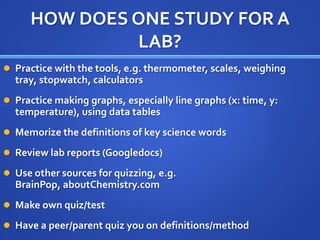
HOW DOES ONE STUDY FOR A
               LAB?
 Practice with the tools, e.g. thermometer, scales, weighing
  tray, stopwatch, calculators
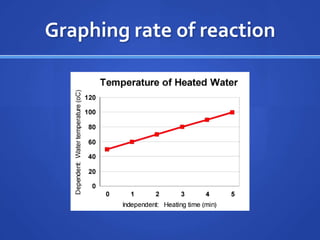
 Practice making graphs, especially line graphs (x: time, y:
  temperature), using data tables
 Memorize the definitions of key science words

 Review lab reports (Googledocs)

 Use other sources for quizzing, e.g.
  BrainPop, aboutChemistry.com
 Make own quiz/test

 Have a peer/parent quiz you on definitions/method
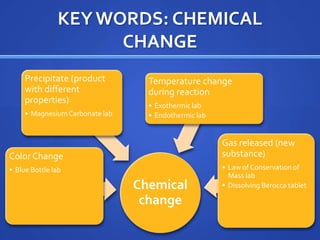
KEY WORDS: CHEMICAL
                     CHANGE
     Precipitate (product          Temperature change
     with different                during reaction
     properties)
                                   • Exothermic lab
     • Magnesium Carbonate lab     • Endothermic lab


                                                       Gas released (new
Color Change                                           substance)
• Blue Bottle lab                                      • Law of Conservation of
                                                         Mass lab
                                 Chemical              • Dissolving Berocca tablet

                                  change
chemical change
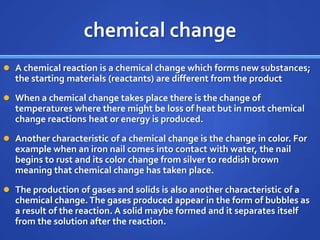
 A chemical reaction is a chemical change which forms new substances;
  the starting materials (reactants) are different from the product
 When a chemical change takes place there is the change of
  temperatures where there might be loss of heat but in most chemical
  change reactions heat or energy is produced.
 Another characteristic of a chemical change is the change in color. For
  example when an iron nail comes into contact with water, the nail
  begins to rust and its color change from silver to reddish brown
  meaning that chemical change has taken place.
 The production of gases and solids is also another characteristic of a
  chemical change. The gases produced appear in the form of bubbles as
  a result of the reaction. A solid maybe formed and it separates itself
  from the solution after the reaction.
BrainPop Movie

 http://www.brainpop.com/science/matterandchemistry/pr
  opertychanges/preview.weml
Endothermic reaction
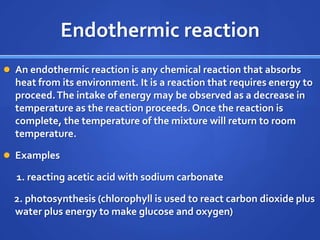
 An endothermic reaction is any chemical reaction that absorbs
  heat from its environment. It is a reaction that requires energy to
  proceed. The intake of energy may be observed as a decrease in
  temperature as the reaction proceeds. Once the reaction is
  complete, the temperature of the mixture will return to room
  temperature.

 Examples

  1. reacting acetic acid with sodium carbonate

  2. photosynthesis (chlorophyll is used to react carbon dioxide plus
  water plus energy to make glucose and oxygen)
Exothermic reaction
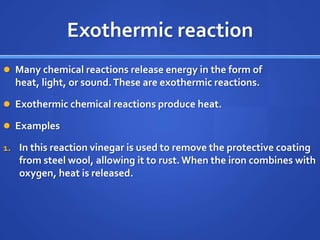
 Many chemical reactions release energy in the form of
  heat, light, or sound. These are exothermic reactions.

 Exothermic chemical reactions produce heat.

 Examples

1. In this reaction vinegar is used to remove the protective coating
   from steel wool, allowing it to rust. When the iron combines with
   oxygen, heat is released.
Collecting Data

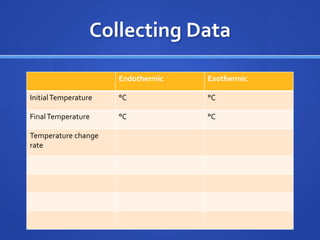
                      Endothermic   Exothermic

Initial Temperature   °C            °C

Final Temperature     °C            °C

Temperature change
rate
Graphing rate of reaction
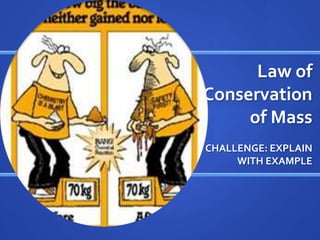
Law of
Conservation
     of Mass
CHALLENGE: EXPLAIN
     WITH EXAMPLE
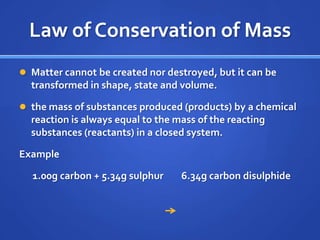
Law of Conservation of Mass
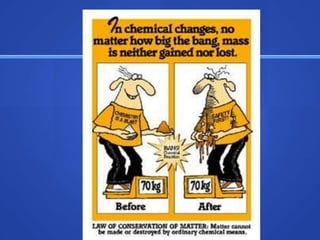
 Matter cannot be created nor destroyed, but it can be
  transformed in shape, state and volume.

 the mass of substances produced (products) by a chemical
  reaction is always equal to the mass of the reacting
  substances (reactants) in a closed system.

Example

  1.00g carbon + 5.34g sulphur     6.34g carbon disulphide
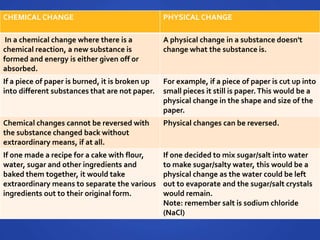
CHEMICAL CHANGE                                  PHYSICAL CHANGE

 In a chemical change where there is a           A physical change in a substance doesn't
chemical reaction, a new substance is            change what the substance is.
formed and energy is either given off or
absorbed.
If a piece of paper is burned, it is broken up   For example, if a piece of paper is cut up into
into different substances that are not paper.    small pieces it still is paper. This would be a
                                                 physical change in the shape and size of the
                                                 paper.
Chemical changes cannot be reversed with         Physical changes can be reversed.
the substance changed back without
extraordinary means, if at all.
If one made a recipe for a cake with flour,      If one decided to mix sugar/salt into water
water, sugar and other ingredients and           to make sugar/salty water, this would be a
baked them together, it would take               physical change as the water could be left
extraordinary means to separate the various      out to evaporate and the sugar/salt crystals
ingredients out to their original form.          would remain.
                                                 Note: remember salt is sodium chloride
                                                 (NaCl)
GOOD LUCK!


Photo credit: http://www.flickr.com/photos/ittybittiesforyou/5396563894/

Chemistry review

  • 1.
    SCIENCE REVIEW TEST READINESS
  • 2.
    HOW DOES ONESTUDY FOR A LAB?  Practice with the tools, e.g. thermometer, scales, weighing tray, stopwatch, calculators  Practice making graphs, especially line graphs (x: time, y: temperature), using data tables  Memorize the definitions of key science words  Review lab reports (Googledocs)  Use other sources for quizzing, e.g. BrainPop, aboutChemistry.com  Make own quiz/test  Have a peer/parent quiz you on definitions/method
  • 3.
    KEY WORDS: CHEMICAL CHANGE Precipitate (product Temperature change with different during reaction properties) • Exothermic lab • Magnesium Carbonate lab • Endothermic lab Gas released (new Color Change substance) • Blue Bottle lab • Law of Conservation of Mass lab Chemical • Dissolving Berocca tablet change
  • 4.
    chemical change  Achemical reaction is a chemical change which forms new substances; the starting materials (reactants) are different from the product  When a chemical change takes place there is the change of temperatures where there might be loss of heat but in most chemical change reactions heat or energy is produced.  Another characteristic of a chemical change is the change in color. For example when an iron nail comes into contact with water, the nail begins to rust and its color change from silver to reddish brown meaning that chemical change has taken place.  The production of gases and solids is also another characteristic of a chemical change. The gases produced appear in the form of bubbles as a result of the reaction. A solid maybe formed and it separates itself from the solution after the reaction.
  • 5.
  • 6.
    Endothermic reaction  Anendothermic reaction is any chemical reaction that absorbs heat from its environment. It is a reaction that requires energy to proceed. The intake of energy may be observed as a decrease in temperature as the reaction proceeds. Once the reaction is complete, the temperature of the mixture will return to room temperature.  Examples 1. reacting acetic acid with sodium carbonate 2. photosynthesis (chlorophyll is used to react carbon dioxide plus water plus energy to make glucose and oxygen)
  • 7.
    Exothermic reaction  Manychemical reactions release energy in the form of heat, light, or sound. These are exothermic reactions.  Exothermic chemical reactions produce heat.  Examples 1. In this reaction vinegar is used to remove the protective coating from steel wool, allowing it to rust. When the iron combines with oxygen, heat is released.
  • 8.
    Collecting Data Endothermic Exothermic Initial Temperature °C °C Final Temperature °C °C Temperature change rate
  • 9.
  • 10.
    Law of Conservation of Mass CHALLENGE: EXPLAIN WITH EXAMPLE
  • 11.
    Law of Conservationof Mass  Matter cannot be created nor destroyed, but it can be transformed in shape, state and volume.  the mass of substances produced (products) by a chemical reaction is always equal to the mass of the reacting substances (reactants) in a closed system. Example 1.00g carbon + 5.34g sulphur 6.34g carbon disulphide
  • 13.
    CHEMICAL CHANGE PHYSICAL CHANGE In a chemical change where there is a A physical change in a substance doesn't chemical reaction, a new substance is change what the substance is. formed and energy is either given off or absorbed. If a piece of paper is burned, it is broken up For example, if a piece of paper is cut up into into different substances that are not paper. small pieces it still is paper. This would be a physical change in the shape and size of the paper. Chemical changes cannot be reversed with Physical changes can be reversed. the substance changed back without extraordinary means, if at all. If one made a recipe for a cake with flour, If one decided to mix sugar/salt into water water, sugar and other ingredients and to make sugar/salty water, this would be a baked them together, it would take physical change as the water could be left extraordinary means to separate the various out to evaporate and the sugar/salt crystals ingredients out to their original form. would remain. Note: remember salt is sodium chloride (NaCl)
  • 14.
    GOOD LUCK! Photo credit:http://www.flickr.com/photos/ittybittiesforyou/5396563894/

Editor's Notes

  • #7 http://chemistry.about.com/od/lecturenotesl3/a/endorxns.htm