Concept Maps and  Medical Interviewing ICM I  April, 2011
Concept Maps Concept mapping is a type of knowledge representation  Representing knowledge in the visual format of a concept map allows one to gain an overview of a domain of knowledge  Adapted from John Pelley, PhD
 
Concept Maps Similar to an outline or a flowchart, a concept map is a way of representing or organizing knowledge.  However, a concept map goes beyond the typical outline in that concept maps show relationships between concepts, including bi-directional relationships
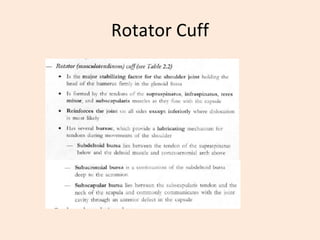
Rotator Cuff
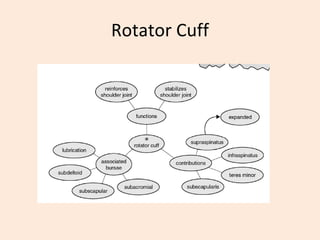
Rotator Cuff
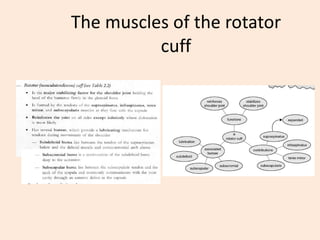
The muscles of the rotator cuff
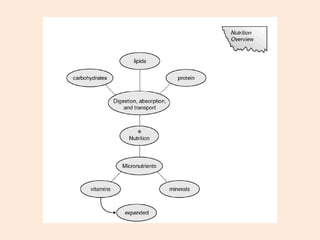
Concept Maps A concept map is a graphical representation where nodes (points or vertices) represent concepts, and links (arcs or lines) represent the relationships between concepts.  The concepts, and sometimes the links, are labeled on the concept map.
 
Concept Maps The links between the concepts can be one-way, two-way, or non-directional.  The concepts and the links may be categorized, and the concept map may show temporal or causal relationships between concepts.
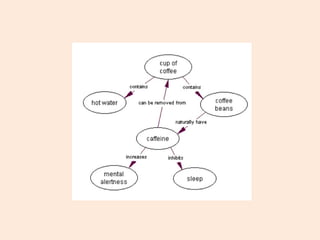
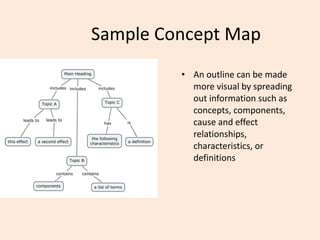
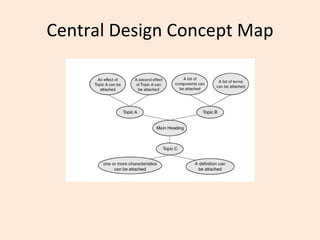
Sample Concept Map An outline can be made more visual by spreading out information such as concepts, components, cause and effect relationships, characteristics, or definitions
Concept Mapping – Why? Concept maps create concrete experience! Visual organization of relationships Visual structure aids long term memory  “ The magic isn’t in the map…” Active learning: requires decisions based on  Inspection – making a list  Identification – finding terms that group  Understanding – finding how things compare
Concept Mapping Applied to  Communication and Interviewing
Complexity of Patient Interviews  Much information may be gather in a clinical encounter with a patient. This information may be in the biomedical or psychosocial realms.
Complexity of Patient Interviews Organizing the information obtained in a interview will help the physician in making the proper diagnosis, know the patient as an individual, and develop a management plan tailored for the patient
Patient Interviews and Concept Maps One method to help organize the information obtained during the interview, its relationships, cause and effect, etc. may be through the use of concept maps
“ A consensus exits about the importance of effective communication between doctor and patient… Students may already possess good communication skills when they enter medical school…  Before they have acquired much medical knowledge students tend to listen to what patients have to tell them, and are concerned about the emotional effects of illness and patients’ social difficulties.”   Kendrick and Freeling, 1993
The next slides review  what will happen in your small group interviewing  session…….
Exercise Interview SP Construct concept map as a group Present your concept maps to the whole group
Interview SP May use any method the group would like One interviewer, ask the team for help Take turns, tag-team Ask questions as a group
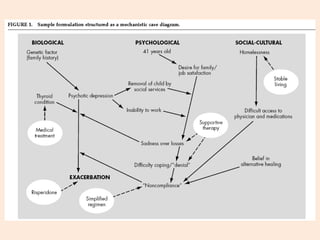
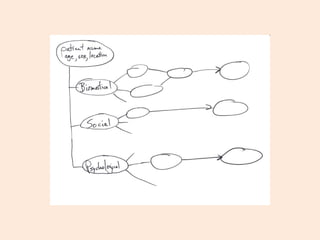
Concept Map of Today’s Case The case may seem like a variety of separate components such as symptoms, problems, concerns, requests, etc, but actually all of these components are linked together in how the individual patient experiences his/her symptoms in the biological, psychological, and social perspectives. Instructions presented to students
Concept Map of Today’s Case Constructing a “concept map” of the case will help you see the inter-relationships between these components.
Concept Map of Today’s Case We will use the concept map to utilize the information we gather from the patient not only to see the relationships between factors causing the patient’s symptoms, but also to begin to understand the patient as an individual in the context of his/her life.
How to make the concept map Begin by gathering the details of the case Identify the key “concepts” of this case: i.e. symptoms, problems, concerns, etc Write each “concept” on a post-it
How to make the concept map Begin to arrange the concepts into groups on the large piece of paper As you arrange the concepts into groups, name the group headings and make post-its with the group headings If these group heading can be combined under a larger heading make a post-it for this heading
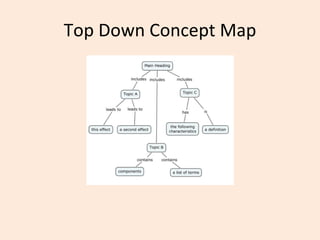
How to make the concept map Begin to arrange the post-its  You need to decide if you are arrange a top down, right to left, or center out concept map For top down put the most generalized concepts at the top, for right to left on the right, and for the center out put the most generalized concepts as the first “bubble” out from the middle
Top Down Concept Map
Central Design Concept Map
How to make the concept map continued Begin to draw lines or arrows between the post-its. You may write what the relationship is above the lines if you wish. Modify your concept map according to group discussion Once you have decided on a map, copy it on the second piece of large paper
 
 
Your concept maps…. What did you learn? How did your group function? Take home points Questions?

ICM Concept Map

  • 1.
    Concept Maps and Medical Interviewing ICM I April, 2011
  • 2.
    Concept Maps Conceptmapping is a type of knowledge representation Representing knowledge in the visual format of a concept map allows one to gain an overview of a domain of knowledge Adapted from John Pelley, PhD
  • 3.
  • 4.
    Concept Maps Similarto an outline or a flowchart, a concept map is a way of representing or organizing knowledge. However, a concept map goes beyond the typical outline in that concept maps show relationships between concepts, including bi-directional relationships
  • 5.
  • 6.
  • 7.
    The muscles ofthe rotator cuff
  • 8.
    Concept Maps Aconcept map is a graphical representation where nodes (points or vertices) represent concepts, and links (arcs or lines) represent the relationships between concepts. The concepts, and sometimes the links, are labeled on the concept map.
  • 9.
  • 10.
    Concept Maps Thelinks between the concepts can be one-way, two-way, or non-directional. The concepts and the links may be categorized, and the concept map may show temporal or causal relationships between concepts.
  • 11.
    Sample Concept MapAn outline can be made more visual by spreading out information such as concepts, components, cause and effect relationships, characteristics, or definitions
  • 14.
    Concept Mapping –Why? Concept maps create concrete experience! Visual organization of relationships Visual structure aids long term memory “ The magic isn’t in the map…” Active learning: requires decisions based on Inspection – making a list Identification – finding terms that group Understanding – finding how things compare
  • 15.
    Concept Mapping Appliedto Communication and Interviewing
  • 16.
    Complexity of PatientInterviews Much information may be gather in a clinical encounter with a patient. This information may be in the biomedical or psychosocial realms.
  • 17.
    Complexity of PatientInterviews Organizing the information obtained in a interview will help the physician in making the proper diagnosis, know the patient as an individual, and develop a management plan tailored for the patient
  • 18.
    Patient Interviews andConcept Maps One method to help organize the information obtained during the interview, its relationships, cause and effect, etc. may be through the use of concept maps
  • 19.
    “ A consensusexits about the importance of effective communication between doctor and patient… Students may already possess good communication skills when they enter medical school… Before they have acquired much medical knowledge students tend to listen to what patients have to tell them, and are concerned about the emotional effects of illness and patients’ social difficulties.” Kendrick and Freeling, 1993
  • 20.
    The next slidesreview what will happen in your small group interviewing session…….
  • 21.
    Exercise Interview SPConstruct concept map as a group Present your concept maps to the whole group
  • 22.
    Interview SP Mayuse any method the group would like One interviewer, ask the team for help Take turns, tag-team Ask questions as a group
  • 23.
    Concept Map ofToday’s Case The case may seem like a variety of separate components such as symptoms, problems, concerns, requests, etc, but actually all of these components are linked together in how the individual patient experiences his/her symptoms in the biological, psychological, and social perspectives. Instructions presented to students
  • 24.
    Concept Map ofToday’s Case Constructing a “concept map” of the case will help you see the inter-relationships between these components.
  • 25.
    Concept Map ofToday’s Case We will use the concept map to utilize the information we gather from the patient not only to see the relationships between factors causing the patient’s symptoms, but also to begin to understand the patient as an individual in the context of his/her life.
  • 26.
    How to makethe concept map Begin by gathering the details of the case Identify the key “concepts” of this case: i.e. symptoms, problems, concerns, etc Write each “concept” on a post-it
  • 27.
    How to makethe concept map Begin to arrange the concepts into groups on the large piece of paper As you arrange the concepts into groups, name the group headings and make post-its with the group headings If these group heading can be combined under a larger heading make a post-it for this heading
  • 28.
    How to makethe concept map Begin to arrange the post-its You need to decide if you are arrange a top down, right to left, or center out concept map For top down put the most generalized concepts at the top, for right to left on the right, and for the center out put the most generalized concepts as the first “bubble” out from the middle
  • 29.
  • 30.
  • 31.
    How to makethe concept map continued Begin to draw lines or arrows between the post-its. You may write what the relationship is above the lines if you wish. Modify your concept map according to group discussion Once you have decided on a map, copy it on the second piece of large paper
  • 32.
  • 33.
  • 34.
    Your concept maps….What did you learn? How did your group function? Take home points Questions?

Editor's Notes

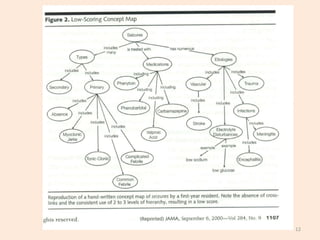
  • #13 This map has no cross-links but does illustrate branching. This is a map of formal knowledge out of a lecture or a text book. It is a good place to start, but it does not reflect the understanding that comes with experience. The next one does.
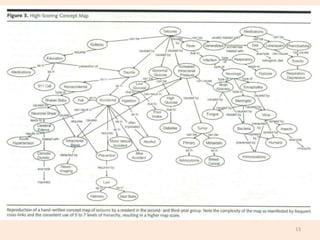
  • #14 This map has many cross-links in addition to many more facts. The hierarchy represents functional knowledge born out of experience rather than the more formalized knowledge found in a text.
  • #15 Constructing a concept map requires prefrontal decision making that feeds back to establish long term memory in the temporal lobes. Anyone else but the originator of the map is just seeing an outline. The originator sees meaning. More connections, especially cross-links, indicate more meaning.