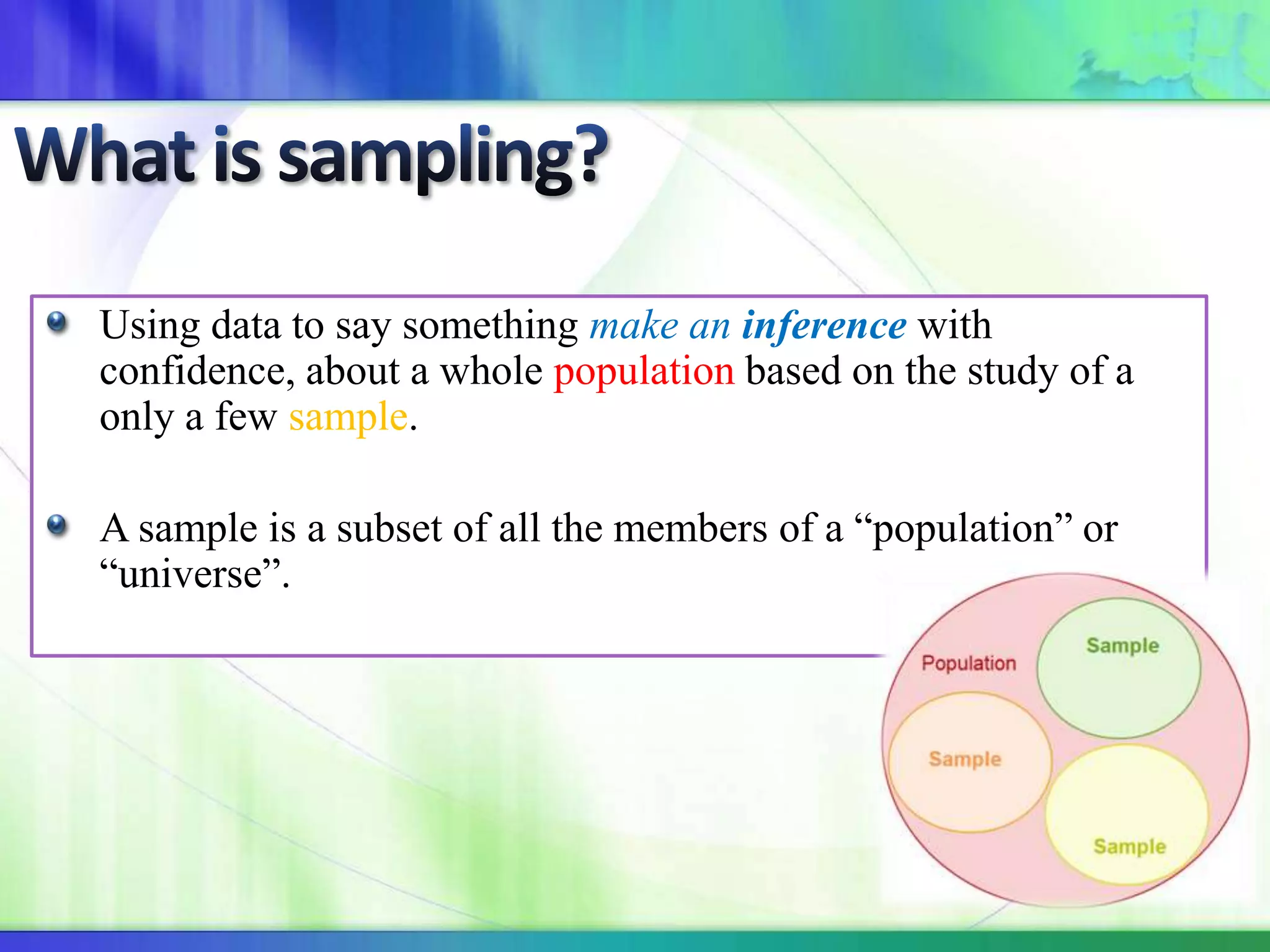
Using data to say something make an inference with
confidence, about a whole population based on the study of a
only a few sample.
A sample is a subset of all the members of a “population” or
“universe”.
Population: Subjects of interest
Sample: Subset for whom we have data
Statistical techniques to make conclusions
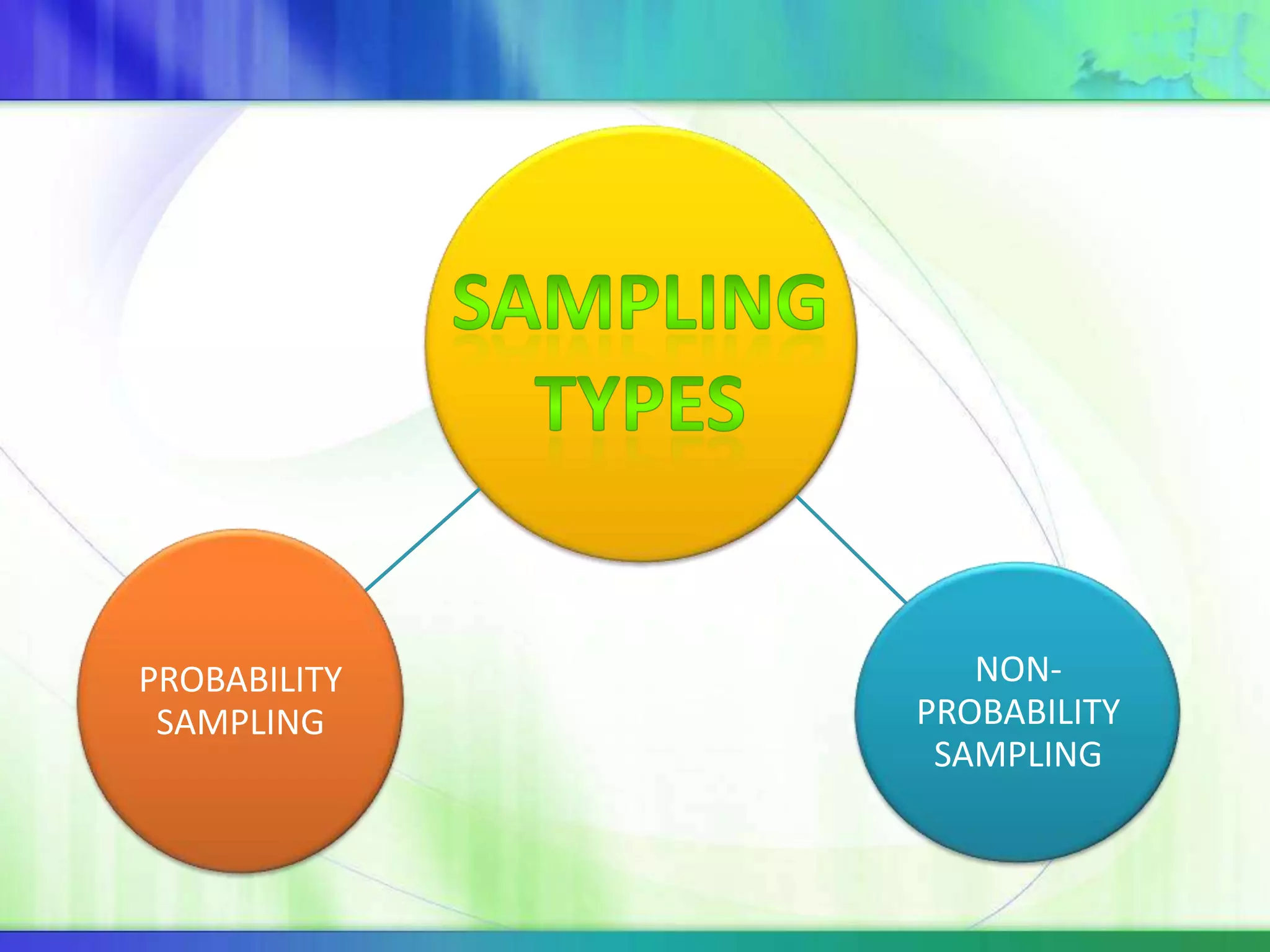
NON-
PROBABILITY
SAMPLING
PROBABILITY
SAMPLING
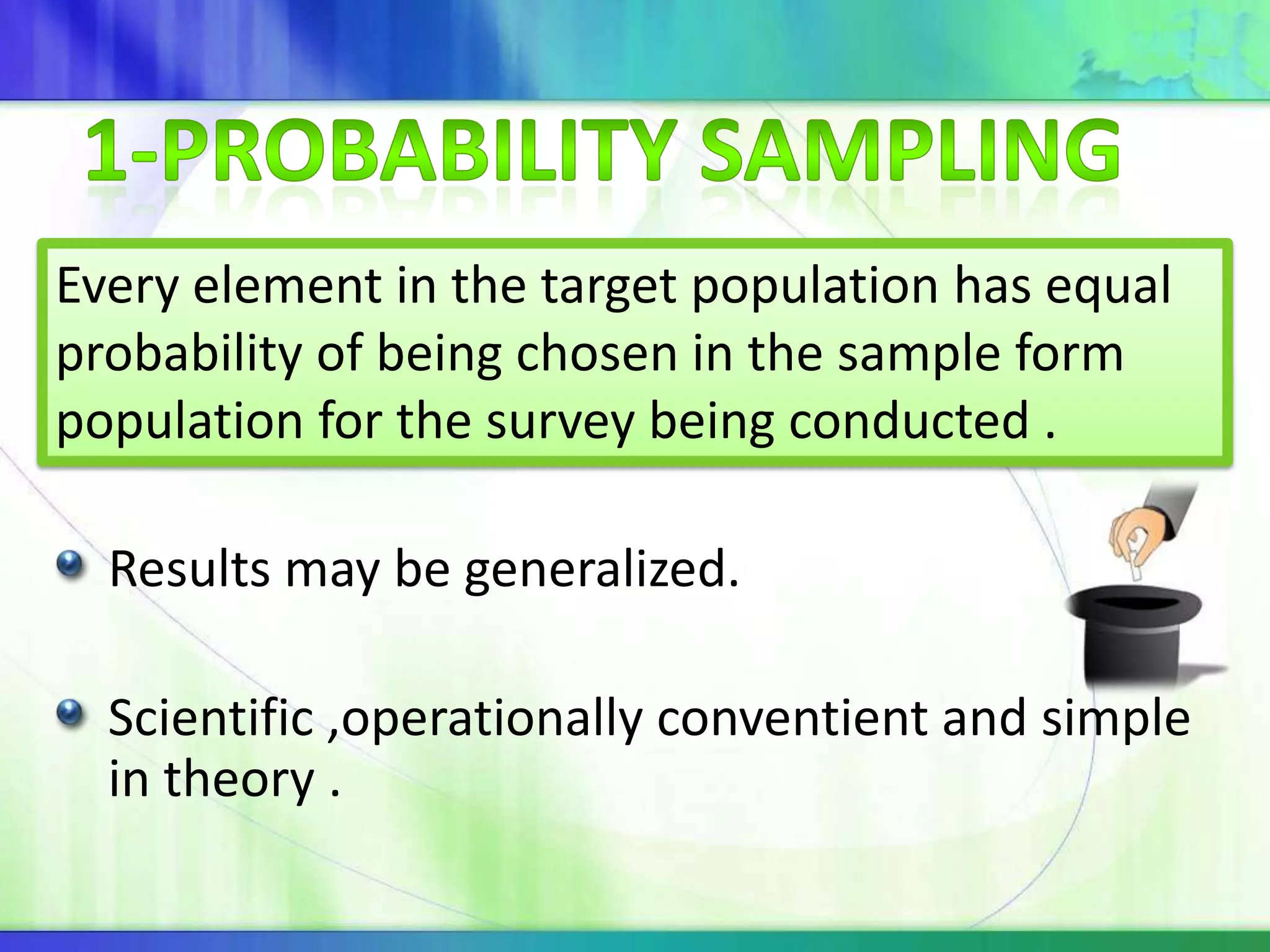
Results may be generalized.
Scientific ,operationally conventient and simple
in theory .
Every element in the target population has equal
probability of being chosen in the sample form
population for the survey being conducted .
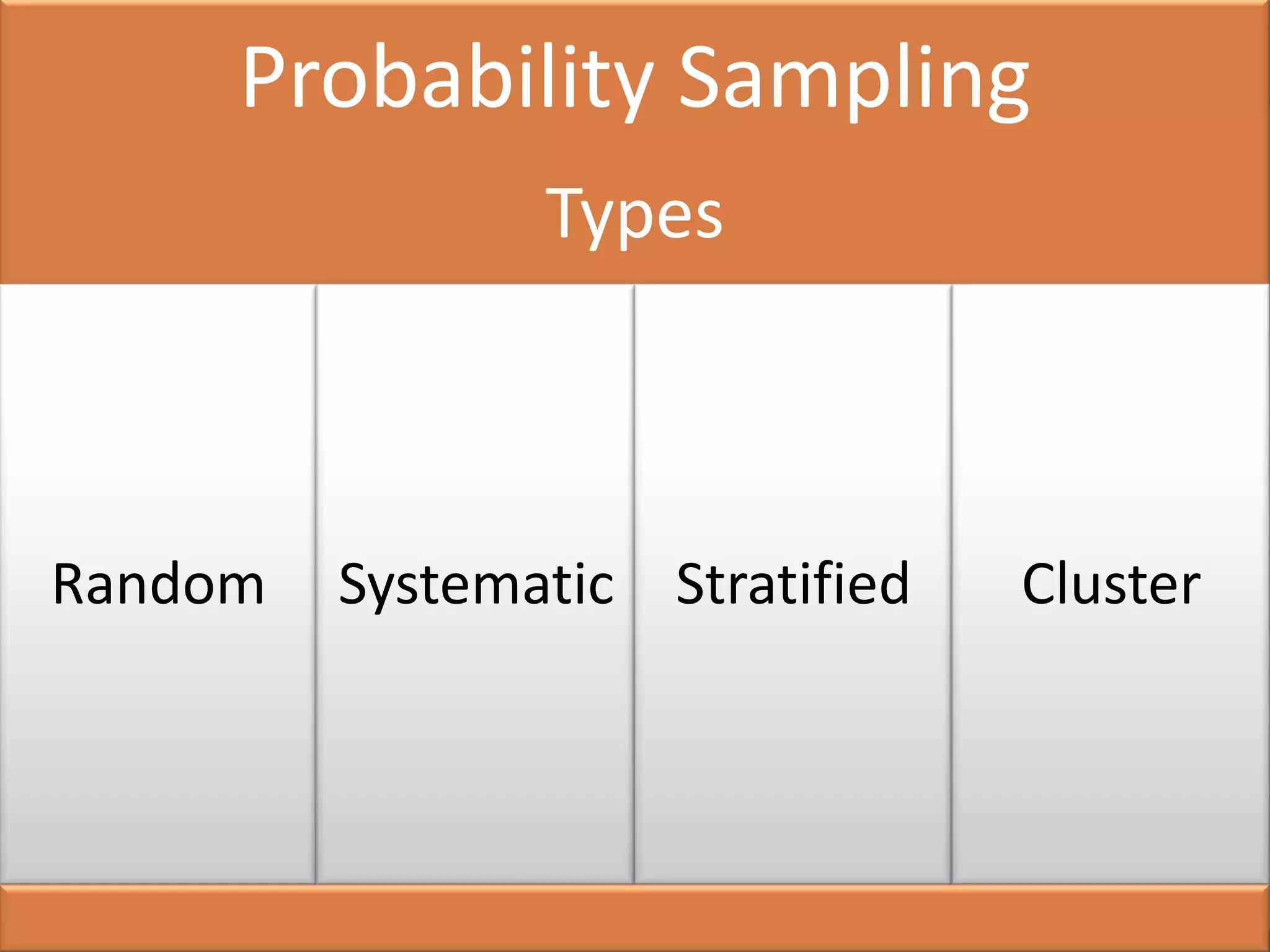
Probability Sampling
Types
Random Systematic Stratified Cluster
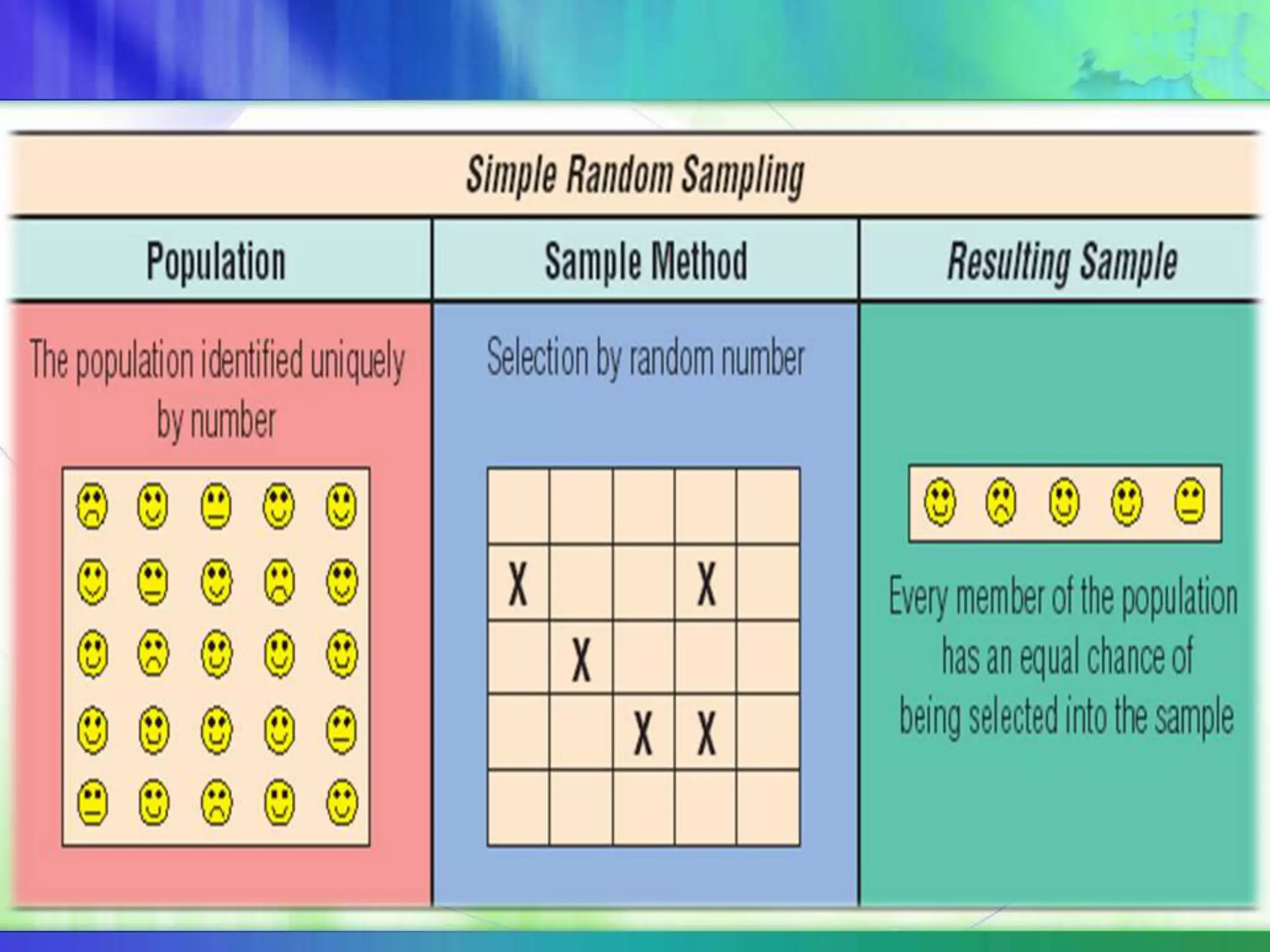
Ever individual or item from frame has an equal
chance of being selected
Selection may be with replacement or without
replacement
Samples obtained from table of random numbers
or computer random number generators (prize
bond number)
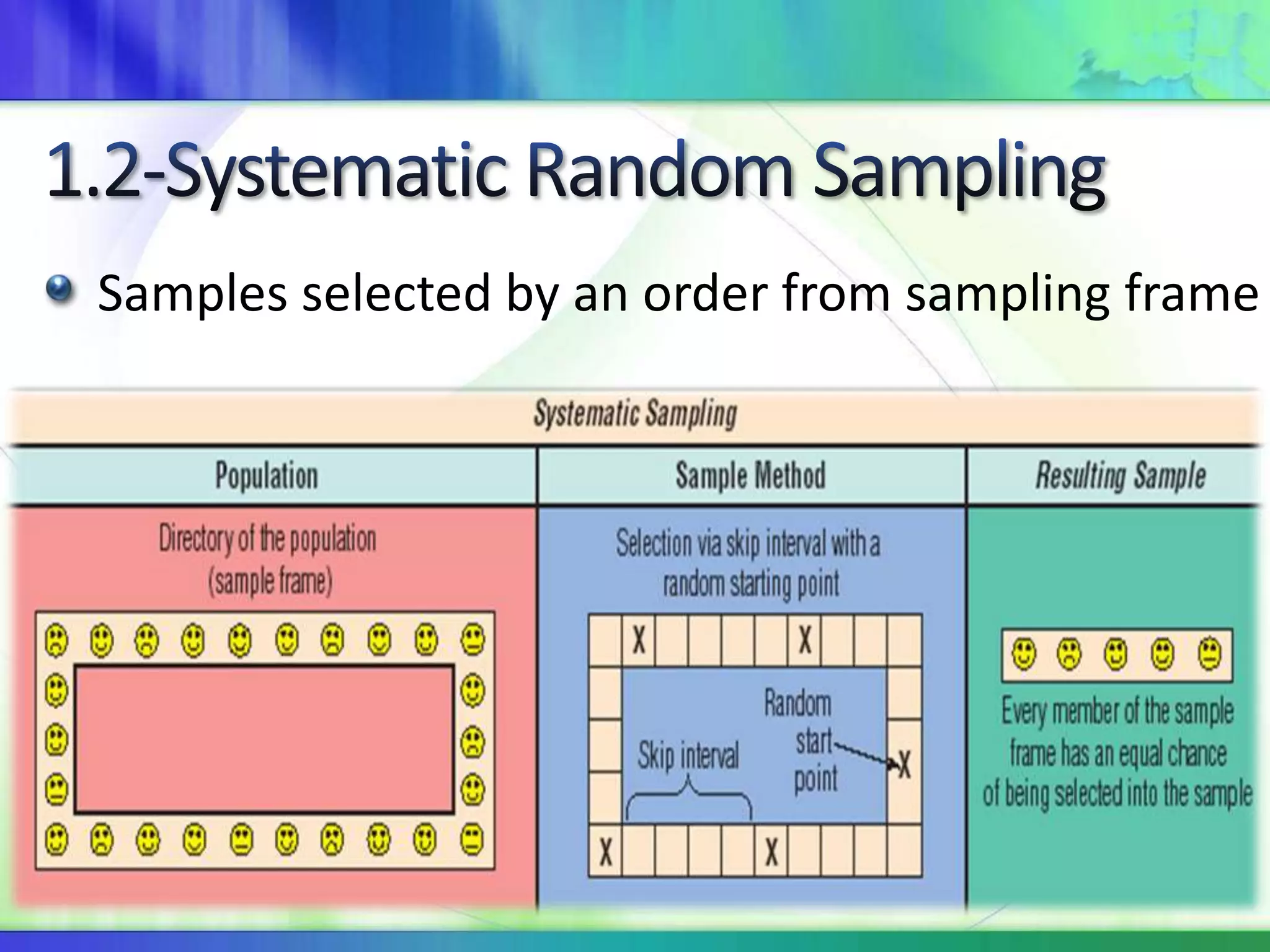
Samples selected by an order from sampling frame
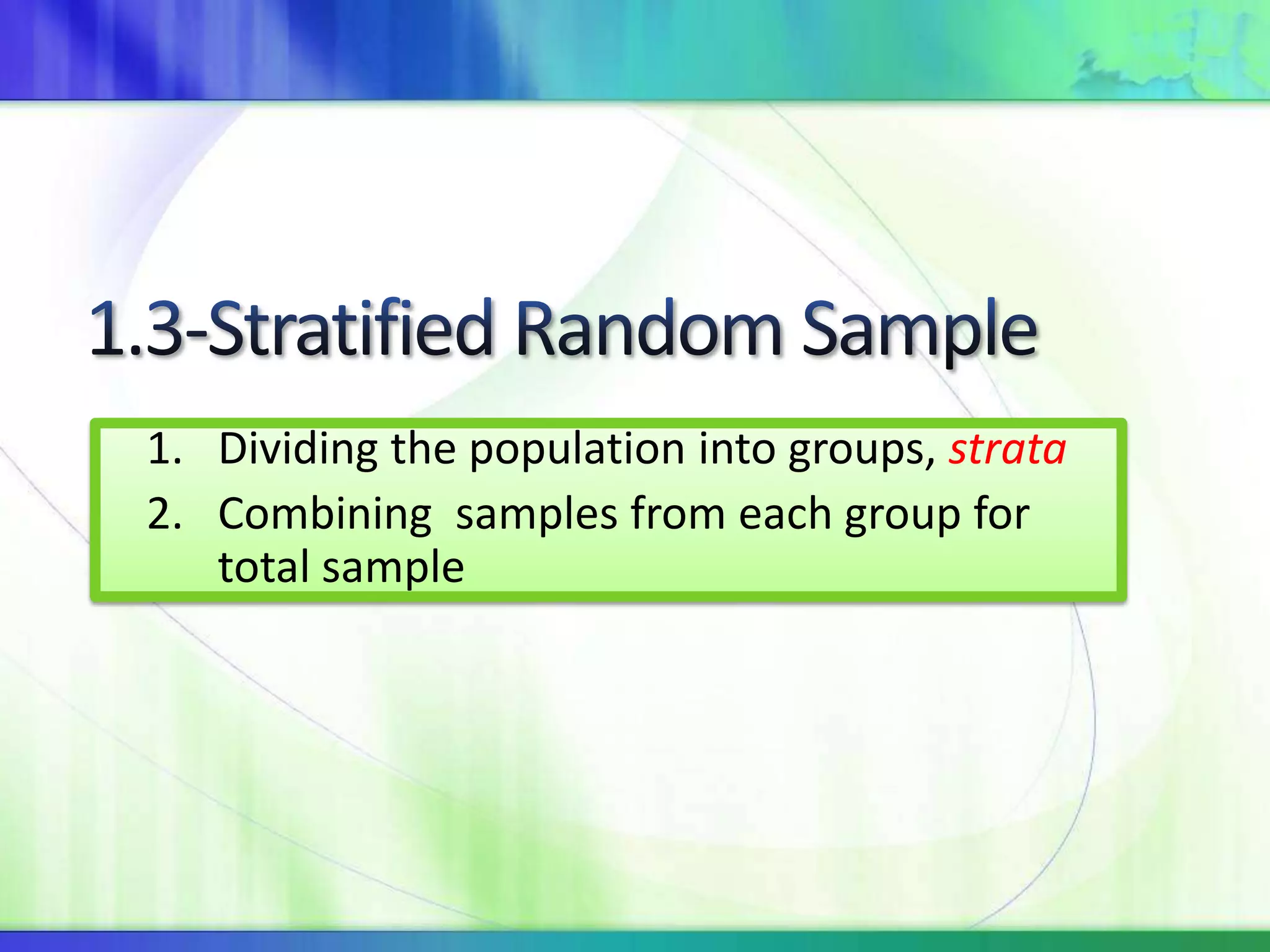
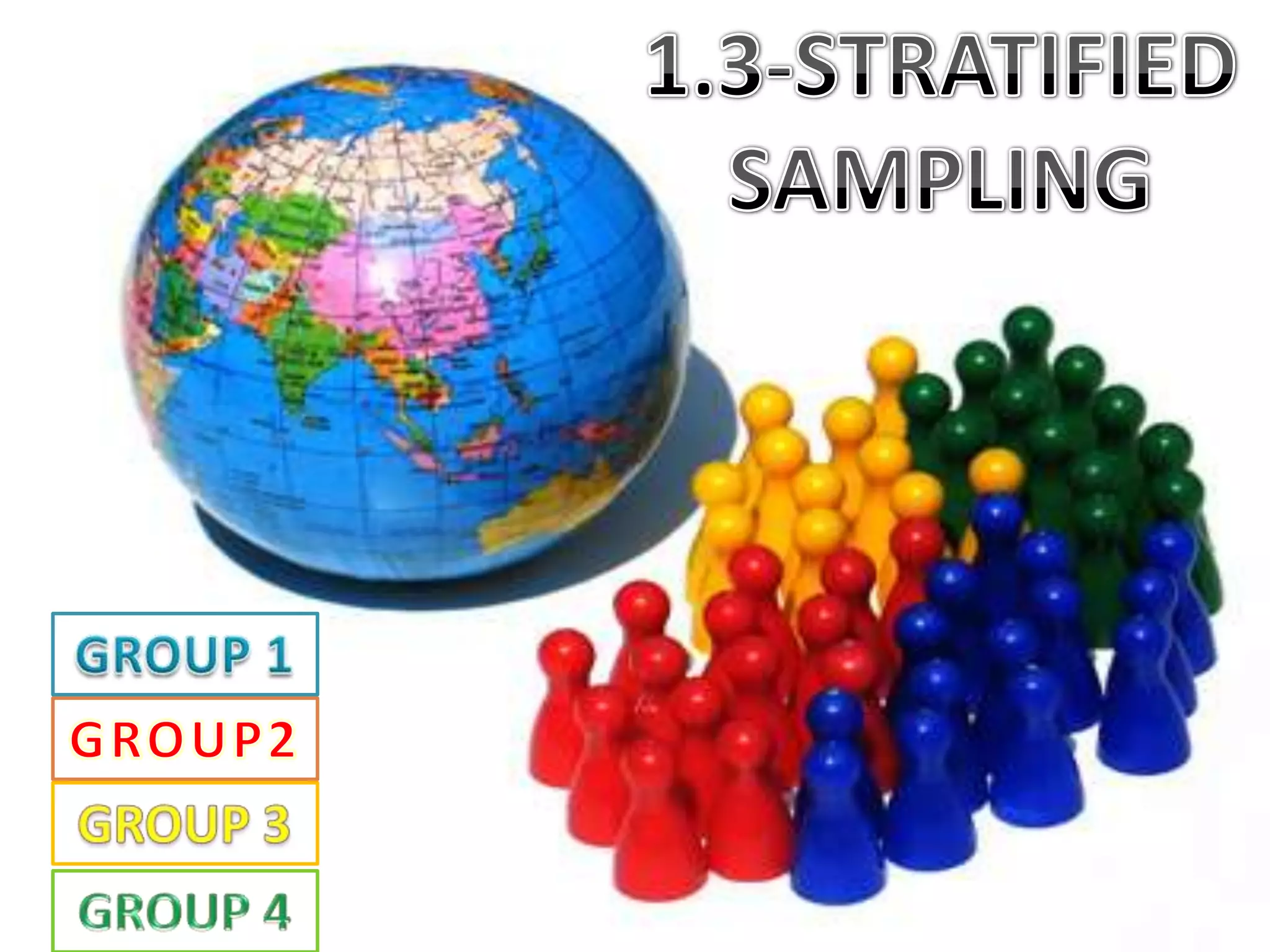
1. Dividing the population into groups, strata
2. Combining samples from each group for
total sample
Population divided into several clusters
It is used during evident of natural grouping
All items in selected clusters can be used
Every element in the universe or sampling frame
not have equal probability of being choosen in
the sample form
Non-probability sampling does not involve
random selection.
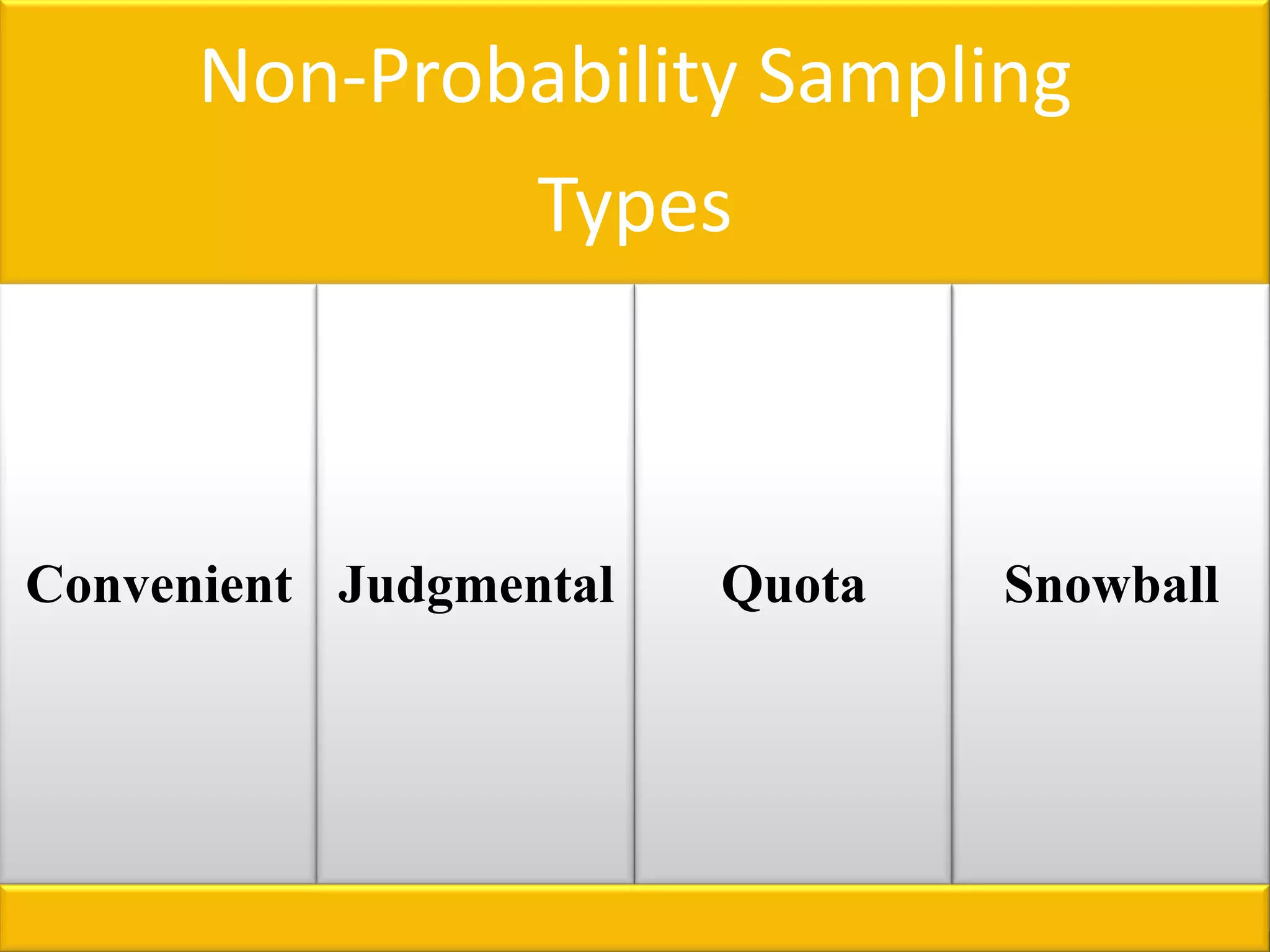
Non-Probability Sampling
Types
Convenient SnowballQuotaJudgmental
selecting a participant or group of participants
based on their availability to the researcher
Examples
Students enrolled in the researcher’s classes
Fourth-grade students in two local, parochial schools to which the
researcher has access
samples that require a or an “educated guess” on the part
of the interviewer as to who should represent the
population. Also, “judges” (informed individuals) may be
asked to suggest who should be in the sample.
2.3-Quota Sampling
In this case respondents are selected
according to some fixed quota relating to
gender, race, religion etc. e.g. 45% women
and 55% men.
Used when the researcher cannot use probability
sampling procedures but does want a sample that
is somewhat representative of the population
Similar to stratified sampling
2.4-Snowball Sampling
A respondent is found that meets the
sampling criteria, they are asked for more
likely candidates, who are asked for more
likely candidates and so on.
sampling types
sampling types

sampling types

  • 2.
    Using data tosay something make an inference with confidence, about a whole population based on the study of a only a few sample. A sample is a subset of all the members of a “population” or “universe”.
  • 3.
    Population: Subjects ofinterest Sample: Subset for whom we have data Statistical techniques to make conclusions
  • 4.
  • 5.
    Results may begeneralized. Scientific ,operationally conventient and simple in theory . Every element in the target population has equal probability of being chosen in the sample form population for the survey being conducted .
  • 6.
  • 7.
    Ever individual oritem from frame has an equal chance of being selected Selection may be with replacement or without replacement Samples obtained from table of random numbers or computer random number generators (prize bond number)
  • 9.
    Samples selected byan order from sampling frame
  • 10.
    1. Dividing thepopulation into groups, strata 2. Combining samples from each group for total sample
  • 12.
    Population divided intoseveral clusters It is used during evident of natural grouping All items in selected clusters can be used
  • 13.
    Every element inthe universe or sampling frame not have equal probability of being choosen in the sample form Non-probability sampling does not involve random selection.
  • 14.
  • 15.
    selecting a participantor group of participants based on their availability to the researcher Examples Students enrolled in the researcher’s classes Fourth-grade students in two local, parochial schools to which the researcher has access
  • 16.
    samples that requirea or an “educated guess” on the part of the interviewer as to who should represent the population. Also, “judges” (informed individuals) may be asked to suggest who should be in the sample.
  • 17.
    2.3-Quota Sampling In thiscase respondents are selected according to some fixed quota relating to gender, race, religion etc. e.g. 45% women and 55% men. Used when the researcher cannot use probability sampling procedures but does want a sample that is somewhat representative of the population Similar to stratified sampling
  • 18.
    2.4-Snowball Sampling A respondentis found that meets the sampling criteria, they are asked for more likely candidates, who are asked for more likely candidates and so on.