Topic: Project Cost Managment
Presented by
Muhammad Hanif (12PG142)
Under the supervision of
Sir Khalil Rehman Memon
Contents
©Objectives of Presentation
©Introduction
©What is PCM
©Cost Management Process
©Cost Types
Objectives of Presentation
Through this interaction, participants
will enhance their:
Level of Knowledge and
Skills of project cost management
Introduction
• Cost Management(CM): Includes processes
required to ensure that the project is
completed within the approved budget.
• CM is a form of Management accounting that
allows a business to predict impending
expenditures to help reduce the chance of
going over budget.
Project Cost Management (PCM)
 What is PCM?
 You might think that PCM is managing the
"costs" on your project.
 The reality is that you must manage
everything else that incurs cost .
 Because if you don't, the costs will just keep
on climbing.
 Whether you like it or not!
What is PCM?
Project Cost Management is
o Placing of responsibility on those in charge of any aspect of the
project.
• E.g. the managers, designers and implementers
o To perform their respective roles and responsibilities within
prescribed limits.
• Specifically, agreed cost allowances or budgets
o Then collecting cost data and comparing it to the corresponding
allowances.
o And taking appropriate management action.
o To contain the final results.
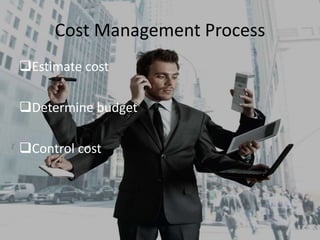
Cost Management Process
Estimate cost
Determine budget
Control cost
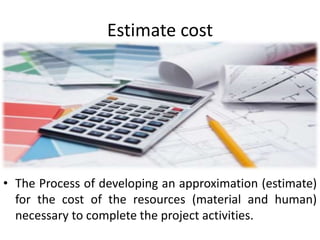
Estimate cost
• The Process of developing an approximation (estimate)
for the cost of the resources (material and human)
necessary to complete the project activities.
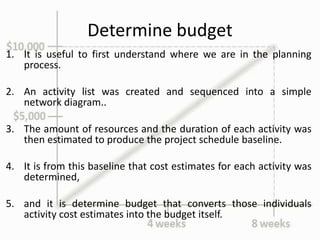
Determine budget
1. It is useful to first understand where we are in the planning
process.
2. An activity list was created and sequenced into a simple
network diagram..
3. The amount of resources and the duration of each activity was
then estimated to produce the project schedule baseline.
4. It is from this baseline that cost estimates for each activity was
determined,
5. and it is determine budget that converts those individuals
activity cost estimates into the budget itself.
Control cost
• The practice of managing and/or reducing business expenses.
• Cost controls starts by the businesses identifying what their
costs are and evaluate whether those costs are reasonable and
affordable.
• Then, if necessary, they can look for ways to cut costs through
methods such as cutting back, moving to a less expensive plan
or changing service providers.
• The cost-control process seeks to manage expenses ranging
from phone, internet and utility bills to employee payroll and
outside professional services.
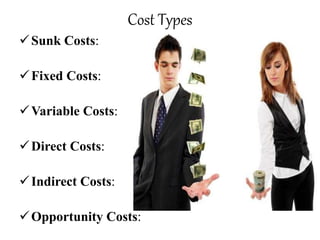
Cost Types
Sunk Costs:
Fixed Costs:
Variable Costs:
Direct Costs:
Indirect Costs:
Opportunity Costs:
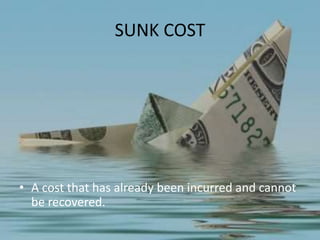
SUNK COST
• A cost that has already been incurred and cannot
be recovered.
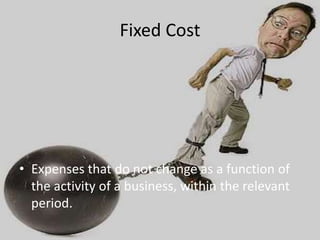
Fixed Cost
• Expenses that do not change as a function of
the activity of a business, within the relevant
period.
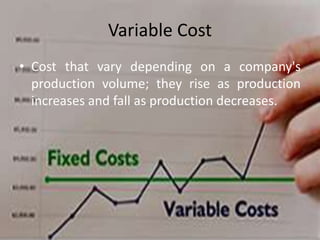
Variable Cost
• Cost that vary depending on a company's
production volume; they rise as production
increases and fall as production decreases.
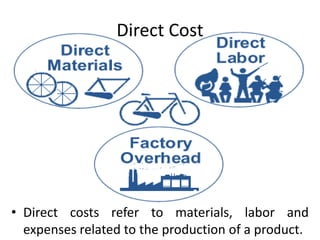
Direct Cost
• Direct costs refer to materials, labor and
expenses related to the production of a product.
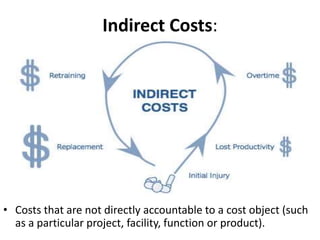
Indirect Costs:
• Costs that are not directly accountable to a cost object (such
as a particular project, facility, function or product).
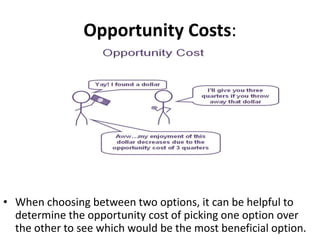
Opportunity Costs:
• When choosing between two options, it can be helpful to
determine the opportunity cost of picking one option over
the other to see which would be the most beneficial option.
Project Cost Management

Project Cost Management

  • 1.
    Topic: Project CostManagment Presented by Muhammad Hanif (12PG142) Under the supervision of Sir Khalil Rehman Memon
  • 2.
    Contents ©Objectives of Presentation ©Introduction ©Whatis PCM ©Cost Management Process ©Cost Types
  • 3.
    Objectives of Presentation Throughthis interaction, participants will enhance their: Level of Knowledge and Skills of project cost management
  • 4.
    Introduction • Cost Management(CM):Includes processes required to ensure that the project is completed within the approved budget. • CM is a form of Management accounting that allows a business to predict impending expenditures to help reduce the chance of going over budget.
  • 5.
    Project Cost Management(PCM)  What is PCM?  You might think that PCM is managing the "costs" on your project.  The reality is that you must manage everything else that incurs cost .  Because if you don't, the costs will just keep on climbing.  Whether you like it or not!
  • 6.
    What is PCM? ProjectCost Management is o Placing of responsibility on those in charge of any aspect of the project. • E.g. the managers, designers and implementers o To perform their respective roles and responsibilities within prescribed limits. • Specifically, agreed cost allowances or budgets o Then collecting cost data and comparing it to the corresponding allowances. o And taking appropriate management action. o To contain the final results.
  • 7.
    Cost Management Process Estimatecost Determine budget Control cost
  • 8.
    Estimate cost • TheProcess of developing an approximation (estimate) for the cost of the resources (material and human) necessary to complete the project activities.
  • 9.
    Determine budget 1. Itis useful to first understand where we are in the planning process. 2. An activity list was created and sequenced into a simple network diagram.. 3. The amount of resources and the duration of each activity was then estimated to produce the project schedule baseline. 4. It is from this baseline that cost estimates for each activity was determined, 5. and it is determine budget that converts those individuals activity cost estimates into the budget itself.
  • 10.
    Control cost • Thepractice of managing and/or reducing business expenses. • Cost controls starts by the businesses identifying what their costs are and evaluate whether those costs are reasonable and affordable. • Then, if necessary, they can look for ways to cut costs through methods such as cutting back, moving to a less expensive plan or changing service providers. • The cost-control process seeks to manage expenses ranging from phone, internet and utility bills to employee payroll and outside professional services.
  • 11.
    Cost Types Sunk Costs: FixedCosts: Variable Costs: Direct Costs: Indirect Costs: Opportunity Costs:
  • 12.
    SUNK COST • Acost that has already been incurred and cannot be recovered.
  • 13.
    Fixed Cost • Expensesthat do not change as a function of the activity of a business, within the relevant period.
  • 14.
    Variable Cost • Costthat vary depending on a company's production volume; they rise as production increases and fall as production decreases.
  • 15.
    Direct Cost • Directcosts refer to materials, labor and expenses related to the production of a product.
  • 16.
    Indirect Costs: • Coststhat are not directly accountable to a cost object (such as a particular project, facility, function or product).
  • 17.
    Opportunity Costs: • Whenchoosing between two options, it can be helpful to determine the opportunity cost of picking one option over the other to see which would be the most beneficial option.

Editor's Notes

  • #4 Objective of my presentation is to enhance your knowledge level and to learn you some skills of PCM
  • #5 CM is very much cleared by it definition. Predict Impending Expenditures= To Know about the future unnecessary consume cost. Simply To manage a project within the budget and don’t let go expenses over the budget.
  • #6 Incurs cost = unwelcome cost
  • #13 Examples: once rent is paid it cant be recovered General example is when you put petrol in your vehicle then you will never get your money back.
  • #14 rent, insurance premiums, or loan payments etc
  • #15 Formula: Total Variable Cost = Total Quantity of Output * Variable Cost per Unit of Output Example: If company is making 20 shirts per hour then requirement is increased or decreased that cost difference is known as variable cost.
  • #16 if a company produces artisan furniture, the cost of the wood and the cost of the craftsperson are direct costs.
  • #18 OC is what a person sacrifice when they choose one option over another