SUMMER INTERNSHIP PROJECT
REPORT
A FINANCIAL STATEMENT ANALYSIS AND INTERPRETATION
OF ……………..
S.D. GUPTA & COMPANY
UNDER THE SUPERVISION OF CA Shobhit Kumar
Project Guide
……..
Submitted by
………
……
INTRODUCTION
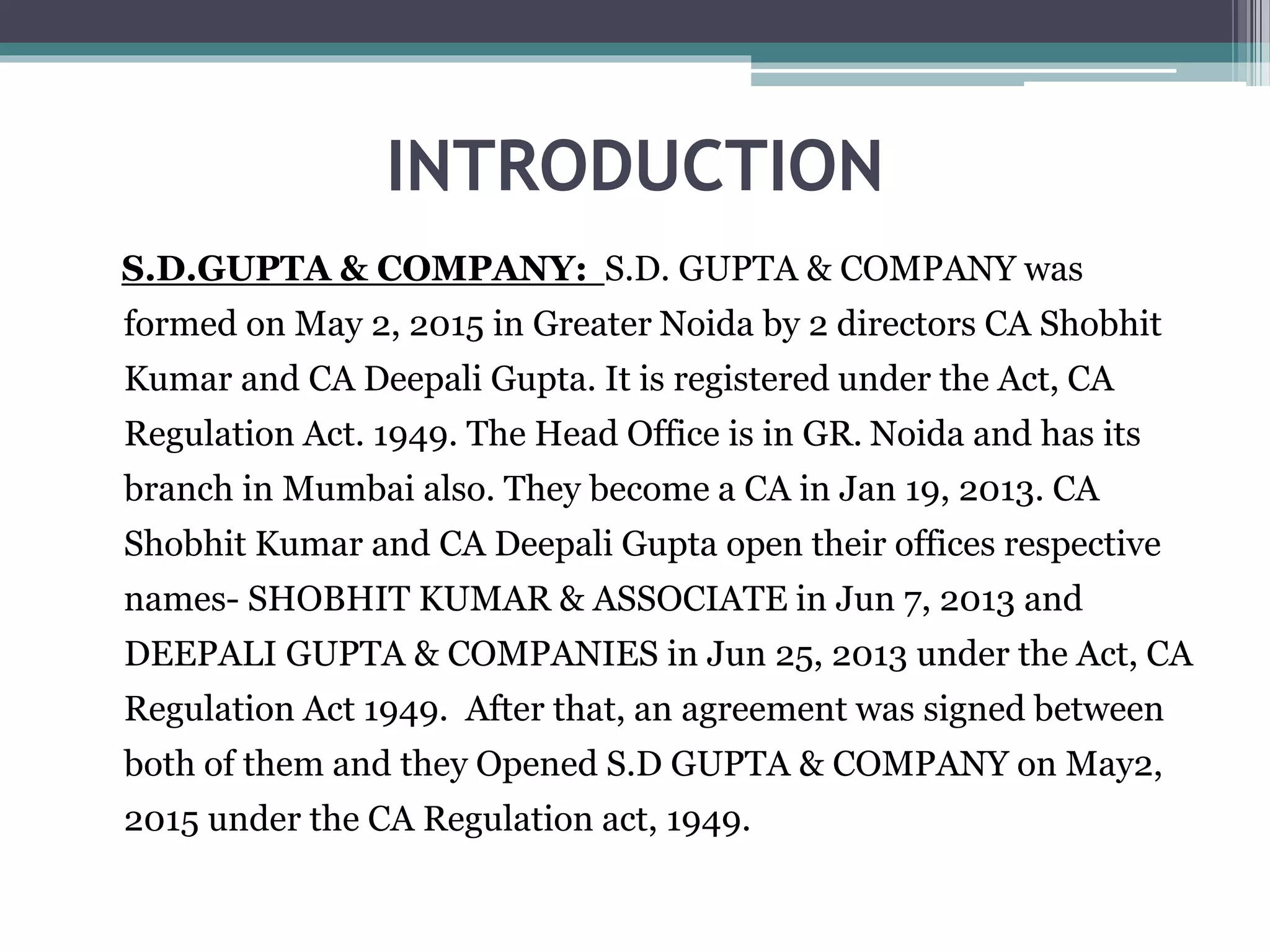
S.D.GUPTA & COMPANY: S.D. GUPTA & COMPANY was
formed on May 2, 2015 in Greater Noida by 2 directors CA Shobhit
Kumar and CA Deepali Gupta. It is registered under the Act, CA
Regulation Act. 1949. The Head Office is in GR. Noida and has its
branch in Mumbai also. They become a CA in Jan 19, 2013. CA
Shobhit Kumar and CA Deepali Gupta open their offices respective
names- SHOBHIT KUMAR & ASSOCIATE in Jun 7, 2013 and
DEEPALI GUPTA & COMPANIES in Jun 25, 2013 under the Act, CA
Regulation Act 1949. After that, an agreement was signed between
both of them and they Opened S.D GUPTA & COMPANY on May2,
2015 under the CA Regulation act, 1949.
FINANCIAL STATEMENT ANALYSIS
Financial statements are records that provide an
indication of the organization’s financial status. It
quantitatively describes the financial health of the
company. It helps in the evaluation of company’s
prospects and risks for the purpose of making business
decisions.
The analysis of financial statement is a process of
evaluating the relationship between component parts of
financial statement to obtain a better understanding of
firm financial position.
OBJECTIVES
• To understand, analyze and interpret the basic concepts
of financial statements of ENTERPRISE.
• Interpretation of financial ratios and their significance.
• To understand, use of Tally 9.0 package for the analysis
and interpretation of financial statements of
ENTERPRISE
• To get idea about the performance of company.
• To find out the relationship between the different items
of Balance Sheet and Profit & Loss account
METHODS OF ANALYSIS
Sources of Data:-
• Vouchers of sale and purchase.
• Bank Statement
• Financial Statement of C.B. ENTERPRISES
• Other related data & books
• Data from website
Accounting tool:-
• Balance sheet
• Income statement
Statistical tool:-
• Ratio analysis
• Comparative balance sheet analysis
• Comparative income statement analysis
1 2
Series1 45.31% 34.83%
0.00%
5.00%
10.00%
15.00%
20.00%
25.00%
30.00%
35.00%
40.00%
45.00%
50.00%
Gross Profit Ratio
1 2
Series1 0.92 1
0.88
0.9
0.92
0.94
0.96
0.98
1
1.02
Quick Ratio
1 2
Series1 9.84% 9.32%
9.00%
9.10%
9.20%
9.30%
9.40%
9.50%
9.60%
9.70%
9.80%
9.90%
Net Profit Ratio
1 2
Series1 1.63 2.77
0
0.5
1
1.5
2
2.5
3
Debt - Equity Ratio
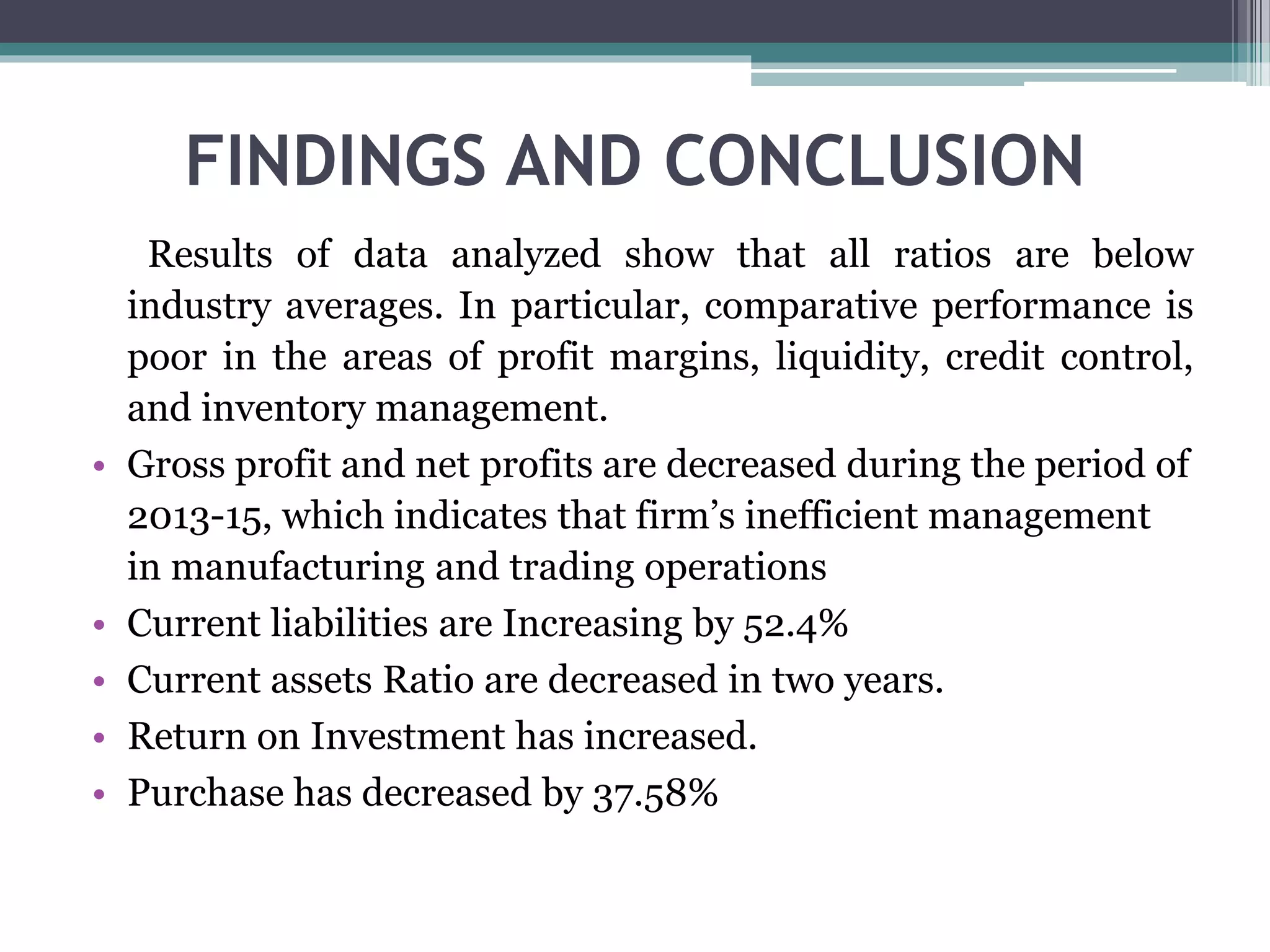
FINDINGS AND CONCLUSION
Results of data analyzed show that all ratios are below
industry averages. In particular, comparative performance is
poor in the areas of profit margins, liquidity, credit control,
and inventory management.
• Gross profit and net profits are decreased during the period of
2013-15, which indicates that firm’s inefficient management
in manufacturing and trading operations
• Current liabilities are Increasing by 52.4%
• Current assets Ratio are decreased in two years.
• Return on Investment has increased.
• Purchase has decreased by 37.58%
• Sales have decreased by 29.47%
• Gross Profit has decreased by 45.79%
• Net profit has decreased by 33.22%
The report finds the prospects of the company in its
current position are not positive. The major areas of
weakness require further investigation and remedial
action by management.
RECOMMENDATIONS
• Production, and Control in Expenses Like
Administrative, selling Etc.
• It should enhance its employee’s efficiency, more
training needed to its employees in order to increase its
production capacity and minimize mistakes while
performing the tasks, also more safety precaution need
to implement to the employees who directly working on
production process.
CONTINUE…
• Improving/increasing inventory turnover·
• Reducing prepayments and perhaps increasing inventory
levels.
• Increase in purchase and Production activity.
• The firms should have proper check all process of the
plant.
• The company high inventory so I suggested that the firm
must reduce the stock by increase sales.
LIMITATIONS
three problems involved in such report are:
• That firms use different accounting principles and
methods.
• That it is often difficult to define what industry and firm
is really a part of and
• That accounting principles varies among countries
THANK YOU

SUMMER INTERNSHIP PROJECT REPORT PPT

  • 1.
    SUMMER INTERNSHIP PROJECT REPORT AFINANCIAL STATEMENT ANALYSIS AND INTERPRETATION OF …………….. S.D. GUPTA & COMPANY UNDER THE SUPERVISION OF CA Shobhit Kumar Project Guide …….. Submitted by ……… ……
  • 2.
    INTRODUCTION S.D.GUPTA & COMPANY:S.D. GUPTA & COMPANY was formed on May 2, 2015 in Greater Noida by 2 directors CA Shobhit Kumar and CA Deepali Gupta. It is registered under the Act, CA Regulation Act. 1949. The Head Office is in GR. Noida and has its branch in Mumbai also. They become a CA in Jan 19, 2013. CA Shobhit Kumar and CA Deepali Gupta open their offices respective names- SHOBHIT KUMAR & ASSOCIATE in Jun 7, 2013 and DEEPALI GUPTA & COMPANIES in Jun 25, 2013 under the Act, CA Regulation Act 1949. After that, an agreement was signed between both of them and they Opened S.D GUPTA & COMPANY on May2, 2015 under the CA Regulation act, 1949.
  • 3.
    FINANCIAL STATEMENT ANALYSIS Financialstatements are records that provide an indication of the organization’s financial status. It quantitatively describes the financial health of the company. It helps in the evaluation of company’s prospects and risks for the purpose of making business decisions. The analysis of financial statement is a process of evaluating the relationship between component parts of financial statement to obtain a better understanding of firm financial position.
  • 4.
    OBJECTIVES • To understand,analyze and interpret the basic concepts of financial statements of ENTERPRISE. • Interpretation of financial ratios and their significance. • To understand, use of Tally 9.0 package for the analysis and interpretation of financial statements of ENTERPRISE • To get idea about the performance of company. • To find out the relationship between the different items of Balance Sheet and Profit & Loss account
  • 5.
    METHODS OF ANALYSIS Sourcesof Data:- • Vouchers of sale and purchase. • Bank Statement • Financial Statement of C.B. ENTERPRISES • Other related data & books • Data from website Accounting tool:- • Balance sheet • Income statement Statistical tool:- • Ratio analysis • Comparative balance sheet analysis • Comparative income statement analysis
  • 6.
    1 2 Series1 45.31%34.83% 0.00% 5.00% 10.00% 15.00% 20.00% 25.00% 30.00% 35.00% 40.00% 45.00% 50.00% Gross Profit Ratio 1 2 Series1 0.92 1 0.88 0.9 0.92 0.94 0.96 0.98 1 1.02 Quick Ratio 1 2 Series1 9.84% 9.32% 9.00% 9.10% 9.20% 9.30% 9.40% 9.50% 9.60% 9.70% 9.80% 9.90% Net Profit Ratio 1 2 Series1 1.63 2.77 0 0.5 1 1.5 2 2.5 3 Debt - Equity Ratio
  • 7.
    FINDINGS AND CONCLUSION Resultsof data analyzed show that all ratios are below industry averages. In particular, comparative performance is poor in the areas of profit margins, liquidity, credit control, and inventory management. • Gross profit and net profits are decreased during the period of 2013-15, which indicates that firm’s inefficient management in manufacturing and trading operations • Current liabilities are Increasing by 52.4% • Current assets Ratio are decreased in two years. • Return on Investment has increased. • Purchase has decreased by 37.58%
  • 8.
    • Sales havedecreased by 29.47% • Gross Profit has decreased by 45.79% • Net profit has decreased by 33.22% The report finds the prospects of the company in its current position are not positive. The major areas of weakness require further investigation and remedial action by management.
  • 9.
    RECOMMENDATIONS • Production, andControl in Expenses Like Administrative, selling Etc. • It should enhance its employee’s efficiency, more training needed to its employees in order to increase its production capacity and minimize mistakes while performing the tasks, also more safety precaution need to implement to the employees who directly working on production process.
  • 10.
    CONTINUE… • Improving/increasing inventoryturnover· • Reducing prepayments and perhaps increasing inventory levels. • Increase in purchase and Production activity. • The firms should have proper check all process of the plant. • The company high inventory so I suggested that the firm must reduce the stock by increase sales.
  • 11.
    LIMITATIONS three problems involvedin such report are: • That firms use different accounting principles and methods. • That it is often difficult to define what industry and firm is really a part of and • That accounting principles varies among countries
  • 12.