Garbage bin
decision making
Decision making
0 What is Decision making?
0 identifying and choosing alternative solutions
that lead to a desired state of affairs
0 It the process of examining your possibilities,
options, comparing them and choosing a
course of action.
SAJNA FATHIMA,SMBS,MGU
Types
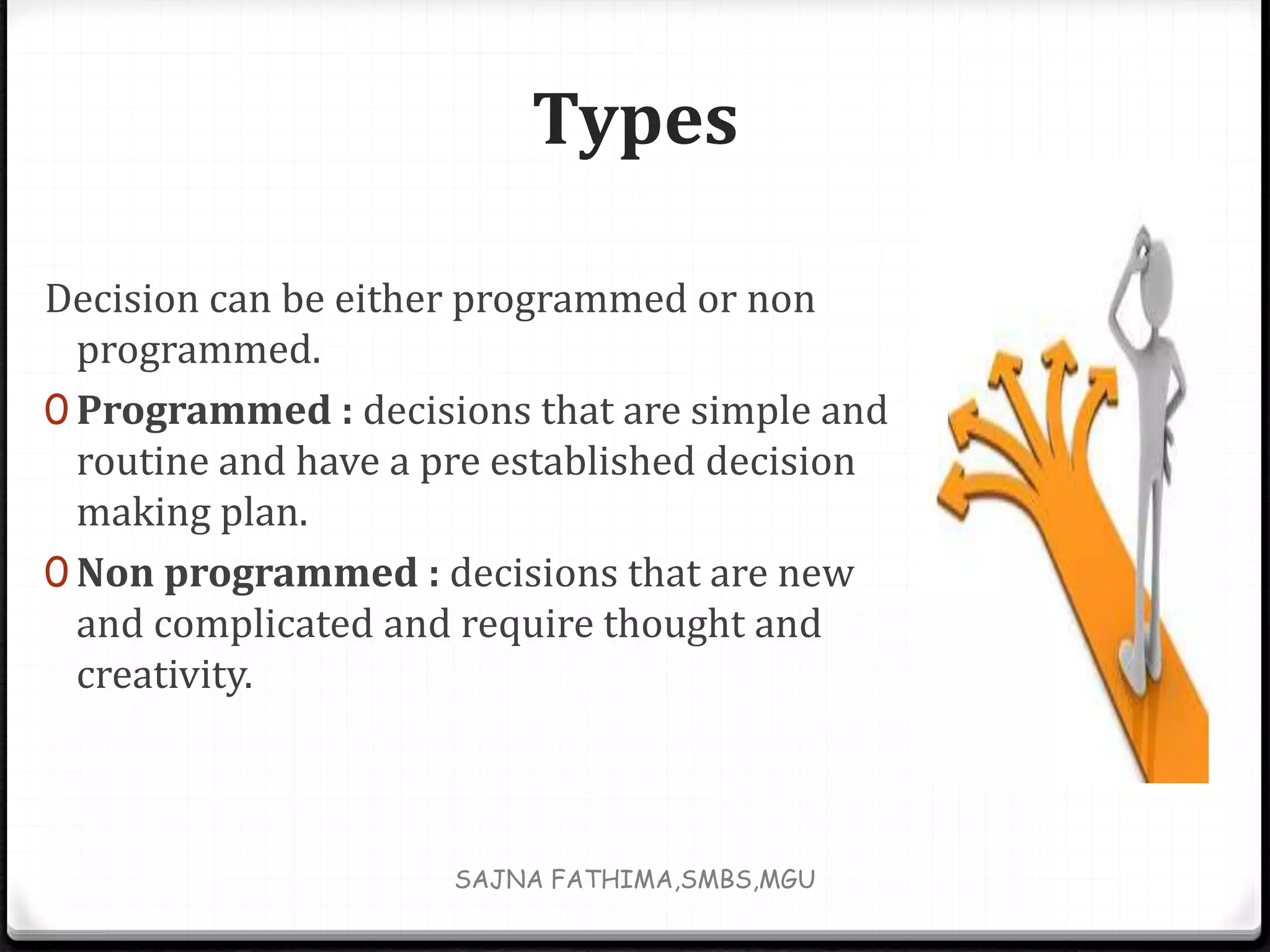
Decision can be either programmed or non
programmed.
0 Programmed : decisions that are simple and
routine and have a pre established decision
making plan.
0 Non programmed : decisions that are new
and complicated and require thought and
creativity.
SAJNA FATHIMA,SMBS,MGU
Factors effecting decision
making
0 Perception – “know before you make.”
0 Priority – without knowing what you want there cant be
any decision made about.
0 Acceptability – accept whether its hard or easy if you
think your decision is correct.
0 Demands – make sure that no one gets hurt by your
decision.
0 Style – don’t be outdated.
0 Resources – make your way with what is available. don’t
ask for more in the region of scarcity.
0 Judgment – go on with the correct decision.
SAJNA FATHIMA,SMBS,MGU
Garbage Can Model
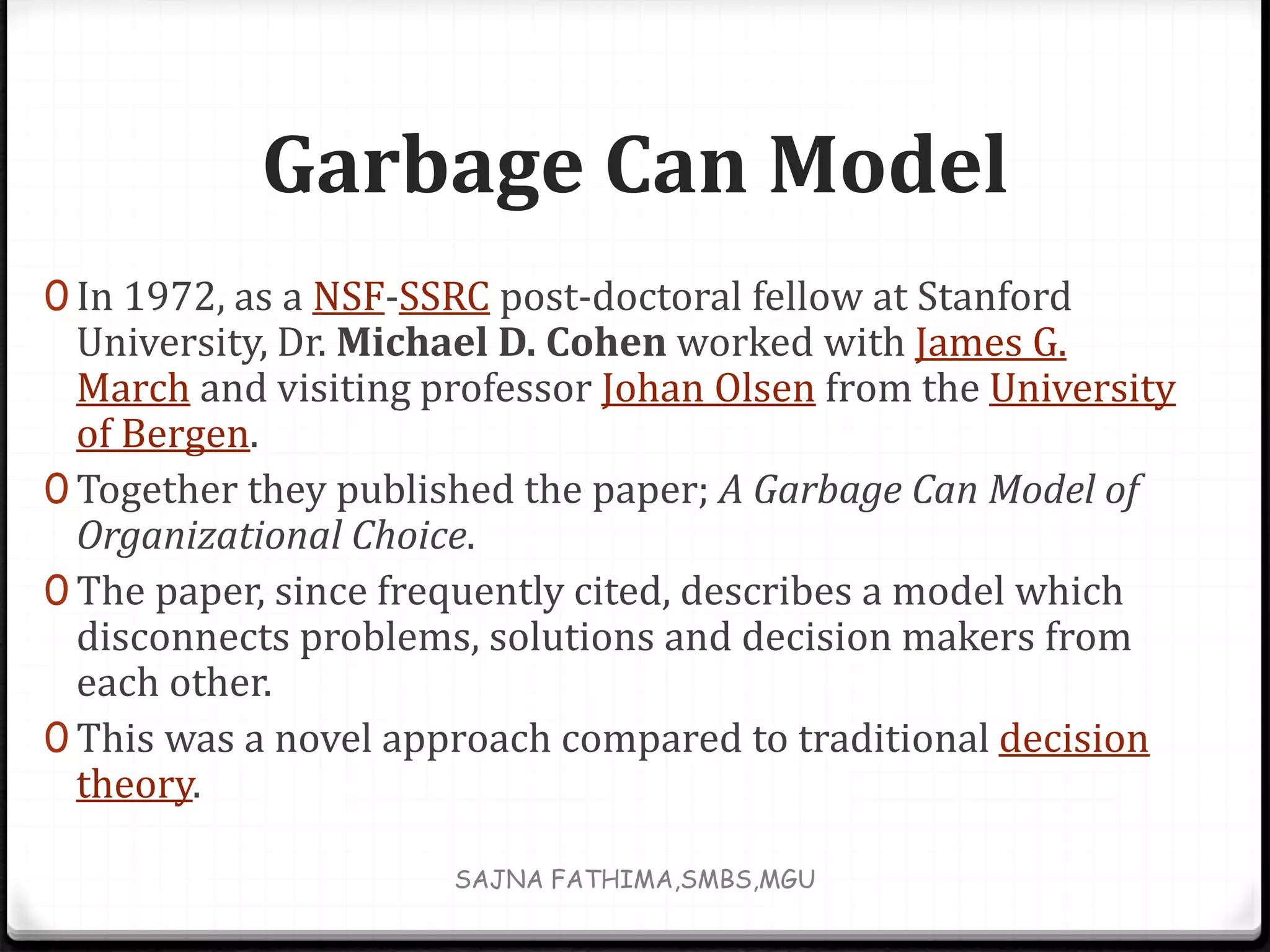
0 In 1972, as a NSF-SSRC post-doctoral fellow at Stanford
University, Dr. Michael D. Cohen worked with James G.
March and visiting professor Johan Olsen from the University
of Bergen.
0 Together they published the paper; A Garbage Can Model of
Organizational Choice.
0 The paper, since frequently cited, describes a model which
disconnects problems, solutions and decision makers from
each other.
0 This was a novel approach compared to traditional decision
theory.
SAJNA FATHIMA,SMBS,MGU
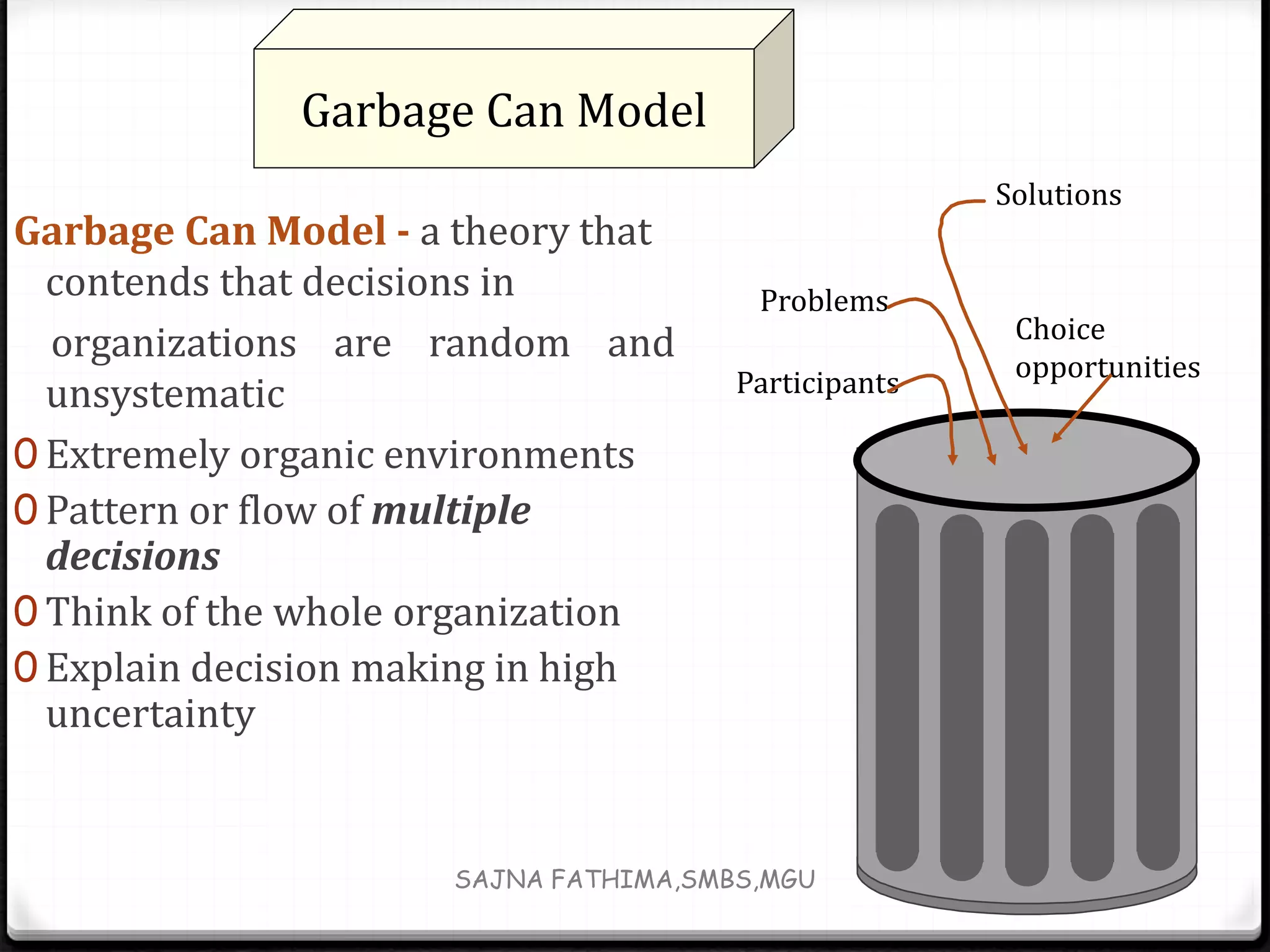
Garbage Can Model - a theory that
contends that decisions in
organizations are random and
unsystematic
0 Extremely organic environments
0 Pattern or flow of multiple
decisions
0 Think of the whole organization
0 Explain decision making in high
uncertainty
Problems
Solutions
Choice
opportunitiesParticipants
Garbage Can Model
SAJNA FATHIMA,SMBS,MGU
Garbage Can Model
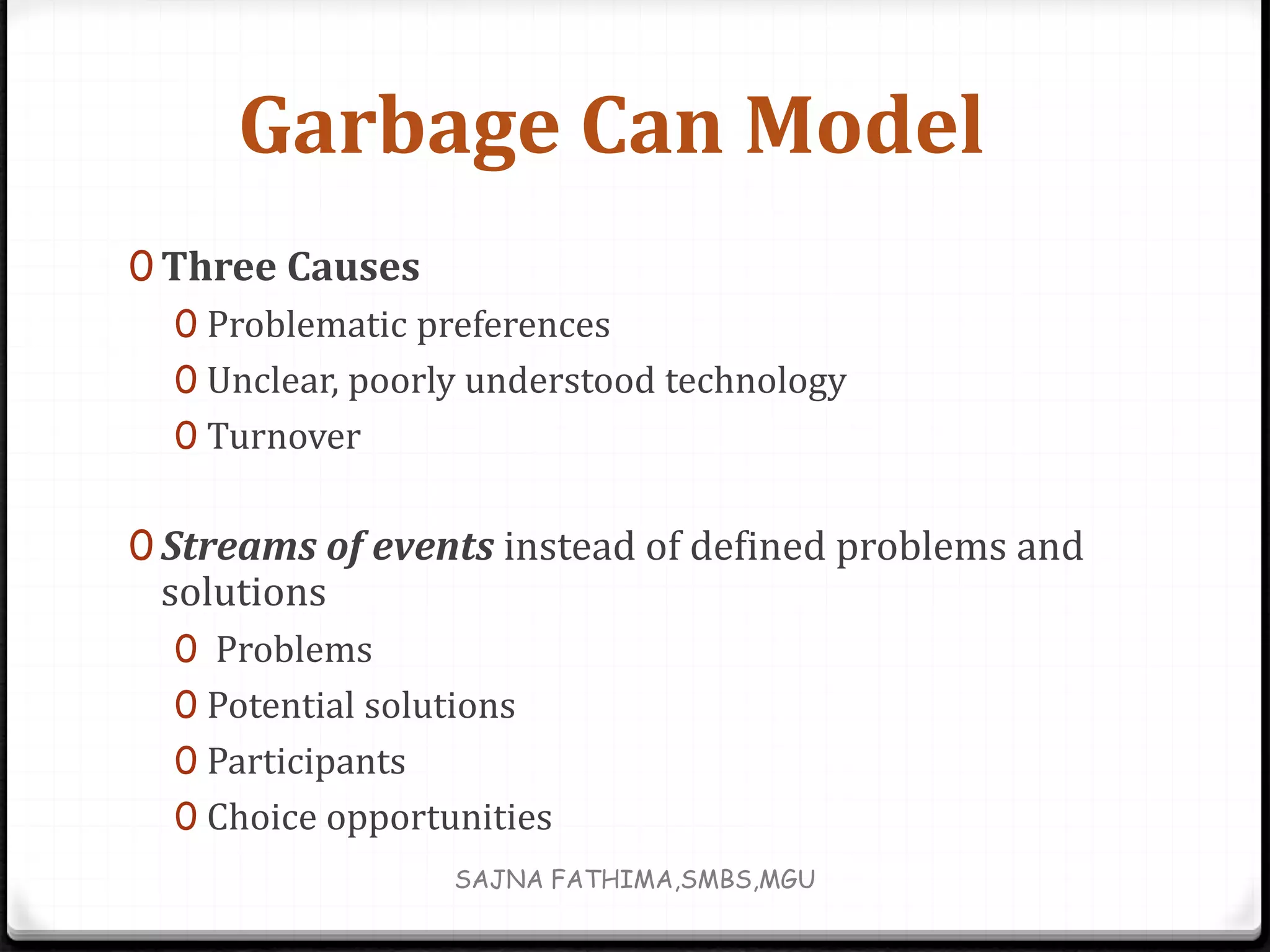
0 Three Causes
0 Problematic preferences
0 Unclear, poorly understood technology
0 Turnover
0 Streams of events instead of defined problems and
solutions
0 Problems
0 Potential solutions
0 Participants
0 Choice opportunities
SAJNA FATHIMA,SMBS,MGU
Garbage Can Theory
0 The garbage-can theory adds that an organization "is a
collection of choices looking for problems, issues and feelings
looking for decision situations in which they might be aired,
solutions looking for issues to which they might be the
answer, and decision makers looking for work".
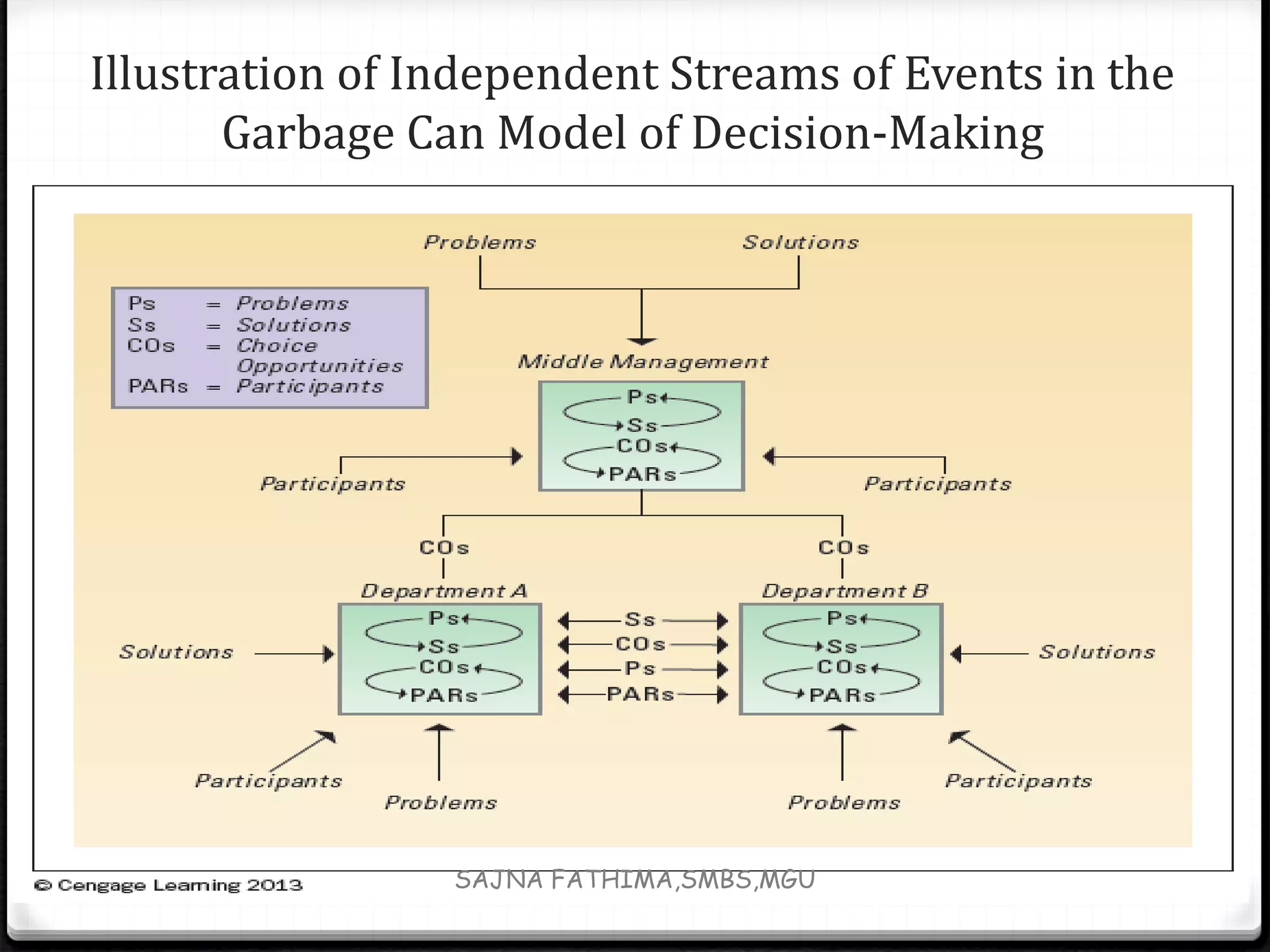
0 Problems, solutions, participants, and choice opportunities
flow in and out of a garbage can, and which problems get
attached to solutions is largely due to chance.
SAJNA FATHIMA,SMBS,MGU
Illustration of Independent Streams of Events in the
Garbage Can Model of Decision-Making
SAJNA FATHIMA,SMBS,MGU
Consequences of the
Garbage Can Model
1. Solutions may be proposed even when problems
do not exist
2. Choices are made without solving problems
3. Problems may persist without being solved
4. A few problems are solved
SAJNA FATHIMA,SMBS,MGU
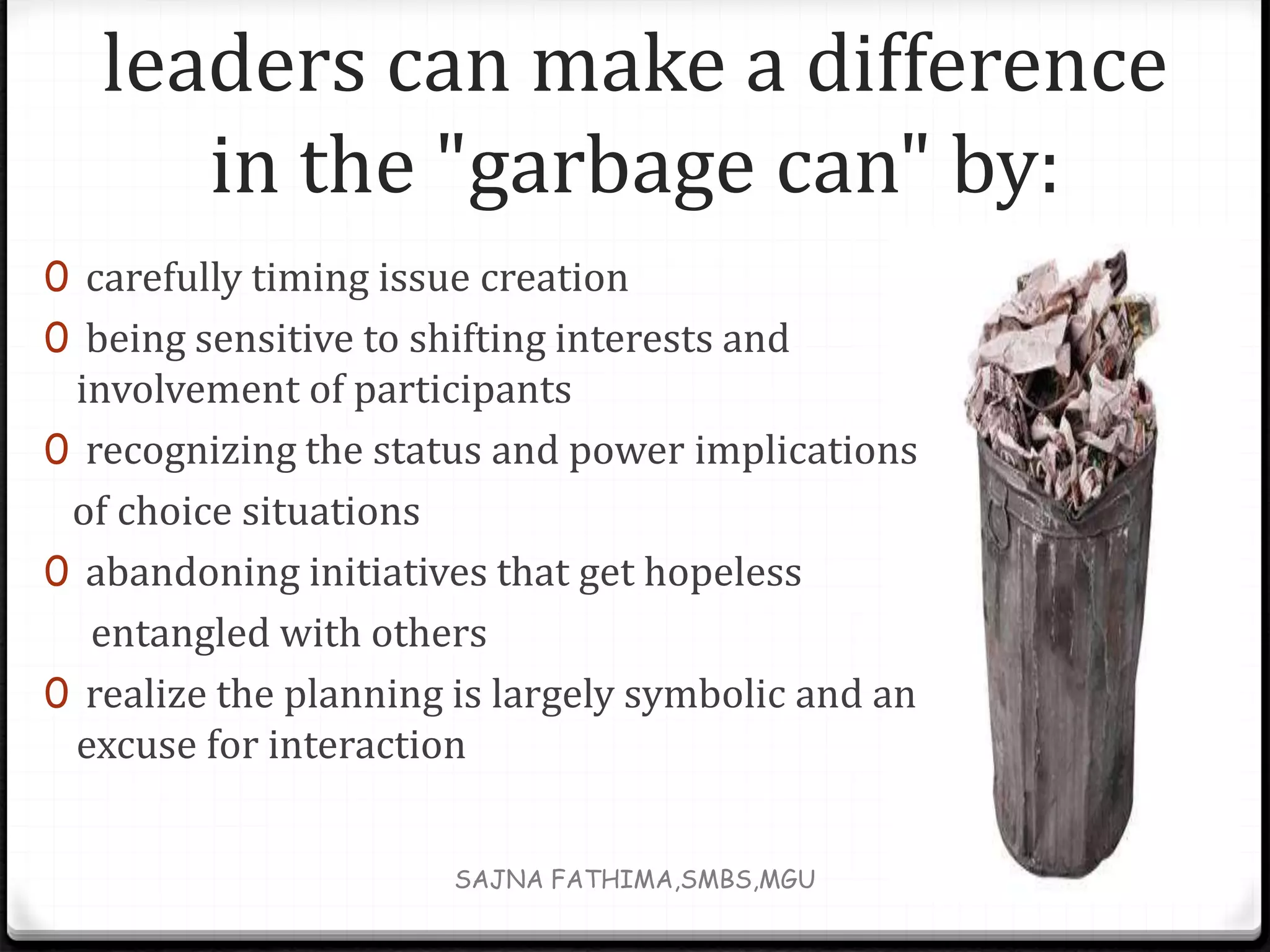
leaders can make a difference
in the "garbage can" by:
0 carefully timing issue creation
0 being sensitive to shifting interests and
involvement of participants
0 recognizing the status and power implications
of choice situations
0 abandoning initiatives that get hopeless
entangled with others
0 realize the planning is largely symbolic and an
excuse for interaction
SAJNA FATHIMA,SMBS,MGU

Garbage bin decision making

  • 1.
  • 2.
    Decision making 0 Whatis Decision making? 0 identifying and choosing alternative solutions that lead to a desired state of affairs 0 It the process of examining your possibilities, options, comparing them and choosing a course of action. SAJNA FATHIMA,SMBS,MGU
  • 3.
    Types Decision can beeither programmed or non programmed. 0 Programmed : decisions that are simple and routine and have a pre established decision making plan. 0 Non programmed : decisions that are new and complicated and require thought and creativity. SAJNA FATHIMA,SMBS,MGU
  • 4.
    Factors effecting decision making 0Perception – “know before you make.” 0 Priority – without knowing what you want there cant be any decision made about. 0 Acceptability – accept whether its hard or easy if you think your decision is correct. 0 Demands – make sure that no one gets hurt by your decision. 0 Style – don’t be outdated. 0 Resources – make your way with what is available. don’t ask for more in the region of scarcity. 0 Judgment – go on with the correct decision. SAJNA FATHIMA,SMBS,MGU
  • 5.
  • 6.
    Garbage Can Model 0In 1972, as a NSF-SSRC post-doctoral fellow at Stanford University, Dr. Michael D. Cohen worked with James G. March and visiting professor Johan Olsen from the University of Bergen. 0 Together they published the paper; A Garbage Can Model of Organizational Choice. 0 The paper, since frequently cited, describes a model which disconnects problems, solutions and decision makers from each other. 0 This was a novel approach compared to traditional decision theory. SAJNA FATHIMA,SMBS,MGU
  • 7.
    Garbage Can Model- a theory that contends that decisions in organizations are random and unsystematic 0 Extremely organic environments 0 Pattern or flow of multiple decisions 0 Think of the whole organization 0 Explain decision making in high uncertainty Problems Solutions Choice opportunitiesParticipants Garbage Can Model SAJNA FATHIMA,SMBS,MGU
  • 8.
    Garbage Can Model 0Three Causes 0 Problematic preferences 0 Unclear, poorly understood technology 0 Turnover 0 Streams of events instead of defined problems and solutions 0 Problems 0 Potential solutions 0 Participants 0 Choice opportunities SAJNA FATHIMA,SMBS,MGU
  • 9.
    Garbage Can Theory 0The garbage-can theory adds that an organization "is a collection of choices looking for problems, issues and feelings looking for decision situations in which they might be aired, solutions looking for issues to which they might be the answer, and decision makers looking for work". 0 Problems, solutions, participants, and choice opportunities flow in and out of a garbage can, and which problems get attached to solutions is largely due to chance. SAJNA FATHIMA,SMBS,MGU
  • 10.
    Illustration of IndependentStreams of Events in the Garbage Can Model of Decision-Making SAJNA FATHIMA,SMBS,MGU
  • 11.
    Consequences of the GarbageCan Model 1. Solutions may be proposed even when problems do not exist 2. Choices are made without solving problems 3. Problems may persist without being solved 4. A few problems are solved SAJNA FATHIMA,SMBS,MGU
  • 12.
    leaders can makea difference in the "garbage can" by: 0 carefully timing issue creation 0 being sensitive to shifting interests and involvement of participants 0 recognizing the status and power implications of choice situations 0 abandoning initiatives that get hopeless entangled with others 0 realize the planning is largely symbolic and an excuse for interaction SAJNA FATHIMA,SMBS,MGU