Production system
The production system of an organization is
that part, which produces products of an
organization
OR
The set of resources and procedures
involved in converting products in raw
materials and delivering them to the
customer.
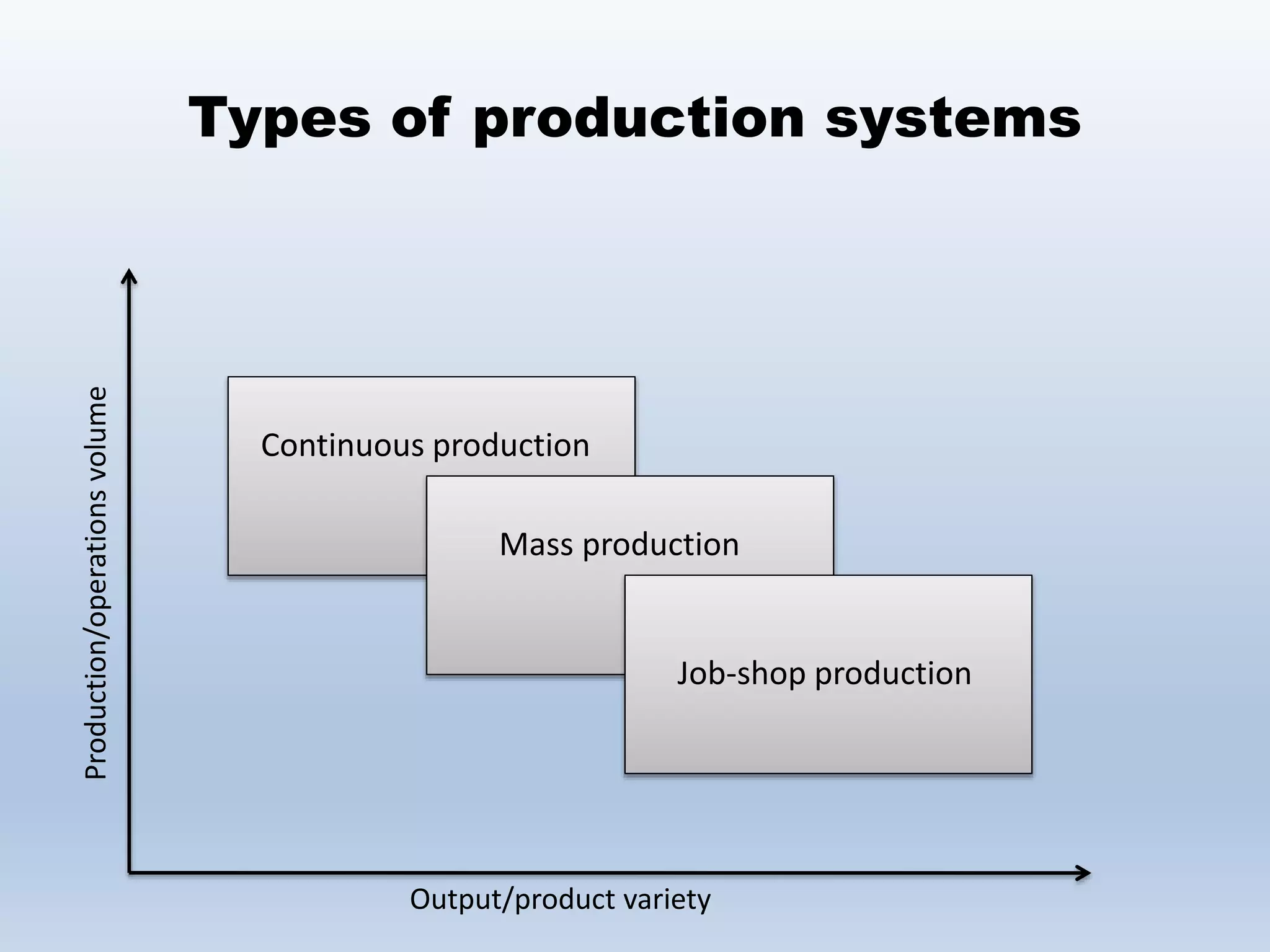
Types of production systems
Mass production
Continuous production
Job-shop production
Production/operationsvolume
Output/product variety
Mass production system
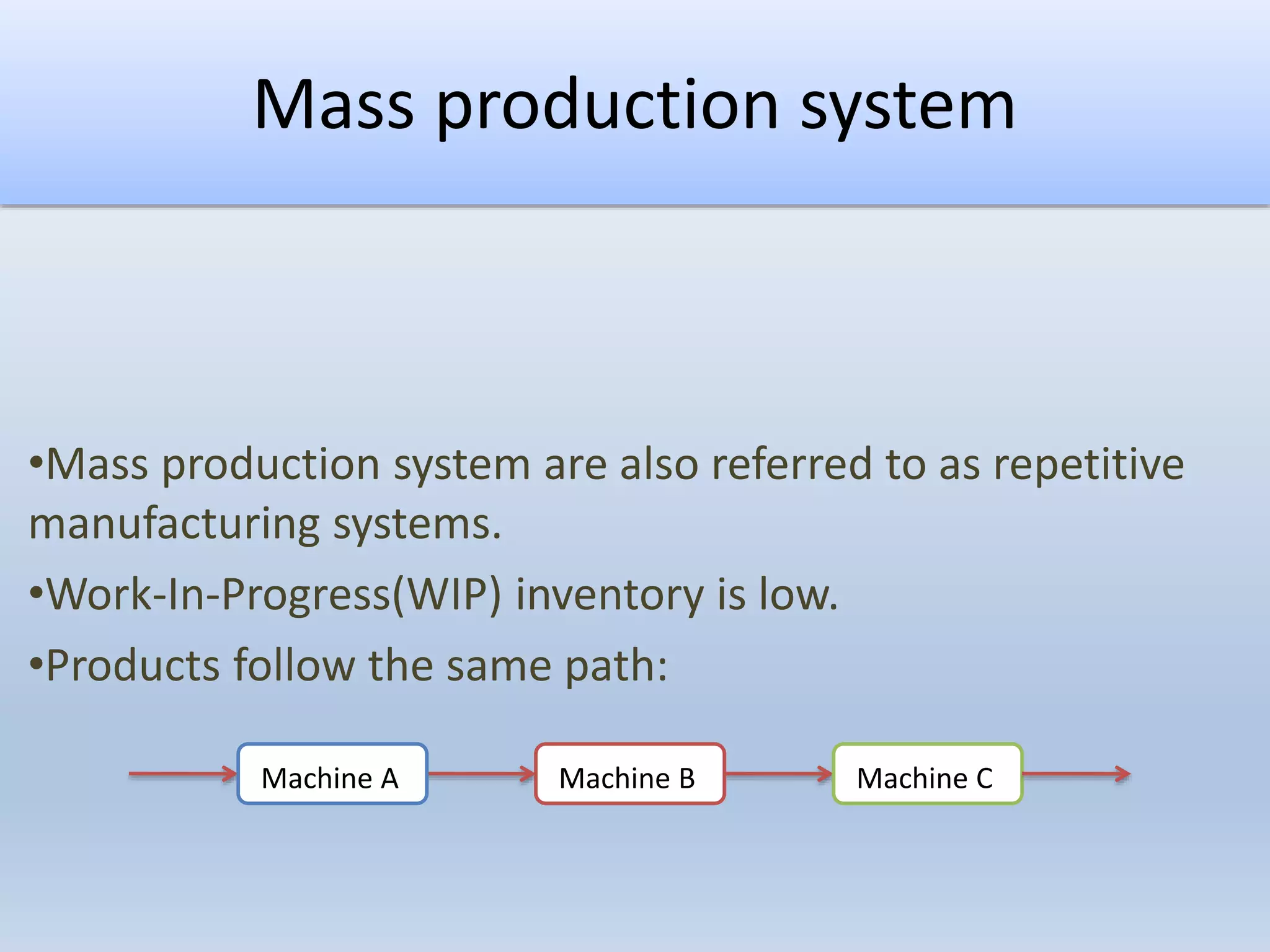
•Mass production system are also referred to as repetitive
manufacturing systems.
•Work-In-Progress(WIP) inventory is low.
•Products follow the same path:
Machine A Machine B Machine C
Mass production system
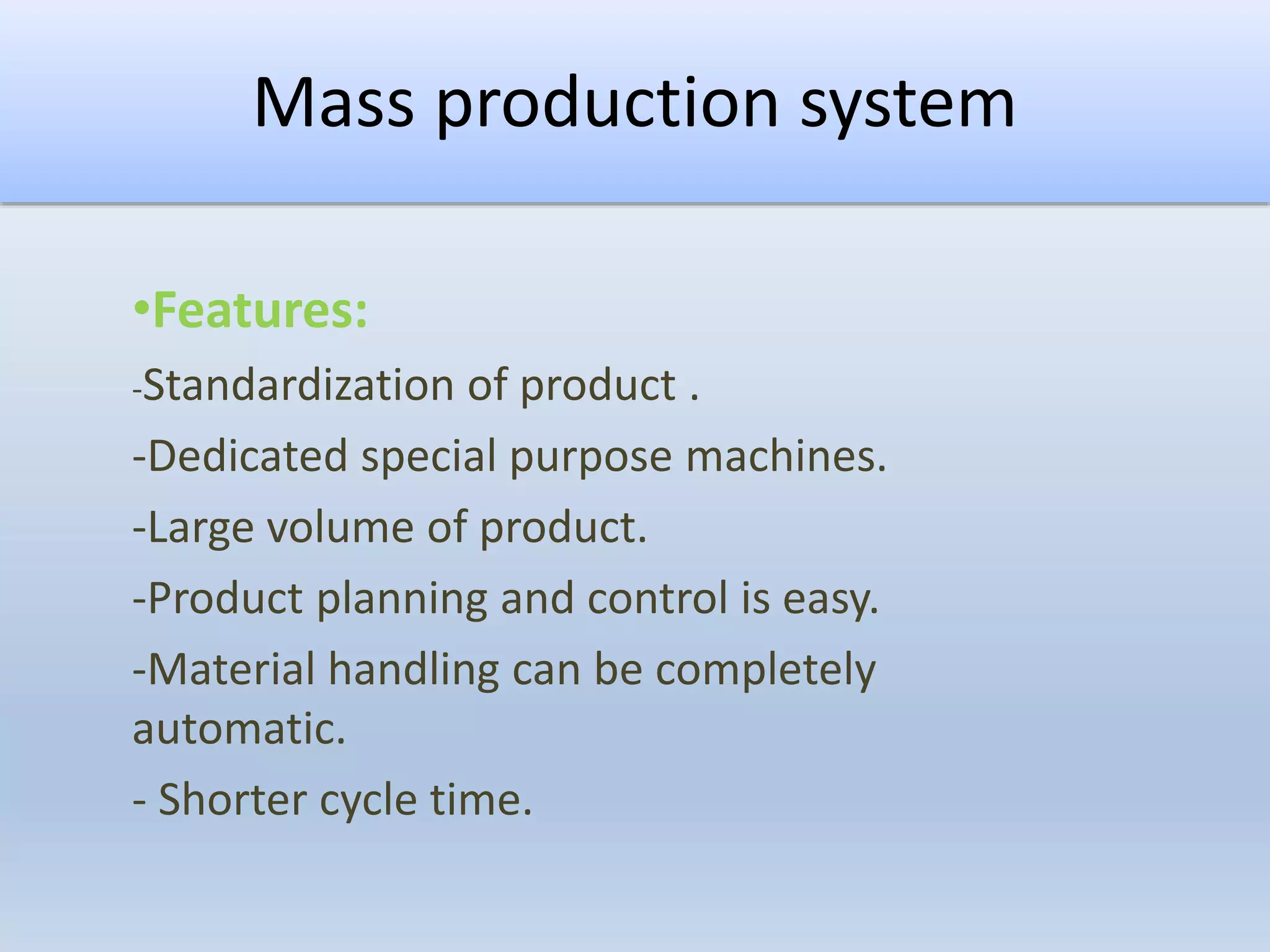
•Features:
-Standardization of product .
-Dedicated special purpose machines.
-Large volume of product.
-Product planning and control is easy.
-Material handling can be completely
automatic.
- Shorter cycle time.
Mass production system
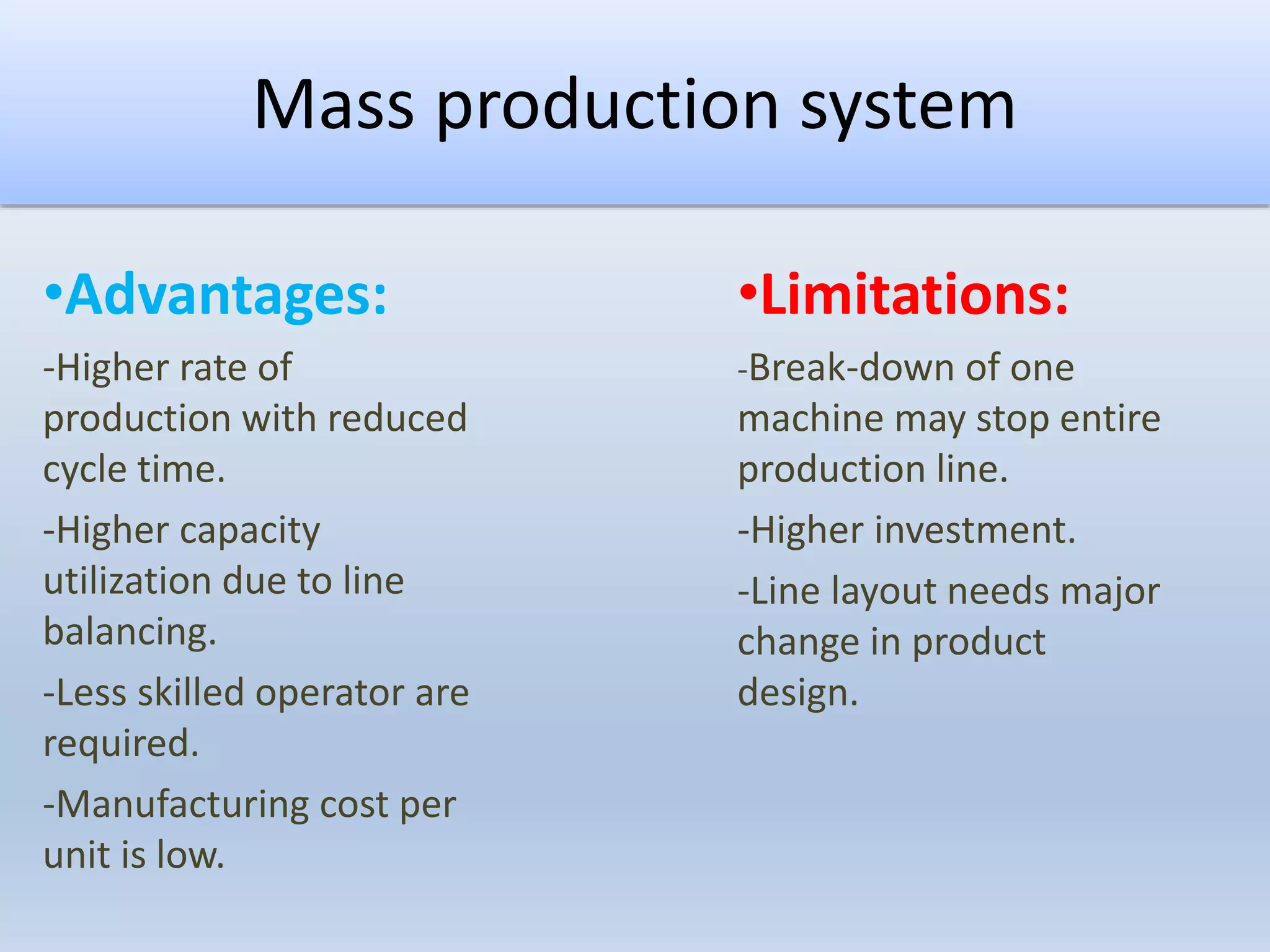
•Advantages:
-Higher rate of
production with reduced
cycle time.
-Higher capacity
utilization due to line
balancing.
-Less skilled operator are
required.
-Manufacturing cost per
unit is low.
•Limitations:
-Break-down of one
machine may stop entire
production line.
-Higher investment.
-Line layout needs major
change in product
design.
Job-shop production system
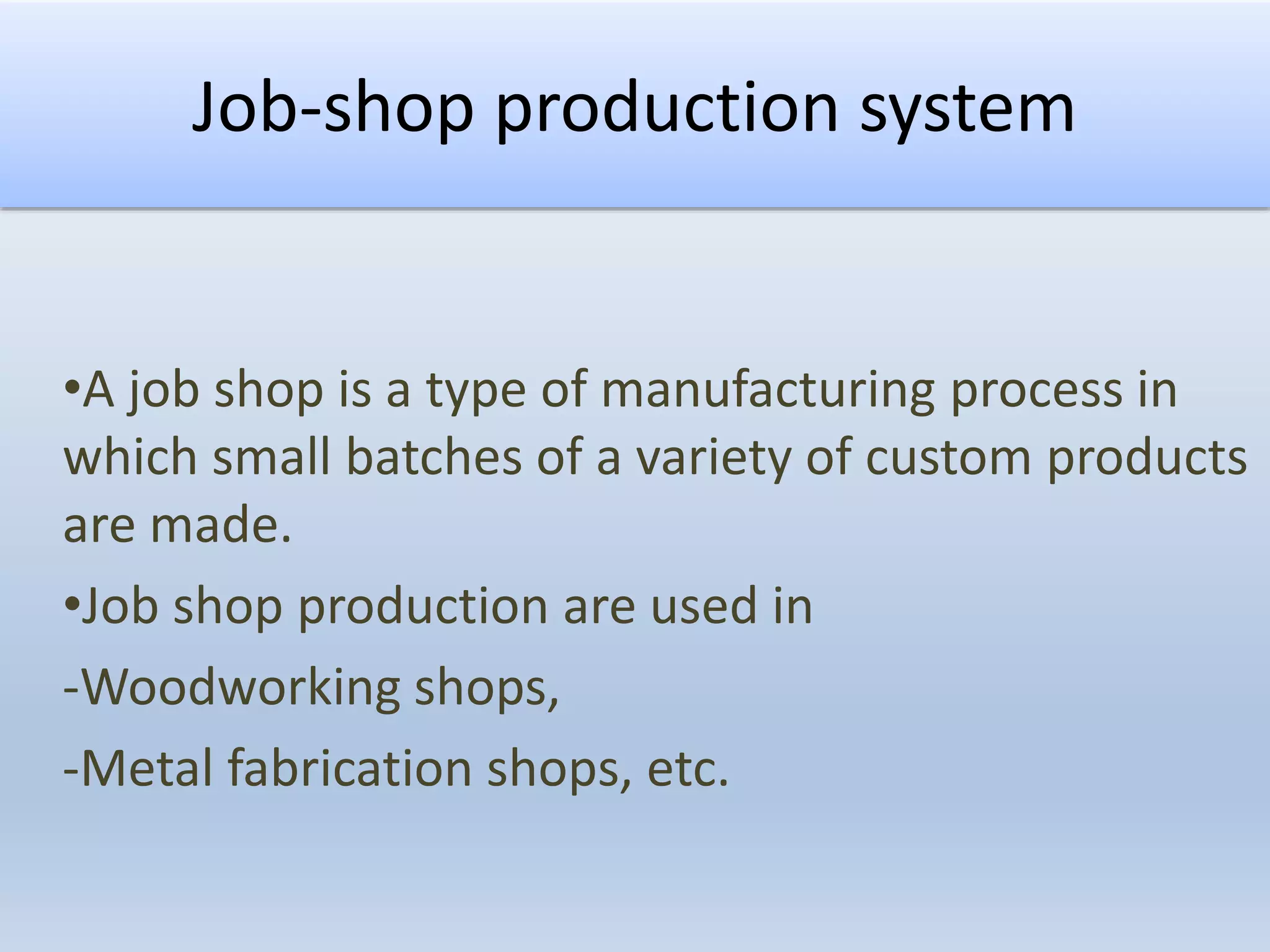
•A job shop is a type of manufacturing process in
which small batches of a variety of custom products
are made.
•Job shop production are used in
-Woodworking shops,
-Metal fabrication shops, etc.
Features
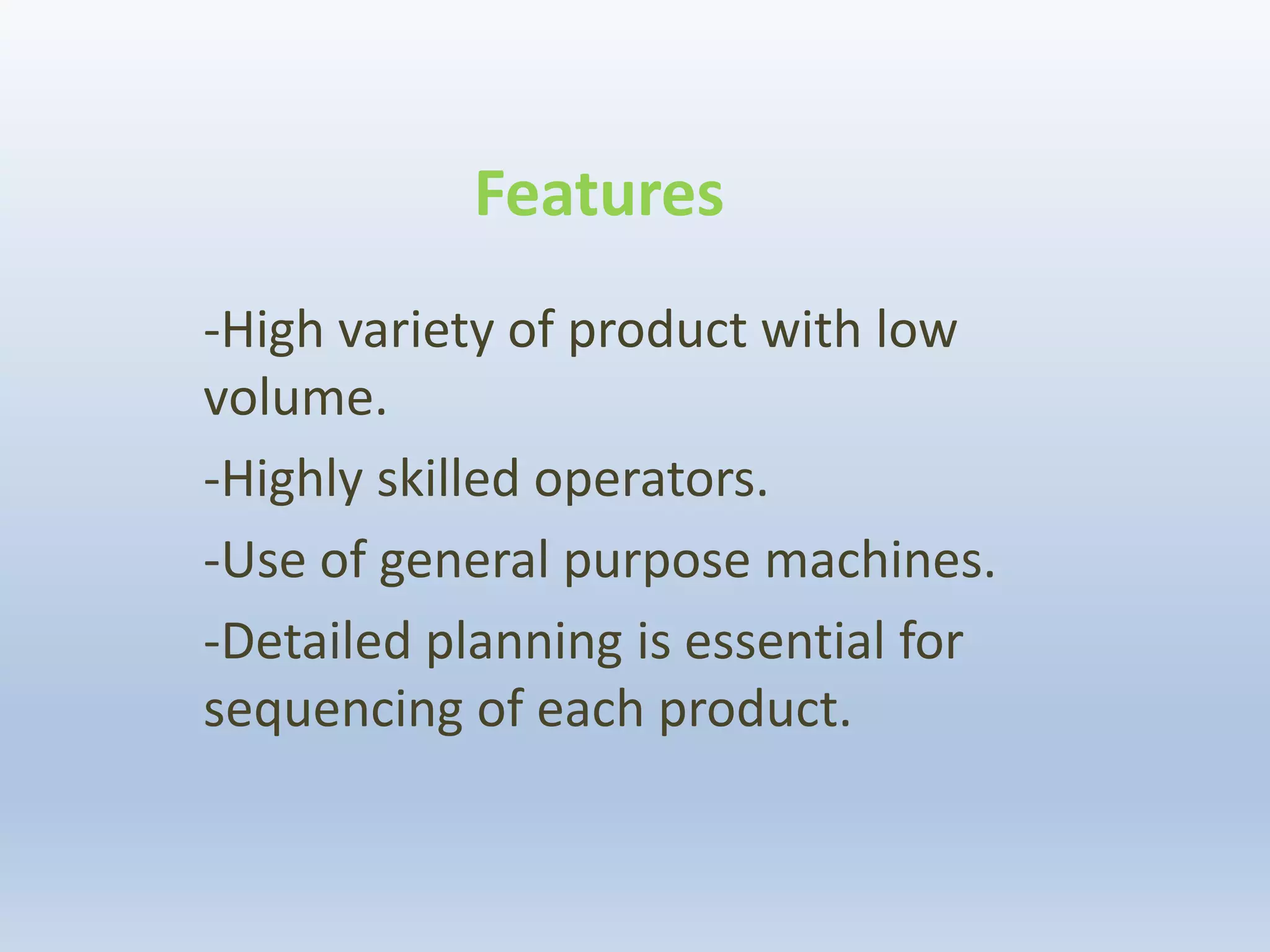
-High variety of product with low
volume.
-Highly skilled operators.
-Use of general purpose machines.
-Detailed planning is essential for
sequencing of each product.
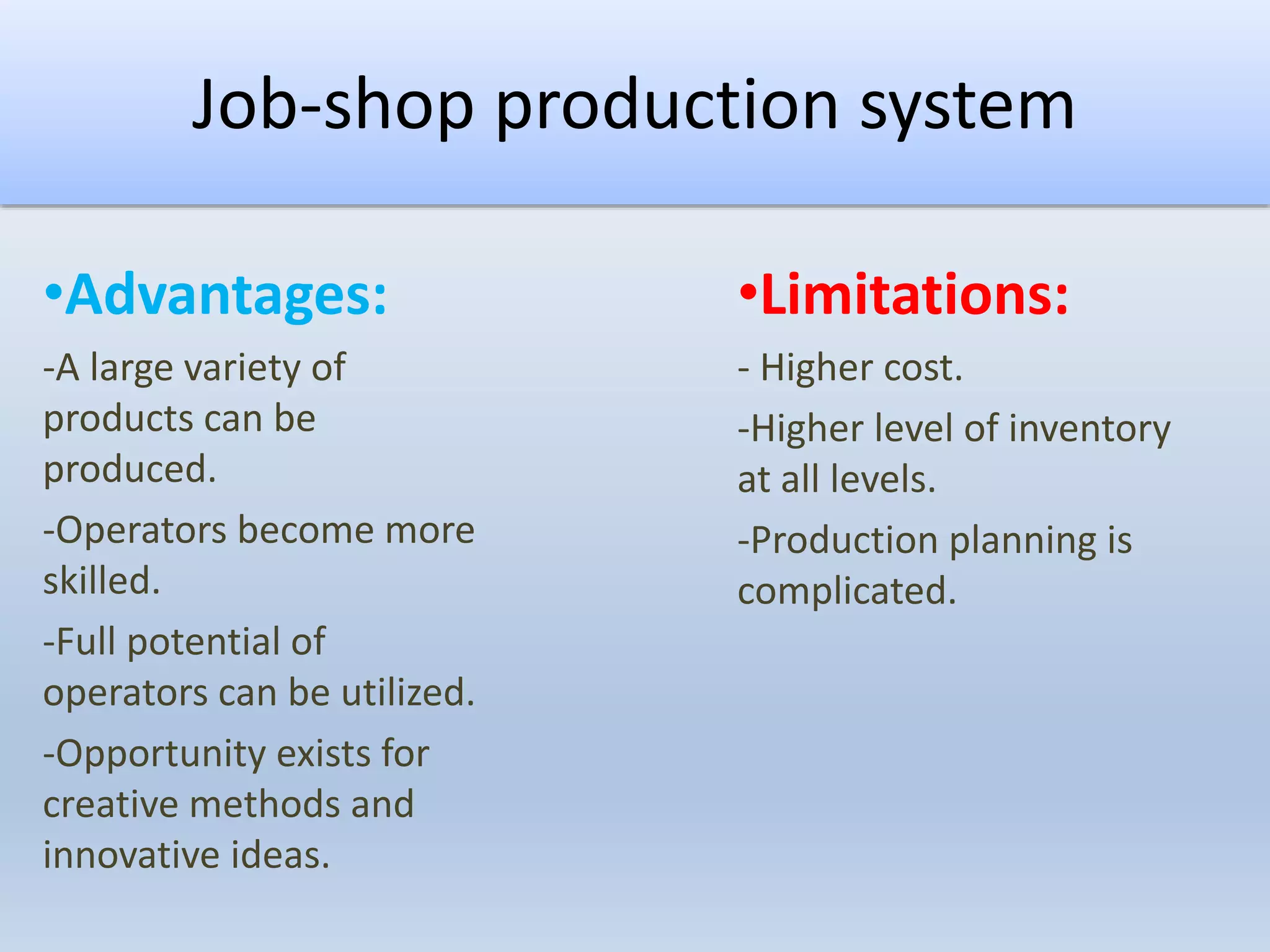
Job-shop production system
•Advantages:
-A large variety of
products can be
produced.
-Operators become more
skilled.
-Full potential of
operators can be utilized.
-Opportunity exists for
creative methods and
innovative ideas.
•Limitations:
- Higher cost.
-Higher level of inventory
at all levels.
-Production planning is
complicated.
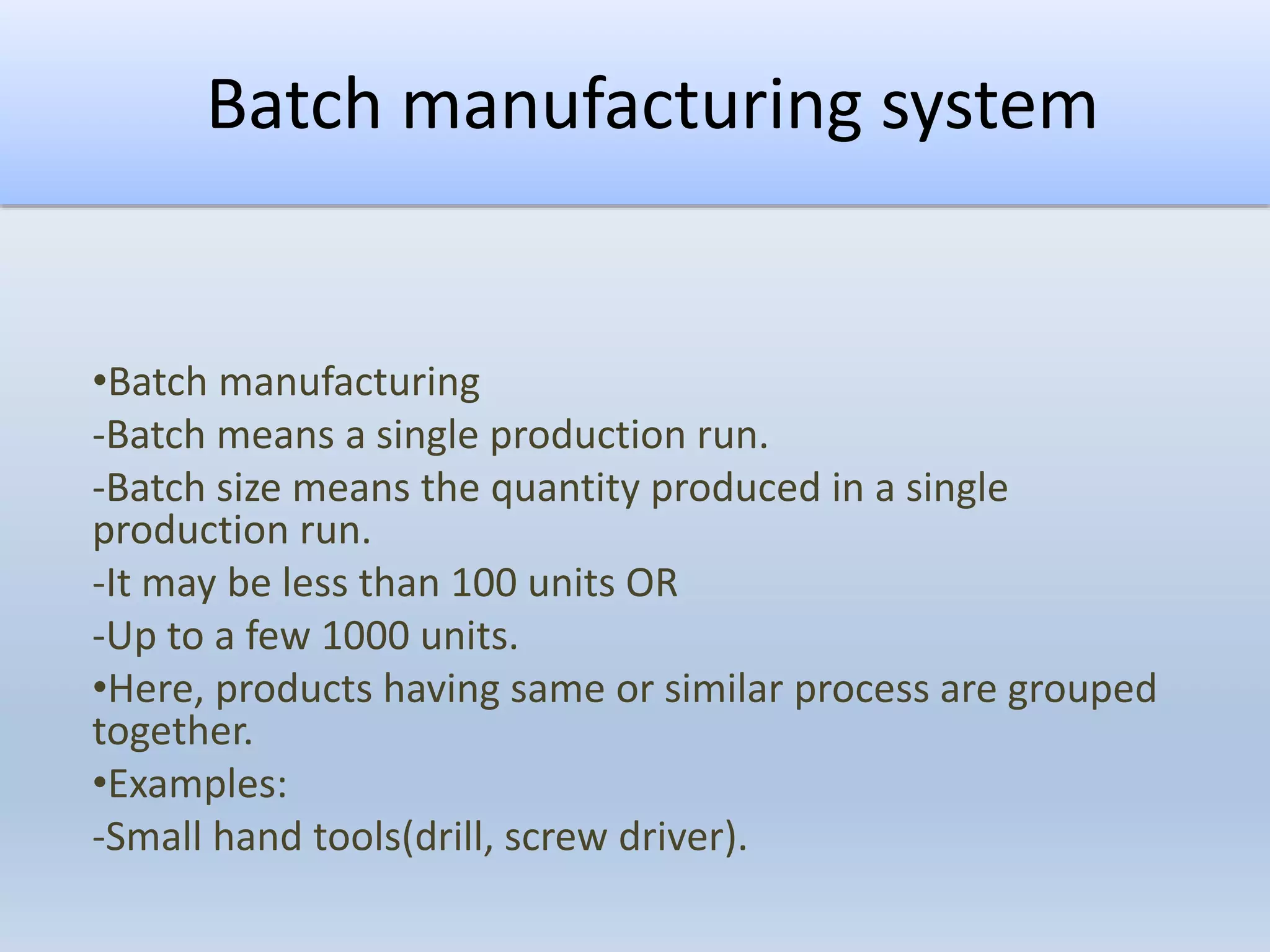
Batch manufacturing system
•Batch manufacturing
-Batch means a single production run.
-Batch size means the quantity produced in a single
production run.
-It may be less than 100 units OR
-Up to a few 1000 units.
•Here, products having same or similar process are grouped
together.
•Examples:
-Small hand tools(drill, screw driver).
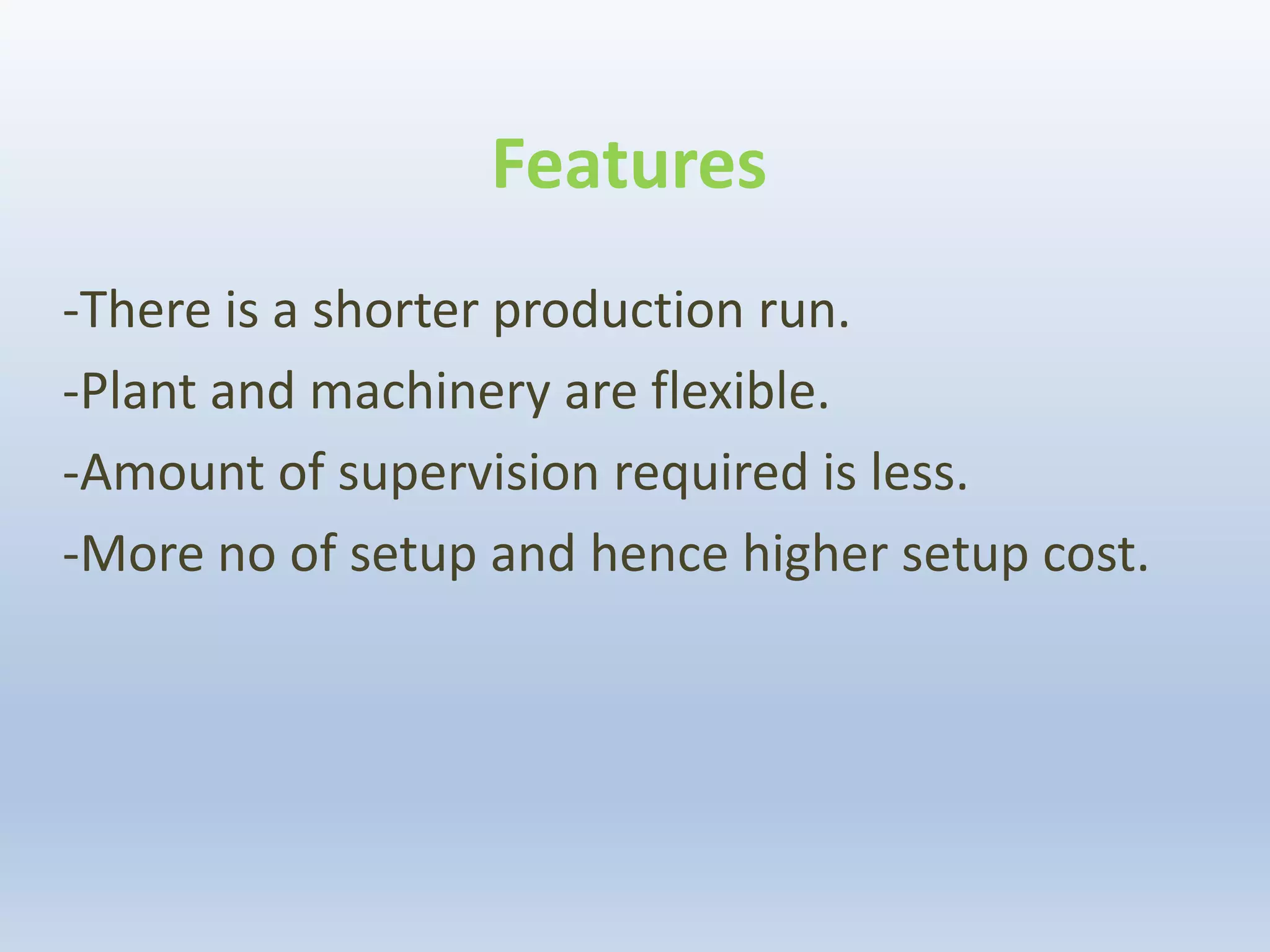
Features
-There is a shorter production run.
-Plant and machinery are flexible.
-Amount of supervision required is less.
-More no of setup and hence higher setup cost.
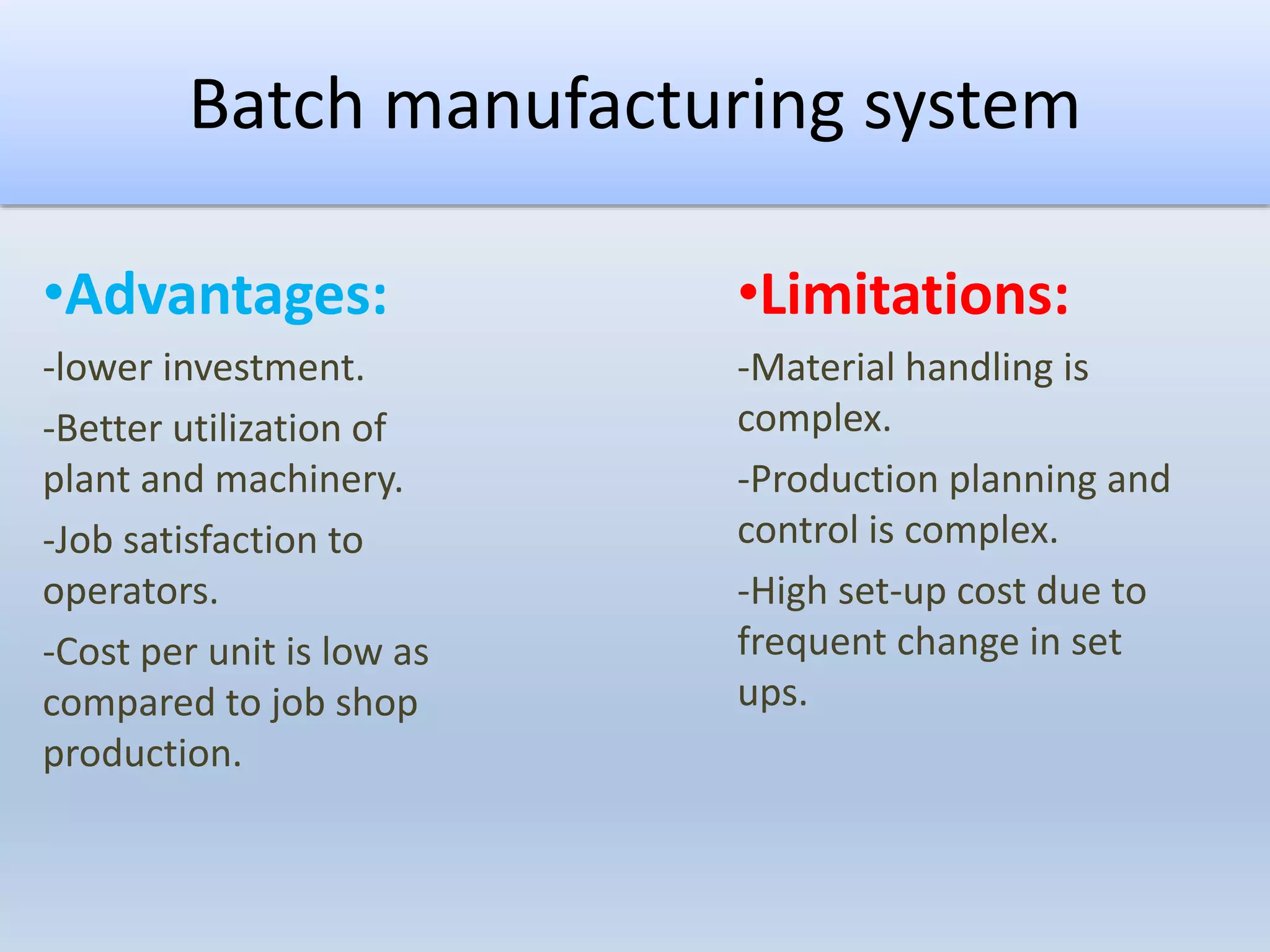
Batch manufacturing system
•Advantages:
-lower investment.
-Better utilization of
plant and machinery.
-Job satisfaction to
operators.
-Cost per unit is low as
compared to job shop
production.
•Limitations:
-Material handling is
complex.
-Production planning and
control is complex.
-High set-up cost due to
frequent change in set
ups.
THANK YOU!

Production ( Types of production system)

  • 2.
    Production system The productionsystem of an organization is that part, which produces products of an organization OR The set of resources and procedures involved in converting products in raw materials and delivering them to the customer.
  • 3.
    Types of productionsystems Mass production Continuous production Job-shop production Production/operationsvolume Output/product variety
  • 4.
    Mass production system •Massproduction system are also referred to as repetitive manufacturing systems. •Work-In-Progress(WIP) inventory is low. •Products follow the same path: Machine A Machine B Machine C
  • 5.
    Mass production system •Features: -Standardizationof product . -Dedicated special purpose machines. -Large volume of product. -Product planning and control is easy. -Material handling can be completely automatic. - Shorter cycle time.
  • 6.
    Mass production system •Advantages: -Higherrate of production with reduced cycle time. -Higher capacity utilization due to line balancing. -Less skilled operator are required. -Manufacturing cost per unit is low. •Limitations: -Break-down of one machine may stop entire production line. -Higher investment. -Line layout needs major change in product design.
  • 7.
    Job-shop production system •Ajob shop is a type of manufacturing process in which small batches of a variety of custom products are made. •Job shop production are used in -Woodworking shops, -Metal fabrication shops, etc.
  • 8.
    Features -High variety ofproduct with low volume. -Highly skilled operators. -Use of general purpose machines. -Detailed planning is essential for sequencing of each product.
  • 9.
    Job-shop production system •Advantages: -Alarge variety of products can be produced. -Operators become more skilled. -Full potential of operators can be utilized. -Opportunity exists for creative methods and innovative ideas. •Limitations: - Higher cost. -Higher level of inventory at all levels. -Production planning is complicated.
  • 10.
    Batch manufacturing system •Batchmanufacturing -Batch means a single production run. -Batch size means the quantity produced in a single production run. -It may be less than 100 units OR -Up to a few 1000 units. •Here, products having same or similar process are grouped together. •Examples: -Small hand tools(drill, screw driver).
  • 11.
    Features -There is ashorter production run. -Plant and machinery are flexible. -Amount of supervision required is less. -More no of setup and hence higher setup cost.
  • 12.
    Batch manufacturing system •Advantages: -lowerinvestment. -Better utilization of plant and machinery. -Job satisfaction to operators. -Cost per unit is low as compared to job shop production. •Limitations: -Material handling is complex. -Production planning and control is complex. -High set-up cost due to frequent change in set ups.
  • 13.