Pisum sativum L.
Fabaceae
2n = 14
Central Asia
Production technology of garden pea
Ningappa Kirasur
2014-12-129
Dept. of Olericulture
COH, Vellanikkara1
Important vegetable crop grown all over the world
Grown as winter crop in India
Highly nutritive and rich source of protein 7%
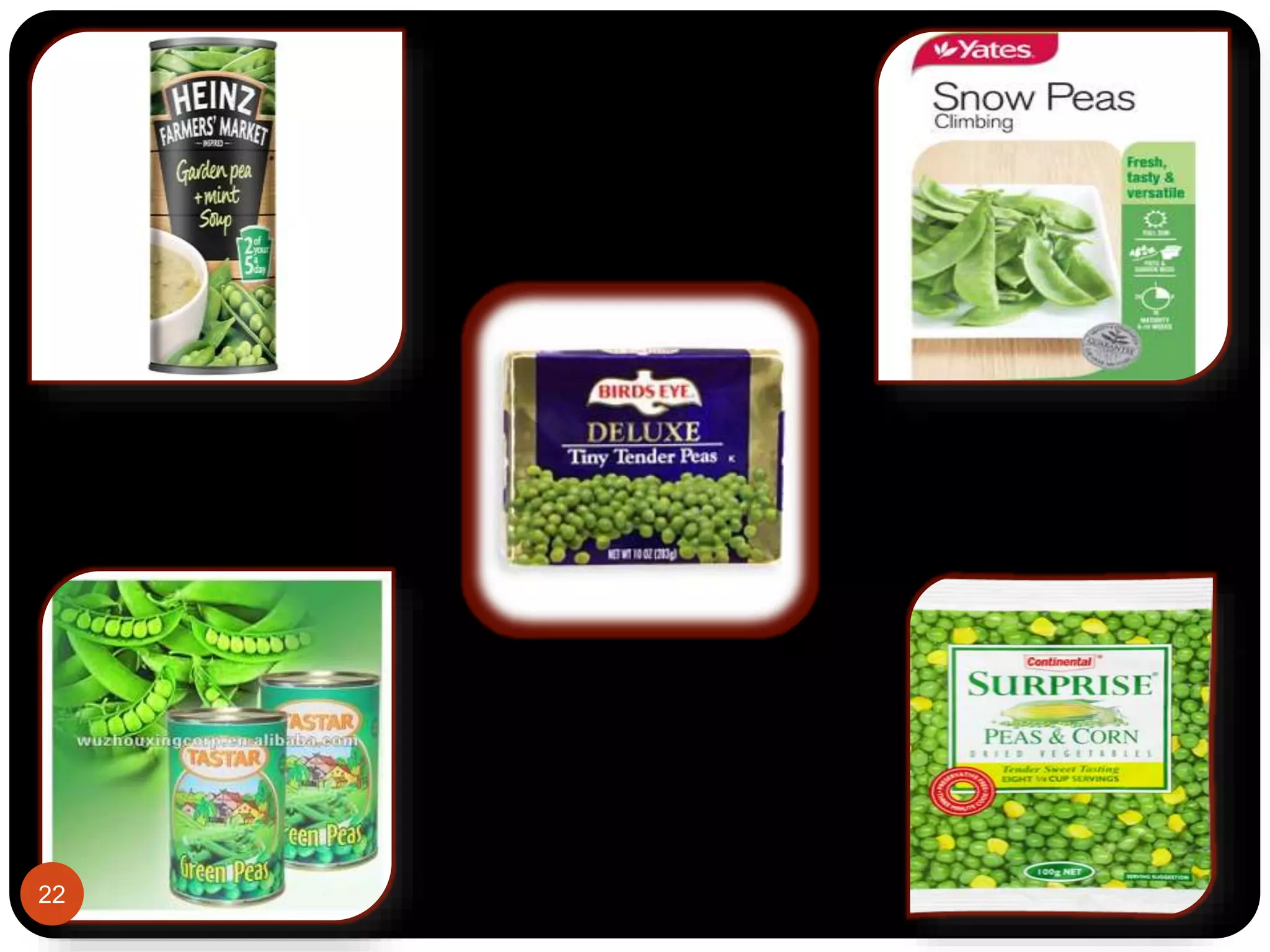
Used as fresh vegetable, canned or dehydrated
The average yield in India is 6.12t/ha
Contd…
2
Soil and Climate
Well drained loamy soil with optimum pH range of 6 -7.5
is ideal
Thrives well in cool weather
Withstands low temperature at the seedling stage
Grows best at a temperature of 10-18 0C
Optimum temperature for seed germination 22 0C
3
Season
Central plains – Oct. - Nov.
Northern hills – Jun. - Jul.
Seed rate
Early crop 100-120 kg ha -1
Mid and late crop 80-90 kg ha -1
4
Varieties
Based on seed
Smooth seeded
Wrinkled seeded
Based on height
Bushy
Medium tall
Tall
5
Ooty 1:
Crop duration of 90 days
Dwarf type with yield potential of 11.9 t/ha
Resistant to white fly
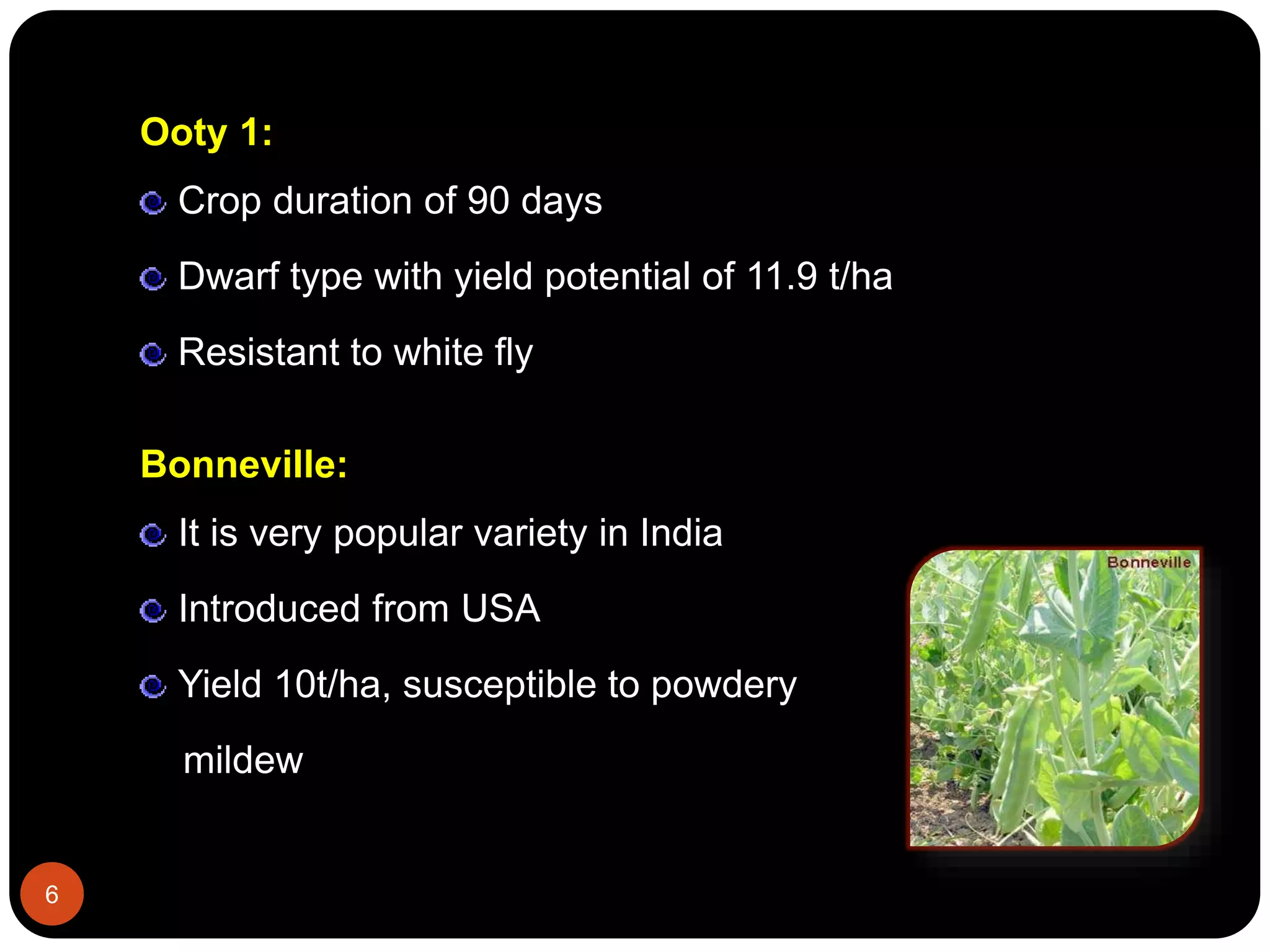
Bonneville:
It is very popular variety in India
Introduced from USA
Yield 10t/ha, susceptible to powdery
mildew
6
Contd…
Arka Ajit:
Released from IIHR, Bangalore
Resistant to powdery mildew and rust
Yield 10t/ha in 90 days
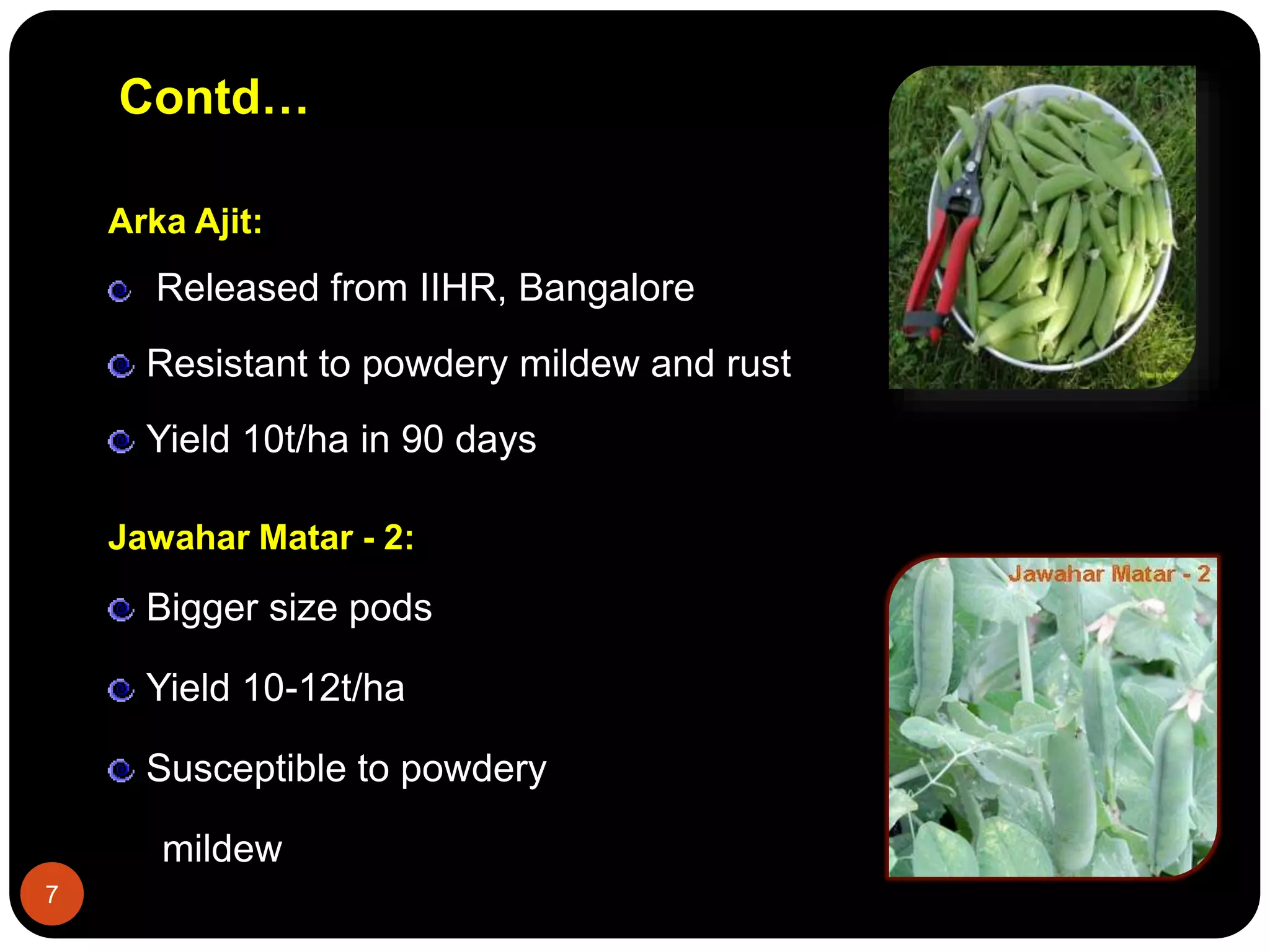
Jawahar Matar - 2:
Bigger size pods
Yield 10-12t/ha
Susceptible to powdery
mildew
7
Contd…
UN 53 :
Snap pea (whole pod edible)
From IIHR- Bangluru
Yield 8- 9 t/ ha
Duration- 90 days
8
Contd…
Arkel:
Most popular exotic pea introduced from England
Susceptible to collar rot
Yield 5t/ha
9
Other varieties
Harbhajan
FC 1
JP 4
JP 19
Lincoln
Mattar Ageta 6
10
Seed treatment
Treat the seeds with Trichoderma 4 g/kg or Thiram or
Captan at 2 g/kg of seed
To avoid seed borne diseases
Apply 2 kg Phosphobacterium as soil application
before sowing
11
Land preparation
Thorough preparation of the land is necessary for pea
crop for better growth
This fix large quantity of atmospheric nitrogen to soil
This is achieved by soil turning plough followed by
one or two harrowing
12
Methods of sowing
Broadcasting
Behind the country plough
By dibbling
Spacing
Early varieties 30 cm x 5-10 cm
Mid and late varieties 45 cm x 10 cm
13
Irrigation
Do not irrigate the crop immediately after sowing
Results in poor germination due to formation of hard crust
Life saving irrigation is given on 3rd day after sowing
Irrigation is done once in a week
critical stages for irrigation are flowering, fruit set and grain
filling stage
14
Manuring
FYM 20 t/ha
N - 60 kg /ha, P2O5 - 80 kg/ha and K2O - 70 kg K/ha as
basal dose
apply N - 60 kg /ha on 30 days after sowing
Foliar sprays of ammonium molybdate 0.1% at flowering
Increased yield and quality
15
After cultivation
Weeding:
Done 15 days after sowing
Subsequent weeding is done as and when necessary
Pre-sowing application of Basalin 3 lit/ha
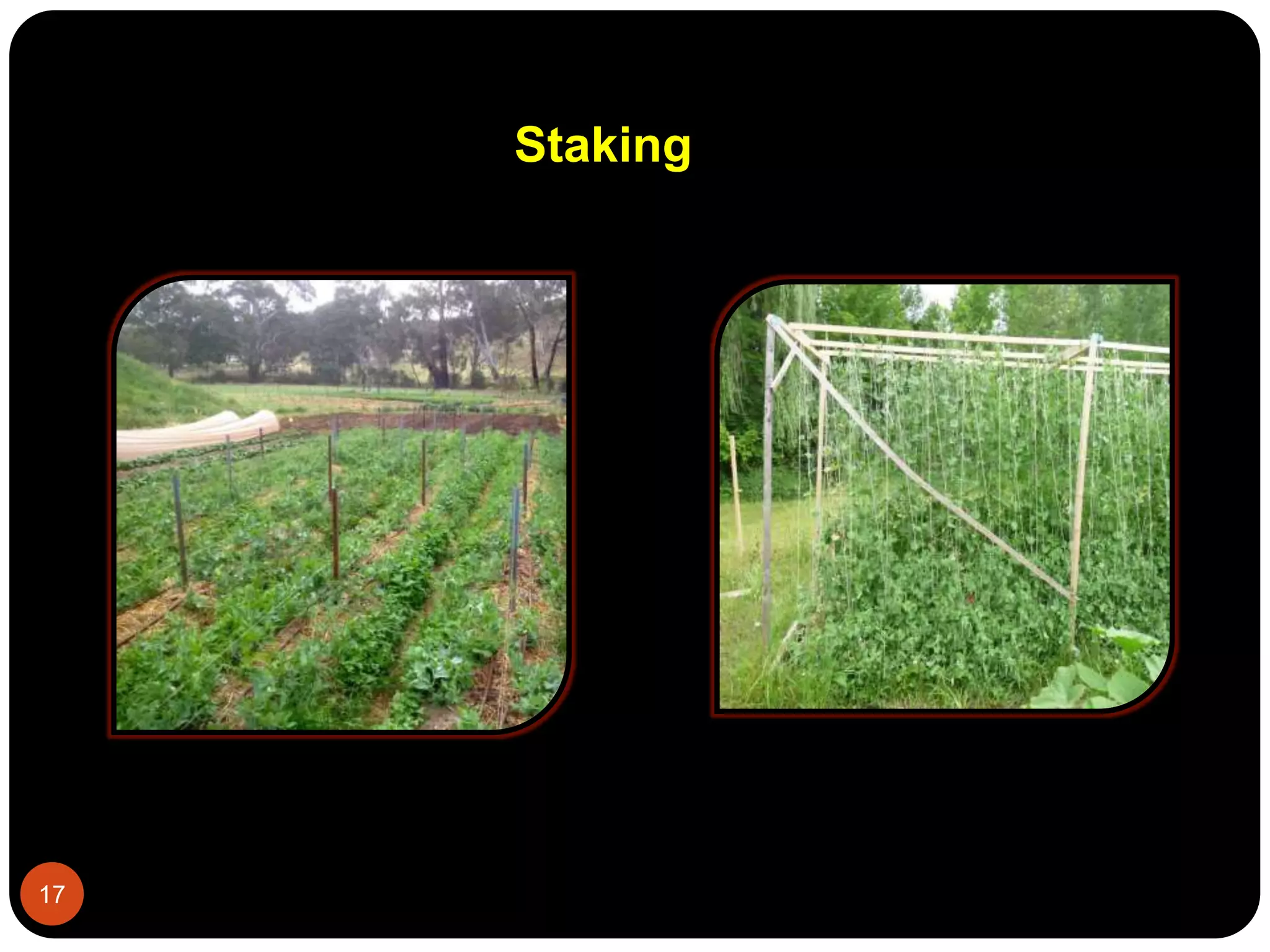
Staking:
Most important operation especially for tall varieties
Stake the plants on 30 days after sowing
16
Staking
17
Harvesting
Peas must be harvested at proper stage of pod maturity
Early varieties in 50days after sowing
Mid and late varieties in 60-75days after sowing
Maturity of pea tested with Tenderometer
18
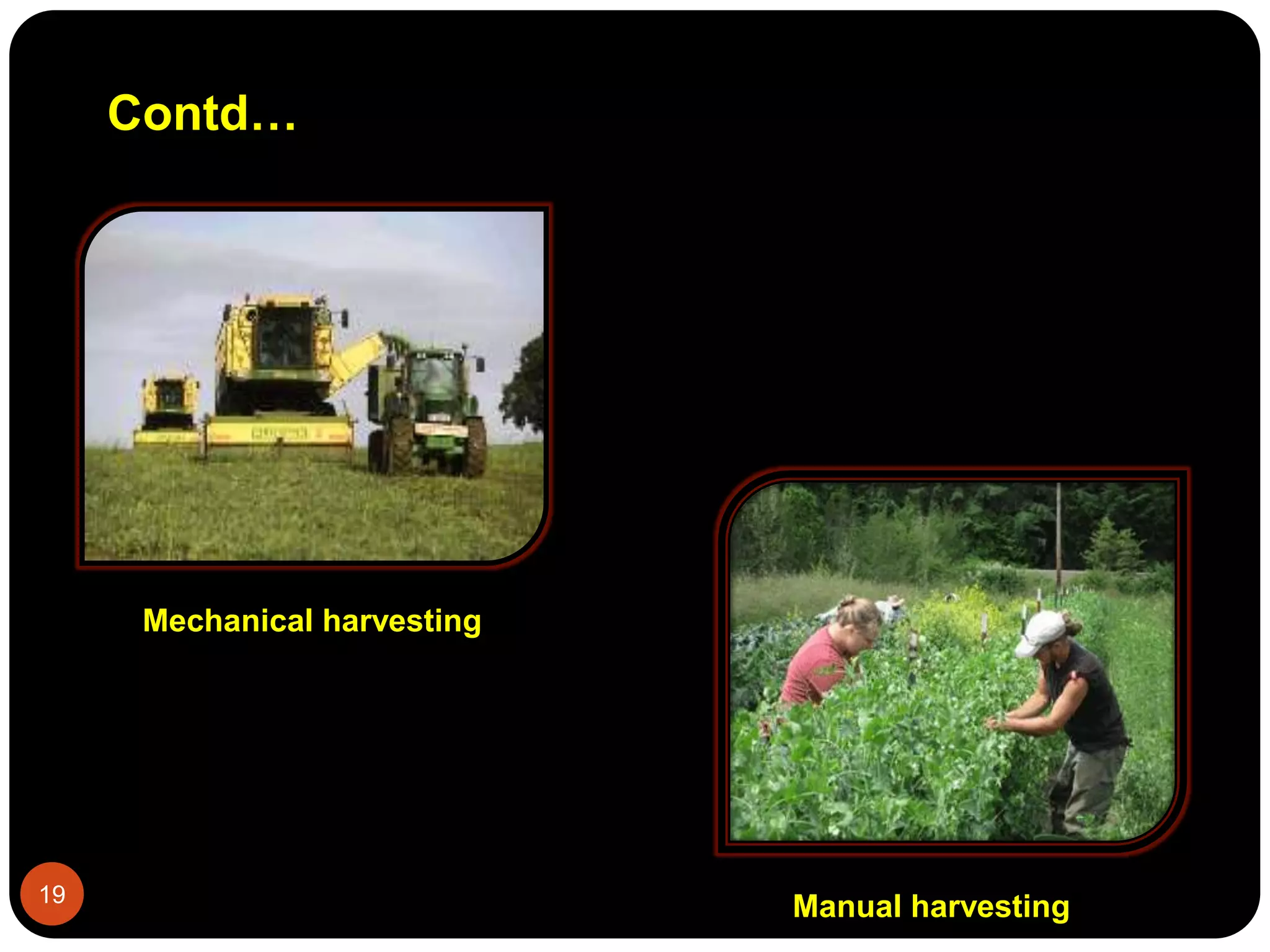
Mechanical harvesting
Manual harvesting
Contd…
19
Contd….
Delayed harvesting leads to fibrous pod
Its bring down the market value of the produce
Higher temperature at harvest affects quality
Yield
Early varieties: 2.5-4t/ha
Mid-varieties: 6-7.5t/ha
Late varieties: 8-10t/ha
20
Storage
Peas are perishable and get heated easily in storage
Fresh unshelled peas are kept at 00 C and 90-95%
RH for 2 weeks
Pods freezes at -10 0C
Shelling percentage ranged from 35-50%
21
22
Pest incidence
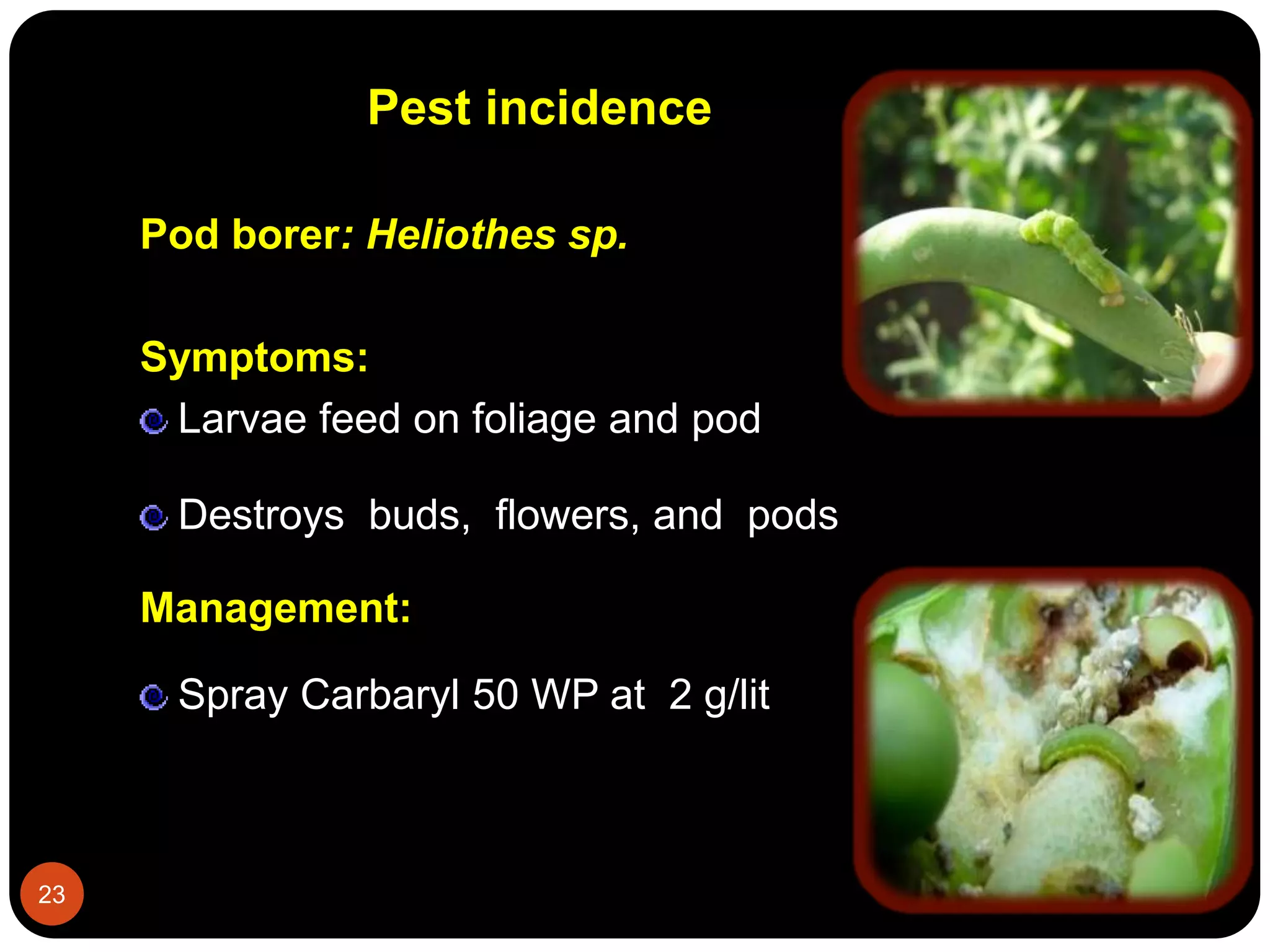
Pod borer: Heliothes sp.
Symptoms:
Larvae feed on foliage and pod
Destroys buds, flowers, and pods
Management:
Spray Carbaryl 50 WP at 2 g/lit
23
Pea aphid: Acyrthosiphon pisum
Symptoms:
Adults and nymphs suck sap from leaves
Leaves turn yellowish green and wilt
Management
Spray Phosphamidon at 1 ml/lit
Contd…
Pea aphids24
Disease incidence
Powdery mildew : Erysiphe polygoni
Symptoms:
Appears as on foliage and pods
First small slightly darkened areas, later become
white powdery spots
Spots enlarge and cover entire leaf area
Infected leaves become chloratic and distorted
25
Management:
 Apply inorganic sulphur at 0.25%
Powdery mildew symptoms
Contd…
26
27

Production technology of garden pea

  • 1.
    Pisum sativum L. Fabaceae 2n= 14 Central Asia Production technology of garden pea Ningappa Kirasur 2014-12-129 Dept. of Olericulture COH, Vellanikkara1
  • 2.
    Important vegetable cropgrown all over the world Grown as winter crop in India Highly nutritive and rich source of protein 7% Used as fresh vegetable, canned or dehydrated The average yield in India is 6.12t/ha Contd… 2
  • 3.
    Soil and Climate Welldrained loamy soil with optimum pH range of 6 -7.5 is ideal Thrives well in cool weather Withstands low temperature at the seedling stage Grows best at a temperature of 10-18 0C Optimum temperature for seed germination 22 0C 3
  • 4.
    Season Central plains –Oct. - Nov. Northern hills – Jun. - Jul. Seed rate Early crop 100-120 kg ha -1 Mid and late crop 80-90 kg ha -1 4
  • 5.
    Varieties Based on seed Smoothseeded Wrinkled seeded Based on height Bushy Medium tall Tall 5
  • 6.
    Ooty 1: Crop durationof 90 days Dwarf type with yield potential of 11.9 t/ha Resistant to white fly Bonneville: It is very popular variety in India Introduced from USA Yield 10t/ha, susceptible to powdery mildew 6
  • 7.
    Contd… Arka Ajit: Released fromIIHR, Bangalore Resistant to powdery mildew and rust Yield 10t/ha in 90 days Jawahar Matar - 2: Bigger size pods Yield 10-12t/ha Susceptible to powdery mildew 7
  • 8.
    Contd… UN 53 : Snappea (whole pod edible) From IIHR- Bangluru Yield 8- 9 t/ ha Duration- 90 days 8
  • 9.
    Contd… Arkel: Most popular exoticpea introduced from England Susceptible to collar rot Yield 5t/ha 9
  • 10.
    Other varieties Harbhajan FC 1 JP4 JP 19 Lincoln Mattar Ageta 6 10
  • 11.
    Seed treatment Treat theseeds with Trichoderma 4 g/kg or Thiram or Captan at 2 g/kg of seed To avoid seed borne diseases Apply 2 kg Phosphobacterium as soil application before sowing 11
  • 12.
    Land preparation Thorough preparationof the land is necessary for pea crop for better growth This fix large quantity of atmospheric nitrogen to soil This is achieved by soil turning plough followed by one or two harrowing 12
  • 13.
    Methods of sowing Broadcasting Behindthe country plough By dibbling Spacing Early varieties 30 cm x 5-10 cm Mid and late varieties 45 cm x 10 cm 13
  • 14.
    Irrigation Do not irrigatethe crop immediately after sowing Results in poor germination due to formation of hard crust Life saving irrigation is given on 3rd day after sowing Irrigation is done once in a week critical stages for irrigation are flowering, fruit set and grain filling stage 14
  • 15.
    Manuring FYM 20 t/ha N- 60 kg /ha, P2O5 - 80 kg/ha and K2O - 70 kg K/ha as basal dose apply N - 60 kg /ha on 30 days after sowing Foliar sprays of ammonium molybdate 0.1% at flowering Increased yield and quality 15
  • 16.
    After cultivation Weeding: Done 15days after sowing Subsequent weeding is done as and when necessary Pre-sowing application of Basalin 3 lit/ha Staking: Most important operation especially for tall varieties Stake the plants on 30 days after sowing 16
  • 17.
  • 18.
    Harvesting Peas must beharvested at proper stage of pod maturity Early varieties in 50days after sowing Mid and late varieties in 60-75days after sowing Maturity of pea tested with Tenderometer 18
  • 19.
  • 20.
    Contd…. Delayed harvesting leadsto fibrous pod Its bring down the market value of the produce Higher temperature at harvest affects quality Yield Early varieties: 2.5-4t/ha Mid-varieties: 6-7.5t/ha Late varieties: 8-10t/ha 20
  • 21.
    Storage Peas are perishableand get heated easily in storage Fresh unshelled peas are kept at 00 C and 90-95% RH for 2 weeks Pods freezes at -10 0C Shelling percentage ranged from 35-50% 21
  • 22.
  • 23.
    Pest incidence Pod borer:Heliothes sp. Symptoms: Larvae feed on foliage and pod Destroys buds, flowers, and pods Management: Spray Carbaryl 50 WP at 2 g/lit 23
  • 24.
    Pea aphid: Acyrthosiphonpisum Symptoms: Adults and nymphs suck sap from leaves Leaves turn yellowish green and wilt Management Spray Phosphamidon at 1 ml/lit Contd… Pea aphids24
  • 25.
    Disease incidence Powdery mildew: Erysiphe polygoni Symptoms: Appears as on foliage and pods First small slightly darkened areas, later become white powdery spots Spots enlarge and cover entire leaf area Infected leaves become chloratic and distorted 25
  • 26.
    Management:  Apply inorganicsulphur at 0.25% Powdery mildew symptoms Contd… 26
  • 27.