DIVYA T.D
BATCH 2
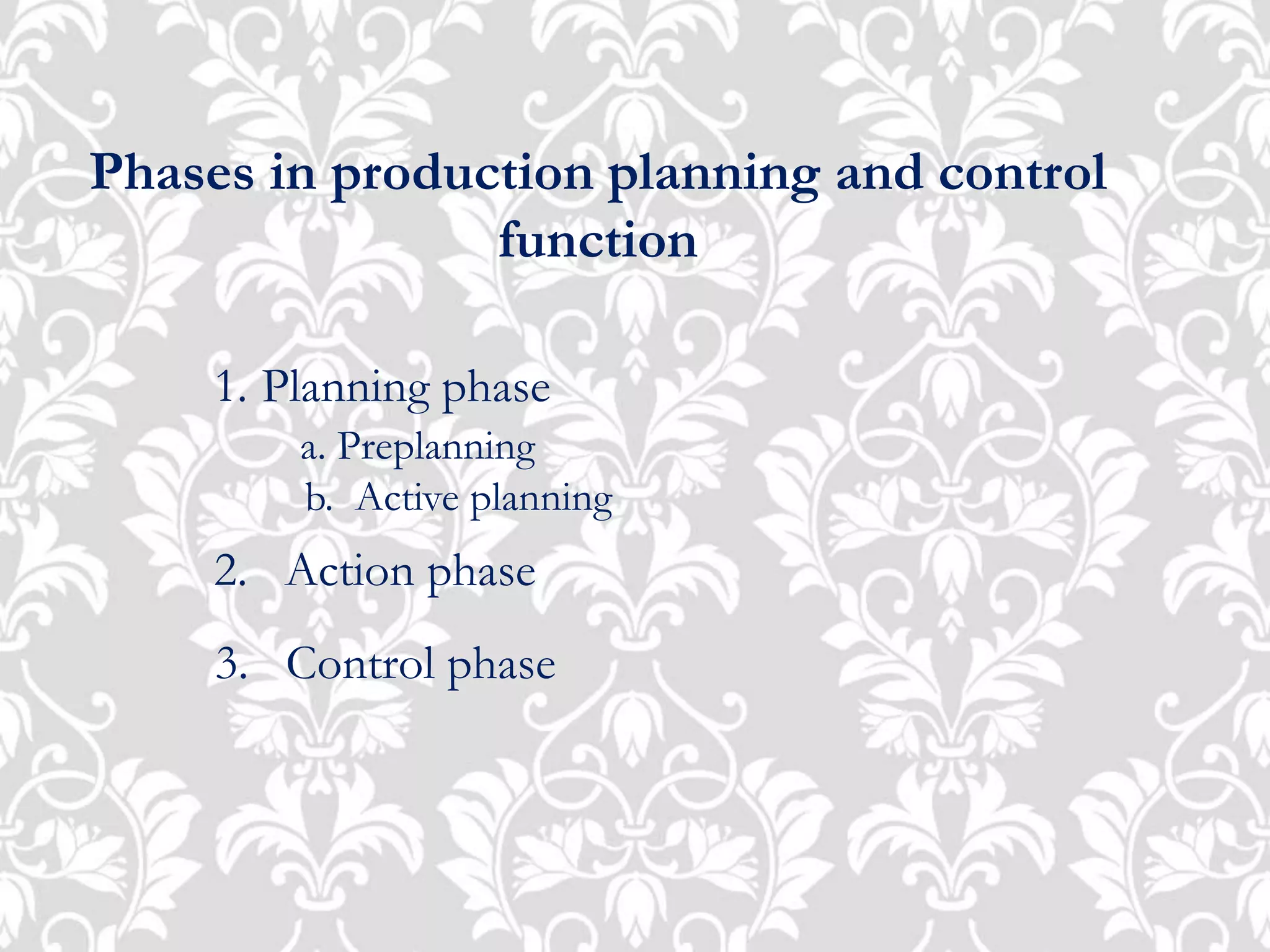
Phases in production planning and control
function
1. Planning phase
a. Preplanning
b. Active planning
2. Action phase
3. Control phase
Functions of production planning and
control department
Production Planning And Control
Production Planning
1. Estimating
2 routing
3. Scheduling
4. Loading
Production control
1. Dispatching
2.Expediting/followup/
Progressing
3. Inspection
4.Evaluating and corrective
action
1. Estimating
Involves deciding the quantity of products to be produced and cost
involved in it on the basis of sales forecast.
estimating man power, machine capacity, and materials required
to meet the planned production targets
2. Routing
Determines sequence of operations to be performed in production
process
Routine sheet: information and instructions raw materials
to finished products. It includes:
• Operation required
• Specification of raw material to be used
• Tools fixtures
• Machine equipment to be used for each operation
• Standard time etc..
Production Planning Functions
3. Scheduling
Involves fixing priorities for each job and determining the starting
time and finishing time for each operation
Objectives:
1. Prevent unbalanced use of time
2. Utilise labour such that the output is produced within
established CT
4. Loading
Loading is the process of converting operations schedules into
practice. Here jobs to be assigned to which work Centre or
machine.
machine loading chart (Gantt chart): planned utilisationof mem
and machines by allocating jobs
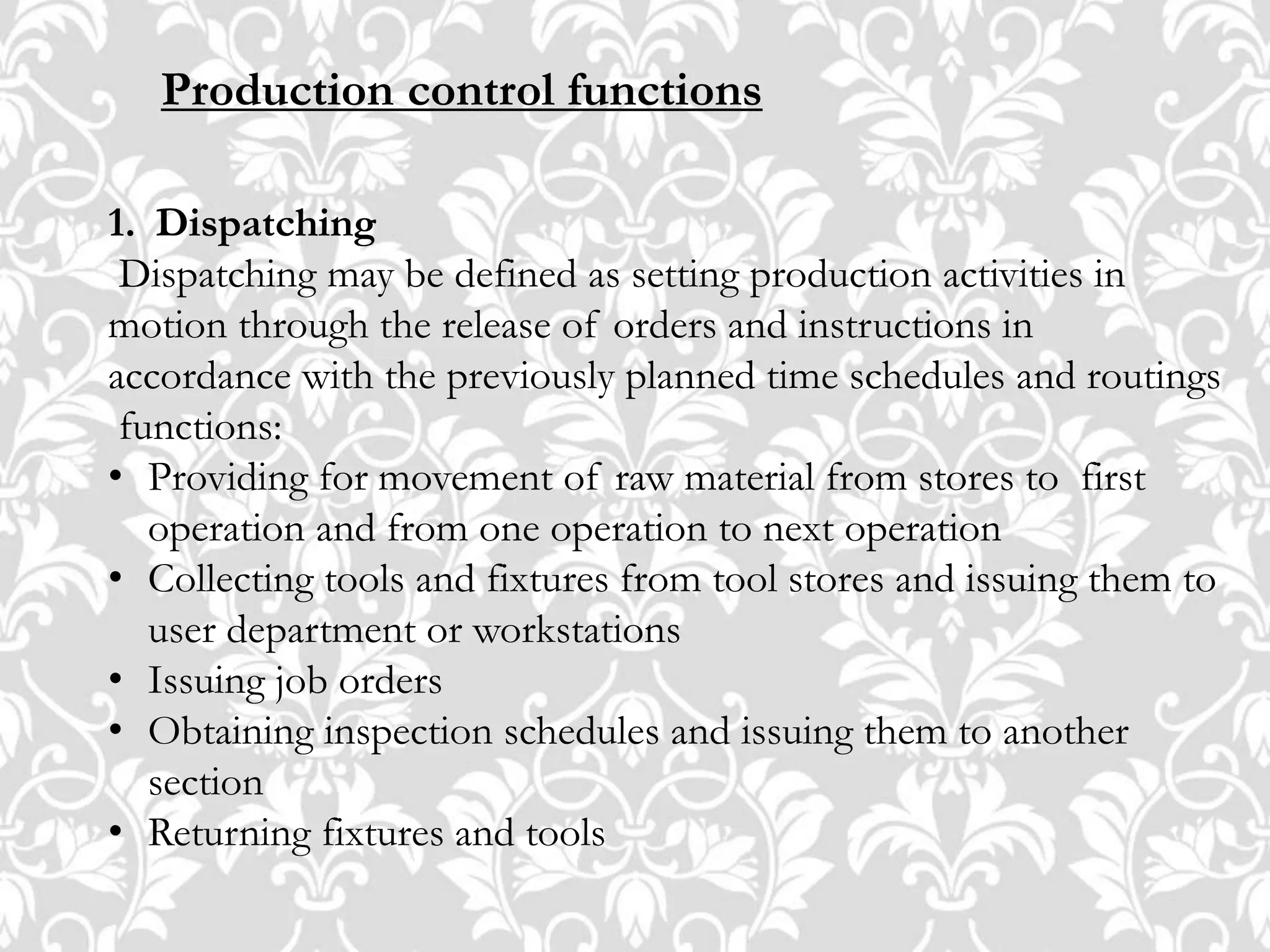
Production control functions
1. Dispatching
Dispatching may be defined as setting production activities in
motion through the release of orders and instructions in
accordance with the previously planned time schedules and routings
functions:
• Providing for movement of raw material from stores to first
operation and from one operation to next operation
• Collecting tools and fixtures from tool stores and issuing them to
user department or workstations
• Issuing job orders
• Obtaining inspection schedules and issuing them to another
section
• Returning fixtures and tools
2. Expediting/Follow-up/Progressing
Expediting and follow up ensures that the work is carried out as per
the plan and delivery schedules are met.
progressing includes all activity such as status reporting, hold ups in
production and removing the same and controlling variations or
deviations from planned performance levels
need for expediting arise when
• Delay in supply of materials
• Excessive absenteeism
• Change in design specification etc.
Benefits and limitations of PPC function
Benefits Limitations
An efficient PPC results
higher quality better utilization
of resources, reduced
inventories
PPC is based on asumptions
Reduced manufacturing and
cycle time
Employees may resist changes
Fastest delivery& better
customer services
Time consuming
Lower production cost and
lower capital investment
Extremely difficult when
environmental factors changes
Right quality of goods and
services
Sales turn over& competitive
avantage
PPC in different production systems
1. Job Production
Manufacture of products to meet specific customer
requirements of specific orders.
a) A small number of products produced only once
b) A small number produce intermittently when need arises
c) A small number produce periodically
PPC function is difficult when in job production because,
• Job order is in different nature
• Job orders are assigned to different work stations
• Production schedules
2. PPC In Batch Production
Manufacture of number of identical articles either to meet
specific order or to satisfy the continuous demand.
In batch production to their can be three types namely;
a) A batch produced only once
b) A batch produced repeatedly at irregular intervals
c) A batch produced periodically at known intervals
PPC function becomes difficult due to size of batch and
scheduling
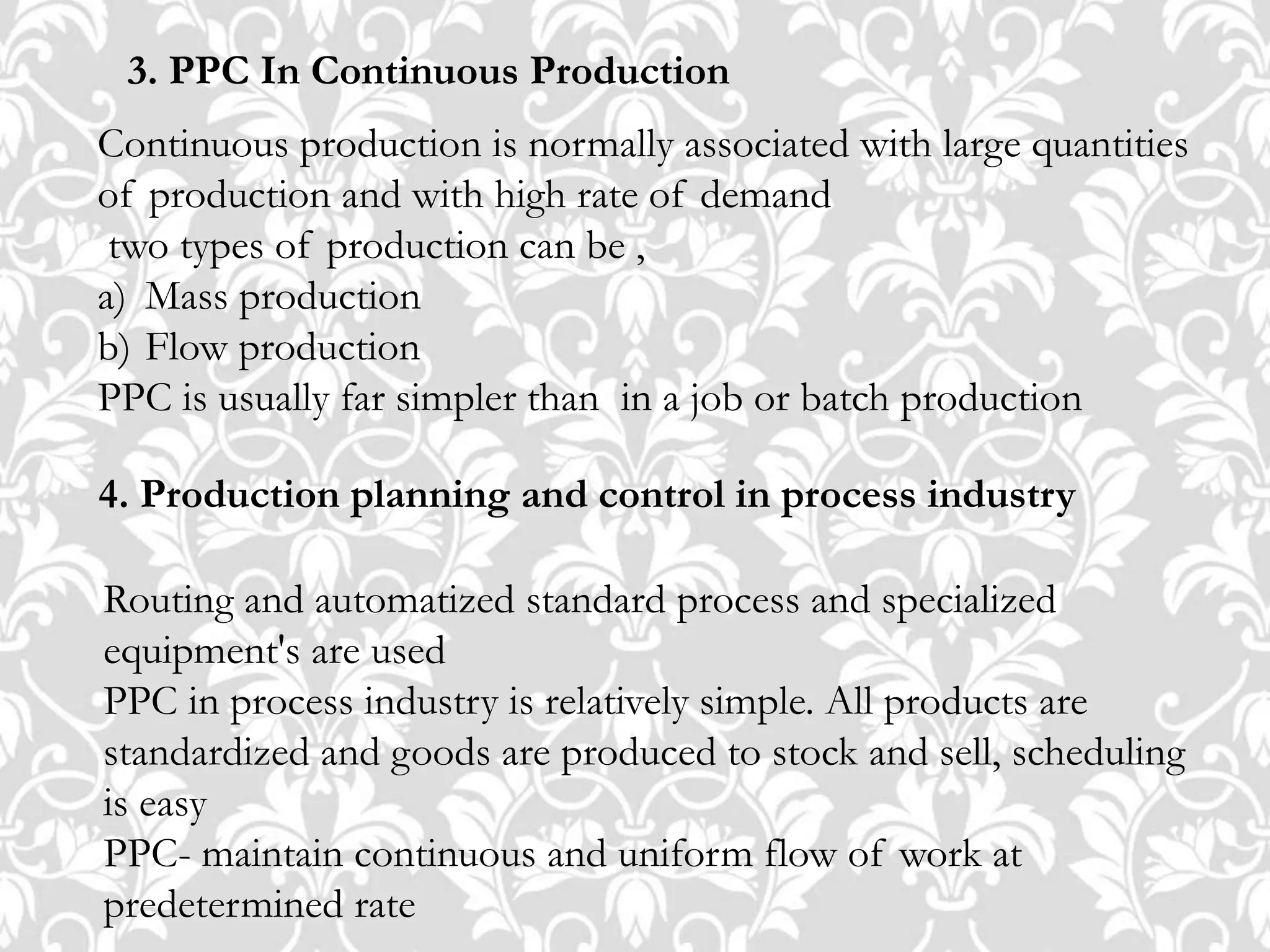
3. PPC In Continuous Production
Continuous production is normally associated with large quantities
of production and with high rate of demand
two types of production can be ,
a) Mass production
b) Flow production
PPC is usually far simpler than in a job or batch production
4. Production planning and control in process industry
Routing and automatized standard process and specialized
equipment's are used
PPC in process industry is relatively simple. All products are
standardized and goods are produced to stock and sell, scheduling
is easy
PPC- maintain continuous and uniform flow of work at
predetermined rate

Production planning

  • 1.
  • 2.
    Phases in productionplanning and control function 1. Planning phase a. Preplanning b. Active planning 2. Action phase 3. Control phase
  • 3.
    Functions of productionplanning and control department Production Planning And Control Production Planning 1. Estimating 2 routing 3. Scheduling 4. Loading Production control 1. Dispatching 2.Expediting/followup/ Progressing 3. Inspection 4.Evaluating and corrective action
  • 4.
    1. Estimating Involves decidingthe quantity of products to be produced and cost involved in it on the basis of sales forecast. estimating man power, machine capacity, and materials required to meet the planned production targets 2. Routing Determines sequence of operations to be performed in production process Routine sheet: information and instructions raw materials to finished products. It includes: • Operation required • Specification of raw material to be used • Tools fixtures • Machine equipment to be used for each operation • Standard time etc.. Production Planning Functions
  • 5.
    3. Scheduling Involves fixingpriorities for each job and determining the starting time and finishing time for each operation Objectives: 1. Prevent unbalanced use of time 2. Utilise labour such that the output is produced within established CT 4. Loading Loading is the process of converting operations schedules into practice. Here jobs to be assigned to which work Centre or machine. machine loading chart (Gantt chart): planned utilisationof mem and machines by allocating jobs
  • 6.
    Production control functions 1.Dispatching Dispatching may be defined as setting production activities in motion through the release of orders and instructions in accordance with the previously planned time schedules and routings functions: • Providing for movement of raw material from stores to first operation and from one operation to next operation • Collecting tools and fixtures from tool stores and issuing them to user department or workstations • Issuing job orders • Obtaining inspection schedules and issuing them to another section • Returning fixtures and tools
  • 7.
    2. Expediting/Follow-up/Progressing Expediting andfollow up ensures that the work is carried out as per the plan and delivery schedules are met. progressing includes all activity such as status reporting, hold ups in production and removing the same and controlling variations or deviations from planned performance levels need for expediting arise when • Delay in supply of materials • Excessive absenteeism • Change in design specification etc.
  • 8.
    Benefits and limitationsof PPC function Benefits Limitations An efficient PPC results higher quality better utilization of resources, reduced inventories PPC is based on asumptions Reduced manufacturing and cycle time Employees may resist changes Fastest delivery& better customer services Time consuming Lower production cost and lower capital investment Extremely difficult when environmental factors changes Right quality of goods and services Sales turn over& competitive avantage
  • 9.
    PPC in differentproduction systems 1. Job Production Manufacture of products to meet specific customer requirements of specific orders. a) A small number of products produced only once b) A small number produce intermittently when need arises c) A small number produce periodically PPC function is difficult when in job production because, • Job order is in different nature • Job orders are assigned to different work stations • Production schedules
  • 10.
    2. PPC InBatch Production Manufacture of number of identical articles either to meet specific order or to satisfy the continuous demand. In batch production to their can be three types namely; a) A batch produced only once b) A batch produced repeatedly at irregular intervals c) A batch produced periodically at known intervals PPC function becomes difficult due to size of batch and scheduling
  • 11.
    3. PPC InContinuous Production Continuous production is normally associated with large quantities of production and with high rate of demand two types of production can be , a) Mass production b) Flow production PPC is usually far simpler than in a job or batch production 4. Production planning and control in process industry Routing and automatized standard process and specialized equipment's are used PPC in process industry is relatively simple. All products are standardized and goods are produced to stock and sell, scheduling is easy PPC- maintain continuous and uniform flow of work at predetermined rate