Critical Thinking, Communication
& Problem Solving
Peer Tutor Training created by Natasha Ford
Student Academic Resource Center
University of Central Florida
CRITICAL THINKING
Modeling effective problem solving for students
• Critical thinking is…
  • the ability for a person to use his/her intelligence,
    knowledge and skills to question and carefully explore
    situations to arrive at thoughtful conclusions based on
    evidence and reason.

• Let’s Discus…
  • How does this relate to tutoring?
  • When do we use critical thinking during tutoring?
  • When do our tutees use critical thinking during
    tutoring?


What is Critical Thinking?
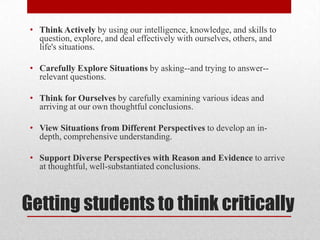
• Think Actively by using our intelligence, knowledge, and skills to
   question, explore, and deal effectively with ourselves, others, and
   life's situations.

 • Carefully Explore Situations by asking--and trying to answer--
   relevant questions.

 • Think for Ourselves by carefully examining various ideas and
   arriving at our own thoughtful conclusions.

 • View Situations from Different Perspectives to develop an in-
   depth, comprehensive understanding.

 • Support Diverse Perspectives with Reason and Evidence to arrive
   at thoughtful, well-substantiated conclusions.


Getting students to think critically
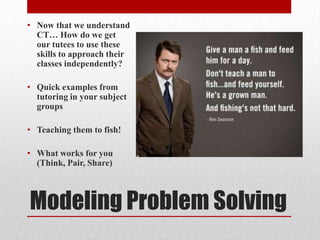
• Now that we understand
  CT… How do we get
  our tutees to use these
  skills to approach their
  classes independently?

• Quick examples from
  tutoring in your subject
  groups

• Teaching them to fish!

• What works for you
  (Think, Pair, Share)


Modeling Problem Solving
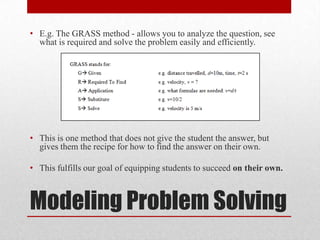
• E.g. The GRASS method - allows you to analyze the question, see
  what is required and solve the problem easily and efficiently.


• This is one method that does not give the student the answer, but
  gives them the recipe for how to find the answer on their own.

• This fulfills our goal of equipping students to succeed on their own.


Modeling Problem Solving
• Take the survival preparedness quiz
• If there were no more tutors in the world tomorrow but your
  students still had to pass their classes based on your
  support…what would your students need to survive without
  you?


Run for your life….
It’s the Tutor Apocalypse!
Make a list of “Important Survival Tips for Life After Tutors”
• 1. Choose an upcoming topic in your subject.
• 2. Break down how to approach any of this type of problem.
  • This should be questions that students can always ask
    themselves when they are faced with these types of questions
• 3. Clearly write down the steps needed to illustrate how to
  think critically about the problem.
• 4. Think back to the “elements” of critical thinking


Problem Solving For
Your Subject Matter
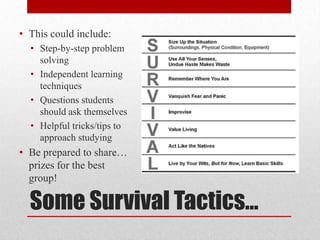
• This could include:
  • Step-by-step problem
    solving
  • Independent learning
    techniques
  • Questions students
    should ask themselves
  • Helpful tricks/tips to
    approach studying
• Be prepared to share…
  prizes for the best
  group!

  Some Survival Tactics…
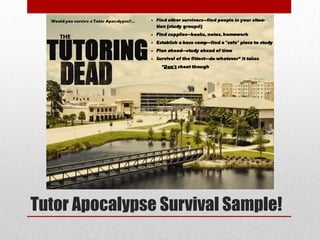
Tutor Apocalypse Survival Sample!

Problem Solving with Critical Thinking

  • 1.
    Critical Thinking, Communication &Problem Solving Peer Tutor Training created by Natasha Ford Student Academic Resource Center University of Central Florida
  • 2.
    CRITICAL THINKING Modeling effectiveproblem solving for students
  • 3.
    • Critical thinkingis… • the ability for a person to use his/her intelligence, knowledge and skills to question and carefully explore situations to arrive at thoughtful conclusions based on evidence and reason. • Let’s Discus… • How does this relate to tutoring? • When do we use critical thinking during tutoring? • When do our tutees use critical thinking during tutoring? What is Critical Thinking?
  • 4.
    • Think Activelyby using our intelligence, knowledge, and skills to question, explore, and deal effectively with ourselves, others, and life's situations. • Carefully Explore Situations by asking--and trying to answer-- relevant questions. • Think for Ourselves by carefully examining various ideas and arriving at our own thoughtful conclusions. • View Situations from Different Perspectives to develop an in- depth, comprehensive understanding. • Support Diverse Perspectives with Reason and Evidence to arrive at thoughtful, well-substantiated conclusions. Getting students to think critically
  • 5.
    • Now thatwe understand CT… How do we get our tutees to use these skills to approach their classes independently? • Quick examples from tutoring in your subject groups • Teaching them to fish! • What works for you (Think, Pair, Share) Modeling Problem Solving
  • 6.
    • E.g. TheGRASS method - allows you to analyze the question, see what is required and solve the problem easily and efficiently. • This is one method that does not give the student the answer, but gives them the recipe for how to find the answer on their own. • This fulfills our goal of equipping students to succeed on their own. Modeling Problem Solving
  • 7.
    • Take thesurvival preparedness quiz • If there were no more tutors in the world tomorrow but your students still had to pass their classes based on your support…what would your students need to survive without you? Run for your life…. It’s the Tutor Apocalypse!
  • 8.
    Make a listof “Important Survival Tips for Life After Tutors” • 1. Choose an upcoming topic in your subject. • 2. Break down how to approach any of this type of problem. • This should be questions that students can always ask themselves when they are faced with these types of questions • 3. Clearly write down the steps needed to illustrate how to think critically about the problem. • 4. Think back to the “elements” of critical thinking Problem Solving For Your Subject Matter
  • 9.
    • This couldinclude: • Step-by-step problem solving • Independent learning techniques • Questions students should ask themselves • Helpful tricks/tips to approach studying • Be prepared to share… prizes for the best group! Some Survival Tactics…
  • 10.