PrintedElectronics for
System Application
Eng :Ahmed Ayman Fahmy
1
outlines
IntroductiontoPrintedElectronics(PE)
PrintingTechnology
Printedelectronics inthe nearFuture
SystemApplication
SystemApplicationcomponents
HowitWorks
Howtoprintsystemapplication
Summary
references
2
IntroductiontoPrintedElectronics (PE)
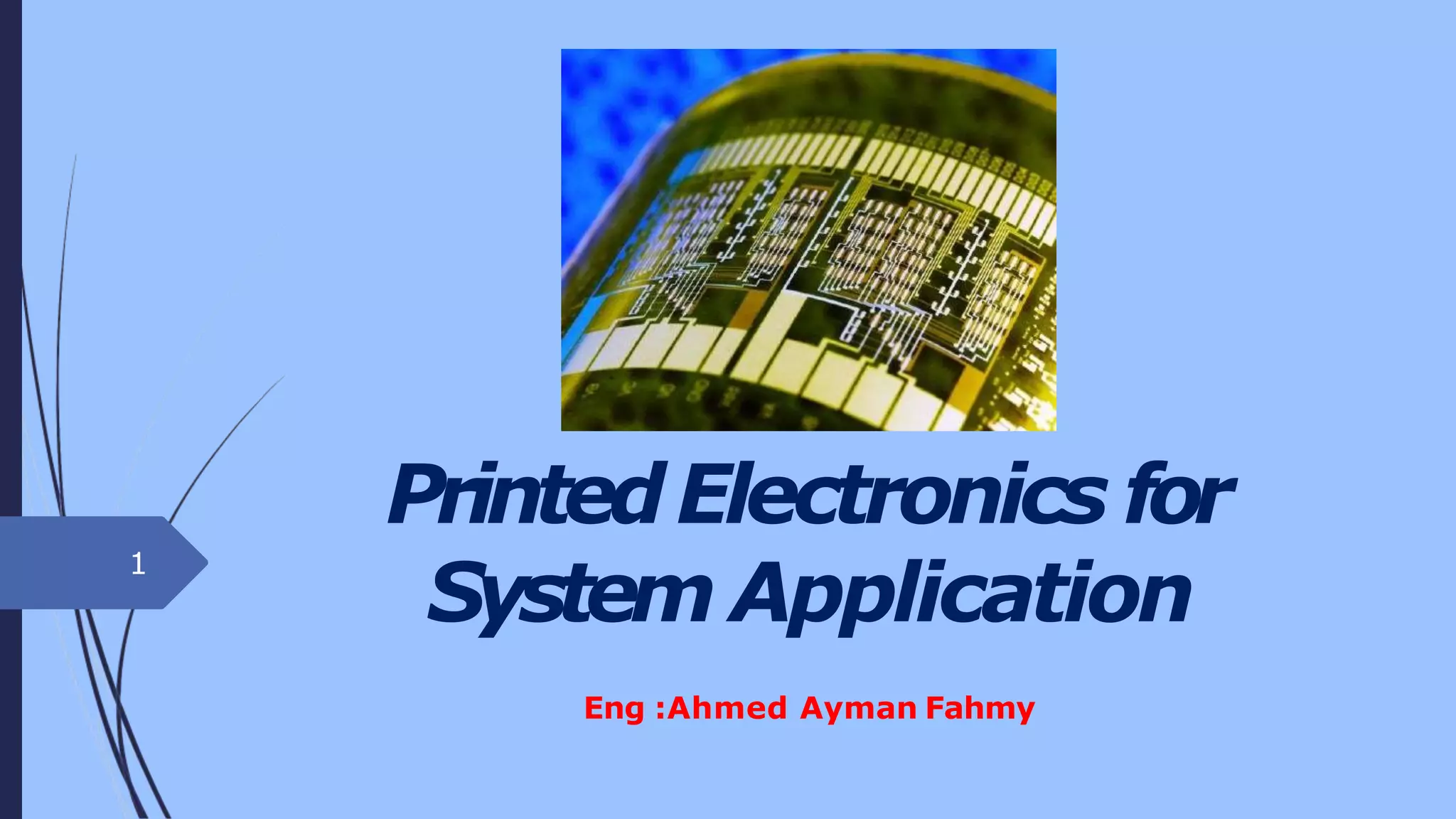
Printed electronics is a new field of technology. PE is a
technology that merges electronics manufacturing and
text/graphic printing.
By this combination, we can manufacture high-
quality electronic products that are thin, flexible,
wearable, lightweight, of varying sizes and low cost.
We can print conductive, semi conductive, dielectric
and other functional materials in roll-to-roll processes on
plastic films.
3
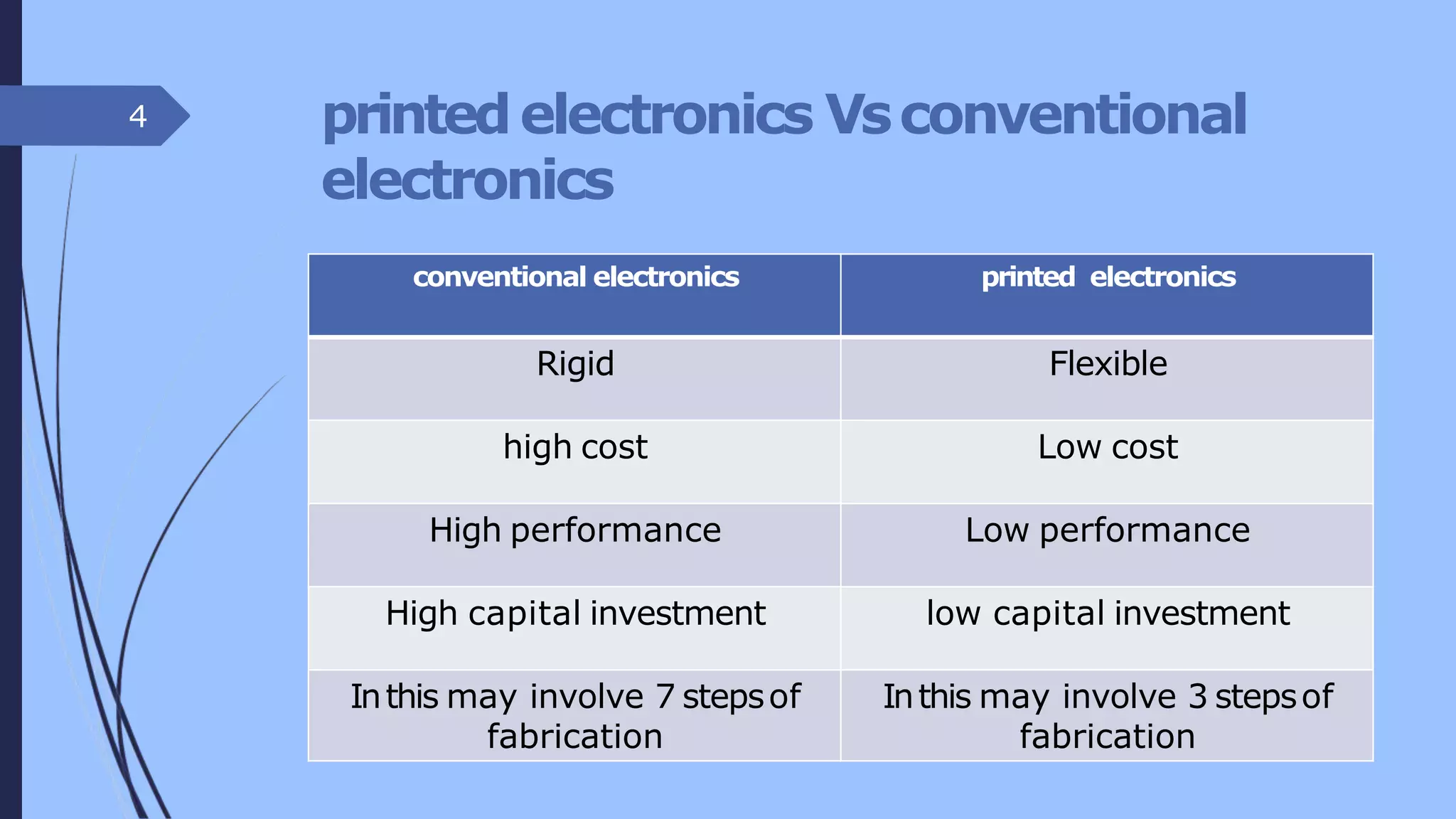
printedelectronics Vsconventional
electronics
conventional electronics printed electronics
Rigid Flexible
high cost Low cost
High performance Low performance
High capital investment low capital investment
Inthis may involve 7 stepsof
fabrication
Inthis may involve 3 stepsof
fabrication
4
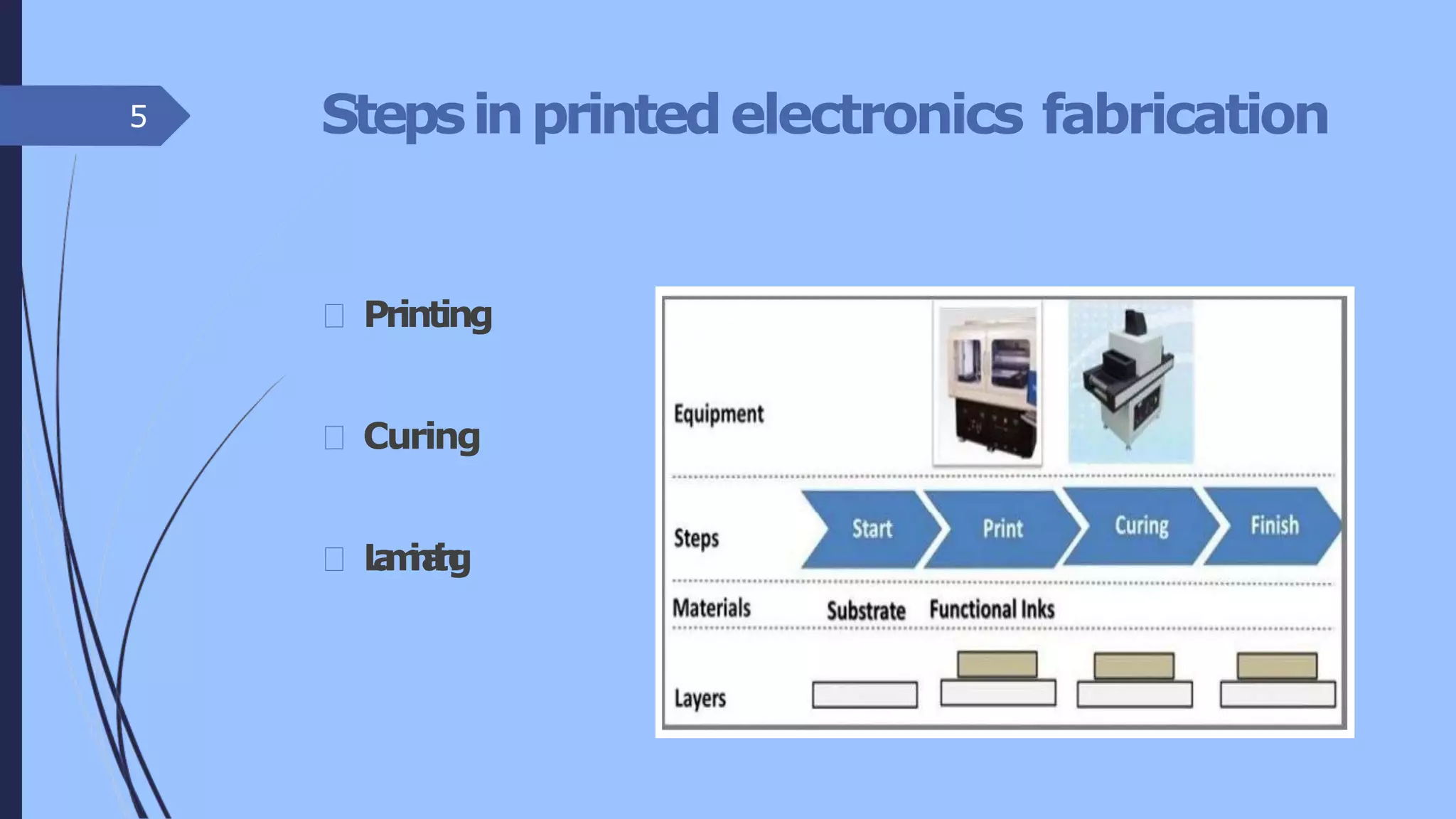
Stepsinprintedelectronics fabrication
Printing
Curing
Laminating
5
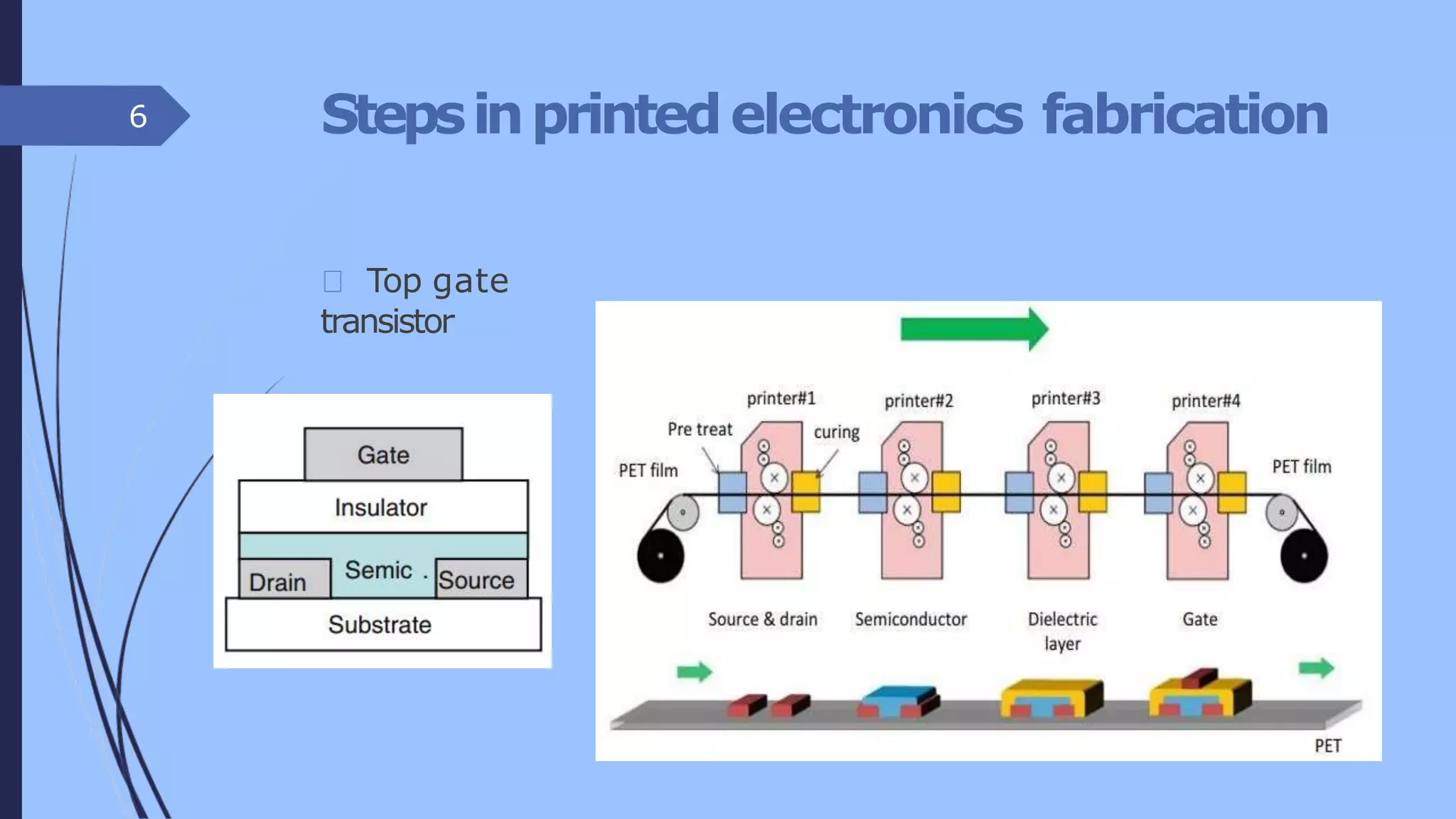
Stepsinprintedelectronics fabrication
Top gate
transistor
6
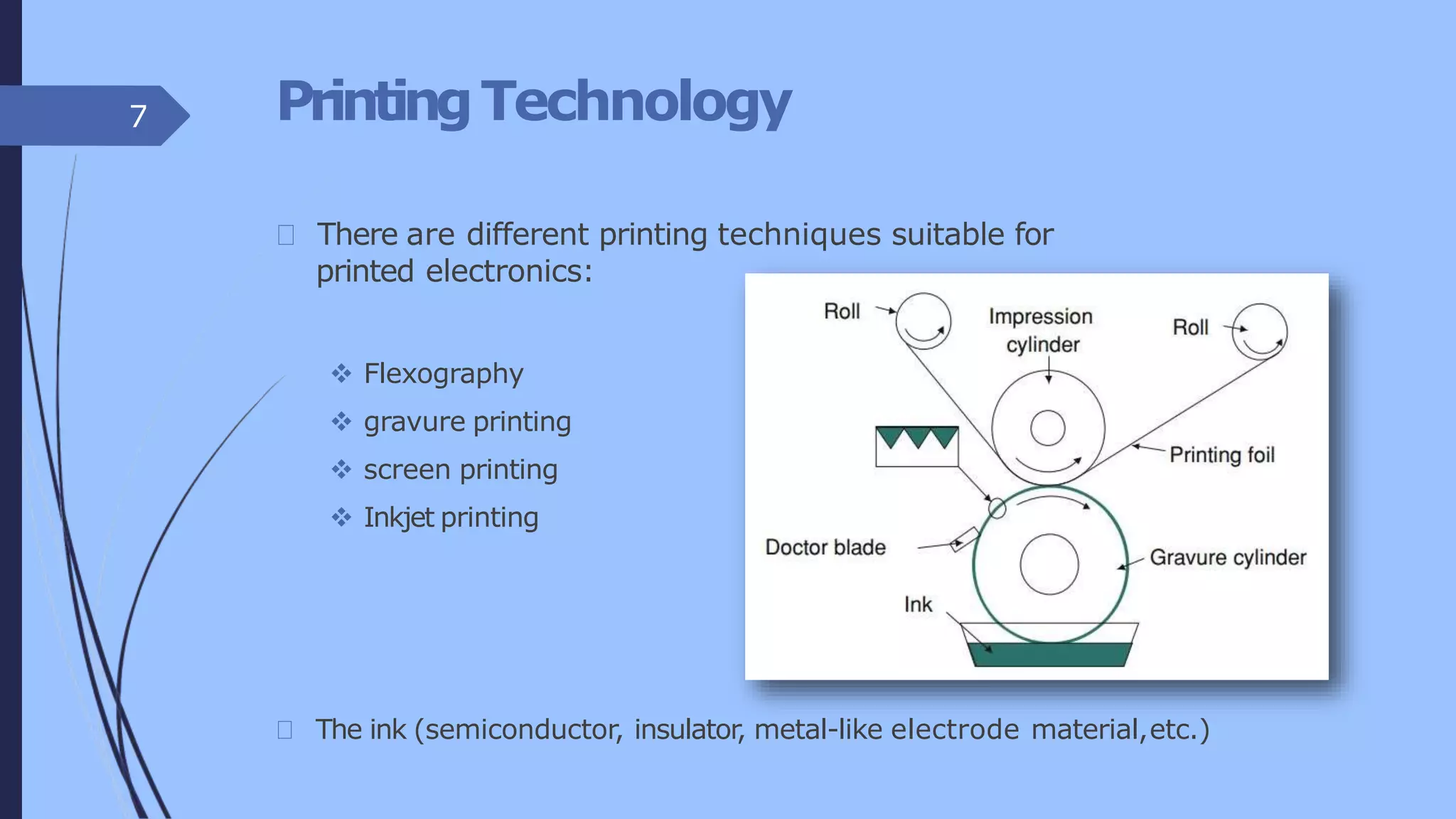
PrintingTechnology
There are different printing techniques suitable for
printed electronics:
 Flexography
 gravure printing
 screen printing
 Inkjet printing
The ink (semiconductor, insulator, metal-like electrode material,etc.)
7
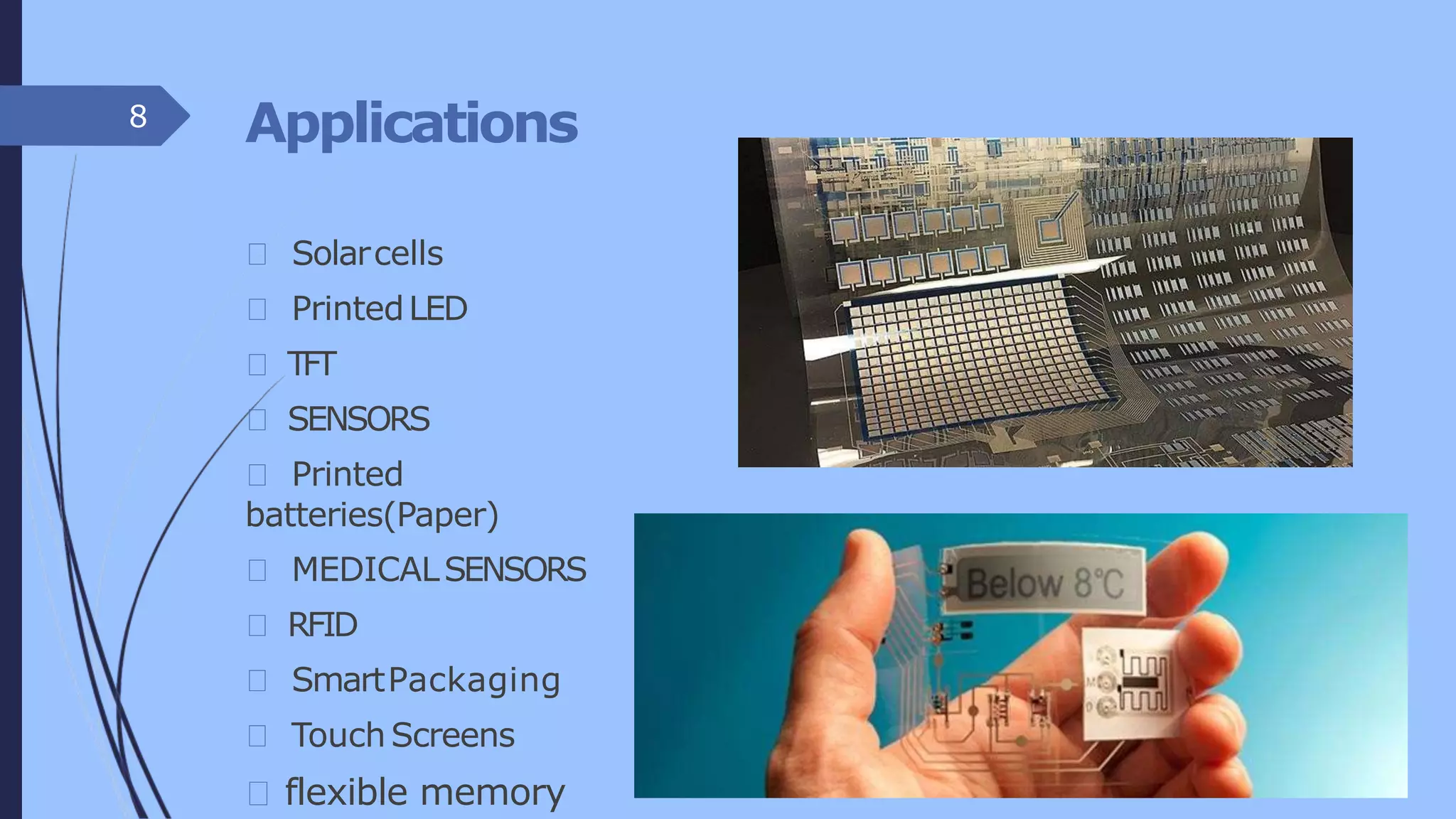
Applications
Solarcells
PrintedLED
TFT
SENSORS
Printed
batteries(Paper)
MEDICALSENSORS
RFID
SmartPackaging
TouchScreens
flexible memory
8
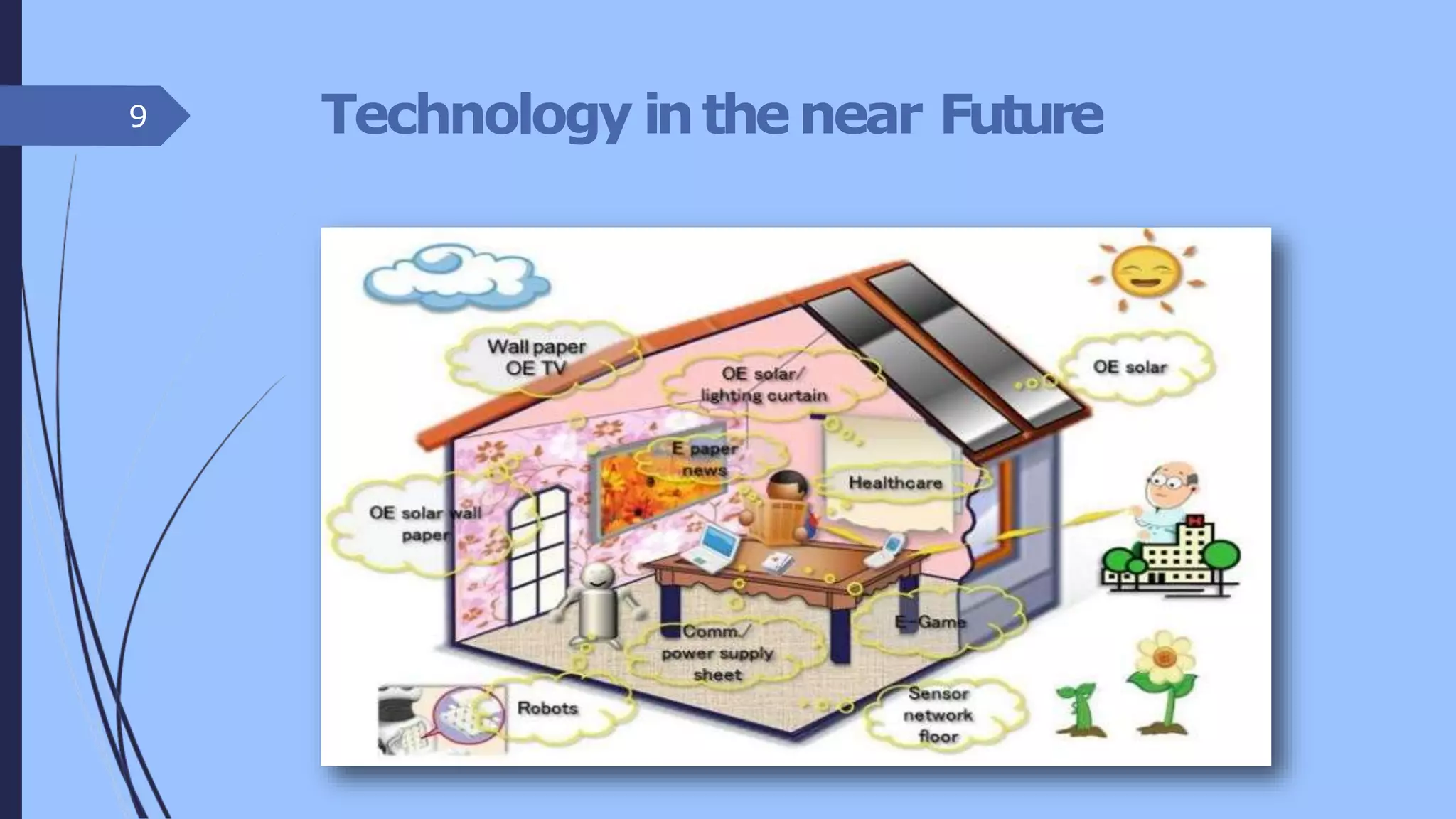
Technology inthenear Future9
Whatis RFID?
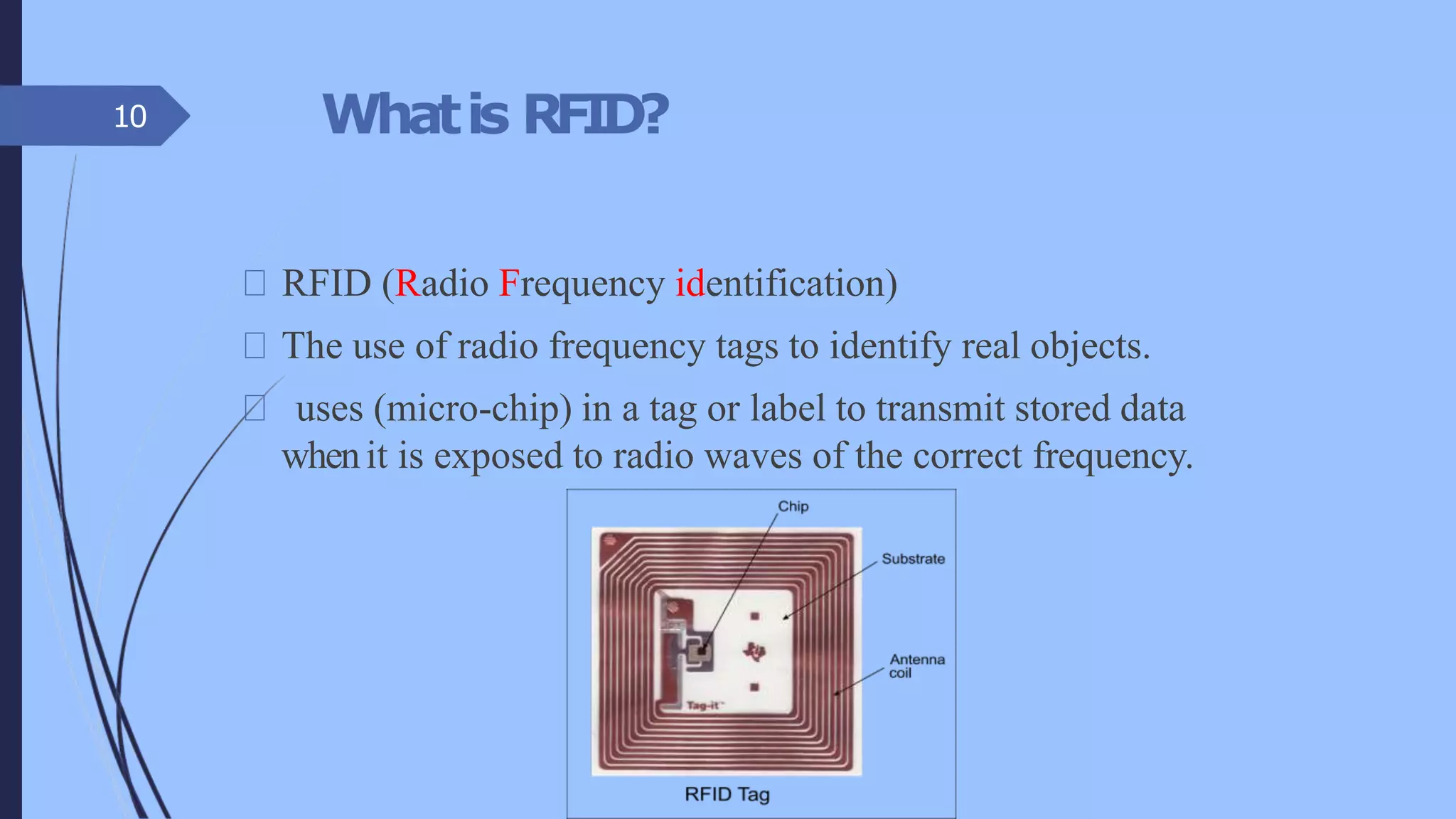
RFID (Radio Frequency identification)
The use of radio frequency tags to identify real objects.
uses (micro-chip) in a tag or label to transmit stored data
whenit is exposed to radio waves of the correct frequency.
10
RFIDCOMPONENTS
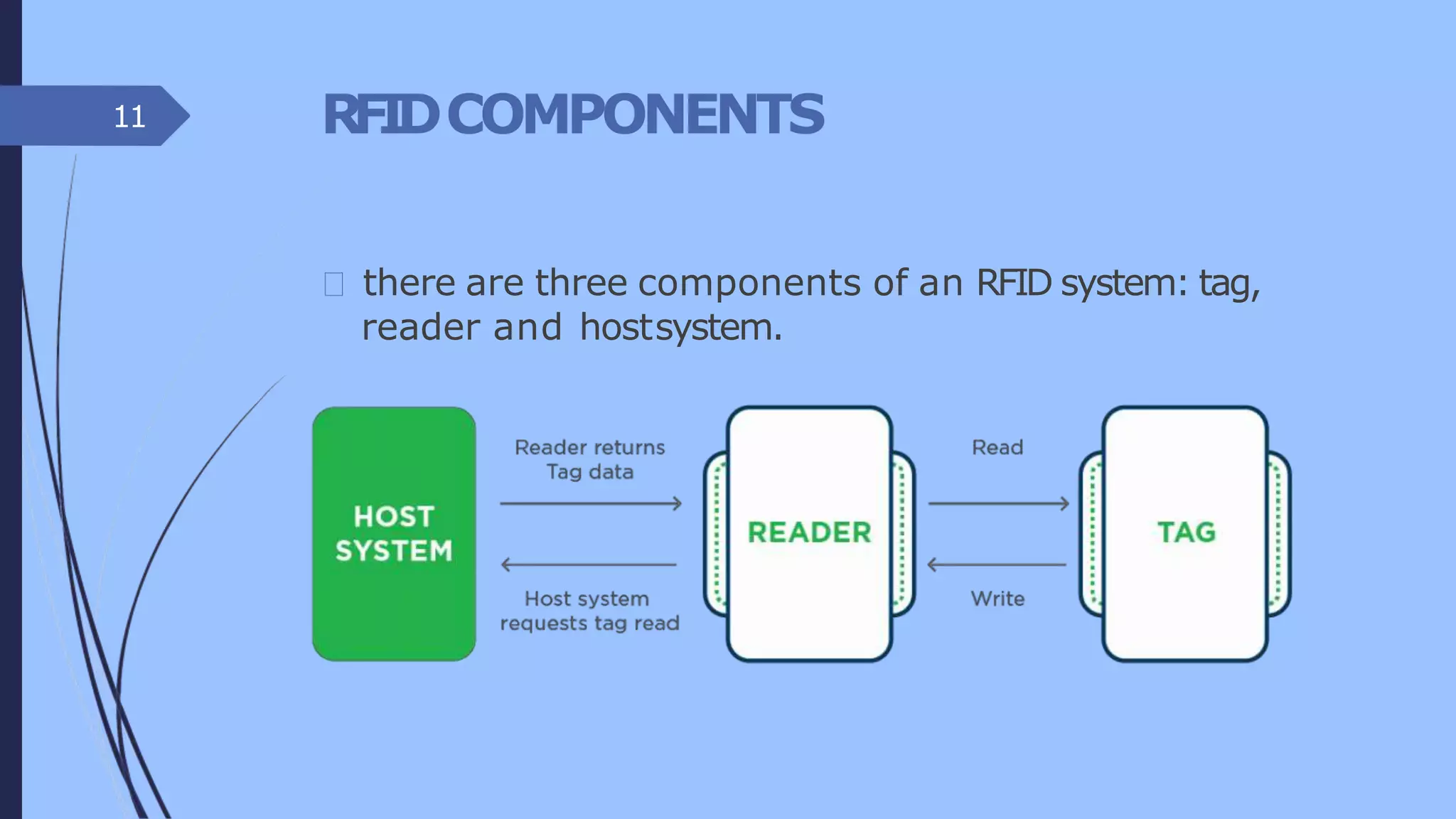
there are three components of an RFID system: tag,
reader and hostsystem.
11
RFIDCOMPONENTScont.
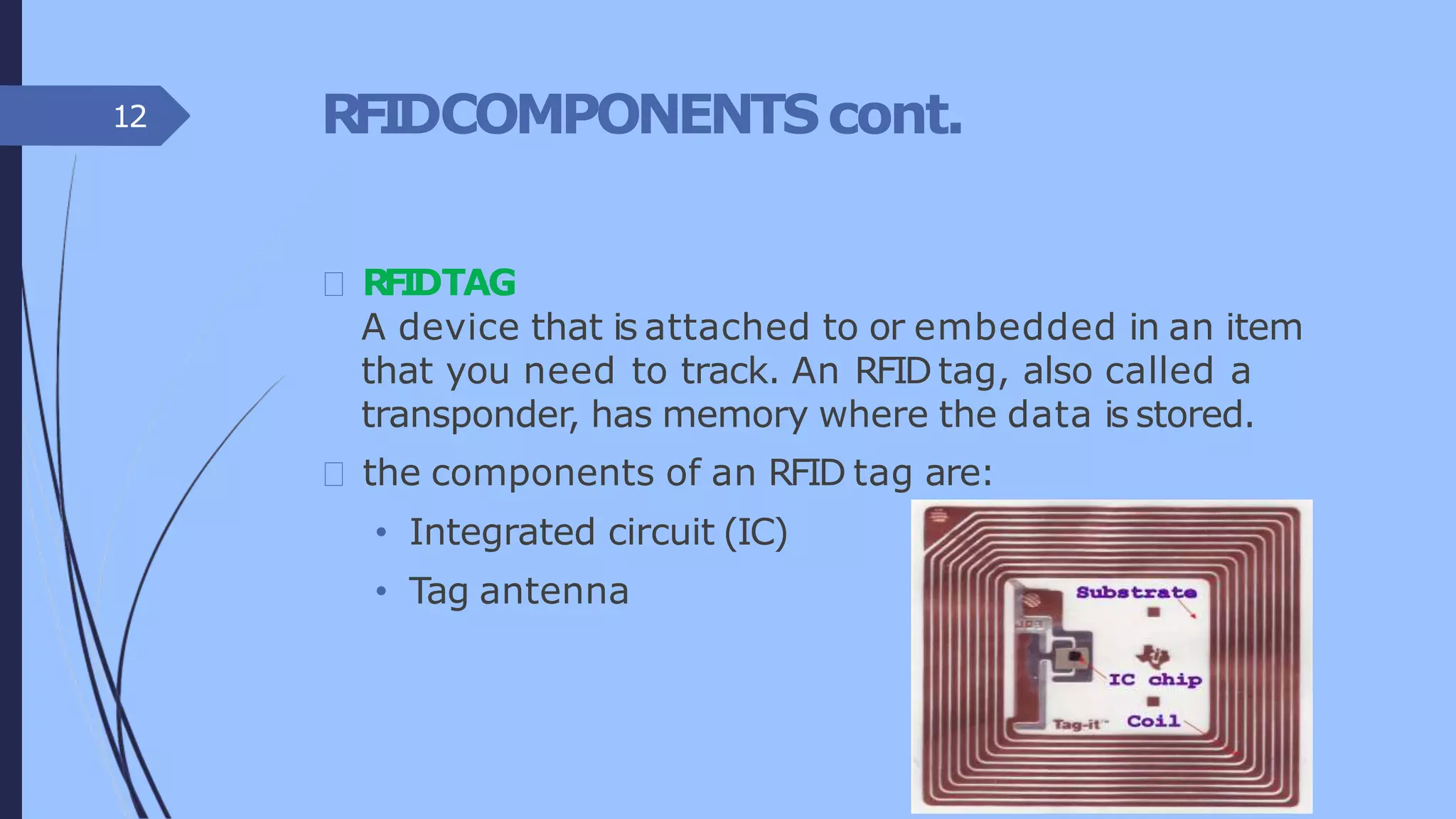
RFIDTAG
A device that is attached to or embedded in an item
that you need to track. An RFID tag, also called a
transponder, has memory where the data is stored.
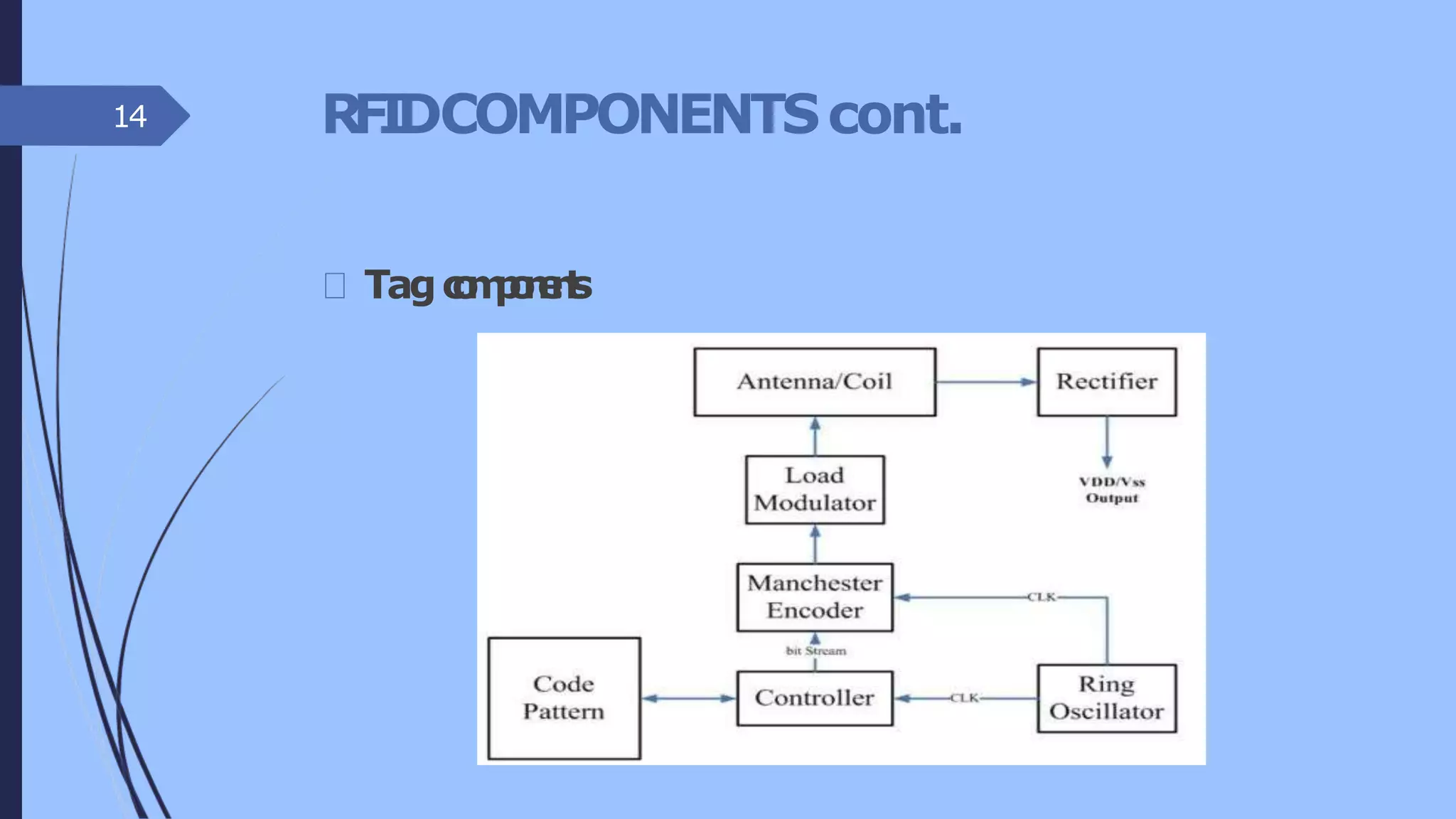
the components of an RFID tag are:
• Integrated circuit (IC)
• Tag antenna
12
RFIDCOMPONENTScont.
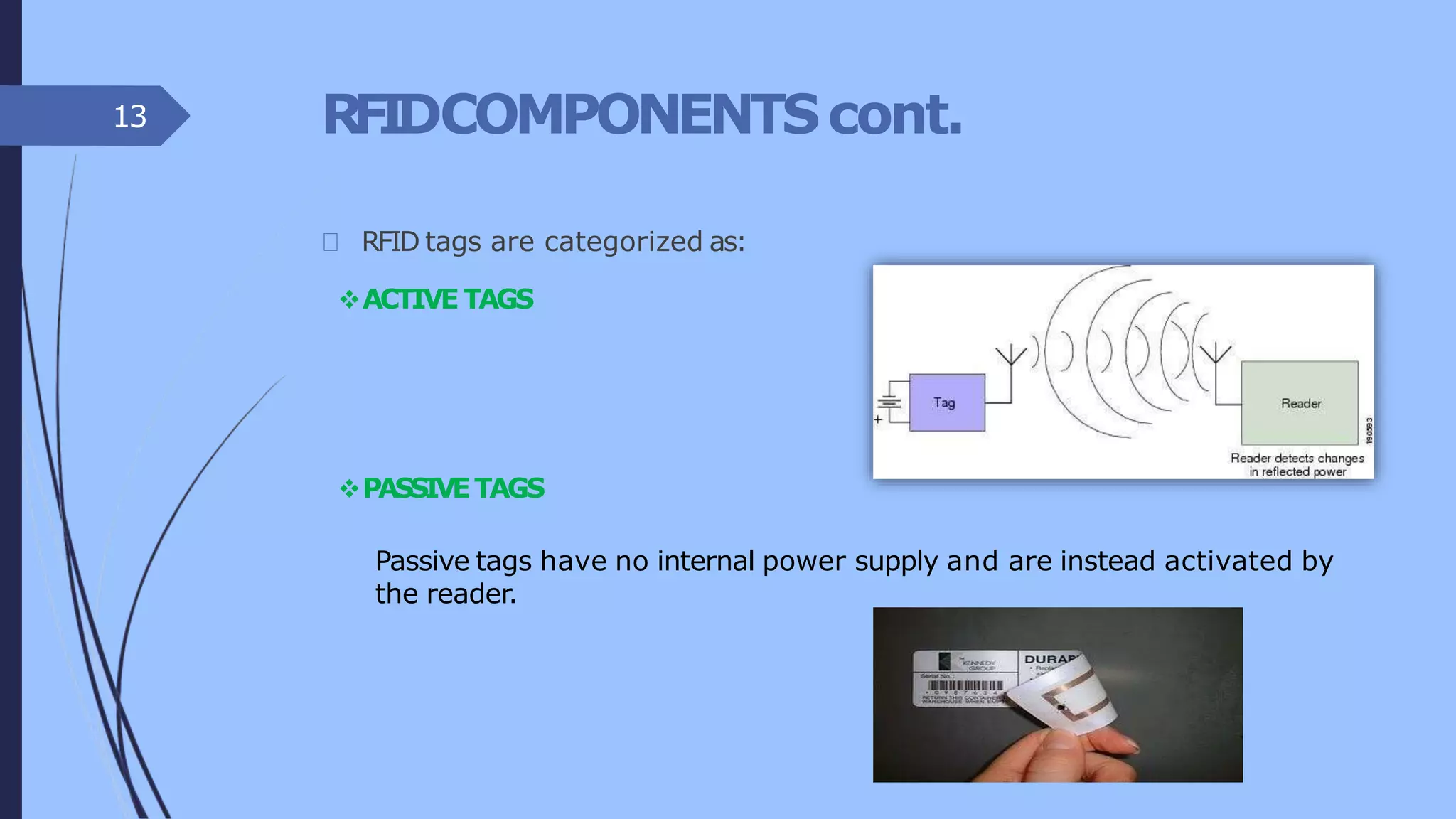
RFID tags are categorized as:
ACTIVE TAGS
PASSIVETAGS
Passive tags have no internal power supply and are instead activated by
the reader.
13
RFIDCOMPONENTScont.
Tagcomponents
14
RFIDCOMPONENTScont.s
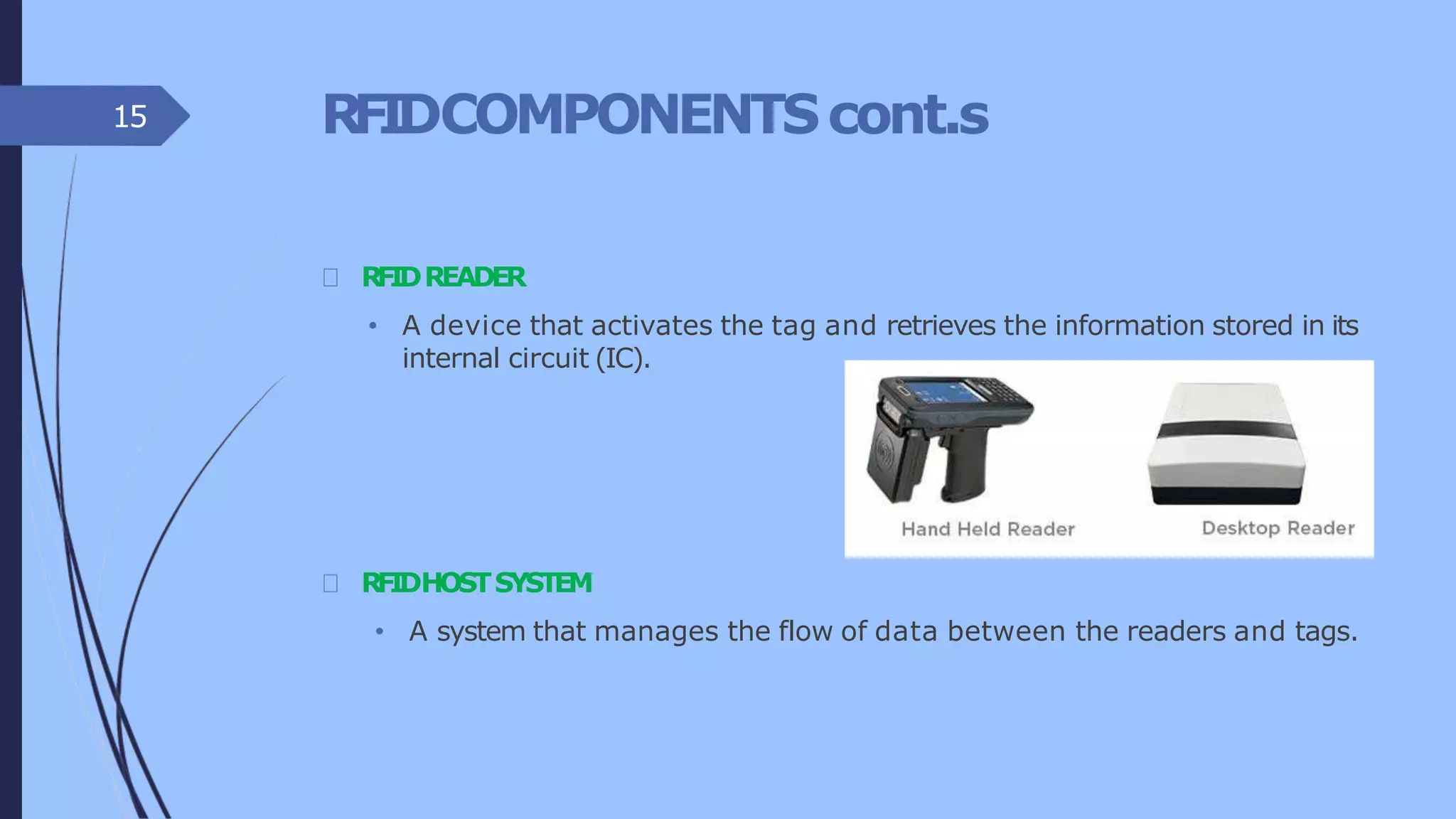
RFIDREADER
• A device that activates the tag and retrieves the information stored in its
internal circuit (IC).
RFIDHOSTSYSTEM
• A system that manages the flow of data between the readers and tags.
15
HowRFIDWorks
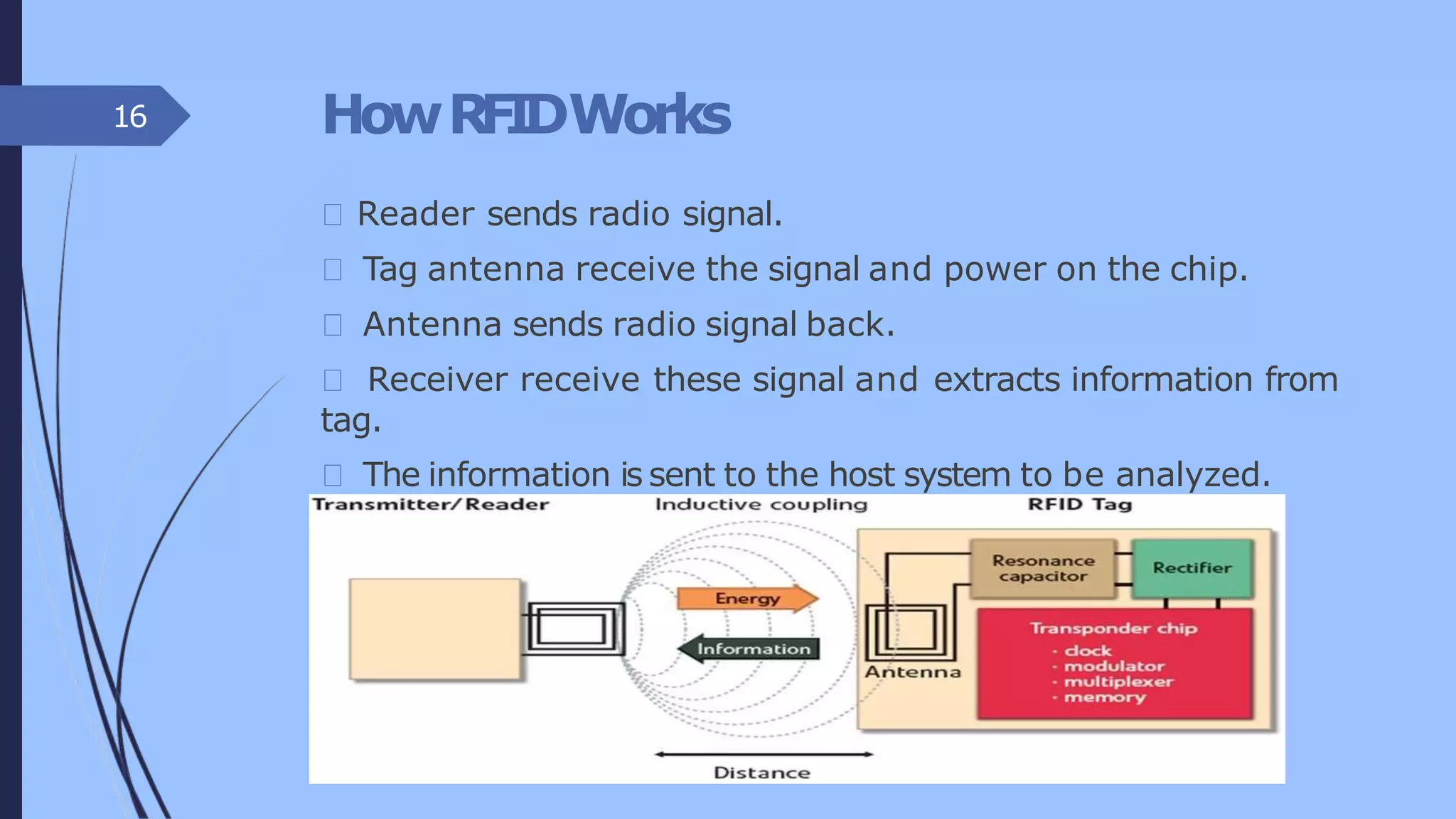
Reader sends radio signal.
Tag antenna receive the signal and power on the chip.
Antenna sends radio signal back.
Receiver receive these signal and extracts information from
tag.
The information is sent to the host system to be analyzed.
16
HowRFIDWorks
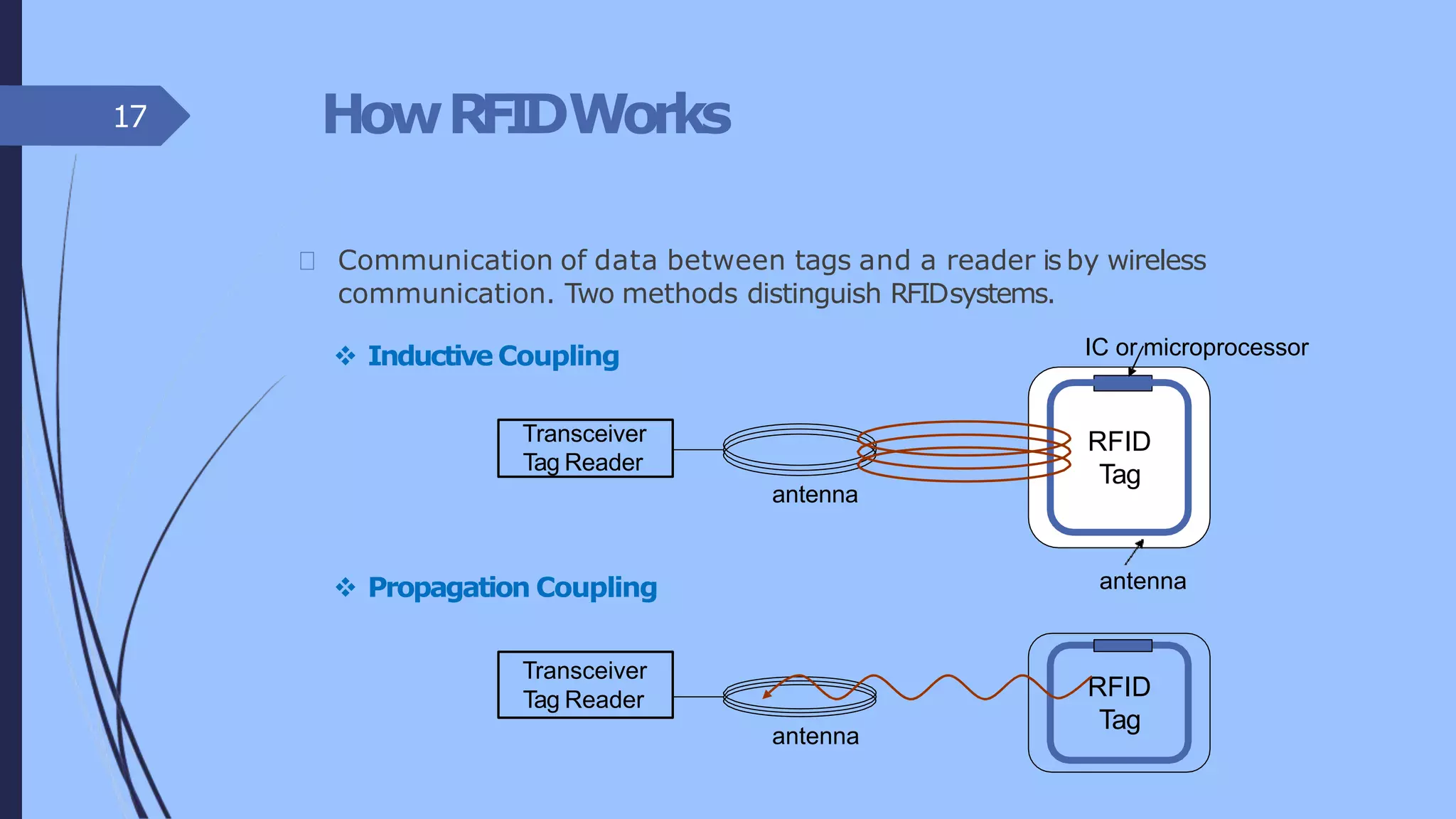
Communication of data between tags and a reader is by wireless
communication. Two methods distinguish RFIDsystems.
17
Transceiver
Tag Reader
antenna
RFID
Tag
IC or microprocessor
antenna
 Inductive Coupling
 Propagation Coupling
Transceiver
Tag Reader
antenna
RFID
Tag
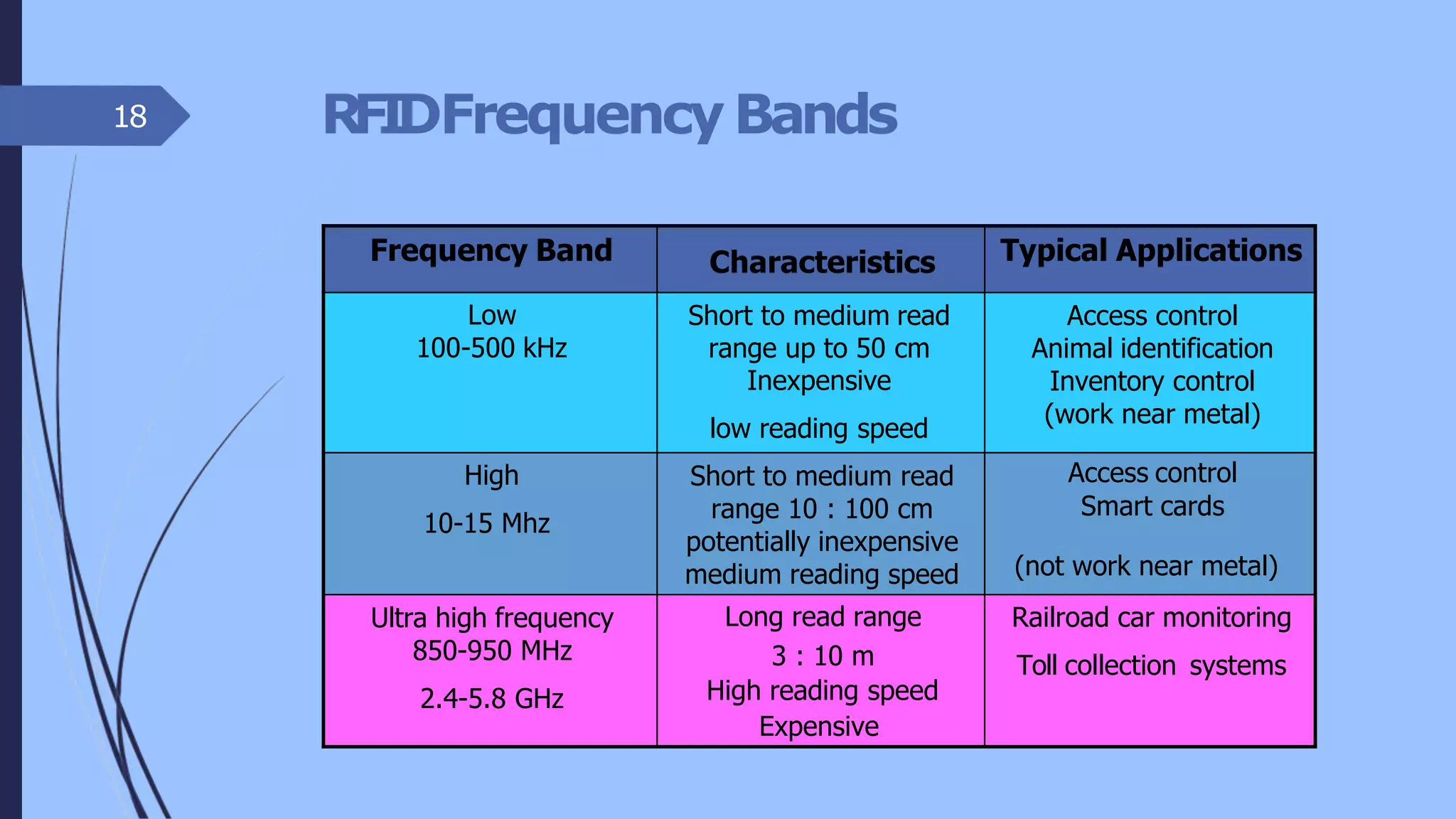
RFIDFrequency Bands18
Frequency Band Characteristics Typical Applications
Low
100-500 kHz
Short to medium read
range up to 50 cm
Inexpensive
low reading speed
Access control
Animal identification
Inventory control
(work near metal)
High
10-15 Mhz
Short to medium read
range 10 : 100 cm
potentially inexpensive
medium reading speed
Access control
Smart cards
(not work near metal)
Ultra high frequency
850-950 MHz
2.4-5.8 GHz
Long read range
3 : 10 m
High reading speed
Expensive
Railroad car monitoring
Toll collection systems
Data on Tag
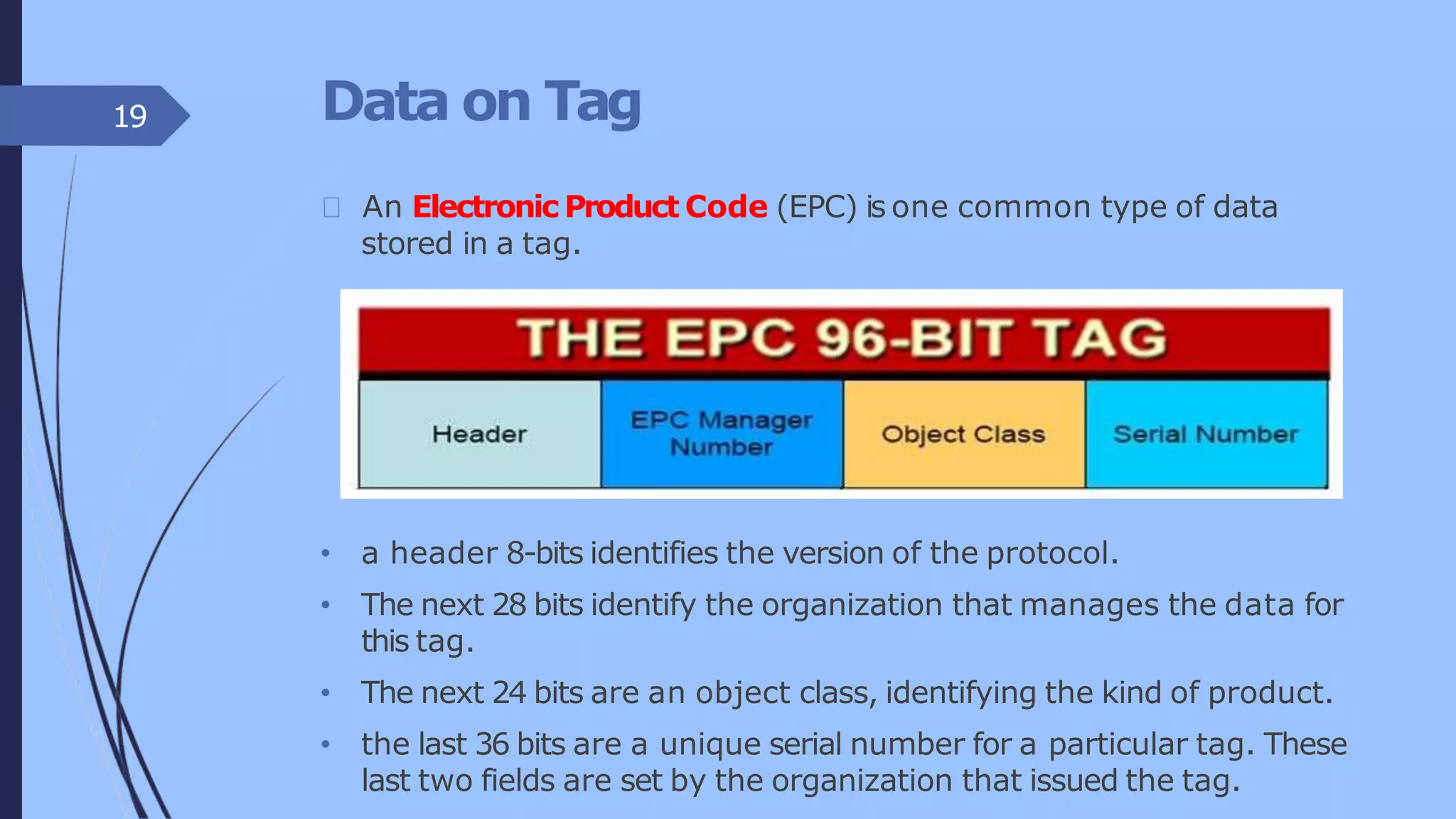
An Electronic Product Code (EPC) is one common type of data
stored in a tag.
• a header 8-bits identifies the version of the protocol.
• The next 28 bits identify the organization that manages the data for
this tag.
• The next 24 bits are an object class, identifying the kind of product.
• the last 36 bits are a unique serial number for a particular tag. These
last two fields are set by the organization that issued the tag.
19
RFIDApplications
People tracking
Animal and insects Tracking
Stock Control
Access control (Access Cards)
Automated Toll Collection
Health care application
20
RFIDAdvantages
No line of sight requirement.
Long read range.
Dynamic information carrier (read/write)
Tracking people, items, and equipment in real time.
Can be hidden
Work in harsh environments
21
PrintingRFID
Coil Antenna
22
PrintingRFID
Rectifier : The diode that could integrated the capacitor
and resistor to form a rectifier in RFID tag.
Itis used to convert the AC signal to DC power.
The requirements for the diode are fast, low forward turn on
voltage, low reverse leakagecurrent.
23
PrintingRFID
Memory:consisting of a ferroelectric film sandwiched between two
electrodes
24
summary
This application can be applied to many simple and
unique applications such as ticketing, access control
and personal itemscontrol
This application has lowest process and investment cost
For device part, diode based on organic material show
good behavior, memory device has very large memory
windows.
25
References
“IntroductiontoPrintedElectronics “Katsuaki Suganuma
“Applications oforganic and printedelectronics “Anantha P.
Chandrakasan
“RFIDHANDBOOK”THIRDEDITION
Programmable polymer thinfilmand non-volatile memory
device
DesignofFlexible RFIDTagand RectifierCircuit usingLowCost
Screen Printing Process
26

Printed electronics for system application