 Image
The image is always striking purposely to catch the audiences eye, however it is a simple and
simple and basic image to show what it’s representation, depending on the subject of the
of the image it can either be humorous or shocking.
 Logo
The logo is always shown on each print advert depending on the channel as logos are used
are used for the audience to recognise and identify the channel. The channel 4 logo for
for example has its logo placed in the same position on each print advert.
 Font
The font is always simple and easy to read which is usually blocked with a primary colour
colour
 Text
The text always includes : Title, slogan, time, and channel.
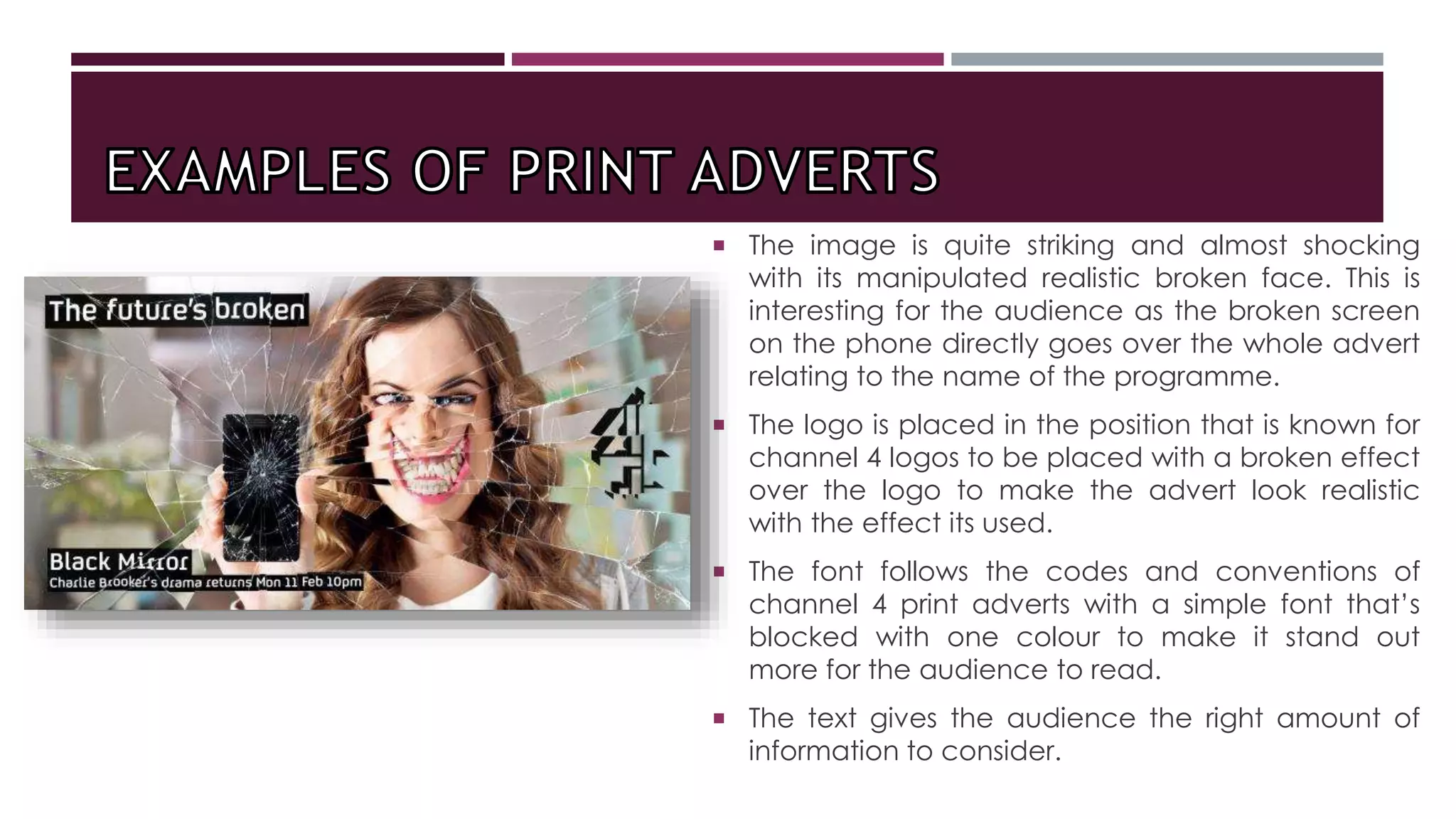
 The image is quite striking and almost shocking
with its manipulated realistic broken face. This is
interesting for the audience as the broken screen
on the phone directly goes over the whole advert
relating to the name of the programme.
 The logo is placed in the position that is known for
channel 4 logos to be placed with a broken effect
over the logo to make the advert look realistic
with the effect its used.
 The font follows the codes and conventions of
channel 4 print adverts with a simple font that’s
blocked with one colour to make it stand out
more for the audience to read.
 The text gives the audience the right amount of
information to consider.
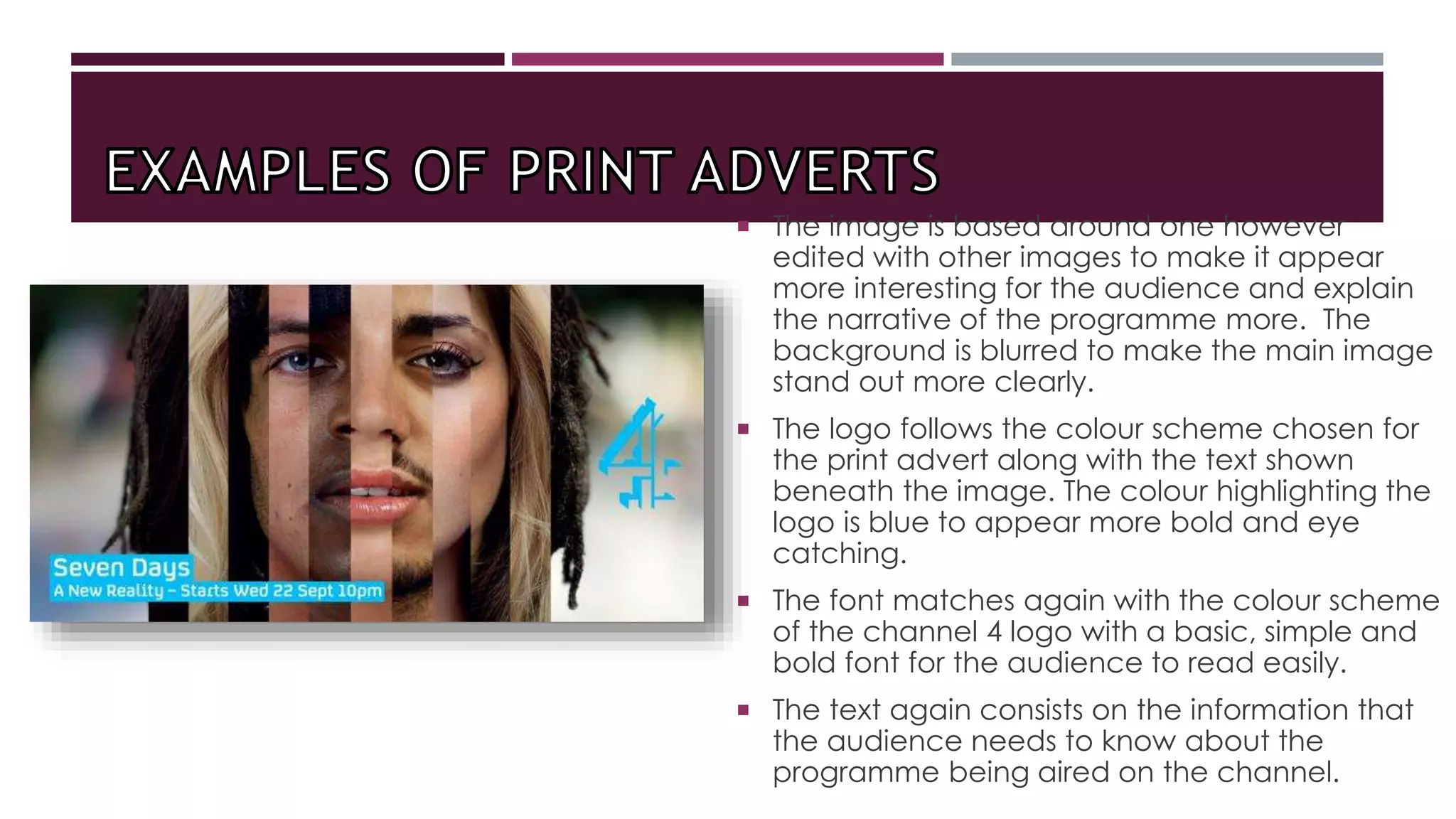
 The image is based around one however
edited with other images to make it appear
more interesting for the audience and explain
the narrative of the programme more. The
background is blurred to make the main image
stand out more clearly.
 The logo follows the colour scheme chosen for
the print advert along with the text shown
beneath the image. The colour highlighting the
logo is blue to appear more bold and eye
catching.
 The font matches again with the colour scheme
of the channel 4 logo with a basic, simple and
bold font for the audience to read easily.
 The text again consists on the information that
the audience needs to know about the
programme being aired on the channel.
 Sound effects
The sound effects used are always relevant to the topic and are used to attract the audiences
audiences attention to listen and become intrigued to what the radio advert is about.
about.
 Voice over
The voice over used on a radio advert is most likely to be the same voice used on the
documentary or television show.
 Background music
Background music is used to create interest and uses music that relates to the topic.
 Sound clips from the program
Sound clips from the program or documentary encourages the audience to watch whatever
whatever the radio advert is advertising and gives them a taste of what the programme
programme includes and its context.
 Tone
The tone is always clear for the audience to hear and is either humorous or serious.
Lastly, a radio advert always ends with the date and time its scheduled with the channel its

Print and radio advertisements with codes and conventions

  • 2.
     Image The imageis always striking purposely to catch the audiences eye, however it is a simple and simple and basic image to show what it’s representation, depending on the subject of the of the image it can either be humorous or shocking.  Logo The logo is always shown on each print advert depending on the channel as logos are used are used for the audience to recognise and identify the channel. The channel 4 logo for for example has its logo placed in the same position on each print advert.  Font The font is always simple and easy to read which is usually blocked with a primary colour colour  Text The text always includes : Title, slogan, time, and channel.
  • 3.
     The imageis quite striking and almost shocking with its manipulated realistic broken face. This is interesting for the audience as the broken screen on the phone directly goes over the whole advert relating to the name of the programme.  The logo is placed in the position that is known for channel 4 logos to be placed with a broken effect over the logo to make the advert look realistic with the effect its used.  The font follows the codes and conventions of channel 4 print adverts with a simple font that’s blocked with one colour to make it stand out more for the audience to read.  The text gives the audience the right amount of information to consider.
  • 4.
     The imageis based around one however edited with other images to make it appear more interesting for the audience and explain the narrative of the programme more. The background is blurred to make the main image stand out more clearly.  The logo follows the colour scheme chosen for the print advert along with the text shown beneath the image. The colour highlighting the logo is blue to appear more bold and eye catching.  The font matches again with the colour scheme of the channel 4 logo with a basic, simple and bold font for the audience to read easily.  The text again consists on the information that the audience needs to know about the programme being aired on the channel.
  • 5.
     Sound effects Thesound effects used are always relevant to the topic and are used to attract the audiences audiences attention to listen and become intrigued to what the radio advert is about. about.  Voice over The voice over used on a radio advert is most likely to be the same voice used on the documentary or television show.  Background music Background music is used to create interest and uses music that relates to the topic.  Sound clips from the program Sound clips from the program or documentary encourages the audience to watch whatever whatever the radio advert is advertising and gives them a taste of what the programme programme includes and its context.  Tone The tone is always clear for the audience to hear and is either humorous or serious. Lastly, a radio advert always ends with the date and time its scheduled with the channel its