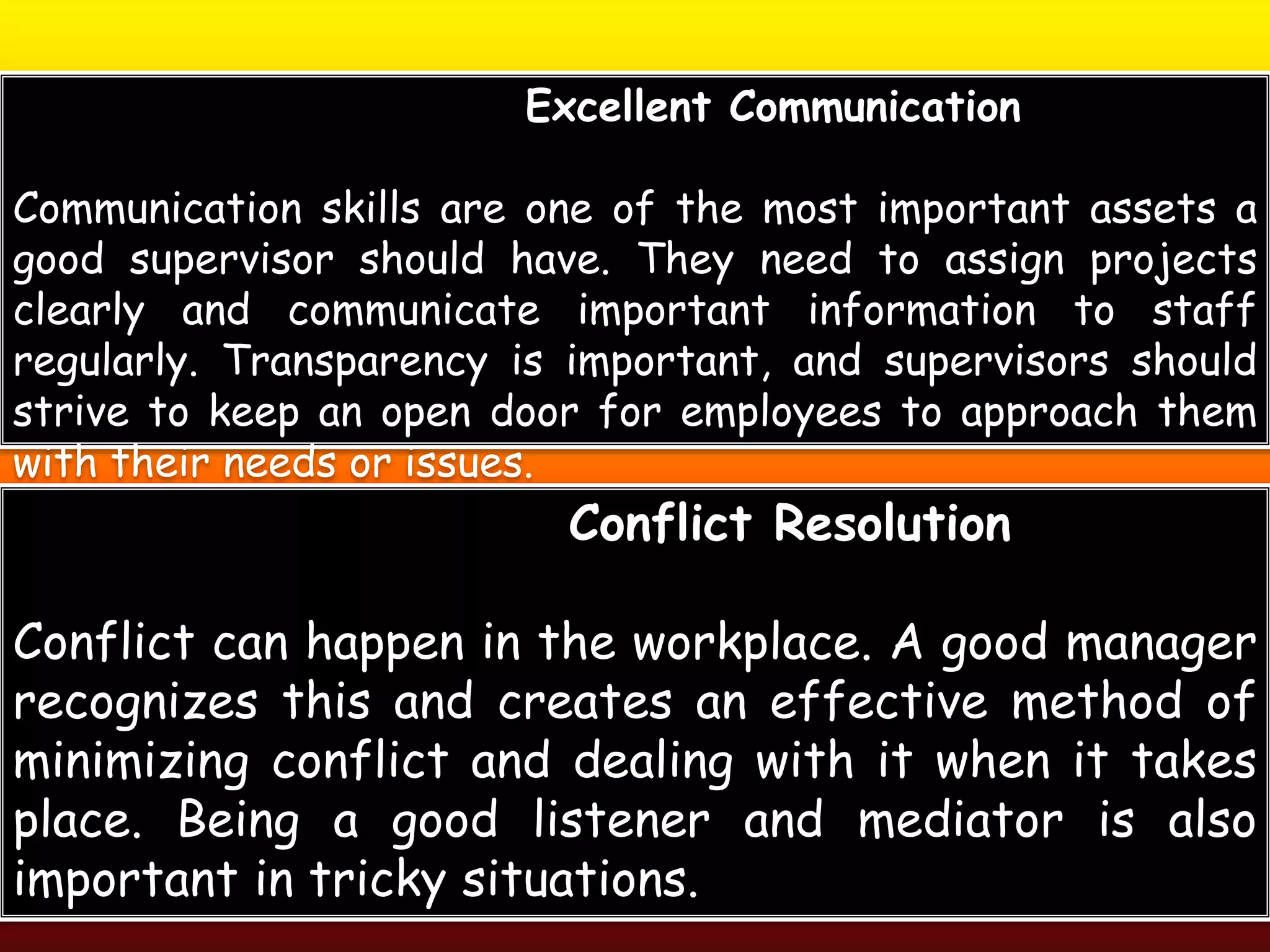
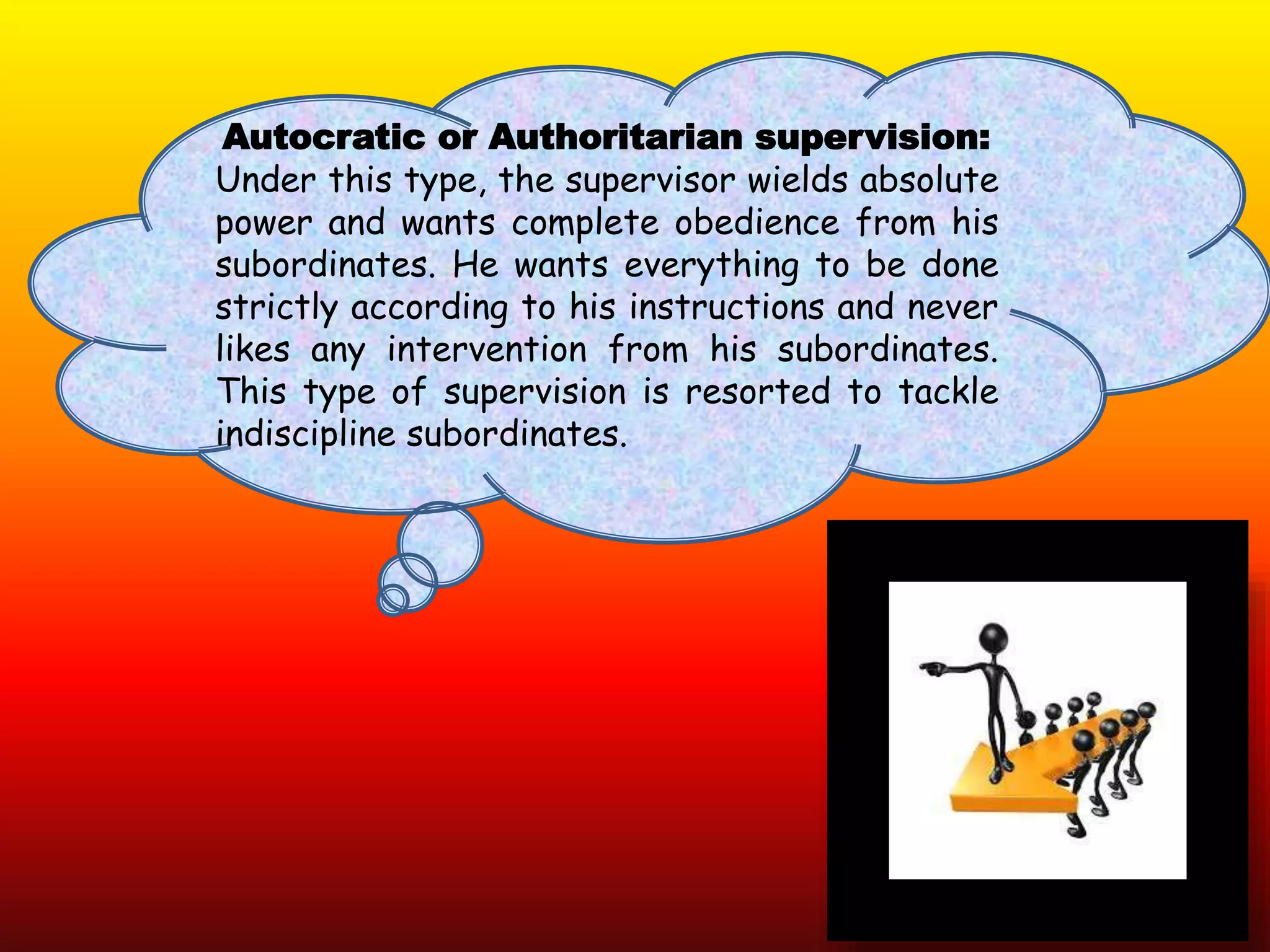
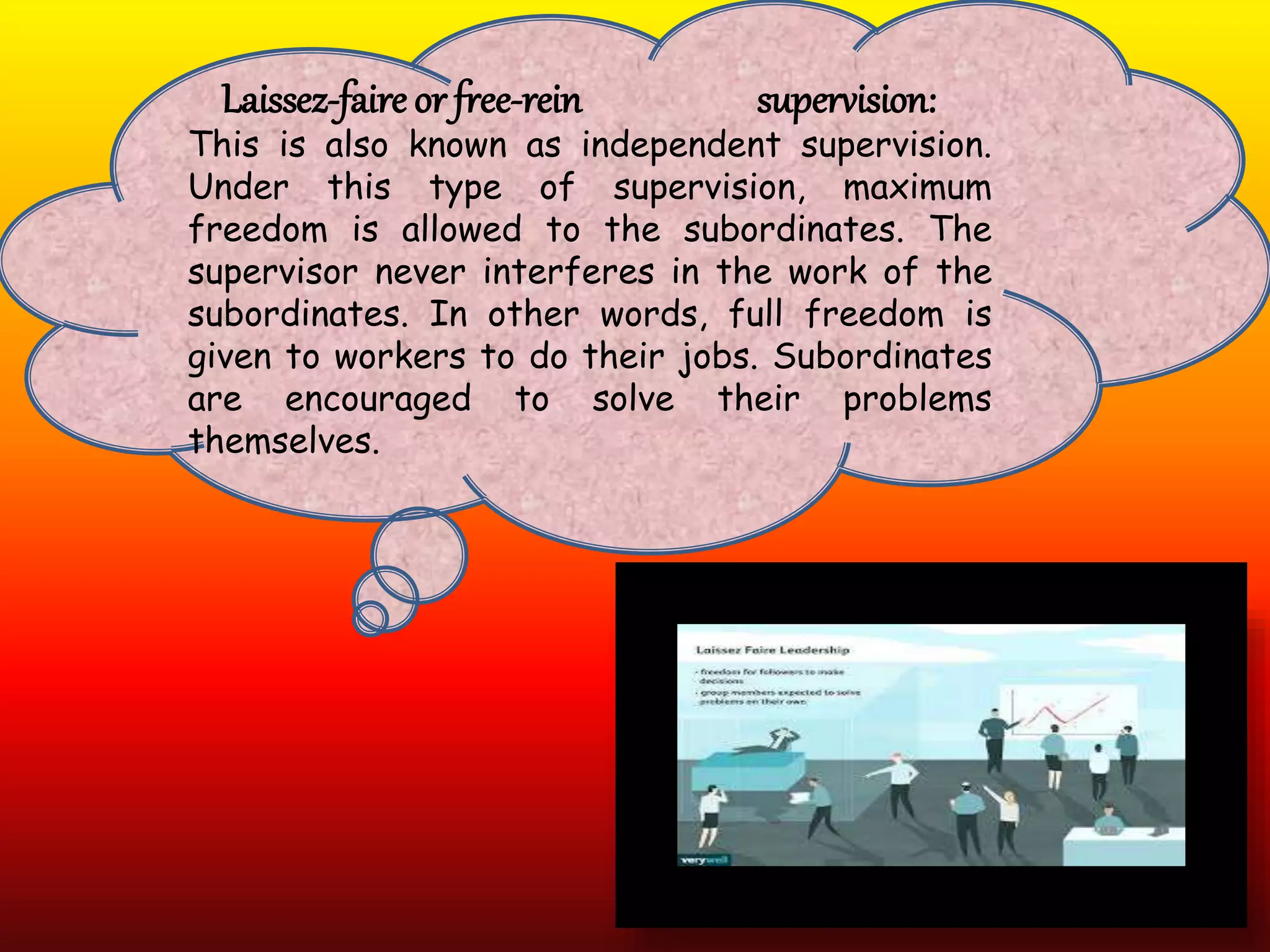
The document discusses the essential qualities and responsibilities of supervisors, emphasizing their role in guiding, training, and managing teams to meet organizational goals. It describes various supervision styles, including autocratic, laissez-faire, democratic, and bureaucratic approaches, and highlights the importance of communication, conflict resolution, leadership, critical thinking, time, and priority management. The text underlines that effective supervision leads to employee satisfaction and improved performance.