PRESENTATION ON MANAGERIAL 
SKILLS, TYPES, SCOPE AND STYLES 
 
Jayender heer 
Roll no : CUHP14MBA32 
Sec : “B”
MANAGEMENT OR MANAGERIAL SKILLS
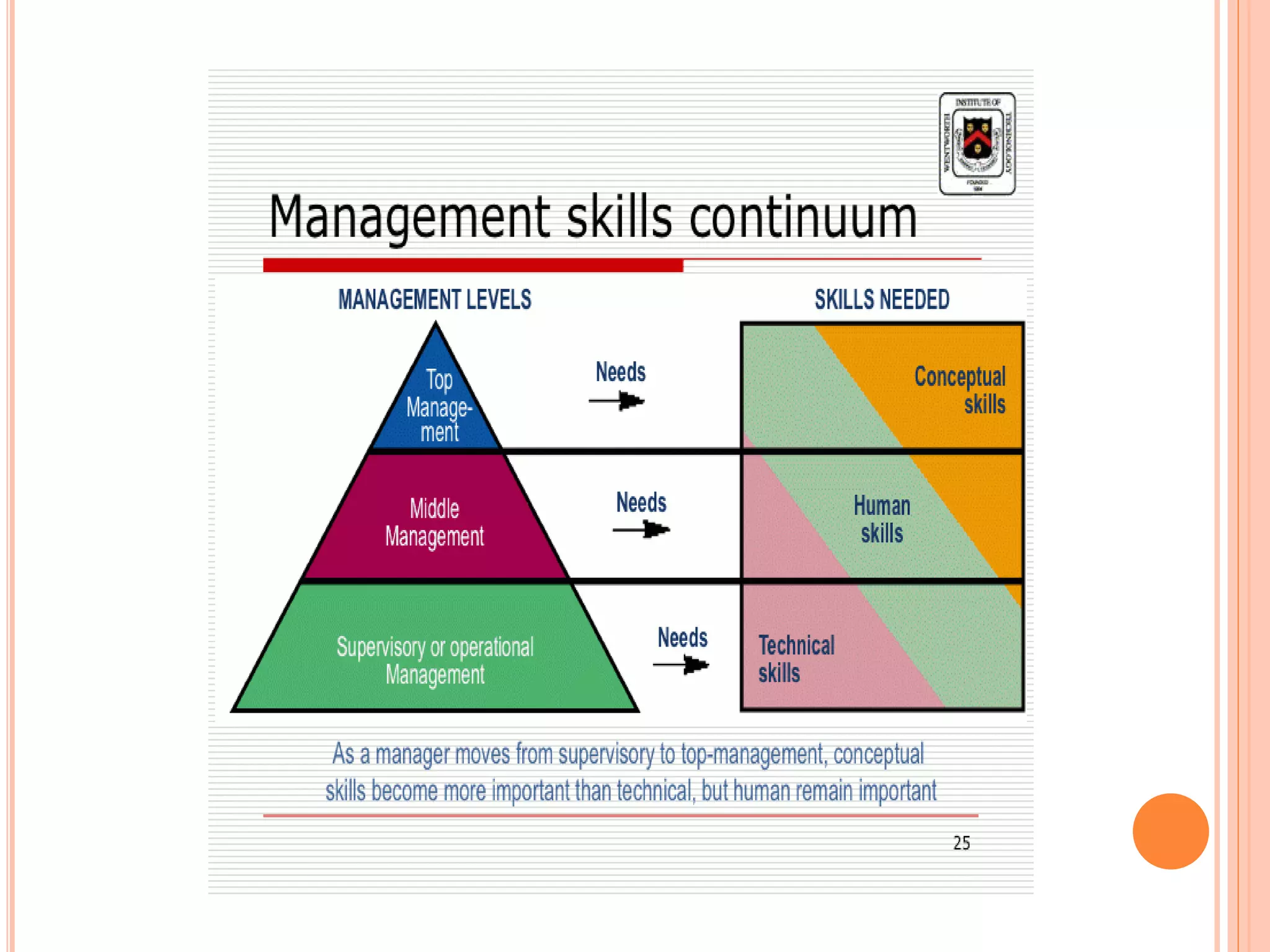
 Conceptual skills 
Conceptual skills allow a manager to visualize the 
entire organization and work with ideas and the 
relationships between abstract concepts. 
 Human skills, also called human relation skills, 
require communication and attention to 
relationships with others. 
 Technical skills 
Technical skills are needed to actually get the work 
done; they are the techniques, practices, tools, 
and processes needed by front-line employees in 
the manager's functional area.
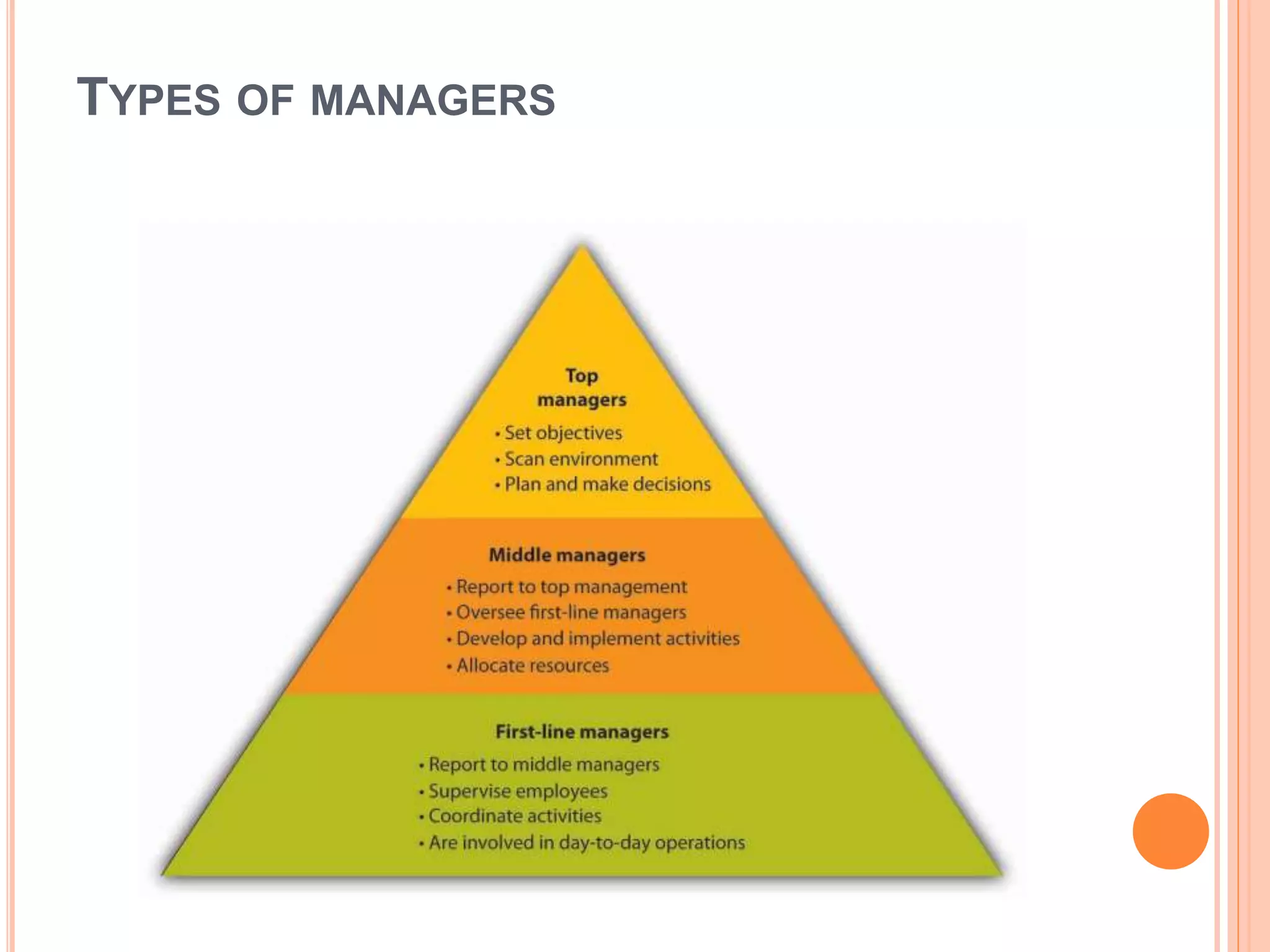
TYPES OF MANAGERS
 Top Managers: Refer to managers who are 
placed at the top positions in the organizational 
hierarchy. Top managers refer to a group of 
individuals who are responsible fat the whole 
management process of an organization. 
They hold ultimate power and authority far the 
taking any decisions in the interest of the 
organization. The top managers of an 
organization are also responsible far setting 
organizational goals and objectives and scanning 
internal and external business environment. 
B.O.D, C.E.O, President are the example of Top 
managers. 
•
 Middle Managers: Refers to managers working 
between top and bottom level in an organization. 
These managers directly report to the 
management. These managers are responsible far 
monitoring the performance of first line members, 
also called supervisors, the middle managers also 
develop and implement activities as well as allocate 
resources far the successful accomplished of 
organizational goals and activities. Sales manger, 
plant manager, personnal manager are the example 
of middle managers.
 Lower Managers: Refers to the managers who are 
placed at the lowest level in the organizational 
hierarchy. They are also known as first line 
managers or simply line managers. These 
managers are involved in the day to day activities of 
an organization and directly report to the middle 
level managers. Line managers and supervisors 
are the example of lower managers
TYPES OF MANAGERS ON THE BASES OF SCOPE 
AND ACTIVITIES 
 Functional Manager: Refers to a manager who is 
responsible far a particular function of an organization. 
Far example, marketing manager is responsible far all 
activities carried out in the marketing department. 
Functional managers are considered to be middle level 
manager’s because they have to manage the entire 
gamut of activities taking place under one organizational 
function and report the same directly to the top 
management. 
 General Manager: Refers to managers, who are 
responsible, far all activities being carried out in all 
organizational functions. A general manager supervises 
the complete organization, a subsidiary, branch, or 
specific business unit. A general manager is also known 
as a divisional manager.
TYPES OF MANAGERS ON THE BASIS OF 
STYLE OF MANAGEMENT 
 Entrepreneur style 
 Conservative style 
 Scientific style 
 Professional styles
 Entrepreneur style: Refers to those managers who 
create something unique on the basis of their self 
analysis without going through prescribed policies and 
procedures. Managers of entrepreneur styles are 
generally ambitious, enthusiastic, energetic and 
dominating by nature. They are practical, results-oriented, 
and like to command a team of subordinates. 
Managers of entrepreneur style do not hesitate to take 
up new business ideas and opportunities in terms of 
innovation and creativity. 
 Conservative style: Refers to those managers who 
believe in classical school of management. The style of 
managers is mostly found in India in both public and 
private sectors. The managers of conservative style 
prefer to managers is mostly found in India in both 
sectors. The managers of conservative style prefer to 
work in a closed setting and do not interact with the 
outer world. These managers remain generally satisfied 
with their moderate performance.
 Scientific style: Refers to those managers who believe 
in solving the problem in a logical way. The managers 
belonging to scientific style are the individual who do not 
agree with anything without reason. They use scientific 
methodology of problem solving and decision making 
which involves a step by step process. These managers 
use quantitative approach to management far setting 
and accomplishing organizational goals. 
 Professional styles: Refers to managers having a 
professional background. These managers apply 
modern management techniques and devices. They 
deal with the problems in a professional manner and 
possess specialized knowledge and expertise to 
manage and cope with the changes in the business 
environment. These managers are fair and consistent in 
their approach toward any situation.
THANKS......

managerial skills and styles

  • 1.
    PRESENTATION ON MANAGERIAL SKILLS, TYPES, SCOPE AND STYLES  Jayender heer Roll no : CUHP14MBA32 Sec : “B”
  • 2.
  • 4.
     Conceptual skills Conceptual skills allow a manager to visualize the entire organization and work with ideas and the relationships between abstract concepts.  Human skills, also called human relation skills, require communication and attention to relationships with others.  Technical skills Technical skills are needed to actually get the work done; they are the techniques, practices, tools, and processes needed by front-line employees in the manager's functional area.
  • 5.
  • 6.
     Top Managers:Refer to managers who are placed at the top positions in the organizational hierarchy. Top managers refer to a group of individuals who are responsible fat the whole management process of an organization. They hold ultimate power and authority far the taking any decisions in the interest of the organization. The top managers of an organization are also responsible far setting organizational goals and objectives and scanning internal and external business environment. B.O.D, C.E.O, President are the example of Top managers. •
  • 7.
     Middle Managers:Refers to managers working between top and bottom level in an organization. These managers directly report to the management. These managers are responsible far monitoring the performance of first line members, also called supervisors, the middle managers also develop and implement activities as well as allocate resources far the successful accomplished of organizational goals and activities. Sales manger, plant manager, personnal manager are the example of middle managers.
  • 8.
     Lower Managers:Refers to the managers who are placed at the lowest level in the organizational hierarchy. They are also known as first line managers or simply line managers. These managers are involved in the day to day activities of an organization and directly report to the middle level managers. Line managers and supervisors are the example of lower managers
  • 9.
    TYPES OF MANAGERSON THE BASES OF SCOPE AND ACTIVITIES  Functional Manager: Refers to a manager who is responsible far a particular function of an organization. Far example, marketing manager is responsible far all activities carried out in the marketing department. Functional managers are considered to be middle level manager’s because they have to manage the entire gamut of activities taking place under one organizational function and report the same directly to the top management.  General Manager: Refers to managers, who are responsible, far all activities being carried out in all organizational functions. A general manager supervises the complete organization, a subsidiary, branch, or specific business unit. A general manager is also known as a divisional manager.
  • 10.
    TYPES OF MANAGERSON THE BASIS OF STYLE OF MANAGEMENT  Entrepreneur style  Conservative style  Scientific style  Professional styles
  • 11.
     Entrepreneur style:Refers to those managers who create something unique on the basis of their self analysis without going through prescribed policies and procedures. Managers of entrepreneur styles are generally ambitious, enthusiastic, energetic and dominating by nature. They are practical, results-oriented, and like to command a team of subordinates. Managers of entrepreneur style do not hesitate to take up new business ideas and opportunities in terms of innovation and creativity.  Conservative style: Refers to those managers who believe in classical school of management. The style of managers is mostly found in India in both public and private sectors. The managers of conservative style prefer to managers is mostly found in India in both sectors. The managers of conservative style prefer to work in a closed setting and do not interact with the outer world. These managers remain generally satisfied with their moderate performance.
  • 12.
     Scientific style:Refers to those managers who believe in solving the problem in a logical way. The managers belonging to scientific style are the individual who do not agree with anything without reason. They use scientific methodology of problem solving and decision making which involves a step by step process. These managers use quantitative approach to management far setting and accomplishing organizational goals.  Professional styles: Refers to managers having a professional background. These managers apply modern management techniques and devices. They deal with the problems in a professional manner and possess specialized knowledge and expertise to manage and cope with the changes in the business environment. These managers are fair and consistent in their approach toward any situation.
  • 13.