Management Skills Performance Improvement
Definition
Definition Supervisor or Manager is the person who lead a team of people to achieve targets and goals set by the organization
Sharing  experience
ORGANISATIONAL LEVEL TOP MANAGERS MIDDLE MANAGERS FIRST-LINE MANAGERS OPERATIVES
FIRST-LINE MANAGERS Supervisors responsible for directing the day-to-day activities of operative employees
MIDDLE MANAGERS Individuals at levels of management between the first-line manager and top management
TOP MANAGERS Individuals who are responsible for making decisions about the direction of the organization and establishing policies that affect all organizational members
Operatives People who work directly on a job or task and have no responsibility for overseeing the work of others.
Process
MANAGEMENT ORGANIZING PLANNING LEADING CONTROLLING
PLANNING Defining goals Establishing strategy Developing plans to coordinate activities.
ORGANIZING What tasks are to be done Who is to do them How the task to be grouped Who reports to whom Where decisions are to be made Length of time
LEADING Motivating employees Directing the activities of others Selecting the most effective communication channel Resolving conflicts
CONTROLLING Monitoring performance Comparing performance with goals Correcting any significant deviations
DOING 10 % -50%
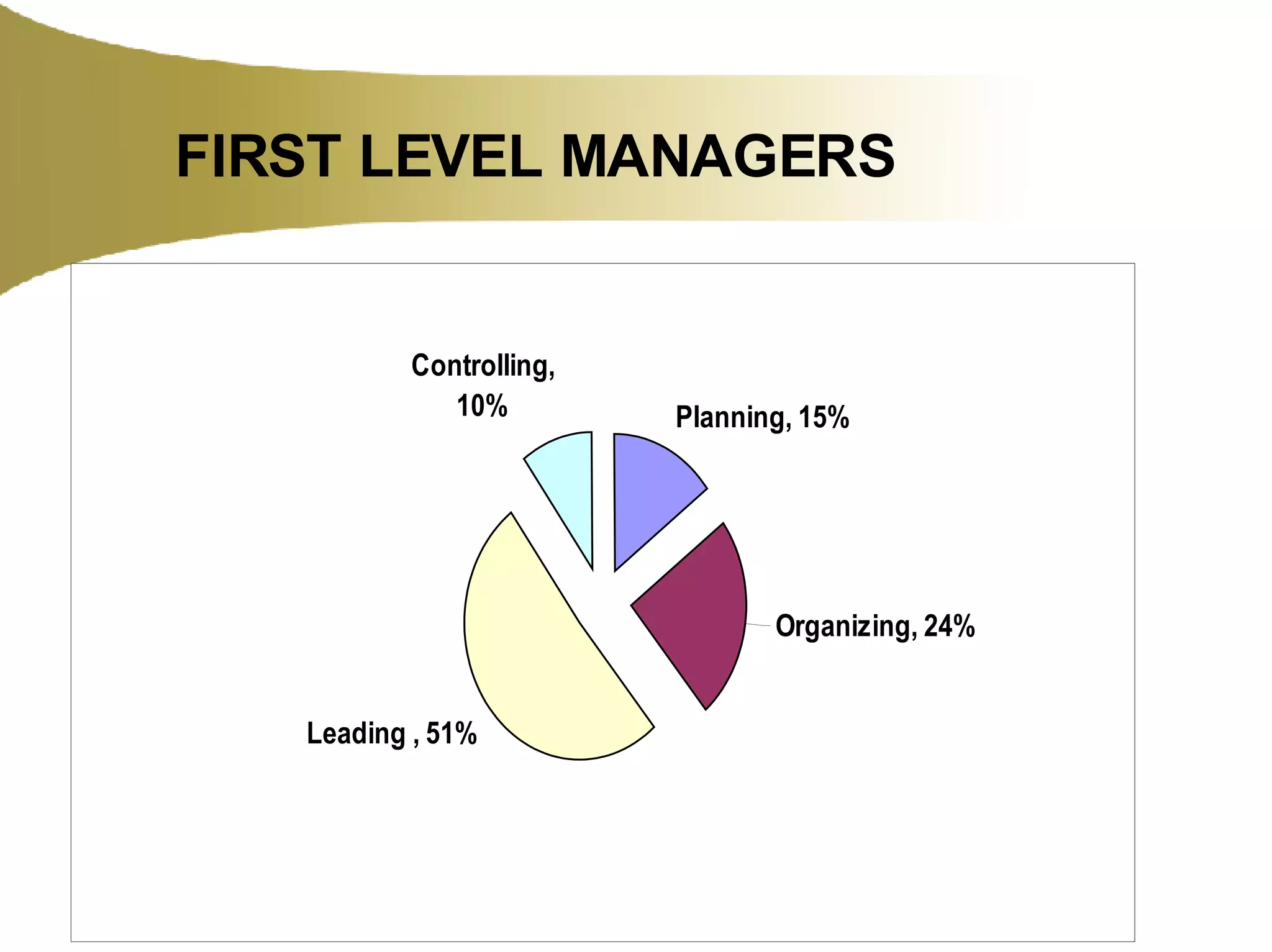
FIRST LEVEL MANAGERS
MIDDLE MANAGERS
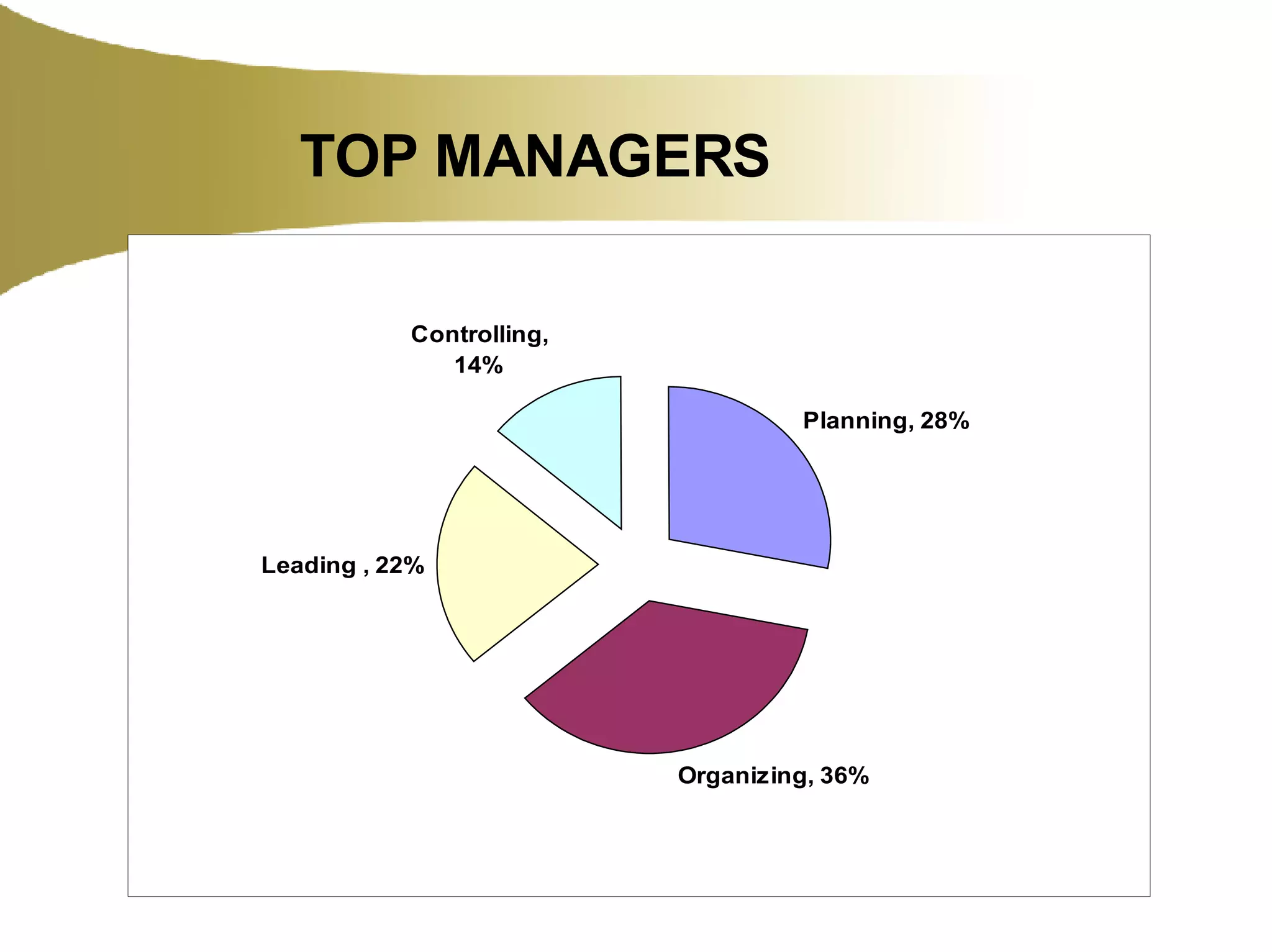
TOP MANAGERS
 
Tools Optimum results
Delegation explain why job is important define results wanted authority agreed on deadline ask for feedback set up controls
Problem Solving Work changing Focus on system: Dr Juran  80% System 20% People Service Industry 30-80% loss in non value added job
Tools SWOT FISHBONE ACTION PLAN
SWOT
SWOT Analysis What is SWOT Analysis? Tools for auditing an organization and its environment. 1 st  stage for planning.
S – Strength (Kekuatan Dalam) W – Weaknesses (Kelemahan Dalam) O – Opportunity (Peluang Luaran) T – Threat (Ancaman Luaran)
Internal External Threat Opportunity Weakness Strength
Fishbone
Action Plan
END

Supervisory Skills