
Principles of Design
follow us for videos:
https://www.youtube.com/c
hannel/UCPAiJGawMvOStSDf
cArCwdw
Principles of Design
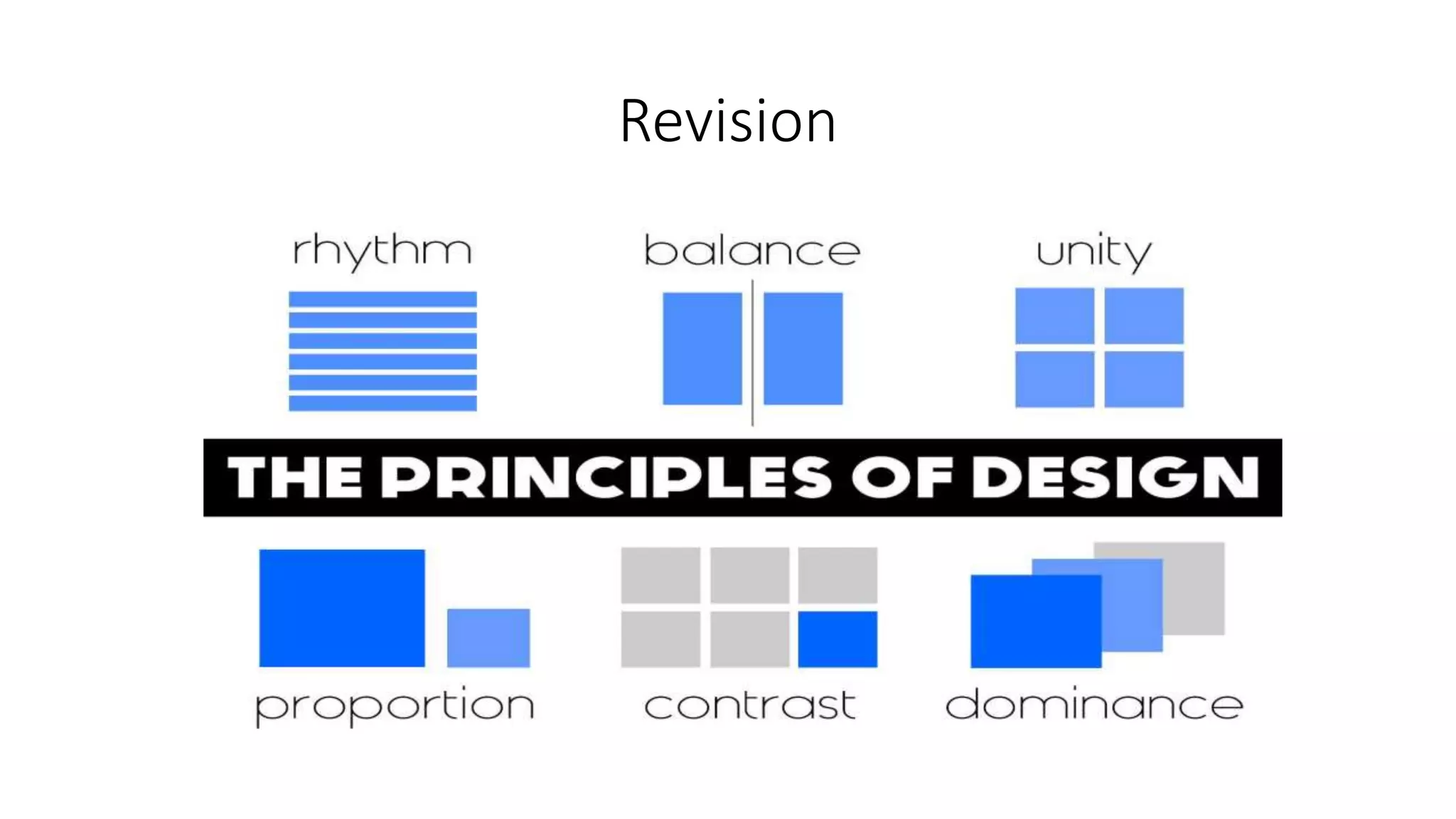
Rhythm Proportion Balance Unity/Harmony Emphasis
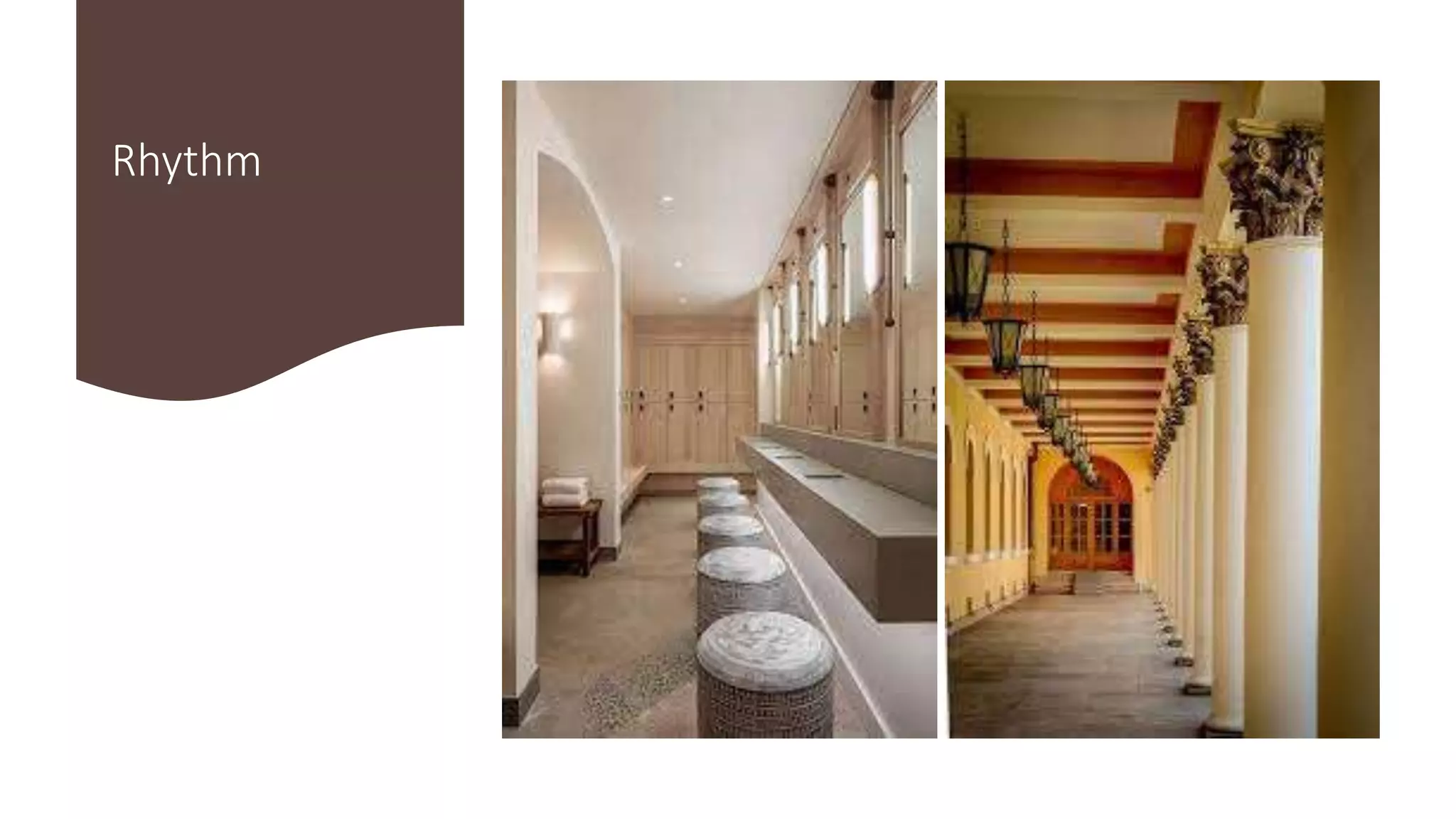
Rhythm- It allows the eye to move from one part of a
design to another part smoothly.
Rhythm can be created by:
• Repeating a colour, shape, texture, line, or space when designing.
• Varying the size of objects (small to large).
• Using a progression of colours from tints to shades (light blue to dark blue).
• Shifting from one hue to a neighbouring hue (yellow to yellow-orange to orange to red-
orange to red).
Rhythm
Proportion
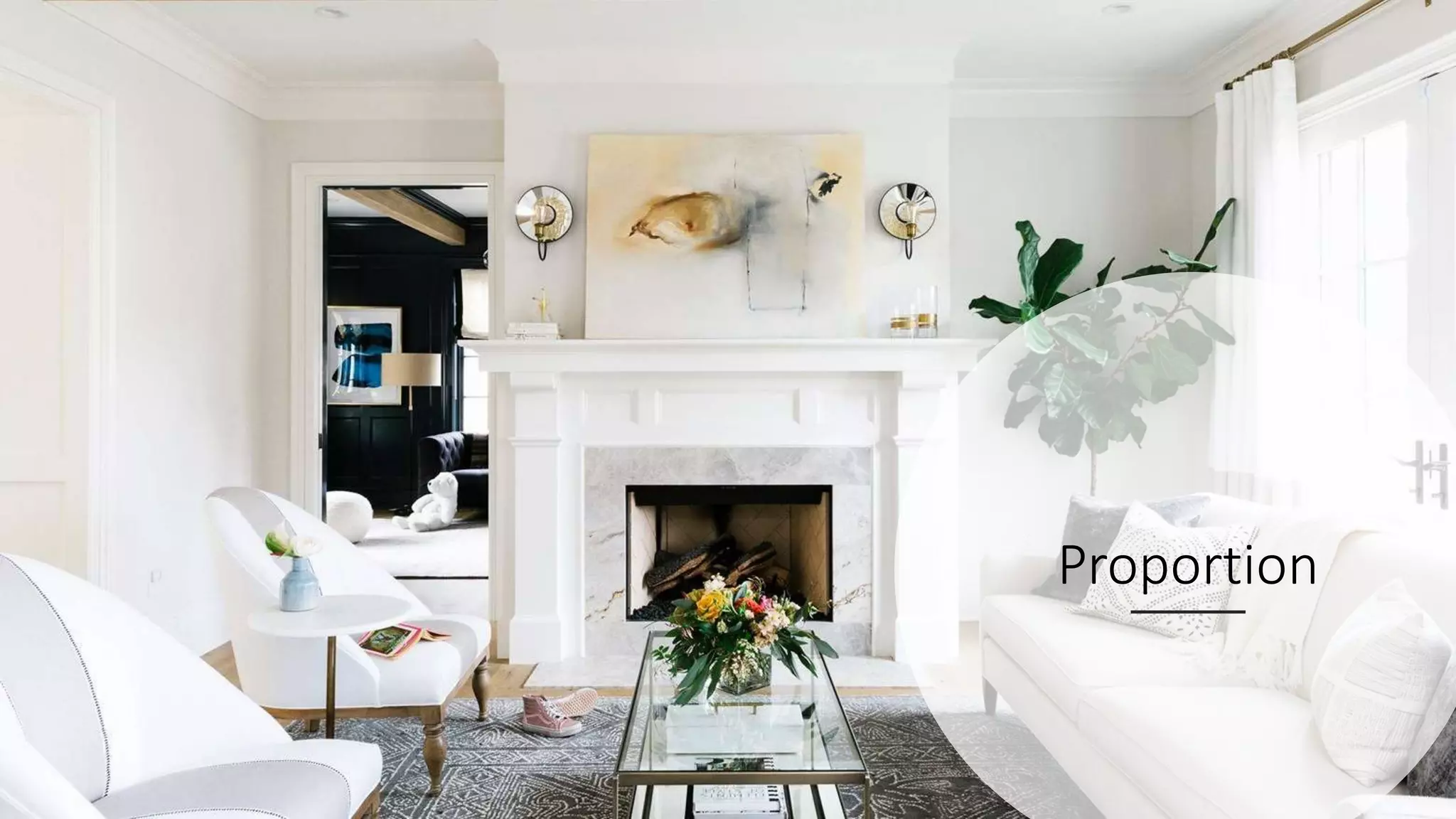
Proportion refers to the relationship between one part of a design and
another part or to the whole design. It is a comparison of sizes, shapes,
and quantities. For example, the relationship between the vertical and
horizontal measurements of a wall hanging may be pleasing because the
unequal lengths produce an interesting contrast.
Proportion
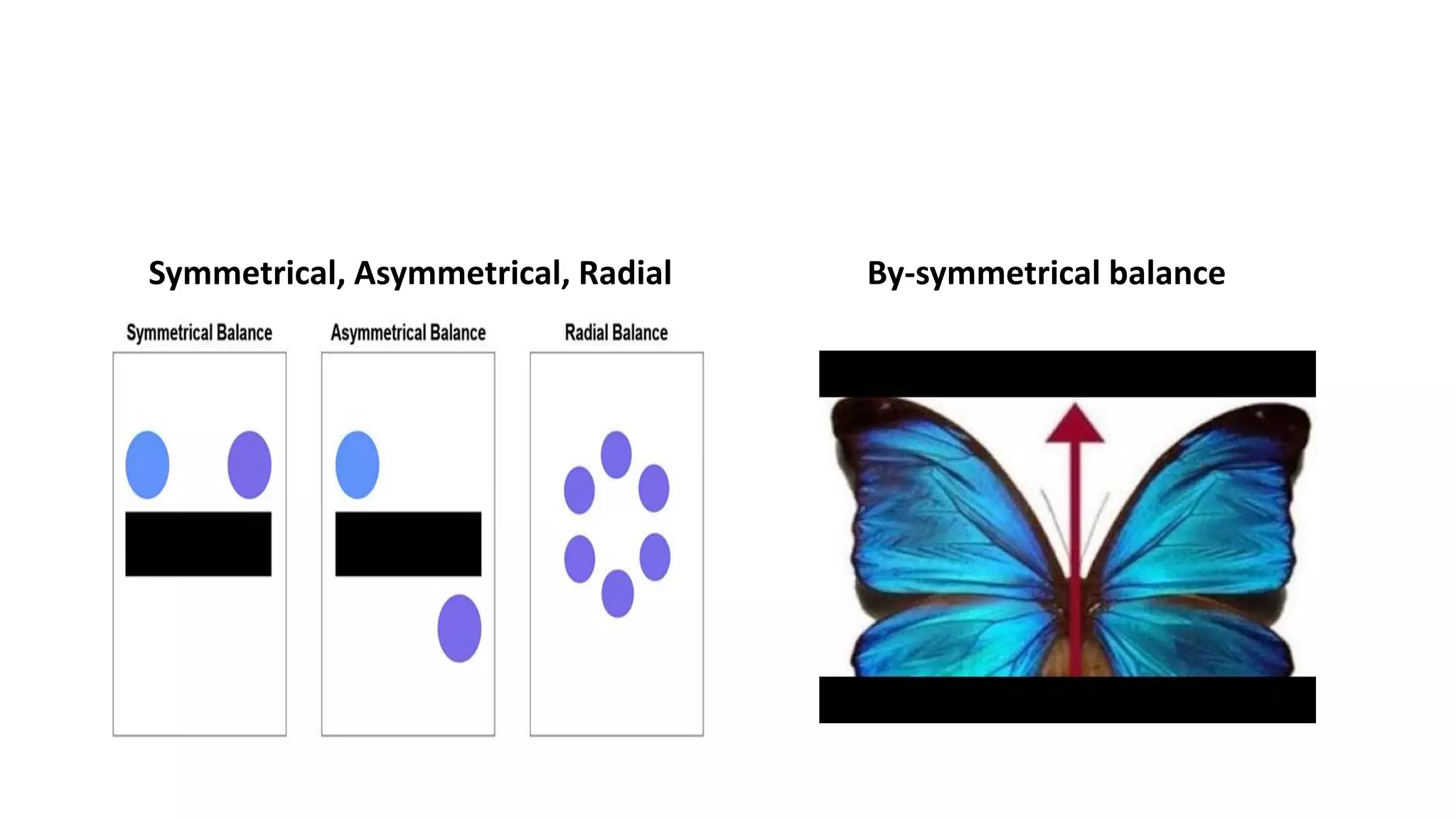
Balance
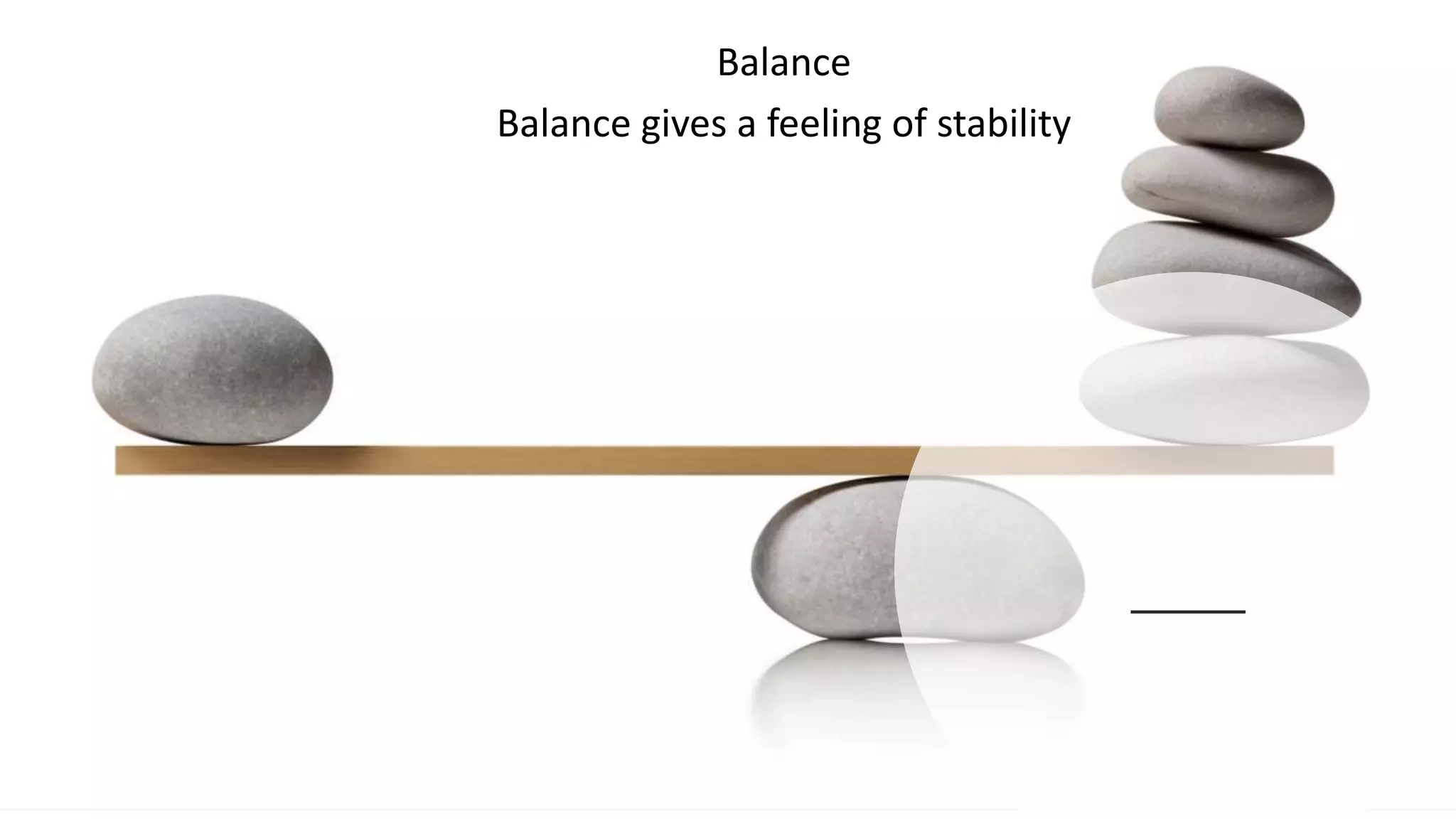
Balance gives a feeling of stability
Balance
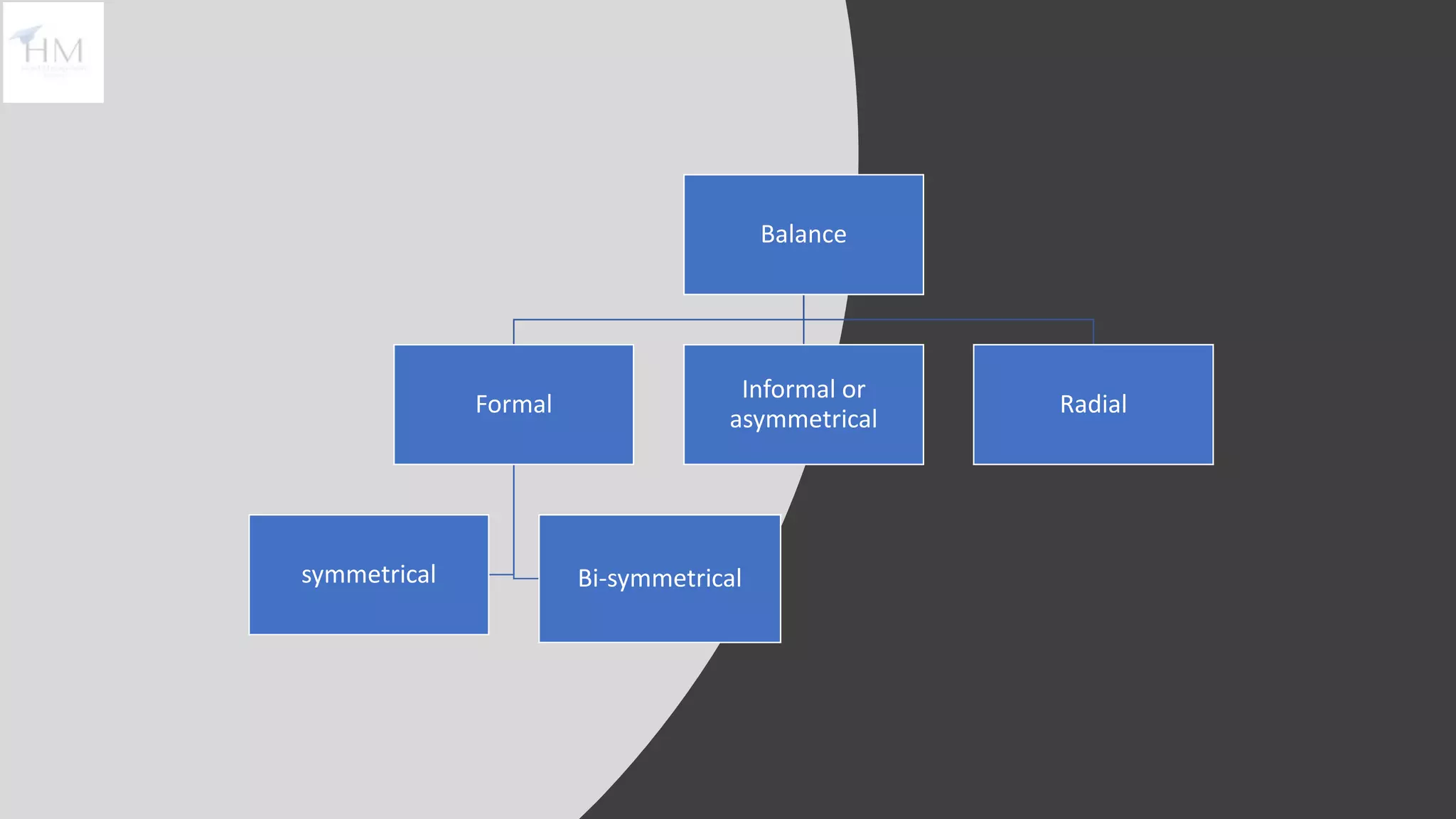
Formal
symmetrical Bi-symmetrical
Informal or
asymmetrical
Radial
Symmetrical, Asymmetrical, Radial By-symmetrical balance
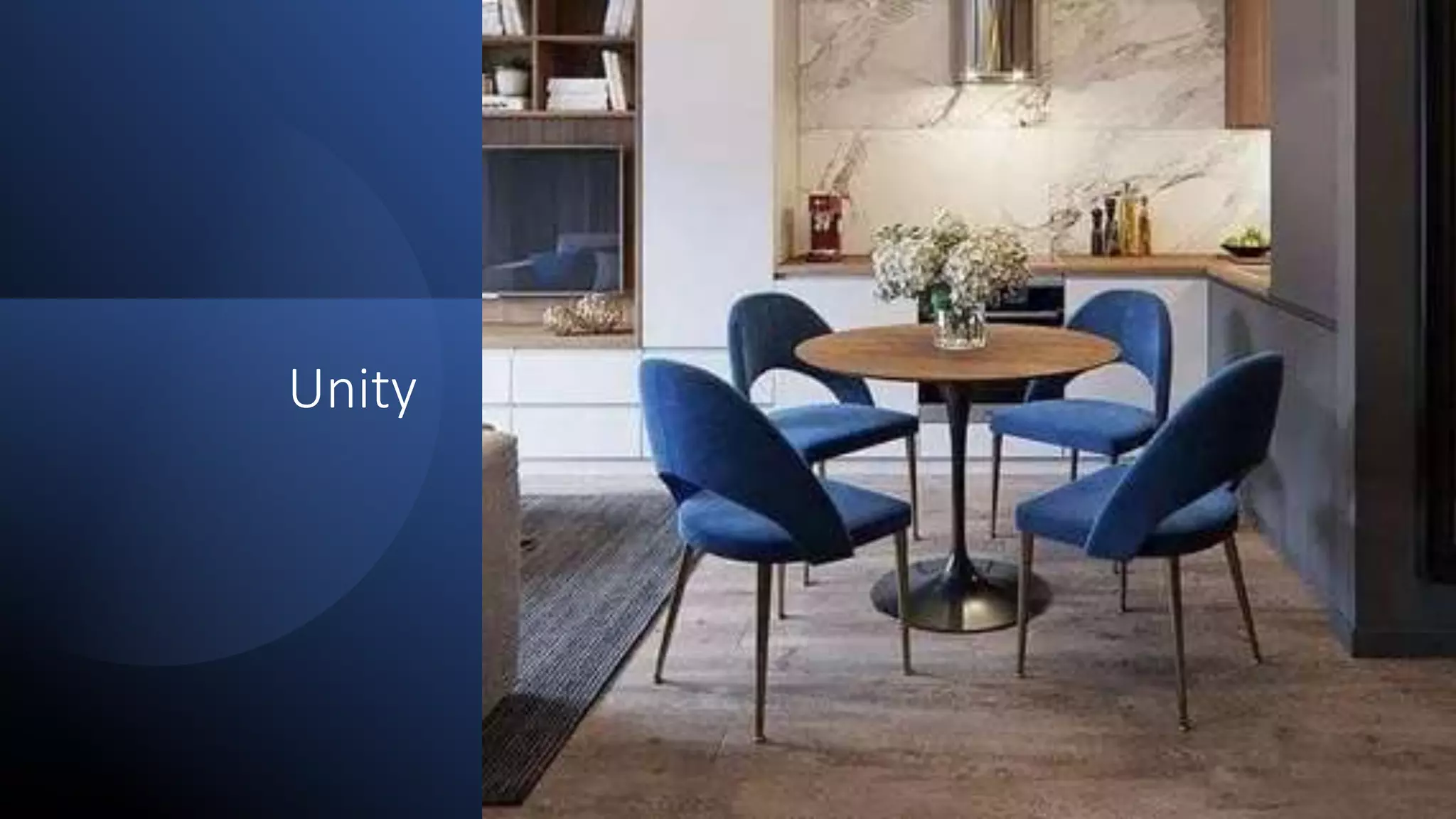
Unity/Harmony
When things look right together, you have created unity or harmony.
Lines and shapes that repeat each other show unity (curved lines
with curved shapes).
Colors that have a common hue are harmonious.
Textures that have a similar feel add to unity.
But too much uniformity sometimes can be boring. At the same
time, too much variety destroys unity.
Use similar design elements to unify your decorating scheme. For
instance, painting each room a different color can be jarring.
However, if you unify the spaces by using a limited palette of
complementary colors, you will create visual flow and harmony.
Unity
Emphasis/Focal
Point/Dominance
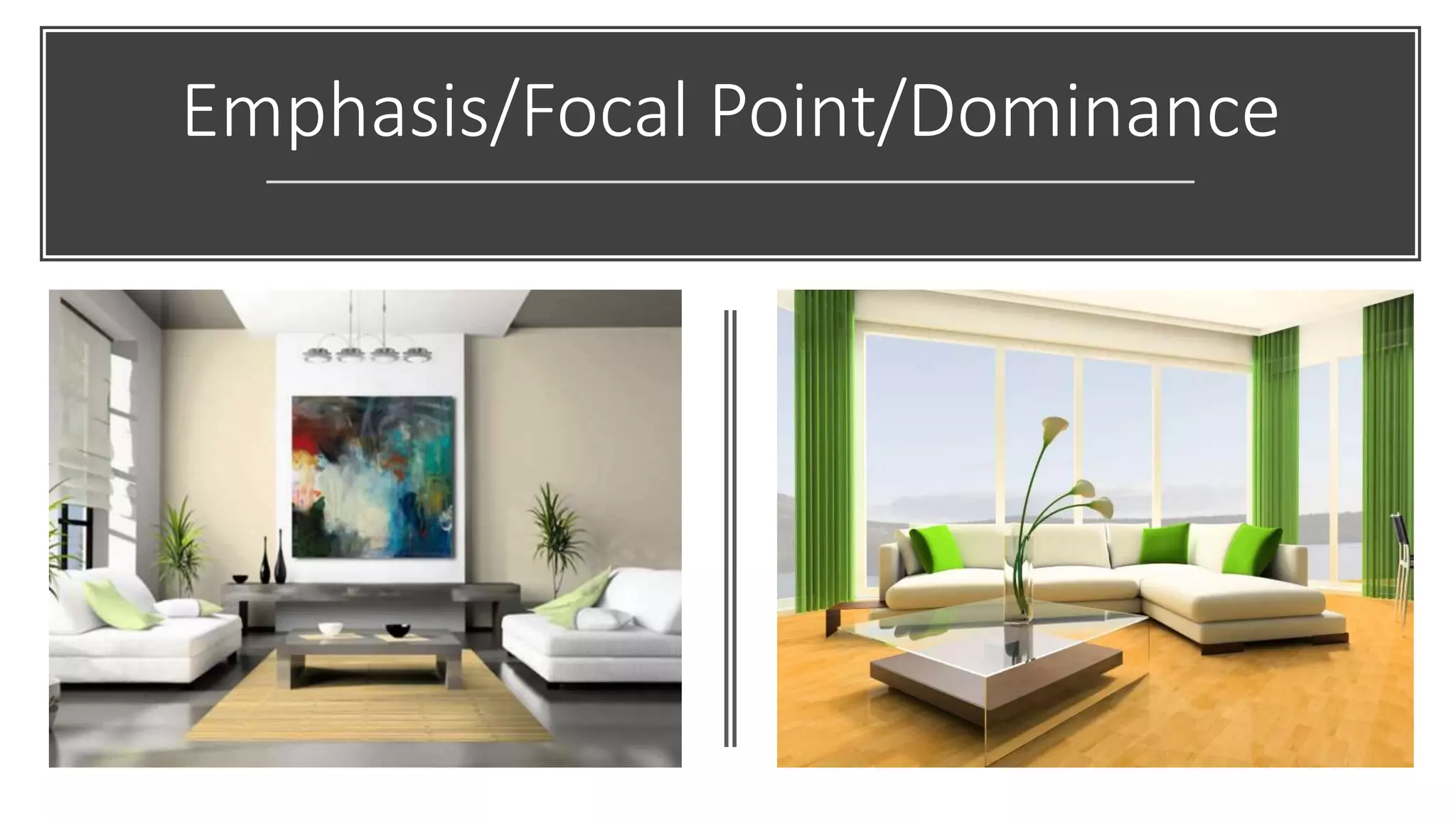
Every design needs an accent—a point of interest. Emphasis is
the quality that draws your attention to a certain part of a
design first. There are several ways to create emphasis:
• Use a contrasting color.
• Use a different or unusual line.
• Make a shape very large or very small.
• Use a different shape.
Use plain background space.
Emphasis/Focal Point/Dominance
Revision
Thank You

Principles of Design

  • 1.
    Principles of Design followus for videos: https://www.youtube.com/c hannel/UCPAiJGawMvOStSDf cArCwdw
  • 2.
    Principles of Design RhythmProportion Balance Unity/Harmony Emphasis
  • 3.
    Rhythm- It allowsthe eye to move from one part of a design to another part smoothly. Rhythm can be created by: • Repeating a colour, shape, texture, line, or space when designing. • Varying the size of objects (small to large). • Using a progression of colours from tints to shades (light blue to dark blue). • Shifting from one hue to a neighbouring hue (yellow to yellow-orange to orange to red- orange to red).
  • 4.
  • 5.
    Proportion Proportion refers tothe relationship between one part of a design and another part or to the whole design. It is a comparison of sizes, shapes, and quantities. For example, the relationship between the vertical and horizontal measurements of a wall hanging may be pleasing because the unequal lengths produce an interesting contrast.
  • 6.
  • 7.
    Balance Balance gives afeeling of stability
  • 8.
  • 9.
    Symmetrical, Asymmetrical, RadialBy-symmetrical balance
  • 10.
    Unity/Harmony When things lookright together, you have created unity or harmony. Lines and shapes that repeat each other show unity (curved lines with curved shapes). Colors that have a common hue are harmonious. Textures that have a similar feel add to unity. But too much uniformity sometimes can be boring. At the same time, too much variety destroys unity. Use similar design elements to unify your decorating scheme. For instance, painting each room a different color can be jarring. However, if you unify the spaces by using a limited palette of complementary colors, you will create visual flow and harmony.
  • 11.
  • 12.
    Emphasis/Focal Point/Dominance Every design needsan accent—a point of interest. Emphasis is the quality that draws your attention to a certain part of a design first. There are several ways to create emphasis: • Use a contrasting color. • Use a different or unusual line. • Make a shape very large or very small. • Use a different shape. Use plain background space.
  • 13.
  • 14.
  • 15.