Primary Research Results
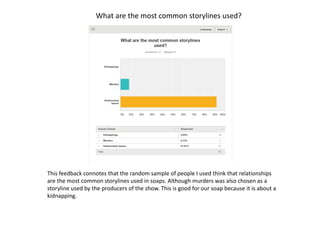
What are the most common storylines used? 
This feedback connotes that the random sample of people I used think that relationships 
are the most common storylines used in soaps. Although murders was also chosen as a 
storyline used by the producers of the show. This is good for our soap because it is about a 
kidnapping.
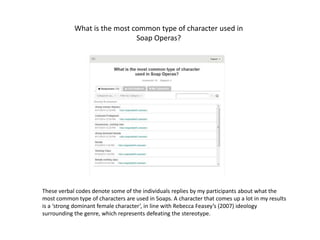
What is the most common type of character used in 
Soap Operas? 
These verbal codes denote some of the individuals replies by my participants about what the 
most common type of characters are used in Soaps. A character that comes up a lot in my results 
is a ‘strong dominant female character’, in line with Rebecca Feasey’s (2007) ideology 
surrounding the genre, which represents defeating the stereotype.
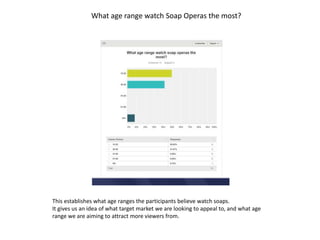
What age range watch Soap Operas the most? 
This establishes what age ranges the participants believe watch soaps. 
It gives us an idea of what target market we are looking to appeal to, and what age 
range we are aiming to attract more viewers from.
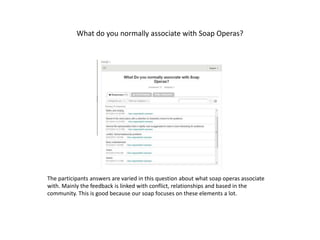
What do you normally associate with Soap Operas? 
The participants answers are varied in this question about what soap operas associate 
with. Mainly the feedback is linked with conflict, relationships and based in the 
community. This is good because our soap focuses on these elements a lot.
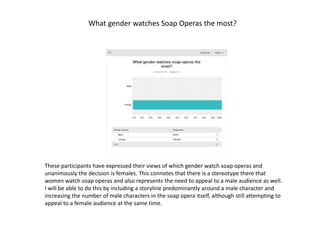
What gender watches Soap Operas the most? 
These participants have expressed their views of which gender watch soap operas and 
unanimously the decision is females. This connotes that there is a stereotype there that 
women watch soap operas and also represents the need to appeal to a male audience as well. 
I will be able to do this by including a storyline predominantly around a male character and 
increasing the number of male characters in the soap opera itself, although still attempting to 
appeal to a female audience at the same time.
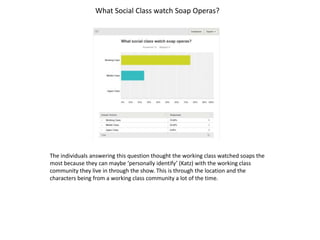
What Social Class watch Soap Operas? 
The individuals answering this question thought the working class watched soaps the 
most because they can maybe ‘personally identify’ (Katz) with the working class 
community they live in through the show. This is through the location and the 
characters being from a working class community a lot of the time.
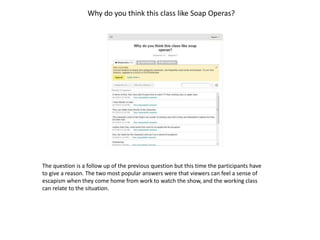
Why do you think this class like Soap Operas? 
The question is a follow up of the previous question but this time the participants have 
to give a reason. The two most popular answers were that viewers can feel a sense of 
escapism when they come home from work to watch the show, and the working class 
can relate to the situation.
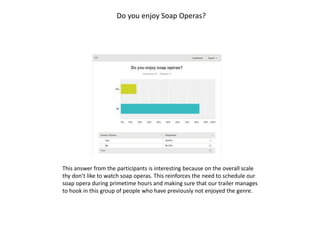
Do you enjoy Soap Operas? 
This answer from the participants is interesting because on the overall scale 
thy don’t like to watch soap operas. This reinforces the need to schedule our 
soap opera during primetime hours and making sure that our trailer manages 
to hook in this group of people who have previously not enjoyed the genre.

Primary research results

  • 1.
  • 2.
    What are themost common storylines used? This feedback connotes that the random sample of people I used think that relationships are the most common storylines used in soaps. Although murders was also chosen as a storyline used by the producers of the show. This is good for our soap because it is about a kidnapping.
  • 3.
    What is themost common type of character used in Soap Operas? These verbal codes denote some of the individuals replies by my participants about what the most common type of characters are used in Soaps. A character that comes up a lot in my results is a ‘strong dominant female character’, in line with Rebecca Feasey’s (2007) ideology surrounding the genre, which represents defeating the stereotype.
  • 4.
    What age rangewatch Soap Operas the most? This establishes what age ranges the participants believe watch soaps. It gives us an idea of what target market we are looking to appeal to, and what age range we are aiming to attract more viewers from.
  • 5.
    What do younormally associate with Soap Operas? The participants answers are varied in this question about what soap operas associate with. Mainly the feedback is linked with conflict, relationships and based in the community. This is good because our soap focuses on these elements a lot.
  • 6.
    What gender watchesSoap Operas the most? These participants have expressed their views of which gender watch soap operas and unanimously the decision is females. This connotes that there is a stereotype there that women watch soap operas and also represents the need to appeal to a male audience as well. I will be able to do this by including a storyline predominantly around a male character and increasing the number of male characters in the soap opera itself, although still attempting to appeal to a female audience at the same time.
  • 7.
    What Social Classwatch Soap Operas? The individuals answering this question thought the working class watched soaps the most because they can maybe ‘personally identify’ (Katz) with the working class community they live in through the show. This is through the location and the characters being from a working class community a lot of the time.
  • 8.
    Why do youthink this class like Soap Operas? The question is a follow up of the previous question but this time the participants have to give a reason. The two most popular answers were that viewers can feel a sense of escapism when they come home from work to watch the show, and the working class can relate to the situation.
  • 9.
    Do you enjoySoap Operas? This answer from the participants is interesting because on the overall scale thy don’t like to watch soap operas. This reinforces the need to schedule our soap opera during primetime hours and making sure that our trailer manages to hook in this group of people who have previously not enjoyed the genre.