BAL-BHARTI'S
M.J.PANCHOLIA
COLLEGE OF COMMERCE.


SUB - COOPERATIVES AND RURAL MARKETS
TOPIC-NABARAD
 Ankish maurya
Dharmisth padia
Kishan panchal
Niyati pandya
Anisha patel
Kinjal patel
 INTRODUCTION
 HISTORY
 VISION AND MISSION
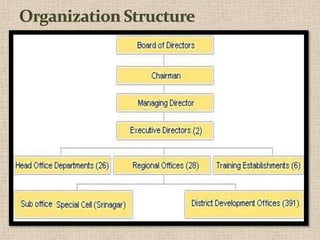
 ORGANIZATION STRUCTURE
 OBJECTIVES
 ROLES AND FUNCTIONS
 PROMOTIONAL EFFORTS BY NABARD
 MODEL BANKABLE PROJECTS
 SCHEME OF PROVIDING TECHNOLOGY
  SUPPORT TO NGOS
 INNOVATIVE PROJECTS
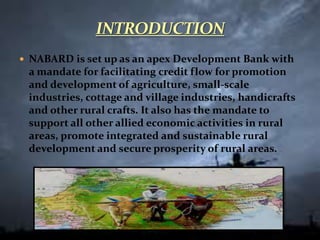
 NABARD is set up as an apex Development Bank with
 a mandate for facilitating credit flow for promotion
 and development of agriculture, small-scale
 industries, cottage and village industries, handicrafts
 and other rural crafts. It also has the mandate to
 support all other allied economic activities in rural
 areas, promote integrated and sustainable rural
 development and secure prosperity of rural areas.
 The Committee to Review
 Arrangements for Institutional
 Credit for Agriculture and Rural
 Development (CRAFICARD), set up
 by the Reserve Bank of India (RBI)
 under the Chairmanship of SHRI B.
 SIVARAMAN, conceived and
 recommended the establishment of
 the National Bank for Agriculture and
 Rural Development (NABARD). It was
 established on 12 July 1982 by a
 special act by the parliament and its
 main focus was to uplift rural India
 by increasing the credit flow for
 elevation of agriculture .
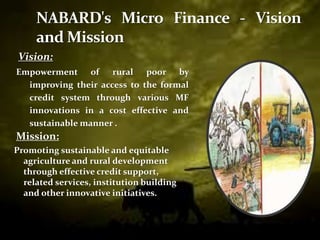
Vision:
Empowerment of rural poor by
  improving their access to the formal
  credit system through various MF
  innovations in a cost effective and
  sustainable manner .
Mission:
Promoting sustainable and equitable
  agriculture and rural development
  through effective credit support,
  related services, institution building
  and other innovative initiatives.
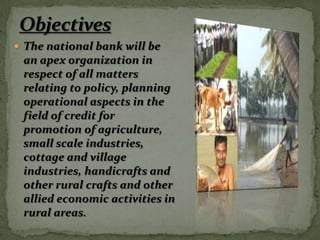
 The national bank will be
 an apex organization in
 respect of all matters
 relating to policy, planning
 operational aspects in the
 field of credit for
 promotion of agriculture,
 small scale industries,
 cottage and village
 industries, handicrafts and
 other rural crafts and other
 allied economic activities in
 rural areas.
 The Bank will also provide direct
  lending to any institution as may
  approved by the Central Government.
 The Bank will have organic links with
  the Reserve Bank and maintain a
  close link with in.
 The Bank will serve as a refinancing
  institution for institutional credit
  such as long-term, short-term for the
  promotion of activities in the rural
  areas.
• Credit Functions

• Developmental and Promotional Functions

• Supervisory Functions

• Institutional and Capacity building

• Role in Training
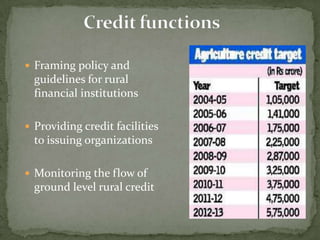
 Framing policy and
  guidelines for rural
  financial institutions

 Providing credit facilities
  to issuing organizations

 Monitoring the flow of
  ground level rural credit
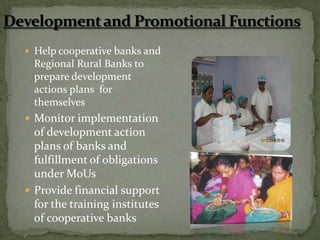
 Help cooperative banks and
  Regional Rural Banks to
  prepare development
  actions plans for
  themselves
 Monitor implementation
  of development action
  plans of banks and
  fulfillment of obligations
  under MoUs
 Provide financial support
  for the training institutes
  of cooperative banks
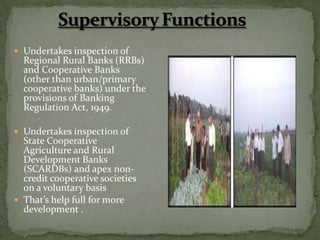
 Undertakes inspection of
  Regional Rural Banks (RRBs)
  and Cooperative Banks
  (other than urban/primary
  cooperative banks) under the
  provisions of Banking
  Regulation Act, 1949.

 Undertakes inspection of
  State Cooperative
  Agriculture and Rural
  Development Banks
  (SCARDBs) and apex non-
  credit cooperative societies
  on a voluntary basis
 That’s help full for more
  development .
 •Help cooperative banks and RRBs to prepare development
  actions plans for themselves •
 •Monitor implementation of development action plans of
  banks and fulfillment of obligations under Moue.
 •Provide financial assistance to cooperatives and RRBs for
  establishment of technical, monitoring and evaluations cells.
 •Provide organization development intervention
  (ODI) through reputed training institutes like Bankers
  Institute of Rural Development (BIRD), Lucknow,
  National Bank Staff College, Lucknow, College of Agriculture
  Banking, Pune, etc.
 •Provide financial support for the training institutes of
  cooperative banks
 •Provide training for senior and middle level executives of
  commercial banks, RRBs and cooperative banks
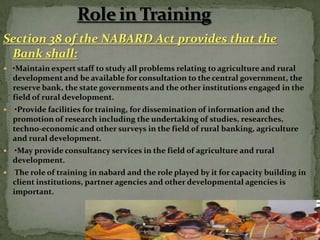
Section 38 of the NABARD Act provides that the
 Bank shall:
 •Maintain expert staff to study all problems relating to agriculture and rural
    development and be available for consultation to the central government, the
    reserve bank, the state governments and the other institutions engaged in the
    field of rural development.
    •Provide facilities for training, for dissemination of information and the
    promotion of research including the undertaking of studies, researches,
    techno-economic and other surveys in the field of rural banking, agriculture
    and rural development.
   •May provide consultancy services in the field of agriculture and rural
    development.
    The role of training in nabard and the role played by it for capacity building in
    client institutions, partner agencies and other developmental agencies is
    important.
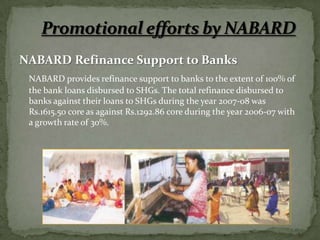
NABARD Refinance Support to Banks
 NABARD provides refinance support to banks to the extent of 100% of
 the bank loans disbursed to SHGs. The total refinance disbursed to
 banks against their loans to SHGs during the year 2007-08 was
 Rs.1615.50 core as against Rs.1292.86 core during the year 2006-07 with
 a growth rate of 30%.
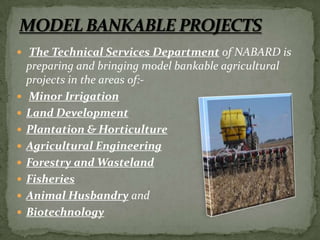
 The Technical Services Department of NABARD is
    preparing and bringing model bankable agricultural
    projects in the areas of:-
   Minor Irrigation
   Land Development
   Plantation & Horticulture
   Agricultural Engineering
   Forestry and Wasteland
   Fisheries
   Animal Husbandry and
   Biotechnology
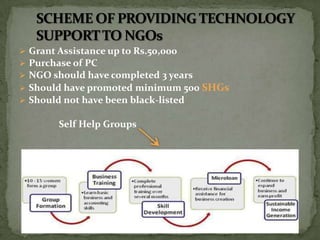
 Grant Assistance up to Rs.50,000
 Purchase of PC
 NGO should have completed 3 years
 Should have promoted minimum 500 SHGs
 Should not have been black-listed

       Self Help Groups
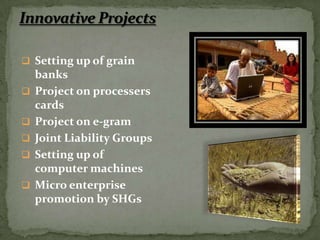
 Setting up of grain
    banks
   Project on processers
    cards
   Project on e-gram
   Joint Liability Groups
   Setting up of
    computer machines
   Micro enterprise
    promotion by SHGs
VISIT IN NABARD HEAD OFFICE
https://www.google.com
https://www.wikipedia.org
http://www.nabard.org
Nabard ppt

Nabard ppt

  • 1.
    BAL-BHARTI'S M.J.PANCHOLIA COLLEGE OF COMMERCE. SUB- COOPERATIVES AND RURAL MARKETS TOPIC-NABARAD
  • 2.
     Ankish maurya Dharmisthpadia Kishan panchal Niyati pandya Anisha patel Kinjal patel
  • 3.
     INTRODUCTION  HISTORY VISION AND MISSION  ORGANIZATION STRUCTURE  OBJECTIVES  ROLES AND FUNCTIONS  PROMOTIONAL EFFORTS BY NABARD  MODEL BANKABLE PROJECTS  SCHEME OF PROVIDING TECHNOLOGY SUPPORT TO NGOS  INNOVATIVE PROJECTS
  • 4.
     NABARD isset up as an apex Development Bank with a mandate for facilitating credit flow for promotion and development of agriculture, small-scale industries, cottage and village industries, handicrafts and other rural crafts. It also has the mandate to support all other allied economic activities in rural areas, promote integrated and sustainable rural development and secure prosperity of rural areas.
  • 5.
     The Committeeto Review Arrangements for Institutional Credit for Agriculture and Rural Development (CRAFICARD), set up by the Reserve Bank of India (RBI) under the Chairmanship of SHRI B. SIVARAMAN, conceived and recommended the establishment of the National Bank for Agriculture and Rural Development (NABARD). It was established on 12 July 1982 by a special act by the parliament and its main focus was to uplift rural India by increasing the credit flow for elevation of agriculture .
  • 6.
    Vision: Empowerment of ruralpoor by improving their access to the formal credit system through various MF innovations in a cost effective and sustainable manner . Mission: Promoting sustainable and equitable agriculture and rural development through effective credit support, related services, institution building and other innovative initiatives.
  • 8.
     The nationalbank will be an apex organization in respect of all matters relating to policy, planning operational aspects in the field of credit for promotion of agriculture, small scale industries, cottage and village industries, handicrafts and other rural crafts and other allied economic activities in rural areas.
  • 9.
     The Bankwill also provide direct lending to any institution as may approved by the Central Government.  The Bank will have organic links with the Reserve Bank and maintain a close link with in.  The Bank will serve as a refinancing institution for institutional credit such as long-term, short-term for the promotion of activities in the rural areas.
  • 11.
    • Credit Functions •Developmental and Promotional Functions • Supervisory Functions • Institutional and Capacity building • Role in Training
  • 12.
     Framing policyand guidelines for rural financial institutions  Providing credit facilities to issuing organizations  Monitoring the flow of ground level rural credit
  • 13.
     Help cooperativebanks and Regional Rural Banks to prepare development actions plans for themselves  Monitor implementation of development action plans of banks and fulfillment of obligations under MoUs  Provide financial support for the training institutes of cooperative banks
  • 14.
     Undertakes inspectionof Regional Rural Banks (RRBs) and Cooperative Banks (other than urban/primary cooperative banks) under the provisions of Banking Regulation Act, 1949.  Undertakes inspection of State Cooperative Agriculture and Rural Development Banks (SCARDBs) and apex non- credit cooperative societies on a voluntary basis  That’s help full for more development .
  • 16.
     •Help cooperativebanks and RRBs to prepare development actions plans for themselves •  •Monitor implementation of development action plans of banks and fulfillment of obligations under Moue.  •Provide financial assistance to cooperatives and RRBs for establishment of technical, monitoring and evaluations cells.  •Provide organization development intervention (ODI) through reputed training institutes like Bankers Institute of Rural Development (BIRD), Lucknow, National Bank Staff College, Lucknow, College of Agriculture Banking, Pune, etc.  •Provide financial support for the training institutes of cooperative banks  •Provide training for senior and middle level executives of commercial banks, RRBs and cooperative banks
  • 17.
    Section 38 ofthe NABARD Act provides that the Bank shall:  •Maintain expert staff to study all problems relating to agriculture and rural development and be available for consultation to the central government, the reserve bank, the state governments and the other institutions engaged in the field of rural development.  •Provide facilities for training, for dissemination of information and the promotion of research including the undertaking of studies, researches, techno-economic and other surveys in the field of rural banking, agriculture and rural development.  •May provide consultancy services in the field of agriculture and rural development.  The role of training in nabard and the role played by it for capacity building in client institutions, partner agencies and other developmental agencies is important.
  • 19.
    NABARD Refinance Supportto Banks NABARD provides refinance support to banks to the extent of 100% of the bank loans disbursed to SHGs. The total refinance disbursed to banks against their loans to SHGs during the year 2007-08 was Rs.1615.50 core as against Rs.1292.86 core during the year 2006-07 with a growth rate of 30%.
  • 20.
     The TechnicalServices Department of NABARD is preparing and bringing model bankable agricultural projects in the areas of:-  Minor Irrigation  Land Development  Plantation & Horticulture  Agricultural Engineering  Forestry and Wasteland  Fisheries  Animal Husbandry and  Biotechnology
  • 21.
     Grant Assistanceup to Rs.50,000  Purchase of PC  NGO should have completed 3 years  Should have promoted minimum 500 SHGs  Should not have been black-listed Self Help Groups
  • 22.
     Setting upof grain banks  Project on processers cards  Project on e-gram  Joint Liability Groups  Setting up of computer machines  Micro enterprise promotion by SHGs
  • 23.
    VISIT IN NABARDHEAD OFFICE
  • 24.