Dr Bikash Subedi
Moderator: Prof. Dr Baburaja Shrestha
19th Aug,2014
O Mr Ghimire,32/m
Presenting complaints
O Snoring x 3 years
O Recurrent Throat pain/foreign body
sensation x 2 yrs
O ?Disturbed sleep x 2 yrs
HOPI
O Off and on throat pain and tonsillar
enlargement
O Unaware of sleeping difficulty (snoring,
obstructed breathing)
O Somnolence,fatigue, headache in the
morning
O No significant past medical except for
taking painkillers & antibiotics off and on
for throat pain
O No h/o surgical oR anesthetic exposure
Personal history
O Smoker- 5-6 cigarettes/day for the last 6 yrs
?left since last 1.5 mnths
O Occasional drinker
O Normal bowel/bladder habits
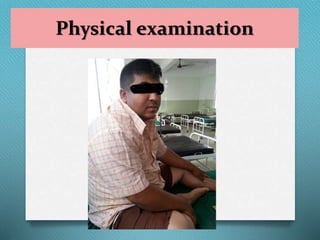
Physical examination
General examination
O General condition – fair
O Wt.-108 kgs, Ht.- 165 cms
O BMI – 39.66 kg/M2
O PILLCCOD – NIL
BMI- < 18.5= underweight. 18.5-25= normal wt. 25-30= overweight. 30-35= class
1 obesity. 35-40= class II. > 40= class III obesity
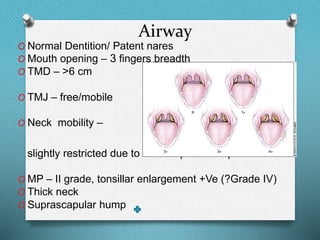
Airway
O Normal Dentition/ Patent nares
O Mouth opening – 3 fingers breadth
O TMD – >6 cm
O TMJ – free/mobile
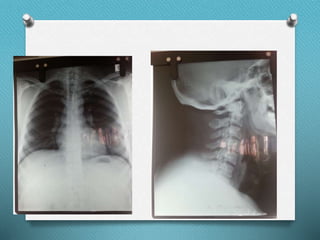
O Neck mobility –
slightly restricted due to surascapular hump
O MP – II grade, tonsillar enlargement +Ve (?Grade IV)
O Thick neck
O Suprascapular hump
Systemic examination
OCVS Examination :
O Pulse: 80,regular
O BP: 130/80 mm Hg (left sitting)
O S1 + S2 + M0
ORespiratory Examination:
O RR: 16/min
O Air entry B/L on bases, otherwise NVB
OAbdomen
distended, fatty
no organomegaly,
Investigations
O Hb:13.2 gm%
O TC: 10,300/mm3
O P72, L22, E06
O PT: 15 secs
O INR: 1.1
O Platelets: 2,25,000/mm3
O Blood group: 0 +ve
O Na: 146 meq/l
O K: 4.7 meq/l
O Urea: 26 mg/dl
O Creatinine: 0.9
mg/dl
O RBS: 134 mg/dl
O ABG: N/A
O Trop I – Neg
O CK MB- 17 U/L
O Normal echocardiographic findings
LVEF-65%
O Normal Thyroid function tests
T3= 2.63 pg/L
T4= 11.49 pg/L
TSH= 1.10 mIU/L
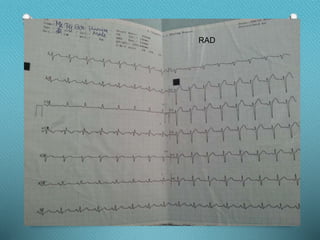
RAD
Preoperative preparation
O NPO/Premedication PPI,Prokinetic
O IV access/ 16 G cannula
O Equipments for Difficult airway made
ready
O Ramping done
O Preoxygenation & RSI
OPIOID-LESS SURGERY!!
O INDUCTION
inj Propofol 250 mg
inj Sux 150 mg
1.5 gms of PCM
150 mg of Diclofenac sodium
O 6.5 mm ID RAE tube. uneventful
O MAINTENANCE
Vecuronium,Ketamine
(intermittent/analgesia)
O2 (100%), Isoflurane
O REVERSAL
DOS = 1 hr 45 mins
Neostigmine, Glycopyrrolate
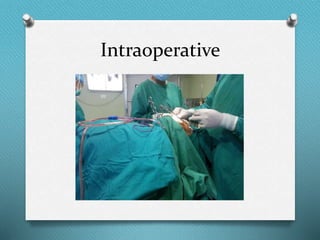
Intraoperative
NOT so smooth emergence!!
O Bucking on the tube
O Oral bleeding noticed >> re-induced with
Propofol
O Another 40 mins of cautery!
O Awake intubation planned >> violent pt.
>> nasopharyngeal airway sutured! >>
suctioned/extubated >> another 25 mins
of airway support maneuvers
O Shifted to ICU for monitoring/ CPAP
PCM/ NSAIDS for pain
O O2 Sats dropped to 65% during sleep
O CPAP not tolerated well >> O2 face mask
>> sats above 90 %
DISCUSSION
Obstructive Sleep Apnea
O Sleep apnea-hypopnea syndrome
O Cessation or significant decrease in
airflow in the presence of breathing effort
O Recurrent episodes of upper airway
collapse during sleep
O Recurrent desaturations and arousals
O OSA a/w excessive daytime sleepiness
OSA syndrome
Signs & Symptoms
Night symptoms
O Snoring, usu loud & bothersome
O Witnessed apneas (interrupt snoring &
end with snort)
O May have Gasping/choking that arouse
O Restless sleep (toss & turn)
O nocturia
Daytime symptoms
O Sleepiness,fatigue
O Headache, dry/sore throat
O ↓vigilance, confusion
O Personality/mood changes
(depression,anxiety)
O ↓libido, GERD
O Paradoxical “good sleepers”
STOP!
O S: "Do you snore loudly, loud enough to
be heard through a closed door?"
O T: "Do you feel tired or fatigued during the
daytime almost every day?"
O O: "Has anyone observed that you stop
breathing during sleep?"
O P: "Do you have a history of high blood
pressure with or without treatment?“
O >>2 OUT OF 4 >>
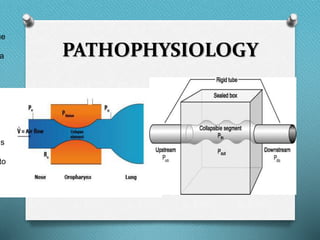
PATHOPHYSIOLOGY
STATIC
FACTORS
• Anatomic
factors
• ↓pharyngeal
diameter
• Gravity/posture
DYNAMIC
FACTORS
• Airway
resistance
• Bernoulli’s
effect
• Dynamic
adherence
Nonstructural risk factors
O Obesity
O Central fat distribution
O Male sex (M:F=2:3.1
O Age (inc with inc age)
O Postmenopausal state
O Alcohol use
O Sedative use
O Smoking
O Supine sleep position
O Hypothyroidism, Acromegaly
O Rapid eye movement (REM) sleep
PATHOPHYSIOLOGY
ue
a
is
to
Examination may reveal
O Obesity (BMI usu > 30)
O Enlarged neck circumference
men > 43 cm. Women >37 cm
O High MP scores, enlarged tonsils (grade
3/4)
O Retro/micrognathia, overjet
O High arched palate
BANG! – BMI, AGE > 50 ,Neck circum Gender M
O Systemic arterial HTN (upto 50% OSA
cases)
O Pulm. HTN, CHF
O Type II DM, Metabolic syndrome
DIAGNOSIS
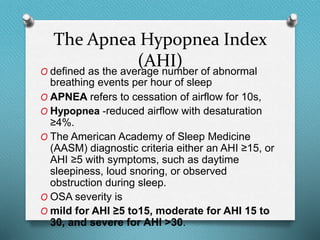
The Apnea Hypopnea Index
(AHI)O defined as the average number of abnormal
breathing events per hour of sleep
O APNEA refers to cessation of airflow for 10s,
O Hypopnea -reduced airflow with desaturation
≥4%.
O The American Academy of Sleep Medicine
(AASM) diagnostic criteria either an AHI ≥15, or
AHI ≥5 with symptoms, such as daytime
sleepiness, loud snoring, or observed
obstruction during sleep.
O OSA severity is
O mild for AHI ≥5 to15, moderate for AHI 15 to
30, and severe for AHI >30.
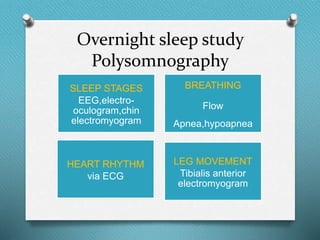
Overnight sleep study
Polysomnography
SLEEP STAGES
EEG,electro-
oculogram,chin
electromyogram
BREATHING
Flow
Apnea,hypoapnea
HEART RHYTHM
via ECG
LEG MOVEMENT
Tibialis anterior
electromyogram
Apnea,Hypoapnea & RERA
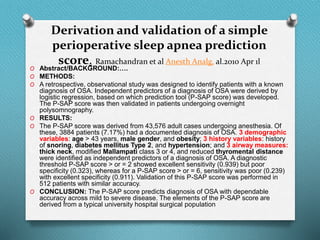
Derivation and validation of a simple
perioperative sleep apnea prediction
score. Ramachandran et al Anesth Analg. al.2010 Apr 1l
O Abstract/BACKGROUND:….
O METHODS:
O A retrospective, observational study was designed to identify patients with a known
diagnosis of OSA. Independent predictors of a diagnosis of OSA were derived by
logistic regression, based on which prediction tool (P-SAP score) was developed.
The P-SAP score was then validated in patients undergoing overnight
polysomnography.
O RESULTS:
O The P-SAP score was derived from 43,576 adult cases undergoing anesthesia. Of
these, 3884 patients (7.17%) had a documented diagnosis of OSA. 3 demographic
variables: age > 43 years, male gender, and obesity; 3 history variables: history
of snoring, diabetes mellitus Type 2, and hypertension; and 3 airway measures:
thick neck, modified Mallampati class 3 or 4, and reduced thyromental distance
were identified as independent predictors of a diagnosis of OSA. A diagnostic
threshold P-SAP score > or = 2 showed excellent sensitivity (0.939) but poor
specificity (0.323), whereas for a P-SAP score > or = 6, sensitivity was poor (0.239)
with excellent specificity (0.911). Validation of this P-SAP score was performed in
512 patients with similar accuracy.
O CONCLUSION: The P-SAP score predicts diagnosis of OSA with dependable
accuracy across mild to severe disease. The elements of the P-SAP score are
derived from a typical university hospital surgical population
Conservative therapy &
prevention
O Sleep position (NOT supine)
O Upright position for markedly obese
O Smoking cessation
O Alcohol/ sedatives avoidance
O Avoidance of sleep deprivation
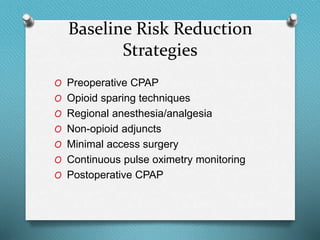
Baseline Risk Reduction
Strategies
O Preoperative CPAP
O Opioid sparing techniques
O Regional anesthesia/analgesia
O Non-opioid adjuncts
O Minimal access surgery
O Continuous pulse oximetry monitoring
O Postoperative CPAP
Mechanical means
O CPAP
O Bilevel positive airway pressure
O Oral appliance therapy ??
Surgical options
O Underlying cause= tonsillectomy,
adenoidectomy
O Uvulopalatopharyngoplasty
O Craniofacial reconstruction
O Tracheostomy
O Implantable neurostimulator for OSA
O http://emedicine.medscape.com/article/295807-
clinical#aw2aab6b3b2
O http://journal.frontiersin.org/Journal/10.3389/fneur.
2012.00095/full
O http://www.stopbang.ca/pdf/pub10.pdf
O http://www.michiganrc.org/sites/michiganrc.org/file
s/u1258/SKR%20Boston%20IARS%20-
%20Ramachandran.pdf
O http://www.sasmhq.org/wp-
content/uploads/2014/05/SASM14_Educational_v3
.pdf
O http://www.sign.ac.uk/pdf/qrg73.pdf

Case presentation obstructive sleep apnea (osa)

  • 1.
    Dr Bikash Subedi Moderator:Prof. Dr Baburaja Shrestha 19th Aug,2014
  • 2.
  • 3.
    Presenting complaints O Snoringx 3 years O Recurrent Throat pain/foreign body sensation x 2 yrs O ?Disturbed sleep x 2 yrs
  • 4.
    HOPI O Off andon throat pain and tonsillar enlargement O Unaware of sleeping difficulty (snoring, obstructed breathing) O Somnolence,fatigue, headache in the morning
  • 5.
    O No significantpast medical except for taking painkillers & antibiotics off and on for throat pain O No h/o surgical oR anesthetic exposure
  • 6.
    Personal history O Smoker-5-6 cigarettes/day for the last 6 yrs ?left since last 1.5 mnths O Occasional drinker O Normal bowel/bladder habits
  • 7.
  • 8.
    General examination O Generalcondition – fair O Wt.-108 kgs, Ht.- 165 cms O BMI – 39.66 kg/M2 O PILLCCOD – NIL BMI- < 18.5= underweight. 18.5-25= normal wt. 25-30= overweight. 30-35= class 1 obesity. 35-40= class II. > 40= class III obesity
  • 9.
    Airway O Normal Dentition/Patent nares O Mouth opening – 3 fingers breadth O TMD – >6 cm O TMJ – free/mobile O Neck mobility – slightly restricted due to surascapular hump O MP – II grade, tonsillar enlargement +Ve (?Grade IV) O Thick neck O Suprascapular hump
  • 10.
    Systemic examination OCVS Examination: O Pulse: 80,regular O BP: 130/80 mm Hg (left sitting) O S1 + S2 + M0 ORespiratory Examination: O RR: 16/min O Air entry B/L on bases, otherwise NVB
  • 11.
  • 12.
    Investigations O Hb:13.2 gm% OTC: 10,300/mm3 O P72, L22, E06 O PT: 15 secs O INR: 1.1 O Platelets: 2,25,000/mm3 O Blood group: 0 +ve O Na: 146 meq/l O K: 4.7 meq/l O Urea: 26 mg/dl O Creatinine: 0.9 mg/dl O RBS: 134 mg/dl O ABG: N/A O Trop I – Neg O CK MB- 17 U/L
  • 13.
    O Normal echocardiographicfindings LVEF-65% O Normal Thyroid function tests T3= 2.63 pg/L T4= 11.49 pg/L TSH= 1.10 mIU/L
  • 15.
  • 16.
    Preoperative preparation O NPO/PremedicationPPI,Prokinetic O IV access/ 16 G cannula O Equipments for Difficult airway made ready O Ramping done O Preoxygenation & RSI
  • 17.
    OPIOID-LESS SURGERY!! O INDUCTION injPropofol 250 mg inj Sux 150 mg 1.5 gms of PCM 150 mg of Diclofenac sodium O 6.5 mm ID RAE tube. uneventful
  • 18.
    O MAINTENANCE Vecuronium,Ketamine (intermittent/analgesia) O2 (100%),Isoflurane O REVERSAL DOS = 1 hr 45 mins Neostigmine, Glycopyrrolate
  • 19.
  • 20.
    NOT so smoothemergence!! O Bucking on the tube O Oral bleeding noticed >> re-induced with Propofol O Another 40 mins of cautery! O Awake intubation planned >> violent pt. >> nasopharyngeal airway sutured! >> suctioned/extubated >> another 25 mins of airway support maneuvers
  • 21.
    O Shifted toICU for monitoring/ CPAP PCM/ NSAIDS for pain O O2 Sats dropped to 65% during sleep O CPAP not tolerated well >> O2 face mask >> sats above 90 %
  • 22.
  • 23.
    Obstructive Sleep Apnea OSleep apnea-hypopnea syndrome O Cessation or significant decrease in airflow in the presence of breathing effort O Recurrent episodes of upper airway collapse during sleep O Recurrent desaturations and arousals
  • 24.
    O OSA a/wexcessive daytime sleepiness OSA syndrome
  • 25.
  • 26.
    Night symptoms O Snoring,usu loud & bothersome O Witnessed apneas (interrupt snoring & end with snort) O May have Gasping/choking that arouse O Restless sleep (toss & turn) O nocturia
  • 27.
    Daytime symptoms O Sleepiness,fatigue OHeadache, dry/sore throat O ↓vigilance, confusion O Personality/mood changes (depression,anxiety) O ↓libido, GERD O Paradoxical “good sleepers”
  • 28.
    STOP! O S: "Doyou snore loudly, loud enough to be heard through a closed door?" O T: "Do you feel tired or fatigued during the daytime almost every day?" O O: "Has anyone observed that you stop breathing during sleep?" O P: "Do you have a history of high blood pressure with or without treatment?“ O >>2 OUT OF 4 >>
  • 29.
    PATHOPHYSIOLOGY STATIC FACTORS • Anatomic factors • ↓pharyngeal diameter •Gravity/posture DYNAMIC FACTORS • Airway resistance • Bernoulli’s effect • Dynamic adherence
  • 30.
    Nonstructural risk factors OObesity O Central fat distribution O Male sex (M:F=2:3.1 O Age (inc with inc age) O Postmenopausal state O Alcohol use O Sedative use O Smoking O Supine sleep position O Hypothyroidism, Acromegaly O Rapid eye movement (REM) sleep
  • 31.
  • 32.
    Examination may reveal OObesity (BMI usu > 30) O Enlarged neck circumference men > 43 cm. Women >37 cm O High MP scores, enlarged tonsils (grade 3/4) O Retro/micrognathia, overjet O High arched palate BANG! – BMI, AGE > 50 ,Neck circum Gender M
  • 33.
    O Systemic arterialHTN (upto 50% OSA cases) O Pulm. HTN, CHF O Type II DM, Metabolic syndrome
  • 34.
  • 35.
    The Apnea HypopneaIndex (AHI)O defined as the average number of abnormal breathing events per hour of sleep O APNEA refers to cessation of airflow for 10s, O Hypopnea -reduced airflow with desaturation ≥4%. O The American Academy of Sleep Medicine (AASM) diagnostic criteria either an AHI ≥15, or AHI ≥5 with symptoms, such as daytime sleepiness, loud snoring, or observed obstruction during sleep. O OSA severity is O mild for AHI ≥5 to15, moderate for AHI 15 to 30, and severe for AHI >30.
  • 36.
    Overnight sleep study Polysomnography SLEEPSTAGES EEG,electro- oculogram,chin electromyogram BREATHING Flow Apnea,hypoapnea HEART RHYTHM via ECG LEG MOVEMENT Tibialis anterior electromyogram
  • 37.
  • 38.
    Derivation and validationof a simple perioperative sleep apnea prediction score. Ramachandran et al Anesth Analg. al.2010 Apr 1l O Abstract/BACKGROUND:…. O METHODS: O A retrospective, observational study was designed to identify patients with a known diagnosis of OSA. Independent predictors of a diagnosis of OSA were derived by logistic regression, based on which prediction tool (P-SAP score) was developed. The P-SAP score was then validated in patients undergoing overnight polysomnography. O RESULTS: O The P-SAP score was derived from 43,576 adult cases undergoing anesthesia. Of these, 3884 patients (7.17%) had a documented diagnosis of OSA. 3 demographic variables: age > 43 years, male gender, and obesity; 3 history variables: history of snoring, diabetes mellitus Type 2, and hypertension; and 3 airway measures: thick neck, modified Mallampati class 3 or 4, and reduced thyromental distance were identified as independent predictors of a diagnosis of OSA. A diagnostic threshold P-SAP score > or = 2 showed excellent sensitivity (0.939) but poor specificity (0.323), whereas for a P-SAP score > or = 6, sensitivity was poor (0.239) with excellent specificity (0.911). Validation of this P-SAP score was performed in 512 patients with similar accuracy. O CONCLUSION: The P-SAP score predicts diagnosis of OSA with dependable accuracy across mild to severe disease. The elements of the P-SAP score are derived from a typical university hospital surgical population
  • 39.
    Conservative therapy & prevention OSleep position (NOT supine) O Upright position for markedly obese O Smoking cessation O Alcohol/ sedatives avoidance O Avoidance of sleep deprivation
  • 40.
    Baseline Risk Reduction Strategies OPreoperative CPAP O Opioid sparing techniques O Regional anesthesia/analgesia O Non-opioid adjuncts O Minimal access surgery O Continuous pulse oximetry monitoring O Postoperative CPAP
  • 41.
    Mechanical means O CPAP OBilevel positive airway pressure O Oral appliance therapy ??
  • 42.
    Surgical options O Underlyingcause= tonsillectomy, adenoidectomy O Uvulopalatopharyngoplasty O Craniofacial reconstruction O Tracheostomy
  • 43.
  • 45.
    O http://emedicine.medscape.com/article/295807- clinical#aw2aab6b3b2 O http://journal.frontiersin.org/Journal/10.3389/fneur. 2012.00095/full Ohttp://www.stopbang.ca/pdf/pub10.pdf O http://www.michiganrc.org/sites/michiganrc.org/file s/u1258/SKR%20Boston%20IARS%20- %20Ramachandran.pdf O http://www.sasmhq.org/wp- content/uploads/2014/05/SASM14_Educational_v3 .pdf O http://www.sign.ac.uk/pdf/qrg73.pdf

Editor's Notes

  • #9 BMI- < 18.5= underweight. 18.5-25= normal wt. 25-30= overweight. 30-35= class 1 obesity. 35-40= class II. > 40= class III obesity (MEDSCAPE)
  • #10 Grading Scale Tonsil 0: Tonsils fit within tonsillar fossa.Tonsil 1+: Tonsils <25% of space between pillars.Tonsil 2+: Tonsils <50% of space between pillars .Tonsil 3+: Tonsils <75% of space between pillars. Tonsil 4+: Tonsils >75% of space between pillars (http://www.fpnotebook.com/ent/exam/TnslrHyprtrphyGrdngScl.htm)
  • #25 OSA when a/w daytime sleepiness is called OSA syndrome
  • #28 Pts might describe themselves as good sleepers coz they can sleep anytime which is actually due to incomplete night sleep. Thus, Paradoxical
  • #29 If the patient answers yes to more than 2 questions, the sensitivity of him or her having an AHI greater than 5 is 66% and the sensitivity of him or her having an AHI greater than 15 is 74%.
  • #30 Bernouli effect: In accordance with this effect, airflow velocity increases at the site of stricture in the airway. As airway velocity increases, pressure on the lateral wall decreases. 
  • #31 Hypothyroidism may atrribute to OSA by inc. Soft tissue mass around pharynx,large tongue and myopathy
  • #32 Starling resistor model of obstructive sleep apnea.
  • #33 Overjet (upper incisors protruding beyond lower). Approximately 30% of patients with a BMI greater than 30 and 50% of those with a BMI greater than 40 have OSA. neck circumference of 40 cm or greater had a sensitivity of 61% and a specificity of 93% for OSA, regardless of the person’s sex.MEDSCAPE
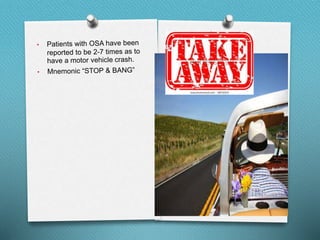
  • #34 Patients with OSA have been reported to be 2-7 times as likely as control individuals to have a motor vehicle crash
  • #35 portable monitors to assess apnea-hypopnea index (AHI) are recommended. If a portable monitor reveals a problem, a full study in the sleep lab may be warranted
  • #36 The Canadian Thoracic Society guidelines for the diagnosis of OSA specifies the presence of an AHI ≥5 on polysomnography, and either of (1) daytime sleepiness OR (2) at least 2 other symptoms of OSA (e.g. choking or gasping during sleep, recurrent awakenings, unrefreshing sleep, daytime fatigue).
  • #37 American academy of sleep medicine. APNEA- no airflow for at least 10 secs. The STOP-Bang Questionnaire (SBQ) has a high sensitivity and specificity to identify OSA. A SBQ of < 2 predicts a very low likelihood of OSA. A SBQ of 5-8 indicates a high probability of moderate-severe OSA.Other screening questionnaires include the Berlin Questionnaire the American Society of Anesthesiologists Checklist,
  • #41 http://www.michiganrc.org/sites/michiganrc.org/files/u1258/SKR%20Boston%20IARS%20-%20Ramachandran.pdf
  • #42 CPAP Use for more than 6 hours per night was associated with a significantly decreased MORTALITY.