Constipation
Prof. Mazen Naga
Faculty of Medicine, Cairo
University
Egypt
Definition
Diagnostic criteria
Types
Diagnosis & evaluation
Approach
Role of Endoscopy
Management
Why constipation?!
• Commonly encountered in clinical practice
• Negative impact on quality of life
• Health burden
• Not fully understood
• Mostly, a chronic condition
• Still new in understanding & management
Definition
Definition
Many symptoms encountered
• Hard stools
• Excessive straining
• Abdominal bloating
• Feeling of incomplete evacuation
• Infrequent bowel movements (<3 DPW)
• Use of digital maneuvers
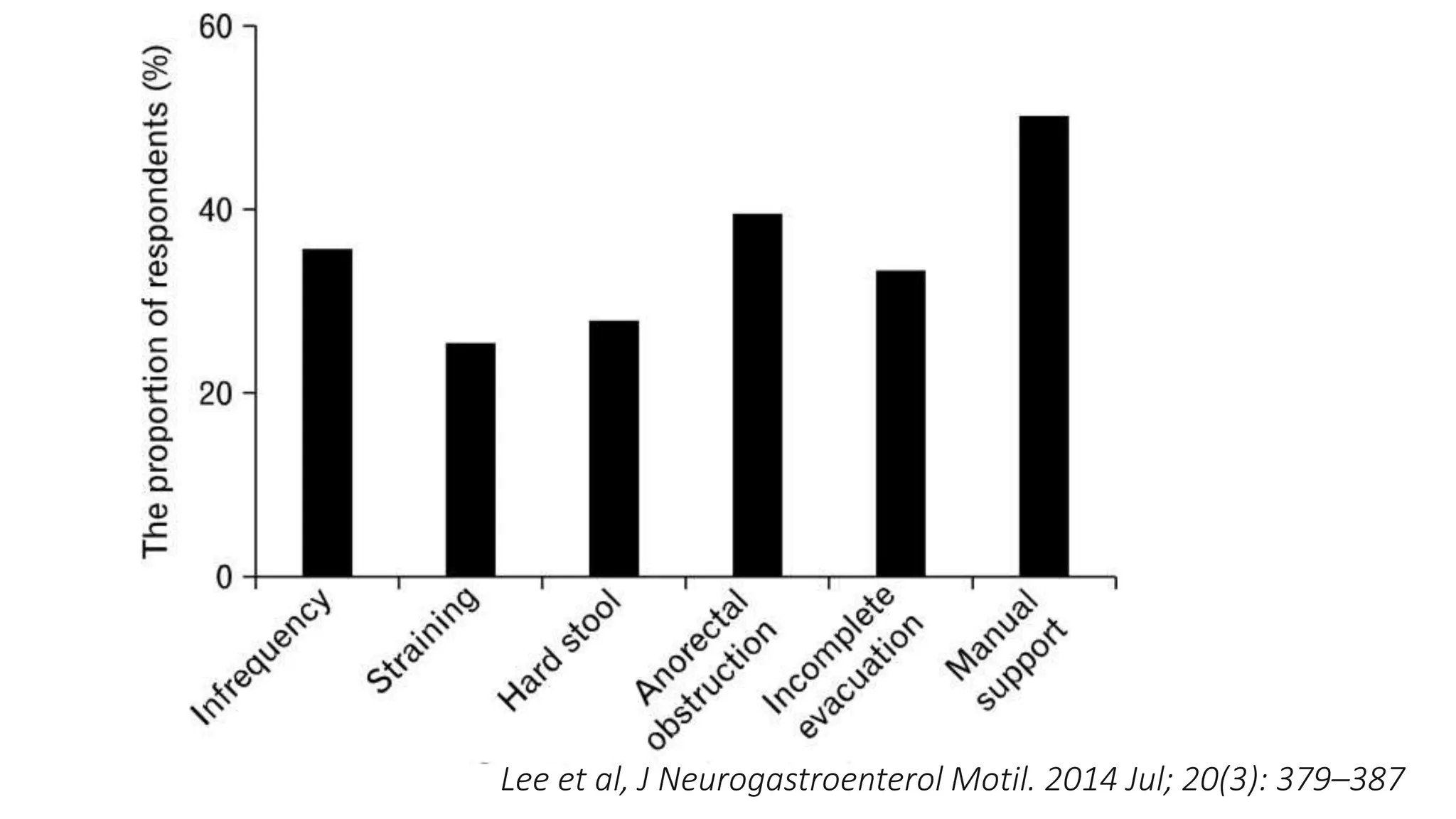
Lee et al, J Neurogastroenterol Motil. 2014 Jul; 20(3): 379–387
Definition
Diagnostic criteria
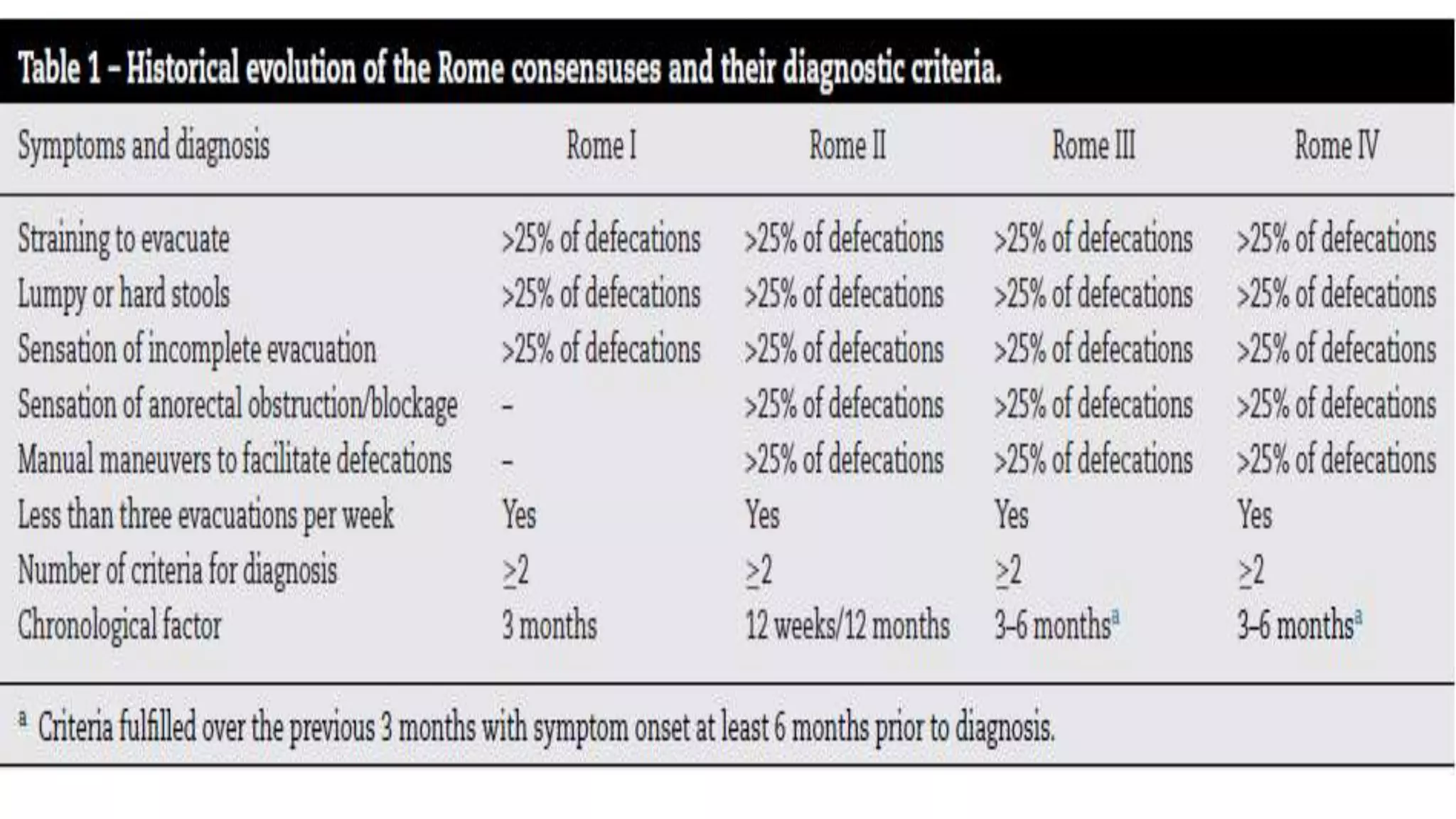
Rome III diagnostic criteria of functional
constipation
Must include at least 2 of the following:
+ Loose stools rarely without laxatives
+ Insufficient criteria for IBS
*Criteria for 3 months, onset in 6 months
ACG Task Force Diagnostic criteria of Chronic
idiopathic constipation (CIC)
Unsatisfactory defecation
characterized by
-Infrequent stools
-Difficult stool passage
-or Both
Difficult stool passage includes:
-Straining
-Sense of difficulty passing stool
-Incomplete evacuation
-Hard / lumpy stools
-Prolonged time to stool
-Need for manual maneuvers
The presence of these symptoms for at least 3 months
Definition
Diagnostic criteria
Types
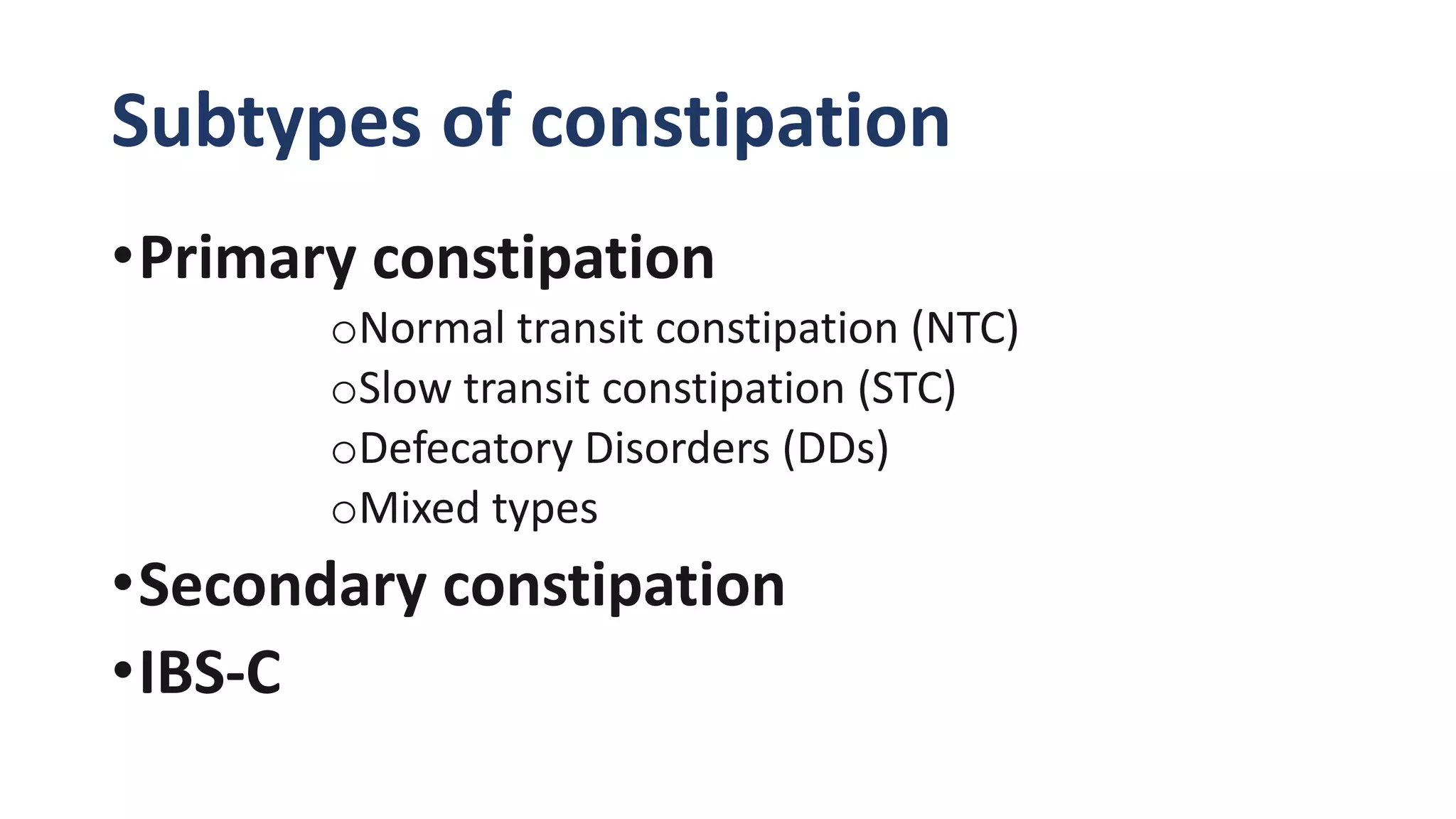
Subtypes of constipation
•Primary constipation
oNormal transit constipation (NTC)
oSlow transit constipation (STC)
oDefecatory Disorders (DDs)
oMixed types
•Secondary constipation
•IBS-C
Primary constipation
oNormal transit constipation (NTC)
oSlow transit constipation (STC)
oDefecatory Disorders (DDs)
oMixed types
Normal transit constipation (NTC)
Most common type
Stool passes through the colon at a normal rate
Stool frequency is often within the normal range
Patients find it difficult to evacuate their bowels
Patients in this category often overlap with IBS with
constipation (IBS-C)
The usually have psychological distress
Slow transit constipation (STC)
Young females
Infrequent bowel movements (typically < 1 /week)
Decreased urgency
Abdominal bloating & palpable stool in the sigmoid colon
Dysfunction of colonic smooth muscle activity, colonic reflexes,
neurotransmitters, or colonic pacemaker cell activity
Defecatory Disorders (DDs)
Significant straining
Spending long time on the toilet daily
Manual rectal evacuation using a finger, position changes or
enema
Laxatives are highly ineffective
Many patients had the disorder since childhood, suggesting
impaired learning of defecation
Defecatory Disorders (DDs)
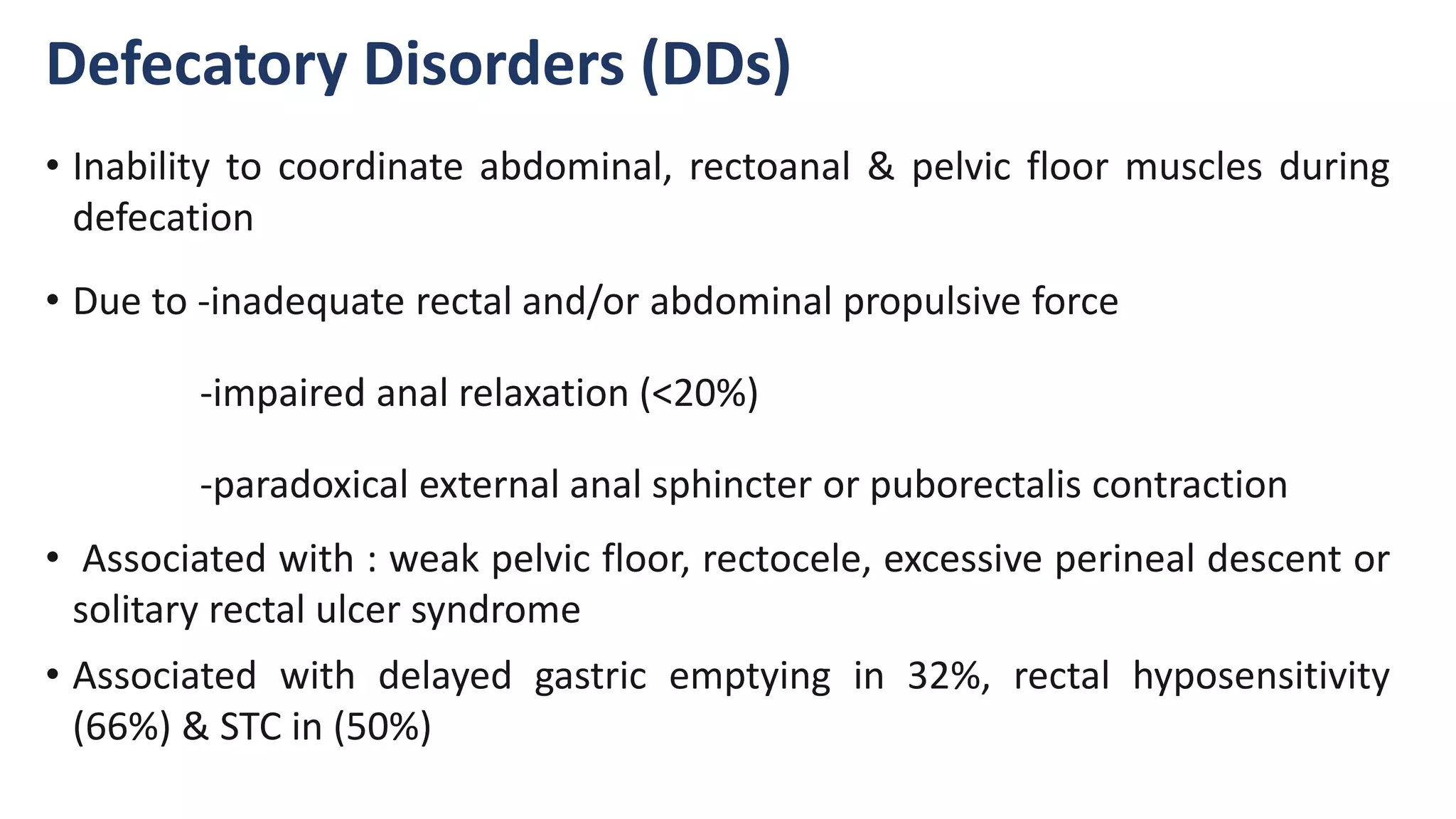
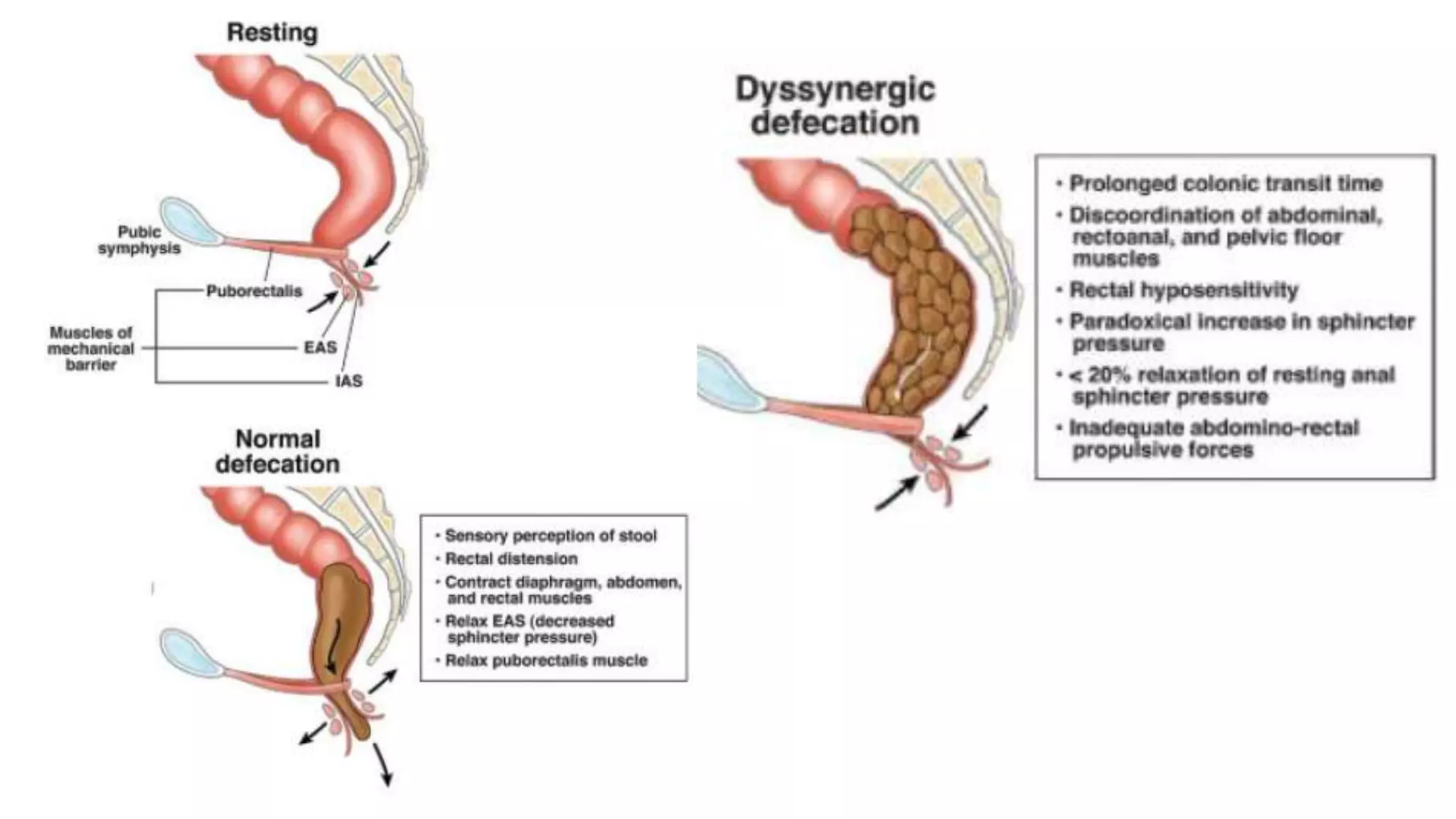
• Inability to coordinate abdominal, rectoanal & pelvic floor muscles during
defecation
• Due to -inadequate rectal and/or abdominal propulsive force
-impaired anal relaxation (<20%)
-paradoxical external anal sphincter or puborectalis contraction
• Associated with : weak pelvic floor, rectocele, excessive perineal descent or
solitary rectal ulcer syndrome
• Associated with delayed gastric emptying in 32%, rectal hyposensitivity
(66%) & STC in (50%)
Secondary Constipation
Medications
-Analgesics:
oNSAIDs
oOpioids
-Antihypertensive agents:
oDiuretics
oCalcium channel blockers
-Antidepressants
-Antihistamines
-Antiparkinson agents
-Metallic ions
Secondary Constipation
Metabolic disorders
• Diabetes
• Hypothyroidism
• Hyperparathyroidism
• Metabolic and electrolytes
imbalance Hypocalcaemia
• Hypokalaemia
• Hypomagnesaemia
Neuropathy
• Autonomic neuropathy
• Hirchsprung disease
• Amyloidosis
• CNS lesion
Secondary Constipation
Idiopathic and other associated conditions
• Parkinson disease
• Paraneoplastic syndromes
• Eating disorders
• Diet: low fibre, low intake, high protein
• Colonic obstructions Mass lesions
• Pseudo-obstruction
IBS-C
IBS-C
Rome III criteria stated that individuals with chronic
constipation should do not fulfill criteria for IBS
In practice, a clear separation between CIC and IBS-C with
constipation may be challenging
Studies have shown considerable overlap between them
entities & significant tendency for patients to migrate
between these diagnoses over time
Rome III criteria of IBS
Recurrent abdominal pain or discomfort at least 3 days / month in
the past 3 months associated with > 2 of the following:
- Improvement with defecation
- Onset associated with a change in frequency of stool
- Onset associated with a change in form (appearance) of stool
These criteria should be fulfilled for the past 3 months with
symptom onset at least 6 months before diagnosis
Definition
Diagnostic criteria
Types
Diagnosis & evaluation
Diagnosis & evaluation
1st step >>> Detailed History
- Alarming features : Bleeding
Weight loss
New onset > 50yr
Anaemia
Obstructive symptoms
Detailed History
• OCD
• Frequency
• Straining or not?
• Time spent in the toilet ?
• Stools shape & consistency ?
• Postural or digital manoeuvres to assist defecation ?
• complete or incomplete evacuation ?
• Use of laxatives ? Response?
• Exclude secondary causes
2nd step >>> Rectal Examination
• Inspection >> hemorrhoids,
fissures, scars or skin
excoriation
• Digital Examination>> stricture,
spasm, tenderness, mass or
stool
• Lack of awareness of stool
can indicate rectal
hyposensitivity
Ask the patient to push
Normally >>>
o relaxation of the external anal sphincter
o relaxation of puborectalis
o perineal descent
o tightening of abdominal muscles
Dyssynergia >> one or more of these responses are absent
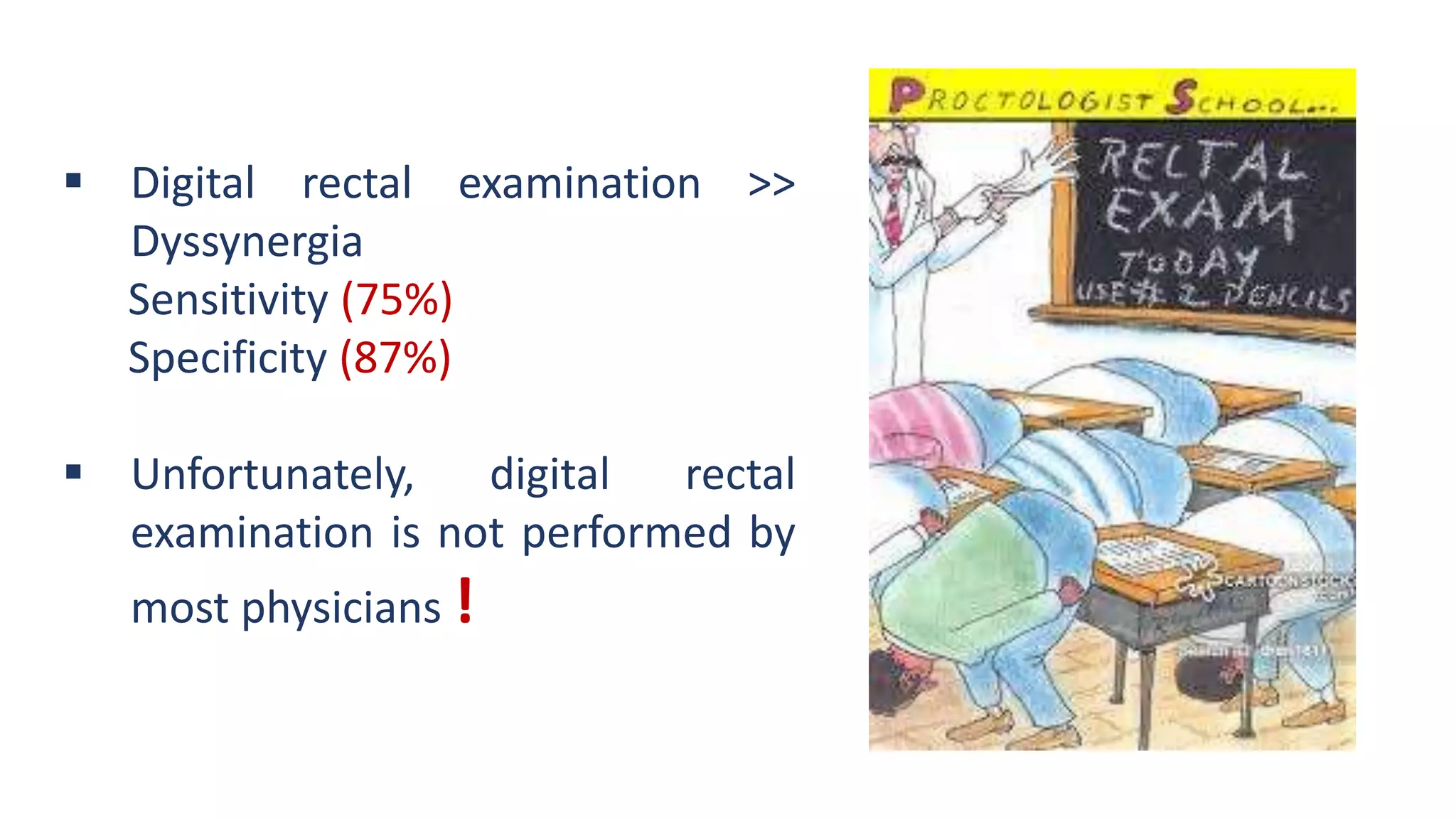
 Digital rectal examination >>
Dyssynergia
Sensitivity (75%)
Specificity (87%)
 Unfortunately, digital rectal
examination is not performed by
most physicians !
7- Day Stool Diary
• Number of bowel movements per day
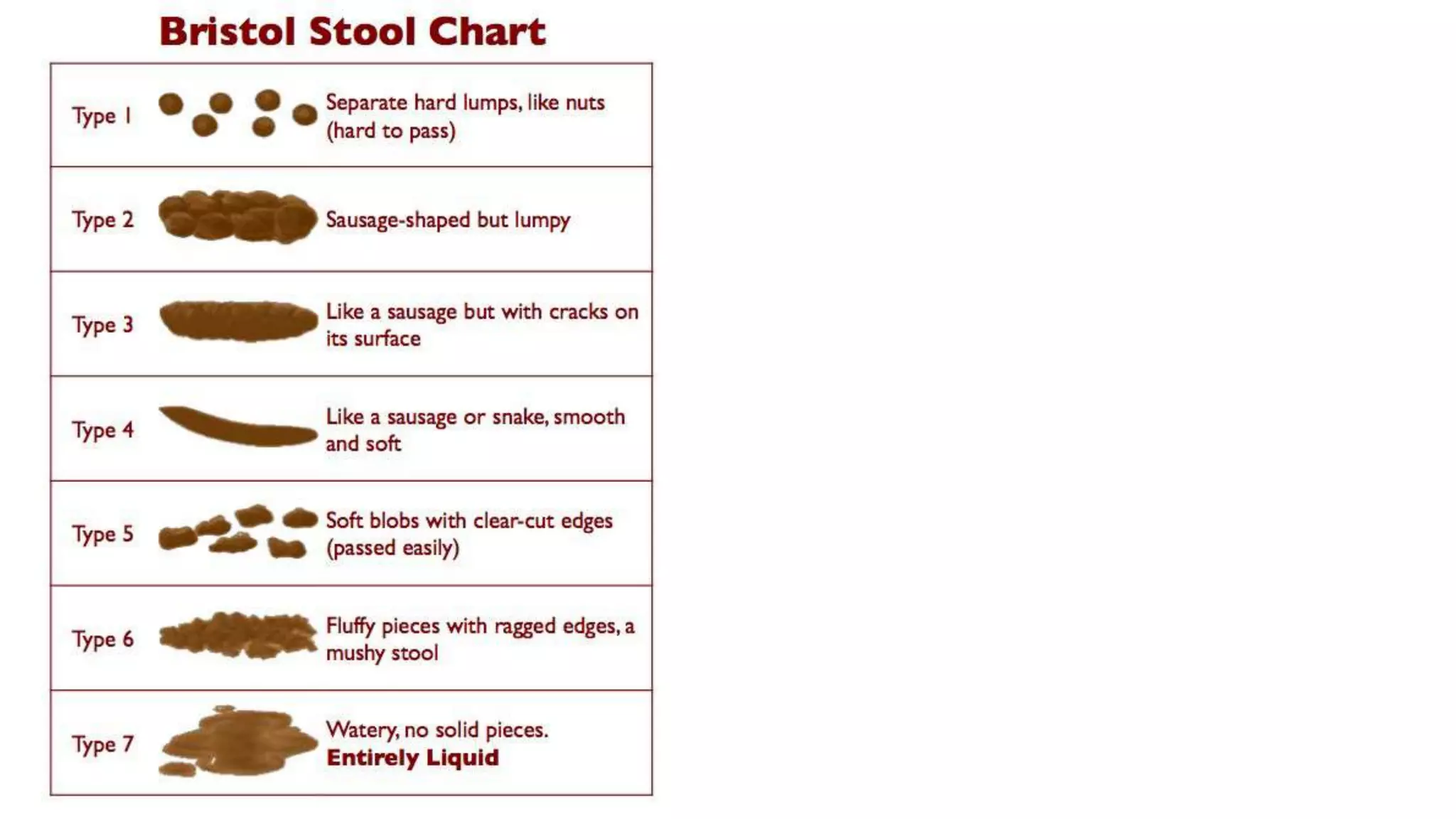
• Stool consistency (Bristol stool form type 1–7)
• Level of straining, use of digital maneuvers
• Feelings of incomplete evacuation
• Presence of pain and bloating
Predicts colonic transit time and therapeutic responsiveness
Törnblom H et al Am J Gastroenterol. 2012 May;107(5):754-60
Diagnostic colonic and anorectal tests
• Anorectal manometry
• Colonic transit assessment
• Balloon expulsion test
• Defecography and MR defecography
• Wireless motility capsule test
• Colonic manometry
Anorectal manometry
Assess >>resting & squeeze sphincter tone
rectoanal reflexes
rectal sensation
pressure changes during attempted defecation
Defecation >>intrarectal pressure increases (≥40 mmHg) &
external anal sphincter pressure decreases
Dyssynergia >> this response is impaired or uncoordinated
Type I: adequate rectal push effort with paradoxical anal sphincter
contraction
Type II: inadequate rectal push effort with paradoxical anal sphincter
contraction
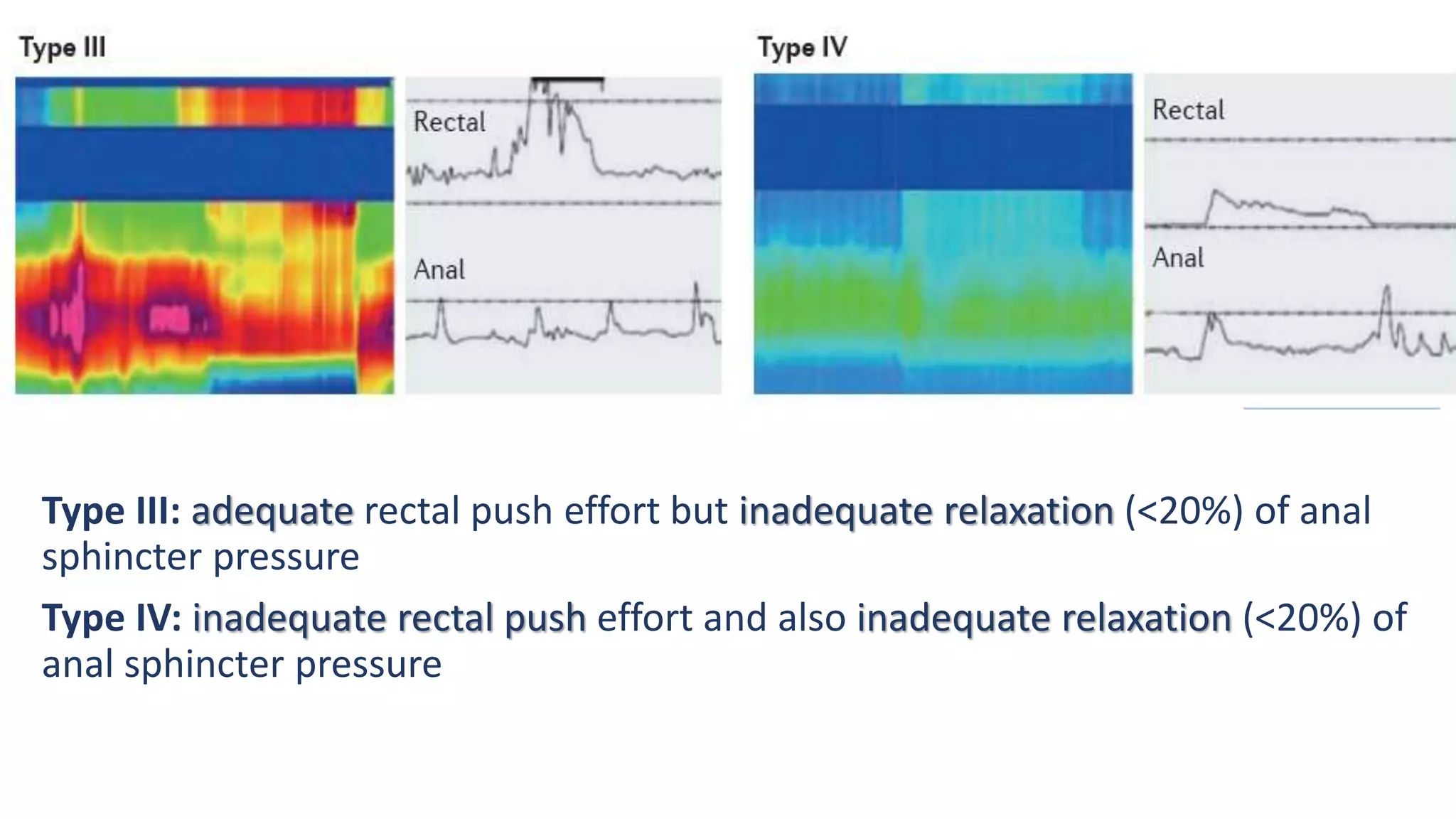
Type III: adequate rectal push effort but inadequate relaxation (<20%) of anal
sphincter pressure
Type IV: inadequate rectal push effort and also inadequate relaxation (<20%) of
anal sphincter pressure
Colonic manometry
Assess>> resting colonic motility & pressure changes after
provocative stimulations such as meals or drugs
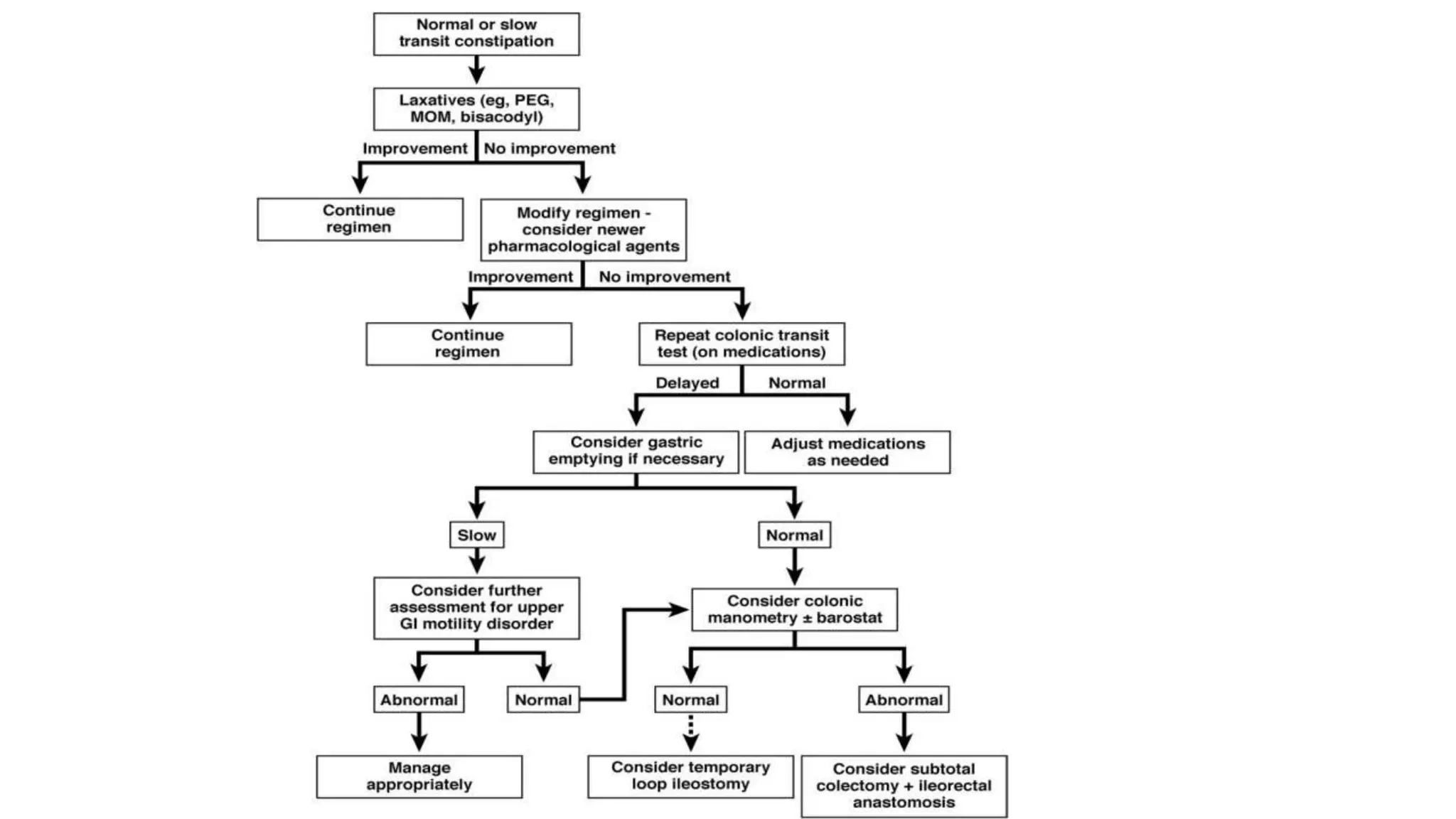
Slow-transit constipation who has failed to respond to
medical therapy
Multisensor solid state probe and ambulatory recorder or
with a stationary water perfusion system for 8 h
Colonic manometry
Selection of patients with STC for surgery
-Studies showed it helped to diagnose patients with colonic neuropathy
-Only 15% of these patients with colonic neuropathy responded to
medical or behavioral therapy >>> better surgical outcome
Selection of patients with STC who can respond to medical TT
- 64% of patients with normal colonic motility and with colonic myopathy
responded to aggressive medical treatment, including biofeedback
therapy
Colonic transit assessment
-Radio-opaque marker test
-Ingest one capsule 24 radio-opaque
markers on day 0
-120 h later (on day 5) a radiograph of
the abdomen is taken
-A colonic transit study is considered
abnormal if more than five (>20%)
markers are retained in the colon
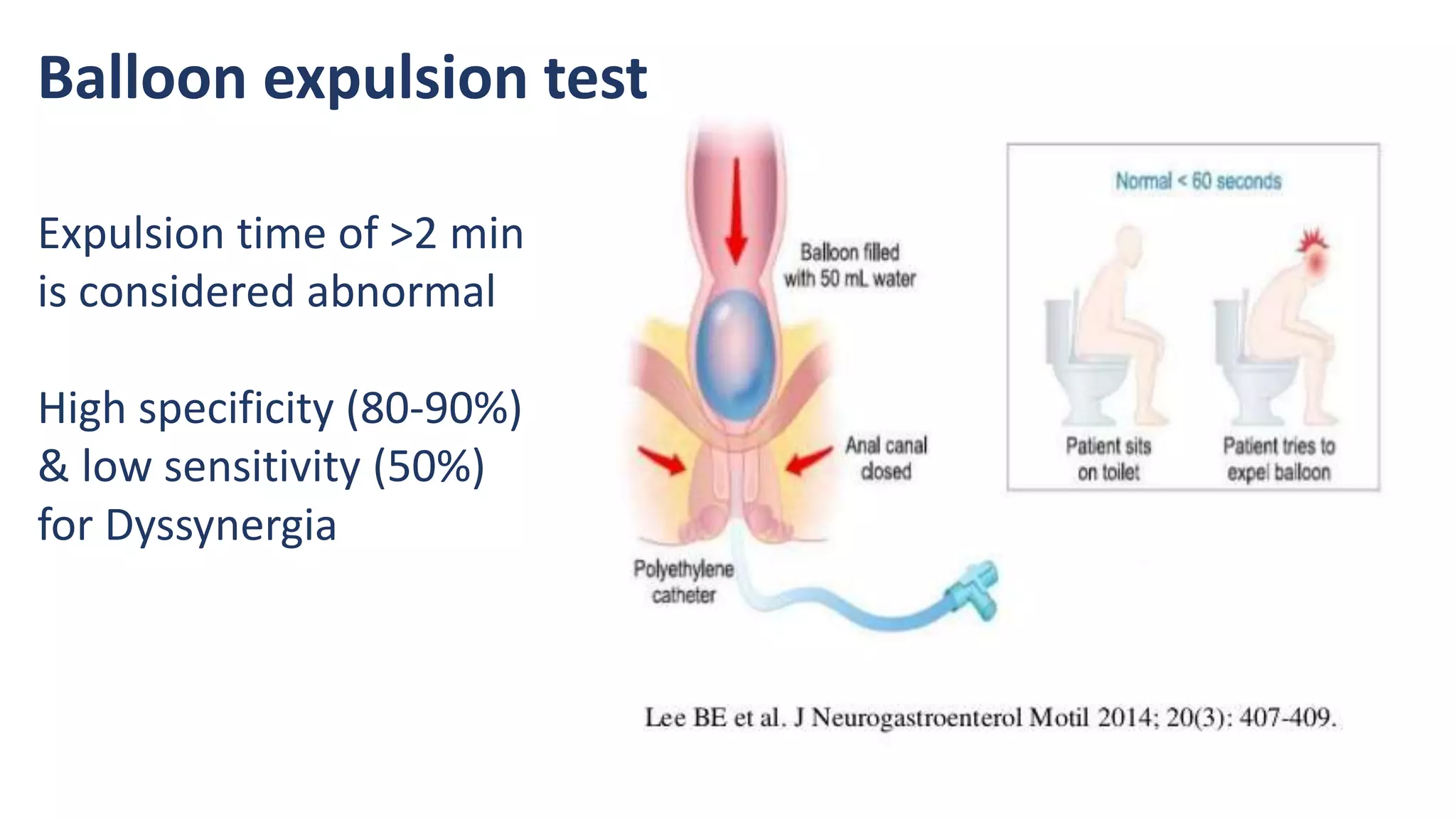
Balloon expulsion test
Expulsion time of >2 min
is considered abnormal
High specificity (80-90%)
& low sensitivity (50%)
for Dyssynergia
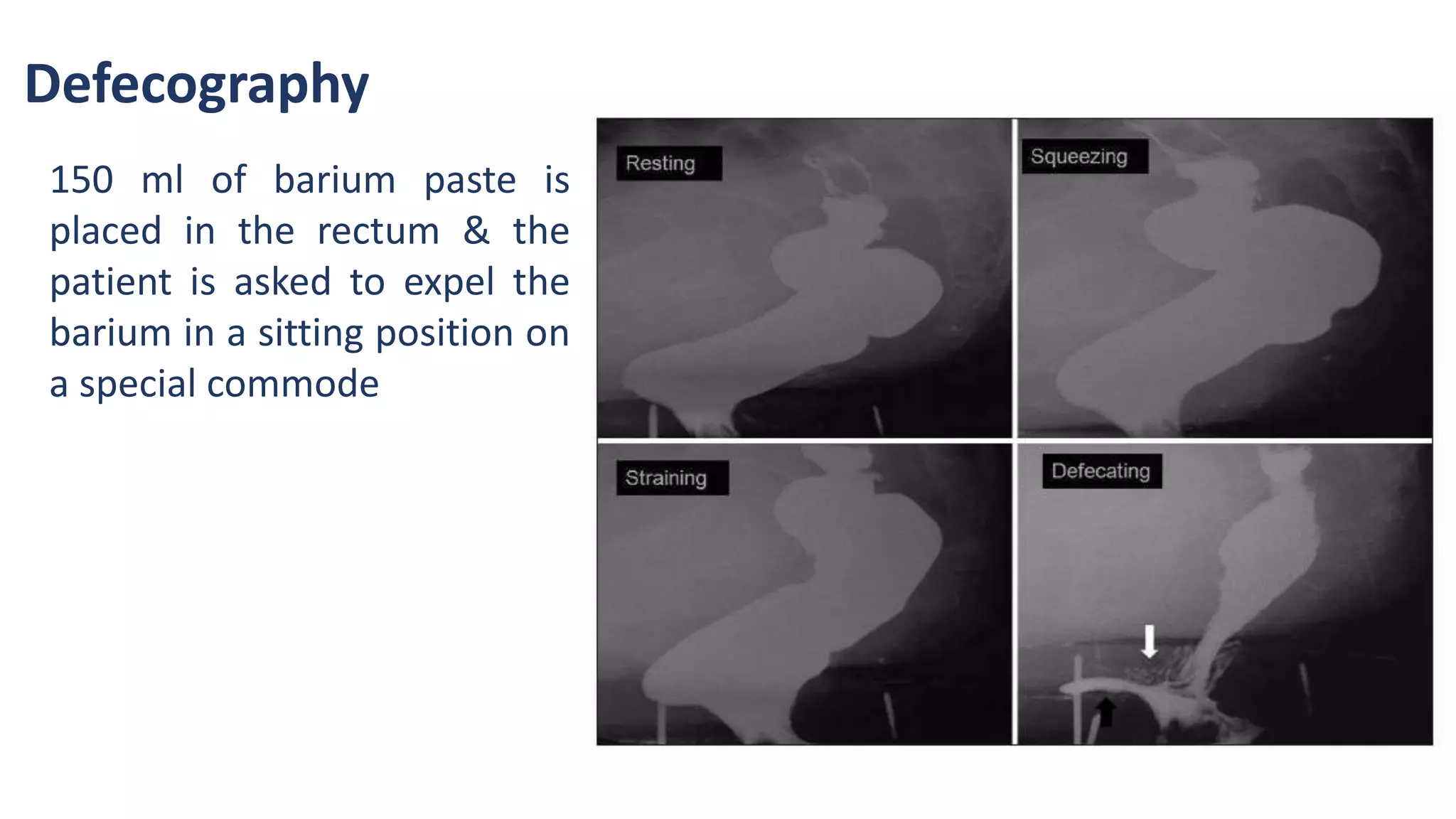
Defecography
150 ml of barium paste is
placed in the rectum & the
patient is asked to expel the
barium in a sitting position on
a special commode
Pros:
• Provides useful information about anatomical changes such as
rectocele, rectal prolapse and intussusception
• Dynamic changes such as descending perineum syndrome &
dyssynergic defecation
Cons:
• Radiation
• Poor agreement exists between observers
• Patients feel embarrassed during the test
MR Defecography
• Pros
-No radiation exposure
-More precise
-Reproducible measurements
-Excellent details of all pelvic floor compartments, muscles,
soft tissue & supporting structures
-When performed in the open system the patient is seated
(more physiological)
• Cons
-More expensive
-When performed in a closed setting, the patient is lying
position
Rest
Straining
Squeeze
Defecation
Wireless motility capsule test (WMC)
• Patients ingests a
wireless capsule that
is detected in stools
within 24-48 hrs
• Measures pH,
temperature &
pressure
Wireless motility capsule test (WMC)
• FDA approved
• Recommended by the American and European Neuro-
gastroenterology and Motility Societies
• No radiation exposure
• Assesses regional (gastric, small bowel and colonic) & also
whole-gut transit time
• Normal colonic transit time <59 h
• Whole gut transit time is <73 h
Definition
Diagnostic criteria
Types
Diagnosis & evaluation
Approach
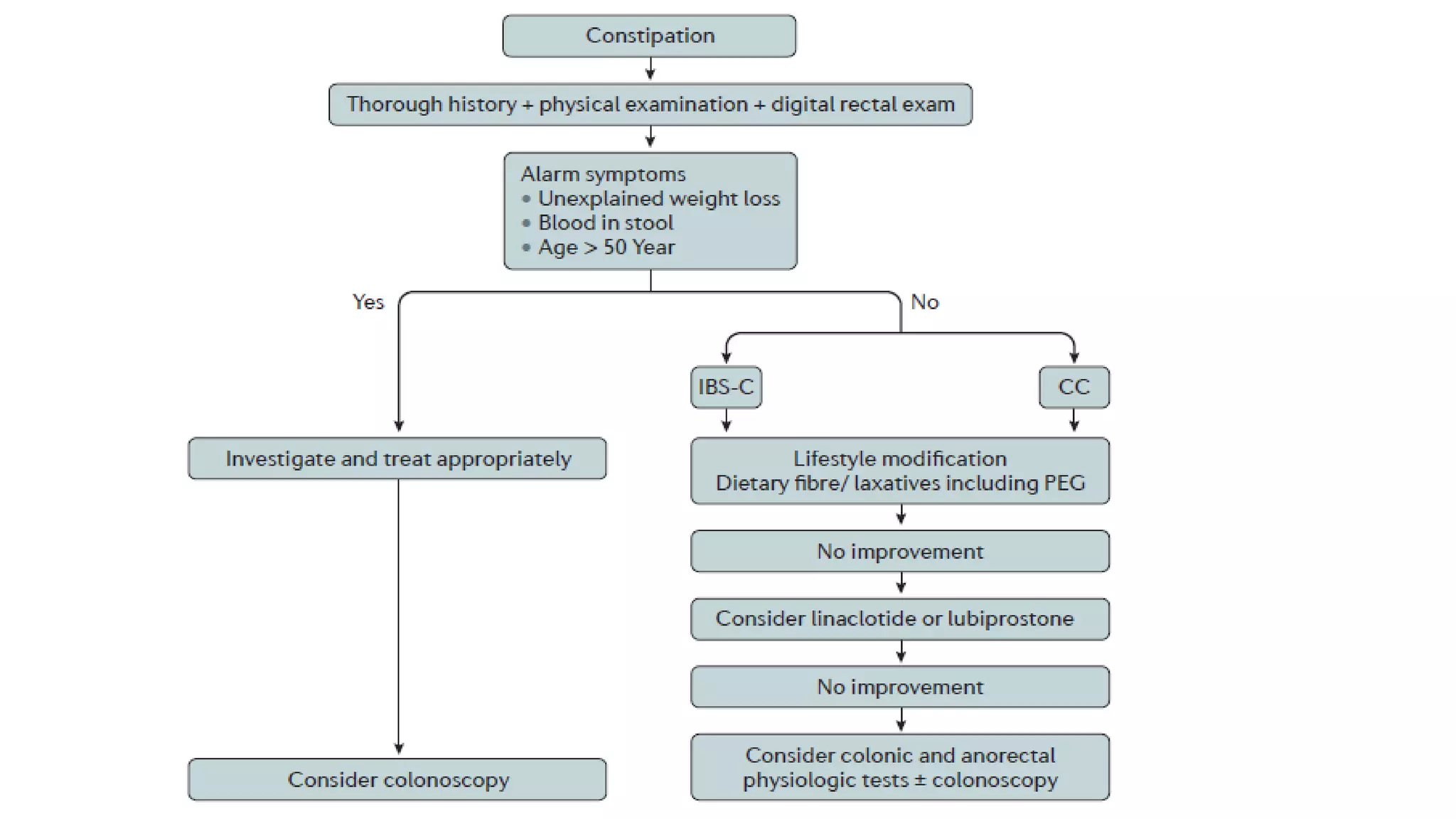
AGA Medical Position Statement on Constipation
Alarming features >>
Colonoscopy
Exclude 2nd causes
Definition
Diagnostic criteria
Types
Diagnosis & evaluation
Approach
Role of Endoscopy
1. Alarming features
2. To exclude obstruction from cancer, stricture, and extrinsic
compression
3. Prior to surgery for constipation
4. In younger patients, a flexible sigmoidoscopy may be
sufficient to exclude distal disease
5. Suspected Hirschsprung’s disease requires deep biopsy
6. Patients aged > 50 years who have not had prior colorectal
cancer screening should undergo colonoscopy
7. Percutaneous endoscopic cecostomy or colostomy in
children with severe refractory constipation e.g neurogenic
bowel
8. In adults with acute colonic pseudo-obstruction and
neurogenic bowel, percutaneous endoscopic cecostomy
may be effective when conservative treatment fails
Definition
Diagnostic criteria
Types
Diagnosis & evaluation
Approach
Role of Endoscopy
Management
Patient education
Life style modification
8
>25
30
Adverse eventsActionDrugsLaxatives
Flatulence, bloating, abdominal
distension; rarely causing
mechanical obstruction
Retaining water in stool,
increasing stool bulk and
improving consistency
Psyllium, calcium
polycarbophil,
methylcellulose,
bran
Bulk (fibre)
laxatives
Intestinal cramping; irritation
of throat (liquid formulation)
Promoting luminal water
binding by detergent-like
action,increasing stool bulk
Docusate sodium,
docusate calcium
Stool
softeners
Abdominal discomfort, rarely
electrolytes disturbance,
melanosis coli
Increasing intestinal peristalsis
by acting on myenteric nerve
plexus, decreasing large
intestinal water absorption
Senna, aloe, bisacodyl,
sodium picosulfate
Stimulant
laxatives
Bloating, flatulence, abdominal
cramping; in rare instances,
electrolytes disturbances
Osmotic water bindingPEG, lactulose, sorbitol,
milk
of magnesia,
magnesium citrate
Osmotic
Laxatives
Flatulence, bloatingStool bulking and osmotic
action
Dried plumsMixed
laxatives
New Drugs
1. Colonic Secretagogues
Lubiprostone
Linaclotide
Plecanatide
Lubiprostone
• Action: Selective activation of intestinal epithelial
chloride channel 2 >> increasing chloride secretion
Lubiprostone
•Approved for CIC & IBS-C
• Dose : 24 μg twice daily; orally
• Not studied in hepatic & renal patients
• Avoided in pregnancy & lactation
• Adverse events : nausea, diarrhea &
headache ?dyspnea
Linaclotide
• Guanylate cyclase C activators
• Activation of guanylate
cyclase C receptor on
enterocytes, increasing cGMP,
activating CFTR, increasing
luminal chloride and/or
bicarbonate secretion;
ameliorating visceral
hypersensitivity
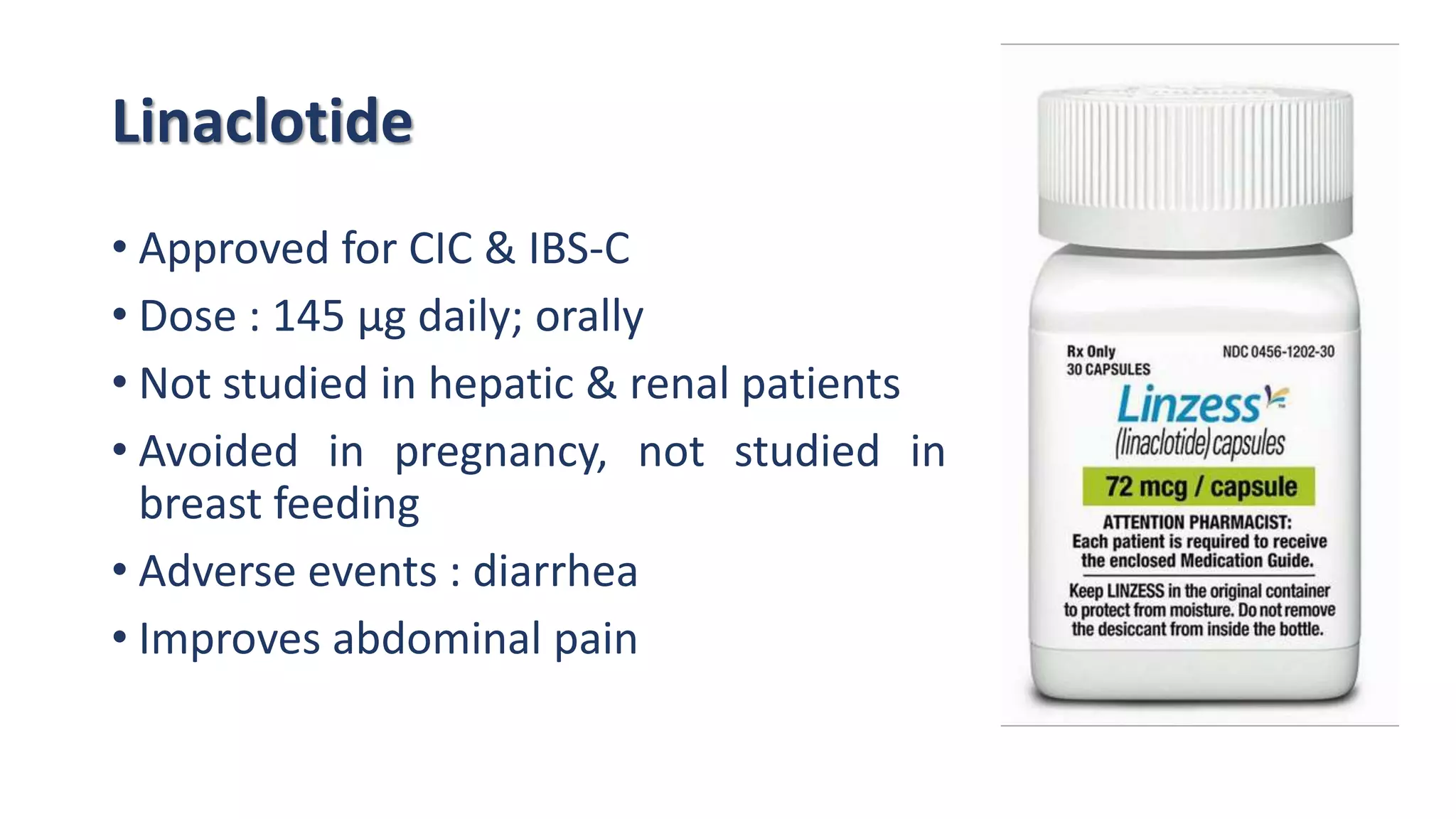
Linaclotide
• Approved for CIC & IBS-C
• Dose : 145 μg daily; orally
• Not studied in hepatic & renal patients
• Avoided in pregnancy, not studied in
breast feeding
• Adverse events : diarrhea
• Improves abdominal pain
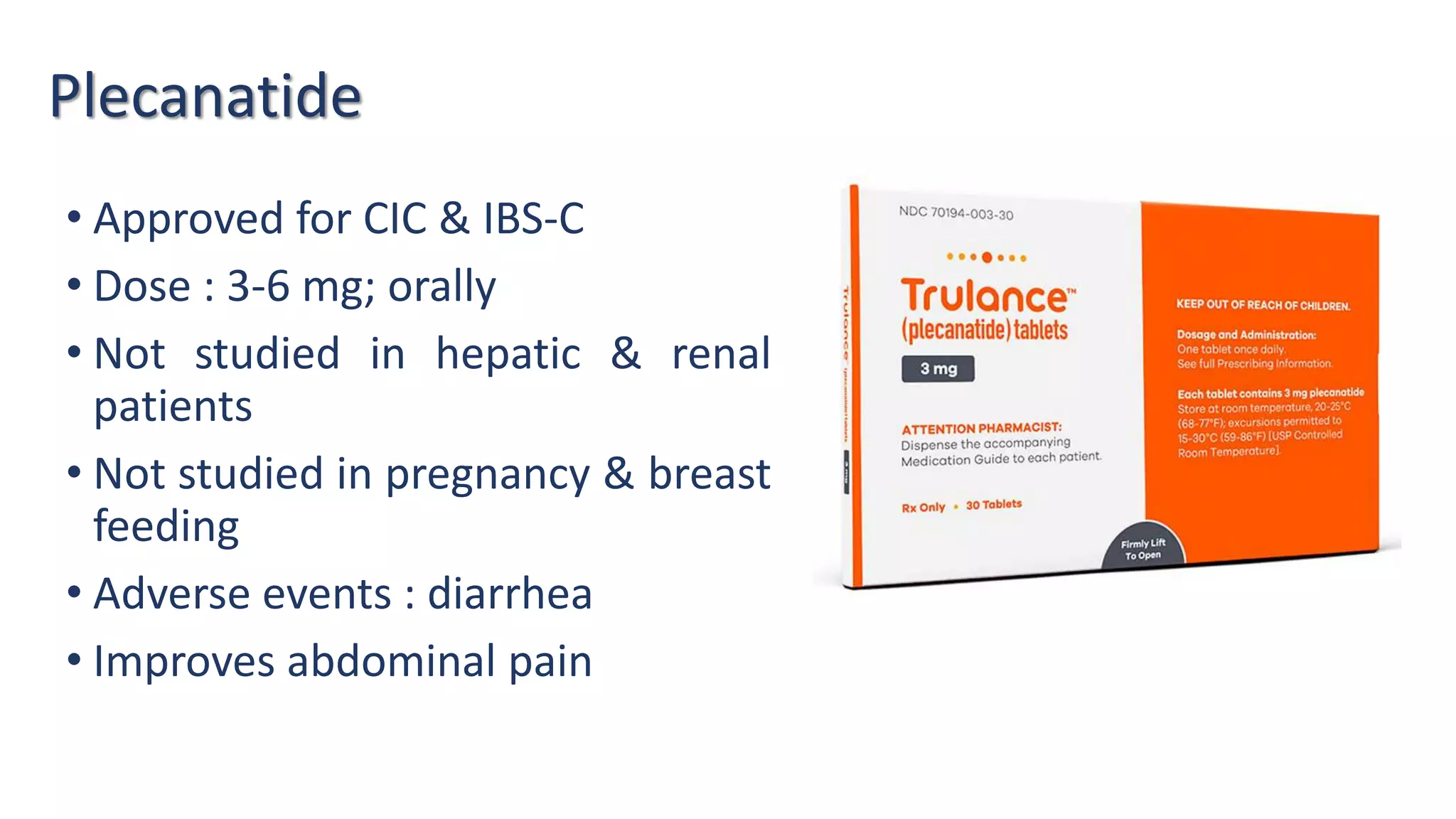
Plecanatide
• Uroguanylin analogue, dependent. Activation of guanylate cyclase C
receptor on enterocytes, increasing cGMP, activating CFTR, increasing
luminal chloride and/or bicarbonate secretion; ameliorating visceral
hypersensitivity
Plecanatide
• Approved for CIC & IBS-C
• Dose : 3-6 mg; orally
• Not studied in hepatic & renal
patients
• Not studied in pregnancy & breast
feeding
• Adverse events : diarrhea
• Improves abdominal pain
New Drugs
2. Opioid receptor antagonists
Methylnaltrexone
Alvimopan
Naloxegol
• Enteric opioid receptor antagonism, with minimal absorption and not
crossing blood–brain barrier
• All approved in Opiate-induced constipation
• Methylnaltrexone & Alvimopan used in postoperative ileus
•
NaloxegolAlvimopanMethylnaltrexone
12.5–25 mg; orally6–12 mg twice daily, 30–
300 mins prior to surgery
then twice daily for 7
days
0.15–0.3 mg/ kg) every
other day, SC
N/AAvoidHalf dose in severe renal
and hepatic
Abdominal pain,
diarrhoea, nausea,
vomiting, headache,
flatulance
Nausea, vomitingAbdominal cramping,
flatulence, nausea
New Drugs
3. Serotonergic agonists
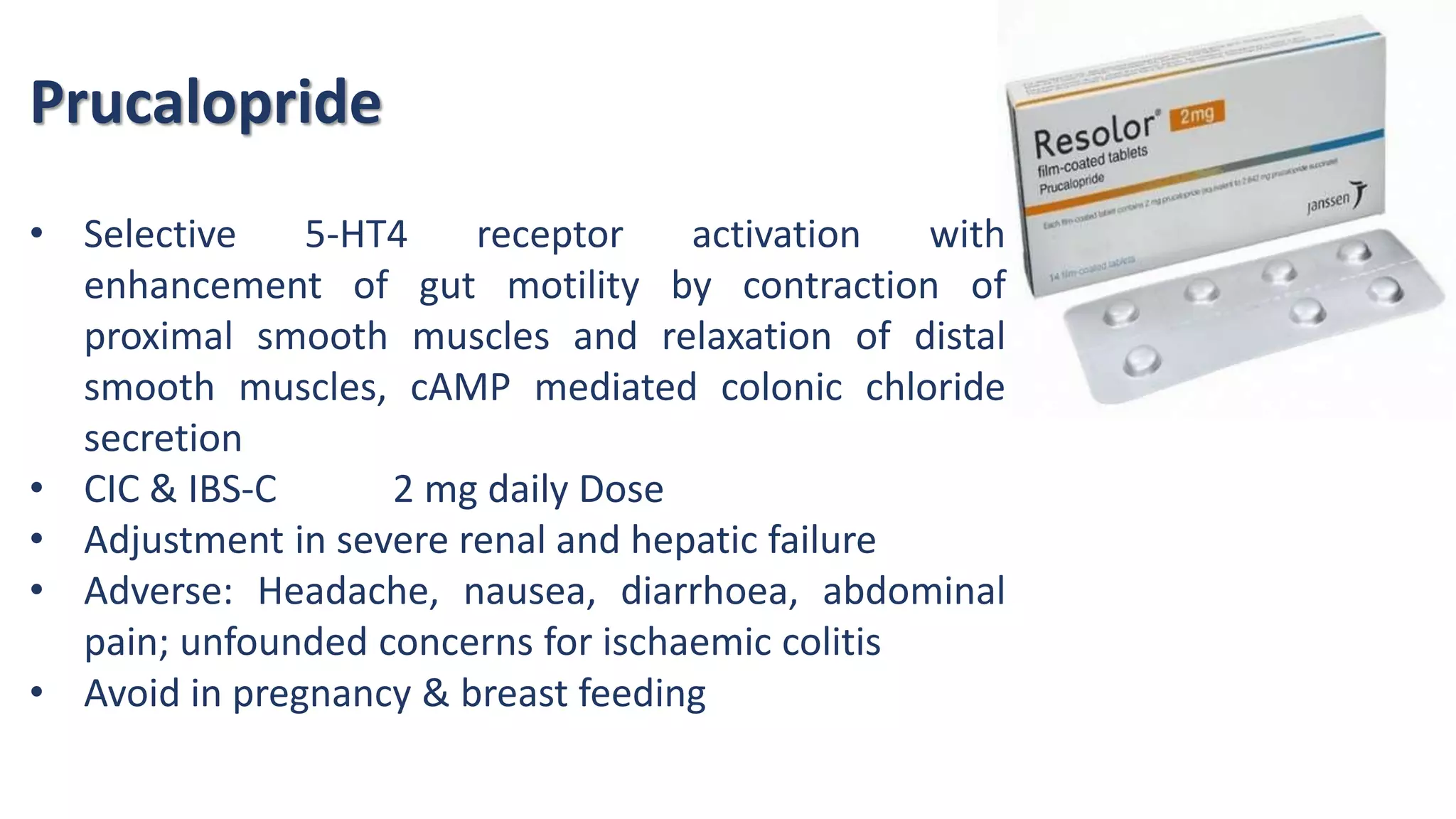
Prucalopride
Prucalopride
• Selective 5-HT4 receptor activation with
enhancement of gut motility by contraction of
proximal smooth muscles and relaxation of distal
smooth muscles, cAMP mediated colonic chloride
secretion
• CIC & IBS-C 2 mg daily Dose
• Adjustment in severe renal and hepatic failure
• Adverse: Headache, nausea, diarrhoea, abdominal
pain; unfounded concerns for ischaemic colitis
• Avoid in pregnancy & breast feeding
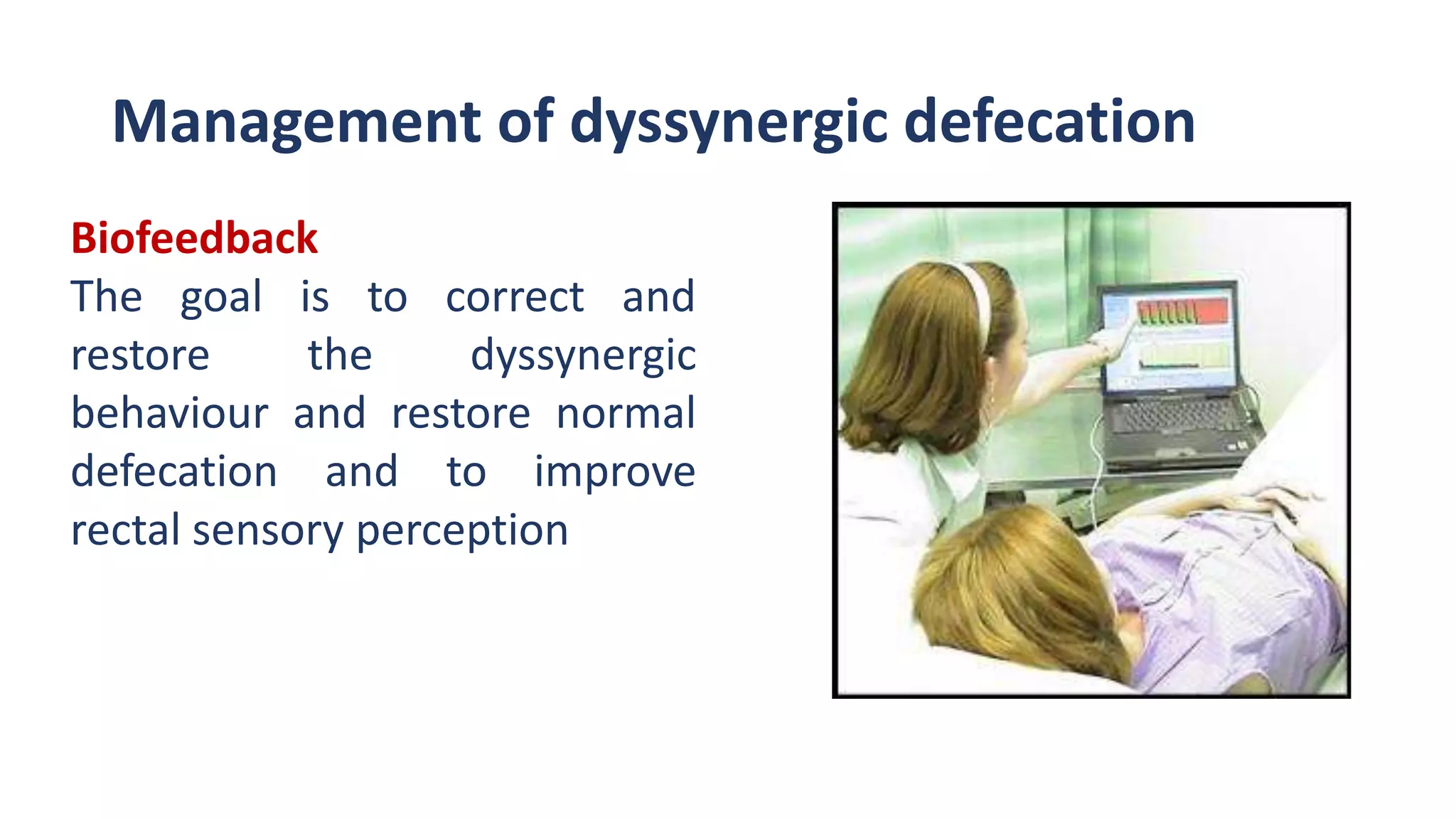
Management of dyssynergic defecation
Biofeedback
The goal is to correct and
restore the dyssynergic
behaviour and restore normal
defecation and to improve
rectal sensory perception
Management of dyssynergic defecation
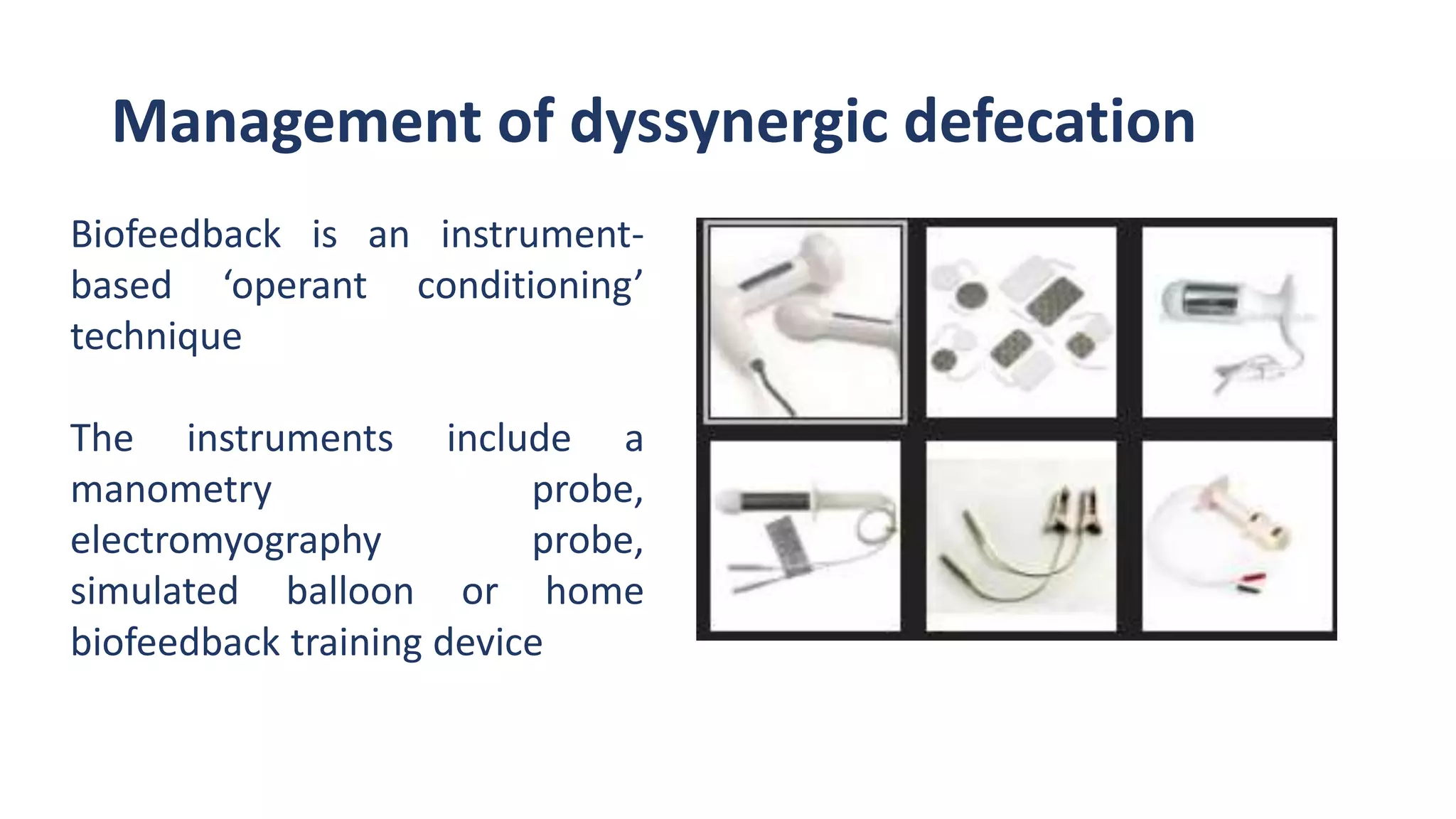
Biofeedback is an instrument-
based ‘operant conditioning’
technique
The instruments include a
manometry probe,
electromyography probe,
simulated balloon or home
biofeedback training device
Management of dyssynergic defecation
• Typically, the device is placed
in the rectum
• Diaphragmatic muscle
training with simulated
defecation, manometry-
guided pelvic floor training &
simulated defecation training
• The simulated defecation
training can be performed
with a water-filled balloon
Biofeedback therapy
• Few studies, proved efficacy for >2 years
• Sensory retraining might be required to improve bowel function in
patients with impaired rectal sensation
• The success of biofeedback therapy depends on both the patient’s
motivation & the skill of the therapist
• Grade A recommendation for the treatment of dyssynergic defecation
by the American Neurogastroenterology and Motility Society & the
European Society of Neurogastroenterology and Motility
Surgical options
- Colectomy
- Cecostomy
- Sacral nerve stimulation
Take home message
• Constipation is common, impairs quality of
life and consumes health-care resources
• Recognition of whether constipation is
primary or secondary is key for appropriate
management
• A detailed history &
physical examination
including digital rectal
examination is
important and can
identify an evacuation
disorder
Take home message
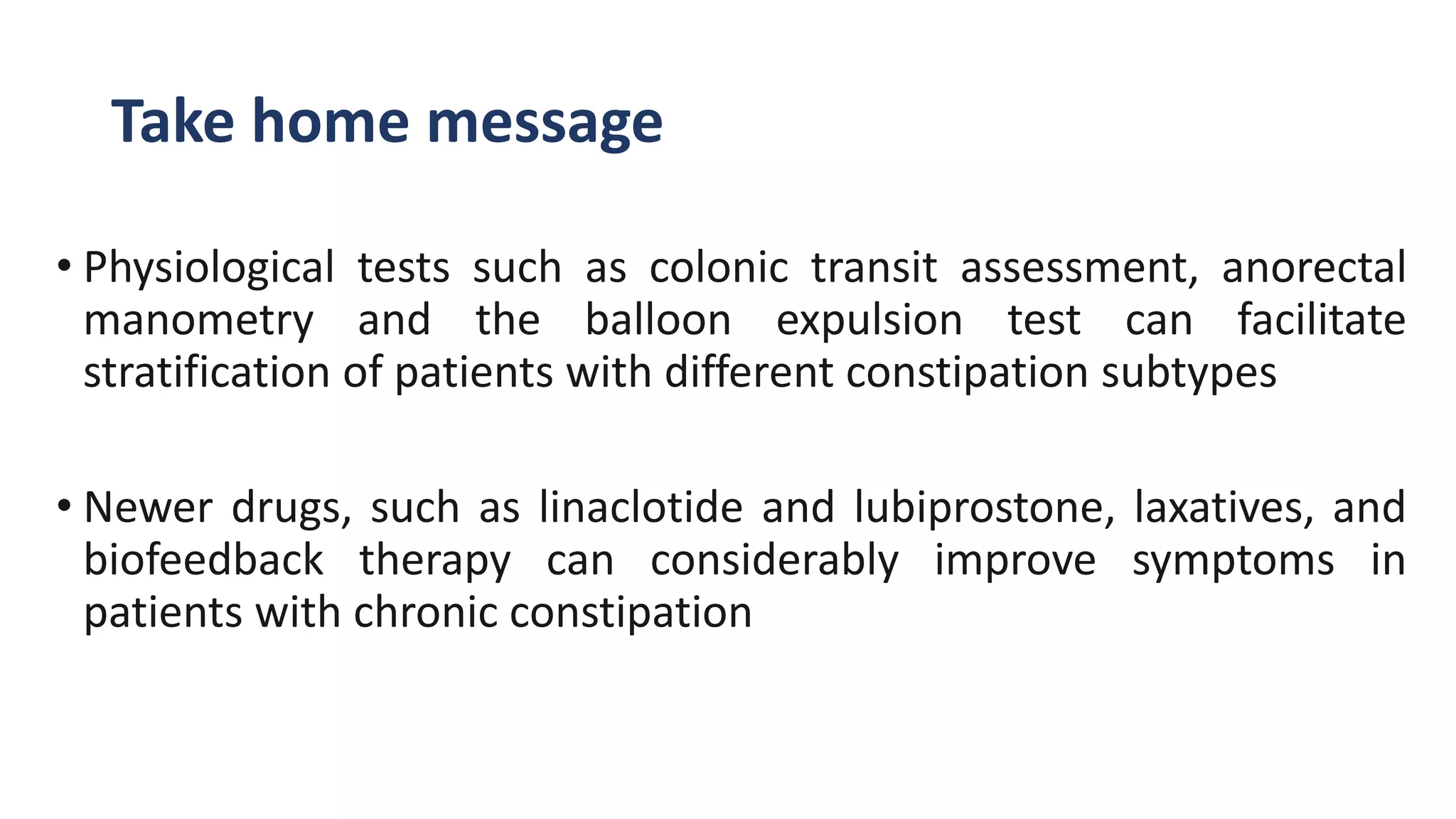
• Physiological tests such as colonic transit assessment, anorectal
manometry and the balloon expulsion test can facilitate
stratification of patients with different constipation subtypes
• Newer drugs, such as linaclotide and lubiprostone, laxatives, and
biofeedback therapy can considerably improve symptoms in
patients with chronic constipation
Modified Rome III diagnostic criteria
The criteria should be fulfilled for the past 3 months with symptom onset
at least 6 months before diagnosis
There are
insufficient criteria
for IBS
Must include > 2: (at least 25% of defecations)
• Straining
• Lumpy or hard stools
• Sensation of incomplete evacuation
• Sensation of anorectal obstruction and/or
blockage
• Manual maneuvers to facilitate
Loose stools are
rarely present
without use of
laxatives

Constipation

  • 1.
    Constipation Prof. Mazen Naga Facultyof Medicine, Cairo University Egypt
  • 2.
    Definition Diagnostic criteria Types Diagnosis &evaluation Approach Role of Endoscopy Management
  • 3.
    Why constipation?! • Commonlyencountered in clinical practice • Negative impact on quality of life • Health burden • Not fully understood • Mostly, a chronic condition • Still new in understanding & management
  • 4.
  • 5.
    Definition Many symptoms encountered •Hard stools • Excessive straining • Abdominal bloating • Feeling of incomplete evacuation • Infrequent bowel movements (<3 DPW) • Use of digital maneuvers
  • 6.
    Lee et al,J Neurogastroenterol Motil. 2014 Jul; 20(3): 379–387
  • 7.
  • 8.
    Rome III diagnosticcriteria of functional constipation Must include at least 2 of the following: + Loose stools rarely without laxatives + Insufficient criteria for IBS *Criteria for 3 months, onset in 6 months
  • 10.
    ACG Task ForceDiagnostic criteria of Chronic idiopathic constipation (CIC) Unsatisfactory defecation characterized by -Infrequent stools -Difficult stool passage -or Both Difficult stool passage includes: -Straining -Sense of difficulty passing stool -Incomplete evacuation -Hard / lumpy stools -Prolonged time to stool -Need for manual maneuvers The presence of these symptoms for at least 3 months
  • 11.
  • 12.
    Subtypes of constipation •Primaryconstipation oNormal transit constipation (NTC) oSlow transit constipation (STC) oDefecatory Disorders (DDs) oMixed types •Secondary constipation •IBS-C
  • 13.
    Primary constipation oNormal transitconstipation (NTC) oSlow transit constipation (STC) oDefecatory Disorders (DDs) oMixed types
  • 14.
    Normal transit constipation(NTC) Most common type Stool passes through the colon at a normal rate Stool frequency is often within the normal range Patients find it difficult to evacuate their bowels Patients in this category often overlap with IBS with constipation (IBS-C) The usually have psychological distress
  • 15.
    Slow transit constipation(STC) Young females Infrequent bowel movements (typically < 1 /week) Decreased urgency Abdominal bloating & palpable stool in the sigmoid colon Dysfunction of colonic smooth muscle activity, colonic reflexes, neurotransmitters, or colonic pacemaker cell activity
  • 16.
    Defecatory Disorders (DDs) Significantstraining Spending long time on the toilet daily Manual rectal evacuation using a finger, position changes or enema Laxatives are highly ineffective Many patients had the disorder since childhood, suggesting impaired learning of defecation
  • 17.
    Defecatory Disorders (DDs) •Inability to coordinate abdominal, rectoanal & pelvic floor muscles during defecation • Due to -inadequate rectal and/or abdominal propulsive force -impaired anal relaxation (<20%) -paradoxical external anal sphincter or puborectalis contraction • Associated with : weak pelvic floor, rectocele, excessive perineal descent or solitary rectal ulcer syndrome • Associated with delayed gastric emptying in 32%, rectal hyposensitivity (66%) & STC in (50%)
  • 19.
  • 20.
    Secondary Constipation Medications -Analgesics: oNSAIDs oOpioids -Antihypertensive agents: oDiuretics oCalciumchannel blockers -Antidepressants -Antihistamines -Antiparkinson agents -Metallic ions
  • 21.
    Secondary Constipation Metabolic disorders •Diabetes • Hypothyroidism • Hyperparathyroidism • Metabolic and electrolytes imbalance Hypocalcaemia • Hypokalaemia • Hypomagnesaemia Neuropathy • Autonomic neuropathy • Hirchsprung disease • Amyloidosis • CNS lesion
  • 22.
    Secondary Constipation Idiopathic andother associated conditions • Parkinson disease • Paraneoplastic syndromes • Eating disorders • Diet: low fibre, low intake, high protein • Colonic obstructions Mass lesions • Pseudo-obstruction
  • 23.
  • 24.
    IBS-C Rome III criteriastated that individuals with chronic constipation should do not fulfill criteria for IBS In practice, a clear separation between CIC and IBS-C with constipation may be challenging Studies have shown considerable overlap between them entities & significant tendency for patients to migrate between these diagnoses over time
  • 25.
    Rome III criteriaof IBS Recurrent abdominal pain or discomfort at least 3 days / month in the past 3 months associated with > 2 of the following: - Improvement with defecation - Onset associated with a change in frequency of stool - Onset associated with a change in form (appearance) of stool These criteria should be fulfilled for the past 3 months with symptom onset at least 6 months before diagnosis
  • 27.
  • 28.
    Diagnosis & evaluation 1ststep >>> Detailed History - Alarming features : Bleeding Weight loss New onset > 50yr Anaemia Obstructive symptoms
  • 29.
    Detailed History • OCD •Frequency • Straining or not? • Time spent in the toilet ? • Stools shape & consistency ? • Postural or digital manoeuvres to assist defecation ? • complete or incomplete evacuation ? • Use of laxatives ? Response? • Exclude secondary causes
  • 31.
    2nd step >>>Rectal Examination • Inspection >> hemorrhoids, fissures, scars or skin excoriation • Digital Examination>> stricture, spasm, tenderness, mass or stool • Lack of awareness of stool can indicate rectal hyposensitivity
  • 32.
    Ask the patientto push Normally >>> o relaxation of the external anal sphincter o relaxation of puborectalis o perineal descent o tightening of abdominal muscles Dyssynergia >> one or more of these responses are absent
  • 33.
     Digital rectalexamination >> Dyssynergia Sensitivity (75%) Specificity (87%)  Unfortunately, digital rectal examination is not performed by most physicians !
  • 34.
    7- Day StoolDiary • Number of bowel movements per day • Stool consistency (Bristol stool form type 1–7) • Level of straining, use of digital maneuvers • Feelings of incomplete evacuation • Presence of pain and bloating Predicts colonic transit time and therapeutic responsiveness Törnblom H et al Am J Gastroenterol. 2012 May;107(5):754-60
  • 35.
    Diagnostic colonic andanorectal tests • Anorectal manometry • Colonic transit assessment • Balloon expulsion test • Defecography and MR defecography • Wireless motility capsule test • Colonic manometry
  • 36.
    Anorectal manometry Assess >>resting& squeeze sphincter tone rectoanal reflexes rectal sensation pressure changes during attempted defecation Defecation >>intrarectal pressure increases (≥40 mmHg) & external anal sphincter pressure decreases Dyssynergia >> this response is impaired or uncoordinated
  • 37.
    Type I: adequaterectal push effort with paradoxical anal sphincter contraction Type II: inadequate rectal push effort with paradoxical anal sphincter contraction
  • 38.
    Type III: adequaterectal push effort but inadequate relaxation (<20%) of anal sphincter pressure Type IV: inadequate rectal push effort and also inadequate relaxation (<20%) of anal sphincter pressure
  • 39.
    Colonic manometry Assess>> restingcolonic motility & pressure changes after provocative stimulations such as meals or drugs Slow-transit constipation who has failed to respond to medical therapy Multisensor solid state probe and ambulatory recorder or with a stationary water perfusion system for 8 h
  • 41.
    Colonic manometry Selection ofpatients with STC for surgery -Studies showed it helped to diagnose patients with colonic neuropathy -Only 15% of these patients with colonic neuropathy responded to medical or behavioral therapy >>> better surgical outcome Selection of patients with STC who can respond to medical TT - 64% of patients with normal colonic motility and with colonic myopathy responded to aggressive medical treatment, including biofeedback therapy
  • 42.
    Colonic transit assessment -Radio-opaquemarker test -Ingest one capsule 24 radio-opaque markers on day 0 -120 h later (on day 5) a radiograph of the abdomen is taken -A colonic transit study is considered abnormal if more than five (>20%) markers are retained in the colon
  • 44.
    Balloon expulsion test Expulsiontime of >2 min is considered abnormal High specificity (80-90%) & low sensitivity (50%) for Dyssynergia
  • 45.
    Defecography 150 ml ofbarium paste is placed in the rectum & the patient is asked to expel the barium in a sitting position on a special commode
  • 46.
    Pros: • Provides usefulinformation about anatomical changes such as rectocele, rectal prolapse and intussusception • Dynamic changes such as descending perineum syndrome & dyssynergic defecation Cons: • Radiation • Poor agreement exists between observers • Patients feel embarrassed during the test
  • 47.
    MR Defecography • Pros -Noradiation exposure -More precise -Reproducible measurements -Excellent details of all pelvic floor compartments, muscles, soft tissue & supporting structures -When performed in the open system the patient is seated (more physiological) • Cons -More expensive -When performed in a closed setting, the patient is lying position
  • 48.
  • 49.
    Wireless motility capsuletest (WMC) • Patients ingests a wireless capsule that is detected in stools within 24-48 hrs • Measures pH, temperature & pressure
  • 50.
    Wireless motility capsuletest (WMC) • FDA approved • Recommended by the American and European Neuro- gastroenterology and Motility Societies • No radiation exposure • Assesses regional (gastric, small bowel and colonic) & also whole-gut transit time • Normal colonic transit time <59 h • Whole gut transit time is <73 h
  • 51.
  • 52.
    AGA Medical PositionStatement on Constipation Alarming features >> Colonoscopy Exclude 2nd causes
  • 53.
    Definition Diagnostic criteria Types Diagnosis &evaluation Approach Role of Endoscopy
  • 54.
    1. Alarming features 2.To exclude obstruction from cancer, stricture, and extrinsic compression 3. Prior to surgery for constipation 4. In younger patients, a flexible sigmoidoscopy may be sufficient to exclude distal disease 5. Suspected Hirschsprung’s disease requires deep biopsy
  • 55.
    6. Patients aged> 50 years who have not had prior colorectal cancer screening should undergo colonoscopy 7. Percutaneous endoscopic cecostomy or colostomy in children with severe refractory constipation e.g neurogenic bowel 8. In adults with acute colonic pseudo-obstruction and neurogenic bowel, percutaneous endoscopic cecostomy may be effective when conservative treatment fails
  • 56.
    Definition Diagnostic criteria Types Diagnosis &evaluation Approach Role of Endoscopy Management
  • 58.
  • 59.
  • 60.
    Adverse eventsActionDrugsLaxatives Flatulence, bloating,abdominal distension; rarely causing mechanical obstruction Retaining water in stool, increasing stool bulk and improving consistency Psyllium, calcium polycarbophil, methylcellulose, bran Bulk (fibre) laxatives Intestinal cramping; irritation of throat (liquid formulation) Promoting luminal water binding by detergent-like action,increasing stool bulk Docusate sodium, docusate calcium Stool softeners Abdominal discomfort, rarely electrolytes disturbance, melanosis coli Increasing intestinal peristalsis by acting on myenteric nerve plexus, decreasing large intestinal water absorption Senna, aloe, bisacodyl, sodium picosulfate Stimulant laxatives Bloating, flatulence, abdominal cramping; in rare instances, electrolytes disturbances Osmotic water bindingPEG, lactulose, sorbitol, milk of magnesia, magnesium citrate Osmotic Laxatives Flatulence, bloatingStool bulking and osmotic action Dried plumsMixed laxatives
  • 61.
    New Drugs 1. ColonicSecretagogues Lubiprostone Linaclotide Plecanatide
  • 62.
    Lubiprostone • Action: Selectiveactivation of intestinal epithelial chloride channel 2 >> increasing chloride secretion
  • 63.
    Lubiprostone •Approved for CIC& IBS-C • Dose : 24 μg twice daily; orally • Not studied in hepatic & renal patients • Avoided in pregnancy & lactation • Adverse events : nausea, diarrhea & headache ?dyspnea
  • 64.
    Linaclotide • Guanylate cyclaseC activators • Activation of guanylate cyclase C receptor on enterocytes, increasing cGMP, activating CFTR, increasing luminal chloride and/or bicarbonate secretion; ameliorating visceral hypersensitivity
  • 65.
    Linaclotide • Approved forCIC & IBS-C • Dose : 145 μg daily; orally • Not studied in hepatic & renal patients • Avoided in pregnancy, not studied in breast feeding • Adverse events : diarrhea • Improves abdominal pain
  • 66.
    Plecanatide • Uroguanylin analogue,dependent. Activation of guanylate cyclase C receptor on enterocytes, increasing cGMP, activating CFTR, increasing luminal chloride and/or bicarbonate secretion; ameliorating visceral hypersensitivity
  • 67.
    Plecanatide • Approved forCIC & IBS-C • Dose : 3-6 mg; orally • Not studied in hepatic & renal patients • Not studied in pregnancy & breast feeding • Adverse events : diarrhea • Improves abdominal pain
  • 68.
    New Drugs 2. Opioidreceptor antagonists Methylnaltrexone Alvimopan Naloxegol
  • 69.
    • Enteric opioidreceptor antagonism, with minimal absorption and not crossing blood–brain barrier • All approved in Opiate-induced constipation • Methylnaltrexone & Alvimopan used in postoperative ileus •
  • 70.
    NaloxegolAlvimopanMethylnaltrexone 12.5–25 mg; orally6–12mg twice daily, 30– 300 mins prior to surgery then twice daily for 7 days 0.15–0.3 mg/ kg) every other day, SC N/AAvoidHalf dose in severe renal and hepatic Abdominal pain, diarrhoea, nausea, vomiting, headache, flatulance Nausea, vomitingAbdominal cramping, flatulence, nausea
  • 71.
    New Drugs 3. Serotonergicagonists Prucalopride
  • 72.
    Prucalopride • Selective 5-HT4receptor activation with enhancement of gut motility by contraction of proximal smooth muscles and relaxation of distal smooth muscles, cAMP mediated colonic chloride secretion • CIC & IBS-C 2 mg daily Dose • Adjustment in severe renal and hepatic failure • Adverse: Headache, nausea, diarrhoea, abdominal pain; unfounded concerns for ischaemic colitis • Avoid in pregnancy & breast feeding
  • 73.
    Management of dyssynergicdefecation Biofeedback The goal is to correct and restore the dyssynergic behaviour and restore normal defecation and to improve rectal sensory perception
  • 74.
    Management of dyssynergicdefecation Biofeedback is an instrument- based ‘operant conditioning’ technique The instruments include a manometry probe, electromyography probe, simulated balloon or home biofeedback training device
  • 75.
    Management of dyssynergicdefecation • Typically, the device is placed in the rectum • Diaphragmatic muscle training with simulated defecation, manometry- guided pelvic floor training & simulated defecation training • The simulated defecation training can be performed with a water-filled balloon
  • 76.
    Biofeedback therapy • Fewstudies, proved efficacy for >2 years • Sensory retraining might be required to improve bowel function in patients with impaired rectal sensation • The success of biofeedback therapy depends on both the patient’s motivation & the skill of the therapist • Grade A recommendation for the treatment of dyssynergic defecation by the American Neurogastroenterology and Motility Society & the European Society of Neurogastroenterology and Motility
  • 77.
    Surgical options - Colectomy -Cecostomy - Sacral nerve stimulation
  • 80.
    Take home message •Constipation is common, impairs quality of life and consumes health-care resources • Recognition of whether constipation is primary or secondary is key for appropriate management • A detailed history & physical examination including digital rectal examination is important and can identify an evacuation disorder
  • 81.
    Take home message •Physiological tests such as colonic transit assessment, anorectal manometry and the balloon expulsion test can facilitate stratification of patients with different constipation subtypes • Newer drugs, such as linaclotide and lubiprostone, laxatives, and biofeedback therapy can considerably improve symptoms in patients with chronic constipation
  • 88.
    Modified Rome IIIdiagnostic criteria The criteria should be fulfilled for the past 3 months with symptom onset at least 6 months before diagnosis There are insufficient criteria for IBS Must include > 2: (at least 25% of defecations) • Straining • Lumpy or hard stools • Sensation of incomplete evacuation • Sensation of anorectal obstruction and/or blockage • Manual maneuvers to facilitate Loose stools are rarely present without use of laxatives

Editor's Notes

  • #4 Why are we talking about constipation ……. Its important
  • #6 There is No definitive definition >> many symptoms encountered by patients such as …. DPW: defecation per week …… this is commonly believed by physicians
  • #7 You can see this study is about Constipation Misperception Is Associated With Gender, Marital Status, Treatment Utilization and Constipation Symptoms Experienced Done on 625 patients and this is the percentage of who they perceive constipation, no great variations
  • #11 However, although there is general awareness of the Rome criteria, they are infrequently employed in the assessment of constipation in clinical practice . To provide more “ clinician friendly ” definitions, as well as to permit inclusion of studies that predated the Rome process, American College of Gastroenterology Task Forces suggested the following definitions in systematic reviews
  • #16 Delayed transit of stool due to an underlying dysfunction of colonic smooth muscle or neuropathy, Patients do not feel the urge to defecate & may complain of associated bloating and abdominal discomfort
  • #17 Defecation disorders (DDs) are a group of functional and anatomical abnormalities of the anorectum that lead to symptoms of constipation. Clinically, patients with DDs present with significant straining, often spending large amounts of time on the toilet daily. Manual rectal evacuation using a finger, position changes or frequent enema use is common. Frequently, laxatives are highly ineffective, and DD patients may even have difficulty evacuating liquid stools. Pelvic floor tone may be constantly increased, which can lead to hemorrhoid formation and anal fissuring, which can become chronic. Conversely, prolonged avoidance of defecation due to pain associated with anal fissure may result in DDs.
  • #18 Defecation disorders (DDs) are a group of functional and anatomical abnormalities of the anorectum that lead to symptoms of constipation. Clinically, patients with DDs present with significant straining, often spending large amounts of time on the toilet daily. Manual rectal evacuation using a finger, position changes or frequent enema use is common. Frequently, laxatives are highly ineffective, and DD patients may even have difficulty evacuating liquid stools. Pelvic floor tone may be constantly increased, which can lead to hemorrhoid formation and anal fissuring, which can become chronic. Conversely, prolonged avoidance of defecation due to pain associated with anal fissure may result in DDs.
  • #19 These disorders are primarily characterized by impaired rectal evacuation from inadequate rectal propulsive forces and/or increased resistance to evacuation; the latter may result from high anal resting pressure (“anismus”) and/or incomplete relaxation or paradoxical contraction of the pelvic floor and external anal sphincters (“dyssynergia”) during defecation. Structural disturbances (eg, rectocele, intussusception) and reduced rectal sensation may coexist.Other terms for these conditions include outlet obstruction, obstructed defecation, dyschezia, anismus, and pelvic floor dyssynergia. Patients with defecatory disorders may have slow colonic transit that may improve once the defecatory disorder is treated.
  • #20 Secondary constipation results from various factors including anatomical problems (anorectal and colonic diseases), diet, drugs (particularly opioids), metabolic disorders (such as diabetes mellitus or hypothyroidism) and neurological problems such as Parkinson disease. Secondary constipation that is acute or chronic will only improve after the underlying problem is remedied, and might require stool disimpaction, withdrawal of offending drugs or correction of colonic luminal pathology
  • #25 It is important to note that the Rome III criteria state that individuals with chronic constipation do not fulfill criteria for IBS, with pain or discomfort being a major determinant in the latter. In practice, a clear separation between CIC and IBS with constipation may be challenging and studies have shown, not only considerable overlap between these entities, but also a significant tendency for patients to migrate between these diagnoses over time
  • #30 OCD :onset course duration
  • #31 Most of the constipated patients lie within 1-3
  • #35 A prospective 7‑day diary that assesses the number of bowel movements per day, stool consistency (Bristol stool form type 1–7), level of straining, use of digital manoeuvres, feelings of incomplete evacuation and presence of pain and bloating can provide useful information regarding bowel habits. One study showed that the stool diary was a valid instrument for assessing patients with constipation and that both the stool form findings (especially if the stool was very loose or hard) and stool frequency provided useful information regarding colonic transit time and therapeutic responsiveness
  • #38 Four types of dyssynergic patterns were originally described and in 2015 four additional subtypes have been recognized30. In addition, manometry can reveal rectal hyposensitivity. Newer techniques such as high-resolution or 3D high-definition anorectal manometry might reveal distinct abnormalities of puborectalis and/or anal sphincter function
  • #41 The pre-defaecatory array of propagating sequences (PS). Note that with each PS approaching stool expulsion the site of origin of the PS shifts in an orad direction
  • #42 A case-controlled study has shown that this test facilitates appropriate selection of patients with slow-transit constipation for surgical treatment. The study demonstrated that patients with an absence of any two of the three normal colonic physiological responses (notably presence of high-amplitude propagated contractions, gastrocolonic response and waking up response) were most likely to have colonic neuropathy. In addition, only 15% of these patients with colonic neuropathy responded to medical or behavioural therapy (and would be better suited to undergo colectomy). By contrast, 64% of patients with normal colonic motility and with colonic myopathy responded to aggressive medical treatment, including biofeedback therapy. Colonic manometry is only available at selected centres, and further multicentre studies are needed to evaluate its clinical utility and to correlate manometric findings of neuropathy and myopathy with histological evidence.
  • #46  Note moderate rectal descent (34 mm) and severe anterior rectocele (42 mm) (black arrow) in this 45-year-old female. During defecation, rectocele became more prominent with incomplete emptying accompanied by intra-rectal intussusception (white arrow)
  • #49 Figure 1 (A-D): Normal MR defecogram. Normal position of the anorectal junction at rest (arrow in a) with mild pelvic floor lift on squeeze (B) On straining (C) and defecation (D) there is mild descent of the anorectal junction, with the rectum and anal canal aligned in almost a straight line. The broken white line in (D) is the pubococcygeal line. The broken black line is the "H line" corresponding to the anteroposterior dimension of the hiatus. The solid black line is the "M line" which is the perpendicular distance between the pubococcygeal line and the posterior anorectal junction
  • #60 8 glasses of water, fiber >25gm/day. More exercise 30 min/day ………. Avoid alcohol & caffeine