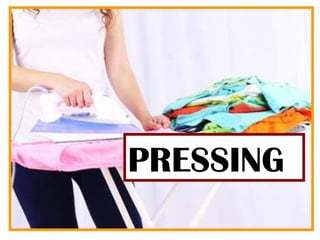
PRESSING
1. Identify the Pressing tools
and their uses.
3. Explain the Different
Techniques in Pressing
2. Differentiate Pressing and
Ironing.
3. Know the proper way of
Pressing and Ironing of the ff.:
a. Pants c. Jeans
b. Shirts d. Dress
Unlocking of Difficulties
• Crease- Mark made by folding in a cloth.
• Wrinkles- A small crease on a surface of
a cloth
• Scrap- A small piece of cloth that can be
recycled or be used again in the next
project.
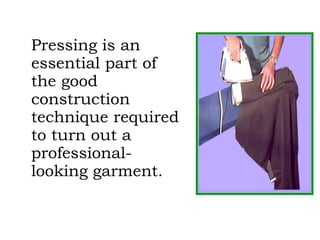
Pressing is an
essential part of
the good
construction
technique required
to turn out a
professional-
looking garment.
Pressing Tools and Equipment and Their
Uses
Electric Iron - is used in
straightening wrinkle on
finished garment for a
neat appearance.
Ironing Board- is padded,
smooth and adjustable in
height. The cover should be
kept clean and smooth for
ready use.
How about Ironing?
What do we mean by
Pressing
What is the difference
by Pressing and
Ironing?
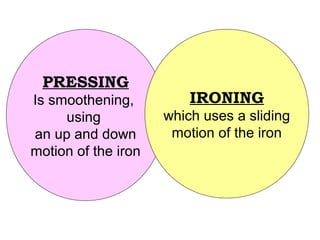
PRESSING
Is smoothening,
using
an up and down
motion of the iron
IRONING
which uses a sliding
motion of the iron
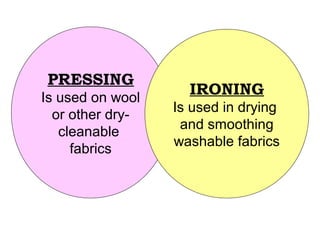
PRESSING
Is used on wool
or other dry-
cleanable
fabrics
IRONING
Is used in drying
and smoothing
washable fabrics
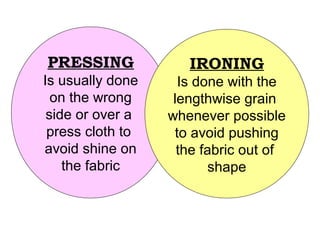
PRESSING
Is usually done
on the wrong
side or over a
press cloth to
avoid shine on
the fabric
IRONING
Is done with the
lengthwise grain
whenever possible
to avoid pushing
the fabric out of
shape
When to Press?
1. If there are creases or wrinkles
which will affect the accuracy of
sewing.
2. Use unit construction – construct
and press one unit before joining it
to another unit.
3. Garments and parts of
garments which will not
stretch out of shape should
be hanged on hangers in
order to prevent
unnecessary wrinkling.
When to Press?
Consider the Fabric When Pressing
1. Temperature of the Iron
2. Testing the Fabric
3. Using Moisture
Temperature of Iron
Use the correct temperature
for each type of fabric as
indicated on the iron. If
there is no temperature
control on the iron, test the
heat on a piece of fabric
before pressing.
Testing the Fabric
Because of many new fibers and
blends of fibers in fabrics and
because of the wide variety of
finishes used on fabrics, it is
impossible to predict exactly how
each fabric will react to pressing.
For this reason, it is wise to test
fabric by experimenting on a
scrap of the cloth.
Using Moisture
Moisture may be applied as
water or stream. It may be
applied to th press cloth with
a sponge, a damp scrap of th
garment fabric, or a piece of
muslin. The applicator should
be squeezed enough to prevent
dripping.
Pressing Tips
1. Unplug steam iron
when you fill it with
water.
2.Set iron on heel
stand when not using
3.Test iron temperature
on a scrap of fabric.
Pressing Tips
4.Press on the wrong side
whenever possible.
5.Avoid pressing directly
on the zipper -- some
zippers will melt!
6.Do not press over pins --
this scratches the iron and
also leaves a mark on many
fabrics.
Pressing Tips
7.Do not press over
basting. This may leave a
mark on your fabric.
8.Do not press over a
stain or oil -- this makes
it (stain) harder to
remove later.
Pressing Tips
9.Do not over press. Too hot
an iron, used too many
times, or pressing a fabric
until it is dry will result in a
tired look! It may also leave
a shine on synthetics.
10.Unplug iron when
you have finished using
it.
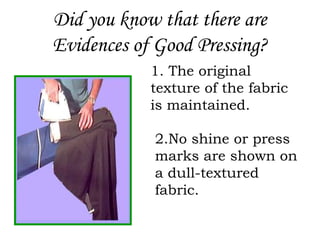
Did you know that there are
Evidences of Good Pressing?
1. The original
texture of the fabric
is maintained.
2.No shine or press
marks are shown on
a dull-textured
fabric.
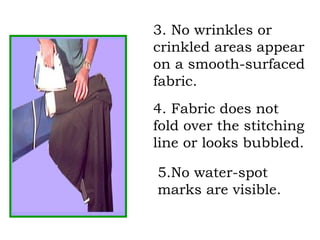
3. No wrinkles or
crinkled areas appear
on a smooth-surfaced
fabric.
4. Fabric does not
fold over the stitching
line or looks bubbled.
5.No water-spot
marks are visible.
True or False: Write the word TRUE if the
statement is correct and write the word
FALSE if the statement is incorrect.
Let’s See What You Know
_______1. One evidence of good
pressing is that there is no shine or
press marks shown on a dull-
textured fabric.
______2. Another evidence of good
pressing is that wrinkles or crinkled
areas doesn’t appear on a smooth-
surfaced fabric.
______3. Another evidence of god
pressing is that water-spot marks
are visible.
______4. When pressing a garment,
you should press directly on the
zipper.
______5. You should not press over
basting. This may leave a mark on your
fabric.
______6.Pressing is a sliding motion of
the iron on the fabric.
_____7. Ironing is a process by which
the iron is raised and lowered on
the fabric in a series of up-and-
down motions.
_____8. You need to press if there are
creases or wrinkles which will
affect the accuracy of sewing.
_____9. Because of many new fibers
and blends of fibers in fabrics and
because of the wide variety of
finishes used on fabrics, it is
possible to predict exactly how
each fabric will react to pressing.
_____10.After pressing, hang wool
garments and allow them to become
completely dry. Do not work with wool
fabrics immediately after pressing.
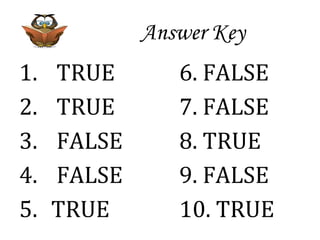
Answer Key
1. TRUE 6. FALSE
2. TRUE 7. FALSE
3. FALSE 8. TRUE
4. FALSE 9. FALSE
5. TRUE 10. TRUE
Bring the Following:
1. Cloth for pajama
2. Pajama Pattern
3. Cutting Shears and Scissors
4. Pin and Pin Cushion
5. Thread and Sewing No 11 (sewing
machine needle)
ASSIGNMENT

Pressing

  • 1.
  • 2.
    1. Identify thePressing tools and their uses. 3. Explain the Different Techniques in Pressing 2. Differentiate Pressing and Ironing.
  • 3.
    3. Know theproper way of Pressing and Ironing of the ff.: a. Pants c. Jeans b. Shirts d. Dress
  • 4.
    Unlocking of Difficulties •Crease- Mark made by folding in a cloth. • Wrinkles- A small crease on a surface of a cloth • Scrap- A small piece of cloth that can be recycled or be used again in the next project.
  • 5.
    Pressing is an essentialpart of the good construction technique required to turn out a professional- looking garment.
  • 6.
    Pressing Tools andEquipment and Their Uses Electric Iron - is used in straightening wrinkle on finished garment for a neat appearance.
  • 7.
    Ironing Board- ispadded, smooth and adjustable in height. The cover should be kept clean and smooth for ready use.
  • 8.
    How about Ironing? Whatdo we mean by Pressing What is the difference by Pressing and Ironing?
  • 9.
    PRESSING Is smoothening, using an upand down motion of the iron IRONING which uses a sliding motion of the iron
  • 10.
    PRESSING Is used onwool or other dry- cleanable fabrics IRONING Is used in drying and smoothing washable fabrics
  • 11.
    PRESSING Is usually done onthe wrong side or over a press cloth to avoid shine on the fabric IRONING Is done with the lengthwise grain whenever possible to avoid pushing the fabric out of shape
  • 12.
    When to Press? 1.If there are creases or wrinkles which will affect the accuracy of sewing. 2. Use unit construction – construct and press one unit before joining it to another unit.
  • 13.
    3. Garments andparts of garments which will not stretch out of shape should be hanged on hangers in order to prevent unnecessary wrinkling. When to Press?
  • 14.
    Consider the FabricWhen Pressing 1. Temperature of the Iron 2. Testing the Fabric 3. Using Moisture
  • 15.
    Temperature of Iron Usethe correct temperature for each type of fabric as indicated on the iron. If there is no temperature control on the iron, test the heat on a piece of fabric before pressing.
  • 16.
    Testing the Fabric Becauseof many new fibers and blends of fibers in fabrics and because of the wide variety of finishes used on fabrics, it is impossible to predict exactly how each fabric will react to pressing. For this reason, it is wise to test fabric by experimenting on a scrap of the cloth.
  • 17.
    Using Moisture Moisture maybe applied as water or stream. It may be applied to th press cloth with a sponge, a damp scrap of th garment fabric, or a piece of muslin. The applicator should be squeezed enough to prevent dripping.
  • 18.
    Pressing Tips 1. Unplugsteam iron when you fill it with water. 2.Set iron on heel stand when not using 3.Test iron temperature on a scrap of fabric.
  • 19.
    Pressing Tips 4.Press onthe wrong side whenever possible. 5.Avoid pressing directly on the zipper -- some zippers will melt! 6.Do not press over pins -- this scratches the iron and also leaves a mark on many fabrics.
  • 20.
    Pressing Tips 7.Do notpress over basting. This may leave a mark on your fabric. 8.Do not press over a stain or oil -- this makes it (stain) harder to remove later.
  • 21.
    Pressing Tips 9.Do notover press. Too hot an iron, used too many times, or pressing a fabric until it is dry will result in a tired look! It may also leave a shine on synthetics. 10.Unplug iron when you have finished using it.
  • 22.
    Did you knowthat there are Evidences of Good Pressing? 1. The original texture of the fabric is maintained. 2.No shine or press marks are shown on a dull-textured fabric.
  • 23.
    3. No wrinklesor crinkled areas appear on a smooth-surfaced fabric. 4. Fabric does not fold over the stitching line or looks bubbled. 5.No water-spot marks are visible.
  • 24.
    True or False:Write the word TRUE if the statement is correct and write the word FALSE if the statement is incorrect. Let’s See What You Know _______1. One evidence of good pressing is that there is no shine or press marks shown on a dull- textured fabric.
  • 25.
    ______2. Another evidenceof good pressing is that wrinkles or crinkled areas doesn’t appear on a smooth- surfaced fabric. ______3. Another evidence of god pressing is that water-spot marks are visible.
  • 26.
    ______4. When pressinga garment, you should press directly on the zipper. ______5. You should not press over basting. This may leave a mark on your fabric. ______6.Pressing is a sliding motion of the iron on the fabric.
  • 27.
    _____7. Ironing isa process by which the iron is raised and lowered on the fabric in a series of up-and- down motions. _____8. You need to press if there are creases or wrinkles which will affect the accuracy of sewing.
  • 28.
    _____9. Because ofmany new fibers and blends of fibers in fabrics and because of the wide variety of finishes used on fabrics, it is possible to predict exactly how each fabric will react to pressing. _____10.After pressing, hang wool garments and allow them to become completely dry. Do not work with wool fabrics immediately after pressing.
  • 29.
    Answer Key 1. TRUE6. FALSE 2. TRUE 7. FALSE 3. FALSE 8. TRUE 4. FALSE 9. FALSE 5. TRUE 10. TRUE
  • 30.
    Bring the Following: 1.Cloth for pajama 2. Pajama Pattern 3. Cutting Shears and Scissors 4. Pin and Pin Cushion 5. Thread and Sewing No 11 (sewing machine needle) ASSIGNMENT