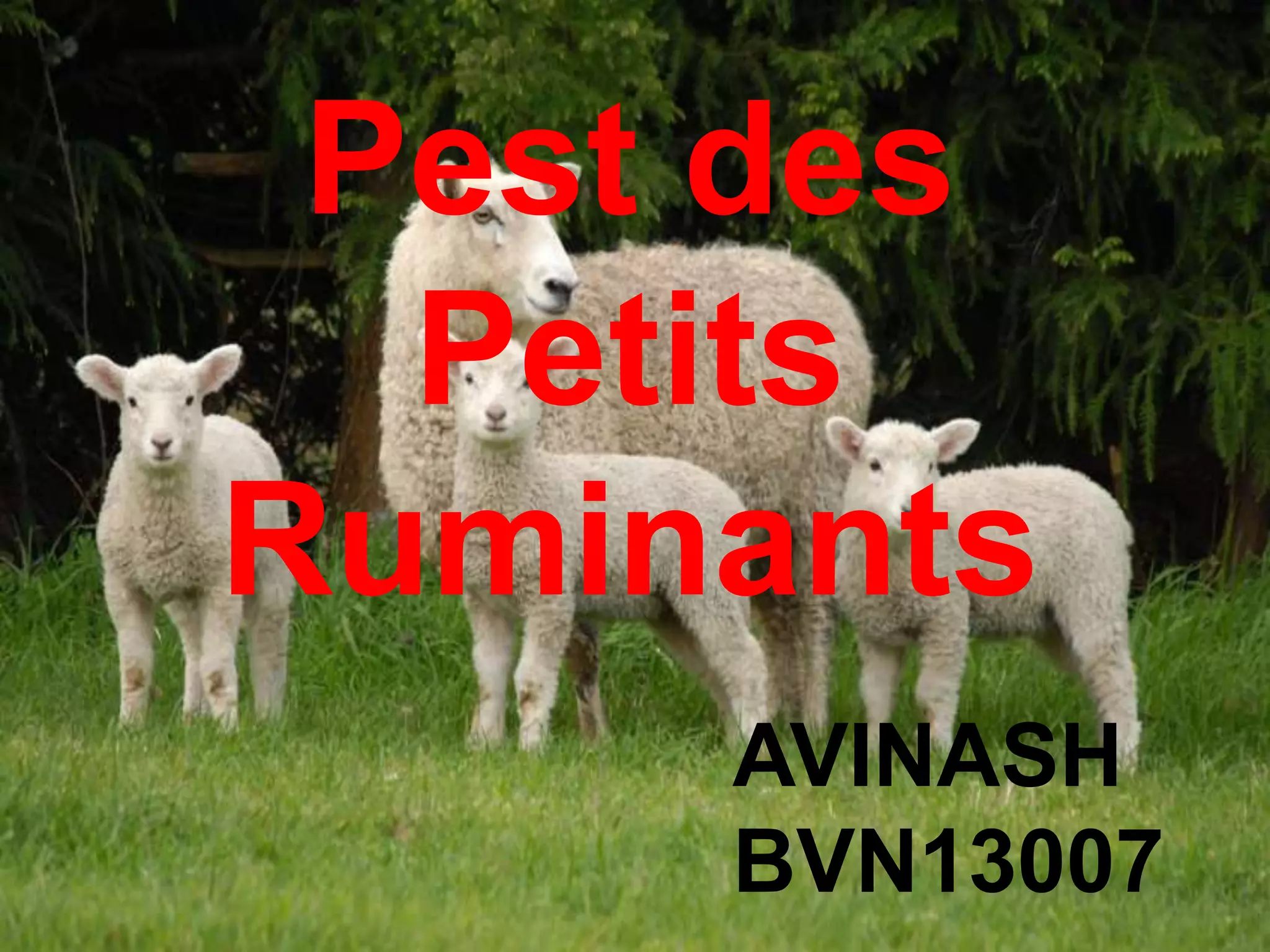
Pest des
Petits
Ruminants
AVINASH
BVN13007
DEFINITION:-
Highly contagious disease characterized
by high fever, conjunctivitis,
bronchopneumonia, enteritis, stomatitis.
Also known as
KATA
Stomatitis pneumo enteritis complex
Pseudorinderpest of sheep and goat
Contagious pustular stomatitis
Goat palgue
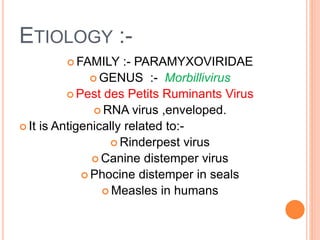
ETIOLOGY :-
 FAMILY :- PARAMYXOVIRIDAE
 GENUS :- Morbillivirus
 Pest des Petits Ruminants Virus
 RNA virus ,enveloped.
 It is Antigenically related to:-
 Rinderpest virus
 Canine distemper virus
 Phocine distemper in seals
 Measles in humans
CONT…
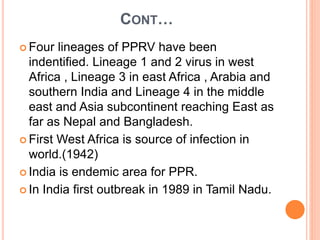
 Four lineages of PPRV have been
indentified. Lineage 1 and 2 virus in west
Africa , Lineage 3 in east Africa , Arabia and
southern India and Lineage 4 in the middle
east and Asia subcontinent reaching East as
far as Nepal and Bangladesh.
 First West Africa is source of infection in
world.(1942)
 India is endemic area for PPR.
 In India first outbreak in 1989 in Tamil Nadu.
EPIDEMIOLOGY:-
Principally occurs in goats and sheep
Cattle and pigs seroconvert but do not
develop or transmit disease.
Wild ungulates can be affected.
PPR is not transmissible to human.
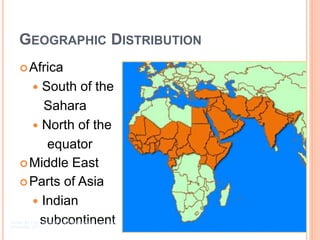
Africa
 South of the
Sahara
 North of the
equator
Middle East
Parts of Asia
 Indian
subcontinentCenter for Food Security and Public Health, Iowa State
University, 2011
GEOGRAPHIC DISTRIBUTION
MORBIDITY AND MORTALITY:-
Infection rates in enzootic areas are
generally high (above 50%) and can be
up to 90%of the flock during outbreaks.
Disease however is more severe in goats
than in sheep and rapidly fatal in young
animal which are mostly affected (Ages 4
months to 1 years)
Case fatality rate are also much higher in
goats (55-80%) than in sheep (less than
10%).
CONT…
It varies by species, immunity, breed
also.
Morbidity and mortality rates lower in
endemic areas.
Change in climate affect outbreak like
winter season or rainfall.
When maternal Ab are lost at about 4
month of age the number of susceptible
animal is likely peak kidding and lambing
seasons.
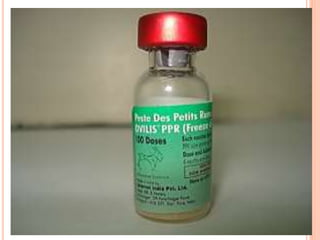
TRANSMISSION :-
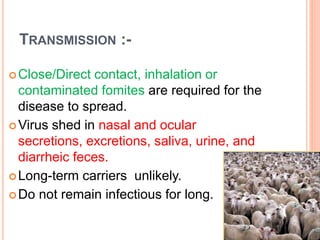
Close/Direct contact, inhalation or
contaminated fomites are required for the
disease to spread.
Virus shed in nasal and ocular
secretions, excretions, saliva, urine, and
diarrheic feces.
Long-term carriers unlikely.
Do not remain infectious for long.
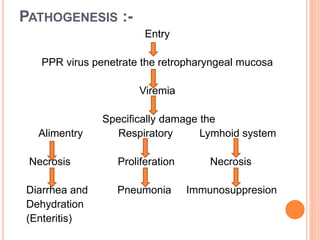
PATHOGENESIS :-
Entry
PPR virus penetrate the retropharyngeal mucosa
Viremia
Specifically damage the
Alimentry Respiratory Lymhoid system
Necrosis Proliferation Necrosis
Diarrhea and Pneumonia Immunosuppresion
Dehydration
(Enteritis)
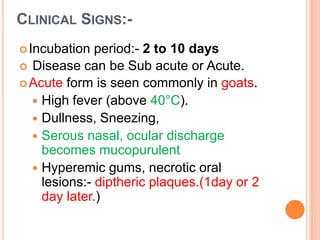
CLINICAL SIGNS:-
Incubation period:- 2 to 10 days
 Disease can be Sub acute or Acute.
Acute form is seen commonly in goats.
 High fever (above 40°C).
 Dullness, Sneezing,
 Serous nasal, ocular discharge
becomes mucopurulent
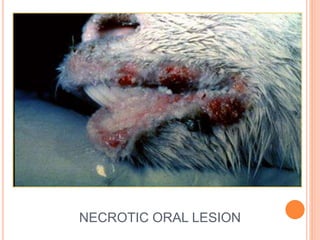
 Hyperemic gums, necrotic oral
lesions:- diptheric plaques.(1day or 2
day later.)
CONT…
Brain like deposition in oral cavity.
Profound halitosis.
Animal is unable to eat because of sore
mouth and sawollen lips.
Mating of eyelids and occluding the
external nares.
Profuse Diarrhea and feces may be
mucoid and blood tinged. (3-4 day after
the onset of fever).
CONT…
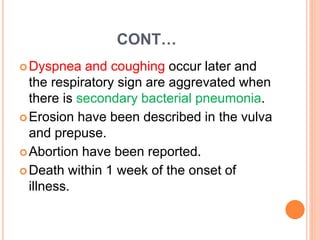
Dyspnea and coughing occur later and
the respiratory sign are aggrevated when
there is secondary bacterial pneumonia.
Erosion have been described in the vulva
and prepuse.
Abortion have been reported.
Death within 1 week of the onset of
illness.
NECROTIC ORAL LESION
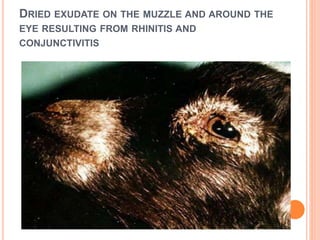
DRIED EXUDATE ON THE MUZZLE AND AROUND THE
EYE RESULTING FROM RHINITIS AND
CONJUNCTIVITIS
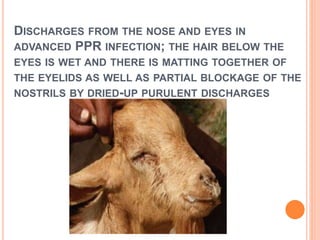
DISCHARGES FROM THE NOSE AND EYES IN
ADVANCED PPR INFECTION; THE HAIR BELOW THE
EYES IS WET AND THERE IS MATTING TOGETHER OF
THE EYELIDS AS WELL AS PARTIAL BLOCKAGE OF THE
NOSTRILS BY DRIED-UP PURULENT DISCHARGES
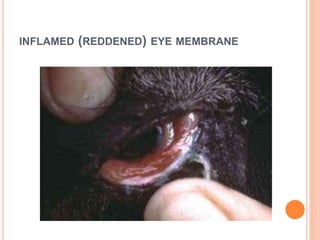
INFLAMED (REDDENED) EYE MEMBRANE
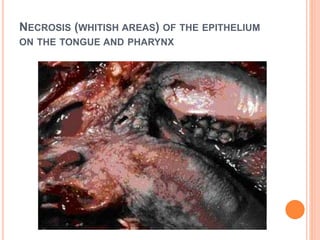
NECROSIS (WHITISH AREAS) OF THE EPITHELIUM
ON THE TONGUE AND PHARYNX
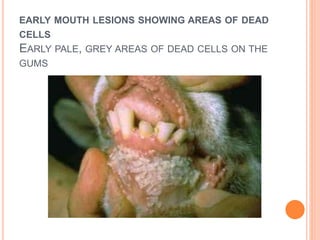
EARLY MOUTH LESIONS SHOWING AREAS OF DEAD
CELLS
EARLY PALE, GREY AREAS OF DEAD CELLS ON THE
GUMS
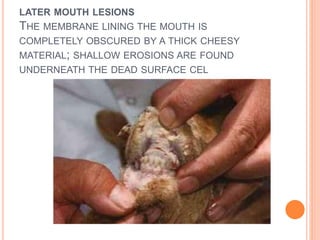
LATER MOUTH LESIONS
THE MEMBRANE LINING THE MOUTH IS
COMPLETELY OBSCURED BY A THICK CHEESY
MATERIAL; SHALLOW EROSIONS ARE FOUND
UNDERNEATH THE DEAD SURFACE CEL
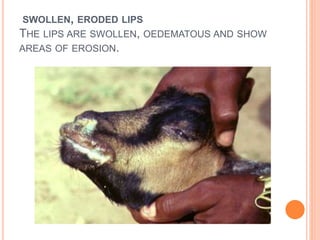
SWOLLEN, ERODED LIPS
THE LIPS ARE SWOLLEN, OEDEMATOUS AND SHOW
AREAS OF EROSION.
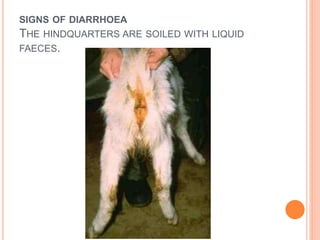
SIGNS OF DIARRHOEA
THE HINDQUARTERS ARE SOILED WITH LIQUID
FAECES.
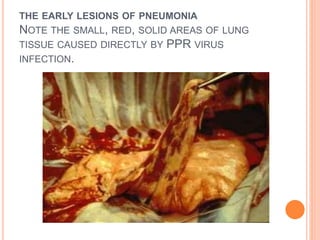
THE EARLY LESIONS OF PNEUMONIA
NOTE THE SMALL, RED, SOLID AREAS OF LUNG
TISSUE CAUSED DIRECTLY BY PPR VIRUS
INFECTION.
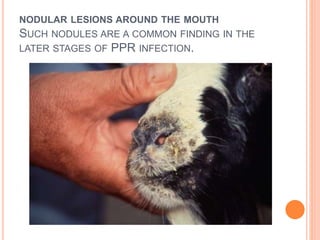
NODULAR LESIONS AROUND THE MOUTH
SUCH NODULES ARE A COMMON FINDING IN THE
LATER STAGES OF PPR INFECTION.
CONT…
Sub Acute:-
 More common in sheep.
 Asymptomatic.
 Sign and lesion less marked
 Most animal recover and few animal may
die within 2 week.
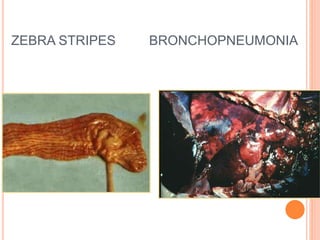
POST MORTEM LESIONS :-
Hemorrhagic ulceration is marked in the
ileocecal region, colon and rectum produce
typical “Zebra stripes”.
Regional lymph node and spleen enlarged.
Interstitial pneumonia.
Hyperemic bronchi contain froth due to
pulmonary congestion and edema.
Mucopurulent exudate from nasal opening to
larynx.
ZEBRA STRIPES BRONCHOPNEUMONIA
HISTOPATHOLOGICAL LESION:-
Intracytoplasmic eosinophilic inclusion
bodies in intestinal crypt epithelium.
Huge syncytial giant cell ,Intranuclear
and intracytoplasmic inclusion bodies in
respiratory tract cells.
SAMPLING FOR DIAGNOSIS:-
Scrapping of buccal mucosa.
Ocular discharge.
Nasal swab.
Buffy coat from whole blood.
Whole blood with anticoagulant for virus
isolation
CLINICAL DIAGNOSIS:-
Low serum sodium and potassium due to
diarrhea.
Virus neutralization test.
AGID, CFT, CIEP.
Virus isolaton in cell culture and animal
inoculation.
cELISA
DIFFERENTIAL DIAGNOSIS:-
Rinderpest
Bluetongue
Contagious ecthyma
Foot and mouth disease
Heartwater
Coccidiosis
Mineral poisoning
Contagious caprine pleuropneumonia
Contagious bovine pleuropneumonia.
Pasteurellosis
TREATMENT:-
Valuable sick animal in the early stages
of the disease should be isolated and
given hyperimmune serum which may
obtain from cattle hyperimmunised
against rinderpest.
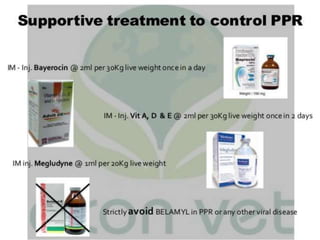
Supportive treatment includes fluid
therapy for dehydration and antibiotics to
prevent secondary bacterial infection.
CONT…
Lesion around the eyes, nostril and
mouth should be cleaned antiseptic
solution and put povidone iodine solution.
PREVENTION AND CONTROL :-
Not introducing new animal brought from
market to others, keep it in quarantine for
some day for observation.
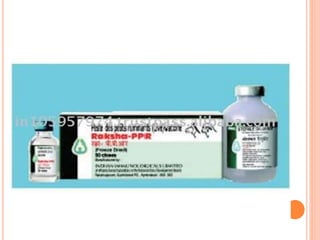
Tissue culture rinderpest vaccine(attenuated)
is effective but not in enzootic areas.
Kid, lamb should be vaccinated at 3-4 months
of age by which time maternal antibodies
would have waned.
HomologousLive attenuated PPRvaccine
used containing ARJU strain.
CONT…
Most recently a homologous PPRV tissue
culture vaccine was produced by serial
passage in Vero cells.
Recombinant Vaccine.
Dose :- 1ml s/c at neck region ( one year
protection)
CONT…
Vaccine is contraindicated in pregnant animals
and weak, debilitated animals.
Before mansoon healthy animal should be
vaccinated.
CONT…
Disinfection:-
PPR virus killed by most common
disinfectants
 Alkalis (sodium carbonate, hydroxide)
 Halogens (sodium hypochlorite)
2% for 24 hours
 Phenolic compounds
 Citric Acid
 Alcohols
 Iodophores
REFRENCE
 VETERINARY MEDICINE
A TEXTBOOK OF THE DISEASES OF CATTLE,
HORSES, SHEEP , PIG AND GOATS.
10TH EDITION
OTTO M RADOSTITS
CLIVE C GAY
KENNETH W HINCHCLIFF
PETER D CONSTABLE
Presentation6

Presentation6

  • 1.
  • 2.
    DEFINITION:- Highly contagious diseasecharacterized by high fever, conjunctivitis, bronchopneumonia, enteritis, stomatitis. Also known as KATA Stomatitis pneumo enteritis complex Pseudorinderpest of sheep and goat Contagious pustular stomatitis Goat palgue
  • 3.
    ETIOLOGY :-  FAMILY:- PARAMYXOVIRIDAE  GENUS :- Morbillivirus  Pest des Petits Ruminants Virus  RNA virus ,enveloped.  It is Antigenically related to:-  Rinderpest virus  Canine distemper virus  Phocine distemper in seals  Measles in humans
  • 4.
    CONT…  Four lineagesof PPRV have been indentified. Lineage 1 and 2 virus in west Africa , Lineage 3 in east Africa , Arabia and southern India and Lineage 4 in the middle east and Asia subcontinent reaching East as far as Nepal and Bangladesh.  First West Africa is source of infection in world.(1942)  India is endemic area for PPR.  In India first outbreak in 1989 in Tamil Nadu.
  • 5.
    EPIDEMIOLOGY:- Principally occurs ingoats and sheep Cattle and pigs seroconvert but do not develop or transmit disease. Wild ungulates can be affected. PPR is not transmissible to human.
  • 6.
    Africa  South ofthe Sahara  North of the equator Middle East Parts of Asia  Indian subcontinentCenter for Food Security and Public Health, Iowa State University, 2011 GEOGRAPHIC DISTRIBUTION
  • 7.
    MORBIDITY AND MORTALITY:- Infectionrates in enzootic areas are generally high (above 50%) and can be up to 90%of the flock during outbreaks. Disease however is more severe in goats than in sheep and rapidly fatal in young animal which are mostly affected (Ages 4 months to 1 years) Case fatality rate are also much higher in goats (55-80%) than in sheep (less than 10%).
  • 8.
    CONT… It varies byspecies, immunity, breed also. Morbidity and mortality rates lower in endemic areas. Change in climate affect outbreak like winter season or rainfall. When maternal Ab are lost at about 4 month of age the number of susceptible animal is likely peak kidding and lambing seasons.
  • 9.
    TRANSMISSION :- Close/Direct contact,inhalation or contaminated fomites are required for the disease to spread. Virus shed in nasal and ocular secretions, excretions, saliva, urine, and diarrheic feces. Long-term carriers unlikely. Do not remain infectious for long.
  • 10.
    PATHOGENESIS :- Entry PPR viruspenetrate the retropharyngeal mucosa Viremia Specifically damage the Alimentry Respiratory Lymhoid system Necrosis Proliferation Necrosis Diarrhea and Pneumonia Immunosuppresion Dehydration (Enteritis)
  • 11.
    CLINICAL SIGNS:- Incubation period:-2 to 10 days  Disease can be Sub acute or Acute. Acute form is seen commonly in goats.  High fever (above 40°C).  Dullness, Sneezing,  Serous nasal, ocular discharge becomes mucopurulent  Hyperemic gums, necrotic oral lesions:- diptheric plaques.(1day or 2 day later.)
  • 12.
    CONT… Brain like depositionin oral cavity. Profound halitosis. Animal is unable to eat because of sore mouth and sawollen lips. Mating of eyelids and occluding the external nares. Profuse Diarrhea and feces may be mucoid and blood tinged. (3-4 day after the onset of fever).
  • 13.
    CONT… Dyspnea and coughingoccur later and the respiratory sign are aggrevated when there is secondary bacterial pneumonia. Erosion have been described in the vulva and prepuse. Abortion have been reported. Death within 1 week of the onset of illness.
  • 14.
  • 15.
    DRIED EXUDATE ONTHE MUZZLE AND AROUND THE EYE RESULTING FROM RHINITIS AND CONJUNCTIVITIS
  • 16.
    DISCHARGES FROM THENOSE AND EYES IN ADVANCED PPR INFECTION; THE HAIR BELOW THE EYES IS WET AND THERE IS MATTING TOGETHER OF THE EYELIDS AS WELL AS PARTIAL BLOCKAGE OF THE NOSTRILS BY DRIED-UP PURULENT DISCHARGES
  • 17.
  • 18.
    NECROSIS (WHITISH AREAS)OF THE EPITHELIUM ON THE TONGUE AND PHARYNX
  • 19.
    EARLY MOUTH LESIONSSHOWING AREAS OF DEAD CELLS EARLY PALE, GREY AREAS OF DEAD CELLS ON THE GUMS
  • 20.
    LATER MOUTH LESIONS THEMEMBRANE LINING THE MOUTH IS COMPLETELY OBSCURED BY A THICK CHEESY MATERIAL; SHALLOW EROSIONS ARE FOUND UNDERNEATH THE DEAD SURFACE CEL
  • 21.
    SWOLLEN, ERODED LIPS THELIPS ARE SWOLLEN, OEDEMATOUS AND SHOW AREAS OF EROSION.
  • 22.
    SIGNS OF DIARRHOEA THEHINDQUARTERS ARE SOILED WITH LIQUID FAECES.
  • 23.
    THE EARLY LESIONSOF PNEUMONIA NOTE THE SMALL, RED, SOLID AREAS OF LUNG TISSUE CAUSED DIRECTLY BY PPR VIRUS INFECTION.
  • 24.
    NODULAR LESIONS AROUNDTHE MOUTH SUCH NODULES ARE A COMMON FINDING IN THE LATER STAGES OF PPR INFECTION.
  • 25.
    CONT… Sub Acute:-  Morecommon in sheep.  Asymptomatic.  Sign and lesion less marked  Most animal recover and few animal may die within 2 week.
  • 26.
    POST MORTEM LESIONS:- Hemorrhagic ulceration is marked in the ileocecal region, colon and rectum produce typical “Zebra stripes”. Regional lymph node and spleen enlarged. Interstitial pneumonia. Hyperemic bronchi contain froth due to pulmonary congestion and edema. Mucopurulent exudate from nasal opening to larynx.
  • 27.
  • 28.
    HISTOPATHOLOGICAL LESION:- Intracytoplasmic eosinophilicinclusion bodies in intestinal crypt epithelium. Huge syncytial giant cell ,Intranuclear and intracytoplasmic inclusion bodies in respiratory tract cells.
  • 29.
    SAMPLING FOR DIAGNOSIS:- Scrappingof buccal mucosa. Ocular discharge. Nasal swab. Buffy coat from whole blood. Whole blood with anticoagulant for virus isolation
  • 30.
    CLINICAL DIAGNOSIS:- Low serumsodium and potassium due to diarrhea. Virus neutralization test. AGID, CFT, CIEP. Virus isolaton in cell culture and animal inoculation. cELISA
  • 31.
    DIFFERENTIAL DIAGNOSIS:- Rinderpest Bluetongue Contagious ecthyma Footand mouth disease Heartwater Coccidiosis Mineral poisoning Contagious caprine pleuropneumonia Contagious bovine pleuropneumonia. Pasteurellosis
  • 32.
    TREATMENT:- Valuable sick animalin the early stages of the disease should be isolated and given hyperimmune serum which may obtain from cattle hyperimmunised against rinderpest. Supportive treatment includes fluid therapy for dehydration and antibiotics to prevent secondary bacterial infection.
  • 33.
    CONT… Lesion around theeyes, nostril and mouth should be cleaned antiseptic solution and put povidone iodine solution.
  • 35.
    PREVENTION AND CONTROL:- Not introducing new animal brought from market to others, keep it in quarantine for some day for observation. Tissue culture rinderpest vaccine(attenuated) is effective but not in enzootic areas. Kid, lamb should be vaccinated at 3-4 months of age by which time maternal antibodies would have waned. HomologousLive attenuated PPRvaccine used containing ARJU strain.
  • 36.
    CONT… Most recently ahomologous PPRV tissue culture vaccine was produced by serial passage in Vero cells. Recombinant Vaccine. Dose :- 1ml s/c at neck region ( one year protection)
  • 39.
    CONT… Vaccine is contraindicatedin pregnant animals and weak, debilitated animals. Before mansoon healthy animal should be vaccinated.
  • 40.
    CONT… Disinfection:- PPR virus killedby most common disinfectants  Alkalis (sodium carbonate, hydroxide)  Halogens (sodium hypochlorite) 2% for 24 hours  Phenolic compounds  Citric Acid  Alcohols  Iodophores
  • 41.
    REFRENCE  VETERINARY MEDICINE ATEXTBOOK OF THE DISEASES OF CATTLE, HORSES, SHEEP , PIG AND GOATS. 10TH EDITION OTTO M RADOSTITS CLIVE C GAY KENNETH W HINCHCLIFF PETER D CONSTABLE