IN WHAT WAYS DOES YOUR MEDIA PRODUCT USE,
DEVELOP OR CHALLENGE FORMS AND
CONVENTIONS OF REAL MEDIA PRODUCTS?
Question 1
Media products
Each of these magazines feature a big and bold masthead that are a bigger size than any other font, this is a design that occurs in many
magazine products. They all have a house theme running through them, for example CLASH is very monochrome and grey/black scale, there
are no bright colours, whereas KERRANG is very different and enhances their colours, which makes the magazine recognisable. This is
persistent throughout the magazine, and is something I wanted to include in my magazine design. The photos are all interesting, with either
eye contact or close ups of the model on the front cover. All magazines have a bar code, price and issue number. I think it is important to get
the right price for your magazine as I think it reflects the quality of your magazine. Many of the media products have features that is
important to include in your magazine design and I believe that I have included all the essential features and pushed the forms of
convention media products have developed.
Front Cover
Development
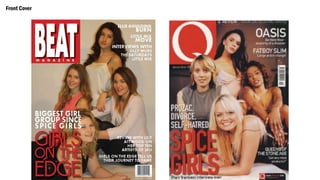
MASTHEAD- I kept the concept of using a square box with the magazine name placed in the box, filling the box. I think by using a
strong, confident colour and font, makes the masthead visually arresting, as it should be in a magazine design as it is the corporate
identity . Choosing to call my magazine BEAT was a difficult decision, as Q stands for queue the music, I wanted to make it music
related yet short and memorable. Choosing the font was just as difficult as I had to conform with the sophisticated genre that the
magazine had, yet appeal to my target audience, which was both male and female, aged 18-25 years old. I did this by choosing a
simple, bold font which stood out and caught peoples attention, by adding ‘magazine’ underneath gave it the finished look and
added detail to add to the design.
COVER STORY- ‘GIRLS ON THE EDGE’ is my cover story title. I came up with the name by thinking what made the girl band sound
interesting and modern, it needed to appeal to my target audience. ‘GIRLS ON THE EDGE’ is a memorable band name, just like
SPICE GIRLS, and by adding ‘on the edge’, the girl band will seem more fun and exciting, like they are ‘living on the edge’. I decided
to keep the title in the left hand bottom corner, the same as Q, because I think it gives the front cover a order and style. It fitted in
with my cover photo and I liked the way it lined up with the masthead as well so I decided to keep this layout.
COVER PHOTO- I conformed to Q’s cover photo when deciding what positions to put my models in, I tried a range of styles, however
I decided that this works best with Q’s sophisticated style. I like the different levels of each band member, and I tried to incorporate
archetypes with a blonde, perhaps stereotypically dumb like baby spice and the dark head acting as posh spice with the serious
face and elegant clothing. I used plain, smart clothing as I think it adds value and class to the magazine.
TAG LINES- I developed my tag lines as I included slightly more tag lines than Q have in their Spice Girls edition. I decided to put
more in my designs because I believe it made the magazine more appealing and grabbed the reader more effectively, rather than
just a few like Q used. I kept the theme of a similar font to continue my house style have used throughout the magazine as I believe
it is important to not over complicate the text as it makes it difficult for the reader to read clearly.
Contents page
Development
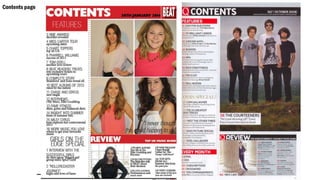
Left hand side column- I followed Q’s layout of their magazine because I think it is simple and easy to follow for a reader using
the contents page. It is important to have clear layout and font in he contents column as it will appeal to the reader more and
they will actually be able to read it. I also included topics that I think would appeal to my target audience. The fonts I chose
were simple and clear to read.
Review- I include this in the bottom right hand side of me contents page and followed Q’s layout as I think it added interest to
the magazine and kept the page looking busy and exciting. It also gave the page structure and let the reader follow a clear flow
of text when reading the contents page. I developed this section further by using less text in the box to let my reader see clearly
what's included in the review and not crowding the small space I had too much.
Challenging forms and conventions
When designing BEAT magazine I didn’t want to follow all of Q’s design and layout. I had to chose a group photo to go in the
contents page and tried out many different photos from the photoshoots I had but struggled to find a interesting, different
photo. In Q’s contents page, the photo they have included is of the boy band OASIS standing outside in a different environment.
To challenge this design I decided to include a montage of each girl in Girls on the Edge, identifying each of the girls and bringing
them together. I believe this design adds interest to the design and it also looks different to what is in the real media products. It
is not a style you see very much so I pushed their form of design and usual conventions by adding this design feature in.
The masthead featuring in the left corner of Q’s magazine, is part of their house theme running throughout the magazine, I liked
this design feature and knew I wanted to include it. To achieve this, I used my BEAT masthead and resized it into a smaller size. I
decided to place it in the right corner of the contents page, unlike Q, who used it in the left corner. I made this decision as I
believed it looked better next to the date of issue, and it also made my masthead more memorable for people flicking through
the magazine as it is something that they would see more frequently, than being stuck on the left where the magazine spine
would be.
At the bottom of the page I designed and included a bar with again the masthead in a smaller, resized scale and the data with the
page number. I think this gave the contents page a more professional look and gave more of a structure. However Q did not have
this as a feature on their contents page, so it is a new convention I chose to include. Again, I followed my house theme of the red,
white and black colours and fonts, which I think is very important and it resembles the magazine and makes it more memorable
for the audience.
Forms of conventions
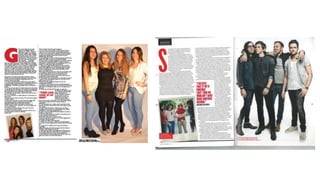
When designing my double page spread, I conformed to a lot of Q’s conventions. I kept it looking traditional with an in-depth
interview getting to know the girl band more, rather than a quick, simple interview that some pop magazines may feature. I was
aware of the fold in the magazine and made my design fit around this, so therefore I kept each page separate, making sure there
was no writing going across the fold making it difficult for the reader to read and understand.
I carried on the informal feel to the double page spread, which Q incorporated in their edition. They achieved this by having the
boy band pose informally with casual clothing and not all the band members making eye contact with the audience. They all look
relaxed. I wanted to carry on this feel to my double page spread, so I followed these design features. I got my girl band to look
relaxed and smiley in the feature photo, unlike the font cover, where they have a professional, serious look to them and smart
clothing. I achieved the casual informal look by having them wear jeans and their arms around each other with smiles on their
faces. I kept the location of the photo shoot the same with a plain white background, just like Q did.
From a glance, there is a lot of text in my interview, forcing the reader to engage in the interview and read about the girl band. The
bold red title standing out of the body text, grabbing the readers attention, I also chose a gripping quote that made the reader
interested and would make them want to sit down and read the interview. Again this would appeal to my target audience of 18-25
year olds, who have the time and would be more interested in an in-depth interview, rather than young teenagers who get bored
by a lot of text.

Presentation1

  • 1.
    IN WHAT WAYSDOES YOUR MEDIA PRODUCT USE, DEVELOP OR CHALLENGE FORMS AND CONVENTIONS OF REAL MEDIA PRODUCTS? Question 1
  • 2.
    Media products Each ofthese magazines feature a big and bold masthead that are a bigger size than any other font, this is a design that occurs in many magazine products. They all have a house theme running through them, for example CLASH is very monochrome and grey/black scale, there are no bright colours, whereas KERRANG is very different and enhances their colours, which makes the magazine recognisable. This is persistent throughout the magazine, and is something I wanted to include in my magazine design. The photos are all interesting, with either eye contact or close ups of the model on the front cover. All magazines have a bar code, price and issue number. I think it is important to get the right price for your magazine as I think it reflects the quality of your magazine. Many of the media products have features that is important to include in your magazine design and I believe that I have included all the essential features and pushed the forms of convention media products have developed.
  • 3.
  • 4.
    Development MASTHEAD- I keptthe concept of using a square box with the magazine name placed in the box, filling the box. I think by using a strong, confident colour and font, makes the masthead visually arresting, as it should be in a magazine design as it is the corporate identity . Choosing to call my magazine BEAT was a difficult decision, as Q stands for queue the music, I wanted to make it music related yet short and memorable. Choosing the font was just as difficult as I had to conform with the sophisticated genre that the magazine had, yet appeal to my target audience, which was both male and female, aged 18-25 years old. I did this by choosing a simple, bold font which stood out and caught peoples attention, by adding ‘magazine’ underneath gave it the finished look and added detail to add to the design. COVER STORY- ‘GIRLS ON THE EDGE’ is my cover story title. I came up with the name by thinking what made the girl band sound interesting and modern, it needed to appeal to my target audience. ‘GIRLS ON THE EDGE’ is a memorable band name, just like SPICE GIRLS, and by adding ‘on the edge’, the girl band will seem more fun and exciting, like they are ‘living on the edge’. I decided to keep the title in the left hand bottom corner, the same as Q, because I think it gives the front cover a order and style. It fitted in with my cover photo and I liked the way it lined up with the masthead as well so I decided to keep this layout. COVER PHOTO- I conformed to Q’s cover photo when deciding what positions to put my models in, I tried a range of styles, however I decided that this works best with Q’s sophisticated style. I like the different levels of each band member, and I tried to incorporate archetypes with a blonde, perhaps stereotypically dumb like baby spice and the dark head acting as posh spice with the serious face and elegant clothing. I used plain, smart clothing as I think it adds value and class to the magazine. TAG LINES- I developed my tag lines as I included slightly more tag lines than Q have in their Spice Girls edition. I decided to put more in my designs because I believe it made the magazine more appealing and grabbed the reader more effectively, rather than just a few like Q used. I kept the theme of a similar font to continue my house style have used throughout the magazine as I believe it is important to not over complicate the text as it makes it difficult for the reader to read clearly.
  • 5.
  • 6.
    Development Left hand sidecolumn- I followed Q’s layout of their magazine because I think it is simple and easy to follow for a reader using the contents page. It is important to have clear layout and font in he contents column as it will appeal to the reader more and they will actually be able to read it. I also included topics that I think would appeal to my target audience. The fonts I chose were simple and clear to read. Review- I include this in the bottom right hand side of me contents page and followed Q’s layout as I think it added interest to the magazine and kept the page looking busy and exciting. It also gave the page structure and let the reader follow a clear flow of text when reading the contents page. I developed this section further by using less text in the box to let my reader see clearly what's included in the review and not crowding the small space I had too much.
  • 7.
    Challenging forms andconventions When designing BEAT magazine I didn’t want to follow all of Q’s design and layout. I had to chose a group photo to go in the contents page and tried out many different photos from the photoshoots I had but struggled to find a interesting, different photo. In Q’s contents page, the photo they have included is of the boy band OASIS standing outside in a different environment. To challenge this design I decided to include a montage of each girl in Girls on the Edge, identifying each of the girls and bringing them together. I believe this design adds interest to the design and it also looks different to what is in the real media products. It is not a style you see very much so I pushed their form of design and usual conventions by adding this design feature in. The masthead featuring in the left corner of Q’s magazine, is part of their house theme running throughout the magazine, I liked this design feature and knew I wanted to include it. To achieve this, I used my BEAT masthead and resized it into a smaller size. I decided to place it in the right corner of the contents page, unlike Q, who used it in the left corner. I made this decision as I believed it looked better next to the date of issue, and it also made my masthead more memorable for people flicking through the magazine as it is something that they would see more frequently, than being stuck on the left where the magazine spine would be. At the bottom of the page I designed and included a bar with again the masthead in a smaller, resized scale and the data with the page number. I think this gave the contents page a more professional look and gave more of a structure. However Q did not have this as a feature on their contents page, so it is a new convention I chose to include. Again, I followed my house theme of the red, white and black colours and fonts, which I think is very important and it resembles the magazine and makes it more memorable for the audience.
  • 9.
    Forms of conventions Whendesigning my double page spread, I conformed to a lot of Q’s conventions. I kept it looking traditional with an in-depth interview getting to know the girl band more, rather than a quick, simple interview that some pop magazines may feature. I was aware of the fold in the magazine and made my design fit around this, so therefore I kept each page separate, making sure there was no writing going across the fold making it difficult for the reader to read and understand. I carried on the informal feel to the double page spread, which Q incorporated in their edition. They achieved this by having the boy band pose informally with casual clothing and not all the band members making eye contact with the audience. They all look relaxed. I wanted to carry on this feel to my double page spread, so I followed these design features. I got my girl band to look relaxed and smiley in the feature photo, unlike the font cover, where they have a professional, serious look to them and smart clothing. I achieved the casual informal look by having them wear jeans and their arms around each other with smiles on their faces. I kept the location of the photo shoot the same with a plain white background, just like Q did. From a glance, there is a lot of text in my interview, forcing the reader to engage in the interview and read about the girl band. The bold red title standing out of the body text, grabbing the readers attention, I also chose a gripping quote that made the reader interested and would make them want to sit down and read the interview. Again this would appeal to my target audience of 18-25 year olds, who have the time and would be more interested in an in-depth interview, rather than young teenagers who get bored by a lot of text.